Bootstrap
Charles Spurgeon

Am I My Brother's Keeper?

Galatians 6; Genesis 4:9
Charles Spurgeon March, 10 2017 Audio
0 Comments
Choice Puritan Devotional!

In C. H. Spurgeon's sermon titled "Am I My Brother's Keeper?" he explores the theme of individual responsibility towards others in the context of sin and redemption, particularly referencing Cain's defiant question to God in Genesis 4:9. Spurgeon argues that while personal responsibility before God is paramount — no one can shift blame or responsibility for their actions to another — Christians have a moral obligation to care for the souls of others. He references Galatians 6 and the command to love one's neighbor, emphasizing that genuine love for God compels believers to share the Gospel and support one another in faith. The sermon highlights the dangers of indifference and the serious implications of failing to act in love towards others, illustrating the Reformed doctrine of individual accountability intertwined with communal responsibility in the body of Christ.

Key Quotes

“Oh, dear friends, let us avoid sin, if only for the evil effect which it has upon our minds.”

“If you let sinners die, what will become of you? There is the point.”

“We are not men's sponsors, and if they reject our Savior, whom we faithfully preach, then their blood must be upon their own heads.”

“To deny the gospel, to have no word to say for Jesus, is this not soul murder?”

Sermon Transcript

Auto-generated transcript • May contain errors

100%
Am I my brother's keeper?

This sermon was originally preached by Charles Haddon Spurgeon somewhere between the mid to late 1800s. Our text for tonight comes from the book of Genesis, Genesis chapter 4 verse 9.

Am I my brother's keeper?

Cain displayed a shameful tone of presumptuous impudence in his insulting reply to the Lord God. If it had not been on record in the pages of Inspiration, we might almost have doubted whether a man could speak so impudently when actually conscious that God Himself was addressing him. Men often blaspheme in a most terrible fashion, but it is usually because they forget God and ignore His presence. But Cain was conscious that God was speaking to him. He heard him say, where is your brother Abel? And yet he dared with the coldest impertinence to reply to God, I don't know. Am I my brother's keeper? As much as to say, do you think I have to keep watch over him as he watches over his sheep? Am I also a shepherd as he was? And am I to take as much care of him as he did of a crippled lamb? The unfriendly impudence of Cain is an indication of the state of his heart, which led up to his murdering his brother. And it was also partly a result of his having committed that terrible crime. He would not have accomplished the brutal deed of bloodshed if he had not first cast off the fear of God and been ready to defy his creator. Having committed murder, the hardening influence of sin upon Cain's mind must have been intense, and thus he was able to speak to God's face what he felt within his heart, and to say to him, am I my brother's keeper? This goes a long way to explain what has puzzled some persons, namely the amazing calmness with which great criminals will appear in court. I remember having heard it said of one who had undoubtedly committed a very violent murder that he looked like an innocent man. He stood up before his accusers as calmly and quietly, they said, as an innocent man could do. I remember feeling at the time that an innocent man would probably not have been calm. The distress of mind felt by an innocent man for being under such a charge would have prevented him having the coolness which was displayed by the guilty individual. Instead of its being any evidence of innocence that a man wears a shameless front when charged with a great crime, it should by wise men be considered to be evidence against him. The guilty person may seem to be dispassionate and unmoved because he has already been so unfeeling as to dip his hand in blood. Oh, dear friends, let us avoid sin, if only for the evil effect which it has upon our minds. It is poison to the heart. It cripples the conscience, drugs it, puts it to sleep. It intoxicates the judgment and puts all the faculties, as it were, into a state of drunkenness so that we become capable of hideous bravery and blind impertinence. which makes us mad enough to dare insult God to his face. Save us, O God, save us from having our hearts hammered to the hardness of steel by sin, and daily keep us by your grace sensible and tender before you, trembling at your word. Now let us note here that while we so heavily condemn Cain, we must remember that we are not without guilt ourselves. While we so heavily condemn Cain, we must remember that we are not without guilt ourselves. Because if we look at it without prejudice, every kind of excuse that we make to God is a very serious case of presumption. When we are charged with any form of guilt, If we begin denying it or providing extenuating circumstances, then we are guilty of the sin of Cain as to impudence before God. And when there is any duty to be performed and we begin to shirk it or try to make an apology for disobedience, are we not forgetting in whose presence we stand? Does God charge me with what I have committed? And shall I be so wicked as to attempt a denial? Does God command me to perform a duty? And do I begin to hesitate, question, and ask myself, shall I or shall I not? Oh, what bold rebellion! The essence of treason lurks in every hesitancy to obey and dwells in every attempt to extenuate our fault when we have already disobeyed. You may think Cain is a monster because he should dare to face it out with God. Yet God is present everywhere, and every sin is perpetrated while He is watching us. Against Him do we sin, and in His presence we do evil. And when we begin to apologize with excuses for doing wrong, or hesitate concerning the duty commanded, we are disobeying in the immediate presence of the Lord our God. Since we have doubtless been found guilty, let us humbly confess it and ask the Lord to give us great tenderness of conscience, that from this day forward we may fear the Lord and never dare to stand up to question what He has to say. The very same thing, no doubt, lies at the bottom of objections to Bible truths. The very same thing, no doubt, lies at the bottom of objections to biblical truth. There are some who go to the scriptures not to take out of it what is there, but seeing what is clearly revealed, they then begin to question and judge and come to conclusions according to their own notions of what ought to have been there. O brothers and sisters, who are we that we should speak against God? If he says it, it is true. Believe it. But you say, I can't understand it. But who are you that you should understand everything? Can you hold the sea in the hollow of your hand or grasp the wind in your fist? Oh, worm of the dust, the infinite must always be beyond you. There must always be some things about the glorious Lord that are incomprehensible. And it is not for you to doubt because you can't understand, but rather humbly to bow before the awesome presence of Him who has made you and in whose hand your breath is. God save us from the presumption which dares to say with Pharaoh, who is the Lord that I should obey his voice? and from the profane arrogance which replies to the Lord in the spirit of Cain. Now let us look at what Cain said. He said to the Lord, Am I my brother's keeper? May the Holy Spirit guide us in considering this question. First, it is to be noted that man is not his brother's keeper in some senses. Man is not his brother's keeper in some senses. There is a little truth in what Cain says. Generally, some amount of truth clings to every lie, and even in the greatest possible profanity there is, usually, something or other of truth, though it is dangerously twisted and distorted. In this atrocious question of Cain, there is some little measure of reason. In some senses, no man is his brother's keeper. For instance, every man and woman must bear their own responsibility for their own acts before Almighty God. Every man and woman must bear their own responsibility for their own acts before Almighty God. It is not possible for a man or woman to shift from their shoulders to those of another their obligations to the Most High. Obedience to the law of God must be personally rendered, or a person becomes guilty. No matter how holy their father was or how righteous their mother was, they themselves will have to stand on their own feet and answer for themselves before the judgment seat of God. Each person who hears the gospel is responsible for understanding it. No one else can believe the gospel for them, or repent for them, or be born again for them, or become a Christian for them. They must personally repent of sin, personally believe in Jesus Christ, personally be converted, and personally live to the service and glory of God. There have been idle attempts to shift the responsibility to a certain order of men called priests or clergymen or ministers, according as the case may be, but it cannot be done. Each man and woman must seek the Lord themselves. Each one must lay their load of sin at the foot of the cross and personally accept a personal savior for themselves. You cannot do with the matters of your soul as you would do with the business of your estate, and employ a priest in the same way as you would engage a lawyer to represent you. There is only one substitute, an advocate, who can plead for us. Thus no earthly sponsor can plead with heaven for us. God demands the heart, and with the heart, men and women must believe unto righteousness. and with their own heart too, for no one can take their place. Personal service is required by the Great King and must be rendered on pain of eternal damnation. No one can be his brother's keeper in the sense of taking upon himself another person's responsibilities. And again, no one can positively secure the salvation of another No, they cannot even have a hope of the salvation of a friend, so long as the other person remains unbelieving. No one can positively secure the salvation of another. No, they cannot even have the hope, not even a hope of the salvation of a friend, so long as that other person remains unbelieving. Oh, unconverted people, We can pray for you, we can ask the Lord to renew you by His Spirit, but we can do nothing with you ourselves. Neither will our prayers be answered until you yourselves make a confession of your sin and run to Christ for salvation. It is no doubt a very great blessing to have friends who bear your names upon their hearts before God. But oh, Do you have any confidence in other people's prayers while you are prayerless yourselves? We ought to be very thankful that other people can pray diligently for us. But we shall never be saved if we remain unbelieving ourselves. Now, since we cannot convert other people, we are not responsible to do what we cannot do. And therefore, we are not our brother's keeper. in the sense as to be responsible for his acceptance or rejection of Jesus. And here let me say, in the next place, that people do great harm who enter into any vows or promises for others in this matter when they themselves are quite powerless. People do great harm who enter into any vows or promises for others in this matter when they themselves are quite powerless. To me it always remains a riddle, which I cannot explain except by the utter heartlessness or godlessness of this age, that men and women are found to come forward to solemnly promise concerning a little infant, as yet unconscious, that it shall keep all God's holy commandments and walk in holiness all the days of its life. and shall renounce all the pleasures and vanities of this present evil world. I dare not stop short of saying that it is a frightful lie if you make any such promise. You go farther than that. You are guilty of perjury before Almighty God. Oh, with what wrath he must look down upon persons who in the church, which they think to be sacred to his honor, in the presence of those who wear vestments which are supposed to mark them out as special messengers of God, dare to say that they will do that which is completely out of their power. You cannot do it, and you know it. You have perhaps not renounced the pleasures and vanities of the world for yourselves. Certainly you have not kept all God's holy commandments. How then can you do it for another? If you stood up there and promised before God that the little infant should grow to be eight feet tall, that its hair should be of a yellow color, and that its eyes should be green, you would be quite as much justified in making such a vow as in promising that which is prescribed in the prayer book concerning infant baptisms and godfathers and godmothers. Only there would be a touch of the ludicrous about that. But in this there is nothing that I can see to smile about, but everything to mourn over. It is sad that the human mind should be capable of such use of words that it should dare, it should dare to pronounce a lie as an act of worship, and then go calmly and quietly home as though everything had been done to please God. No, you cannot be other people's keepers. Do not, therefore, put yourselves into the awful position of promising that you will be. It is proper here to say that the most earnest minister of Christ must not so push the idea of his own personal responsibility to such an extreme as to make himself unfit for his work through a morbid view of his own position. It is proper here to say that the most earnest minister of Christ must not so push the idea of his own personal responsibility to such an extreme as to make himself unfit for his work through a morbid view of his own position. If the minister has faithfully preached the gospel and his message is rejected, let him persevere in hope and not condemn himself. I remember years ago when I labored to feel the responsibility of men's souls upon me. I became very depressed in spirit and the temptation arose out of it to give up the ministry in despair. I believe that responsibility should be duly felt. Neither do I wish to say a word to excuse any who are unfaithful. But in my own case, I saw that I could harp on one chord of my nature till I destroyed my power to do good. For I became so unhappy that the elasticity of my spirit departed from me. Then I remembered. I remembered that if I put the gospel faithfully before you and pressed it upon you, if you refused it, I had nothing more to do with the matter except to pray over it. If I earnestly entreated the Lord to send a blessing, and tried again and again to plead and urge with your consciences that you would be reconciled to God, and if still I failed, I remembered that I would not be held responsible for not doing what I could not do, namely, turn hearts of stone to flesh and awaken dead sinners to life. Our responsibility is heavy enough without our exaggerating it. We are not men's sponsors, and if they reject our Savior, whom we faithfully preach, then their blood must be upon their own heads. Our Lord did not always weep over Jerusalem. He sometimes rejoiced in spirit. No one thought must exclusively occupy our minds or we shall be good for nothing in the practical aspects of life. We are not the keepers of other men's souls in a boundless sense. There is a limit to our responsibility, and it is foolish to allow an excessive sensitivity to burden us into semi-lunacy. There is, however, a sense in which we are our brother's keeper, and of that I am now going to speak. You will bear my caveat in mind, and it will not weaken the force of what I have to say. but it will increase its weight, because you will feel that I have completely looked at the subject from all aspects. So now, secondly, in an important sense we are, each one of us, our brother's keeper. In a very important sense we are, each one of us, our brother's keeper. We ought to regard ourselves in that light, and it is a Cainish spirit which prompts us to think otherwise, and to wrap ourselves up in hard-heartedness and say, it is no concern of mine how others fare. Am I my brother's keeper? Oh, let us be far from such a spirit. For first, common feelings of humanity should lead every Christian to feel an interest in the soul of every unsaved person. Common feelings of humanity should lead every Christian to feel an interest in the soul of every unsaved person. I say common humanity, for we use the word humanity to signify kindness. I trust among us the expression may be used that common humanity leads us to desire the salvation of others. I am sure, my dear friends, if you saw a man dying for lack of bread, that you would wish to share your crust with him. Will you let souls perish for lack of the bread of life without pitying and helping them? If we saw a poor, unfortunate person shivering in the winter's cold, we would be ready to divide our clothing that we might clothe him. Shall we see sinners without the robe of righteousness, and not be anxious to speak to them of him who can clothe them in pure white linen? When a person's life is in jeopardy because of an accident, we rush them anywhere and use every means available that we may rescue them. And yet this life is trivial compared with life eternal. And for us to be indifferent when men and women are perishing Indifferent to the dreadful anguish and torment which come upon unrepentant sinners throughout all of eternity, is to act as if all brotherly compassion had fled from our hearts. Dear Christians, I charge you, even with so low a motive as this, because you are men and women, and unbelieving men and women are your brothers and sisters, born of the same stock, and living beneath the canopy of one Eternal Father, therefore care for the souls of others, and be, each one of you, his brother's and sister's keeper." A second argument is drawn from the fact that all of us, especially those who are Christians, have the power to do good to others. A second argument is drawn from the fact that all of us, especially those of us who are Christians, have the power to do good to others. None of us have the same abilities, for none of us have the same gifts or the same position. But like the little girl, a captive from Israel, that served Naaman's wife, who had opportunity to tell of the prophet who could heal her master, therefore every young Christian here has some power to do good to others. Converted children can speak the name of Jesus to their fathers and mothers and therefore bless them. We all have some capacity for doing good. Now take it as a truism that power to do good involves the duty of doing good. Wherever you are placed, if you can bless a person, you are obligated to do so. To have the power and not to use it is a sin. If you withhold your hand from that which you are able to do for the good of your fellow man, then you have broken the law of love. You do not need a special call to tell a sinner about Jesus. You need no special call to take a little child and tell it of the Savior's love. You need no revelation by angels from heaven to tell you what has benefited you will benefit your fellow man. All your knowledge All your experience, all that you possess that grace has given you, demands a return in the form of service rendered to others. The Jews were God's elect nation, elect to keep the revelations of God for all the nations. But they failed. They failed because they never cared about sharing those great truths with the Gentiles, but believed that they had received them for their own special benefit. The selfish spirit so grew on them that when God's grace to the heathen was mentioned, it made them angry with rage. And you saved ones, you owe much to God, but do not think that you are saved for your own special benefit alone. It is a great benefit to you, but grace is bestowed on you like light, that you may give it to others who are in the darkness. bestowed on you as the bread that was given by our Lord to his disciples, that they might share it among the multitude, that all might eat and be filled." Think of this, that the power to do good involves a responsibility to do it wherever that power exists. And so as far as you have any ability, you are by that very fact constituted as your brother's keeper.

Another argument is very plainly drawn from our Lord's version of the moral law. What is the second and great commandment according to Him? You shall love your neighbor as yourself. Another argument is very plainly drawn from our Lord's version of the moral law. What is the second and great commandment according to Christ? You shall love your neighbor as yourself.

Now since we have loved ourselves so much that through God's grace we have sought and found forgiveness for our sin, should we not love our neighbors so much as to desire for them to know their sin and to seek forgiveness too? It was right of us to secure our highest interest by laying hold of eternal life. But if we are to love our neighbor as ourselves, should we give ourselves any rest while multitudes are despising Christ and refusing salvation? No, my brothers and sisters, we have never come up to the standard yet. But in proportion, as we do begin to love our neighbor as ourselves, we shall certainly feel that God has made us, in a measure, to be our brother's keeper.

Yet again, without looking to other men's souls, we cannot keep the first of the two great commands in which the Lord has summarized the moral law. It says this, you shall love the Lord your God with all your heart and with all your soul and with all your mind and with all your strength. But we cannot possibly do this unless we have a love towards our brother's soul. For rightly does the apostle ask, If any man does not love his brother whom he has seen, how can he love God whom he has not seen? It is all very good to stand up and sing about your love to God and let the missionary offering plate go by while your eyes are gazing into heaven. But if you do not care for the heathen souls, how can you truly care for God? It is all very pretty to be enamored with Christ and to have a sweet experience or to think you have. And yet poor, miserable unbelievers all around us are dying without the knowledge of the Savior. And you can let them die and let them sink into hell without emotion. Oh, may God save us from such holiness. It is very pretty to look at like the gold-colored paint on wooden trim, but there is no gold in it at all. And loveless religion is good for nothing. He who does not love his fellow man enough to desire their salvation, and aim at it with all his might, gives no proof, gives no proof that he loves God at all.

Think of these things, and weigh my arguments with candor.

Once more, to the Christian, perhaps, the most forcible reason will be that the whole example of Jesus Christ, whom we call Lord and Master, lies in the direction of our being the keeper of our brother. For what was Jesus's life but one of complete unselfishness? To the Christian, perhaps, the most forcible reason will be that the whole example of Jesus Christ whom we call Lord and Master, lies in the direction of our being the keeper of our brother. For what was Jesus' life but one of complete unselfishness? What was said of Jesus at his death but that he saved others, but he could not save himself? The very fact that there is a Christ at all means that there was one who cared for others. and that our Lord became a man because he loved his enemies and came here to rescue those who rebelled against his authority. If we are selfish, if we make our own eternal life to be the great end of life, then we are not Christians. We may call whom we please Master, but we are not following Jesus Christ.

You shed tears, do you? But do you weep over Jerusalem? Tears for yourselves are poor things if there are never any for others. You pray and agonize, but is your grief ever caused by bearing the burden of another person's soul? Oh, even if we gave our bodies to be burned at the stake, yet if we have no love for mankind, it would profit us nothing. We may go a long way, and apparently all the way in the externals of Christian religion. But if the heart is never warm, never warm with the desire to benefit mankind, we are still aliens to the commonwealth of which Jesus is the Great Head.

I am sure it is true. I do not speak my own mind, but the mind of Christ. If Christ were here, what would he say to anyone who called himself his disciple and yet never, never lifted his hand or moved his tongue to snatch the firebrand from the flame or to save the sinner from the error of his ways. It must be so. It must be so then. We must be our brother's keepers.

Let the thought next rise in our minds that we are certainly ordained to the office of Brother Keeper because we shall be called to account about it. Let the thought rise in our minds that we are certainly ordained to the office of Brother Keeper because we shall be called to account about it. Cain was called to account. Where is your brother Abel? Oh, I pray to God, dear friends, and especially you, the young men of the college who asked me to speak about missions tonight. That you could now hear the Lord speaking to you and saying, where is your brother Abel?

Take first, those who are united to us by the ties of the flesh who fall under the term brothers and sisters, because they are born of the same parents or our near relatives. Where is John? Where is Thomas? Where is Henry, your brother? Unsaved? Without God? What have you ever done for him? How much have you prayed for him? How often have you spoken to him seriously about his lost state? What means have you used for his instruction, persuasion, conviction? Dear sisters, I must not let you off. Where is your brother? You sisters have very great power over brothers, more power than brothers have. Where, dear mother, let me put the question very tenderly to you, where is your child, your son, your daughter? Not where you wish, you say? But can you say, if your dear child were to perish, that you are innocent of their blood? Father, the boy grieves you. Are you quite innocent that you did not help to sow in him the sins which are now your trial? Come, have you done all that could be done? If within a week You had to follow, in mournful procession, your son's body to the grave. Are you quite innocent? Quite innocent of his blood? O relatives, I put you all together. Are you quite innocent of the blood of your relatives? For the day will come when the question will have to be put very plainly. Where is your brother Abel? You cannot help it, I know. that such a one lives in sin and has remained an unbeliever. You cannot absolutely help it. But still, have you done all that you should have done towards the preventing of sin by leading that soul into the way of life and peace? I pause for a moment to let that solemn question sink into everyone. The proverb says, charity begins at home. And certainly Christian love ought to begin there. Are our own houses swept clean? Our own children and brothers and sisters and employees? Have we done as much as is possible within us to seek to win them to Christ? For my part, I denounce the spirit which takes a Christian mother from her children to be doing good everywhere except at home. I dread the zeal of those who can run to many different services, but whose households are not cared for, yet sometimes such is the case. I have known people very interested in the seven trumpets and the seven seals in the book of Revelation, who have not been quite so particular about the seven dear children that God has entrusted to them. Leave it to somebody else to open up the book of Revelation, and you look after your own Pay attention to where they are in the evenings, and see to your girls that they know at least the gospel. For indeed there are some households where there is ignorance of the plan of salvation, albeit that the parents profess to be Christians. Such things ought not to be. Where is your brother Abel, your son? Where is your daughter, your sister, your father? your cousin. See to this that you begin at once earnestly seeking the salvation of your relatives. But beloved, we must never end there, because brotherhood extends to all ranks, races, and conditions. And according to each person's ability, we will be held responsible about the souls of others whom we never saw. Where is your brother Abel? Down a back street in the city. He is just now going inside a bar room. He is half drunk already. Have you done anything, friend, towards the reclaiming of that drunkard? Where is your sister? Your sister who frequents the midnight streets? You shrink back and say, she is no sister of mine. True? but God may require her blood at your hands if you leave her to perish. Have you ever done anything towards reclaiming her? She has a tender heart despite her sin. Sadly, many a Christian woman, many a Christian man who comes across the path of such, will draw themselves up with a kind of Phariseeism, shake the dust off their feet, and feel as if they were contaminated by their very presence. Yet Christians ought to love the erring and the sinful, and if we do not, we shall be called to account for it. If we have an opportunity of doing good, even to the vilest, and do not use it, we shall not be guiltless. Some of you who get rich in the city then move out to the suburbs, and I cannot blame you. Why shouldn't you? But if you leave the heart of the city, where the working people are, without any means of grace, if you are content to hear the gospel yourselves and withdraw your wealth from the struggling churches among the poor, God will one day say to you, where is your brother Abel? Oh, city merchant, where are the poor men that enabled you to become wealthy? Where are they? who after all were the bone and sinew that made you rich, from whom you fled as though they were struck with the plague, and whom you left to die in utter ignorance. Oh, see to this, you rich men, you persons in responsible positions, lest the blood of the poor of the city be demanded of your souls at the great day of reckoning, the great day of accounting. Yes, but our cities are not everywhere. Nor is this country everything. Look, if you can, across the sea to the land of India, where more humanity lives and sadly die at this very hour of famine. The day will come when God will say to Christians in our country, where is your brother to Hindu? Where is your brother, the Indian? And what answer will be given by the men who ought to be there and have the ability to be there? What answer will be given by rich men who ought to help to send missionaries there, but allow the millions to perish without a knowledge of Christ, not lifting their hand to help? And further still lies China, with its teeming millions upon millions who have never even heard the sound of Jesus' name. Their destiny we leave with God. But still we know that to be ignorant of God and of his Christ is a frightful thing. And every man who has light, unless his duty lies at home, should prepare himself and say in God's name, I will not have the blood of India streaming down my clothes, nor the blood of China pouring a curse upon my head. The Lord grant to all Christians to see their relation to mankind. and to act as a brother's keeper to all races. One more thing upon this calling to account. The more needy, the more destitute people are, the greater is their claim upon us. The more needy, the more destitute people are, the greater is their claim upon us. For according to the account book, need I turn to the chapter? I think you remember it. They are the persons for whom we shall have mainly to give an account. I was hungry and you gave me no food. I was thirsty and you gave me no drink. I was sick and in prison and you did not visit me. Naked and you did not clothe me. These objects of charity were the most destitute and poor of all. And the great question of the last day is about what was done for them. So if there is a nation more ignorant than another, our call is their first. If there is a people more sunken and degraded than others, it is concerning them that we shall have to give a special account. Now I close the second point about our really being our brother's keeper by saying this. that there are some of us who are brother's keepers voluntarily, but yet most solemnly by the office that we hold. I close this second point about our really being our brother's keeper by saying this, that there are some of us who are our brother's keeper voluntarily, but yet most solemnly by the office that we hold. We are ministers, old brother ministers, We are our brother's keepers. If the watchman doesn't warn them, they shall perish. That is an awful sentence to me. They shall perish. The next is not so awful, sometimes to my heart, but it is very dreadful. But their blood will I require at the watchman's hands. You cannot enter the Christian ministry without standing where you will need almighty grace to keep you innocent of the blood of souls. Yes, and you Sunday school teachers, when you undertake to teach that class of children, you enter under the most solemn responsibilities. I may add that all of you who name the name of Jesus, by that very fact, come into your measure of responsibility. For Christ has said, not of ministers, nor of Sunday school teachers, but of everyone, you are the light of the world. If you give no light, what shall be said of you? You are the salt of the earth, and if there is no savor in you, what will become of you but to be cast out and trodden under foot of men? Our time is almost used up tonight. I wanted to say more, but if I leave those thoughts with you, I shall be well content. However, I must speak briefly on the third point, namely, that it will be high presumption on our part if, from this night forward, we shirk the duty of being our brother's keeper. It will be high presumption on our part if from this night forward we shirk the duty of being our brother's keeper. I will set it very briefly in a strong light. It will be denying the right of God to make a law and to call us to obey it if we refuse to do as we are commanded. God is so organized society that every person receiving light is obligated to spread it. And if you decline the blessed service, you will practically deny the right of God to require such service of you. You will be judging your judge and insulting your God. High treason lies in that. Notice next that you will be denying all claim on your part to divine mercy. Because if you will not render mercy to others, and if you deny altogether your responsibility to others, You put yourself into the position of saying, I need nothing from another, consequently nothing from God. Such mercy as you show, such mercy shall you have. The question is not what will become of the heathen if you do not teach them. The great question is what will become of you if you do not do it. If you let sinners die, what will become of you? There is the point. You put yourself out of the reach of mercy because you, yourself, refuse to render it. When you bow your knee in prayer, you curse yourself, for you ask God to forgive your debts as you forgive your debtors, and thus, in effect, you ask Him to deal with you as you are dealing with others. What mercy, then, can you expect? In addition, there is this about it too, that it is something like throwing the blame of your own sin upon God if you allow men and women to perish. When Cain said to God, Am I my brother's keeper? He meant probably, You are the preserver of men. Why did you not preserve Abel? I am not his keeper. Some throw on the sovereignty of God the weight which lies on their own indolence. If one soul perishes without being taught the gospel, you cannot fling the weight of that fact upon divine sovereignty until the Christian Church has done her utmost to make the gospel known. If we had all done all that could be done, I mean all of us who are believers, and yet souls perished, the blame would lie with men themselves. But wherein we fall short, to that degree we are our brother's keeper, and we must not accuse the Lord. And again, there is to my mind an utter ignoring of the whole plan of salvation in that man who says, I am not going to have any responsibility for others, because the whole plan of salvation is based on substitution. on the care of another for us, on the sacrifice of another for us. And the whole spirit of it is self-sacrifice and love to others. If you say, I will not love, well, the whole system goes together and you renounce it all if you will not love. Therefore, you cannot have love's benediction. If you will not love, you cannot be saved by love. And if you believe that the Christian faith leaves you unloving and selfish and yet still takes you to heaven, you have made a mistake. There is no such religion propagated by the Word of God. For the religion of Jesus Christ teaches that since Christ has so loved us, we are therefore to love one another, and to love the ungodly so as to endeavor to bring them to the feet of the Savior. May God grant that these words may have a beneficial effect by the Spirit of God applying them to your souls. Last of all, it may turn out that if we are not our brother's keeper, we may be our brother's murderer. If we are not our brother's keeper, we may be our brother's murderer. Have any of us been so already? When were you converted? Will you kindly look back to your sins before conversion? He must be a very happy person who did not before conversion commit sins which injured others. And there are some persons whose lives before they turned to Christ were frightfully blended with the career of others whom they left in the gall of bitterness to perish. I have seen bitter tears, bitter tears shed by men who have led wicked lives, when they have remembered others with whom they sinned. I am forgiven. I am saved, one has said to me. Oh, but what about that poor girl? Oh God, forgive me. Oh God, forgive me. One man had been an infidel, and he has led others into infidelity, and he has been saved himself. but he cannot bring those back again whom he tutored in atheism. Before conversion, you may have murdered many a soul. Ought not this to stir you up to seek now, if possible, as much as lies within you, to bring those to Christ whom you once led away, and to teach the living word, since once you taught the deadly word which ruins souls? Oh, much solemn thought ought to arise out of this. Pray for the power of the Holy Spirit to work by you to the salvation of those whom your evil influence drew towards the pit. But what shall be said of our conduct since we have been converted? May we not have helped to murder souls since then? I tell you a cold-hearted Christian makes unbelievers think that Christianity is a lie. Inconsistent Christians, and there are such. Woe, woe that it should be so. Bad-tempered, covetous people, sarcastic, snarling persons, who we hope may be the Lord's people. What shall we say of these? Oh, how little they are like their master. They are the propagators of death. I do believe that nobody is more mischievous than a person who is barely a Christian. or almost a Christian, and continually shows his wicked side to the world, while yet he boasts of his holiness in Christ. He disgusts the world with the name of Jesus. Perhaps some of you are backslidden since your conversion, and you have committed acts which have made the enemy to blaspheme the name of Christ. I charge you by the love of God, repent of this iniquity. Look what you have done. Look at how you have led others astray. Oh, see to it at once. You know that when David had sinned with Bathsheba, he repented and was forgiven. But he could never make poor, murdered Uriah live again. He was dead. You may have gone astray and damaged a soul eternally, and you cannot undo the deed. Still, if you cannot revive the slain, you can mourn over the crime. Awake, arise, you sluggish Christians, and ask the Holy Spirit to help you to be from this day forward your brother's keepers to the utmost of your power. And don't you believe that we may also have seriously injured other people by denying them the gospel? And don't you think that we may have seriously injured other people by denying them the gospel? If you want to murder a man, you need not stab him. Rather, just starve him. If you want to destroy a man, you need not teach him to drink or swear. Just keep back the gospel from him. Be in his company and never, never say a word for Christ. Be where you ought to speak and be sinfully silent. Then who knows how much blood will be laid on your head Don't you think that to deny a cup of cold water to a man and let him die of thirst is murder? To deny the gospel, to have no word to say for Jesus, is this not soul murder? God accounts it so. Well, says some, I cannot speak or preach. No, but do you pray for the conversion of others? Some people also have money entrusted to them. They cannot go to India or China, but many other men are willing to go, and they ought to assist in sending them. I have men in the college ready to go, but I have no money to send them. The Missionary Society is in debt. They cannot send out all that they would, and yet there are people in this country with thousands and thousands of dollars that they will never need. and yet the heathen may die and be lost before they will part with their gold. Is there no crime in all of this? Does not the voice of your brother's blood cry out unto God from the ground? I believe it does. You are not to do what you cannot do, but what you can do, and surely there cannot be any question about such a matter as this, because if you could once see persons in peril, If you stood on the beach and watched a good ship break up, if you were able to hold an oar, you would want to be in the lifeboat. There is not a woman among you that would be willing to spare her husband for such a task or lend her own hand to push the boat out to launch it upon the wave. For life, for the precious life of our fellow men, we would do anything. But if we believe, as we do, that there is a world to come and also a terrible hell, and that there is no way of salvation except by Jesus Christ, we ought to feel ten times the love for the rescue of the souls of men and women from the sure wrath to come. If some are stirred by these words tonight, my heart will greatly rejoice. And if you are aroused, promise not to make an effort in your own strength, but pray to God about it. Commit yourselves to God and ask the Divine Spirit to lead you into ways of usefulness, that before you die you may have brought some souls to Jesus, and to His name shall be the glory forever and ever. Amen.
Charles Spurgeon
About Charles Spurgeon
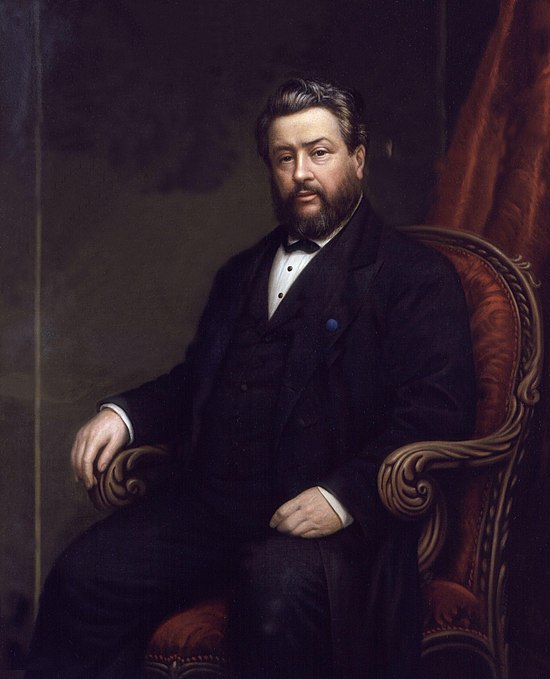
Charles Haddon Spurgeon (19 June 1834 — 31 January 1892) was an English Particular Baptist preacher. His nickname is the "Prince of Preachers."
Broadcaster:

Comments

0 / 2000 characters
Comments are moderated before appearing.

Be the first to comment!

4
Joshua

Joshua

Shall we play a game? Ask me about articles, sermons, or theology from our library. I can also help you navigate the site.