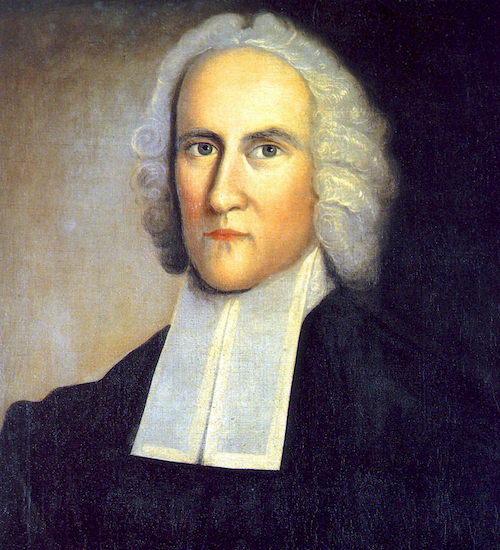
The sermon "Sinners in the Hands of an Angry God," delivered by Jonathan Edwards, centers on the severity of God's judgment against unbelievers and the dire consequences of sin. Edwards emphasizes that it is only the sovereign will of God that currently restrains the wicked from facing immediate condemnation, drawing attention to Scripture passages such as Deuteronomy 32:35 and Amos 9:2-3. He illustrates that the precarious state of the unconverted is likened to standing over a slippery pit, where the inevitable consequence of their sin is rapid and sudden destruction in hell. The sermon not only warns of the gravity of divine wrath but also underscores the urgency of repentance and faith in Christ as the means of escaping eternal damnation. Ultimately, Edwards aims to ignite a sense of urgency among his audience regarding their spiritual state and the need for conversion.
Key Quotes
“There is nothing that presently keeps wicked men and wicked women out of hell but the sovereign will of God.”
“The bow of God's wrath is bent, and the arrow is made ready on the string; and justice points the arrow at your heart.”
“You hang by a slender thread, with the flames of divine wrath burning all around it and ready every moment to singe it and burn it through.”
“Consider whose wrath it is. It is the wrath of an infinite God.”
The Bible describes God's wrath as a fierce response to sin and rebellion against Him, emphasizing that He is justified in pouring out judgment on the wicked.
God's wrath is a central theme in Scripture, particularly seen in passages such as Deuteronomy 32:35, where it states that vengeance belongs to God. This emphasizes that God is not only capable of avenging wrongs but must do so because of His holy nature. In the sermon, Jonathan Edwards vividly articulates that sin provokes God's anger, making the sinner deserving of eternal punishment. Romans 1:18 also echoes this by asserting that the wrath of God is revealed from heaven against all ungodliness and unrighteousness of men. Unbelievers, therefore, are continually under this wrath, held back only by the sovereign will of God, which is a point Edwards highlights throughout his sermon. This wrath is not arbitrary; it stems from God's perfect justice and holiness, demonstrating that unrepentant sin cannot be ignored or unpunished.
Deuteronomy 32:35, Romans 1:18
The existence of eternal punishment is affirmed throughout Scripture and is rooted in God's justice, which cannot overlook sin.
Eternal punishment is a doctrine supported by numerous Scripture passages that depict hell as a real and terrible place prepared for those who reject God. Edwards emphasizes that the unconverted are presently under a sentence of eternal torment in hell, stemming from the certainty of God's justice. For instance, John 3:18 states that whoever does not believe in the Son is already condemned. This demonstrates that the consequence of sin is not merely temporal but leads to an everlasting separation from God. Thus, the reality of hell is perceived not as an arbitrary punishment but as a necessary response from a holy God who cannot overlook sin. Furthermore, Revelation 20:15 warns that anyone whose name is not found in the book of life will be thrown into the lake of fire, solidifying the truth of eternal judgment for unbelievers. Through these passages, believers can affirm the seriousness and reality of eternal punishment as intrinsic to God's righteous character.
John 3:18, Revelation 20:15
God's sovereignty assures Christians that He is in control and that nothing happens outside His divine plan.
The sovereignty of God is foundational to Reformed theology and is vital for understanding the nature of salvation and existence itself. Jonathan Edwards expounds the notion that nothing keeps the wicked from hell except God's sovereign will, indicating that it is His sovereign decision to restrain His judgment for a time. Romans 8:28 assures that all things work together for good to those who love God, affirming that God's sovereignty affects every aspect of the believer's life, including trials, tribulations, and graces. This sovereignty breeds confidence among Christians, as they know their salvation is secured not by their own efforts but by the unchangeable purpose of God, as seen in Ephesians 1:4-5, which states that He chose us in Him before the foundation of the world. By recognizing God's sovereignty, Christians can navigate life's uncertainties with assurance, knowing that all is under His divine authority.
Romans 8:28, Ephesians 1:4-5
The fate of the unconverted is eternal separation from God in hell, as they remain under divine wrath and judgment.
Scripture presents the fate of the unconverted as dire and sobering. As Edwards elaborates, unconverted individuals are already condemned, as reflected in John 3:18, where it states that those who do not believe are under the wrath of God. They are destined for eternal punishment in hell, a doctrine that aligns with Matthew 25:46, which speaks of the righteous going into eternal life, while the wicked depart into eternal punishment. This emphasizes the finality of their judgment, with no second chances offered after death. Moreover, the unconverted are depicted as being in a precarious position, continuously at risk of falling into hell, which is vividly illustrated through Edwards' metaphor of being held over a pit by a slender thread. Without the saving grace of Jesus Christ, their fate is sealed and awaits them justly, underscoring the urgent need for repentance and faith to escape such a dreadful future.
John 3:18, Matthew 25:46

Comments
Your comment has been submitted and is awaiting moderation. Once approved, it will appear on this page.
Be the first to comment!