Bootstrap
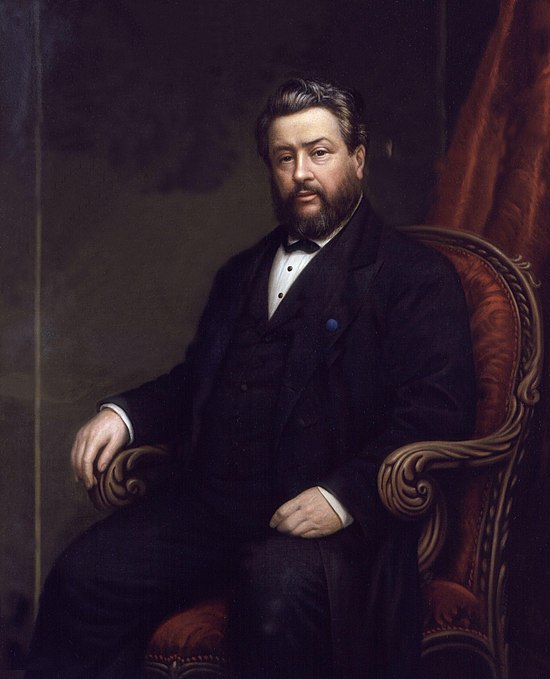
Charles Spurgeon

Even though he had a shipload of such rubbish!

1 Timothy 6; Philippians 4:11-12
Charles Spurgeon July, 16 2016 Audio
0 Comments
Choice Puritan Devotional!

C. H. Spurgeon's sermon entitled "Even though he had a shipload of such rubbish!" addresses the theological topic of true riches in Christ compared to worldly wealth. He argues that spiritual wealth, defined by one's relationship with God and maturity in Christian virtues, far surpasses material possessions. Spurgeon references Philippians 4:11-12 to illustrate the Apostle Paul’s learned contentment, regardless of material circumstances, emphasizing that genuine riches are found in spiritual growth and internal qualities rather than external wealth. The significance of this doctrine is profound, as it calls believers to re-evaluate their understanding of prosperity, urging them to seek God as their ultimate source of richness rather than the transient treasures of the world.

Key Quotes

“A child of God counts himself rich when he has God for his portion, Christ his Redeemer, and the Spirit for his guide, sanctifier and comforter.”

“If we reckon buttons as silver and brass as gold, we shall dream that we are rich when we are in poverty.”

“Such contentment surpasses riches.”

“Grant me grace to live above these perishable things, never setting my heart upon them, nor caring whether I have them or have them not.”

What does the Bible say about true riches?

The Bible teaches that true riches are spiritual and found in a relationship with God, not in material wealth.

In the Scriptures, true riches are defined by one's spiritual condition rather than material possessions. A child of God finds wealth in having God as his portion, Christ as his Redeemer, and the Holy Spirit as his guide. This spiritual wealth is infinitely superior to the transient riches valued by the world. As Paul indicates in Philippians 4:11-12, a believer can be content regardless of material circumstances, highlighting that true contentment and richness stem from a deeper, spiritual understanding.

Philippians 4:11-12

Why is contentment important for Christians?

Contentment is vital for Christians as it reflects a heart that trusts in God's provision and values spiritual wealth over material gain.

Contentment is crucial for Christians as it signifies a deep-seated trust in God's sovereignty and provision. The Apostle Paul achieved profound contentment through his relationship with Christ despite varying circumstances, saying he learned the secret to be content in any situation (Philippians 4:11-12). This inner peace is a marker of spiritual maturity, allowing believers to focus on God's grace and the riches it brings, rather than the fleeting nature of material wealth that the world often chases.

Philippians 4:11-12

How do we know spiritual wealth is true?

Spiritual wealth is true as its value is eternal and aligns with God's purpose for His people, contrasting with worldly wealth.

Spiritual wealth is affirmed through Scripture, revealing that true value lies not in earthly possessions but in our relationship with God. Believers are reminded that material treasures are transient and ultimately vanities, as proclaimed in Ecclesiastes. The worth of spiritual wealth is eternal; it shapes our character and draws us nearer to God's essence. Paul epitomizes this by expressing that despite external circumstances, his inner spiritual richness found in Christ surpasses all worldly possessions, proving the authenticity of spiritual wealth.

Ecclesiastes, Philippians 4:11-12

Sermon Transcript

Auto-generated transcript • May contain errors

100%
Even though he had a shipload of such rubbish. By Charles Spurgeon. From Flowers from a Puritan's Garden, 1883.

The more abundance of truly valuable things a man has, the more he has of true riches. A child counts himself rich when he has a great many marbles and toys and rocks, for these suit his childish age and imagination. Just so, a worldly man counts himself rich when he has a great store of gold and silver or lands and houses.

But a child of God counts himself rich when he has God for his portion, Christ his Redeemer, and the Spirit for his guide, sanctifier and comforter. This is as much above a carnal man's estate in the world as a carnal man's estate is above a child's toys and trifles. Yes, infinitely more.

It is above all things desirable that we adopt a correct scale to estimate things. When we make our personal audit, we shall fall into grievous error if the principles of our reckoning are not thoroughly accurate. If we reckon buttons as silver and brass as gold, we shall dream that we are rich when we are in poverty.

In taking stock of our own condition, let us be sure only to reckon that for riches which is really riches to us. Wealth to the worldling is not wealth to the Christian. His currency is different. His valuables are of another sort.

Am I to-day poorer in money than I was ten years ago? And at the same time, am I more humble, more patient, more earnest, more loving? Then set me down as a rich man. Have my worldly goods largely increased during the last few years, and at the same time, am I also more proud, more carnal-minded, more lukewarm, more petulant? Then I must write myself down as a poorer man, whatever others may think of my estate.

A Christian's riches are within him. External belongings are by no means a sure gain to a man. A horse is none the better off for all its gilded trappings. Just so a man is in truth none the richer for his sumptuous surroundings.

Paul was richer than King Croesus when he was able to say

I have learned to be content whatever the circumstances I know what it is to be in need and I know what it is to have plenty I have learned the secret of being content in any and every situation whether well-fed or hungry whether living in plenty or in want Philippians chapter 4 verse 11 and 12

Such contentment surpasses riches.

Solomon, after summing up all his possessions and delights, was compelled to add, Vanity of vanities. All is vanity.

If a man should labour to be rich after the fashion of the poor African natives, and should accumulate a large store of shells and beads, yet when he came home to England he would be a beggar even though he had a ship-load of such rubbish. Just so, he who gives his heart and soul to the accumulation of gold coins is a beggar when he comes into the spiritual realm, where such coins are reckoned as mere forms of earth, non-current in heaven, and of less value than the least of spiritual blessings.

O my Lord, let me not merely talk thus, and pretend to despise earthly treasure, when all the while I am hunting after it. Grant me grace to live above these perishable things. never setting my heart upon them, nor caring whether I have them or have them not. But give me grace to exercise all my energy in pleasing you, and in gaining those things which you hold in esteem.

Give me, I beseech you, the riches of your grace, that I may at last attain to the riches of your glory. you
Charles Spurgeon
About Charles Spurgeon
Charles Haddon Spurgeon (19 June 1834 — 31 January 1892) was an English Particular Baptist preacher. His nickname is the "Prince of Preachers."
Broadcaster:

Comments

0 / 2000 characters
Comments are moderated before appearing.

Be the first to comment!

Joshua

Joshua

Shall we play a game? Ask me about articles, sermons, or theology from our library. I can also help you navigate the site.