Bootstrap
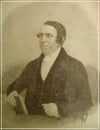
James Smith

And WHY, dear Savior - Tell me why?

John 3:16; Titus 2:14
James Smith • October, 5 2011 • Audio
0 Comments
James Smith
James Smith • October, 5 2011
Choice Puritan Devotional

James Smith's sermon, "And WHY, dear Savior - Tell me why?" delves into the theological significance of Christ's atoning sacrifice, emphasizing the profound contrast between the glorious nature of Christ and the depravity of humanity. Smith argues that the only begotten Son of God voluntarily gave Himself for the redemption of utterly sinful creatures, highlighting the grace and love that drove His sacrifice. He draws on John 3:16 and Titus 2:14 to illustrate how Christ’s self-giving serves as a substitute, fulfilling divine justice and securing salvation from the guilt, power, and consequences of sin. The sermon underscores the practical significance of this doctrine, as it calls believers to live as a "peculiar people," set apart for good works in response to Christ's redemptive love.

Key Quotes

“The most exalted, glorious, and holy being in the universe gave himself for the most vile, polluted, and degraded of his creatures. Oh, how astonishing!”

“He gave His entire self, doing and suffering all that was necessary to secure our release from sin's curse and our everlasting salvation.”

“He gave Himself that He might justly redeem, ransom, or deliver us from the guilt, power, and penal consequences of sin.”

“Oh, wondrous love!”

What does the Bible say about Jesus giving Himself for us?

The Bible teaches that Jesus gave Himself to redeem us from all iniquity and to purify a people for Himself (Titus 2:14).

According to Scripture, Jesus Christ, as the only begotten Son of God, sacrificially gave Himself for us to redeem us from the guilt and power of sin. Titus 2:14 emphasizes His mission to purify for Himself a 'peculiar people' who are zealous for good works. This act of self-giving is grounded in His unparalleled love for humanity, especially given our depraved state. Through His sacrifice, He not only fulfills the law but also makes a full atonement for our sins, ensuring our salvation and establishing us as His chosen people.

Titus 2:14

How do we know that Christ's sacrifice is sufficient for our sins?

Christ's sacrifice is sufficient because He took on the burden of our sins and fully atoned for them through His own body (1 Peter 2:24).

The sufficiency of Christ's sacrifice is rooted in His role as our substitute. He bore the weight of our sins in His own body to satisfy divine justice and secure our redemption. As stated in 1 Peter 2:24, He carried our sins on the tree, thereby enabling us to die to sin and live for righteousness. This implies that nothing else is needed for atonement; His sacrifice was complete and accepted by God, allowing us to be cleansed from all unrighteousness. His voluntary offering affirms that His death was intended to pay the full penalty for all His people's sins, highlighting the doctrine of limited atonement within Reformed theology.

1 Peter 2:24

Why is Jesus's love important for Christians?

Jesus's love is foundational to the Christian faith as it exemplifies grace and compels believers to live in obedience (1 John 4:19).

The love of Jesus is crucial for Christians because it demonstrates the depth of God's grace and mercy towards us. As expressed in 1 John 4:19, we love because He first loved us. His self-giving love, even unto death, serves as the model for how we are to love others and respond to God's call in our lives. This love ensures our assurance of salvation and motivates our service to Him, creating a community that reflects His character and devotion. Moreover, understanding and experiencing this love fosters a transformative relationship with Christ, allowing believers to grow in holiness and zealousness for good works as His redeemed people.

1 John 4:19

Sermon Transcript

Auto-generated transcript • May contain errors

100%
And why, dear Saviour, tell me why? James Smith, Redeeming Love, 1861.

He gave himself for us, that he might redeem us from all iniquity, and purify unto himself a peculiar people, zealous for good works. Titus 2, 14.

He gave himself for us, Note the contrast between the giver and those for whom he gave himself. The giver is he who was the only begotten Son of God, the author of creation, the sustainer of the universe, the brightness of divine glory, the source and end of all things, He who was proclaimed by the prophet as the mighty God, the everlasting Father, and the Prince of Peace. He who is declared by the Apostle to be God over all, blessed forevermore.

He gave himself for us. For us, who at the best are mere creatures, between whom and our Creator there can be no comparison, but it was not for us as mere creatures, but for us as base, vile, insignificant, and totally depraved creatures. We had debased ourselves, even unto hell. Our nature could not be worse, for the human heart is the most deceitful of all things, and desperately wicked.

The most exalted, glorious, and holy being in the universe gave himself for the most vile, polluted, and degraded of his creatures. Oh, how astonishing! But He volunteered on our behalf, without any solicitation, offering to become our substitute, to fulfill the law in our stead, our sacrifice, to make a full atonement for our sins, and our ransomer, to pay the satisfactory price for our redemption.

He engaged to bear the desert of all our sins in His own body, to suffer all that the inflexible justice of God could inflict on our surety, and so put away our sins for ever by the sacrifice of Himself, He gave His person for our persons, His blood as a ransom price, and His life for our lives. He gave His entire self, doing and suffering all that was necessary to secure our release from sin's curse and our everlasting salvation.

O amazing grace of a gracious Saviour! He gave Himself that He might justly redeem, ransom, or deliver us from the guilt, power, and penal consequences of sin. He gave Himself to expiate the guilt, to destroy the power, and secure us against the eternal desert of our transgressions. He gave Himself to purify unto Himself by fully expiating their sins.

A peculiar people a people purchased to be peculiarly his own, a people sanctified, separated from all others, to be set apart for himself, a people to be his own subjects, as the king of Zion, a people to be his own soldiers, as the captain of our salvation, a people to be his own servants, as the lord of the house, a people to be His own children, as the everlasting Father.

He gave Himself. The love of Jesus is unparalleled. Out of pure love to us who had no love to Him, nor ever would have had, but for His first loving us, He gave not only His time, His labor, His wealth, but Himself. He gave His entire person as the God-man, the incarnate Jehovah.

He gave Himself. This was more than as if He had given a thousand worlds, for these He could create with a word. He gave Himself, and not merely to live for us, or lay before us, but even to die for us. He gave himself, and not even to die some easy and honourable death, but the most painful, shameful death that man ever invented, or creature ever suffered.

Oh, wondrous love!
Broadcaster:

Comments

0 / 2000 characters
Comments are moderated before appearing.

Be the first to comment!

51
Joshua

Joshua

Shall we play a game? Ask me about articles, sermons, or theology from our library. I can also help you navigate the site.

0:00 0:00