Bootstrap
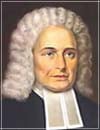
Samuel Davies

George is dead!

2 Samuel 1:19; Hebrews 9:27
Samuel Davies September, 2 2010 Audio
0 Comments
Samuel Davies
Samuel Davies September, 2 2010
Choice Puritan Devotional

In Samuel Davies' sermon "George is Dead," the main theological topic addressed is the inevitability of death, particularly as it impacts even those in positions of power, such as King George II. Davies argues that death is the ultimate equalizer, highlighting how riches, power, and virtue cannot secure one against mortality. He supports his arguments using Scripture references from 2 Samuel 1:19, which emphasizes the tragedy of the fallen, and Hebrews 9:27, which speaks to the appointed nature of death for all humanity. The practical significance of this sermon lies in its call for individuals to recognize their mortality and to prepare for eternity, challenging the audience to move beyond earthly attachments and acknowledge the spiritual realities of life and death.

Key Quotes

“How the mighty have fallen, fallen under the superior power of death, fallen under death, the king of terrors.”

“A throne is only a higher precipice from whence to fall with greater noise and more extensive ruin into the grave.”

“How vain are all things beneath the sun! Vanity of vanities, all is vanity!”

“The alarm of mortality has sounded from the throne, and he who lived for their benefit dies for their benefit too.”

Sermon Transcript

Auto-generated transcript • May contain errors

100%
George is dead by Samuel Davies from his sermon on the death of King George II. How the mighty have fallen. 2 Samuel 1.19.

George is dead. George, the mighty, the just, the gentle, and the wise. King George, the father of Britain and her colonies, the guardian of laws and liberty, the protector of the oppressed, the arbiter of Europe, the terror of tyrants. George, the friend of man, the benefactor of millions, is no more.

How the mighty have fallen, fallen under the superior power of death, fallen under death, the king of terrors, the conqueror of conquerors, whom riches cannot bribe, whom power cannot resist, whom goodness cannot soften, whose dignity and nobility Cannot deter, or o'er to a reverential distance.

Death intrudes into royal palaces, As well as into humble cottages. Death arrests the monarch, as well as the slave. The royal robes of majesty, and the filthy rags of beggary, Are equal preludes to the shroud. A throne is only a higher precipice from whence to fall with greater noise and more extensive ruin into the grave.

Since death has climbed the British throne, and from then snatched George the Mighty, who then can hope to escape? If temperance, that best preservative of health and life, if extensive benefit to half of the world, if the united prayers of nations, if the collected virtues of the king, could secure an earthly immortality, never, O lamented George, never should your fall have added fresh honours to the trophies of death.

But since this King of Britain is no more, then let all the nobles of earthly courts be prepared for their long homes in the dust. Let those earthly idols prepare to die like men, and to sink down to a level with beggars and worms in the clay. The alarm of mortality has sounded from the throne, and he who lived for their benefit dies for their benefit too, dies to remind them that they also must die.

But how astonishing and lamentable is the stupidity of mankind! Can the natural or the moral world exhibit another phenomenon so shocking and unaccountable? Death sweeps off thousands of our fellow mortals every year. Our neighbours, like leaves in autumn, drop into the grave in a thick succession. And our attendance upon funerals is almost as frequent as our visits of friendship.

Nay, sometimes death enters in at our windows, and ravages our families before our eyes. The air, the waters, the earth, and all the elements, are armed with the powers of death, and have their pestilential vapours and inclemencies their tempests and inundations, their eruptions and volcanoes, to destroy the life of man. A thousand dangers lie in ambush for us. Nay, the principles of mortality lurk in our own bodies. And sickness, the herald of the last enemy, often warns us to prepare.

Yet how few realize the thought that they must die! How few familiarize to their minds that all-important hour pregnant with consequences of great, of incomparable, of infinite importance! How many forget that they must die until they feel it, and stand fearless and insolent upon the slippery brink of eternity, until they unexpectedly fall and are engulfed forever in that boundless ocean.

The sons of Adam the sinner, those fleeting phantoms of a day, put on the air of immortality upon earth, and make no provision for their existence in the proper regions of immortals beyond the grave. Pilgrims and strangers imagine themselves everlasting residents on earth, and make this transistory life their all, as if earth was to be their eternal home, as if eternity was but a fairyland, and heaven and hell but majestic fantasies.

How the mighty have fallen! Shall not this loud alarm awaken us out of our vain dream Of an earthly immortality? When the mighty has fallen, shall not the feeble tremble? Since the mighty has fallen, since George is no more, How vain are all things beneath the sun! Vanity of vanities, all is vanity!

Can the riches of Britain, or the honours of a crown, can the extent of dominion, or the laurels of victory, now afford the least pleasure to the royal corpse, which lies senseless in the dust, or to the royal soul, which has winged its flight to its own region, to the eternal world? No, all these are now as insignificant as mere nothings to him.

How the mighty have fallen! 2 Samuel 1.19
Broadcaster:

Comments

0 / 2000 characters
Comments are moderated before appearing.

Be the first to comment!

Joshua

Joshua

Shall we play a game? Ask me about articles, sermons, or theology from our library. I can also help you navigate the site.