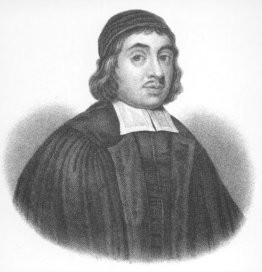
The sermon titled "The Silver Vein of Sanctity" by Thomas Brooks addresses the essential Reformed doctrine of holiness as it permeates daily life. Brooks argues that true holiness is not limited to spiritual activities but manifests in all aspects of a believer's life, including mundane tasks like eating, drinking, and working. He supports his claims through Scripture references such as Zechariah 14:20-21, emphasizing that everything associated with a holy person should reflect the glory of God, including ordinary actions. The practical significance of the sermon emphasizes the transformative nature of true sanctity, encouraging believers to lead lives that consistently reflect their identity as children of God in all circumstances.
“If you look upon him in his eating and drinking, you shall find him holy.”
“Holiness is written upon his dealings with others, and upon his behavior towards his family and friends.”
“A spirit of holiness runs and shines in all the common actions of his life.”
“So, whether you eat or drink or whatever you do, do it all for the glory of God.”
The Bible emphasizes that holiness should characterize every aspect of a believer's life, even in mundane activities.
Zechariah 14:20-21, 1 Corinthians 10:31
True holiness manifests in both spiritual practices and everyday actions, showing a consistent God-centered life.
Zechariah 14:20-21, 1 Corinthians 10:31
Understanding holiness is crucial as it shapes a believer’s conduct and witness in the world.
Zechariah 14:20-21, 1 Corinthians 10:31
Auto-generated transcript • May contain errors
Pristine Grace functions as a digital library of preaching and teaching from many different men and ministries. I maintain a broad collection for research, study, and listening, and the presence of any preacher or message here should not be taken as a blanket endorsement of every doctrinal position expressed.
I publish my own convictions openly and without hesitation throughout this site and in my own preaching and writing. This archive is not a denominational clearinghouse. My aim in maintaining it is to preserve historic and contemporary preaching, encourage careful study, and above all direct readers and listeners to the person and work of Christ.
Brandan Kraft
Everything that exists is a thought in the mind of God.
Try again.
I spent the majority of my adult life building something I didn't know had a name. It started with the Scriptures and a lot of late nights. It ended with one sentence that generates every theological position I hold, from the nature of God to the nature of heaven and hell, without contradiction. One sentence. Thirty chapters. Sixteen appendices. And if you accept the sentence, everything else follows.
Most systematic theologies start with a list of doctrines and work through them one by one. This book starts with an ontological claim - that everything that exists is a thought in the mind of God - and derives everything from that single proposition. This is not a rearrangement of existing theology. This is a paradigm shift. Since Augustine imported Plato's metaphysics into the church in the fourth century, every major system of Christian theology has been built on a foundation the Scriptures never laid. This book identifies that foundation, names it, traces its influence across sixteen centuries, and replaces it with an ontology derived from Scripture alone. If the claim holds, this is the most significant shift in the theological starting point since Augustine. And I believe it holds.
This is not a devotional. This is not a commentary. This is a systematic theology built from the ground up by a computer programmer with no seminary degree, no denominational backing, and no one's permission. It uses the vocabulary of information theory, computer science, and quantum physics to describe realities that traditional theological language has never been able to reach. If you are a scientist who suspects that information is fundamental to reality but can't bring yourself to call it God, this book speaks your language. If you are a sovereign grace believer looking for a system that follows the logic all the way, this book does that. And if you have been told that the sharpest doctrine produces the coldest heart, this book ends with the widest arms you have ever seen in a Reformed theology.
The digital edition is free. The truth doesn't come with a price tag. - Brandan Kraft
Imports both:
Fuses them with Scripture.
Aquinas · Calvin · Luther · Westminster
Gill · Clark · Berkhof · Grudem · Hoeksema
Every system in the comparison above stands on this foundation.
Stands on a different foundation: Scripture, on its own terms (John 1:1; Heb. 11:3; Col. 1:17; Isa. 45:7).
The architecture is idealism, because Scripture teaches it — mind precedes matter, the invisible is more real than the visible.
Rejects what Augustine inherited:

“Everything that exists is a thought in the mind of God, sustained by His will, authored by His purpose, and held together by personal covenants of love.”Read Now
Choose from multiple reading plans, track your daily progress, and receive reminders to stay on track — all with a free account.
Select a plan to begin your Bible reading journey. Your progress will be tracked automatically.
You've completed your reading plan!
Isaiah 53:10, Rom 8:28-30, Psalm 23, grace, love one another
Comments
Your comment has been submitted and is awaiting moderation. Once approved, it will appear on this page.
Be the first to comment!