Bootstrap
John Flavel

The Christian View of Death

1 Corinthians 15
John Flavel October, 25 2007 Audio
0 Comments
A most precious and comforting sermon on death. Uplifting and full of hope!

In the sermon "The Christian View of Death," John Flavel addresses the theological concept of the believer's relationship with death, arguing that death is ultimately harmless for God's people. He emphasizes that through Christ, death has lost its sting, transforming from a terror into a doorway to eternal joy with God. Flavel supports his arguments with Scripture, notably citing 1 Corinthians 15, where Paul speaks of death's defeat through the resurrection of Christ. He articulates that death is not to be feared but should be welcomed as it is necessary for complete communion with God and a release from the afflictions of earthly life. The sermon underscores the Reformed belief in the assurance of salvation, which empowers believers to face death without dread, reinforcing their hope in the resurrection and eternal life.

Key Quotes

“Why, then, are you afraid that your sickness may bring you to death? if you were to die in your sins… then you might reasonably startle and shrink back from it with horror and dismay.”

“Who would not be willing to die for the perfect enjoyment of God?”

“The happiness of heaven commences immediately after death… your soul will be swallowed up in life.”

“If He has nothing further for you to do here, why not say with David, Here am I, let God do what seems good to Him.”

Sermon Transcript

Auto-generated transcript • May contain errors

100%
THE CHRISTIAN VIEW OF DEATH
by John Flavel

I shall offer several considerations, calculated to help the people of God in time of sickness, to keep their hearts loose from all earthly objects, and cheerfully willing to die.

First, death is harmless to the people of God. Its shafts leave no sting in them. Why, then, are you afraid that your sickness may bring you to death? if you were to die in your sins, if death were to reign over you as a tyrant, to feed upon you as a lion does upon his prey, if death to you were to be the precursor of hell, then you might reasonably startle and shrink back from it with horror and dismay.

But if your sins are blotted out, if Christ has vanquished death in your behalf so that you have nothing to encounter but bodily pain, and possibly not even that, if death will be to you the forerunner of heaven, why should you be afraid? Why not bid it welcome? It cannot hurt you. It is easy and harmless. It is like taking off your clothes, of taking rest.

It may keep your heart from shrinking back to consider that death is necessary to fit you for the full enjoyment of God. Whether you are willing to die or not, there certainly is no other way to complete the happiness of your soul. Death must do you the kind office to remove this veil of flesh, this animal life which separates you from God. before you can see and enjoy Him fully.

While we are at home in the body, we are absent from the Lord. And who would not be willing to die for the perfect enjoyment of God? I think one would look and sigh, like a prisoner through the greats of this mortality. Oh, that I had wings like a dove! Then would I fly away and be at rest.

Indeed, most men need patience to die. But a saint who understands what death will introduce him to, rather needs patience to live. On his death-bed he should often look about and listen for his Lord's coming, and when he perceives his dissolution to be near, he should say, the voice of my beloved, behold, he comes, leaping over the mountains, skipping over the hills.

Consider that the happiness of heaven commences immediately after death. That happiness will not be deferred until a resurrection, but as soon as death has passed upon you, your soul will be swallowed up in life. When you have once loosed from this shore, you shall quickly be taken to the shore of a glorious eternity. And can you not say, I desire to die and to be with Christ?

did the soul and body die together, or did they sleep until the resurrection as some have fancied, it would have been folly for Paul to desire to die for the enjoyment of Christ, because he would have enjoyed more in the body than he could have enjoyed out of it. This scripture speaks of but two ways in which the soul can properly live, that is, by faith and vision. These, too, comprehend its present and future existence. Now, if when faith fails, sight should not immediately succeed, what would become of the soul?

But the truth on this subject is clearly revealed in Scripture. What a blessed change, then, will death make in your condition? Rouse up, dying saint, and rejoice! Let death do his work that the angels may conduct your soul to the world of light.

Fourthly, it may increase your willingness to die to reflect that by death God often removes his people out of the way of great troubles and temptations. When some extraordinary calamity is coming upon the world, God sometimes removes his saints out of the way of that evil. Thus Methuselah died the year before the flood, Augustine a little before the sacking of Hippo, Parius just before the taking of Heidelberg, Luther observes that all the apostles died before the destruction of Jerusalem, and Luther himself died before the wars broke out in Germany. How it may be that by death you will escape some grievous trial which you could not and need not endure!

But, even if no extraordinary trouble would come upon you, yet God desires by death to relieve you from innumerable evils and burdens which are inseparable from the present state. Thus you will be delivered from indwelling sin, which is the greatest trouble, from all temptations from whatever source, from bodily illnesses and failings, and from all the afflictions and sorrows of this life. If the days of your mourning will be ended, and God will wipe away all tears from your eyes, why then should you not hasten to depart?

Fifthly, if you still linger, like Lot and Sodom, what are your pleas and pretenses for a longer life? Why are you unwilling to die? Are you concerned for the welfare of your relations? If so, are you anxious for their temporal support? Then let the word of God satisfy you. Leave your fatherless children to me. I will keep them alive, and let your widows trust in me. Luther says in his last will, Lord, you have given me a wife and children. I have nothing to leave them, but I commit them unto you. O father of the fatherless, and judge of widows, nourish, keep, and teach them.

But are you concerned for the spiritual welfare of your relations? Remember that you cannot convert them if you should live, and God can make your prayers and counsels effectual when you are dead. Perhaps you desire to serve God longer in this world. But if He has nothing further for you to do here, why not say with David, Here am I, let God do what seems good to Him. He is calling you to higher service in Heaven, and can accomplish by other hands what you desire to do further here.

Do you feel too imperfect to go to Heaven? Consider that you must be imperfect until you die. Your sanctification cannot be complete until you get to Heaven. But, you say, I lack assurance. If I had that, I could die easily. Consider, then, that a hearty willingness to leave all the world to be freed from sin and to be with God is the direct way to that desired assurance. No carnal person was ever willing to die upon this ground.
John Flavel
About John Flavel
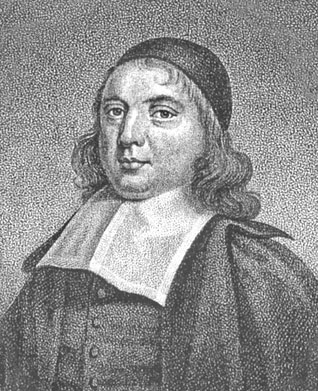
John Flavel (1627 - 1691) was an English Presbyterian clergyman, puritan, and author.
Broadcaster:

Comments

0 / 2000 characters
Comments are moderated before appearing.

Be the first to comment!

Joshua

Joshua

Shall we play a game? Ask me about articles, sermons, or theology from our library. I can also help you navigate the site.