Bootstrap
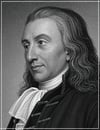
Thomas Boston

The Crook in the Lot, part 2

Psalm
Thomas Boston January, 3 2007 Audio
0 Comments
A wonderful series on the Christian's afflictions and trials. Very comforting and uplifting! Be sure to listen to the other three parts of this series.

In Thomas Boston’s sermon "The Crook in the Lot, part 2," he addresses the theological topic of divine sovereignty in suffering and the necessity of testing human faith through affliction. Boston argues that the "crook" or hardship in a person’s life is fundamentally ordained by God for good, as seen in Scripture such as Psalm 113:7–9 and Job 5:7, which highlight God's power to lift the downtrodden and that suffering is part of the human condition. He emphasizes the importance of recognizing God's hand in affliction, asserting that submission to this divine order is essential for a genuine Christian life, as demonstrated in texts like Jeremiah 10:19 and Psalm 84:11. The doctrinal significance of this sermon lies in the Reformed belief in God’s absolute sovereignty and purpose in suffering, ultimately shaping believers to rely on God for strength and transformation in their spiritual walk, thereby refining their character and faith.

Key Quotes

“He himself can make straight what he hath made crooked, though none other can. There is nothing too hard for him to do.”

“A crook in the lot, which one can by no means submit to, makes a condition of all things like that in hell.”

“Great is the loss by not submitting to it. The crook in the lot, rightly improved, has turned to the best account and made the best time to some that ever they had all their life long.”

“The only effectual way of getting the crook evened is to apply to God for it.”

Sermon Transcript

Auto-generated transcript • May contain errors

100%
He himself can make straight what he hath made crooked, though none other can. There is nothing too hard for him to do. He raiseth up the poor out of the dust, and lifteth the needy out of the dunghill, that he may set him with princes. He maketh the barren woman to keep house, and to be a joyful mother of children. Psalm 113, 7-9 Say not that your crook has been so long continued that it will never mend. Put it in the hand of God who made it, that he may mend it, and wait on him. And if it be for your good that it should be mended, it shall be mended. For no good thing will he withhold from them that walk uprightly. Psalm 84 11. 3. For exhortation. Since the crook in the lot is of God's making, then aying, considering the hand of God in yours, be reconciled to it, and submit under it whatever it is. I say eyeing, considering, the hand of God in it, for otherwise your submission under the crook in your lot cannot be a Christian submission acceptable to God, having no reference to him as your party in matter. Objection! But some will say, the crook in my lot is from the hand of the creature, and such a one, too, as I deserved no such treatment from. Answer. From what hath been already said, it appears that, although the crook in thy lot be indeed immediately from the creature's hand, yet it is immediately from the hand of God. There being nothing of that kind, no penal evil, but the Lord hath done it. Therefore without all for adventure, God himself is the principal party, whoever be the less principal. And albeit thou hast not deserved thy crook at the hand of the instrument which he makes use of for thy correction, thou certainly deservest it at his hand, and he may make use of it immediately by himself, even as seems good in his sight. But the crook in my lot might quickly be evened if the instrument or instruments thereof pleased, only there is no dealing with them so as to convince them of their fault in making it. Answer. If it is so, be sure God's time is not as yet come, that the crook should be made even. For if it were come, though they stand now like an impregnable fort, they would give way like a sandy bank under one's feet. They should bow down to thee with their faith toward the earth and lick up the dust of thy feet. Isaiah 49, 23. Meanwhile, that state of the matter is so far from justifying one's not eyeing the hand of God in the crook in the lot, that it makes a peace of trial, in which his hand very eminently appears, namely, that men should be signally injurious and burdensome to others, yet by no means susceptible of conviction. This was the trial of the church from her adversaries. All that found them had devoured them, and their adversaries said, We offend not, because they have sinned against the Lord, the habitation of justice, Jeremiah 57. They were very abusive and gave her barbarous usage. Yet would they own no fault in the matter? How could they ward off the conviction? Were they verily blameless in their devouring the Lord's straying sheep? No, surely they were not. Did they look upon themselves as ministers of the divine justice against her? No, they did not. Some indeed would make a question here. How could the adversaries of the church celebrate her God as the habitation of justice? But the original pointing of the text being retained, it appears that there is no ground at all for this question here, and with all the whole matter is set in a clear light. All that found them have devoured them, and their adversaries said, We offend not, because they have sinned against the Lord, the habitation of justice. These last are not the words of the adversaries, but the words of the prophet, showing how it came to pass that the adversaries devoured the Lord's sheep as they lighted on them, and withal stood to the defense of it when they had done far from acknowledging any wrong. The matter lay here, the sheep had sinned against the Lord, the habitation of justice. and as a just punishment hereof from his hand they could have no justice at the hand of their adversaries. Wherefore laying aside these frivolous pretenses, and eyeing the hand of God as that which hath bowed your lot, in that part and keeps it in the bow be reconciled to and submit under the crook whatever it is saying from the heart truly this is a grief and I must bear it Jeremiah 10 19 and to move you here unto consider One, it is a duty you owe to God as your sovereign Lord and benefactor. His sovereignty challenges our submission, and it can in no case be meanness of spirit to submit to the crook which his hand hath made in our lot, and to go quietly under the yoke that he hath laid on. But it is really madness for the potsherds of the earth by their turbulent and refractory carriage under it, to strive with their Maker. And His beneficence to us, ill-deserving creatures, may well stop our mouth from complaining of His making a crook in our lot, who would have done us no wrong, had He made the whole of it crooked.

Shall we receive good at the hand of God, and shall we not receive evil? Job 2, 10. 2. It is an unalterable statute for the time of this life that nobody shall want a crook in their lot, for man is born unto trouble as the sparks fly upward. Job 5, 7. And those who are designed for heaven are in a special manner assured of a crook in theirs, that in the world they shall have tribulation. for by means thereof the Lord makes them meet for heaven.

And how can you imagine that you shall be exempted from the common lot of mankind? Shall the rock be removed out of his place for thee? And since God makes the crooks in man's lot according to the different exigences of their cases, you may be sure that yours is necessary for you. 3. A crook in the lot, which one can by no means submit to, makes a condition of all things like that in hell. For there, a yoke which the wretched sufferers can neither bear nor shake off, is wreathed about their necks. There the almighty arm draws against them, and they against it. There they are ever suffering and ever sinning, still in the furnace, but their droth not consumed, nor they purified. Even such is the case of those who now cannot submit to the crook in their lot. 4. Great is the loss by not submitting to it. The crook in the lot, rightly improved, has turned to the best account and made the best time to some that ever they had all their life long. As the psalmist from his own experience testifies,

Before I was afflicted, I went astray, but now have I kept thy word. Psalm 119.67 There are many now in heaven who are blessing God for the crook they had in their lot here. What a sad thing must it be then to lose this teeth wind for Emmanuel's land. But if the crook in thy lot do thee no good, be sure it will not miss of doing thee great damage. It will greatly increase your guilt and aggravate your condemnation. While it shall forever cut thee to the heart, To think of the pains taken by means of the crook in the lot, To wean thee from the world, and bring you to God, but all in vain. Take heed therefore how you manage it, lest thou mourn at the last, And say, How have I hated instruction, and my heart despised reproof.

Proverbs 5, 11 and 12. 2. What God sees meet to mar, we shall not be able to mend in our lot. What crook God makes in our lot, we shall not be able to even run. we shall show God's marring and making a crook in one's lot as he sees meat. Two, we shall consider men's attempting to mend or even that crook in their lot. Three, in what sense it is to be understood that we shall not be able to mend or even the crook in our lot. Four, render some reasons of the point. One,

As to the first heading, namely to show God's marring and making a crook in one's lot as he sees meet, God keeps the choice of everyone's crook to himself and therein he exerts his sovereignty. Matthew 20, 15. It is not left to our option what that crook shall be or what our peculiar burden But as the potter makes of the same clay one vessel for one use, another for another use, so God makes one crook for one, another for another, according to his own will and pleasure. Whatsoever the Lord pleased, that did he in heaven and in earth. Psalm 135, 6. He sees and observes the bias of everyone's will and inclination, how it lies, and wherein it especially bends away from himself, and consequently wherein it needs the special thou. So he did in that man's case, one thing thou lackest, go thy way, sell whatever thou hast, and give to the poor. Mark 10.21. Observes the bent of his heart to his great possessions, he takes notice what is that idol that in everyone's case is most apt to be his rival, that so he may suit the trial to the case, making the crook there. By the conduct of his providence or touch of his hand, he gives that part of one's lot a bow the contrary way. so that henceforth it lies quite contrary to the bias of the party's will. Ezekiel 24 25 And here the trial is made, the vent of the will lying one way, and that part of one's lot another, that it does not answer the inclination of the party, but thwarts it. He wills that crook in the lot to remain while he sees meat for a longer or shorter time, just according to the holy ends he designs it for. 2 Samuel 12 10 Hosea 5 15 By that will is so fixed that the whole creation cannot alter it or put it out of the bow.

We shall consider men's attempting to mend or even that crook in their lot. This, in a word, lies in their making efforts to bring their lot in that point to their own will that they may both go one way. So it imports three things. A certain uneasiness under the crook in the lot. It is a yoke which is hard for the party to bear, till his spirit be tamed and subdued. Jeremiah 31 18 Thou hast chastised me, and I was chastised, as a bullock unaccustomed to the yoke. Turn thou me, and I shall be turned, etc. And it is for the breaking down of the weight of one's spirit that God lays it on. for which cause it is declared to be a good thing to bear it. Lamentations 3.27. That being the way to make one at length as a weaned child. A strong desire to have the cross removed or to have matters in that part going according to our inclinations. This is very natural, nature desiring to be freed from everything that is burdensome or cross to it. And if that desire be kept to a due subordination to the will of God, and it be not too preemptory, it is not sinful. Matthew 26, 13, 9. If it be possible, let this cup pass from me, nevertheless not as I will, etc. Hence, so many accepted prayers of the people of God for the removal of the crook in their lot. an earnest use of means for that end. This naturally follows on that desire, the man being pressed with the cross which is in his crook, labors all he can in the use of means to be rid of it. And if the means used be lawful, and not relied upon, but followed with an eye to God in them, the attempt is not sinful, whether he succeed in the use of them or not.

In what sense it is to be understood that we shall not be able to mend or even the crook in our lot? It is not to be understood as if the case were absolutely hopeless and that there is no remedy for the crook in the lot. For there is no case so desperate, but God may write it. Is anything too hard for the Lord? Genesis 18, 14. When the crook has continued long and spurned all remedies one has used for it, one is ready to lose hope about it. But many a crook given over for hopeless that would never mend, God has made perfectly straight, as in Job's case. But we shall never be able to mend it by ourselves. If the Lord Himself take it not in hand to remove it, it will stand before us, immovable, like a mountain of brass, though perhaps it may be in itself a thing that might easily be removed.

We take it up in these three things. It will never do by the mere force of our hand, for by strength shall no man prevail. 1 Samuel 2 9 The most vigorous endeavors we can use will not even the crook, if God give it not a touch of his hand. So that all endeavors that way without an eye to God are vain and fruitless, and will be but plowing on the rock. Psalm 127, 1 and 2. 2. The use of all allowable means for it will be unsuccessful unless the Lord bless them for that end. Who is he that saith, And it cometh to pass, when the Lord commanded it not. Lamentations 3.37. As one may eat and not be satisfied, so one may use means proper for evening the crook in his lot, and yet prevail nothing. For nothing can be or do for us any more than God makes it to be or do. Ecclesiastes 9.11. The race is not to the swift, nor the battle to the strong, neither yet bred to the wise, nor yet richest to men of understanding, etc. 3. It will never do in our time, but in God's time, which seldom is as early as ours. My time is not yet come, but your time is always ready. John 7, 6. Hence, that cloak remains sometimes immovable, as if it were kept by an invisible hand, and at another time it goes away with a touch, because God's time is come for evening it.

4. We shall now assign the reasons of the point, because of the absolute dependence we have upon God, Acts 17, 28. As the light depends on the sun, or the shadow on the body, so we depend on God, and without Him can do nothing, great or small. And God will have us to find it so, to teach us our dependence. Because His will is irresistible, Isaiah 46.10, my counsel shall stand, and I will do all my pleasure. When God wills anything, and the creature the contrary, it is easy to see which will must be done. When the omnipotent arm holds, in vain does the creature draw, who hath hardened himself against him, and hath prospered. Job 9, 4. There is a necessity of yielding and submitting to the crook in our lot, for we may as well think to remove the rocks and mountains which God has settled as to make that part of our lot straight which he hath made crooked. The evening of the crook in our lot, by main force of our own, is but a cheat we put on ourselves. and will not last, but, like a stick thy main force made straight, it will quickly return to the bow again. The only effectual way of getting the crook evened is to apply to God for it.

Exhortation
Let us then apply to God for removing any crook in our lot that in the settled order of things may be removed Men cannot cease to deserve the removal of a crook, more than that of a thorn in the flesh. But since we are not able to mend what God sees meet to mar, it is evident we are to apply to Him that made it to amend it, and not take the evening of it in our own hand.

Motive.
All our attempts for its removal will, without Him, will be vain and fruitless. Psalm 127, 1. Let us be as resolute as we will to have it evened. If God say it not, we will labor in vain. Lamentations 3, 37. Howsoever fair the means we use bid for it, they will be ineffectual if he commanded not the blessing. Ecclesiastes 9.11. Such attempts will readily make it worse. Nothing is more ordinary than for a proud spirit striving with the crook to make it more crooked. Whosoever breaketh a hedge, a serpent shall bite him. Whoso removeth stones shall be hurt therewith. Ecclesiastes 10, 8 and 9.

This is evident in the case of the murmurers in the wilderness. It naturally comes to be so, because at any rate, the will of the party bends farther away from it. And, moreover, God is provoked to wreathe the yoke faster about one's neck, that he will by no means let it sit easy on him. There is no crook but what may be remedied by him and made perfectly straight. The Lord raiseth them that are bowed down. Psalm 146. 8. He can perform that concerning which there remains no hope with us, who quickeneth the dead, and calleth those things which be not as though they were. Romans 4. 17. It is His prerogative to do wonders, to begin a work where the whole creation gives it over as hopeless and carry it on to perfection. Genesis 18, 14.

He loves to be employed in evening crooks and calls us to employ him that way. Psalm 50, 15. Call upon me in the day of trouble, I will deliver thee, etc. He makes them for that very end that he may bring us to him on that errand and may manifest his power and goodness in evening of them. Hosea 5, 15. The straits of the children of men afford a large field for displaying his glorious perfections which otherwise would be wanting. Exodus 15 11

A crook thus evened is a double mercy. There are some crooks evened by a touch of the hand of common providence while people are either not exercised about them or when they fret for their removal. These are sapless mercies and short-lived. Psalm 78, 30, and 31. Hosea 13, 11. Fruits thus too hastily plucked off the tree of providence can hardly miss to set the teeth on edge and will certainly be bitter to the gracious soul. But, O the sweets of the evening of the crook, by a humble application to, and waiting on, the Lord, it has the image and superscription of divine favor upon it, which makes it bulky and valuable. Genesis 33 10 For therefore I have seen thy face, as though I had seen the face of God, etc. Chapter 21 verse 6 God has signaled his favor to his dearest children in making and mending notable crooks in their lot. His darling ones ordinarily have the greatest crooks made in their lot. Hebrews 12, 6. but then they make way for their richest experiences in the removal of them upon their application to him. This is clear from the case of Abraham, Jacob, and Joseph, which of the patriarchs had so great crooks as they, but which of them, on the other hand, had such signal tokens of the divine favor? The greatest of men, as Samson and the Baptist, have been born of women, naturally barren. So do the greatest of crooks issue in the richest of mercies to them that are exercised thereby. It is the shortest and surest way to go straight to God with the crook in the lot. If we would have our wish in that point, We must, as the eagle, first soar aloft and then come down on the prey. Mark 5, 36. Our faithless out-of-the-way attempts to even the crook are but our fool's haste. That is no speed. As in the case of Abraham's going into Hagar, God is the first mover who sets all the wheels in motion for evening the crook, which without him will remain immovable. Hosea 2, 21 and 22. Objection. But it is needless, for I see that though the crook in my lot may mend, yet it never will mend. In its own nature it is capable of being removed, but it is plain it is not to be removed. It is hopeless. Answer. That is the language of unbelieving haste, which faith and patience should correct. Psalm 116.11.12 Abraham had as much to say for the hopelessness of his crook, but yet he applies to God in faith for the mending of it. Romans 4, 19 and 20. Sarah had made such a conclusion for which she was rebuked. Genesis 18, 13 and 14. Nothing can make it needless in such a case to apply to God. Objection. But I have applied to him again and again for it, yet it is never mended. Answer. Delays are not denials of suits at the court of heaven, but trials of faith and patience of the petitioners. And whoso will persevere will certainly speed at length. Luke 18, 7 and 8. And shall not God avenge his own elect? which cry day and night unto him, though he bear long with them, I tell you that he will avenge them speedily. Sometimes indeed folks grow pettish, in the case of the crook in the lot, and let it drop out in their prayers, in a course of despondency, while yet it continues uneasy to them. But if God mind to even it in mercy, He will oblige them to take it in again. I will yet for this be inquired of by the house of Israel to do it for them. Ezekiel 36-37 If the removal come while it is dropped, there will be little comfort in it, though it were never to be removed while we live, that should not cut off our applying to God for the removal. For there are many prayers not to be answered till we come to the other world, Romans 7 24, and there all will be answered at once. Directions for rightly managing the application for removing the crook in the lot. 1. Pray for it, Ezekiel 36-37, and pray in faith, believing that, for the sake of Jesus, you shall certainly obtain at length and in this life, too, if it is good for you, but without peradventure in the life to come, Matthew 21-22. They will not be disappointed that get the song of Moses and of the Lamb, Revelation 15-3, And in some cases of that nature, extraordinary prayer with fasting is very expedient. Matthew 17, 21. 2. Humble yourselves under it as the yoke which the sovereign hand has laid on you. I will bear the indignation of the Lord, because I have sinned against him. Micah 7, 9. Justify God. Condemn yourselves. Kiss the rod and go quietly under it. This is the most feasible way to get rid of it. The end being obtained. James 4. 10. Thou wilt prepare their heart. Thou wilt cause thine ear to hear. Psalm 10. 17. 3. Wait on patiently till the hand that made it mend it. Psalm 27 14. Do not give up the matter as hopeless, because you are not so soon relieved as you would wish. But let patience have her perfect work, that ye may be perfect and entire, wanting nothing. James 1 4. Leave the timing of the deliverance to the Lord. His time will, at length to conviction, appear the best, and it will not go beyond it. Isaiah 60, 22. I, the Lord, will hasten it in His time, waiting on Him. You will not be disappointed, for they shall not be ashamed that wait for Me. Isaiah 49, 23. Exhortation. What crooked areas which in the settled order of things cannot be removed or evened in this world, let us apply to God for suitable relief under it. For instance, The common crook in the lot of saints, these in dwelling sin, as God has made that crook not to be removed here, he can certainly balance it and afford relief under it. The same is to be said of any crook while it remains unremoved. In such cases, apply yourself to God for making up your losses another way. And there are five things I would have you to keep in view and aim at here. 1. To take God in Christ for, and instead of that thing, the withholding. or taking away of which from you makes the crook in your lot. Psalm 142, 4 and 5. There is never a crook which God makes in our lot, but it is in effect heaven's offer of a blessed exchange to us, such as Mark 10, 21. Sell whatsoever thou hast, and thou shalt have treasure in heaven. In managing of which exchange God first puts out his hand and takes away some earthly thing from us and it is expected we put out our hand next and take some heavenly thing from him instead of it and particularly his Christ. Wherefore has God emptied your left hand of such and such an earthly comfort? Stretch out your right hand to God in Christ take him in the room of it and welcome therefore the soul's closing with Christ is called buying wherein parting with one thing we get another in its stead Matthew 13 45 and 46 the kingdom of heaven is likened to a merchant man seeking goodly pearls who when he has found one pearl of great price, went and sold all that he had, and bought it. Do this, and you will be more than even hands with the crook in your lot. Two, look for the stream running as full from him as ever it did, or could run, when the crook of the lot has dried it. This is the work of faith, confidently to depend on God for that which is denied us from the creature. When my father and mother forsake me, then the Lord will take me up. Psalm 27 10. This is the most rational expectation. For it is certain there is no good in the creature but what is found from God. Therefore there is no good to be found in the creature, the stream, but what may be got immediately from God, the fountain. And it is a welcome plea to come to God and say, Now, Lord, thou hast taken away from me such a creature comfort I must have as good from thyself. 3. Seek for the spiritual fruits of the crook in the lot. Hebrews 12, 11. We see the way in the world is when one trade fails to fall on and drive another trade. So should we, when there is a crook in the lot, making our earthly comforts low, set ourselves the more for spiritual attainment. If our trade with the world sinks, Let us see to drive a trade with heaven more vigorously. See if by means of the crook we can obtain more faith, love, heavenly mindedness, contempt of the world, humility, self-denial, etc. 2 Corinthians 6 10 So while we lose at one hand, we shall gain at another. 4 Grace to bear us up under the crook. For this thing I besought the Lord thrice, and He said, My grace is sufficient for thee." 2 Corinthians 12, 8 and 9. Whether a man be faint and have a light burden, or be refreshed and strengthened and have a heavy one, it is all the same. The latter can go as easy under his burden as the former under his. Grace proportioned to the trial is what we should aim at, getting that though the crook be not evened, we are even hands with it. 5. The keeping in our eye, the eternal rest and weight of glory in the other world, for our light affliction which is but for a moment worketh for us a far more exceeding and eternal weight of glory. While we look not at the things which are seen, but at the things which are not seen, 2 Corinthians 4, 17 and 18, this will balance the crook in your lot, be it what it will. While they who have no well-grounded hope of salvation will find the crook in their lot in this world such a weight, as they have nothing to counterbalance it, but the hope of eternal rest may bear up under all the toil and trouble met with here. Exhortation Let us then set ourselves rightly to bear the crook in our lot, while God sees meet to continue it. What we cannot mend, let us bear in a Christian manner, and not fight against God, and so kick against the prick. Patience, 1. So let us bear it, patiently, without fuming and fretting or murmuring. James 5, 7. Psalm 37, 7. Though we lose our comfort in the creature, through the crook in our lot, let us not lose the possession of ourselves. Luke 21, 19. The crook in our lot makes us like one who has but a scanty fire to warm at. but impatience under it scatters it, so as to set the house on fire about us, and expose us to danger. Proverbs 25, 28 He that hath no rule over his own spirit is like a city that is broken down and without walls. With Christian fortitude, without sinking under discouragement, nor faint when thou art rebuked of him, Hebrews 12, 5, Satan's work is by the crook, either to bend or break people's spirits, and oftentimes by bending to break them. Our work is to carry evenly under it, steering a middle course. guarding against splitting on the rocks on either hand. Our happiness lies not in any earthly comfort, nor will the want of any of them render us miserable. Habakkuk 3, 17 and 18. So that we are resolutely to hold on our way with a holy contempt, and regardless of hardships, the righteous also shall hold on his way, And he that hath clean hands shall be stronger and stronger. Job 17, 9. Question. When may any one be reckoned to fall under sinking discouragement from the crook in his lot? Answer. When it prevails so far as to unfit for the duties either of our particular or Christian calling. We may be sure it has carried us beyond the bounds of moderate grief. When it unfits us for the common affairs of life, which the Lord calls us to manage, 1 Corinthians 7, 24. Or for the duties of religion, hindering them altogether, 1 Peter 3, 7. That your prayers be not hindered, Greek, cut off or cut up, like a tree from the roots, or making one quite hopeless in them, Malachi 2, 13. Profitably, Let us bear it profitably, so as we may gain some advantage thereby. Psalm 119.71 It is good for me that I have been afflicted, that I might learn by statues. There is an advantage to be made thereby, Romans 5, 3 through 5. And it is certainly an ill-managed crook in our lot when we get not some spiritual good of it, Hebrews 12, 11. The crook is a kind of spiritual medicine, and as it has lost a physic that purges away no ill humors, in vain are its unpleasantness to the taste and its gripings injured. So it is a lost crook, and ill is the bitterness of it, born if we are not bettered by it. Isaiah 27, 9. By this, therefore, shall the iniquity of Jacob be purged, and this is all the fruit to take away his sin. Motives to press this exhortation. 1. There will be no evening of it while God sees meet to continue it. Let us behave under it as we will. and make what sallies we please in the case, it will continue immovable, as fixed with bands of iron and brass. But he is in one mind, and who can turn him? And what his soul desireth, even that he doeth. For he performeth the thing that is appointed for me, and many such things are with him. Job 23, 13 and 14. Is it not wisdom, then, to make the best we may of what we cannot mend? Make a virtue, then, of necessity. What is not to be cured must be injured, and should with a Christian resignation. 2. An awkward carriage under it notably increases the pain of it. What makes the yoke gall our necks? but that we struggle so much against it and cannot let it sit at ease on us. Jeremiah 31. 18. How often are we in that case like men dashing their heads against a rock to remove it. The rock stands unmoved, but they are wounded and lose exceedingly by their struggle. Impatience under the crook lays an overweight on the burden and makes it heavier, while withal it weakens us and makes us less able to bear it. 3. The crook in my lot is the special trial God has chosen for thee to take thy measure by. 1 Peter 1, 6 and 7. It is God's fire, whereby He tries what metal men are of. Heaven's touchstone for discovering true and counterfeit Christians. They may bear and go through several trials, whom the crook and the lot will discover to be not, because by no means they can bear that. Mark 10, 21 and 22. Think then with thyself under it. Now here the trial of my state turns. I must, by this, be proved either sincere or a hypocrite. For can any be a cordial subject of Christ without being able to submit his lot to him? Do not all who sincerely come to Christ put a blank in his hand? Acts 9, 6, Psalm 47, 4. And does he not tell us that without that disposition we are not his disciples? If any man come to me, and hate not his father and mother and wife and children and brethren and sisters, yea, and his own life also, he cannot be my disciple. Luke 14, 26. Perhaps you find you can submit to anything, but that But will not that but mar all? Mark 10, 21 and 22. Did ever any hear of a sincere closing with Christ with reserve or exception of one thing wherein they chose to be their own lords? Question, is that disposition and a qualification necessarily pre-required to our believing? And if so, where must we have it? Can we work it out of our natural powers? Answer, no, it is not so, but it necessarily accompanies and goes along with believing flowing from the same saving illumination in the knowledge of Christ whereby the soul is brought to believe on him. Hereby the soul sees Him, an able Savior, and so trusts on Him for salvation, the rightful Lord and infinitely wise Ruler, and so submits the lot to Him. Matthew 13, 45 and 46. The soul taking him for a savior takes him also for a head and ruler. It is Christ giving himself to us and our receiving him that causes us to quit other things to and for him as it is the light that dispels the darkness. Case. Illustration. Alas, I cannot get my heart freely to submit my lot to him in that point. that submission will not be carried on in any without a struggle the old man will never submit to it and when the new man of grace is submitting to it the old man will still be rebelling for the flesh lost against the spirit and the spirit against the flesh and these are contrary the one to the other so that ye cannot do the things that ye would Galatians 5 17 but are ye sincerely desirous and habitually aiming to submit to it from the ungracious struggle against the crook turn away to the struggle with your own heart to bring it to submit believing the promise and using the means for it being grieved from the heart with yourself so you cannot submit to it This is submitting of your lot in the favorable construction of the gospel. Romans 7, 17-20, 2 Corinthians 8, 12. If you had your choice, would you rather have your heart brought to submit to the crook than the crook evened to your heart's desire? Romans 7, 22-23. And do you not sincerely endeavor to submit, notwithstanding the reluctance of the flesh? Galatians 5.17 Where is the Christian self-denial and taking up the cross without submitting to the crook? This is the first lesson Christ put in the hands of his disciples. Matthew 16.24 If any man will come after me, let him deny himself and take up his cross and follow me. Self-denial would procure a reconciliation with the crook and an admittance of the cross. But while we cannot bear our corrupt self to be denied any of its cravings, and particularly that which God sees meet, especially to be denied. We cannot bear the crook in our lot, but fight against it in favor of self. Where is our conformity to Christ while we cannot submit to the crook? We cannot evidence ourselves Christians without conformity to Christ. He that saith he abideth in him, ought himself also so to walk, even as he walked. 1 John 2.6. There was a continued crook in Christ's lot, but he submitted to it, and being found in fashion as a man, he humbled himself and became obedient unto death. even the death of the cross. Philippians 2, 8, Romans 15, 3, 4, even Christ pleased not himself, etc. And so, must we, if we will prove ourselves Christians? Indeed, Matthew 11, 29, 2 Timothy 2, 11, 12. How shall we prove ourselves the genuine, kindly children of God, if still warring with the cross? We cannot pray, Our Father, Thy will be done on earth, as, etc., Matthew 6, nay, the language of that practice is, we must have our own will, and God's will cannot satisfy us. 4. The trial by the crook here will not last long, 1 Corinthians 7, 29-31. Let though the work be sore, it may be the better comported with, that it will not be lonesome. A few days or years at the farthest will put an end to it and take you off your trials. Do not say, I shall never be eased of it, for if not eased before, you will be eased of it at death. Come after it, what will? A serious view of death and eternity might make us set ourselves to behave rightly under our crook while it lasts. 5. If you would, in a Christian manner, set yourselves to bear the crook, you will find it easier than you imagine. Take my yoke upon you, and learn of me, and ye shall find rest unto your souls. For my yoke is easy, and my burden is light. Matthew 11, 29 and 30. Satan has no readier way to gain his purpose than to persuade men. It is impossible that ever their minds should apply with the crook, that it is a burden to them, altogether insupportable. As long as you believe that, be sure you will never be able to bear it. But the Lord makes no crook in the lot of any, but what may be born of them acceptably, though not sinlessly and perfectly. Matthew 11.30 For there is strength for that effect, secured in the covenant. 2 Corinthians 3.5, Philippians 4.13 And, being by faith fetched, it will certainly come. Psalms 28.7 If you behave in a Christian manner under your crook here, you will not lose your labor, but get a full reward of grace in the other world through Christ, 2 Timothy 2, 12, 1 Corinthians 15, 58. There is a blessing pronounced on him that endureth on this very ground, James 1, 12, Blessed is the man that endureth temptation, for when he is tried he shall receive the crown of life, which the Lord hath promised to them that love him. Heaven is the place into which the approved upon the trial of the crook are received. Revelation 7, 14. These are they which come out of great tribulation, and have washed their robes, and made them white in the blood of the Lamb. When you come there, no vestiges of it will be remaining in your lot, nor will you have the least uneasy remembrance of it, but it will accent your praises and increase your joy. 7. If you do not behave in a Christian manner under it, you will lose your souls in the other world. Jude 15 and 16. Those who are at war with God in their lot here, God will have war with them forever. If they will not submit to His yoke here, and go quietly under it, He will wreathe His yoke about their neck forever, with everlasting bonds that shall never be loosed. Job 9, 4. Therefore, set yourselves to behave rightly under the crook in your lot. If you ask what way one may reach that for direction, we propose proposition three, that considering the crook in the lot as the work of God is a proper means to bring one to behave rightly under it. One, what it is to consider the crook as the work of God, we take it up in these five things. An inquiry into the spring whence it rises, Genesis 25, 22. Reason and religion both teach us not only to notice the crook, which we cannot avoid, but to consider and inquire into the spring of it. Surely it is not our choice, nor do we designedly make it for ourselves, and to ascribe it to fortune is to ascribe it to nothing. It is not sprung of itself, but sown by one hand or another for us, Job 5, 6. And we are to notice the hand from whence it comes. The hand of God is perceived in it, whatever hand any creatures have therein. We ought not to terminate our view in them, but look above and beyond them, to the supreme manager's agency, Job 1, 21. Without this, we shall make a god of the creature that is instrumental of the crook, looking on it as if it were the first cause, which is peculiar to God. Romans 11, 36. And bring ourselves under that doom, because they regard not the works of the Lord, nor the operation of his hands. He shall destroy them and not build them up. Psalm 28, 5. in representing it to ourselves as a work of God, which he hath wrought against us for holy and wise ends, becoming the divine perfections. This is to take it by the right handle, to represent it to ourselves under a right notion, from whence a right management under it may spring. It can never be safe to overlook God in it, but very safe to overlook the creature, ascribing it unto God, as if no other hand were in it, his being always the principle therein. It is the Lord, let him do what seemeth him good. 1st Samuel 3.18. Thus David overlooked Shimei, and looked to God in the matter of his cursing, as one fixing his eyes not on the axe, but on him that wielded it, here two things are to come into our consideration. The decree of God, purchasing that crook for us from eternity, for he worketh all things after the counsel of his own will. Ephesians 1, 11, the sealed book, in which are written all the black lines that make the crook. Whatever valleys of darkness, grief, and sorrow we are carried through, we have to look on them as made by the mountains of brass, the immovable divine purposes. Zechariah 6, 1. This can be no presumption in that case, if we carry it no further than the event goes in our sight and feeling. For so far the book is opened for us to look into. The providence of God bringing to pass that crook for us in time, Amos 3, 6. There is nothing can befall us without him in whom we live. Whatever kind of agency of the creatures may be in the making of our crook, whatever they have done or not done towards it, he is the spring that sets all the created wheels in motion, which, ceasing, they would all stop. though he is still infinitely pure in his agency, however impure they be in theirs. Job considered both these. Chapter 23, verse 14. A continuing in the thought of the crook as such. It is not a simple glance of the eye, but a contemplating and leisurely viewing of it as his work that is the proper mean We are to be habitually impressed with this consideration, as the crook is some lasting grievance, so the consideration of this as the remedy should be habitually kept off. There are other considerations besides this that we must entertain, so that we cannot always have it expressly in our mind. But we must lay it down for a rooted principle according to which we are to manage the crook and keep the heart in a disposition whereby it may expressly slip into our minds as occasion calls. We are to be occasionally exercised in it. Whenever we begin to feel the smart of the crook, we should fetch in this remedy. When the yoke begins to gall the back, there should be an application of this spiritual ointment. And however often the former comes in on us, it will be our wisdom to fetch in the latter as the proper remedy. The oftener it is used, it will more easily come to hand. and also be the more effectual, considering it for the end for which it is purposed to us, namely to bring us to a dutiful carriage under it. Men's corruptions will cause them to enter on the consideration of it, but as the principle is, so the end and the effect of it will be corrupt. 2 Kings 6.33. but we must enter on and use it for a good end if we would profit from it, taking it as a practical consideration for regulating our conduct under the crook. Two, how it is to be understood to be a proper means to bring one to behave rightfully under the crook, not as if it were sufficient of itself and as it stands alone to produce that effect. but as it is used in faith, in the faith of the gospel. That is to say, a sinner's bear considering the crook in his lot has the work of God without any saving relation to him. will never be a way to behave himself rightly under it. But having believed in Jesus Christ, and so taking God for his God, and considering of the crook as the work of God, his God, is the proper means to bring him to that desirable temper and behavior. Many hearers mistake here when they hear such and such lawful considerations proposed for bringing them to duty They presently imagine that by the mere force of them they may gain the point. And many preachers, too, who, forgetting Christ and the gospel, pretend by the force of reason to make men Christians, the eyes of both being held that they do not see the corruption of men's nature, which is such as sets the true cure above the force of reason. all that they are sensible of, being some ill habits which they think may be shaken off by a vigorous application of their rational faculties. To clear this matter, consider the following. Chapter 3 God Blesses His People Through Affliction Is it rational to think to set a fallen man with his corrupted nature to work the same way with innocent Adam? That is, to set beggars on a level with the rich, lame men to a journey with those that have limbs. Innocent Adam had a stock of gracious abilities whereby he might, by the force of moral considerations, have brought himself to perform duty aright. But where is that with us? 2 Corinthians 3, 5. Whatever force be in them to a soul endowed with spiritual life, what power have they to raise the dead, such as we are? Ephesians 2, 1. The scripture is very plain on this head, showing the indispensable necessity of faith. Hebrews 11. And that such as unites to Christ. Without me, that is, separate from me, ye can do nothing." John 15, 5. No, not with all the moral considerations you can use. How were the Ten Commandments given on Mount Sinai? Not as a bare exaction of duty, but prompted with the Gospel to be believed in the first place. I am the Lord thy God, etc. And so Solomon, whom many regard rather as a moral philosopher than an inspired writer leading to Christ, fronts his writings in the beginning of the Proverbs with most express gospel. And must we have it expressly repeated in our Bibles with every moral precept, or else shut our eyes and take these precepts? without it? That is the effect of our natural enmity to Christ. If we loved Him more, we should see Him more, in every page and in every command, receiving the law at His mouth. Do but consider what it is to behave rightly under the crook and the law, What humiliation of soul, self-denial, and absolute resignation to the will of God must be in it? What love to God it must proceed from? How regard to His glory must influence it as the chief and thereof? And try, and see if it is not impossible for you to reach it without that faith aforementioned. I know a Christian may reach it without full assurance, But still, according to the measure of their persuasion that God is their God, so will their attainments in it be. These keep equal pace. Oh, what kind of hearts do they imagine themselves to have, that think they can for a moment empty them of the creature, farther than they can fill them with a God, as their God, in its room and stead. No doubt men may, from the force of moral considerations, work themselves to behave under the crook externally right, such as many pagans do, but a Christian disposition of spirit under it will never be reached without that faith in God. Objection. Then it is saints only that are capable of the improvement of that consideration. Answer, yes, indeed it is so, as to that and all other moral considerations for true Christian ends. And that amounts to no more than that directions for walking rightly are only for the living, that have the use of their limbs, and therefore that you may improve it set yourselves to believe in the first place. I shall confirm that it is a proper mean to bring one to behave rightly under it. This will appear if we consider these four things. One, it is of great use to divert from the considering and dwelling on those things about the crook which serve to irritate our corruption. Such are the balking of our will and wishes, the satisfaction we should have in the matters going according to our mind, the instruments of the crook, how injurious they are to us, how unreasonable, how obstinate, etc. The dwelling on these considerations is but the blowing of the fire within, but to turn our eyes to it as the work of God, would be a cure by way of diversion, 2 Samuel 6, 9 and 10. And such diversion of the thoughts is not only lawful, but expedient and necessary. 2. It has a moral aptitude for producing this good effect. Though our cure is not composed by the mere force of reason, yet it is carried on, not by a brutal movement, but in a rational way. Ephesians 5, 15. This consideration has a moral efficacy on our reason. It is fit to awe us into a submission and ministers a deal of argument for behaving as a Christian under our crow. 3. It has a divine appointment for that end which is to be believed. Proverbs 3, 6. So the text. The creature in itself is an inefficacious and motionless thing, a mere vanity. Acts 17, 28. That which makes anything a means fit for the end is a word of divine appointment. Matthew 4, 4. To use anything, then, for an end, without the faith of this, is to make a god of the creature. therefore it is to be used in a dependence on God according to that word of appointment 1st Timothy 4 4 and 5 and everything is fit for the end for which God has appointed it this consideration is appointed for that end and therefore is a fit means for it for the spirit may be expected to work by it, and does work by it, in them that believe, and look to him for it, forasmuch as it is a mean of his own appointment. Pathists, legalists, and all superstitious persons devise various means of sanctification, seeming to have, or really having, a moral fitness for the same, but they are quite ineffectual, because like Abana and Farpar, the rivers of Damascus, to which Naaman referred when he was commanded to cleanse himself in the river Jordan, 2 Kings 5, 12. They want a word of divine appointment for curing us of our leprosy. Therefore the Spirit works not by them, since they are not His instruments, but devised of their own hearts. And since even the means of divine appointment are ineffectual without the spirit, these can never be effectual. But this consideration, having a divine appointment, the spirit works by it. Use, application. Then take this direction for your behaving rightly under the crook in your lot, in you or yourselves to consider it as the work of God and for helping you to improve it. So as it may be effectual, I offer this advice. 1. Consider it as the work of your God in Christ. This is the way to sprinkle it with gospel grace and so to make it tolerable. Psalm 22. 1. The discerning of the Father's hand in the crook will take up much of the bitterness of it, and sugar the pill to you. For this cause it will be necessary, one, solemnly to take God for your God under your crook. Psalm 142, 4 and 5. in all your encounters with it, resolutely to believe and claim your interest in him. 1 Samuel 30. 6. 2. Enlarge the consideration with a view of the divine relations to you and the divine attributes Consider it being the work of your God, the work of your father, elder brother, head, husband, etc., who therefore surely consults your good. Consider His holiness and justice, showing His wrongs you not, His mercy and goodness, that it is not worse, His sovereignty that may silence you, His infinite wisdom and love, that may satisfy you in it. 3. Consider what a work of His it is, how it is a convincing work for bringing sin to remembrance, a correcting work to chastise you for your follies, a preventing work to hedge you up from courses of sin you would otherwise be apt to run into, a trying work to discover your state, your graces, and corruption. A weaning work, to wean you from the world and fit you for heaven. 4. In all your considerations of it in this manner, look upward for His Spirit to render them effectual, 1 Corinthians 3 says. Thus may you behave in a Christian manner under it, till God makes it even, either here or in heaven. Better it is to be of a humble spirit with the lowly than to divide the spoil with the proud. Proverbs 16, 19 Could man once be brought to believe that it is better to have their minds banded to the crook in their lot than to force the crook to their mind? They would be in a far way to bring their matters to a good account. Hear then the divine decision in that case? Better it is to be of an humble spirit with the lowly than to divide the spoil with the proud. humility, in which words there is a comparison instituted and that between two parties and two points wherein they vastly differ. The parties are the lowly and the proud, who differ like heaven and earth. The proud are climbing up and soaring aloft. The lowly are content to creep on the ground, if that is the will of God. Let us view them more particularly, as the text represents them. On the one hand is the lowly. Here there is a line, a reading, and a marginal, both from the Holy Spirit, and they differ only in a letter. The former is the afflicted or poor that are low in their condition, those that have a notable crook in their lot, through affliction laid on them, or by their condition is lowered in the world. The other is the lowly or meek, humble ones, who are low in their spirit as well as their condition, and so have their minds brought down to their lot. Both together make the character of this lowly party. On the other hand is the proud, the gay and high-minded ones. It is supposed here that they are crossed, too, and have crooks in their lot, for dividing the spoil is the consequence of a victory, and a victory presupposes a battle. The points wherein these parties are supposed to differ, these being of a humble spirit, and dividing the spoil. Afflicted and lowly ones may sometimes get their condition changed, may be raised up on high and divide the spoil as Hannah, Job, etc.
The proud may sometimes be thrown down and crushed as Pharaoh, Nebuchadnezzar, etc. But that is not the question. Whether is it better to be raised up with the lowly or thrown down with the proud? There would be no difficulty in determining that. But the question is whether it is better to be of a low and humble spirit in low circumstances with afflicted, humble ones, or to divide the spoil and get one's will with the proud. If men would speak the native sentiments of their hearts, That question would be determined in a contradiction to the text. The points then here compared and set one against another are these. On the one hand, to be of a humble spirit with afflicted lowly ones, Hebrew. To be low of spirit, for the word primarily denotes lowliness in situation or state. So the point here proposed is to be with or in the state of afflicted lowly ones. Having the spirit brought down to that low lot. The lowness of the spirit balancing the lowness of one's condition. On the other hand, to divide the spoil with the proud. The point here proposed is to be with or in the state of the proud, having their lot by main force brought to their mind, as those who, taking themselves to be injured, fight it out with the enemy, overcome, and divide the spoil according to their will. the decision made wherein the former is preferred to the latter. Better it is to be of an humble spirit with the lowly than to divide the spoil with the proud. If these two parties were set before us, it were better to take our lot with those of a low condition, who have their spirits brought as low as their lot, than with those who, being of a proud and high spirit, have their lot brought up to their mind. A humble spirit is better than a heightened condition. Doctrine. There is a generation of lowly afflicted ones having their spirit lowered and brought down to their lot, whose case, in that respect, is better than that of the proud, getting their will and carrying all to their mind. The condition of the lowly. We shall consider the generation of the lowly, afflicted ones, having their spirit brought down to their lot, and we shall, first, lay down some general considerations about them. 1. There is such a generation in the world, bad as the world is. The text expressly mentions them, and the scripture elsewhere speaks of them, as Psalm 9, 12, and Psalm 10, 12. Matthew 5, 3, with Luke 6, 20. Where shall we seek them? Not in heaven. There are no afflicted ones there, nor in hell. There are no lowly or humble ones there, whose spirit is brought to their lot. In this world they must then be, where the state of trial is. If it were not so, Christ, as he was in the world, would have no followers in it. He was the head of that generation whom they all copy after. Learn of me, for I am meek and lowly in heart. Matthew 11, 29. And for his honor, and the honor of his cross, They will never be wanting while the world stands. Whom he did foreknow, he also did predestinate to be conformed to the image of his Son. Romans 8, 29. His image lies in these two, suffering and holiness, whereof lowliness is a chief part. 3. Nevertheless, they are certainly very rare in the world, Edgar observes that there is another generation. Their eyes are lofty, and their eyelids lifted up. Proverbs 30, 13, quite opposite to them, and this makes the greatest company by far. The low and afflicted lot is not so very rare, but the lowly disposition of spirit is rarely yoked with it. Many a high spirit keeps up in spite of lowering circumstances. 4. They can be no more in number than the truly godly, for nothing less than the power of divine grace can bring down men's minds from their native heights, and make their will pliant to the will of God. 2 Corinthians 10, 4 and 5. Men may put on a face of submission to a low and a crossed lot because they cannot help it, and they see it is in vain to strive, but to bring the Spirit truly to it must be the effect of humbling grace. 5. Though all of the godly are of that generation, yet there are some of them to whom that character more especially belongs. The way to heaven lies through tribulation to all. Acts 14.22 And all Christ's followers are reconciled to it, notwithstanding. Luke 14.26 Yet there are some of them more remarkably disciplined than others, whose spirit is hereby humbled and brought down to their lot. Surely I have behaved and quieted myself as a child that is weaned of his mother. My soul is even as a weaned child. Psalm 131, 2. For I have learned in whatsoever state I am, therewith to be content. I know both how to be abased and I know how to abound. Everywhere and in all things I am instructed both to be full and to be hungry, both to abound and to suffer need. Philippians 4, 11 and 12. A lowly disposition of soul and habitual aim and bent of the heart that way has a very favorable construction put upon it in heaven. Should we look for a generation perfectly purged of pride and risings of heart against their adverse lot, at any time we should find none in this world. But those who are sincerely aiming and endeavoring to reach it and keep the way of contented submission. Though sometimes blown aside and returning to it again, God accounts to be that lowly generation. 2 Corinthians 7, 10, and 11. James 5, 11. We shall enter into particulars. There are two things which together make up their character. Affliction in their lot. That lowly generation preferred to the proud and prosperous is a generation of afflicted ones whom God keeps under the discipline of the covenant. We may take it up in these two. There is a yoke of affliction of one kind or other oftentimes upon them. Psalm 73, 14. God is frequently visiting them as a master doth his scholars, and a physician his patients, whereas others are in a sort overlooked by him. Revelation 3, 19. They are accustomed to the yoke, and that's from the time they enter into God's family. Psalm 129, 1-3. God sees it good for them. Lamentations 3, 27 and 28. 2. There is a particular yoke of affliction which God has chosen for them. that hangs about them, and is seldom, if ever, taken off them. Luke 9.23. That is their special trial, the crook in their lot, the yoke which lies on them for their constant exercise. Their other trials may be exchanged, but that is a weight that still hangs about them, bowing them down. lowliness in their disposition and tenor of spirit. They are a generation of lowly, humble ones, whose spirits God has, by His grace, brought down from their natural height. And thus, one, they think soberly and meanly of themselves, what they are, 2 Corinthians 12, 9 and 10, what they can do, 2 Corinthians 3, 5, what they are worth, Genesis 32, 10, and what they deserve, Lamentations 3, 22. Viewing themselves in the glass of the divine law and perfection, they see themselves as a mass of imperfection and sinfulness, Job 42, 5 and 6. Two, they think highly and honorably of God, Psalm 145, 3. They are taught by the Spirit what God is, and so entertain elevated thoughts of Him. They consider Him as the Sovereign of the world, His perfections as infinite, His work as perfect. They look on Him as the fountain of happiness, as a God in Christ, doing all things well, trusting His wisdom, goodness, and love, even where they cannot see. 3. They think favorably of others, as far as injustice they may. Philippians 2. 3. Though they cannot hinder themselves from seeing their glaring faults, yet they are ready withal to acknowledge their excellencies and esteem them so far. And because they see more into their own mercies and advantages for holiness and mis-improving thereof, than they can see in others. They are apt to look on others as better than themselves circumstances compared. 4. They are sunk down into a state of subordination to God and His will. Psalm 131, 1 and 2. Pride sets a man up against God, lowliness brings him back to his place, and lays him down at the feet of his sovereign Lord, saying, Thy will be done on earth, etc. They seek no more the command, but are content that God Himself sit at the helm of their affairs and manage all for them. Psalm 47, 4, 5. They are not bent on high things, but disposed to low things. Psalm 131. 1. Lowliness levels the towering imaginations which pride mounts up against heaven, draws a veil over all personal worth and excellencies before the Lord, and yields a man's all to the Lord. to be as stepping stones to the throne of His glory. 2 Samuel 15 25-26 6 They are apt to magnify mercies bestowed on them. Genesis 32 10 pride of heart overlooks and vilifies mercies one is possessed of and fixes the eye on what is wanting in one's condition making one like the flies which pass over the sound of places and swarm together on the sore on the contrary lowliness teaches men to recount the mercies they enjoy in the lowest condition and to set a mark on the good things they have possessed, or yet do. Job 2.10. A Christian response to the crook in the lot. A spirit brought down to their lot. Their lot is a low and afflicted one, but their spirit is as low, being, through grace, brought down to it. We may take it up in these five things. 1. They submit to it as just. I will bear the indignation of the Lord because I have sinned against Him." Micah 7, 9. There are no hardships in our condition, but we have procured them to ourselves. And it is therefore just that we kiss the rod and be silent under it, and so lower our spirits to our lot.
Thomas Boston
About Thomas Boston
Thomas Boston (1676–1732) was a Scottish Presbyterian minister and theologian known for his deep piety, pastoral care, and theological clarity. Educated at the University of Edinburgh, he ministered first in Simprin and later in Ettrick, where he served for the rest of his life. Boston was a key figure in the Marrow Controversy, defending the doctrines of grace and assurance found in The Marrow of Modern Divinity. His most famous work, Human Nature in Its Fourfold State, remains a classic of Reformed theology, outlining the spiritual conditions of man from creation to eternity. Boston's writings and ministry left a lasting legacy in Scottish Calvinism, emphasizing both doctrinal soundness and heartfelt devotion.
Broadcaster:

Comments

0 / 2000 characters
Comments are moderated before appearing.

Be the first to comment!

Joshua

Joshua

Shall we play a game? Ask me about articles, sermons, or theology from our library. I can also help you navigate the site.