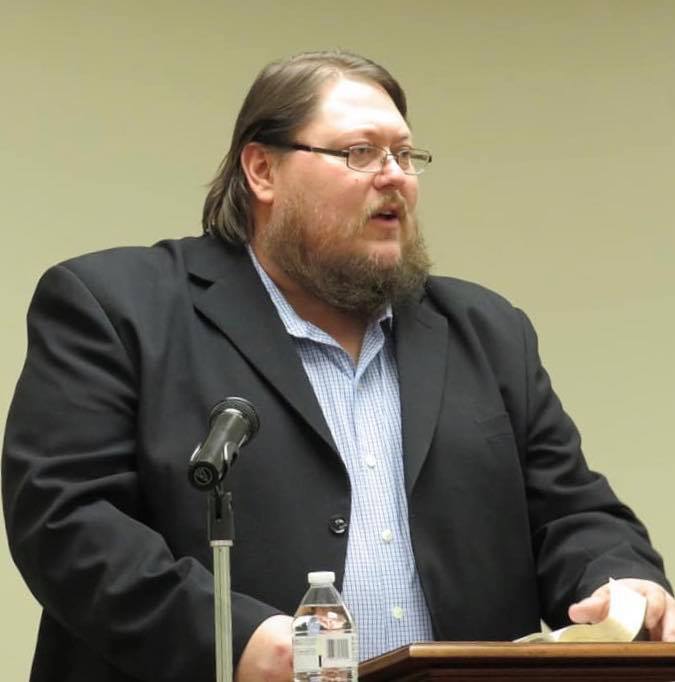
In the sermon "Origin of the Church Pt 2," Mikal Smith addresses the doctrine of the church's origin, contending against the widely held belief that the church began at Pentecost. Smith argues that the church was established during Jesus' earthly ministry, citing instances where Jesus called the apostles, instituted ordinances such as baptism and the Lord's Supper, and gave the Great Commission before Pentecost. Scripture references, particularly from the Gospels (e.g., Matthew 28:16-20, Luke 6:13), are utilized to bolster the claim that Jesus organized his followers into a community that functioned as a church prior to the coming of the Holy Spirit. The significance of this teaching lies in its Reformed emphasis on the continuity and visibility of the church throughout biblical history, affirming its existence as part of God's redemptive plan long before Pentecost.
Key Quotes
“Jesus called them brethren and sang in the church with them. And the only record we have of that being done is whenever the Lord's Supper was taking place.”
“If it was given to the disciples themselves, guess what? It died out when they died out.”
“The commission was placed within you, the congregation, not one person.”
“The church of Jerusalem was preaching the doctrine commanded by Christ, functioning effectively even before Pentecost.”
The church originated with Christ, not at Pentecost, as demonstrated by Jesus' calling of the apostles and the practices established prior to Pentecost.
The Bible indicates that the church has been in existence since the beginning of Jesus' earthly ministry. Jesus called the apostles during this time, establishing them as the foundation of the church. The practices of baptism and the Lord's Supper were already being conducted before Pentecost, as shown in passages like Matthew 28, where Jesus gave the Great Commission to the apostles. Therefore, the church was not an institution that began at Pentecost but was already a functioning entity during Jesus' ministry.
Matthew 28:16-20, Luke 6:13, Acts 1:15, Matthew 18:17-20
The Great Commission was given to the apostles after Jesus' resurrection, prior to the events of Pentecost.
The Great Commission, found in Matthew 28:16-20, clearly shows that Jesus instructed the apostles to go and make disciples of all nations before the Holy Spirit descended at Pentecost. This commission emphasizes the authority given to the apostles as leaders within the church, which existed prior to Pentecost. By discerning the timeline of events in the Gospels, it becomes evident that the commission was a directive to an already established church, rather than a command initiating the church's existence.
Matthew 28:16-20
Understanding the church's origin affirms its purpose and God's sovereign plan for His people.
Recognizing that the church was established by Jesus during His earthly ministry ensures that Christians comprehend their identity as part of a divinely ordained community, rather than an accidental or late development within God's plan. This understanding also legitimizes the authority and practices of the church, which are tied directly to Christ and His commands. Furthermore, it emphasizes the continuity of God's redemptive work through His church from the time of Christ to the present day, reinforcing the importance of church membership and participation in the ordinances.
Ephesians 1:4-5, Matthew 28:18-20, Acts 2:41-47
The apostles were appointed as the foundational leaders of the church by Jesus, entrusted with teaching and governing.
The apostles were essential to the church’s establishment and its structure. Jesus called them as His closest followers and appointed them to lead and teach His commands. In Ephesians 2:20, it is affirmed that the apostles and prophets served as the foundation of the church, with Christ Himself as the cornerstone. This role carried immense responsibility, as they were not only to preach the gospel but to disciple and build up the church. Their intimate relationship with Jesus allowed them to convey His teachings accurately and authentically, ensuring that the foundation they laid would carry through to future generations.
Ephesians 2:20, Matthew 10:1-4, Acts 2:42
Church discipline is biblically mandated and involves the congregation addressing sin among its members.
Scripture provides a clear framework for church discipline, which is aimed at maintaining the purity and integrity of the church. Matthew 18:15-17 outlines a step-by-step process for resolving conflicts among members, beginning with direct, private confrontation and escalating to involve the broader church if necessary. Church discipline is not intended to punish but to restore the erring brother or sister to fellowship and proper standing within the community. The authority lies with the church collectively, illustrating a participatory model rather than a top-down approach, ensuring accountability and support within the body of Christ.
Matthew 18:15-17, 1 Corinthians 5:12-13, Galatians 6:1

Comments
Your comment has been submitted and is awaiting moderation. Once approved, it will appear on this page.
Be the first to comment!