Bootstrap
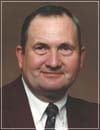
Carroll Poole

When The Savior Conquered Shorty

Luke 19:1-10
Carroll Poole May, 5 2024 Audio
0 Comments

In Carroll Poole's sermon, "When The Savior Conquered Shorty," he addresses the theme of divine initiative in salvation as exemplified in the story of Zacchaeus from Luke 19:1-10. Poole emphasizes that Jesus entered the corrupt city of Jericho with the compassionate purpose to save the lost, specifically focusing on Zacchaeus, a despised tax collector. He presents key arguments highlighting the condescension of Christ and the necessity for individuals to recognize their spiritual poverty, which is a prerequisite for true repentance and faith. Poole uses Scripture to illustrate that Christ comes to those whom society deems "incurable" and reveals that true faith involves not only acknowledgment of need but a heartfelt reception of Christ's grace. The doctrinal significance lies in the Reformed understanding of total depravity and God's sovereign grace, underscoring that salvation is wholly the work of God.

Key Quotes

“Never. Never. The only people to whom Christ ever said no are those who've come to Him in pretense.”

“It's not about them; it's about Him. It's not about how low you are, it's about how high He is.”

“He came to seek and to save that which was lost. Not seek and try to save.”

“We were redeemed positively when Christ hung on the tree. He loved me and gave Himself for me.”

Sermon Transcript

Auto-generated transcript • May contain errors

100%
This is a story very familiar
to some, somewhat familiar to others, and not at all familiar
to others. But, Luke 19. And I encourage you to read the
passage in full, the first ten verses of this chapter. But all I'm going to do right
now is read verse 1. And Jesus entered and passed
through Jericho. That may not be seeming to say
a whole lot in that brief verse, but it is saying a whole lot
about four things specifically. It speaks, number one, of a corrupt
place, Jericho. And secondly, of a condescending
person, Jesus. And thirdly, a compassionate
purpose. He entered into Jericho, not
just into the city, but in the hearts of some. And fourthly, a conquering power. He passed through, not to fail,
but to conquer and to succeed in all that he came to do. So
beginning with this verse, we want to speak on this passage
this morning. Sometimes in our hospitals nowadays, a patient
will be discharged, and having been told, we don't know what
else to do, we've done all we can, And without saying it plainly,
they're saying you're incurable and we're sending you home to
die. But I want to say that no sinner has ever earnestly came
to Christ, came honestly, seeking salvation, and been discharged
as incurable. Never. Never. The only people
to whom Christ ever said, I have nothing for you, are those who've
come to Him in pretense. I don't need you that bad. I don't need much of a Savior.
I'm on third base already. All I need is a little shove
in the right direction. Our Lord has nothing for that
kind of coming. And people say, I want you to
give salvation to me, but I'm not interested in giving myself
to you. That's wrong. That's wrong. And that's where
we miss it. We want God to give, give, give
to me, but I won't give myself to Him. That religion is not to be found
in the Bible. And with that attitude, It's
no wonder we don't sense God's presence, let alone God's approval
in the individual heart. But those are the only kind of
people to whom Christ ever said no. It is not my business or any preacher's
business to close the door of salvation upon anyone. We know
that Christ is able to save to the uttermost all that come unto
God by Him. And we're to preach the gospel
to the worst and the wickedest, that Christ died for sinners,
and pray that He may penetrate the hearts of whom He will. In reading the Scriptures, we
may well perceive, as they did in Jesus' day, certain cases
that we'd consider incurable. Nicodemus was incurable of his
dignity, his importance, a ruler of the Jews. Bartimaeus was incurable
of his blindness. No man could do it. The Samaritan woman was incurable
in her immorality. Nobody had been able to change
her. She hadn't changed herself. Saul of Tarsus was incurable
of his religion. He was so proud of it. The demon-possessed man at Gadara,
he was incurable beyond any question. They'd tried. And Zacchaeus, the man in this
story in Luke 19, was incurable of his prestige of position and
power and influence. The Lord Jesus Christ never stepped
back and beheld any of these cases and labeled them incurable. What he did was put in their
hearts a desire for Him. It's not about them, it's about
Him. It's not about how low you are,
it's about how high He is. It's not about how sorry you
are, it's about how gracious and holy He is. There's an old
line in an old poem that says this, A sinner is a precious thing.
The Holy Ghost hath made him so. And what that means is this.
It's the Holy Ghost, the Holy Spirit that quickens a sinner's
heart to realize that we are sinners. And until that happens, unless
that happens, You live and die, nothing but a good religious
person, with the praise of men, but without the praise of God.
And unless he does that, the Spirit of God takes the initiative,
you'll never come to Christ. You live and die believing God
needs you more than you need Him. After all, isn't that what
a lot of preachers are telling you? Yes. In today's modern so-called
evangelism, it's downright offensive to charge you with being the
needy one. It feels much better, it's much
better for your ego to tell you how glad and how lucky God is
to have somebody like you that's interested in Him. Well, in this seemingly familiar
text are some beautiful things. This man, Zacchaeus, was probably
the last man in town anybody would expect to be saved. He's the chief tax collector.
He's the top dog of the IRS in Jericho. Not only is he the last man anybody
would expect to be saved, he's the last man anybody would want
to be saved. Nobody wanted it, but the One
that could do it. Huh? And He did it. They would fall out with the
Lord for having anything to do with a man like this. And sometimes church folks fall
out with the Lord for forgiving someone they won't
forgive. These people would fall out with the Lord for having
anything to do with you. And you probably fall out with
the Lord for having anything to do with people you don't like. We're a mess, aren't we? We are. He's a tax collector. He's contracted
with the Roman government to collect taxes of the people here
in Jericho. And he's considered a traitor
by the Jews and they despise him. You read here that he was little
of stature, a short man. And I thought about titling this
message, When the Savior Got to Shorty. That's what happened. Most everybody
says Zacchaeus came to Jesus. Is that how it was? Or he allowed the Holy Spirit
to lead him to Jesus. Is that how it was? Well, let's just talk about a
few of these things. We mentioned in verse 1. First, the corrupt
place, Jericho. Jericho was a city in the Jordan
Valley. It was noted for its many palm trees and balsam trees
and the mild climate. A prominent resort city in the
Jordan Valley. a fortified walled city, a prosperous
city. And being such a desirable and
prosperous place to live, it's no wonder the chief tax collector
lived there. The balsam trees, the forest
gave fragrance, they say, for miles around. It was so appealing,
so pleasant. And the gardens of roses in Jericho
were known far and wide. Even the historian Josephus called
it a divine region. Beautiful place. And this is a fearful thought.
We say we're cursed with sickness. We're cursed with poverty. We're
cursed with enemies and problems of every sort. But we might be blessed with
sickness, blessed with poverty, blessed
with enemies, blessed with problems of every sort. Because you see,
whatever God does to humble us, to bring us to Himself is not
a curse. It's a blessing. It's a blessing. However unpleasant it seems to
flesh. Now this place, Jericho, the Lord destroyed it way back
yonder. If you want to go back and read,
the walls fell down flat. Back there in the book of Joshua,
chapter 6. And the Lord said, Cursed is
the man that builds this city back. It's the end of it. God destroyed it. He didn't say
just the walls fell. They fell flat. Cursed is the man that rebuilds
it. But a man did. And God went on to say the man
that does it, he'll lay the foundation of it in the death of his firstborn. And he'll hang the gates, he'll
finish the job in the death of his youngest. And you can read
that over in 1st Kings 16.34, it happened. Just like he said. So this world we live in is a
corrupt place like Jericho. Our father Adam, by his disobedience,
made us all by nature, residents of Jericho. Part of an accursed race, cut
off from God, no desire for God. Since Adam fell, man's only word
to God has been, leave us alone. and there still is. Bless us, prosper us, heal us, but stay out of our lives, leave
us alone. And so it is today. So the whole
world is Jericho, a corrupt place. And if the Lord leaves you alone,
God forbid, you already are and will You become more and more
just as corrupt and filthy and vile as anyone who ever lived. The corrupt place. Then I mentioned
a condescending person. This is Jesus Christ. Not of this world. He came down
from heaven. For 50 years I've been reading
garbage. about who Jesus was. The bastard son of a Roman soldier.
Yeah, yeah, yeah. This, that, and the other. No,
no. He's the holy, sinless Son of God. Not of this world. Not born of
the sinful seed of Adam. like your young'uns and mine. Adam's blood was not running
in his veins, but he was conceived of the Holy Ghost in a virgin's
womb, and what a condescension that was, we can't even imagine.
He came down. He said in John 6 numerous times,
I came down. I came down from heaven. As the
manna came down from heaven, I came down from heaven. We can't comprehend that, the
greatness of such a condescension. From the glory with the Father
into this world of fallen men. From the heights of heaven's
glory to the depth of sin's shame. To go from being one with the
Father to being one with men. We can't imagine it. And then the third thing I mentioned
is a compassionate purpose. The Lord Jesus Christ never came
into this world and had a good beginning and had a great following,
but he fooled around and made some bad statements and started
losing popularity and fooled around God Himself crucified
against His will. That's not what this Bible teaches. To be crucified, to go to the
cross, is why He came. He said it over and over, I laid
down my life for my sheep. I've come to die. You and I were
born dying. He was born and took our sins
upon Him so He could die. Matthew 20, 28, He came to give
His life a ransom for many. I lay down my life. I have power
to lay it down and I have power to take it up again. He entered
into Jericho. He entered into the corruption,
the shame, the condemnation. He bore the curse. of the sin
of His people. He who knew no sin was made sin
for us, that we might be made the righteousness of God. That
is, the very righteousness God required of us. We're given it
in Him. In Him. Ephesians 1-6, Paul said
we're made accepted. Accepted with God. in the Beloved. He entered Jericho. God, in the person of His Son,
took the initiative. No one in Jericho had called
Him on the phone. No one had texted Him and asked
Him to come. No one there had sent Him an
offering. That's the picture here. There's
really no reason Jesus should pass through Jericho except that
He had sheep there. He had already found Bartimaeus
outside town and now Zacchaeus in town. He passed through deliberately
to find His sheep. A part from which his sheep would
never be found. That's the bottom line. Compassionate
purpose. He cared. He came to die. And then the fourth thing I mentioned
was a conquering power. Was he able to do this? People get so warped up in words.
I heard a fellow say, let's pray that God will be able to do this
and this. You don't have to pray that God will be able. He's able
to do whatever He wills. Pray that He go ahead and do
it. He go ahead and do it. Our praying,
we said this earlier in our Bible class, the main petition ought
not be for God to agree with us, but for us to agree with
God. That's the real need. He's going
to do what He's going to do. Boy, if you let Him, I'll tell
you what you'll let Him, nothing. Leave us alone. That's what you'll
let Him. But He's God. And if He's on your trail, He'll
get you. And that's what we're seeing right here in this man
Zacchaeus. The Lord did not fail to conquer.
The proud-hearted tax collector named Zacchaeus. One of the last
two men in Jericho that anybody thought the Lord would be interested
in. Bartimaeus, he was blind and
worthless. And Zacchaeus, he was rich and
worthless. But without Christ, we're all
worthless. So verse 2, And behold, there
was a man named Zacchaeus, which was the chief among the publicans,
and he was rich. Very successful in business.
We don't read in here that he was a crook. A lot of people
say he was. I don't read it. But very successful. But there's something about this
fellow no one knew except him and the Lord. Though his pockets were full, his life was empty. And only the Lord can put that
void and create that hunger and desire in your heart and mind. Financially, he had far more
than he'd ever need. Spiritually, he needed far more
than he had. This man had heard of Jesus.
But being a man whose career, whose life was given to material
gain, had not the Lord worked in his heart beforehand to see
his emptiness, to create desire for peace and rest in his heart
and spirit. Had the Lord not done that, this
man would have had No interest in seeing this popular religious
figure called Jesus. But he knew something. Though he's a big man in business,
he was very small in his heart. His life was empty. And physically,
he was little of stature. He was short. I'm guessing people
that despised him called him shorty. But what was working in his heart
was that he was short spiritually. He was lacking. And looking back
over his life, as only the Holy Spirit can cause you to do this,
he could say, I was short in this. I was short in that. I'm short in how I've treated
people. I'm short in compassion. I'm short in about everything.
I'm short in what really matters in my entire life. And most of
all, I'm an awful sinner. Romans 3, 23. I have sinned.
All have sinned and come what? Short. of the glory of God. Shorty is my name. He wanted to see Jesus. We don't
read that he wanted to know Jesus, but he wanted to see Jesus, who
he was. Well, can I tell you this? Apart
from divine initiative, trees don't grow tall enough for you
to see Jesus. who he is. They do grow tall enough for
him to see you. That's what's going to happen here. He was curious. He wanted to
see Jesus, who he was, and could not for the press, meaning the
crowd. Why? Because he was short. Everyone in this building this
morning is short. A few of you are taller than
me physically, but I promise you we're all short, way short. You cannot see Jesus, who He
is, unless God the Holy Ghost is on your trail and gets your
attention, puts you up a tree, you'll be short forever. But if God is on your trail,
He'll have you doing what this man did. Lay down your pride,
who you are, what people think of you, anything, just to get
a glimpse of Jesus. He didn't want to talk to Jesus,
and he didn't want Jesus to talk to him. But see, God's setting
this whole thing up. deeper than he meant for it to
go. Conviction will do that. Holy
Spirit. But it did bring him out of curiosity
at the very least to climb a tree in order to see Jesus. Why did
he have to do that? He was short. You're short. I'm short. All
come short. The glory of God. Can the leopard
change its spots? Never. Can the Ethiopian change
his skin? Never. Can the sinner change
his heart? Never. Can we be anything but
short? Never. But if the Lord is on your trail,
you can and will climb a tree. When Jesus came to the place,
verse 5, now see this, He knew He was up there. When Jesus came to the place,
He looked up and saw Him, and said unto him, Zacchaeus, make
haste and come down, for today I must abide at thy house. The
Lord knew He was up there. He's walking along, a crowd all
around him, shoulder to shoulder, bumping into one another and
everything, and you've got to watch where you're going. But
guess what? When he came to the place, when he came to the place,
he had a place for me, and the fewer he is, he has a place for
you. And when he came to the place, he stopped and he looked
up. He knew he was up there. He's the fullness of the Godhead
bodily. Father, Son, and Holy One. He
knew Zacchaeus was up that tree because He's the one put him
up the tree. He's trapped there. He is shut
up. Not just physically, but in his
heart. I can't get out of the mess I'm
in. He's shut up. Psalm 88, the psalmist said,
I am shut up. I cannot come forth. God's got
me. He's nailed me down. This man, years before, maybe even before
Zacchaeus was born, God calls a little sycamore sprout to come
up by the side of the road. And in all the years of his life,
it was God who saw to it that nobody cut it down. You see how deep this thing goes?
Everything's this deep. God is in everything, big and
little. Once Zacchaeus got in on this
day, the Lord Jesus Christ had been in on forever. That's big. That's bigger than us. And so
with that said, I'll have to sidetrack a minute and say you
can have your little God that don't know anything about you
until you tell Him. And He can't do anything for you until you
let Him. That God don't exist except in
your mind. But the God of this Bible, if
you're one of His, He knows how to put you up a tree and He'll
do it. He'll do it. Who you are, the talent you have,
the goods you own, the reputation you have, what people think,
all the good you've done, how morally clean you've been, all
that junk is too much to try to climb a tree with. You've got to be short. You've
got to be broke. And you've got to be empty. He saw him. That's physical. He never just saw shorty. That
don't matter now. He's up a tree. But he saw Him. That is, Jesus
saw all the way through him. He saw all there was to him. And he knew what the Holy Spirit
had done in him. And the Lord Jesus proceeds with
what He'll do for him. Notice the first word Jesus spoke
to the man. In verse 5, was his name, Zacchaeus. John chapter 10, verse 3, said
of Christ, the shepherd, he calleth his own sheep by name. He knows your name. Y'all supposed
to be saying that song, you ain't never done it. And when Jesus looked up, the
whole crowd looked up. And they knew this man. And I guess laughter broke out. Shorty up a tree. I guess they about died laughing.
How humiliating. But that didn't matter. God's
done got him beyond what anybody thinks. And He'll get you there if He
makes anything of you. He then got him where he needed
to be to see Jesus. And if you don't do that, I promise
you, dear religious person, dear churchgoer, you'll live and die
saying, well, I guess that's a good thing for some, It's just
not for me. But I'm telling you, if God,
the Holy Spirit, leaves you to yourself, you'll never climb
a tree. You'll never leave all your baggage
on the ground. This man did. And Jesus said,
make haste and come down. Hurry up about it. Well, he couldn't have done that
if he took all that junk up there with him. And the Lord didn't say, Zacchaeus,
would you like to come down and accept me as your personal
Savior? No. The Lord was already in his heart,
or he wouldn't have been up a tree. Zacchaeus, would you take that
first step, one limb at a time, and make
sure this is what you want. It's all up to you. I've heard
that till I'm sick. No, he said, get down from there
and don't beat around the bush about it. Make haste. He didn't say we're going to
sing six more stanzas. to try to get you to come forward.
No, he said, make haste and come down. One liberal preacher, freewheeler
I know, that still got Zacchaeus in the control, said that Jesus
invited him to dinner at his house. He graciously received him in
his house. I didn't read that, did you? Zacchaeus is not doing the talking.
He hasn't said a word. But here's what Jesus said. Today,
I must abide at thy house. That don't sound like a walk
down the aisle. Give Jesus a chance. No, the timing is today. The
urgency is a must. The permanence is abide. And
the place is at your house. And he made haste and came down
and received him joyfully. Don't miss that word received
many times in the New Testament. He didn't accept Jesus. You don't
find that in the New Testament. But it's received. Big difference. The power is not on your end. It's on God's end. And when they saw it, they all
murmured, saying, They murmured. That's what religion
has always done to the Son of God who came to save sinners. He don't save good people. Nobody is too bad to be saved,
but some of you are too good to be saved. He saves sinners. So they murmured,
saying that He was gone to be guest with a man that is a sinner."
Well, that was true. But they never had a thought
that they were sinners too. They knew how to call somebody
else a sinner, as do we all. But they didn't spend much time
looking in the mirror, spiritually. You know religion is the only
thing that's as warped up as it is. Folks go to an AA meeting
and they testify, my name is so-and-so, I am an alcoholic. Or the rehab, my name is so-and-so,
I am a drug addict. Or my name is so-and-so, I am
a molester. They're all testifying, I am
a sinner. But you go to church and it's,
we're Christians. We're Christians. Did you know
in the New Testament, when they called the followers of Christ
Christians, it was not a compliment. It was a criticism. Oh man, we're Christians. And
this side hates the guts of this side. But we're going to sing, Oh,
How I Love Jesus. Yeah, how is that? No wonder the world hates religion.
No wonder God hates religion. And I don't have to look at you.
I wish I hated it in me. Our time is gone. You've sat
patiently. Here's the confirmation of the
work of God in this man's heart. Verse 8. He's going to call Jesus, Lord.
And he's not being a hypocrite. Zacchaeus stood and said unto
the Lord. It's the first time he's speaking now. Behold, Lord,
the half of my goods I give to the poor. Materially, I've got
way more than I need and it's not about that anymore. And if I have taken anything
from any man by false accusation, I restore him fourfold. It didn't say he had, but I want
to tell you when God works in your heart, there'll be that
tender sensitivity to the Holy Spirit and say, if I've messed
up, I want it right. This is not hypocrisy. And were the Lord not in on this, was this not a work from heaven? The situation would have been
altogether different. You see, the pocketbook is a very sensitive
thing to a man like this. The pocketbook is a very sensitive
thing to most of you. But you see, he's not the man
he was. And Jesus don't call him Shorty.
He calls him Zacchaeus. You're my son. And Jesus said
unto him, This day is salvation come to this house, forasmuch
as he also is a son of Abraham. That didn't just mean he was
a Jew. Galatians 1.7 Know ye therefore that they which are
of faith, the same are the children of Abraham." He's a believer. For the Son of Man has come to
seek and to save that which was lost. Not seek and try to save. We don't worship a God that's
trying to do a whole lot more in this world than He's able
to get done. There's plenty in that camp.
But we're worshiping the God that Apostle Paul did when he
said in Ephesians 1.11 that God worketh all things after the
counsel of His own will. Psalm 110 verse 3, He hath done
whatsoever He hath pleased. He has His way. So He's come
not to seek and try to save, But it says to seek and to save
that which was lost. The elect number chosen in Christ
from eternity, that's what was lost. And we were lost in Adam. Anything lost implies previous
ownership. No need me trying to get you
to go out here in the grass and help me hunt a hundred dollar
bill that I never lost. If I could get you to do that,
I would. But now if I lost one, I'd try that. See? Anything lost
implies previous ownership. You say, well, the whole world's
lost. No, no. Those whom God chose in Christ
from eternity. They're lost. Lost in Adam. And he has come to seek and to
save that which was lost. And he's doing it. He's doing
it. Luke 15, my son was lost and
is found. One more statement and I'm through,
I promise. But get this. We were redeemed
positively when Christ hung on the tree. We sing the old song
sometimes, He redeemed me when He died. And how true that is. He paid the price. He accomplished
it. It was certain that I would be
redeemed, accepted of God because He did the work. He loved me and gave Himself
for me. We were redeemed positively when Christ hung on the tree.
Now most folk preachers are not redeemed until you decide to
let what He done be worth something. No, what He done was worth something.
And He'll bring you to agree with it if you're His. He redeemed
us positively when He hung on the tree. And we're rescued personally
when He puts us up a tree. And I trust today that God has
or will do this for you before you leave this world.
Carroll Poole
About Carroll Poole
Carroll Poole is Pastor of East Hendersonville Baptist Church, Hendersonville, NC. He may be reached via email at carrollpoole@bellsouth.net.
Broadcaster:

Comments

0 / 2000 characters
Comments are moderated before appearing.

Be the first to comment!

Joshua

Joshua

Shall we play a game? Ask me about articles, sermons, or theology from our library. I can also help you navigate the site.