Bootstrap
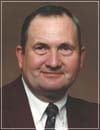
Carroll Poole

The Sabbath Day and The Lord's Day

Psalm 118:24
Carroll Poole October, 1 2023 Audio
0 Comments
Carroll Poole
Carroll Poole October, 1 2023

The sermon by Carroll Poole centers on the theological distinction between the Old Testament Sabbath and the New Testament observance of the Lord's Day, emphasizing its significance in the life of the believer. Poole argues that the Sabbath, instituted for the Israelites as a perpetual reminder of their deliverance from Egypt, was fulfilled in Christ and is no longer obligatory for Christians. He supports this with Scripture references from Psalm 118:24, Isaiah 28:16, and Colossians 2:16-17, emphasizing that the ultimate rest comes from the person of Christ, rather than a specific day. The practical significance of this distinction is that believers are called to celebrate and rejoice in the redemptive work of Christ on the Lord’s Day, underscoring a shift from law-based observance to Spirit-led worship.

Key Quotes

“This is the day which the Lord hath made. We will rejoice and be glad in it.”

“The Sabbath was never given to us. It was given of God through Moses to those Israelites who had come out of Egypt.”

“Our Sabbath is not a day. It's a person.”

“If your hope of eternal life is in anything you've done, including profession and performance, you have no hope.”

Sermon Transcript

Auto-generated transcript • May contain errors

100%
And we have sort of a unique
subject this morning. The Sabbath day and the Lord's
day. And our text verse is verse 24. This is the day which the Lord
hath made. We will rejoice. And be glad
in it. Probably 50 years ago now, at
10 o'clock on Sunday night, came a radio broadcast of the Northside
Baptist Church in Charlotte. And their pastor was named Jack
Hudson. And for several years, I listened
about every Sunday night. And he'd come on every time in
a very excited, trying to excite his congregation. And every time
the broadcast would come on, he would quote this verse. This
is the day which the Lord hath made. We will rejoice and be
glad in it. He was referring to that specific
day he was speaking. And the next Sunday, he'd be
referring to that day. The next Sunday he'd be referring
to that day. So what he was really saying
every time was, this is a day which the Lord hath made, like
every other day. But this verse doesn't say that. It says this is the day, one of its kind, no other like
it. It's the day, the day, which
the Lord hath made. Let me back up and start reading
in verse 21. I will praise thee for thou hast
heard me and art become my salvation. The stone which the builders
refused is become the head of the corner. This is the Lord's
doing. It is marvelous in our eyes.
This is the day which the Lord hath made. We will rejoice and
be glad in it. This psalm was penned about a
thousand years before Christ came into the world. And in verse 22, The stone which
the builders refused is none other than the Lord Jesus Christ. And some 300 years after this
psalm, still 700 years before Christ, the prophet Isaiah spake
about this stone. And in Isaiah 28, 16, he said, therefore, thus saith
the Lord God, behold, I lay in Zion for a foundation, a stone,
a tried stone, a precious cornerstone, a sure foundation. He that believeth shall not make
haste. Or rather, he that believeth
on him shall not be disappointed. Then in the New Testament, Epistle
of Peter. The Apostle Peter quoted this
from Isaiah 28. And he said in 1 Peter 2, verse
6, Wherefore also it is contained in the Scripture Behold, I lay
in Zion a chief cornerstone, elect, precious. And he that believeth on him
shall not be confounded. Unto you, therefore, which believe,
he is precious. That means priceless. But unto them which be disobedient,
the stone which the builders disallowed, the same is made
the head of the corner. And a stone of stumbling, and
a rock of offense, even to them which stumble at the word, being
disobedient, whereunto also they were appointed." So here in Psalm
118, we see First, Christ rejected. He's
the stone which the builders refused. The builders were the
Jewish religious leaders, chief priests, elders, doctors of the
law. They're the builders, those who
were supposed to know some things, supposed to know the Old Testament,
and to recognize the Messiah when He came. But they didn't. They refused Him. They rejected
Him. They crucified Him. So there's
the stone rejected. Imagine if you could the picture
of what's meant here. Imagine a crew of stonemasons
building a building out of rock. And they have a pile of rocks
over here. And they're searching for a unique stone to fit in
a very specific place. And when they come across this
particular stone, they say, this won't fit anywhere. We can't
use this rock at all. And so they toss it away from
the pile over in the bushes somewhere. It's rejected. It's rejected. That's our Lord Jesus Christ
when He came into this world. Not only rejection, but then
we see the stone resurrected after He's refused, rejected
and crucified. He's brought back, resurrected
from the dead, and is now given not just a place
in the building, but He's the most important stone in the building, in the most important position.
And as it were, He is the building. Apart from Him, there'd be no
building. Apart from Him, no other stone would matter. Isaiah
called him the foundation stone. Paul the Apostle said in 1 Corinthians
3.11, For other foundation can no man lay than that is laid,
which is Christ Jesus. So the psalmist says here in
verse 22, He has become the headstone of the corner. Isaiah said precious
cornerstone. Peter said, chief cornerstone,
disallowed indeed of men, but chosen of God. So he's rejected
and crucified, then he's resurrected and exalted. And then here in
our text, verse the rejoicing. Because of this specific day,
the day of his resurrection and exaltation, The psalmist says,
we will rejoice and be glad in it in this day. Paul said in
Romans 1-4, it is by the resurrection that Christ is declared to be
the Son of God with power. He was the Son of God all along.
But in the resurrection, He is declared to be the Son of God
with power. By whom? By God Himself. And
He testified then after the resurrection, Matthew 28, all power is given
me in heaven and in earth, meaning authority in heaven and earth. So God declared this. How? According to the Spirit
of holiness by the resurrection from the dead. So this was on
the first day of the week Sunday, Resurrection Day, the Lord's
Day. The Lord's Day. A lot of years
ago now, I was sitting in the barber chair, getting a haircut,
and we began to talk a little. And the barber just questioned
me a little bit and found out I was a Baptist. And at that
time, I didn't know what a Baptist was. And I soon found out he was a
Sabbath day Adventist. He let me know that. He let me
know that. And he asked me two questions. First, he asked, what gives you
the right to ignore the fourth commandment? That's in Exodus
20. Remember the Sabbath day to keep
it holy. And if I'd known then what I
know now, I could have answered him somewhat more appropriately
than I did. I don't even remember what I
said. Probably didn't make any sense.
But he said, what gives you the right to ignore the fourth commandment? And then he quoted it. Remember
the Sabbath day to keep it holy. Then another question he asked,
referring to Baptists, and I guess a lot of other denominations,
Why did you all change the Sabbath from Saturday to Sunday? I didn't
know how to answer that either. But now I want to talk to us
a few minutes and maybe answer both those questions that were
asked me then. The first Sabbath day belonged
to God. And he kept it by himself. Listen
to this. Genesis 2, 2 and 3, And on the
seventh day God ended His work which He had made, and He rested
on the seventh day from all His work which He had made. And God
blessed the seventh day and sanctified it, because that in it He had
rested from all His work which God created and made. God rested on the seventh day,
not because He was tired. God don't get tired. He rested
because He was through. He rested in the sense of satisfaction
with His completed work of creation. Many a man, I'm sure all of you
here this morning, man has completed a job that he felt was very successful
and stands back and looks and admires his work with great satisfaction. He rested from the work, happy with it, satisfied with
it, and resting from it because it was done, complete. But then, in Genesis 2, was not
the institution of the weekly Sabbath day for man. It was not. No man observed the
Sabbath day for 2,500 years. Adam didn't. Abel didn't. Enoch didn't. Noah didn't. Abraham
didn't. Isaac didn't. Jacob didn't. Joseph
didn't. It was not until Moses, 2,500 years from Adam, after
the children of Israel were delivered out of Egypt, out of bondage,
it was then that they were given to observe this.
Deuteronomy 5.15, And remember that thou wast a servant in the
land of Egypt, and that the Lord thy God brought
thee out hence through a mighty hand and by a stretched out arm."
Therefore, the word therefore means on that basis. Because of this, therefore, the work of deliverance is done
just like the work of creation was done. Therefore, on this basis, because
you're out of Egypt, the work of deliverance is complete. The
Lord thy God commanded thee to keep the Sabbath day. Now had they kept the Sabbath
day before that time, Moses could not have said, therefore. God is saying for this reason,
on the basis of that deliverance, keep the Sabbath day. The fourth commandment reads, remember that's the reason for
it. To remember the day God gave
them rest. Remember the Sabbath day to keep
it holy. In that same chapter, Deuteronomy
5 verse 3, the Lord hath not made this covenant with
our fathers." That leaves out everybody that lived before Moses.
But with us, even us, who are all of us here alive this day. Now, the Sabbath day was not
given or meant to all nations. only to Israel. Those Israelites,
they were out of Egypt. And it was for a reminder to
them of that deliverance from Egypt. Same as the Passover. That's why they would keep the
Passover, to remember that deliverance, that great deliverance. And for the next 1,500 years, the Israelites were to observe
the Sabbath and keep the Sabbath day from Moses to Christ. Israelites, not Egyptians, not
Canaanites or Assyrians, but Israelites. Not the Gentile Seventh-day Adventists,
not the Baptists, but Israelites in the Old Testament. 1,500 years from Moses to Christ.
So it was 2,500 years from Adam to Moses, and 1,500 from Moses
to Christ. That's 4,000 years that Christ
came into the world from the time of Adam thereabouts. And with Christ coming, the Sabbath
ended. The Old Testament nation of Israel
ended. I could get my head cut off for
saying that. But in Christ, there is neither
Jew nor Gentile. Galatians 3.28, there is neither
Greek nor Jew in Christ. Colossians 3.11, there is neither Greek nor Jew.
Ephesians 2.14, Christ has broken down the middle wall of petition
between us. The prophet Amos in Amos 8.2, He gives some strong prophetic
words in the Old Testament. Then saith the Lord unto me,
The end is come upon my people Israel. The Lord told this prophet, it's
over for this rebellious bunch. Next verse, And the songs of
the temple shall be howlings in that day, just a racket, like
a dog howling. The New Testament version of
that would be what Paul said, sounding brass and tinkling cymbal. Verse 9 of that chapter, Amos
said, And it shall come to pass in that day, saith the Lord,
that I will cause the sun to go down at noon, and I will darken
the earth, in a clear day. When did the sun go down at noon? It was at Calvary. The cross. From the sixth hour, that's noon,
to the ninth hour, there was darkness over all the land. It was the end of Israel. It
was the end of the Sabbath. Matthew 28-1, after the Resurrection. The woman goes to the sepulchre. A lot of people start reading
that verse as it began to dawn toward the verse the other way.
No, no, no, that's not the way it begins. Matthew 28 on. Here's how it
begins. In the end of the Sabbath. Not just the end of the weekly
Sabbath. It was the end of the Sabbath. Hosea 2.11, I will also cause
all of her mirth to cease, her feast, her new moons, and her
Sabbaths, and all her solemn feasts. The feasts were annual,
the new moons were monthly, and the Sabbaths were weekly. God
said it all ceased. Listen to what Paul said in Colossians
chapter 2. Verses 14-17, talking about Christ
on the cross, blotting out the handwriting of ordinances that
was against us, which was contrary to us, and took it out of the
way, nailing it to His cross. And having spoiled the principalities
and powers, He made a show of them openly, triumphing over
them in it. Now verse 16, let no man therefore
judge you in meat, or in drink, or in respect of a holy day,
or of the new moon, or of the Sabbath days, which are a shadow of things
to come. But the body is of Christ. Now someone might ask, well,
you know, when I'm reading the New Testament, Why did Paul go
into the synagogues on the Sabbath day? Well, that's simple. That's when the Jews that didn't
receive Christ, that's when they would be assembled. And he went
there not to agree with them, but to reason with them, the
Bible says. Reason with them who didn't believe.
The apostles worshipped on the Lord's Day, the first day of
the week, Sunday. This is the day which the Lord
hath made. We will rejoice and be in it. So to answer the barber's question, the Sabbath was never given to
us. It was given of God. through
Moses to those Israelites who had come out of Egypt. Don't apply. You walk outside and you see
that jet airliner way high in the sky. Guess what? He ignores the speed limit sign
out here that says 35. Don't apply to Him. He has something
higher, better. And in Christ, we're not under
any Sabbath. It was never for us. Sabbath day was never for Gentiles
living on this side of the cross. Now, I must tell you, the second
question that Barbara asked me, why did y'all change the Sabbath
from Saturday to Sunday? Now, sad to say, I've heard many
good folks refer to Sunday as the Sabbath. I've heard preachers
refer to Sunday as the Sabbath. Well, it's not and never has
been. The Sabbath was the seventh day
of the week, Saturday. Sunday has never been the Sabbath.
And we just read you there in Colossians, the Old Testament
Sabbath was a type of rest, a foreshadowing of our rest in Christ. How blasphemous then to leave
Christ and go back to Saturday and say, oh, we rest on that
day. Honey, our Sabbath is not a day. It's a person. Our rest is not in a day. It's
in a person. This generation rests too much
anyhow. Why did God rest? He rested in
satisfaction of the completed work. Why did Israel rest on
that Sabbath day? redemption was accomplished.
They would remember that. We rest in His redeeming work,
complete, accomplished. Now the Jews kept the Sabbath,
not by any means according to all the Old Testament required,
but in pretense they kept parts of it to celebrate themselves. Now that's what most religion
is about today, to celebrate self. It was supposed to be to celebrate
God and His work of deliverance for them. The mighty miracle
of deliverance from Egypt. So I say to the barber, We never
change the Sabbath from Saturday to Sunday. Christ fulfilled that
type and it is no more. When did the apostles meet? John
20 and 19, the same day at evening. This is the resurrection day.
The same day at evening being the first day of the week. The
doors being shut, Christ joined their meeting. Thomas was absent. The next Sunday,
the next Lord's Day, Thomas was present. Acts chapter 2, and when the
day of Pentecost was fully come. Pentecost means 50th. Most of
you know that. That's what Pentecost means. In the Old Testament, Leviticus
23, 16, even unto the morrow after the seventh Sabbath. That's
seven weeks, 49 days. On the morrow, on the 50th day,
the first day of the week, Sunday, 120 were assembled to worship
Christ. Acts 20 and 7, And upon the first
day of the week, when the disciples came together. 1 Corinthians
16, 2, Upon the first day of the week, let every one of you
lay by him and store as God hath prospered him." We don't assemble on Sunday because
it's a law. We assemble on Wednesday nights
too. And this coming week we're going to assemble on Friday night,
Saturday morning, Sunday morning. Assemble any time we want to.
But we don't meet here on Sunday morning because it's a law. It's a celebration that the work is done. Christ
rose from the dead on the first day of the week. And we're here
to worship Him in that accomplished work and rest in Him for having
accomplished it, just as God rested back yonder. Now, the Jews made the Sabbath
day a law whereby they gloated and still
gloat in their superiority and their performance as pleasing
to God more so than anybody else. It wasn't given for that. And
I'm not just picking on him. Most Baptists are that way. I
ain't Mr. Sunday and I don't know when.
So what? If that's what it was about so
you could tell people that you hadn't missed a Sunday, just
as well they missed it. We're not coming here to count
or keep records. We're here to worship Him who
paid it all. And that Sabbath was given them
for remembrance. Not remembrance of themselves
or anything they had done, Remembrance of what God had done. And that's
why we're here. That's why we're here. The Adventists today follow the
error of the Jews. And many Protestants follow the
same error. Making Sunday a law. We're not here because of law. But love to Him who delivered
us. from the bondage of Egypt, the
bondage of our sins, to celebrate Him as God Himself
celebrated creation. So we celebrate Christ in a completed
redemption on the Lord's Day. And this morning, if your hope
is in anything else, If your hope is in anything you are or anything you've done, you
have no hope. And when most people are questioning
about their faith and their commitment, they go right into the business,
well, I'm not as bad as some I know. So what? If your hope of eternal life
is in anything you've done, including profession and performance, you
have no hope. The songwriter had it right.
My hope is built on nothing less than Jesus' blood and righteousness. So I urge you this morning, if
your trust is not in Him, Trust Christ. Trust Him truly. I'm not talking about a one-time
profession, get your ticket to heaven and forget it. No, that
ain't what I'm talking about. Trust Him truly. Trust Him entirely. And this kind of true trust is
evidenced only by full commitment to Him, to live to honor Him, and obey Him. We all fail, we know that. But
true believers don't defend their failures before God or anyone
else. We confess to God and we plead
for mercy daily. All right. I bless His holy name.
Carroll Poole
About Carroll Poole
Carroll Poole is Pastor of East Hendersonville Baptist Church, Hendersonville, NC. He may be reached via email at carrollpoole@bellsouth.net.
Broadcaster:

Comments

0 / 2000 characters
Comments are moderated before appearing.

Be the first to comment!

2
Joshua

Joshua

Shall we play a game? Ask me about articles, sermons, or theology from our library. I can also help you navigate the site.