Bootstrap
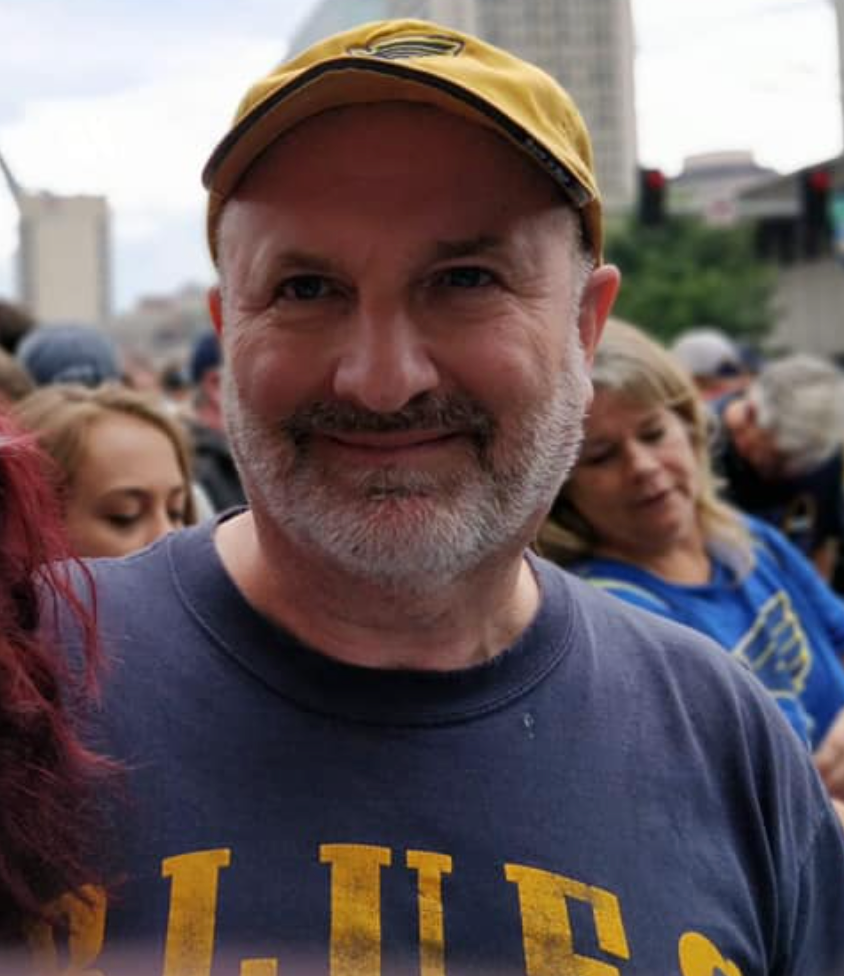
Drew Dietz

"Finished"

John 19:19-30
Drew Dietz November, 28 2021 Audio
0 Comments

The sermon titled "Finished" by Drew Dietz focuses on the theological significance of Jesus' words "It is finished" as recorded in John 19:30. Dietz argues that this declaration encapsulates the completion of Jesus' mission on earth, including the fulfillment of the Father's will, the realization of messianic prophecies, and the completion of the law's demands. He supports his points by referencing various scriptures such as Psalms 40, Matthew 5, and Hebrews 7, illustrating how Christ's work addresses the need for righteousness, redemption, and salvation for His people. The sermon emphasizes that believers should rest in the finished work of Christ, acknowledging that all aspects of salvation—justification, sanctification, and glorification—are accomplished in Him, which carries profound practical implications for how Christians understand their relationship with God.

Key Quotes

“This is where the whole of time and space and history meet at Calvary.”

“When Christ said, It is finished, He defeated and viewed the destruction of Satan.”

“We should rest from our works, our deeds, and our merit.”

“Kiss the Son. Embrace the Son. Trust the Son. Worship the Son.”

Sermon Transcript

Auto-generated transcript • May contain errors

100%
Okay, John chapter 19, starting
in verse 19 through verse 30. And Pilate wrote a title and
put it on the cross, and the writing was, Jesus of Nazareth,
the King of the Jews. This title then read many of
the Jews, for the place where Jesus was crucified was nigh
to the city, and it was written in Hebrew, Greek and Latin. Then
said the chief priest of the Jews to Pilate, write not the
king of the Jews, but that he said, I am the king of the Jews.
And Pilate answered, what I have written, I have written. Then the soldiers, when they
had crucified Jesus, took his garments and made four parts
to every soldier a part, and also his coat. Now the coat was
without seam, woven from top throughout. Just that right there,
there's the gospel. But we won't get into that. That
phrase right there, the gospel's in that. They said, therefore,
among themselves, let us not rend it, but cast lots for it,
whose it shall be, that that the scripture might be fulfilled,
which saith, they parted my raiment among them, and for my vesture
they did cast lots. These things, therefore, the
soldiers It did. Now there stood by the cross
of Jesus his mother, his mother's sister Mary, the wife of Cleophas,
and Mary Magdalene. When Jesus therefore saw his
mother, he said to the disciple standing by, whom he loved, he
saith unto his mother, woman, behold thy son. Then saith he
to the disciple, behold thy mother. And from that hour, that disciple
took her into his own home. After this, Jesus, knowing that
all things were now accomplished, that the Scripture might be fulfilled,
said, I thirst. Now there was set a vessel full
of vinegar, and they filled a sponge with the vinegar, and put it
to his mouth. When Jesus therefore had received
the vinegar, he said, It is finished. And he bowed his head, and gave
up the ghost. It's hard to read this, the sufferings
that our Lord underwent for us. Because I was right there spitting
and mocking and hating Him. So when I read this, how do you
read this without emotion? Now these things were done, as
it says in verse 36, these things were done that the Scripture
might be fulfilled In verse 37, and again, the Scriptures say
that they shall look on Him whom they appear, Zechariah. There
is an author, it's A.W. Pink, I know you know that name.
There's a writing that he has on this text. It's a rather complete
work entitled, The Seven Sayings of the Savior on the Cross. And
also, the venerable Charles Spurgeon has a sermon. He has several
sermons, but this sermon on this verse 30, It is titled, Christ's
Dying Words for His Church. We're going to look at verse
30. He received the vinegar and He said, It is finished. It is
finished. That's what we're going to look
at. Now in the Greek, it's one word. Finished. That's what it
is in the Greek. Who can adequately pin our voice
the magnitude of this moment? This is where the whole of time
and space and history meet at Calvary. Now I know they've changed
it recently, but it used to be A.D., B.C. and A.D. Now they've changed
that because man's smarter than God, but everything points to
Calvary. Behold the bleeding dying Son
of God. I'm sure I will not just, I'll
just touch the tip of the things found here today, but I want
us to look and seek to understand just a little bit of the importance
of these words, this one word, finished. It is finished. We're
going to look at basically one thought, the seven points. What was finished by the Lord
Jesus Christ? When He said, it is finished,
what was finished? What was finished? And there's
more, but we'll just look at seven. First, He finished. Now this word finished could
be accomplished, it could be concluded, or completed. And these are found in the other
Gospels, Luke 23, Mark 15, and Mark 27, you can see the rendition
of the story, worded a little bit different, but these other
words are used. So what did Christ finish? He
said it is finished. What did he mean? Well, he finished
and accomplished and concluded his father's will. Turn with
me to Psalms chapter 40. We're going to be turning to
several passages. Psalms chapter 40. Psalms chapter
40, verses 7 through 10. Then said I," this is Christ,
this is David speaking and prophesying Christ, "'Lo, I come,' this is
also found in Hebrews 10, "'Lo, I come, in the volume of the
book it is written of me. "'I delight to do thy will, O
God. "'Yea, thy law is within my heart. "'I have preached righteousness
in the great congregation. "'Lo, I have not refrained my
lips, O Lord, thou knowest. I have not hid thy righteousness
within my heart. I have declared thy faithfulness,
thy salvation. I have not concealed thy lovingkindness
and thy truth from the great congregation." The Son, He accomplished. It
is finished. He finished the will of His Father. And what was that will? It's
right here. Right here. He says in verse
7, the Bible is written of Me, I delight to do Your will. What's
His will? Look at this. I have preached
righteousness. When Christ came on this earth,
He preached God's absolute, perfect righteousness. Because man doesn't
have any. As a matter of fact, the Scripture
says, our righteousnesses are as filthy rags. And that's disgusting,
the Hebrew, it's disgusting. But that's what we are. He preached
righteousness in the great congregation everywhere he went. It said he
went about doing good, he went about healing people, but he
always spoke. He moved out a little ways on
the shore in a boat and stood up for a preach. He preached. Look at what else He says, in
the great congregation, anyone who would listen, Oh Jerusalem,
Jerusalem, how I would have gathered you, but you would not. But He
still preached. That's what we do. That's what
we do. Male, female, if you're a believer,
a boy or girl, what am I supposed to do? I don't know. Yes, you
do. You tell of His righteousness. I don't have good oratorical
ability, and Moses tried that. God said, I made your tongue.
Just invite them. Take a card. We've got cards.
He says, well, come. Come. But look at what else he
did. I have not refrained my lips, O Lord, Thou knowest. Verse
10, I have not hid Thy righteousness within my heart. I have declared
Thy faithfulness. Great is Thy faithfulness. They
are new every morning. to the believer, he wakes up
and he has life, breath and soundness of mind, it's God's faithfulness
through Christ. He is God's faithful one and
thy salvation. He didn't leave salvation, he
didn't do everything and then salvation is left up to you.
No, he preached God's salvation. How can God be just and justify
the ungodly? With man it's impossible, but
with God, it, salvation, righteousness, faithfulness is possible. And
he says, faithfulness and thy salvation, I have not concealed
thy lovingkindness. People talk about love, it's
abused, it's fornicated, they know nothing, but until when
a person begins to see themselves and they see what's going on
at Calvary, what we're looking at in John chapter 19, when they
begin to see that, then they understand, like never before,
and we still see through a glass darkly, but never before, the
love of God in Christ Jesus. And I've said this so many times,
in Romans 8, you keep looking at it, nothing's going to separate
us, nothing here, there, there, from what? The love of God, which
is where? It's not floating around somewhere
for everybody to get a hold of. It's in Christ Jesus. If you want to know, if you want
to understand and know a little bit about God's love, look in
the book. Lo, the volume of the book is
written of me. Not a bunch of dos and don'ts. I'm glad we took Baptist out
of the name of this church a long time ago. Not the Baptist doctrine. Well, it's Calvin. Before Calvin
was Paul. Before Paul was him. It's Christ's
doctrine. Look at what else he says, "...and
thy truth." You can't have the Gospel truly preached without
loving kindness and truth. Remember, also in another page,
I think it's in Psalm, another place in the Scripture, mercy
and truth have kissed. That only happens in Christ.
So there's a lot of people talking about love, feely emotions, and
they have no truth. And then there's those who are
just, truth, truth. I thought we were supposed to
preach the truth in love. Truth. He's going to reveal the
truth. But we need to speak of His loving
kindnesses, but we also speak of the truth from the great congregation. Wherever we're at. Wherever we're
at. Tim James made a comment to me
years ago, and he had gotten in trouble by going different
places. He said, I go where I'm invited. And you also made a comment,
which Melinda reminded me of the other day, God's preachers
and us are the freest people on the top of God's green earth. Don't let anybody bring you under
bondage. You're free in Christ. Okay, the second thing. What
was finished at Calvary? He finished, concluded all the
messianic prophecies, Matthew chapter 5. And there's a bunch
of scriptures. We'll just go to one in most
of these points. Matthew chapter 5. Secondly,
it is finished. What is finished? All the messianic
prophecies. Matthew chapter 5. And verse 17. Think not that I am come to destroy
the law or the prophets. I am not come to destroy but
to fulfill the prophets. the prophets. From Genesis, he
was that seed promise, the first promise, that was Christ. As
we meander through the earlier Old Testament Scriptures, 1 and
2 Samuel, we see that this Christ's lineage is going to come through
David's house. And then in Isaiah, we see that
he speaks of the virgin birth, that's Christ. In Tamaika, we
see that the child would be coming from Bethlehem. Hosea, he was
going to be coming through Egypt. And in Revelation, He's the reigning
Lamb. It's like we said before, in the Old Testament, in Genesis,
Father, where's the Lamb? In the Gospels, behold the Lamb. In the Revelations, worthy is
the Lamb. It's all the way through. This
is the Lamb book, all the way through. There is not one prophecy
left for Him. To fulfill, because He is all
in all, to fulfill. He did all. And the third thing
that He did was in the same verse, Matthew 5, look at it again,
He completed all the law's demands. All the law's demands. Think
not that I am come to destroy the law or the prophets. I am
not come to destroy, but to fulfill. He's satisfied, and this we have
to have if we're going to have salvation. He had to live a perfect,
pure, holy life, because that's what God requires of us. We can't
do it. We can't do it. The beautiful
thing is there's not one charge that anyone will lay at his children's
feet, for he suffered All the penalty and all the perfections
that God required, and God will not exact judgment twice. He
won't do it. It is finished. Fourthly, He
finished the ransom work on His people's behalf. Matthew chapter
20. Matthew chapter 20 and verse 28. He finished the ransom work on
His people's behalf. Matthew 20 and 28, and another
passage would be Mark 10, 45. We won't turn to that one. We'll
look at this one. Even as the Son of Man, verse 28, came not
to be ministered unto, but to minister and to give His life
a ransom for many. A ransom. He paid the ransom
price on our head The Scripture says in 1 Peter that he died
the just for the unjust. And it also says in another place
that he laid down his life, no one took it up. Now this, that
phrase, I've said that many times. And I just looked at that, just
looked at it a little bit closer. I lay down my life, no one takes
it. That tells me, that shows God
is absolutely sovereign. Here is somebody who the Pharisees
and the worldly religion despised and hated. Remember they tried
to grab him a couple times and he just walked through the midst
of them? How does that happen? If you're sovereign, it does.
Nobody took his life, he laid it down. That tells me that he
has sovereignty of purpose. That also tells me that human
inability. Man had Christ where he wanted
Him numerous times and couldn't lay a hand on Him until he's
like, And when he spoke to those Roman centurions, they all fell
backwards. He allowed himself, because it
was all according to the sovereign purpose of God, to be taken by
wicked hands and crucified. And it also shows me a third
thing, an ordered pre-planned atonement. This wasn't just something
God had to think up. All this was predetermined and
predestined for the good pleasure of His will and for His people. That's amazing. Hebrews chapter
7. Hebrews chapter 7. Still speaking
about the ransom work that Christ would perform for us. Hebrews
chapter 7. Verse 22 through 25. Hebrews 7 verses
20 through 25. By so much was Jesus made a surety of a better testament. And they truly were many priests,
because they were not suffered to continue by reason of death.
But this man, because he continues ever, has an unchangeable priesthood. Wherefore he is able also to
save them to the uttermost that come unto God by him, seeing
he ever lives to make intercession for them." He's our goal between. He's our goal between. He paid
the ransom price for us. The ransom was insisted upon
by God the Father. The ransom was guaranteed by
God the Son, the Immaculate, Satisfying Redeemer. Fifthly,
He came to finish our need of redemption and complete His sufferings. Well, we know Matthew 1.21. You
don't have to turn there. He shall save His people from
their sins. He had to suffer. chapter 1,
1 Timothy chapter 1, and verse 15, 1 Timothy 1 verse 15,
this is a faithful saying, and worthy of all acceptation, that
Christ Jesus came into the world to save sinners, of whom I am
chief. We never get over, it's like
what Matt said, we never get over our sinnerhood, We always
have issues. But we keep confessing, and He's
faithful and just to forgive us our sins. Isaiah 53. Isaiah 53. He must suffer, bleed,
and die, as in the Old Testament picture, the martyr lamb. It's also pictured in the scapegoat.
The priest took the two scapegoats and brought them out inside the
camp, put his hand on, showing transfer of sin. Christ took
our sins upon His own body on the tree, says the Scriptures.
Isaiah 53 and verse 11. He shall see the travail, the
sufferings of His soul, and shall be satisfied. By his knowledge
shall my righteous servant justify many, for he shall bear their
iniquities." Their iniquities. Matthew chapter 16. Matthew chapter 16 and verse
21. And from that time forth began
Jesus to show His disciples how that He must go to Jerusalem
and suffer many things of the elders and chief priests and
scribes and be killed and be raised again the third day. Now,
I'm sure they didn't fully understand everything that was being spoken
of like our minds. We're speaking of infinite stuff
here and our minds are finite. But, He put away our sins, says
Hebrews, by the sacrifice of Himself. He basically put an
end to sin. Do we believe that? Then the
Scripture says we're dead to this world. That's what he's
talking about. We're dead to this world. I read somewhere,
in one of Henry's old bulletins or something, where the theology
student would say, I don't understand, what do you mean dead to the
world? I don't understand it. And he says, go to the cemetery,
and go by this gravestone, and just sit there and observe for
a while, and start talking, Asking questions, he says, and then
come back next time in classes. And I came back, he says, I did
what you said. He goes, what happened? He says,
nothing. He said, did you ask the question? He said, yeah. Did you get an
answer? No. He said, no, he didn't do anything. He says, that's
because he's dead to you. That's where to be dead to the
world. We have to live. We have to get our job. We have to pay taxes. We have
to be in this world. But the world is dead to us. We are dead to the world. Look with me at Matthew 16, verse
21. These are the things I'm going
to have to suffer. Suffer and be killed. See, they thought
He was going to be the Messiah and He was going to come and
they were going to take over the Romans and all that. No, no.
God sees us, thankfully, as our substitute. Hebrews chapter
7. Hebrews chapter 7. And look with
me at verse 19. Hebrews 7, 19. Now I understand
this isn't high ground. It is and it isn't. It's a fact. It's truth. We're dead to the
world. And our sin is over. Now we still sin. I'm not saying
the flesh is... It's not going to be gone until we are six feet
under. But look at what it says here.
In the eyes of God, through His substitute, this is what he sees.
Verse 19, For the law made nothing perfect, but the bringing in
of a better hope did, did by the witch we draw nigh unto God. He's a holy God. He's a righteous
God. We cannot approach Him unless we're like Him. And we're like
Him in Christ. No wonder he's hugging. He's like, I'm not going to let
you go until you bless me. Jacob, I'm not going to let you
go until you bless me. Sixthly, He will in time and
in reality now, if viewed correctly, serve the destruction of Satan's
power. John chapter 12. in John 12. Verse 28-31. This is Christ praying to His
Father. He says, Father, glorify Thy
Name. Verse 28 in John 12. Then there came a voice from
heaven saying, I have both glorified it and will glorify it again.
The people, therefore, that stood by heard it and thundered. Others
said that angels spoke to him. Jesus answered and said, This
voice came not because of me, but for your sakes. Now is the
judgment of this world. Now shall the prince of this
world be cast out." Oh, he's a foal, but he's cast out. He's cast out. In reality, when
Christ said, It is finished, He defeated and viewed the destruction
of Satan. Lastly, for this message, seventhly,
Christ came and finished, concluded, completed all the work of salvation,
sanctification, justification, and glorification, as He says
in 1 Corinthians 1.30. He's made unto us wisdom, righteousness,
sanctification. He's made unto us. So we would, should, must rest
from our works, our deeds, and our merit. I've heard this years and years
ago, and I've reiterated it for you children, perhaps. Stop working. Stop trying to please God by
what you do or don't do. Think or don't think. Hebrews chapter 4. Hebrews chapter 4. Verse 9 and 10. There remaineth therefore a rest
to the people of God. For he or she, man, woman, boy
or girl, that is entered into his rest, Christ, has ceased
from his own works." Oh, I can do it. Go ahead and
try. You're working again. You're working again. When I wrestled years ago, there
was a place you didn't want to be. There was a technique you
didn't want to use. It was called bridging. If you
bridged, you were on your back and you were about to get pinned. You didn't want that to happen.
That's what needs to happen. May God get us in a corner, have
nowhere to go, but simply to rest. upon the finished, complete,
concluded, accomplished work of Christ. In closing, we know
in Matthew chapter 3 when they were in the Mount of Transfiguration
they heard that voice, this is my son in whom I am well pleased. If God is pleased with Christ's
work and his redemptive conclusions Shouldn't we be as well? Why
do we try to add our will, our works, our worth? God is pleased
with His Son. We should be as well. It says
in Colossians 1, verse 19, chapter 1, verse 19, For it pleased
the Father that in Christ, in Him, should all fullness dwell. You can't add anything to God.
Trust in Him. Worship Him. Now close Psalms
chapter 2. This is a little frightening.
It can be. Psalms chapter 2. And the last verse, verse 12.
Psalms chapter 2 and verse 12. Kiss the Son. Embrace the Son. Trust the Son. Worship the Son. Adore the Son. Love the Son. Lest he be angry, and you perish
from the way, when his wrath is kindled but a little, blessed
are all they that put their trust in him, that have kissed him,
and embraced him, and love him. Why? It's always because he first
loved us. What a merciful, glorious Redeemer
we have and we serve. We do not deserve the least of
his mercies, but in Christ we have them all.
Drew Dietz
About Drew Dietz
Drew Dietz is the pastor of Sovereign Grace Church in Jackson, Missouri.
Broadcaster:

Comments

0 / 2000 characters
Comments are moderated before appearing.

Be the first to comment!

Joshua

Joshua

Shall we play a game? Ask me about articles, sermons, or theology from our library. I can also help you navigate the site.