Bootstrap
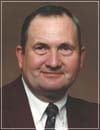
Carroll Poole

The Potter and clay

Jeremiah 18:1-6
Carroll Poole March, 17 2019 Audio
0 Comments
Carroll Poole
Carroll Poole March, 17 2019

Sermon Transcript

Auto-generated transcript • May contain errors

100%
I want us to take our Bibles
this morning and turn to the Old Testament, the book of Jeremiah
chapter 18. Jeremiah 18. Verse 1, the word which came to Jeremiah
from the Lord, saying, arise and go down to the potter's house,
and there I will cause thee to hear my words. Then I went down to the potter's
house, and behold, he wrought a work on the wheels, and the
vessel that he made of clay was marred in the hand of the potter.
So he made it again, another vessel as seemed good to the
potter to make it. Then the word of the Lord came
to me saying, Oh, house of Israel, cannot I do with you as this
potter sayeth the Lord. Behold, as the clay is in the
potter's hand, so are ye in mine hand, O house of Israel. It's reading down through verse
six. This prophet Jeremiah is known as the weeping prophet. Very humble man, very committed man. To preach
the Lord's message in his generation. And his message is that judgment
is coming. Knowing that judgment is coming
on his people. He is faithful to preach and
to warn. And yet it's to no avail. This goes way, way back. In. scripture to see the pattern
of Old Testament history. Genesis 49, 10 is a springboard for the rest
of the Old Testament. Jacob was on his deathbed and
he spake divinely inspired to his fourth son, Judah. And he
said to him, the scepter shall not depart. The scepter being that which
a King holds forth, the scepter shall not depart from Judah.
You'll have Kings. You'll, you'll be a nation until
Shiloh come. Shiloh, the savior, the Lord
Jesus Christ. And they had Kings. Many times
just mock Kings, even after Babylon through the Persian kingdom and
the Greek kingdom in the time of Alexander, the great, and
then the Roman empire. They had mock Kings, even in
the time of Christ Herod was nothing more than a mock King.
He was just a puppet under the. hand of the oppressive hand of
Rome. But after Christ came, that was
the end of the promise of Genesis 49, 10 until Shiloh come. And Christ taught in Matthew
24, that that was the end of it. This generation shall not
pass until all these things. He's talking about the destruction.
Your house is left unto you desolate. It's over. Not one stone shall be left upon
another. It's over. And when he said this generation
shall not pass away, till all these things be fulfilled. He's
referring to 30 something years future in 70 AD when that destruction
actually came. that he talked about so vividly
in Matthew 24. And then natural. Jews were scattered and been
scattered ever since. So I don't say that to offend
anyone, uh, deliberately, but this is the way I believe the
Lord. I believe this is what the scripture teaches and the
Lord has taught us this. Paul taught in Romans 2, 28 and
29. He is not a Jew, which is one
outwardly. Neither is circumcision that
which is outward in the flesh. But he is a Jew, which is one
inwardly. And circumcision is that not
of the flesh, but in the heart. I know this is contradictory
to popular teaching today that national Israel is God's elect. Many times I've had people tell
me they're God's chosen people. They're God's elect people. They
were chosen from the time of Abraham as Abraham's seed naturally
to be a type of God's spiritual people, God's elect. They were chosen to give us the
scriptures. They were chosen to, uh, to demonstrate
God's sovereignty, providence, and protection as he was able
to do. He promised to take care of them
till Christ came in spite of them. And most of the time it
was in spite of them. But most of all, they were chosen,
and the Lord told Abraham this from the beginning, to bring
the Messiah, his son, into the world through his loins. And
that promise passed from Abraham to Isaac, not Ishmael, and on
to Jacob, not Esau, and on to Judah, not the other 11 sons,
and from the tribe of Judah to the house of David, and on to
Christ coming. So that was the picture. That
was the purpose of this chosen Old Testament people. And by
the way, those who, those who assert that never mentioned the
fact that the Lord said back there, if you keep my commandments,
if you walk in my ways, you shall be a peculiar people unto me. a special treasure unto me, my
people." And yes, he called them his people many times for his
end of the covenant, but they never did keep it. You and I
could never keep it. But when Christ came, the gospel
is called a new covenant with no if. He didn't say, if you'll
do such and such, you can be saved in Christ. He said, if
Christ does such and such, you can be saved in Christ. And he
did. That covenant was not between God and men, but between God
and his son. And Christ kept the covenant.
So Simon Peter, I'm done off track here. I don't know. So
Simon Peter, in the epistles, in the Holy epistles, uh, first
epistle, second chapter, he, he repeated those old Testament
words without the F. And he says to the church, the
redeemed, Ye are a chosen people, a peculiar people, a holy nation,
a royal priesthood. No if to it. All the if was taken
care of in Christ. We are his. It's a done deal. So let me get back to where I
was supposed to be here now. Well, let me Ephesians two said. Ephesians two is so clear. The
apostle Paul. It said that he, God, hath made
of twain, which means two, one new man, one body, the twain
being Jew and Gentile. This morning, I am not a Gentile. I am part of a new man. Jews, naturally speaking, if
they're believers in the Lord Jesus Christ, are not Jews. They are part of this new man.
He hath broken down the middle wall of partition between us,
he said, and hath made of twain one new man, one body in Christ. And yet a lot of these prophecy
nuts want to talk about the Jew as God's favorite But because
they wouldn't cooperate, then he had to go to plan B and give
you and I a chance. He never done anything by chance.
He's God. It is just like he's decreed
it to be from the beginning. And then they say when he gets
tired of us or gets through with us, then he's going to turn back
to the Jews. after so-called rapture, I don't
believe any of that goulash. I believe that everything's running
right on schedule. And the number, the exact number
of natural Jews that were chosen in Christ before the foundation
of the world believe just like you and I do. And that all God's
children will come to the knowledge of the truth and believe it.
and make up the redeemed, the body of Christ. Just as he said
in Ephesians 2, it's made of twain, one body, one church. Well, that either confused you
or made you mad, so we'll move on. We've sung these songs about
the potter and the clay and how God has taken us as worthless
clumps of clay, and is even now fashioning us according to his
will to make vessels, as the end of verse four said, as seemeth
good to the potter to make it. He does not take suggestions
as to what he should do. He does not take advice as to
where he's missing it. He maketh it, he fashions it
as seemeth good to the potter to make it. I have preached from
this passage a few times through the years and I've heard it preached
numerous times. And right now I'm not sure if
I've ever gotten it right or if I've ever heard it right.
So that's where we're at. But I'm going to start with it.
But the truth is, God does exactly what he's purposed to do. I've
heard this preached that God so wanted to do something, he was not able to get done because
men wouldn't cooperate. I'll never believe that. That's
part of his work, is to bring about cooperation. And he does
it. No statement of scripture has
ever gotten bigger to me and remained big in my life than
Ephesians 1.11, that God worketh all things after the counsel
of his own will. Now that'll just relieve a whole
lot of stress. God is not sad or regretful of
anything that's ever happened or anything he's ever done. One man preached these verses
as the Lord restoring national Israel. But these six verses
are a parable. Jeremiah is sent down to the
potter's house. In verse two, the Lord does not
say, go down there and converse with the potter. Listen carefully
to his words. Ask him any questions you may
have. No, we don't read that either the potter or Jeremiah
speak a word. The Lord didn't tell Jeremiah,
just watch carefully and you'll figure it out. You'll understand,
no, no, no. The Lord said this at the end
of verse two. And there, there at the potter's
house, watching him at work, nowhere else. There, I will cause
thee to hear my words. You need to hear what I have
to say about it. So Jeremiah went. And Saul, what did he see? He saw the potter do exactly
as he pleased and all that he pleased with the clay. He saw the potter working. Behold,
he wrought a work on the wheels. He saw the potter, not accidentally,
but deliberately. mar the vessel in his hands. The potter didn't have to mar
the vessel. He could have left it as it was, a faulty piece of work, but he
marred it in his hand and he made it again another vessel.
as seemed good to himself. When the Lord asked a question
in verse six, Oh, house of Israel, cannot I do with you as this
Potter? He is not suggesting to Israel. I'd like to do something. You
won't let me do. The verse continues by saying,
I will do whatever I will to do. in spite of what you do. Behold, as the clay is in the
potter's hand, so are ye in mine hand, O house of Israel. When
I read anything about God's hand, I think of Proverbs 21.1. The
king's heart is in the hand of the Lord. He turneth it whithersoever
he will as the rivers of water. You want to know who's calling
the shots in the White House this morning? Our God. That's who. That's who. So now this passage continues
with the Lord saying in so many words, you will not have it any
other way than what it is. He had threatened Israel or Judah
with judgment. Verse seven, at what instant
I shall speak concerning a nation and concerning a kingdom to pluck
up and to pull down and to destroy it. The Lord says, when I make
that threat, if that nation, it's as if he's offering a proposition
to change his mind. And there's two ifs. Let's read
that. If that nation. against whom I have pronounced
turn from their evil, I will repent of the evil that I thought
to do unto them. And at what instant I shall speak
concerning a nation and concerning a kingdom to build in the planet,
if, here's another if, if it do evil in my sight, that it
obey not my voice, then I will repent of the good wherewith
I said I would benefit them. But it is not a proposition really
on God's part. For he knows they will not turn
from their evil. God cannot really be bound to
a promise that he knows can never, the conditions can never be met. I can make you a promise. I'll
give you a million dollars. If you jump over the moon. Well, on the one hand, I'd be
crazy to make that promise because I don't have a million dollars,
but I don't have a problem with it because you're not going to
jump over the moon. See, it says the Lord knows that these people
are not going to turn from their evil way. So he now says. He won't have to change his mind.
He knows they won't change theirs. This was not really a proposition.
It was for them, but it wasn't any good. They weren't going
to do it. Still, he sends Jeremiah to urge
the people to return. from their evil way. Verse 11,
now therefore go to speak to the men of Judah and to the inhabitants
of Jerusalem saying, thus saith the Lord, behold, I frame evil
against you and devise against you, return ye now everyone from
his evil way and make your ways and your doings good. Now in
verse 12, Jeremiah gets the exact answer God knew he would get. And they said, there is no hope,
but we will walk after our own devices and we will everyone
do the imagination of his evil heart. Does that remind you of
any generation you ever heard of? How about ours? Like our generation, they openly
and blatantly defied the commandment of the Lord. And in verse 17,
we will not read all these verses, verse 17, the Lord said, I will
scatter them as with an east wind before the enemy. I will show them the back and
not the face. I'll turn my back on them, not
my face in the day of their calamity. And then they turned on Jeremiah,
the prophet, the preacher. Then said they, come, let us
devise devices against Jeremiah. For the law shall not perish
from the priest, nor counsel from the wise, nor the word from
the prophet. We trust our own evil priest
and prophets and wise men. Come, let us smite him, Jeremiah,
with the tongue, and let us not give heed to any of his words. And then Jeremiah continues to
plead. Give heed to me, O Lord." He begins to pray. And plum to
the end of the chapter, he prays not for, but against these enemies
of God that call themselves the people of God. Going into chapter 19, the Lord
tells Jeremiah to preach to the elders of the people and the
priests. And he said in verse 1, chapter 19, verse 1, he said,
I want you to go and get a potter's earthen bottle, a piece of pottery,
a vessel, and go down to the valley of the son of Hinnom.
This was the place they had sinned so greatly in idolatry and offering
their own children in the fire as sacrifices to Moloch and to
false gods. And the Lord said, Jeremiah,
I want you to take them down there where they've been guilty
of worshiping these idols, false gods. And the Lord said, Jeremiah,
tell them again, Jeremiah is coming. Uh, tell them again,
Jeremiah judgment is coming and tell them I'm just in sending
the judgment and verse six. He said, therefore,
behold, the days come, saith the Lord, that this place shall
no more be called Tophet, nor the valley of the son of Hinnom,
but the valley of slaughter. Judgment. And we could read on
verse nine, I will make this city desolate and hissing. Everyone
that passeth thereby shall be astonished and hiss because of
all the plagues thereof. I will cause them to eat the
flesh of their sons and the flesh of their daughters. They shall
eat every one of the flesh of his friend in the siege of straightness,
wherewith their enemies, and they shall seek their lives,
shall straighten them. Now, he says in verse 10, Jeremiah,
when you get unpreaching, here's what I want you to do. Then shalt
thou break the bottle in the sight of the men that go with
thee. And thou shalt say unto them,
thus saith the Lord of hosts, even so will I break this people
and this city, As one breaketh a potter's vessel, listen to
this now, that cannot be made whole again. It's over. It's over. Sure. After the captivity, a
remnant will return to Judah and Jerusalem. The kingdom of
Israel, the Northern kingdom, the 10 tribes we don't find ever
resurfaced. to any measure. But the kingdom of Judah survived,
as I said, under mock kings and in times of captivity, the Persians,
the Greeks, the Romans, they survived until Christ came. And that was the purpose of their
choice in the first place. God did it. God did it. But here, break this potter's vessel. And
the Lord said, I will break this people. As one breaking the potter's
vessel that cannot be made whole again. This is a hardened vessel
cast away its judgment on Israel. But now back to our text to be
marred in the hand of the potter. While the clay is still soft
and can still be made into another vessel as seemeth good to the
potter is a great, great blessing. And it's not that one piece of
clay is any better than another, but it's simply what seemeth
good to the potter. Turn to Romans nine. I know our
time is getting gone and I know we went way over it last Sunday
and I'm not going to go as far over this Sunday. Okay. Just
a little bit. Romans nine. This is so important. Verse 21. Romans nine, verse
21. Hath not the Potter power over
the clay of the same lump to make one vessel unto honor and
another unto dishonor. Notice it's not two different
lumps of clay with differences in the clay, but it clearly says
of the same lump. May I remind you that all Adams
race is the same lump. Don't matter what color your
skin is, whether you're rich or poor or fat or skinny. All
Adam's race fallen in sin is the same lump. In the same chapter,
Romans nine, when God says in verse 13, Jacob have I loved, but Esau
have I hated. What was it in Jacob that God
loved? It was nothing in Jacob. There was nothing in Jacob to
love. And yet God loved him. There
was nothing in Jacob that wasn't in Esau. They're twins. They're the same
lump. What was it in Esau that God
hated? There was nothing in Esau that
wasn't in Jacob. They're the same lump. There was nothing in Moses that
wasn't in Pharaoh. They're the same lump. There
was nothing in David that wasn't in Saul. They're the same lump. There was nothing in the apostle
Paul that wasn't in Judas Iscariot. They're the same lump. There's nothing in you that's
not in your neighbor or your governor or your president
or your boss man or boss lady, same lump. Then why does God
stop right there? Go no further. When anyone asks,
why does God stop right there? It's because He is God. Being accountable to none but
Himself. He does as He pleases. And it
is right. God does nothing because it is
right. His doing it is what makes it
right. He's His own standard. So the
choice of God is in Himself. Not in Jacob's good. and Esau's
bad, verse 11 said, the same chapter, Romans 9, the children
being not yet born, neither having done any good or evil, that the purpose of God, according
to election might stand. Whose election? Man's election
of God? No. God's election of men. That the purpose of God, according
to election might stand not of works, but of him that calleth. Not
if your good outweighs your bad. No, no, not of works at all,
but of him that calleth. It was said unto her, this is
talking about Jacob and Esau's mother, the elder shall serve
the younger. As it is written, Jacob have
I loved, but Esau have I hated. What should we say then? Is there
unrighteousness with God? That's what about everybody I
talk to says that that's just not fair. But Paul says, God forbid, don't
you even go there and talk about God being unfair. He's gone so
far beyond fair. The very fact that you're not
in hell this morning, God has gone so very far beyond fair.
God forbid you'd charge him with unrighteousness. For he saith
to Moses, here's how it is. I will have mercy on whom I will
have mercy. And I will have compassion on
whom I will have compassion. So then it is not of him that
willeth so much for free will. nor of him that runneth so much
for works, but of God that showeth mercy. In Matthew 20 and verse
15, Jesus asked a question, is it not lawful for me to do what
I will with mine own? Now here in Romans 9 verse 22,
what if God I've underlined those three words
in my Bible. What if God, what are you going
to do about it? What if God does something you
don't think he should have done? You reckon he's going to cry
about how you feel? What if his will and his way
offends you? You think he'll ever apologize
to the likes of you? What if God, what if he lets some people that
hate him live happily and prosperous in this world and become millionaires
and live to be a hundred and never sick a day in their life?
What if God, willing to show his wrath, really to withhold his wrath
until he shows it, and to make his power known,
endured with much longsuffering, the vessels of wrath fitted to
destruction. No matter how good they have
it in this life, or how happy and prosperous and blessed they
seem to be, if they are vessels of wrath, That's all they could possibly
be. And are being fitted to destruction. What if God? Verse 23. What if God? Though his people suffer hardship.
And though you're done wrong. And falsely accused. and persecuted. If you're a chosen vessel of
his mercy, it was so from eternity and you could never be anything
but a vessel of mercy. Who are they? Verse 24 says,
even us whom he hath called, not of the
Jews only, but also of the Gentiles. This is not the nation of Israel. I've heard so many preachers
say, oh, Romans 9 through 11 is a parenthesis passage. You've got to end chapter 8 and
jump to 12, 9 through 11 for the Jew. That's not what we're
reading here. No, no, no, no. This is those, look at it, verse
24, whom he hath called. not of the Jews only, but also
the Gentiles. As he saith also in OC, that's
Hosea, I will call them a people which were not my people. Who
is that? You and I. Paul talked about that in Ephesians
2. We were aliens from the commonwealth of Israel. We were strangers
to the covenants of promise, Old Testament promise. But now,
in Christ, I will call them my people which were not my people.
And I will call her beloved, which was not beloved. And it
shall come to pass that in the place where it was said unto
them, you are not my people, there shall they be called the
children of the living God." Isaiah the prophet pleading for
the nation in captivity. Isaiah 64, 8. He said, but now,
O Lord, thou art our father. talking about his people. We
are the clay and thou our potter, and we all are the work of thy
hand. And he went on to the end of
that chapter, pleading for them, pleading to the Lord for them.
But the Lord went right into the next chapter, Isaiah 65,
and said this, I am sought of them that ask not for me. I am found of them that sought
me not. Behold me, behold me unto a nation
that was not called by my name." Again Gentiles. And he said,
I have spread out my hands all the day unto a rebellious people
which walked in a way that was not good. After their own thoughts,
a people that provoked me to anger continually to my face,
that sacrificeth in gardens and burneth incense upon alders of
bricks which remain among the graves and lodge in the monuments,
which eat swine's flesh and broth of abominable things, is in their
vessels, which say, stand by thyself, come not near to me,
for I am holier than thou. There are a smoke in my nose,
a fire that burneth all the day. Behold, it is written before
me, I will not keep silence, but I will recompense, even recompense
in their bosom. And the Lord says to them, your
iniquities and the iniquities of your fathers together, saith
the Lord, which have burned incense upon the mountains and blaspheme
me upon the hills. Therefore, will I measure their former work
into their bosom. So I ask this question in closing
this morning. How can I know if I'm still soft
clay in the potter's hands to be molded by his touch? through my communion with Him,
through Bible study, through experiences in life, how can
I know if He's still working on me,
as the little song said? Or if I'm a hardened vessel fit
only to be broken in judgment that can never be made whole
again, cast away, worthless forever. How can you know? God will have to show you. If
your cold heart is ever melted, he'll have to do it. There is nothing in this world
and there is nothing in you to stop you in your mad rush to
hell, to fuss and fight and feud. and try to compete in this world. Oh no, if there's any stopping,
if there's any turning around, if there's any melting, if there's
any molding, it has to be God's doing or you never stop. What if God, back to those three
words, what if God, Romans 9, 23, what if God lets you go to
hell? He'll be just in it. It's exactly
what you deserve, a vessel of his wrath against sin. And what
if God has chosen you a vessel of mercy? It's nothing in you,
that's for sure. It's the glory of his grace.
Why did Joseph suffer? Read Genesis 37 through 50. Why
did Joseph suffer? Hated, sold, falsely accused,
Imprisoned, humiliated. He was a vessel of God's mercy. Why did Paul suffer so? It took every speck of it to
make him what he was. He's a vessel of God's mercy.
Why do all God's children suffer? Why did you have to go through
what you go through? And that heathen, you know, that hates
God seems like their life is a bed of roses. It's because you're chosen a
vessel of mercy. He loves us too much to allow
us to remain the spoiled rotten brats that we all are by nature.
He loves us too much to leave us in that shape. That's why
there's trouble and trials and tears. Why? Because we're chosen vessels
of his mercy. What if God leave it at that?
What if God? Thank you so much. All right,
let's stand together. I thank you for being here.
Carroll Poole
About Carroll Poole
Carroll Poole is Pastor of East Hendersonville Baptist Church, Hendersonville, NC. He may be reached via email at carrollpoole@bellsouth.net.
Broadcaster:

Comments

0 / 2000 characters
Comments are moderated before appearing.

Be the first to comment!

Joshua

Joshua

Shall we play a game? Ask me about articles, sermons, or theology from our library. I can also help you navigate the site.