Bootstrap
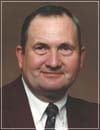
Carroll Poole

The Christ Of Bethlehem

Micah 5:2
Carroll Poole December, 15 2013 Audio
0 Comments
Carroll Poole
Carroll Poole December, 15 2013

Sermon Transcript

Auto-generated transcript • May contain errors

100%
in chapter 5 and verse 2. I'll give you a
moment to find it. This is the most familiar verse
in all the seven chapters of Micah's prophecy. And that being
simply because of the mention of Bethlehem, the birthplace
of Christ. So we'll read this one verse
this morning, Micah 5 verse 2. But thou, Bethlehem Ephrathah,
though thou be little among the thousands of Judah, yet out of
thee shall he come forth unto me, that is to be ruler in Israel,
whose goings forth have been from of old, from everlasting. Prophet Micah lived and preached
around 700 BC and if you read this book of the Bible you'll
find that he is burdened, he is weary, of prevailing
conditions in Israel. Conditions economically. The
rich oppressing the poor, and he talks about that. And the
politicians who make their judgments for reward, not for the good
of the people. And then he is burdened with
prevailing conditions spiritually. Howling prophets and preachers
and a corrupt priesthood. Then comes the word of announcing
the certain judgment of God upon them, not only to Samaria, the
northern kingdom called Israel, but also to Judah, his beloved
Jerusalem and the temple. It's coming. And in God's time that judgment
came through Nebuchadnezzar and the armies of Babylon. But right
in the midst of this, Micah receives from the Lord a word of hope, not a national
hope, but a spiritual hope, a hope that would come out of the place
least of all expected, Bethlehem. It's called here Bethlehem Ephrata,
that Ephrata distinguishing it from another Bethlehem, I believe
in the country of Zebulun. But this is Bethlehem, Ephrathah. And it was a small town about
five miles south of Jerusalem. And it's noted for its shepherd
fields and flocks of sheep. And so my emphasis this morning
is the Christ of Bethlehem. The Christ of Bethlehem. In so
many ways, when you study the scriptures, and study about Christ,
Bethlehem depicts the person of Christ, teaches us of Christ. So the first thing we'd consider
would be the Christ of Bethlehem in the suggestiveness of its
history. There's a little history behind
this place in the Old Testament, and it's a suggestive history. Bethlehem so clearly points to
Christ. First we would mention there's
a grave at Bethlehem, a grave. Turning to Genesis chapter 35,
we find the first mention of Bethlehem. Jacob is returning
home after many years in the house of his father-in-law, Laban,
where he has served faithfully for his beloved wife, Rachel. And as they journey, Rachel's
time comes to deliver a child. Let me read it to you, Genesis
35 and verse 16. And they journeyed from Bethel
And there was but a little way to come to Ephrata, and Rachel
travailed. She had hard labor. It came to
pass when she was in hard labor that the midwife said unto her,
Fear not, thou shalt have this son also. And it came to pass
as her soul was in departing, for she died, that she called
his name Ben-Oni. But his father called him Benjamin.
And Rachel died and was buried in the way to Ephrata, which
is Bethlehem. Bethlehem. So there's a grave
at Bethlehem. What is the lesson of the grave
at Bethlehem? Rachel, as she was dying, named
her newborn son Benoni, which means sorrow or son of my sorrow. It was sorrow for her. It would
mean sorrow for the baby growing up without his mother. But Jacob
never called him Benoni, son of sorrow. Jacob called him Benjamin. which means son of my right hand. Here is projected the two-fold
nature of the man Christ Jesus. In the human, he is a man of
sorrows and acquainted with grief. But as divine, he's the son of
the Father's right hand. Simeon, whom we talked about
last Sunday from Luke chapter 2, he said to Mary, yea, a sword
shall pierce through thy own soul also. He said, Sarah's going
to be your lot. Could she not have rightly named
her son, the Lord Jesus, but none I? That's the human side. But the divine side is another
story. He shall be called wonderful,
counselor, the mighty God, the everlasting Father, the Prince
of Peace. Isaiah said, for unto us a child
is born, that's the human side, and unto us a son is given, that's
the divine side. And we understand that the divine,
the eternal Son of God, precedes the human. He's not the son born,
he's the child born. He's the son given. He's the
son even if he had never been born. He's eternally the son. He's the son given long before
he's the child born. And Isaiah went on to say, and
the government shall be upon his shoulders. What government?
All government. And his name shall be called
Wonderful, Counselor, Mighty God, Everlasting Father, Prince
of Peace. He's Benoni, son of Mysara, to
dying Rachel. But he's Benjamin, son of my
right hand, to living Jacob. So it is with Christ. He is Benoni, son of Mysara,
He's no good to me, says a dying world without God. He's no good
to us. But Christ is Benjamin. He's
son of my right hand to the Father. This is my beloved Son in whom
I am well pleased. So there's the lesson of the
grave at Bethlehem, the twofold nature of Christ. Now, secondly,
There's grace at Bethlehem. Oh, yes. You remember the story
in the book of Ruth. There's a woman named Naomi whose
home was at Bethlehem. And after leaving with her husband
and two sons and them dying in Moab and all the sorrow and grief,
she wanted to change her name from Naomi which means pleasant,
to Marah, which means bitter. She told the women of the town,
when you come home to Bethlehem, don't call me Naomi. My life is not pleasant. My experience
has not been pleasant. Just call me Marah. I am bitterness
incarnate. My experience has been bitter. And her life has gone from happy
to horrible. She did not see herself as God's
instrument of bringing a cursed and despised
Moabite into the land of Israel. But that's what she did. But
there's a godly man Boaz waiting in the land of Israel. Oh yes,
in Bethlehem. And when Boaz sees Ruth, it's
not a despised, cursed Moabite that he sees, but one whom he falls in love
with. Love goes beyond all the curse
and all the shame. Grace surpasses guilt. Grace surpasses shame. Naomi testified, you remember
this, that she came home empty. She did not realize that in God's
grace, this Ruth is the one who would give her an heir, a grandson,
in the lineage of Christ. That's the lesson of grace at
Bethlehem. What is it? It's that Christ
does not save good people. There are none. There are none.
His grace is given to wretched sinners, wretched and cursed,
despised as was Ruth. Our Lord's own words were, I
came not to call the righteous meaning those who think they
are. But I've come to call sinners to repentance. There was a place
for Ruth. There's a place for sinners.
There's grace at Bethlehem. And all this Bethlehem is realized
in the person of Christ our Lord. Then thirdly, there's a glory
at Bethlehem in history. And oh, how suggestive this all
is. of who our Redeemer is, the Lord
Jesus Christ. There's a glory in 1 Samuel chapter
16. Remember the Lord said to his
prophet Samuel, I'm through with Saul. He's out of here. He's done. And he said to Samuel,
I want you to go to the house of Jesse, the Bethlehemite. There's a fellow that lives at
Bethlehem. He's named Jesse. Go to his house,
and I want you to anoint me a king to ascend the throne in the place
of Saul. Not one of your choosing, but
of my choosing." The Lord said, I have provided me a king there. It's already settled. It's already
done. I know which one it is. You don't
know, but you go. And so the glory of Bethlehem
is not in Jesse. The glory of Bethlehem is not
in the seven sons of Jesse. But it's in that eighth son.
The baby boy. The one least suspected. When they finally brought him
in, the Lord said to Samuel, that's him. Anoint him. He's McCain. He's just a boy
now, but not too far down the road. He's the very one who's
going to march out single-handedly and slay the Philistine giant. In time, he's going to ascend
the throne of Israel. He's going to build the kingdom
of Israel to be great, to be the fear and the dread of all
nations. But now he's just a boy. at Bethlehem. Born in Bethlehem. And He points
to another whose glory will far surpass His. He too will be born
at Bethlehem. It's what Micah is saying. How
would it be? How would it be? God. Now here's how it's going
to come about. God in His mighty Providence
and sovereignty would put into the mind and will of the Roman
Emperor, Caesar Augustus. Most powerful man on earth, he
thought. God would put it in his mind
and will to send out a decree that all the Roman world should
be taxed. And each one had to appear in
person in their native town. This required that Joseph, a
spouse to Mary, living in Nazareth, must journey to Bethlehem. And the timing was so that this
baby conceived of the Holy Ghost in Mary's womb, the timing was
that this babe would be born while they were at Bethlehem.
Only God. Only God. This is how big He
is. Oh, it disturbed, it affected,
this decreed the entire Roman Empire. Did you ever think about
that? A decree from Caesar Augustus. It affected everybody. Everybody
had to do this. But God did it to fulfill His
Word that we read to you this morning. Micah 5.2. Written 700
years earlier, God brought it to pass. Well, let me move on. So much for the suggestiveness
of Bethlehem's history. There's a grave there, Rachel's.
There's grace there, for Ruth. And there's glory there, David.
Now a second heading, quickly. We see the Christ of Bethlehem
in the smallness of its hopes. Jerusalem was everything. Bethlehem
was nothing. The Jews were certain that the
Messiah would be one who would, you know, ascend the ladder of
education and religious teaching and standing at Jerusalem. His being born at Bethlehem created
mystery and confusion in great religious minds. They couldn't
believe it. John 7 41, shall Christ come
out of Galilee? Surely not. The same was said of his upbringing
at Nazareth. Can there any good thing come
out of Nazareth? They questioned his knowledge.
How knoweth this man letters, having never learned? He didn't
come through our schools and our training. He can't be of
God. John 9 said he's a sinner. They
said we know this man is a sinner. Oh, the smallness of Bethlehem's
hope. He can't be a prophet. We never
trained him. He can't be a priest. He's not
a Levite. He can't be a king. He's just a bastard child conceived
out and born out of wedlock. We talked about that wedlock
in the lesson this morning. The betrothal and the feast,
the time in between there. Remember they said, we'll not
have this man to reign over us. Oh no. But Luke 1.33, heaven said he shall reign over
the house of Jacob forever. That's not national Israel. But
there's a huge family of Jacobs in this world. I'm one of them. You're one of them. Supplanters, deceivers, scoundrels. That's what Jacob was. The great family of Jacobs, whom
does Christ in his own time hymns us up one by one in an all-night
wrestling match like he did Jacob. And changes our names from Jacob
to Israel, which means a prince with God. Oh yes. Oh, the smallness of Bethlehem's
hope in men's eyes, but God said he shall be great. He shall be
great. He should be called Emmanuel.
He should be called Son of the Highest. He should be called
the Son of God. And then thirdly, we see the
Christ of Bethlehem in the shepherd of its hills. Around the hills of Bethlehem
from before David's time, plum on to Christ's day, plum on to
this day, right now. Shepherds can be seen tending
flocks all around the hills of Bethlehem. And this name Bethlehem,
it has a double meaning. It means the house of bread. It also means the house of war. And that is the two-fold job
description of a shepherd. Provision and protection. Bread and more. To feed the sheep,
house of bread. To fight for the sheep, house
of war. Did not our Lord say on the one
hand, I am the bread, come down from heaven. There's the provision. And then did he not say also
in John 10, I lay down my life for the sheep. There's the protection. And just as literal sheep are
protected from literal wolves by literal shepherds, so Christ's
sheep are protected from the wolves of hell as we live day
by day, from the wooings of Satan, we're saved from the wages of
sin. Why? Because Christ our shepherd
laid down his life for the sheep. Oh Christ of Bethlehem, we see
him in the shepherd of the hills. You remember in John chapter
6, immediately after he fed the 5,000, he said, the bread which
I give is my flesh. Except you eat my flesh and drink
my blood, you have no life in you. Well, now we know that only
the living have an appetite. And only the living in God, only
those quickened, only the living in Christ have an appetite for
the bread of God, the lamb of God. That 5,000 that day, they
all wanted part of that multiplied loaves and fishes. They all wanted
to get their belly filled. 5,000 men, the scripture says,
besides women and children. Could have been 15 or 20,000
total. But when he starts talking like
this, except you eat my flesh and drink my blood, the scripture
says from that time, that is from then on, many of his disciples
went back and walked no more with him. They just wanted his
miracles, they didn't want him. What do you want this morning?
Just His miracles? Or do you want Him? Do you want
a God who is Santa Claus? Or do you want God? Big difference. Big difference. Many, many, many,
many of His disciples, that is learners, students, went back
and walked no more with Him. Then he turned to the twelve
and said, what about you boys? Will you also go away? And Simon
Peter answered and said, Lord, to whom shall we go? Thou hast the words of eternal
life. Christ our shepherd. He is given in a threefold description
in the New Testament. He's the good shepherd that died
for us. John 10 and 11. He's the great
shepherd that keeps us now. Hebrews 13, 20 and 21. And he's
the chief shepherd that's coming back again. 1 Peter 5 and 4. He's the shepherd of the hills.
And we see the Christ of Bethlehem in that light. Then fourthly,
I would view the Christ of Bethlehem in the secret of heaven. What's
the secret? Micah tells us that this one
to be born was not put on the schedule in
Herod's time. He wasn't put on the schedule
in David's time or Moses' time This wasn't even put on the schedule
when Adam fell. It's not an afterthought with
God responding to a dilemma, oh no. But Micah says here of
Christ, whose goings forth have been from of old, even from everlasting. How long has Christ been coming?
He's been coming forever. From everlasting. From the eons of eternity. Christ
Jesus, God the Son, was headed this way. You say, that's too
big for me. It's too big for me. What does
that mean? It means then, from the eons
of eternity, you were a God-rejecting rebel
who needed a Redeemer. You see, I wasn't even born in
the mind of God you was. Nobody knew me. God knew you. From the eons of eternity, He's
been doing something about it forever. Forever. I want to love a God like that.
Don't you? Oh, yes. You see, this little moment of
time we're in this world determines nothing. It reveals everything. Don't miss that. I'm going to
repeat that. This little moment of time we're in this world determines
nothing. It reveals everything. And this morning, if you're determined
to go to hell, then go on. You've been headed that way forever. But for those of us whom the
Lord has changed our heart and moved into our lives and given
us a love for Him, How glorious, glorious the thought. This didn't
start yesterday. It didn't start last year or
years ago when you made that profession. No, no. It's been God's mind forever that He send one in the person
of His Son, God the Son Himself, that he'd come and pay your sin
debt, come and do something about what you are. That's heaven's
secret. And then fifthly and finally,
in this Christ of Bethlehem, we find the satisfaction of hearts.
The satisfaction of hearts is to be found nowhere in no thing
or no one in all the world, but in Christ. And this involves an escape,
an embrace, and an exit. Three things. In Christ, I've
escaped Adam's race. Oh, I know I still look like
him, act like him, and I'm dying like him. I know that. But in
Christ, I've escaped Adam's race. God is my father. My citizenship is in heaven.
This world is not my home. I'm just a passing through. I've
escaped. I've escaped. In Christ, I've experienced and
embraced a love that will not let me go
in spite of me. It's not my hold on Him that's
worth anything. It's His hold on me. And in Christ, I'm anticipating
an exit from this life. It may be today. It may be tomorrow. I don't know. You don't know. But I'm anticipating an exit. Not to receive a bunch of trophies
for what all I've done for Him. That's somebody else's story,
not mine. But rather, to come into the full realization that
I am a trophy. A trophy of His grace. You see, the value of a trophy
to its owner is not in the material it's made
of, but in what it represents. It
may be made of wood with a little brass plaque and not worth all
that much monetarily, but the value is in what it represents. And for a wretch like me, To be in Christ's presence and
to be one with Him forever is such a marvel of grace. I'll deserve no song sung to
me, neither will you, but just another trophy of His
grace belonging to Him. Calling for another anthem They'll
look at me, they'll look at you, they'll look at this one, they'll
look at this one. All trophies of grace calling for another
anthem. Worthy is the Lamb that was slain, who hath loved us and washed
us from our sins in his own blood. The songwriter put it like this,
ye chosen seed, of Israel's race. True Israel is Christ, by the
way. You chosen seed of Israel's race, that's me. You ransomed
from the fall, that's me. Hail Him who saved you by His
grace, that's me. That's Him. And crown Him Lord
of all. I want to do it today in my heart. What am I talking about? I'm
talking about the Christ of Bethlehem. We don't worship a baby Jesus
in a manger. Oh no. We worship one who was
born and according to the scriptural record was laid in a manger. But oh no. He's not the baby
Jesus now. He lived and died on a cross
and rose again and ascended on high. He's King of Kings and
Lord of Lords forever. He's calling the shots. Bless
his holy name. All right. Thank you for your
attention. Stand together.
Carroll Poole
About Carroll Poole
Carroll Poole is Pastor of East Hendersonville Baptist Church, Hendersonville, NC. He may be reached via email at carrollpoole@bellsouth.net.
Broadcaster:

Comments

0 / 2000 characters
Comments are moderated before appearing.

Be the first to comment!

Joshua

Joshua

Shall we play a game? Ask me about articles, sermons, or theology from our library. I can also help you navigate the site.