Bootstrap
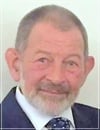
Daniel Parks

Come To Me

Matthew 11:28-30
Daniel Parks December, 4 2007 Audio
0 Comments

Sermon Transcript

Auto-generated transcript • May contain errors

100%
I invite your attention to the
eleventh chapter of the Gospel according to Matthew. Matthew chapter eleven. Our Lord and Savior Jesus Christ
came to men. Now He calls men to come to Him. His purpose in coming to men
was to save lost sinners. For the Son of Man has come to
seek and to save that which was lost. And Christ Jesus came into
the world to save sinners. That's why He came. He who came to save lost sinners
now calls lost sinners to come to Him for His salvation. And He does so in our text in
verse 28. Come to Me. All you who labor and are heavy
laden, and I will give you rest. Take my yoke upon you and learn
of me. For I am meek or gentle and lowly
in heart, and you will find rest for your souls. For my yoke is
easy and my burden is light. In those three verses, we're going to look at the subject
of come to me. That's what Jesus is saying,
come to me. And in this text of three verses,
we're going to observe three things. First, the persons here
addressed. Second, the promise here given. And third, the action here required. So let's look, first of all,
at the persons here addressed. Who are they? To whom does the
Lord speak? All you who labor and are heavy
laden. Observe, first of all, that Jesus
addresses you who labor. These are weary toilers. The Greek word here translated
labor refers not so much to the actual exertion as it does to
the weariness that results from extreme straining. Here are some
who are straining extremely and therefore they are weary with
their labor. Christ speaks in particular of
those who strenuously toil to the point of weariness in legal
ways of righteousness. They labor to the point of weariness
to be righteous by their own works. Paul says they have a
zeal for God, but not according to knowledge, for they being
ignorant of God's righteousness and seeking to establish their
own righteousness have not submitted to the righteousness of God.
And until a man submits to the righteousness of God, he is a
weary toiler in ways of legal righteousness. These will labor
in their religious duties, like that Pharisee that prayed in
the temple. He said, Lord, I'm not like other
men. I weary labor in my religion. I fast and I tithe, and I make
myself weary in all that I do. And then these labor some more
because they feared that their previous labors have not been
enough. And I say to you that if you labor to be righteous,
you are seeking the wrong righteousness and you will never obtain the
righteousness for which you weary yourself. But Jesus has good
news for you. Furthermore, Jesus addresses
you who are heavy laden. Now these are the excessively
burdened and this explains why they are weary toilers. Just before we walked in tonight
in the prayer session, passage was read from the book of Isaiah
about the oxen of Babylon that were heavily laden with their
religious idols and wearily pulled them along and the only place
they were ever going to go was into captivity. And I thought
what an apt description this is of people in legal ways of
righteousness under a heavy yoke and a heavy burden and wearily
plotting alone because they are heavily laden. Now, Christ here
speaks of one class of people in particular But his words are
applicable to men in general, but we will consider the second
group first. Consider some are heavy laden
with sin. Laden with sin. Every man is
heavily laden with sin. For his wickedness is great and
his iniquity is boundless. We read in Job 22 verse 5. Yes, every man is heavily laden
in sin. But not all men are sensible
to their load. Some will finally confess, my
iniquities have gone over my head. Like a heavy burden, they
are too heavy for me. As the psalmist said in Psalm
38 verse 4. When a man realizes what a sinner
he is, he then realizes what a heavy load he is seeing is. And he will say, God be merciful
to me. the sinner, I am heavily laden
with my load of sin. And Jesus here has good news
for such heavily laden sinners. But in particular, Jesus here
speaks of those who are heavy laden by religion. Yes, some are heavy laden with
sin, but others are heavy laden by religion. Religious leaders
have heavily laden them with sectarian laws and human traditions
purported to merit favor with God. The Pharisees came to Jesus
one day and they said, we observed that your disciples do not wash
their hands and that violates the tradition of the fathers.
And so they took these traditions and laid them on their disciples
and made them a heavy load unto them. It is with good reason
that when our Lord spoke of Pharisees, He spoke also of scribes. And
what were scribes but lawyers, legalistic men. And our Lord
says that these sectarian lawyers delight to load men with legalistic
burdens hard to bear, Luke 11, 46. He says, they bind heavy
burdens, hard to bear, and lay them on men's shoulders, but
they themselves will not move them with even one of their fingers. Matthew 23, verse 4. Such burdens
are sometimes negative. A negative load of burdens will
involve do not touch, do not taste, and do not handle, as
Paul says in Colossians 2, 21. Some people think they are righteous
and holy because of things they do not do. No unholy thing has touched my
lips. These hands have not touched
unholy things. And the burden that their lawyers
lay upon them is one of saying that in order to be holy and
righteous, you cannot do these things. But then again, some
of these burdens are positive. These involve duties that must
be performed. Now, man-made religion divides
itself into all kinds of sects and denominations. And the laws
and traditions vary widely from sect to sect. But religious sects,
religious groups, strictly govern with a heavy load what must and
must not be done. Some are commanding to abstain
from foods which God created to be received with thanksgiving
by those who believe and know the truth. Some lay the heavy
burden of dietary laws and say, here are foods you cannot eat,
usually pork, or maybe they say you cannot eat meat on Friday
except for fish. What a heavy burden is that?
Some forbid certain drinks, as Paul says in Colossians 2, 16. And especially do they forbid
wine that makes glad the heart of man, Solomon Ophir, verse
15. It should not surprise us that
people with a heavy load of sin are usually sour and dour people
because they're forbidden to take that which makes merry man's
heart. Some forbid eating and drinking
in a church building. In this part of the country,
surely you know of some that have said it's wrong to eat in
the church building. I have been told to my face that
I'm going to hell because I eat in the church building and I
compound the sin by having a kitchen in the church building. Where'd
you get that? Well, they say the Bible says
that you have houses to eat in and you should not do that in
the house of God. It never seems to dawn on those
folks that in the first century, the house you ate in was the
same place you worship because he didn't have church buildings.
But let me illustrate the inconsistency of this, that eating or drinking
in a church building is a sin. These forbid kitchens. Where
food may be prepared and where it may be eaten and drink may
be drunk. But they provide comfortable
toilets where one may relieve himself of what he ate or drank
before he came. Is that not a little inconsistent?
That a kitchen is unholy, but a toilet is holy? How can this? What a heavy burden this is that
religion puts upon people. Some forbid modern conveniences
such as electricity and automobiles. Some who permit automobiles because
they say that's too heavy a burden to not have an automobile, we
must have an automobile. But here's what we'll do. We'll
let you have an automobile, but no chrome, no chrome. I kid you not. What a heavy burden
this is to bear. In the same sect a few centuries
ago, when the zipper was invented, the denomination split because
they said this is too much of a modern convenience. And so,
ladies and gentlemen, putting zippers in their jackets, no,
you'll go to hell if you do that. What a heavy burden we put upon
people in religion. Some forbid jewelry. Even jewelry
like that which Jesus commended for the prodigal son. What a
heavy burden is this. Some forbid women to wear cosmetics. And it does not surprise us that
some of their ministers run off with women who do. Some years ago, some young ladies
in St. Lucia cornered me. We had just
moved there a short time before and they noticed that my wife
wore a little bit of makeup. And so they cornered me and they
said, and by the way, these young women, and they were glad to
see it, by the way. But anyway, they said, do you let your wife
wear makeup? And I said, I don't let my wife
do anything. My wife was a free woman and
does whatever she wants to do. And I like it like that. What
a heavy burden it is to tell women what they cannot put on
their face. Some forbid men to trim their
beards and forbid women to cut their hair. Telling women, you
must wear your hair long, but if the burden is too heavy to
wear, you can roll it up into a bun. Some forbid the use of mirrors.
They claim these cause one to be vain. I knew a man many years
ago, who permitted only one mirror in the house. But his wife and
his daughters were not permitted to use it. It was for him because
he said, I have to shave. I have to shave. Pardon me if
I say that sounds a bit chauvinistic, but then again, religion usually
is chauvinistic, is it not? Some forbid blood transfusions. Interestingly, today, and you
can probably still find it on Drudge Report if you've got internet
access, there is a young man with a grotesque disease. His face, you wouldn't know,
he does not look like a human. And the treatment for it is a
blood transfusion, but he cannot take it because he is a self-professed
Jehovah's Witness. What a heavy burden to bear. Some forbid inoculations against
disease. Even in life or death, I may
die, but I'll die religious with my heavy burden of tradition. Some forbid seeking remedy from
any practitioner of medicine. Some forbid military service
of any kind. And some forbid even saluting
their country's flag. Some are forbidding to marry.
As Paul says in 1 Timothy 4 verse 3, as one sect does for its priests,
which should not surprise us that their priests take out their
frustrations on other people, children, for example. There's
another sect that used to forbid marriage to every adherent in
the sect. I say used to because they're
now extinct. By the way, they lived very close
to you here. They're now extinct. What a heavy burden that was.
The burden was so heavy it put the whole movement out of existence,
shaking all the way. Some require the clergy to dress
differently from the laity, and they require the laity to defer
to the clergy. Some require the observance of
religious days and festivals, as Paul says in Colossians 2,
16. Some require Sabbath keeping,
but they usually also forbid preparing a meal on that day
or heating a residence on such days. What a heavy burn it is
to eat your food cold and to have no heat in freezing weather. But we're religious and we like
it. Some require adherence to confess
their sins to their priests. One has to wonder to whom do
the priests confess their sins. But then again, religion is that
way, you see. Some governed very stringently
what women may wear. And in some Eastern countries,
if women do not dress appropriately, they suffer the pain of death
for noncompliance. Some require women to defer to
men, perhaps even to be their chattel. Some govern how many
times a day to pray, at what times in the day to pray, and
in what direction to face. Some require hands to be ritualistic
washed before eating, as in Matthew 15, verses 1 and 2. Some require fasting. It's no
wonder they're weary. Some require tithing. And I have
known of some religious leaders who required proof of income
from every church member so they could make sure that you tithe.
And I knew one man on Tortola, one religious leader who knew
the payday of every man and went to that man's house on payday
to get the tithe. What a heavy burden to bear. Oh, I could cite many more such
burdens. But it would weary me too much
to say such a heavy burden, and weary many of you to even hear
such a burden. But pity the poor sinner who
wearies himself in fulfilling such a burden. This has been
laid upon me, and I will weary myself to perform it, they say. Truly, they labor and are heavy
laden. and are excessively burdened,
weary toilers. Oh, my friend, Jesus here has
good news for such people. Jesus calls you who labor. Jesus calls you
who are heavy laden. Jesus furthermore calls all you
who labor and are heavy laden. Jesus will freely receive any
burdened weary toil who comes to him and he will reject none
Prove it come come Jesus Christ has good news For heavily laden
weary toilers all of them Second observe the promise here
given He says, I will give you rest. What is rest? Rest is a
cessation from labor. But this rest is not the cessation
from all labor. For when you enter into this
labor, you must also put on the yoke. Verse 29. Rather, this rest is the cessation
of all labors that never satisfy, including those thought to establish
one's own righteousness, and those under the burdens of religious
duties imposed by others. You won't rest from all those
duties. Jesus promises it. Are you walking in weary ways
of legal righteousness, there's rest from that. Jesus promises
it. Observe furthermore that this
rest is spiritual, not physical. You do not need me to tell you
that the curse for man's sin includes no promise of physical
rest in this earthly life. Until the day you die. You will eat your bread by the
sweat of your brow. There is no rest from that. No
rest at all. And even here in this life, no
rest from physical labor, but there is rest, my friend, from
spiritual labor. Christ here in his gospel promises
spiritual rest. He says, rest for your souls. Notice furthermore that this
rest is both negative and positive. On the negative side, this rest
is the absence from uncertainty, fear, anxiety, and despair. Now, look at the man in religion.
Do you want to see uncertainty? There it is. He's under a heavy
load He is wearily plotting alone in it, but he does not know if
he yet has done enough. And he's told he might lose his
salvation and then got to start all over again. The uncertainty,
do you see that? The fear that religion puts upon
men, do this or you'll have no favor with our religion. The
anxiety that men are under, the despair of their souls going
through life with this heavy load upon them and wearily plodding
along in it. Jesus promises rest from all
that uncertainty and all that fear. and all that anxiety and
all that despair. And this is good news indeed
for those who wonder if Christ is capable of relieving them
from their excessive burdens. Religion will not. But can Christ? Well, listen, folks, where sin
abounded, grace abounded much more. So I say to you that negatively,
you get rest from all that. But positively, Here is rest
for both mind and heart. This is truly rest for your souls. For these are assured that the
God of hope will fill you with all joy and peace in believing
that you may abound in hope by the power of the Holy Spirit.
Rest. Rest. Oh, this is good news for
weary laborers, heavily laden sinners, whether laden with their
sin or by their religion. Here is good news. There's rest. There's rest. Third and last,
observe the action here required. Now, we have observed the persons
here addressed, all you who labor and are heavy laden. We have
observed the promise here given. I will give you rest. But now
finally observe the action here required. What is it? Come to
me. Come to me. What is coming to Christ? First of all, Coming to Christ
is believing in Him unto salvation. How do we know this? How can
we equate coming to Christ with believing in Christ? Because
Christ makes that equation. He equates coming to Him with
believing in Him. He says, if anyone thirsts, let
him come to me and drink. He who believes in me, as the
scripture said, out of his heart will flow rivers of living water.
So our Lord said, coming to me is believing in me. Believing
in me is coming to me. He says, furthermore, I am the
bread of life. He who comes to me shall never
hunger. He who believes in me shall never
thirst. So what is coming to Christ?
believing in him. To believe is to come, to come
is to believe. He who has savingly believed
in Christ has savingly come to Christ. Let me point out something
else to you as well. The distance between you and
Christ, we may say, is the greatest distance in the universe. The
distance between the holy God and the wretched center. What
a great gulf that is. What a far distance that is.
Well, my friend, we could spend the rest of our lives trying
to traverse that distance and we would never make it. But Jesus
says, to come to me is to believe in me. And when you take the
first step, you have arrived. You're there. The moment you
believe in Christ and take that first step, you have walked right
into Christ. Believing in him under salvation
is what it is to come to Christ. But there's something else. Coming
to Christ involves submitting to him as Lord. This Christ requires
when he says, take my yoke upon you. One cannot believe in Christ
as Savior without also submitting to Him as Lord. I realize that
there is religion all around us. They argue this, and some
of them say, well, you know, he believes in Jesus Christ. He just doesn't live like it.
Jesus is his Savior, but not his Lord. No. No. Christ receives none to be that
man's Savior until that man bows to Christ and acknowledges Him
as Lord. One must believe in Christ as
Savior and put on his yoke, acknowledging Him as Lord. What is a yoke?
Well, it's a wooden frame designed to make a burden easier to bear. It's hard to carry a burden sometimes. Sometimes the shape of the burden
makes it difficult to grab hold on to, but if you've got a yoke
and if you can attach your burden to the yoke, why, that makes
that burden so much easier to bear. There's a spiritual sense in
which the yoke is the sum total of obligations one must take
upon himself. The yoke is what you must take
upon yourself. Now religion lays this upon you.
It's the yoke of religion, but there's also the yoke of Christ.
And to take the yoke of Christ is to perform the service Christ
requires. Oh, but listen, folks, there
is a vast contrast between the yoke of legalistic religious
leaders and the yoke of Christ. Peter says, of the former. He says they are putting a yoke
on the neck of the disciples, which neither our fathers nor
we are able to bear. But Christ says my yoke is easy
and my burden is light. Coming to Christ means getting
into the yoke. Coming to Christ means taking
that sum total of all the obligations that come upon a Christian. having
taken Christ and submitted to Him as Lord. But it's an easy
yoke. It never chafes. The burden is
light. You will never be a weary toiler
underneath it. We therefore say serving Christ
is a work and labor of love, of love, such as that which is
performed in glory. In Revelation 4, verse 8, we
read of living creatures. four of them, around the throne
of God. And John says, they rest not,
day nor night, but unceasingly work before the Lord and saying,
holy, holy, holy Lord God of hosts. And they never rest from
that, never took a break. And they love to do it because
that yoke is easy and that burden is light. It is a work and a
labor of love. Another reason why this is a
yoke that is easy is because we may also say we become yoke
fellows with Christ. In olden times, farmers plowed
their field with oxen. And you put two of them together.
And you want to make sure they walk together and pull the plow.
Have some harmony between them. So you put a yoke. Both of them
in the yoke. And here they go along together. There's a reason why the Lord
said do not put a donkey and an oxen together. They don't
walk in harmony. But here we find two oxen together. under the yoke and they pull
that yoke along and the burden becomes that much the line because
they work together. Christians are laborers together
with Christ who we have taken his yoke upon us and all the
yoke is easy. It does not chafe. The burden
is light. We just walk along with him in
his yoke. And then Coming to Christ is
first, as we said, believing in him unto salvation, submitting
to him as Lord, and third, coming to Christ involves following
him as teacher. This Christ requires when he
says, learn of me or learn from me. This we do initially. When we receive his teaching
that salvation is through coming to him Oh, that is one of the
hardest lessons we'll ever learn. You mean, Lord, tell me. I gave up all these things. And I did what they told me to
do, and I know never to you than I was before. No, you're further
away now. Lord, that ain't fair. Who said
religion's fair? The Lord came to save men from
manmade religion. One of the hardest lessons you'll
have to learn is this. What it is to come to Christ. It's not your legalistic works.
It is not what you do or what you abstain from. It's just believing
in him. One of the most difficult things
you'll ever do is Believe in Him. And yet, my friend, that's the
first lesson you'll learn. When Christ begins to teach you,
the lesson taught is, Come to Me. All that are taught to the
Father, Come to Me. That's the first lesson they
learn. Come. Come. Come to Me. And then afterward,
We stay in the college of Christ and he teaches us by his example. He says, I am meek or I am gentle
and lowly in heart. That's the lesson we've got to
learn. We've got to learn to be meek and gentle. I wonder if it was as hard for
you as it was for me, but he teaches that. And his example
shows us what gentleness is. You want to know what a true
gentleman is? Look to Christ. There's a gentle man. Want to
see what neatness is? Look to Christ. Want to see what
lowliness is? Look to Christ. He teaches us
that lesson. And to this end, we confess. He has shown you, old man, what
is good. And what does the Lord require
of you? Now, we know what religion requires. All the things we just burdened
you with a while ago and even telling you about them. What
a heavy burden that was just to recite them and to hear them.
What does Christ require? He has shown you, old man, we
read in Micah 6, 8, What is good, what is right, and what does
the Lord require of you but three things? Here they are. To do
justly, to love mercy, and to walk humbly with your God. What is it to do justly? To do the right thing. That's
what he requires. What does religion require? Do
the wrong thing. Do legal works. Do things that
may get you favor with our religion. That's the wrong thing. Christ
teaches you the right thing. Come to me. To do justly, to
do that which is right. And then to love mercy. Love mercy. You don't find much
mercy in religion. Jesus says, to the legalistic
sectarian lawyers, you lay heavy burdens on people and will not
move them with so much as one of your fingers. No mercy in
religion, folks. No mercy. Your burden, learn
to carry it. Jesus says to his disciples,
love mercy. One of the most merciful things
you'll ever do is to find heavy laden. weary, toiling sinners
and tell them of Christ who says, come to me, come to me. What a merciful thing it is to
tell folk of a savior who saves by merely coming to me and then
to walk humbly with your God. Walk humbly with him. Do you
want to know the easiest way to know that you're walking humbly
with him? Get into his yoke. He sets the pace. He sets the
direction to walk humbly with him. Not before him, not so much
behind him. Walk with him. Religion puts
itself above people. Christ says, come here, walk
with me, walk with me. And in all these things, Christ
is our exemplar. He did justly. He loved mercy. He walked humbly with his God.
He came to men to show us what it was to do so. And now he says,
come to me, all you labor, and every lady and I will give you
rest. Come, ye sinners, poor and wretched,
Weak and wounded, sick and sore. Jesus ready stands to save you. Full of pity, joined with power.
Come, ye thirsty. Come and welcome. God's free
bounty glorify. Full belief and true repentance,
every grace that brings you nigh. Come, ye weary, heavy laden. lost and broken by the fall. For if you tarry till you're
better, you will never come at all. Let not conscience make
you linger, nor of fitness fondly dream. All the fitness he requireth
is to feel your need of him. So I will arise and go to Jesus,
and he will embrace me in his arms. And in the arms of my dear
Savior, oh, there are 10,000 charms. Come to Christ.
Daniel Parks
About Daniel Parks
Daniel E. “Moose” Parks is pastor of Sovereign Grace Church, 1000 7th Avenue South, Great Falls, Montana 59405. Call/text: 931.637-5684. Email: MooseParks@aol.com.
Broadcaster:

Comments

0 / 2000 characters
Comments are moderated before appearing.

Be the first to comment!

Joshua

Joshua

Shall we play a game? Ask me about articles, sermons, or theology from our library. I can also help you navigate the site.