4th century BC
Plato
- Idealism — forms over particulars
- The Republic ethic: “God is not the author of evil”
In 1947, a Bedouin shepherd discovered clay jars in caves near Qumran, along the northwestern shore of the Dead Sea. Inside the jars were scrolls that had been hidden for over two thousand years. The scrolls contained biblical manuscripts, sectarian rules, hymns, and theological writings from a Jewish community that existed from roughly the second century BC to the first century AD.
The community was led by a figure known only as the Teacher of Righteousness. We don’t know his real name. We know that he taught the sovereign grace of God, that his followers fled into the desert to escape the Pharisees, and that his writings were sealed in caves and forgotten for two millennia.
The theological content of the Qumran scrolls is explicitly predestinarian. What follows is a selection of the most significant passages, drawn from the Hodayot (Thanksgiving Hymns), the Community Rule, and the Aramaic Apocalypse. These are not cherry-picked fragments. They are sustained theological arguments, written two centuries before Christ, that read like they could have been written by the authors of this book.
First, a word from the historian who recorded what the Essenes believed:
“The sect of the Essenes affirm, that fate (God) governs all things, and that nothing befalls men but what is according to its determination.” — Flavius Josephus, Antiquities of the Jews, Bk XIII, Ch V, Sn 9
Note the contrast: Josephus explicitly records that the Essenes held to absolute predestination, unlike the Pharisees and Sadducees, who allow for some scope for free will. The debate is 2,200 years old. The sides have not changed.
On the sovereignty of God over all things:
“Everything is engraved before You with the ink of remembrance for all the times of eternity, for the numbered seasons of eternal years in all their appointed times. Nothing is hidden, nor does anything exist apart from Your presence.” — Thanksgiving Psalms (1QH 9.24-25)
“All that is now and ever shall be originates with the God of knowledge. Before things come to be, He has ordered all their designs, so that when they do come to exist, at their appointed times as ordained by His glorious plan, they fulfill their destiny, a destiny impossible to change. He controls the laws governing all things, and He provides for all their pursuits.” — Community Rule (1QS 3.15-17)
On justification by grace alone:
“As for me, my justification lies with God. In his hand are the perfection of my walk and the virtues of my heart. By His righteousness is my transgression blotted out.”
“As for me, to evil humanity and the counsel of perverse flesh do I belong. My transgressions, evils, sins, and corrupt heart belong to the counsel of wormy rot and those who walk in darkness. Surely a man’s way is not his own; neither can any person firm his own step. Surely justification is of God.”
“As for me, if I stumble, God’s loving-kindness forever shall save me. If through the sin of the flesh I fall, my justification will be by the righteousness of God which endures for all time. Though my affliction break out, He shall draw my soul back from the Pit, and firm my steps on the way. Through his love He has brought me near; by His loving-kindness shall He provide my justification. By his righteous truth has He justified me; and through His exceeding goodness shall He atone for all my sins. By His righteousness shall He cleanse me of human defilement and the sin of humankind, to the end that I praise God for His righteousness, the Most High for His glory.”
Read that passage again. “Justification is of God.” “By the righteousness of God.” “Not his own.” “Neither can any person firm his own step.” This is not Calvin in 1536. This is not Luther in 1517. This is a Jewish writer, two centuries before Christ, articulating sola gratia with a precision that most Reformed theologians would envy.
On the two seeds — the righteous created for grace, the wicked created for wrath:
“I know by Your understanding that it is not by human strength . . . a man’s way is not in himself, nor is a person able to determine his step. But I know that in Your hand is the inclination of every spirit, and all his works You have determined before ever You created him. How should any be able to change Your words? You alone have created the righteous one, and from the womb You established him to give heed to Your covenant at the appointed time of grace and to walk in all things, nourishing him in the abundance of Your compassion, and relieving all the distress of his soul for an eternal salvation and everlasting peace without want. Thus You raise his glory above the mortal. But the wicked You created for the time of Your wrath, and from the womb You set them apart for the day of slaughter. For they walk in a way which is not profitable, and they reject Your covenant and their soul abhors Your truth. They have no delight in all that You have commanded, but they chose that which You hate.” — 1QHodayot 7, translated in The Dead Sea Scrolls: A New Translation, Michael Wise, Martin Abegg, Jr., & Edward Cook, p. 89 (HarperSanFrancisco: 1996)
On God as Author of all creation, including every spirit and every word:
“By Thy wisdom all things exist from eternity, and before creating them Thou knewest their works for ever and ever. Nothing is done without thee and nothing is known unless Thou desire it. Thou hast created all the spirits and hast established a statute and law for all their works . . . Thou hast created the earth by Thy power and the seas and deeps by Thy might. Thou hast fashioned all their inhabitants according to Thy wisdom, and hast appointed all that is in them according to Thy will . . . In the wisdom of Thy knowledge Thou didst establish their destiny before ever they were. All things exist according to Thy will and without Thee nothing is done.” — 1QHodayot IX, translated in The Complete Dead Sea Scrolls in English, Geza Vermes, pp. 253-255 (Penguin Books: 1997)
On the deity of the coming Messiah:
“He will be great over the earth . . . all will worship him . . . He shall be called great and he will be designated by his name. He will be called ‘Son of God’ and they will call Him ‘Son of the Most High’ . . . His kingdom will be an eternal kingdom, and all His paths in truth and uprightness . . . He is a great God of gods . . . His kingdom will be an eternal kingdom, and none of the abysses of the earth shall prevail against it.” — 4QAramaic Apocalypse (4Q246) Col. I:7-9; Col. II: 1,5-8
These texts teach:
This is the same theology presented in this book. Not because we borrowed from the scrolls. Because both derive from the same Scriptures. And it is no wonder that modern scholars have dismissed this theology. It violates their free will and conditional system. The Pharisees of today are the same as yesterday.
Modern scholars have largely dismissed the predestinarian theology of the scrolls. The emphasis in Dead Sea Scrolls scholarship has been on the archaeology, the textual variants, the community’s practices, and the historical context. The theology — the explicit, unambiguous predestinarianism — is routinely downplayed, recontextualized, or ignored.
The Pharisees of the first century suppressed this theology with political power. The scholars of the twentieth and twenty-first centuries suppress it with academic indifference. The method changed. The result is the same.
The Dead Sea Scrolls demonstrate that sovereign grace theology is not a later invention of Augustine, Calvin, or the Reformers. It is the original Hebrew theology. The predestinarianism that the church attributes to Calvin in the sixteenth century was already present in Jewish nonconformist communities two centuries before Christ. The Pharisees corrupted it with Greek philosophy. The scrolls preserve what the Pharisees tried to destroy.
This matters because it places the framework of this book in a historical lineage that stretches far beyond the Reformation. The Teacher of Righteousness, Luther, Toplady, Gill, Higby, and this book are all standing in the same stream. Different centuries. Same truth. Same suppression. Same Author behind it all.
Copyright © 2026 by Brandan Kraft. All rights reserved.
Published by Pristine Grace Publishing · pristinegrace.org
ISBN: 979-8-234-05049-6 · First Edition, 2026
Read A Thought in the Mind of God offline in your preferred format.
Use the floating arrows on the sides or the arrows in the top bar to move between chapters.
Tap the 🧠 mind button in the lower right to browse all chapters, search the book, view your bookmarks, and access the Bible.
Search the entire book for any word or phrase. Results link directly to the matching text.
Click the "Bookmark" pill next to any section heading to save your place. Find your bookmarks in the mind menu or in the sidebar.
Tap the clock icon in the top bar to jump back to chapters you've recently visited.
On desktop, the sidebar shows all chapters and sections. Use the filter at the bottom to quickly find a topic.
Everything that exists is a thought in the mind of God.
J/K to scroll, N/P for next/previous chapter, S to search, B to bookmark. Tap to see them all.
Password:
Try again.
Shall we play a game? Ask me about articles, sermons, or theology from our library. I can also help you navigate the site.
Everything that exists is a thought in the mind of God.
Try again.
I spent the majority of my adult life building something I didn't know had a name. It started with the Scriptures and a lot of late nights. It ended with one sentence that generates every theological position I hold, from the nature of God to the nature of heaven and hell, without contradiction. One sentence. Thirty chapters. Sixteen appendices. And if you accept the sentence, everything else follows.
Most systematic theologies start with a list of doctrines and work through them one by one. This book starts with an ontological claim - that everything that exists is a thought in the mind of God - and derives everything from that single proposition. This is not a rearrangement of existing theology. This is a paradigm shift. Since Augustine imported Plato's metaphysics into the church in the fourth century, every major system of Christian theology has been built on a foundation the Scriptures never laid. This book identifies that foundation, names it, traces its influence across sixteen centuries, and replaces it with an ontology derived from Scripture alone. If the claim holds, this is the most significant shift in the theological starting point since Augustine. And I believe it holds.
This is not a devotional. This is not a commentary. This is a systematic theology built from the ground up by a computer programmer with no seminary degree, no denominational backing, and no one's permission. It uses the vocabulary of information theory, computer science, and quantum physics to describe realities that traditional theological language has never been able to reach. If you are a scientist who suspects that information is fundamental to reality but can't bring yourself to call it God, this book speaks your language. If you are a sovereign grace believer looking for a system that follows the logic all the way, this book does that. And if you have been told that the sharpest doctrine produces the coldest heart, this book ends with the widest arms you have ever seen in a Reformed theology.
The digital edition is free. The truth doesn't come with a price tag. - Brandan Kraft
Imports both:
Fuses them with Scripture.
Aquinas · Calvin · Luther · Westminster
Gill · Clark · Berkhof · Grudem · Hoeksema
Every system in the comparison above stands on this foundation.
Stands on a different foundation: Scripture, on its own terms (John 1:1; Heb. 11:3; Col. 1:17; Isa. 45:7).
The architecture is idealism, because Scripture teaches it — mind precedes matter, the invisible is more real than the visible.
Rejects what Augustine inherited:
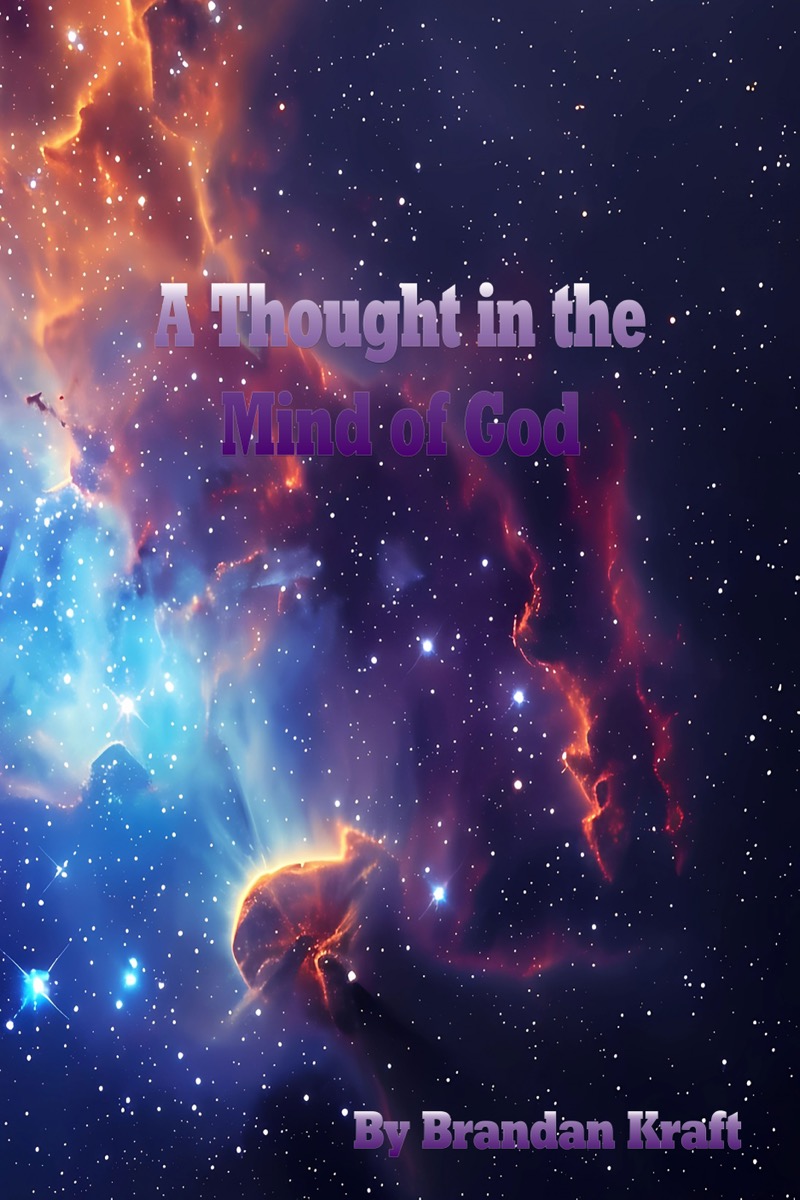
“Everything that exists is a thought in the mind of God, sustained by His will, authored by His purpose, and held together by personal covenants of love.”Read Now
Choose from multiple reading plans, track your daily progress, and receive reminders to stay on track — all with a free account.
Select a plan to begin your Bible reading journey. Your progress will be tracked automatically.
You've completed your reading plan!
Isaiah 53:10, Rom 8:28-30, Psalm 23, grace, love one another
Commentary