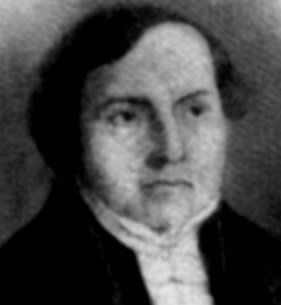
In "Abraham Sitting in the Door of His Tent," Alexander Carson explores the doctrine of divine providence, illustrating how God orchestrates events in everyday life to fulfill His purposes. He argues that Abraham's positioning at the tent door to receive heavenly visitors illustrates God's sovereign hand in human affairs, contrasting it with the blindness of those who fail to recognize God's presence in their circumstances. Carson utilizes Scripture, notably Genesis 18 and 19, as well as Hebrews 13:2, to highlight that God's providential arrangements serve both to bring judgment (as seen in Sodom) and to provide opportunities for hospitality (as exemplified by Abraham and Lot). The significance of this doctrine in the Reformed tradition emphasizes the assurance that God's sovereignty governs all aspects of life, encouraging believers to remain watchful and responsive to God's guiding hand.
Key Quotes
“It was evidently providential. It was divinely ordered that at the moment in which the heavenly messengers approached Abraham's dwelling... the patriarch was found sitting at the door of his tent.”
“Men in general see nothing but chance and nature and second causes in the things that take place on the earth. The Christian may see God in everything.”
“He does not tempt any man to sin but he brings them into situations that manifest what is in them.”
“Be not forgetful to entertain strangers; for thereby some have entertained angels unawares.”
What does the Bible say about God's providence?
The Bible reveals that God's providence governs all events in the world, guiding them for His purposes.
Genesis 18:1-2, Acts 17:28
Why is God's sovereignty important for Christians?
God's sovereignty reassures Christians that He is in control of all circumstances, ensuring that His plan prevails.
Romans 8:28, Genesis 19:1-5
How do we know that God governs the universe?
Scripture provides numerous accounts illustrating God's governance over creation and historical events.
Proverbs 16:9, Genesis 18:1-2, Genesis 19:1-5
At a certain time, Abraham chanced, as men speak, to sit in his tent door in the cool of the day. What could be more natural? What apparently could be more accidental? Yet it was evidently providential. It was divinely ordered that, at the moment in which the heavenly messengers approached Abraham's dwelling, as travellers seeming to pass on another errand, the patriarch was found sitting at the door of his tent, that he might espy and arrest them with his hospitality. In no circumstances, it is true, could the heavenly visitants have been at a loss to find him. But it is usually God's way to bring about his purposes in a providential manner, and to guide events by an unseen hand. In his dealings his own people may discover him; but from the world he lies hid. Men in general see nothing but chance and nature, and second causes in the things that take place on the earth. The Christian may see God in every thing. It is in him we live, and move, and have our being. Abraham, then, at the moment of the arrival of his heavenly guests, was sitting at the tent door in order to be ready to behold and receive them. They were not obliged to seek him, or introduce themselves. A heaven-directed accident gave room for the hospitality of the patriarch to invite the strangers without a discovery of their quality or their errand. "And the Lord appeared unto him on the plains of Mature; and he sat in the tent door in the heat of the day. And he lifted up his eyes and looked, and lo, three men stood by him; and when he saw them, he ran to meet them from the tent door, and bowed himself toward the ground."
A like providential arrangement placed Lot in the gate of Sodom lo receive the angels on their arrival at that city. "And there came two angels to Sodom at even; and Lot sat at the gate of Sodom: and Lot seeing them, rose up to meet them; and he bowed himself to the ground."—Gen. xix. 1.
By this providential method of reception, there was an opportunity afforded to the men of Sodom to behold the strangers in the appearance of men, and to manifest a specimen of that wickedness on account of which the Lord was about lo bring destruction on the cities of the plain. The angels might have come with an angelic appearance, or they might have come as men by night, and unseen by the men of Sodom. But coming in either of these ways an occasion would not have been given to the men of Sodom to manifest the abominations of their hearts. The strangers, therefore, by this appointment of Providence, were seen by the men of the city, and a scene of revolting wickedness was acted immediately before the pouring out of vengeance. "But before they lay down, the men of the city, even the men of Sodom, compassed the house round, both old and young, all the people from every quarter."
Here we have an instance of the sovereignty of God in his Providence. He here acts in a manner which it would be wicked in any mortal to imitate. He does not tempt any man to sin, but he brings them into situations that manifest what is in them. He adopted a method by which the guilt of Sodom was proved and aggravated. He might have adopted a method by which this would have been avoided. Now, this it would be utterly unlawful for men to do. As far as in our power we should avoid every thing that we think calculated to be the occasion of leading men into sin. We should on no account attempt to prove a man to be a hypocrite by presenting him with a temptation, which we judge would manifest him. This is the province of a sovereign God only. We should give no occasion of stumbling either to Jew or Gentile, or to the church of God.
By this method of the angelic appearance, there was also, both to Abraham and Lot, an opportunity given to manifest hospitality. That it had this design, as well as to be an excitement to hospitality in the people of God, is evident from the use made of the fact by the Epistle to the Hebrews: "Be not forgetful to entertain strangers; for thereby some have entertained angels unawares."—Heb. xiii. 2.

Comments
Your comment has been submitted and is awaiting moderation. Once approved, it will appear on this page.
Be the first to comment!