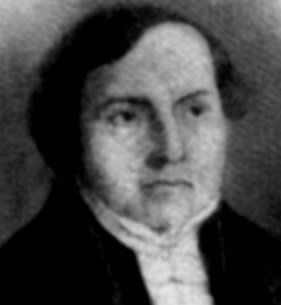
The article "Transference of the Blessing to Jacob" by Alexander Carson explores the providential sovereignty of God in the transfer of Isaac’s blessing from Esau to Jacob. Carson articulates that God orchestrated numerous events, including Isaac's blindness and Rebekah's overhearing of Isaac's conversation, to fulfill His divine purpose despite the sinful conduct of Jacob and Rebekah. He references Genesis 27, noting how God's sovereign plans unfold through human actions that often contradict His moral law. Carson emphasizes that the sinful means employed by Jacob and Rebekah did not negate the divine outcome; rather, they illustrate the profound mystery of God's sovereignty working through human sin. The article holds significant weight in Reformed theology, demonstrating that God is not only sovereign in the appointment of individuals but also in how those appointments are achieved, all while holding humanity accountable for their actions.
Key Quotes
“God did not approve this scheme and yet in his sovereignty it fulfilled his purpose.”
“Here we see that God can fulfil his will through the means even of the sins of his own people.”
“Men's wisdom and men's weakness both equally fulfil God's purposes.”
“Afflictive dispensations of Providence are designed for the good of the Lord's people as well as events that are direct blessings.”
What does the Bible say about the transference of blessings?
The Bible illustrates that God's sovereign will can work through human actions, as seen in the blessing of Jacob over Esau.
Genesis 27:1-40, Romans 8:28-30
How do we know God's sovereignty is true?
God's sovereignty is evident throughout Scripture, demonstrating that His plans are fulfilled regardless of human actions.
Romans 8:29-30, Ephesians 1:11
Why is understanding providence important for Christians?
Understanding providence reassures Christians that God is actively involved in their lives and orchestrates events for their good.
Romans 8:28, Genesis 50:20
How many providential circumstances are linked into one chain, to confer the blessing of his father on Jacob? Among these we may recognise the blindness of Isaac. Had he not been afflicted with great dimness of sight, the scheme by which Jacob succeeded could never have taken place. We have no account of any such blindness in Abraham, when he had arrived at a much greater age. Why did not God prevent Jacob's sin, by continuing strength of eye-sight to his father? Why did a Sovereign Providence make way for this scheme, by inflicting blindness on Isaac? God did not approve this scheme, and yet in his sovereignty it fulfilled his purpose. Who can comprehend this mystery? Who can fathom the depth of this wisdom? Silence, ye prating philosophers! You cannot by searching find out God. Your line cannot measure his conduct.
Another providential circumstance in this matter is, that Isaac, though eminently a man of God, and, by divine revelation, sufficiently informed of God's preference of Jacob, yet attended not to this intimation, so as to ask consent of the Lord before he acted. He either remained ignorant of what he might have known, or from partiality neglected to attend to it. The ignorance of the Lord's people often fulfils the purposes of his will, as well as their knowledge. Yet, in all such cases, it is to their guilt and injury. Isaac did not add to his own happiness, or to that of his family, by his inattention to the revelation of the divine will with respect to his two sons. It would have been much better for all parties that he had asked counsel at the mouth of the Lord, before he had attempted to transfer the blessing. His intention did not succeed, and he added to the guilt of Esau, by laying before him the occasion of intentional murder.
The coupling of the eating of the savoury meat with the conveying of the blessing, whether it was whim or wisdom, is another providential circumstance that was necessary as a foundation for the scheme of Jacob's mother. Had Isaac given the blessing without this previous step, the artifice of Rebekah could have had no place.
Another link in this chain is, that Rebekah overheard Isaac when he addressed Esau about bringing him the savoury meat from the field. Had she not heard this, her plot could not have been formed. What placed her within hearing at that particular time? Why did not Isaac use precaution, and whisper the matter to his son? The thing must be heard by Rebekah. The accident that placed her within hearing was a link in Providence.
As was observed before, in order to transfer the blessing to Jacob, it was necessary that he should be the favourite son of his mother. This is another link in the chain.
To the formation of this scheme, by which the blessing was transferred to Jacob, it was necessary that Rebekah and her son, both of whom were true servants of God, should be ignorant, or regardless of their duty in an astonishing degree. Every feature of the plot is vile and wicked. Yet this mother, this servant of the Lord, invents that hypocritical device, which her son, so eminent a man of God, was base enough to execute. How is it that they combined to practise so shameful a deception? This conduct was not influenced by the faith of Abraham, but was the result of unbelief. Not relying on the power and wisdom of God to give effect to his own purposes, they foolishly, as well as impiously, took the accomplishment of the divine counsels into their own hands, and brought about the divine appointment by sinful means. Here we see that God can fulfil his will through the means even of the sins of his own people. Here is sovereignty. Here is the depth of divine wisdom. The result of the conduct of Jacob and his mother was a fulfilment of God's eternal purpose; yet their conduct is not the less sinful. A child may see the justness of this observation; but can an angel of God fathom this abyss? Be silent, proud Philosophy; and thou, vain Theology, who lovest to lisp in the phraseology of science. Can ye show the harmony of these two apparently opposite truths? God ordains what men's sin effects. Yet man is guilty, and God is just!
The sovereignty of God, with respect to Jacob and Esau, is so offensive to the human mind, that it is not unusual, on this subject, to take revenge on the divine conduct, under the colour of lashing the misconduct of this favourite. A comparison of Esau with Jacob is made at great length, and greatly to the advantage of the elder brother. Esau is a plain, blunt, honest man, of great virtue and integrity; while Jacob is a deep, designing hypocrite. God says, "Jacob have I loved, and Esau have I hated;'' but the language of their heart is, "Esau have I loved, and Jacob have I hated." And why do they love Esau; why do they hate Jacob? Just because they hate that divine Sovereignty which preferred the younger to the elder. There is no reason to hide, or palliate, the sins of Jacob in this matter. By his misconduct, we see that it is not on account of works of our own righteousness that God chooses or saves us. The ground of God's preference of his people is his own free and sovereign good-will. We should not hide this, by endeavouring to justify or excuse any thing that is wrong in Jacob. But nothing but disaffection to God will prefer the character of Esau to that of Jacob. With all his faults, Jacob was a man of God; with all that the most partial affection can claim for Esau, he was a man who profanely undervalued his birthright. He was a carnal man, who had all his happiness in this world. When he was roused, he showed what was in his heart. He purposed to take revenge by murdering his brother. This is the virtue of the reprobate, who is so great a favourite with the enemies of God. With all the ingenuity of Rebekah, her scheme would have been frustrated, had it not been assisted by an addition from the prudence of Jacob. The savoury meat might have been brought to Isaac by Jacob in the room of Esau; but though the blindness of the Patriarch might not have been able to detect the imposture, his hand would have discovered the deceit. Here, then, there is another link added to the chain which connects Jacob with the blessing. Jacob thinks of the danger of detection, and his mother, by another contrivance, guards effectually against it. She covered his hands and his neck with the skins of the kids, and the smooth Jacob passes for the hairy Esau.
But, after all, what a hair's breadth escape from detection? Though Isaac was so dim of sight that he could not discover the difference between his sons by their external appearance, yet his ear is not so deficient but that it still recognises the difference between their voices. "The voice is Jacob's voice, but the hands are the hands of Esau." What prevents the whole plot from now being broken up? What makes Isaac, the guarded, suspicious Isaac, overlook this symptom? Why did he not put the matter to a farther proof? Was any thing more easy? Why did he not demand that both his sons should come into his presence? But the blessing is to be transferred to Jacob. This was God's eternal, unchangeable purpose. Isaac, then, with all his wariness, overcomes his well-founded suspicions, and boldly confers the blessing, when both affection and prudence cried out for delay. Men's wisdom and men's weakness both equally fulfil God's purposes. Here is wisdom. Let those who are truly wise study and admire it. The language in which Isaac conferred the blessing was, no doubt, the immediate dictation of the Holy Spirit; and, therefore, we cannot properly speak of this as a providential circumstance. But in this, inspiration is quite in keep ing with the Providence exhibited in this matter. In conferring the blessing the Holy Spirit puts nothing into the mouth of the Patriarch by which he could see that Jacob was the person to whom he was speaking. The blessing was conferred in language so general, that there is no allusion whatever to any thing peculiar in Jacob. Here is the wisdom of the manner of inspiration. It speaks suitably to the character and situations of the persons by whom it speaks. This fact, instead of being discovered by human wisdom, is so little understood by many Christians, that they have been led by it to invent theories of inspiration, which make the Scriptures in a great measure the mere word of men, and virtually divest them of inspiration.
After all the preparations of hypocrisy and prudence, after all his hardy falsehoods and acting, with his venison and kid's skins, and garments of Esau, Jacob was on the very point of being detected in time to disappoint him of the blessing. What a wonderful, what a providential escape! Jacob is scarcely gone out with the blessing when Esau comes in to receive it. "And it came to pass, as soon as Isaac had made an end of blessing Jacob, and Jacob was yet scarce gone out from the presence of Isaac his father, that Esau his brother came in from his limiting." Who is so blind as not to see the hand of Providence here? Had Esau been a few minutes sooner, Jacob's scheme would have been frustrated. The sovereign God in his Providence prospers the plan which was to fulfil his purposes, while his holy law utterly disclaims that plan. Every link in this chain is inserted by an overruling Providence, while Jacob and his mother are solely the authors of their guilty conduct.
The transaction is finished; Jacob is blessed, and blessed he must be. But the Lord of Providence must continually protect him, and preserve him for the promised blessing. That Providence is immediately at work to watch over him, and defend him from his brother's malice. "And Esau hated Jacob because of the blessing wherewith his father blessed him : and Esau said in his heart, The days of mourning for my father are at hand, then will I slay my brother Jacob." What can prevent him from executing his wicked purpose? What then becomes of the blessing? When Esau made this purpose, why did he not keep it to himself? He said this in his heart: Why did he not keep it there? Why did he put it in words? Why did he make a confidant, or speak so as to be overheard? Yet he did so. Some person was made aware of Esau's intention; and that person discovered the intention to Esau's mother. Was he entrusted with it by Esau? Why then was he not true to his trust? Did he merely learn the intention of Esau by overhearing him speaking to himself? In every light the thing is overruled by Providence. What a consolation does this afford to the Lord's people, when they are threatened in life or property. God by his Providence discovered and disappointed the murderous intention of Esau, even though the conduct of Israel, in provoking the wrath of his brother, was greatly to be blamed. Shall not the Lord be the protector of his people, when by obedience to his will they subject themselves and fortunes to danger? The wicked are not permitted to execute the thousandth part of the mischief which they design against the Lord's people. His Providence watches over his children, and in due season manifests the plots of their enemies, or in one way or other prevents their execution.
In this wicked purpose of Esau, we see the hand of Divine Providence also, in sending Israel to the land of his fathers, where God had provided for him a wife; and where his life, in the house of Laban, might afford a fit emblem of Jesus, of whom this man of sorrows was an eminent type. Afflictive dispensations of Providence are designed for the good of the Lord's people, as well as events that are direct blessings. All things work together for good to them who love God, and are called according to his purpose.

Comments
Your comment has been submitted and is awaiting moderation. Once approved, it will appear on this page.
Be the first to comment!