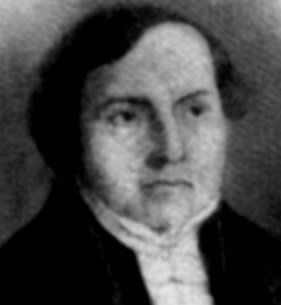
The article by Alexander Carson addresses the theological theme of divine providence as illustrated through Jacob's journey to Haran and his immediate encounter with Rachel. Carson emphasizes the parallels between Jacob's mission and Christ's, highlighting that both were sent by their fathers to seek a bride, with Jacob embodying a type of Christ as he navigated challenging circumstances. Scripture references, particularly regarding Jacob's arrival at the well (Genesis 29:1-12), illustrate how God's providence orchestrated Jacob's path, showing that he arrived precisely when he needed to meet Rachel, thus fulfilling divine purposes. The practical significance lies in affirming believers' understanding of God's hand in every detail of their lives, encouraging them to recognize and acknowledge His guidance throughout their earthly journey.
Key Quotes
“Jacob was a distinguished type of Christ and many points of resemblance present themselves to our view in his history.”
“The Ruler of the world can direct the most trifling and seemingly fortuitous events to serve his own glorious purposes.”
“Nothing is so little as to be below the attention of his Providence; nothing is so great as to be beyond the power of his Providence to accomplish.”
What does the Bible say about the providence of God?
The Bible teaches that God's providence governs all aspects of life, directing events to fulfill His divine purposes.
Genesis 29:1-3
How do we know God's providence is true?
We see God's providence illustrated throughout Scripture, affirming that He consistently guides and provides for His people.
Genesis 29:1-3, Romans 8:28
Why is recognizing God's providence important for Christians?
Recognizing God's providence helps Christians trust in His sovereignty and guides them in their life's journey.
Proverbs 3:5-6
Jacob was a distinguished type of Christ, and many points of resemblance present themselves to our view in his history. Among these the following are striking:—He was sent by his father to a distant country to seek a wife. "And Isaac called Jacob, and blessed him, and charged him, and said unto him, Thou shalt not take a wife of the daughters of Canaan. Arise, go to Padanaram, to the house of Bethuel, thy mother's father, and take thee a wife from thence of the daughters of Laban, thy mother's brother." And Jesus came from heaven to espouse his bride—the Lamb's wife—bone of his bone, and flesh of his flesh. On his journey, Jacob slept in the open air, and made the stones of Bethel his pillow. And Jesus, who was Lord of the universe, appeared on earth in the most destitute circumstances. While the foxes had holes, and the birds of the air had nests, the Son of man bad not where to lay his head. All these points. of resemblance were providential, resulting naturally from the situation in which Jacob was placed. The wisdom of man could discover in them no designed illustration of future events. But the Ruler of the world can direct the most trifling and seemingly fortuitous events, to serve his own glorious purposes. Jacob was as truly adapted to shadow the Saviour in the lowliest parts of his humiliation, as Solomon was in the highest glory of his exaltation. The Providence of God directing the journey of Jacob is strikingly impressed on our notice, on his approach to Haran. By what compass he steered through the deserts that lay in his way, by what information he arrived in the neighbourhood of Haran, we are not told. But, however he was directed, one thing we see,—he did not miss his way. Without any difficulty he lights at once on the people whom he sought. "Then Jacob went on his journey, and came into the land of the people of the east. And he looked, and, behold, a well in the field, and, lo, there were three flocks of sheep lying by it; for out of that well they watered the flocks." Here he is led by Providence to the point of destination as directly as were the wise men of the east by the star which pointed to the house in Bethlehem in which the Saviour was born. At the moment of his arrival, there were three flocks of sheep lying by the well. This was providential, for had he arrived at a time when all the flocks were at pasture, he would have missed the shepherds of Haran. Throughout all the hours of the light of day, why was it that he happened to come to this spot at the time when the flocks were lying by the well? The thing appears to be marked still more particularly as a fact in Providence. By what Jacob afterwards says to the shepherds, (verse 7,) it appears that it was rather early for the flocks to come to water, and Rachel's flock had not then arrived. Divine Providence sent some of the flocks sooner than usual, in order that the shepherds might be in waiting to receive Jacob.
And now comes Rachel, the future wife of this eminent Patriarch; and the Providence of the Lord presented to his view that person whom at random he was seeking, and in whom so much of his earthly happiness was centred. The people of the Lord should see his hand in leading them throughout all their earthly pilgrimage. In all their ways they should acknowledge him. If they have a prosperous journey, they should give the praise to him who led Jacob to the well of Haran. Nothing is so little as to be below the attention of his Providence: nothing is so great as to be beyond the power of his Providence to accomplish.

Comments
Your comment has been submitted and is awaiting moderation. Once approved, it will appear on this page.
Be the first to comment!