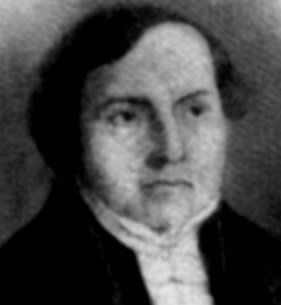
The article "The History of Joseph" by Alexander Carson addresses the theological concept of Divine Providence as it unfolds in the life of Joseph, drawing typological connections to Christ. Carson argues that Joseph's experiences, including his rejection by his brethren and rise to power, serve as a foreshadowing of Jesus Christ's own suffering and exaltation. He supports this with numerous Scripture references, focusing on both Joseph’s narrative in Genesis and New Testament parallels, illustrating that God's orchestration of events transcends human actions and intentions. The significance lies in affirming God's sovereignty in using both righteous and wicked acts to accomplish His divine purposes, echoing Romans 8:28 regarding God working all things for good for those who love Him.
Key Quotes
“God does his will through the voluntary actions of men and effects his purpose as well by his enemies as by his friends.”
“The heart of Reuben relented so far as to wish to prevent the death of the young man... Some of the conspirators incline to mercy and God uses their sympathy to prevent the execution.”
“But as for you, says Joseph to his brethren, ye thought evil against me but God meant it unto good to bring to pass as it is this day to save much people alive.”
“Their very afflictions are sent in love and in mercy.”
What does the Bible say about God's providence in Joseph's story?
The Bible portrays Joseph's story as a clear example of God's providence, where all events, including the actions of men, align to fulfill His divine purpose.
Genesis 50:20
How do we know that God uses human actions for His purposes?
Scripture reveals that God utilizes human actions—both good and evil—to fulfill His eternal purposes, as exemplified in the story of Joseph.
Genesis 50:20, Romans 8:28
Why is the story of Joseph important for Christians?
Joseph's story is significant for Christians as it illustrates God's sovereignty, providential care, and foreshadows the redemptive work of Christ.
Genesis 50:20, John 6:35
The history of Joseph is a series of miracles of Providence. In it the hand of God, in the ruling of the world, is admirably revealed. God does his will through the voluntary actions of men, and effects his purpose as well by his enemies as by his friends; and through the disobedience and ignorance of his people, as well as through their obedience and knowledge. To account for this is beyond the reach of human intellect. Proud man tries to fathom the abyss, and when he fails, he relieves himself by denying its existence. He will not receive both parts of the truth, but, according to his humour, will modify one of them so as to suit the other, that he may glory that he can discover the deep things of the unsearchable God. What he cannot comprehend, with him cannot be true. Will vain man never cease to strive with the Almighty? Will he never learn that the ways of the Lord are inscrutable ?" O the depth of the riches both of the wisdom and knowledge of God! How unsearchable are his judgments, and his ways past finding out."
Joseph was selected by God as one of the persons who were to be types of Christ; and the peculiarity of his typical resemblance required every fact in his history. Jesus was envied and hated by his brethren the Jews: Joseph, as his type in this respect, must be hated by his father's sons. To effect this, Joseph must be the darling of his father. Was it wise, was it just, in Jacob to show so marked a preference to his son Joseph? The best child should certainly be the most esteemed; but the preference of Joseph was because he was the son of the old age of his father. Some have struggled to relieve the Patriarch from this reprehension, but in vain. And there is no need to strain the word of God, to excuse or justify Jacob in the preference. It was still more foolish to distinguish the favourite by the singularity of his dress. This could have no other tendency than to provoke the jealousy of his brethren. Yet this imprudent expression of the partiality of his father might be divinely directed as a shadow of what happened to him who was typified by Joseph, when his robe was stripped off, and when he himself was truly rent in pieces by the wild beasts of the forest on Mount Calvary. What Jacob believed about his darling son, was true with respect to the well beloved Son of God. "Without doubt he was torn in pieces."
Joseph's dreams finished what Jacob's imprudence had first excited. But why did he tell his dreams? Had he not, though younger, as much sagacity to interpret his own dreams as had his brethren? If he did understand them, why did not his prudence conceal them? If their meaning was concealed from him, why was it concealed? Still more 6trange! When he told his first dream, did he not see that his brethren understood its import? Why, then, did he childishly tell the second? Here this son of prudence, wise in youth, providentially acts in the most unguarded manner, evidently that a way might be opened for his future history.
When the moment approached which God had appointed to send Joseph to Egypt, his Providence opened the way, and put the means in train. The sons of Jacob were feeding their flocks at a distance, and it occurs to Jacob to send Joseph to visit them. Why had the sons of Jacob removed to such a distance from Hebron? why at this particular time? Because this opened a way to fulfil the Lord's purposes. Now all things concur to bring about the predestined event. All the lines meet in this centre. As soon as his brethren discovered him at the greatest distance, it instantly occurred to them to rid themselves of the object of their envy. "And when they saw him afar off, even before he came near unto them, they conspired against him to slay him." Yes, to slay him, and he who was typified by Joseph was truly slain ; but it was not God's design to give effect to this conspiracy of murder, and, therefore, his Providence disappointed this part of the scheme. The heart of Reuben relented so far as to wish to prevent the death of the young man. How often are the intended deeds of blood prevented by a similar Providence! Some of the conspirators incline to mercy, and God uses their sympathy to prevent the execution. Jesus was to be buried in the heart of the earth: Joseph, his type, was cast into a pit; and the voice of prophecy speaks of the sufferings of Jesus as a sinking into a miry pit. But Jesus was to arise from, the dead soon after his burial, and Joseph was drawn alive out of the pit in which he was placed by the cruelty of his brethren.
Jesus was to be sold: Joseph must be sold to represent him in this part of his sufferings. Jesus was to be sold by Judas, one of his brethren, one of his disciples; Joseph must then be sold by Judas, one of his brethren. Jesus was to be carried into Egypt, the typical house of bondage, because he took on him the sins of the Israel of God: Joseph, therefore, must be carried as a slave into Egypt.
But how is he to go to Egypt? Divine Providence has a conveyance in readiness, and a messenger waiting to receive the exile. Just as his brethren had let down Joseph into the pit, and had sat down to eat and drink, they "lifted up their eyes, and looked, and, behold, a company of Ishmaelites came from Gilead with their camels, bearing spicery, and balm, and myrrh, going to carry it down to Egypt." What brought them at this critical moment ? and why were they Ishmaelites? As Ishmael himself mocked Isaac; and this is by the Apostle Paul interpreted as typifying the children of the flesh of Abraham persecuting his children by promise; so, here, the Ishmaelites, for a like reason, are the persons who sold Joseph to the Egyptians. The Jews, the carnal seed of Abraham, delivered Jesus to the Gentiles to be crucified. "And Joseph was brought down into Egypt: and Potiphar, an officer of Pharaoh, captain of the guard, an Egyptian, bought him of the hands of the Ishmaelites, which had brought him down thither."
In the person who bought Joseph we see the direction of Providence. Joseph might have come into Egypt, and remained in it through life, without an opportunity of rising to his destined dignity. How many thousands might have been his purchasers? How did it happen that an officer of the king of Egypt, even the officer of the guard, was the purchaser of Joseph? How many chances, in the language of man, were against this? Yet Joseph comes immediately into the house of Potiphar.
In the house of Potiphar the Providence of the Lord protected Joseph, and obtained for him the unbounded confidence of his master. But this prosperity must be interrupted. Joseph must go to prison, and from prison to court. To bring this to pass, Divine Providence employed the wickedness of his mistress. In prison he found favour; and that prison, providentially, was the one in which the king's prisoners were bound. This circumstance was the occasion of his deliverance and exaltation. After Joseph was imprisoned, it happened that two of Pharaoh's servants, that served about his person, were cast into the same prison. What a chance! The whole matter is of the Lord. This made Joseph known, at the proper time, to the king of Egypt. Jesus died between two malefactors, one of whom he saved, the other he suffered to perish in his sins. Joseph was imprisoned with two criminals, one of whom, by his interpretation of dreams, he saved, the other he hanged. Mark the providential circumstance in the forgetfulness of the chief butler. Joseph requested him to remember him before his master. But for two full years the chief butler forgot Joseph! Why was this? Had he made immediate application, and delivered him, Joseph would not now be at hand to interpret Pharaoh's dream, and accomplish all that the Lord had appointed for him. Joseph, without doubt, would have returned to his country. The chief butler, by the overruling Providence of God, forgot Joseph; but now the case is providentially brought to his mind, at the time when it served the purposes of God.
Jesus, after the suffering of death, was exalted, as Ruler over all worlds; Joseph, as a figure of this, was exalted over all Egypt. Joseph provided bread for Israel in their extremity: Jesus was the bread of life to the true Israel of God.
The children of Israel must be slaves in Egypt, to represent the natural slavery in which all the children of God are from the fall of Adam; and this is the means that God appointed to bring them there. The famine obliged them to seek food in Egypt; and this was the means of bringing them into the land of bondage. God, by his Providence, guides the affairs of this world, and in all things effects his eternal purposes. And all things work together for good to them who love God, and are called according to his purpose. Their very afflictions are sent in love and in mercy.
From the history of Joseph we may see that the same thing may be from man, in one point of view, and from God, in another; and that what man may do sinfully to the injury of the people of God, God may effect through them for the good of his people. It is man's work, yet it is, in another view, God's work. How it is God's work the ingenuity of man cannot point out, the intellect of man cannot discover. But that the same thing is of man and of God, the Divine testimony forbids us to doubt. "But as for you," says Joseph to his brethren, " ye thought evil against me; but God meant it unto good, to bring to pass, as it is this day, to save much people alive."

Comments
Your comment has been submitted and is awaiting moderation. Once approved, it will appear on this page.
Be the first to comment!