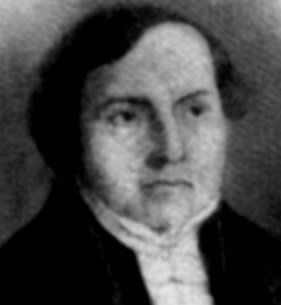
In "Qualification of Bezaleel and Aholiab for Making the Tabernacle," Alexander Carson explores the divine provision of skills necessary for constructing the Tabernacle, emphasizing God's sovereignty in equipping individuals for His purposes. He highlights how Bezaleel and Aholiab, chosen by God, received extraordinary abilities directly from the Spirit of God, illustrating that such qualifications can come without human means or education. Carson asserts that God is always faithful to supply capable workers to fulfill His tasks, as demonstrated in Scripture, particularly in Exodus 31:2-6, which details the calling and endowment of these artisans. The practical significance lies in understanding that God's work—whether through immediate gifts or cultivated skills—is always accomplished, affirming that God will raise up and enable His people to build His church.
Key Quotes
“See, I have called Bezaleel by name... And I have filled him with the Spirit of God in wisdom and in understanding...”
“His work will never remain undone for want of qualified instruments.”
“The harvest may be plenteous and the labourers may be few, but it is only the Lord of the harvest who can send labourers to reap.”
“Both natural abilities and education are gifts of God...learning is useful and necessary for certain tasks.”
What does the Bible say about God's provision for His work?
The Bible teaches that God equips those He calls to fulfill His work, as seen in Exodus 31:1-6.
Exodus 31:1-6
How do we know that God equips His servants for ministry?
We know God equips His servants through biblical examples and promises, particularly in passages like 1 Corinthians 12:4-11.
1 Corinthians 12:4-11, Exodus 31:1-6
Why is learning important for Christians?
Learning is vital for Christians as it helps interpret Scripture accurately and contributes to their spiritual growth.
2 Timothy 2:15, Romans 12:2
In Egypt the children of Israel were the most degraded slaves, and employed in the most laborious occupations. Their minds were not cultivated by education, nor were they instructed even in the useful or ornamental arts of life. The making of the tabernacle and its furniture required the most perfect skill in different arts and trades. How, then, were persons to be found for the execution of the work? God provided in this emergency, and gave the qualifications which were necessary for his own work. "See, I have called Bezaleel by name, the son of Uri, the son of Hur, of the tribe of Judah: And I have filled him with the Spirit of God, in wisdom, and in understanding, and in knowledge, and in all manner of workmanship, to devise cunning works, to work in gold, and in silver, and in brass, and in cutting of stones, to set them, and in carving of timber, to work in all manner of workmanship. And I, behold, I have given with him Aholiab, the son of Ahisamach, of the tribe of Dan: and in the hearts of all that are wise hearted I have put wisdom, that they may make all that I have commanded thee."
These endowments, it is true, were immediately from the Lord, without any use of ordinary means, but they are such as are often witnessed in men of rare genius, whom Providence raises up to make discoveries and improvements even in arts and sciences. And in the qualifications conferred on those who made the typical house of God, we see that God provides the qualifications in those of his people whom he employs to do his work, in building up the spiritual house, his church. Whether these qualifications are the immediate gifts of God in their constitution of mind and body, or are the result of education, they are equally of God. But, in one way or other, the Lord will always qualify men for doing the work which he has appointed them to do. His work will never remain undone for want of qualified instruments. At the time he needs workmen, his Providence will supply them. The harvest may be plenteous, and the labourers may be few; but it is only the Lord of the harvest who can send labourers to reap. And when he intends to reap, labourers he will qualify, labourers he will send into his field, and the work will be done. When the cause of God needs the support of learning, he has it at his command. When he intends to humble the pride of learning, he may permit the learned to use their efforts to pull down the walls of his house, and can build them by men, on whom he confers gifts by nature, without the culture of education. Many of the most learned theologians are mere cumberers of the ground. Many of the most effectual workmen in raising the walls of the temple are mighty men of God, stored wholly with mental culture. This, however, does not imply that learning is useless. It is the gift of God as well as natural abilities; and there are things which without it cannot be done. No mental powers, without learning, could enable a man to translate the Scriptures; and no man can have the most authoritative source of evidence of the meaning of Scripture, who cannot reason from the original. Yet the most successful builders in Zion may be utterly unqualified as translators.

Comments
Your comment has been submitted and is awaiting moderation. Once approved, it will appear on this page.
Be the first to comment!