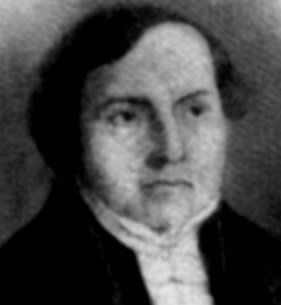
In "Cross of Christ Borne by Simon," Alexander Carson explores the providential significance of Simon of Cyrene bearing the cross for Jesus. He argues that this event is not merely accidental but is intricately linked to Christ's exhortation for believers to take up their crosses and follow Him, as articulated in passages like Matthew 16:24 and Luke 9:23. Carson highlights how Simon's timely encounter with Jesus's path to crucifixion serves as a divine orchestration that underscores the doctrine of providence, affirming that even seemingly trivial events have spiritual importance. The practical significance of this teaching is that all Christians are called to endure trials for Christ's sake, symbolized by the act of carrying one's cross, regardless of whether they experience physical death for their faith. This article also emphasizes the importance of understanding scripture with a view of divine inspiration, arguing that every detail is significant in conveying God’s intentions and truths.
Key Quotes
“By taking of the cross and following after Jesus there is an allusion to the taking up of Christ's cross by Simon who thus followed his Master to the place of execution.”
“Here we see that the most casual things are under providential direction and that the most trifling things recorded in Scripture are calculated to give edification to the man of God.”
“This shows the great importance of right views of the inspiration of the Scriptures.”
“They read it as a common book. It should be read as being every line of it God's book.”
What does the Bible say about taking up the cross?
The Bible teaches that taking up the cross involves bearing trials and sufferings for Christ's sake, as exemplified by Simon of Cyrene.
This concept extends into the believer's life where taking up the cross means embracing the difficulties and struggles that come from following Christ. While not everyone is called to bear a literal cross unto execution, all Christians are expected to endure challenges and tribulations in their spiritual journeys. The cross symbolizes all sacrifices for the sake of Christ, aligning with the understanding that every believer, empowered by grace, will face trials proportionate to their faith and strength. Thus, taking up the cross becomes a daily commitment to live in accordance with Christ's example and teachings.
Matthew 16:24, Luke 9:23
How do we know God's providence is real?
God's providence is evident in Scripture and life events, demonstrating His sovereign control over all circumstances.
Moreover, God's providence reassures Christians that nothing is outside His control, and that all circumstances serve a greater purpose in His divine plan. Romans 8:28 affirms, 'And we know that for those who love God all things work together for good, for those who are called according to his purpose.' Therefore, in recognizing God's providence, believers are encouraged to understand their life experiences, trials, and even 'chance' encounters as part of a greater narrative woven by God's sovereign hand. This leads to a deeper faith and reliance on His promises, knowing that everything is designed for their good and His glory.
Romans 8:28, Matthew 10:29-31
Why is understanding the inspiration of Scripture important?
Understanding Scripture's inspiration affirms its divine authority and significance in instructing believers.
Loose notions of inspiration can lead to a dismissive view of Scripture, undermining its authority and relevance. Treating the Bible simply as a historical document diminishes its significance as the living Word of God. The Bible should instead be approached with reverence, recognizing that every line carries God's truth. Distinguishing between common narrative and divinely inspired account is essential for accurate hermeneutics and encourages believers to delve deeply into Scripture, finding truths that shape their faith and practice. Thus, a correct understanding of Scriptural inspiration enhances spiritual growth and fosters deeper engagement with God's Word.
2 Timothy 3:16-17, 1 Thessalonians 2:13
"And as they led him away, they laid hold upon one Simon, a Cyrenian, coming out of the country, and on him they laid the cross, that he might bear it after Jesus." What can be more purely accidental? What Providence can you discern here? Stop a moment, and consider the matter a little more attentively. Jesus himself said, " He that taketh not his cross, and followeth after me, is not worthy of me." The same declaration is repeatedly made by our Lord, and urged on those about him. Every one knows that this peculiar phraseology is grounded on the manner of execution by the cross, and is an allusion to the circumstance of Christ's carrying his own cross, and of Simon's substitution on the occasion here referred to. By taking of the cross and following after Jesus, there is an allusion to the taking up of Christ's cross by Simon, who thus followed his Master to the place of execution. In this way of speaking, Christ includes all the labours, difficulties, reproaches, trials, and persecutions, which his people are to bear after him for his sake. He bore sufferings and shame himself first for them, going before them. They must in turn bear such things for him, going after him; and thus they take up their cross and follow him. So far none will dispute. But what has this to do with Providence? A great deal. Let it be observed that the declaration of Jesus, repeatedly made in this phraseology, was prospective in its allusion. The thing to which it refers, and on which the phraseology is grounded, had not happened at the time when Jesus used it. It was still future till the time of his death. Christ, then, used the phraseology from his foreknowledge of what was to take place at his death, with respect to the circumstance of his carrying his own cross, and of Simons being met on the way to the place of execution, and his being compelled to carry the cross for the remainder of the way. Here, then, is the Providence. At the particular time in which this phraseology could have its reference accomplished, Simon chanced to be coming out of the country, and happened to meet the party who led Jesus to the place of crucifixion. Had he not come, or had he come a few minutes sooner, or a few minutes later, the reference of the language of Christ would have wanted the ground on which it was to rest. Besides, when they met Simon, what excited the thought to make him carry the cross? Was not this providential? Here we see that the most casual things are under providential direction; and that the most trifling things recorded in "Scripture are calculated to give edification to the man of God. Simon's taking up the cross and carrying it after Jesus, when led to the place of crucifixion, like Christ's washing of the feet of the disciples, is a symbolical action, including all the trials of the Christian for Christ's sake. The cross itself many may never be called to bear. Perhaps, as a matter of fact, none of them may be called to carry their own cross to the place of crucifixion. They may not be called at all to suffer death. But taking up the cross refers to all trials for Christ's sake; and every Christian must take up his cross and follow Jesus. None of the people of Christ, who live any time in the world after they are called to the knowledge of him, are without their trials in proportion to their strength. This shows the great importance of right views of the inspiration of the Scriptures. Many tell us that inspiration cannot be necessary in historical facts known to the narrator. But, had the historian been left to himself, he might have omitted the fact about Simon, and in that case we would have wanted the very foundation on which one of the most commonly repeated sayings of Jesus was grounded. They who have loose notions of inspiration are not in the tract in which they can make discoveries in the word of God. They read it as a common book. It should be read as being, every line of it, God's book. The savage wonders at the process of the man of science in examining the bowels of the earth to make discoveries. Such a savage in the things of God is the man who does not examine the Scriptures in the way in which the philosopher examines the earth.

Comments
Your comment has been submitted and is awaiting moderation. Once approved, it will appear on this page.
Be the first to comment!