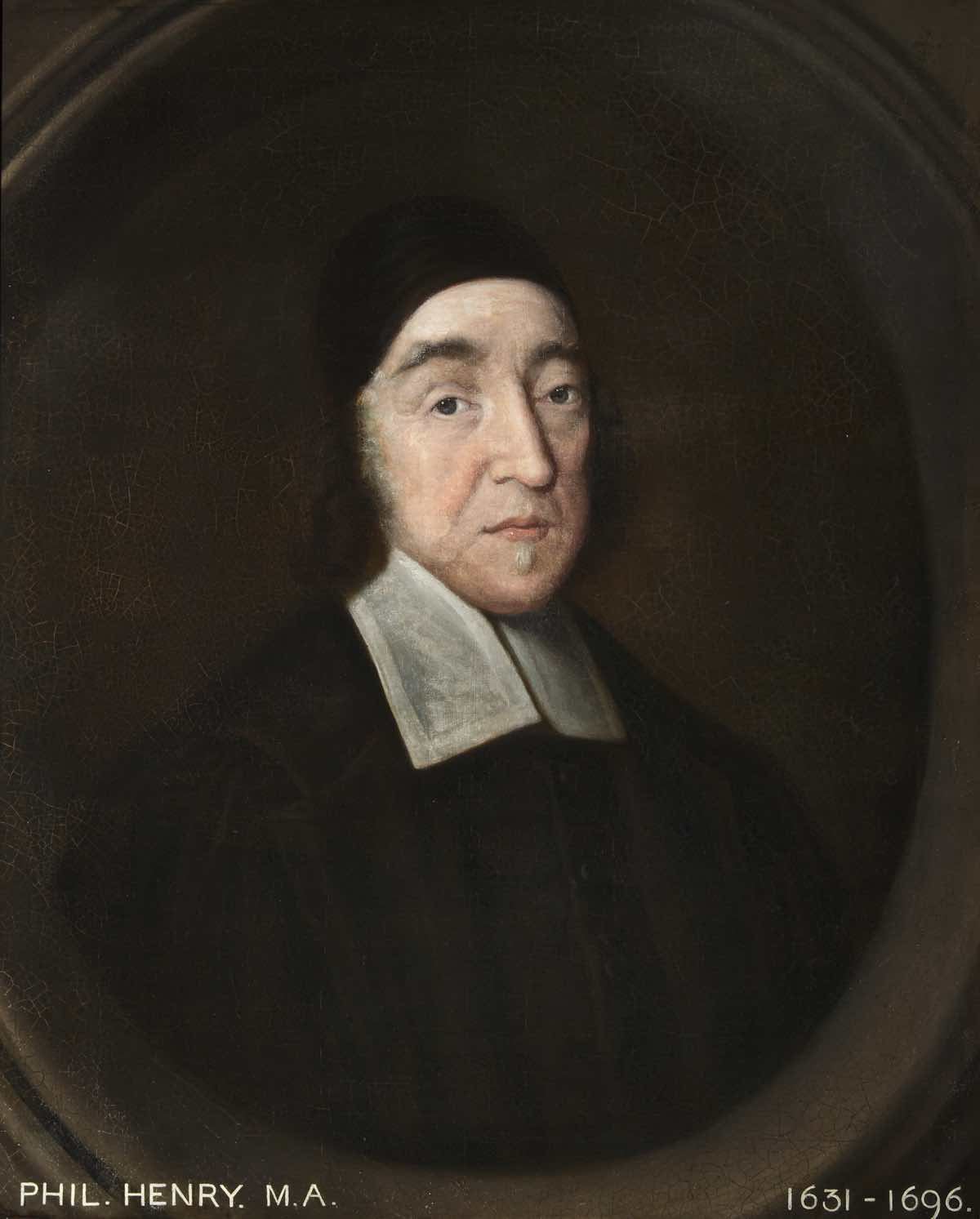
The main theological topic addressed in Philip Henry's article "The Christian's Life" is the concept of living fully in Christ, reflecting the Apostle Paul's declaration, "For to me to live is Christ." Henry articulates that true Christians should embrace Christ as the central principle of their lives, contrasting this with living for self. He supports his points with various Scripture references, such as Philippians 1:21, Galatians 2:20, and 1 Peter 2:5, emphasizing the need for reliance on Christ's merit and righteousness for acceptance before God. Practically, the significance of this doctrine is profound: it calls Christians to abandon self-reliance and instead live through Christ’s strength, prioritize His glory in all actions, and ensure their repentance and faith rest solely on His work, thereby assuring their acceptance and future hope in Him.
Key Quotes
“If to us to live be Christ, the word and will of Christ is our rule in all the actions of our lives.”
“A copy without a blot. The endeavour of every true Christian is to be a follower of Christ.”
“True Christians fetch daily supplies from heaven.”
“To you to live let it be Christ.”
What does the Bible say about living for Christ?
The Bible teaches that true living for Christians is centered on Christ, as Paul states, 'For to me, to live is Christ.'
Philippians 1:21, Psalm 119:29-30
How do we know that the righteousness of Christ is our basis for acceptance?
The righteousness of Christ is the foundation of our acceptance before God, as we cannot rely on our own works for salvation.
Romans 3:22, Philippians 3:8-9
Why is following Christ's example important for Christians?
Following Christ's example is crucial for Christians as He is our model for holy living and obedience to God.
1 Peter 2:21
"For to me to live is Christ."
This is the apostle Paul's account of his life. And he only is a true Christian that can truly say the same. We are not to think it was Paul's prerogative. Every true Christian can say so. Though some more, some less.
Now, if to us to live be Christ, the word and will of Christ is our rule in all the actions of our lives. Not our own will; or the will of the flesh, or of men, or of the devil. Bat we say, as Paul, "Lord, what wilt thou have me to do?" It was then that to Paul to live began to be Christ. See how it was with David: "Remove from me the way of lying, and grant me thy law graciously. I have chosen the way of truth: thy judgments have I laid before me."
And, the example of Christ is the copy that we write after. His "peace" and his "pattern" are the two legacies he left us. A copy without a blot. The endeavour of every true Christian is to be a follower of Christ. "Learn of me," said the Saviour. "Christ suffered for us, leaving us an example that ye should follow his steps."
If to us to live be Christ, his spirit, and
strength, and grace is the principle that actuates us in every thing. It is a great matter what principle we act from—whether self, or Christ. Self is a naughty principle: self-love: self-pleasing. Who prayed such a prayer? Self. Who resisted such a temptation r Self. But a Christian's principle is Christ: "I labored more abundantly than they all; yet not I, but the grace of God which was with me." "I am crucified with Christ, nevertheless I live; yet not I, but Christ liveth in me." "I can do all things through Christ which strengtheneth me." "By the grace of God we have had our conversation in the world." Do we do duties in bur own strength, or in Christ's? True Christians fetch daily supplies from heaven.
If to us to live be Christ, his merit and righteousness is that which we trust to for the pardon of our amisses, and for the acceptance of our performances. As to both those things we have a need of a righteousness. Now, which way are we to look for it? To ourselves? To our own sorrow and repentance? To our own well-doings? No. The true Christian looks to Christ: "Ye also, as lively stones, are built up a spiritual house, an holy priesthood, to offer up spiritual sacrifices, acceptable to God by Jesus Christ." "I thank God through Jesus Christ our Lord." "What things were gain to me, those I counted loss for Christ. Tea doubtless, and I count, all things but loss for the excellency of the knowledge of Christ Jesus my Lord." Certainly herein lies the mystery of godliness.
If to us to live be Christ, the name, and honour, and glory of Christ is our chief end. How did Paul delight in mentioning the very name of Christ. Christ was his highest end: "I determined not to know anything among you, save Jesus Christ, and him crucified." The Pharisees did all for the promoting of their own credit and reputation. To them to live was self, and not Christ. And they had their reward. With a true Christian it is otherwise. To you to live, let it be Christ. That is—
1. In the sense of the great things he has done for you. Set yourselves to love him, and live to him. Have you married the blessed Jesus? Be careful in every thing to please him. Tour scope and end must be changed: "For none of us liveth to himself, and no man dieth to himself. For whether we live, we live unto the Lord; and whether we die, we die unto the Lord: whether we live therefore, or die, we are the Lord's."
2. In all your repentings for sin look at Christ. See him pierced, wounded by sin, and let that grieve you, Zech. xii. 10. In all your expectations of pardon look at the blood of Christ, and see your pardons streaming to you in that blood. Here is the mystery of true gospel repentance, which the most of men err in.
3. Whatever you do, in word or deed, "do all in the name of the Lord Jesus." Do it by warrant from him, and in his strength. Let Christ be in the beginning, in the middle, in the end of all you do. Show forth his virtues and praise.
4. When you have done all, look for acceptance only through Christ. Look for acceptance here, and acceptance in the judgment only upon the account of his merit and mediation. "Christ has died" must be all our plea. But what title hast thou to him? I have accepted him. I have closed with him. To me, to live has been Christ. Has it been so? Then, be comforted. To thee, to die shall be "gain."

Comments
Your comment has been submitted and is awaiting moderation. Once approved, it will appear on this page.
Be the first to comment!