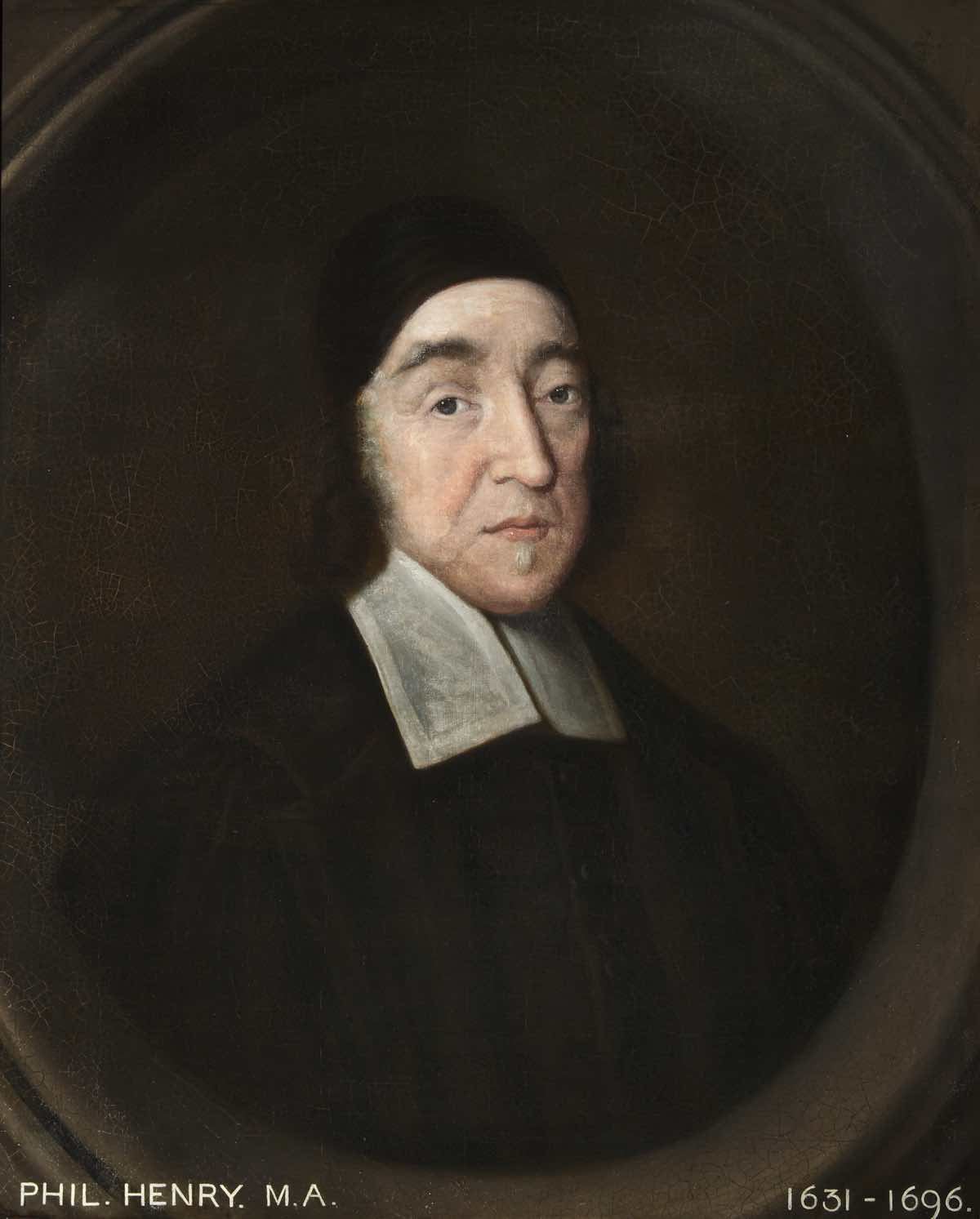
The article "The Throne of Grace" by Philip Henry focuses on the doctrine of prayer and the believer's access to God through the intercession of Christ. Henry emphasizes the necessity of approaching the throne of grace with confidence, highlighting four critical times in life when prayer is essential: during temptation, trouble, duty, and dying. He underscores the role of Jesus as the Great High Priest, referencing Hebrews 4:14-16, which assures believers that they may come boldly before God to seek mercy and grace in their time of need. The article teaches that this boldness rests upon understanding one’s relationship with God as a father, the efficacy of Christ's intercession, and the believer's need for continual preparation and faith. Practically, this doctrine encourages believers to approach God in prayer without fear, laying aside doubts, and recognizing the privilege of regular communion with their heavenly Father.
Key Quotes
“Let us therefore 'come boldly unto the throne of grace that we may obtain mercy and find grace to help in time of need.'”
“To come boldly is to come in full assurance of faith with joy and cheerfulness, laying aside slavish fear and groundless doubtings.”
“The more faith, the more boldness. Without faith it is impossible to please God.”
“What a privilege is it to have such freedom with the King of kings.”
What does the Bible say about the throne of grace?
The throne of grace represents God's invitation to approach Him boldly for mercy and grace in our times of need.
In approaching the throne of grace, believers are called not only to come but to come boldly, which implies a full assurance of faith. This confidence comes from recognizing our relationship with God as our Father and our access through Jesus Christ, our High Priest. Therefore, the throne of grace signifies both an opportunity and a necessity for Christians to seek God's help humbly yet confidently, as He is always ready to listen and respond to our needs.
Hebrews 4:16
Why is it important to approach the throne of grace boldly?
Approaching the throne of grace boldly is important as it reflects faith in God’s willingness to help and grants us the mercy we need.
Additionally, our relationship with God as His children provides a basis for such boldness. Just as children approach their loving fathers without fear, we are called to approach God with the same confidence. Constructing our prayers around this boldness encourages a deeper intimacy with God, facilitates sincere petitions for mercy and grace, and reinforces the assurance that we are heard and valued in His sight.
Hebrews 4:14-16
How does Jesus being our High Priest affect our prayers?
Jesus being our High Priest ensures that our prayers are accepted and interceded for on our behalf before God.
Furthermore, Christ's atonement for our sins, as described in Hebrews 9:24, assures us that our petitions are made in His merit. This deepens our assurance when we pray; we know that our requests are received through the perfect righteousness of Jesus. His continuous intercession (Hebrews 7:25) means that our prayers can be presented before God with the assurance that they are cleansed and accepted because of His sacrifice. Thus, Jesus’ role as our High Priest not only provides accountability but also immense confidence as we engage in prayer.
Hebrews 4:14-16, Hebrews 9:24, Hebrews 7:25
"Let us therefore 'come boldly unto the throne of grace, that we may obtain mercy, and find grace to help in time of need."
Such is the call to each of us. The errand is twofold—" mercy;" and "grace to help in time of need." And there are four times of need.— Tempting time. Troublous time. Duty time. Dying time.
It is the will of God that those who come to the throne of grace should come "boldly:" not ignorantly, irreverently, or unpreparedly. There must be habitual preparation—a principle of grace in the heart. And there must be actual preparation, both solemn and sudden: "When thou saidst, Seek ye my face; my heart said unto thee, Thy face, Lord, will I seek." How needful to be always in a good frame. Remember that God is a Spirit, and is to be worshipped in the spirit. He that is best must have the best.
To come "boldly" is to come in full assurance of faith, with joy and cheerfulness, laying aside slavish fear and groundless doubtings, whatsoever the duty is that we go about. The more faith the more boldness: "Without faith it is impossible to please God." We must "believe that he is, and that he is the rewarder of them that diligently seek him." Nor are we to be drawn to duty. We are to "serve the Lord with gladness:" to "call the sabbath a delight." All slavish fear is to be laid aside. But filial fear there must be: such as that of children to their father. And there should be no groundless doubtings: "O ye of little faith," wherefore do ye doubt? None ever get any thing by doubting.
There are six reasons for this boldness.
1. The invitation. We are bidden to " come boldly." The God of heaven calls us—calls us to repentance—calls us to believe the gospel; to forsake our sins; to love our Bibles. Then come to the throne of grace; bring your Bible. Say, Here is my ticket. Therefore I may be bold.
2. The Intercessor. Jesus Christ is our Great High Priest. Therefore come boldly, seeing we have such a High Priest: "We have an Advocate with the Father, Jesus Christ the righteous."
3. The relation. Children may come boldly to their father. Friends come boldly to each other. "Doubtless thou art our Father."
4. For reputation sake. It would not be for the honour of God, if those who come to his throne were always to come trembling. Either he gives the things we ask, or something better. His denials are from love, and in tenderness.
5. Our errand. Mercy. Grace to help in time of need. Therefore, come "boldly." We say, Need makes bold: as it did the man who came to his friend's house for bread at midnight. And because of his importunity he rose and gave him. It is not for superfluities, but necessaries, that we come.
6. Example sake. We should come boldly, to encourage others to come. We, otherwise, bring an ill report upon our Master and his service.
All this intimates that we may come to the "Throne of grace" as often as we will. Petitioners to earthly princes cannot do so. They have their set days and times. To come at any other time is to no purpose. But it is not so in coming to the King of kings. "We may come any day in the week, any hour in the day. He is always ready. In the morning come; in the evening; at noon; at midnight come. You are welcome. His ear is always open to the supplications of his servants. There are times that may be unseasonable for us to pray—as when it is very late, when children and servants are more fit to sleep than to pray. Take heed of this. But no time is unseasonable to him.
And, we may stay as long as we will. Our time is not limited. Our Lord Jesus continued "all night in prayer to God." Nor is he ever weary of hearing prayer.
We may say, too, what we will. Make your requests known in every thing. We never find any rebuke to asking too much; on the contrary —" Hitherto ye have asked nothing;" that is, but a little: not so much as ye might, and should have asked. How did Abraham "wrestle" with God. And God was pleased with the holy importunity of his servant. One said, he would desire no more to make him rich than a quarter of an hour's freedom every day to be with the king. What a privilege is it to have such freedom with the King of kings! Another said, he had most comfort in those relations he prayed most for.
Come "boldly" as to the way of expressing yourselves in prayer. If you cannot speak a word—sigh, groan, weep, look. The dumb beggar hath the most pity. If there be sincerity and uprightness, your very desires shall be accepted; even "groans that cannot be uttered." I think the meaning is, those desires that are inward; so small as to be scarcely discernible. "No book, nor prayer in any book, can reach your circumstances at all times.
Get a sense of the things you want—mercy and grace.
Look upon God as a father. The lisping of a child is more acceptable to the parent than rhetorical flourishes from a book.
Be acquainted with the Scriptures. With Scripture prayers. You cannot speak to God better than in his own words. With Scripture promises: "I will take away the heart of stone." I will be a " sun and shield." Plead them.
Use that little strength you have. Begin in the closet. Then pray in your families. If God give "a willing mind," though weak abilities, he will accept: according to what we have, not according to what we have not.
And, we have liberty not only to pray, but to plead: "I will not let thee go." Jacob was bold, but not more bold than welcome. How did Moses wrestle for the people of Israel, Exod. xxxii. Read Ezra ix., Neh. ix., Dan. ix. See how those holy men pleaded and wrestled with God. You have another instance in the woman of Canaan, Matt. xv.
Do you ask, What shall we do to get and keep this holy boldness in prayer? Make sure your covenant interest in God, as your God and Father in Jesus Christ. Close with him cordially. Renounce all others. Cleave to him alone. Take heed of sin. A guilty child cannot come boldly to his father as he used to do. "Open thou my lips." Lord, give me my pardon, and then I shall be able to pray again. Ezra said, "I am ashamed, and blush." If you are guilty, do not, therefore, stay from the throne of grace. But the rather come "boldly." We have a Mediator. Is it weakness that discourages your boldness? I am so cold and dull in my duties that I cannot come boldly. God hath sent his Spirit to help our infirmities, Rom. viii. 26.
But the consideration of what a great High Priest Christ is should be a prevailing argument with us, not only to come, but to come "boldly," upon all occasions, to the throne of grace; see Heb. iv. 14, 15. Therefore we should do it.
There is great encouragement in considering who it is we come to. It is to a Father, merciful and gracious; true and faithful; willing and able to help. Oh, think of this in coming. "Good and upright is the Lord; therefore will he teach sinners in the way." What an encouraging "therefore!"
But the consideration in whose name we come, and by whose mediation it is, adds greatly to the encouragement. It is in the name of Christ, the " great High Priest of our profession, who is passed into the heavens." He is our only High Priest. He is ordained to be such. He is one of ourselves: "taken from among men." He is merciful, one that "can have compassion," Heb. ii. 17, 18; iv. 15; v. 2. He is a Priest after the order of Melchisedec, Psa. ex. 4; Heb. v. 6; vi. 20. See the story of Melchisedec, Gen. xiv. 18, 19. Ho was a type of Christ. Our great High Priest laid down his life once for all, a sacrifice to make atonement, Heb. ix. 25, 26. And ho lives again, and that for ever, to make intercession. Let us, therefore, "come boldly," triumphing with holy Paul. "Who is he that condemneth? It is Christ that died, yea rather, that is risen again, who is even at the right hand of God, who also maketh intercession for us."
This is our encouragement upon a fourfold account, according as our doubts and fears are apt to rise.
1. From the sense of our unworthiness as creatures. How shall "dust and ashes" appear before the Lord of glory? But then remember what a Friend we have to introduce us; to make our way; and intercede for us, Eph. iii. 12.
2. From a sense of the guilt we bring with us, old and new. How dare we appear before God? The very sight of us may provoke the eye of his glory. But consider what a High Priest we have; one who has made atonement. God the Father hath declared himself well pleased in him. He hath bidden us come and plead his merit and righteousness. And he is always ready in court; never out of the way: "If any man sin, we have an advocate with the Father, Jesus Christ the righteous: and he is the propitiation for our sins: and not for ours only, but also for the sins of the whole world." If ho were only an advocate and not a propitiation, it would not do.
3. From a sense of the great worth of the things we come for. The less value the thing is that we ask, the more bold we are in asking, whether a pin or a pebble. But if it be any thing that is precious—a pound, or talent, or pearl—we have no hope of speeding unless there is one to speak for us. Now the things we have need of every day are pardon, peace, and heaven. These are great things. Excellent things. Unlikely to be obtained. But having such a High Priest, there is a likelihood. Nay, there is ground for full assurance, John xvi. 23, 24; 1 John v. 14.
4. Prom a sense of our great weakness and manifold infirmities. Petitions to kings and great men must be written fair. But, alas! all our petitions are, at the best, blurred, blotted, polluted, and denied, through vain thoughts, unbelief, deadness, dullness, and drowsiness. Therefore, what hope? None; but for our High Priest, who presents all in his own name. This is like writing it fair. He perfumes it with the incense of his own intercession. He takes all in good part if there be sincerity. Is not this encouraging? see Rev. viii. 3, 4.
What a loss is it to us not to be more acquainted with the priestly office of Jesus Christ. His oblation once for all: his continual intercession. We have often come in vain to the throne of grace, by coming without our Advocate; by coming in our own name; by trusting to the merit of our own performances. Let us repent, and let us always remember to take our High Priest with us. Let us appear in his merit and righteousness; let us ask in his name. "We are the circumcision, which worship God in the spirit, and rejoice in Christ Jesus, and have no confidence in the flesh." "By him therefore let us offer the sacrifice of praise to God continually, that is, the fruit of our lips giving thanks to his name."

Comments
Your comment has been submitted and is awaiting moderation. Once approved, it will appear on this page.
Be the first to comment!