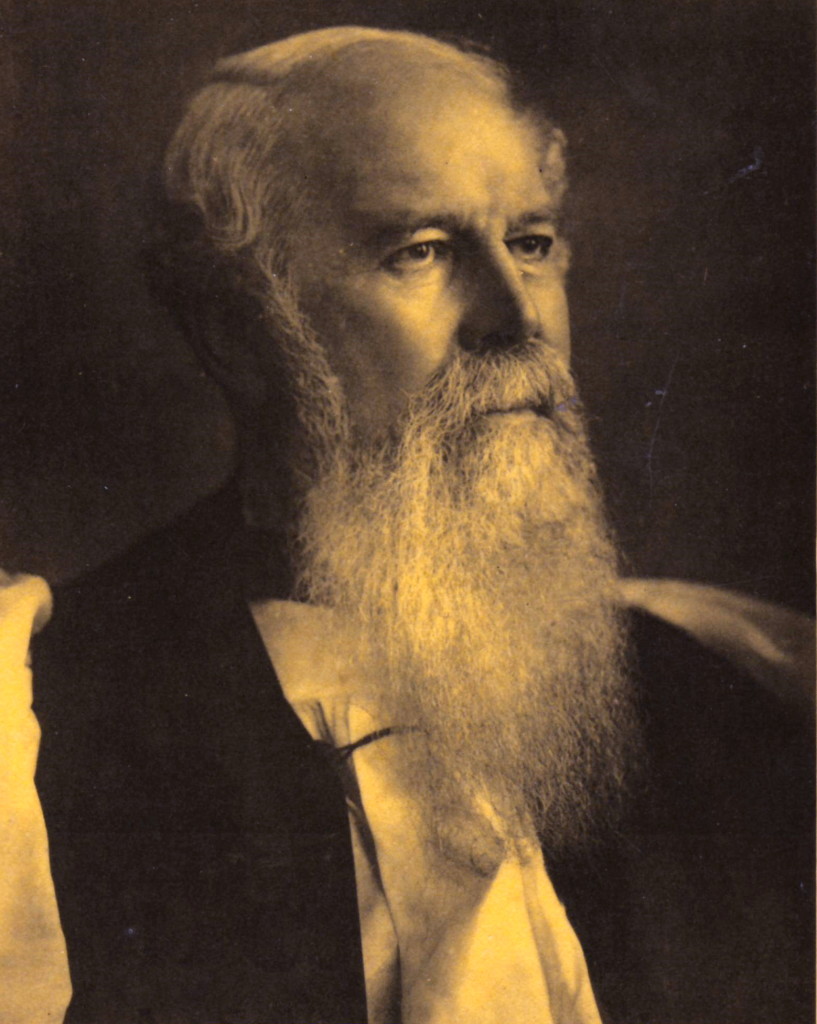
J.C. Ryle’s exposition of John 14:12-17 focuses on the promises of Jesus to His disciples, addressing their fear and uncertainty regarding His impending departure. Ryle emphasizes three key promises: the potential for believers to perform "greater works" than Christ, the assurance of effective prayer in Jesus' name, and the gift of the Holy Spirit as a Comforter. He argues that "greater works" refer not to miraculous feats but to the wider spread of the Gospel and conversions that will follow the apostles’ ministry (Acts 2:41). Ryle underscores that prayer should be in alignment with the believer’s spiritual needs (James 4:3) and highlights the significance of the Holy Spirit's indwelling and guiding role in the lives of Christians (Romans 8:9). The practical implications of these promises are significant for Reformed theology, teaching believers reliance on Christ's intercession and the Holy Spirit’s work as central to their faith and service.
Key Quotes
“Greater works mean more conversions. There is no greater work possible than the conversion of a soul.”
“Our languid desires are the reason of our languid performances. We are not straitened in our Lord but in ourselves.”
“The Holy Spirit is spoken of as a Person... His special office to apply truth to the hearts of Christians.”
“Let us take care that we grasp them firmly and never let them go.”
What does the Bible say about the works Christians can do?
The Bible teaches that Christians can do greater works than Jesus because of their faith in Him.
John 14:12, Acts 2:41
How do we know that prayer is powerful?
The Bible assures that whatever we ask in Christ's name will be done, empowering our prayers.
John 14:13-14, James 4:2
Why is the Holy Spirit important for Christians?
The Holy Spirit is essential as the Comforter and guide, dwelling in believers to empower their lives.
John 14:16-17, Romans 8:9
These verses are an example of our Lord's tender consideration for the weakness of His disciples. He saw them troubled and faint-hearted at the prospect of being left alone in the world. He cheers them by THREE PROMISES, peculiarly suited to their circumstances. "A word spoken in season, how good is it!"
We have first in this passage, a striking promise about the works that Christians may do. Our Lord says, "He that believes on Me, the works that I do shall he do also; and greater works than these shall he do; because I go unto my Father."
The full meaning of this promise is not to be sought in the miracles which the Apostles wrought after Christ left the world. Such a notion seems hardly borne out by facts. We read of no Apostle walking on the water, or raising a person four days dead, like Lazarus. What our Lord has in view seems to be the far greater number of conversions, the far wider spread of the Gospel, which would take place under the ministry of the Apostles, than under his own teaching. This was the case, we know from the Acts of the Apostles. We read of no sermon preached by Christ, under which three thousand were converted in one day, as they were on the day of Pentecost. In short, "greater works" mean more conversions. There is no greater work possible than the conversion of a soul.
Let us admire the condescension of our Master in allowing to the ministry of His weak servants more success than to His own. Let us learn that His visible presence is not absolutely necessary to the progress of His kingdom. He can help forward His cause on earth quite as much by sitting at the right hand of the Father, and sending forth the Holy Spirit, as by walking to and fro in the world. Let us believe that there is nothing too hard or too great for believers to do, so long as their Lord intercedes for them in heaven. Let us work on in faith, and expect great things, though we feel weak and lonely, like the disciples. Our Lord is working with us and for us, though we cannot see Him. It was not so much the sword of Joshua that defeated Amalek, as the intercession of Moses on the hill. (Ex. 17:11.)
We have, secondly, in this passage, a striking promise about things that Christians may get by prayer. Our Lord says, "Whatever you shall ask in my name, that will I do . . . If you shall ask anything in my name, I will do it."
These words are a direct encouragement to the simple, yet great duty of praying. Everyone who kneels daily before God, and from his heart "says his prayers," has a right to take comfort in these words. Weak and imperfect as his supplications may be, so long as they are put in Christ's hands, and offered in Christ's name, they shall not be in vain. We have a Friend at Court, an Advocate with the Father; and if we honor Him by sending all our petitions through Him, He pledges His word that they shall succeed. Of course it is taken for granted that the things we ask are for our souls' good, and not mere temporal benefits. "Anything" and "whatever" do not include wealth, and money, and worldly prosperity. These things are not always good for us, and our Lord loves us too well to let us have them. But whatever is really good for our souls, we need not doubt we shall have, if we ask in Christ's name.
How is it that many true Christians have so little? How is it that they go halting and mourning on the way to heaven, and enjoy so little peace, and show so little strength in Christ's service? The answer is simple and plain. "They have not, because they ask not." They have little because they ask little. They are no better than they are, because they do not ask their Lord to make them better. Our languid desires are the reason of our languid performances. We are not straitened in our Lord, but in ourselves. Happy are they who never forget the words, "Open your mouth wide, and I will fill it." (Ps. 81:10.) He that does much for Christ, and leaves his mark in the world, will always prove to be one who prays much.
We have, lastly, in this passage, a striking promise about the Holy Spirit. Our Lord says, "I will ask the Father, and He shall give you another Comforter, even the Spirit of truth."
This is the first time that the Holy Spirit is mentioned as Christ's special gift to His people. Of course we are not to suppose that He did not dwell in the hearts of all the Old Testament saints. But He was given with peculiar influence and power to believers when the New Testament dispensation came in, and this is the special promise of the passage before us. We shall find it useful, therefore, to observe closely the things that are here said about Him.
The Holy Spirit is spoken of as "a Person." To apply the language before us to a mere influence or inward feeling, is an unreasonable strain of words.
The Holy Spirit is called "the Spirit of truth." It is His special office to apply truth to the hearts of Christians, to guide them into all truth, and to sanctify them by the truth.
The Holy Spirit is said to be one whom "the world cannot receive and does not know." His operations are in the strongest sense foolishness to the natural man. The inward feelings of conviction, repentance, faith, hope, fear, and love, which He always produces, are precisely that part of religion which the world cannot understand.
The Holy Spirit is said to "dwell in" believers, and to be known by them. They know the feelings that He creates, and the fruits that He produces, though they may not be able to explain them, or see at first whence they come. But they all are what they are—new men, new creatures, light and salt in the earth, compared to the worldly, by the indwelling of the Holy Spirit.
The Holy Spirit is given to the Church of the elect, "to abide with them" until Christ comes the second time. He is meant to supply all the needs of believers, and to fill up all that is lacking while Christ's visible presence is removed. He is sent to abide with and help them until Christ returns.
These are truths of vast importance. Let us take care that we grasp them firmly, and never let them go. Next to the whole truth about Christ, it concerns our safety and peace to see the whole truth about the Holy Spirit. Any doctrine about the Church, the ministry, or the Sacraments, which obscures the Spirit's inward work, or turns it into mere form, is to be avoided as deadly error. Let us never rest until we feel and know that He dwells in us. "If any man has not the Spirit of Christ, he is none of His." (Rom. 8:9.)

Comments
Your comment has been submitted and is awaiting moderation. Once approved, it will appear on this page.
Be the first to comment!