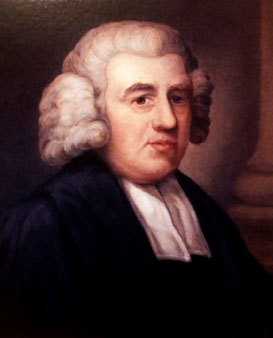
John Newton's life and theological contributions are grounded in the doctrines of grace and the transformative power of personal experience in the Reformed tradition. His narrative, transitioning from a reckless sailor to an esteemed preacher, highlights the effect of divine grace on a sinner’s heart. Key points include Newton's early scriptural influence provided by his mother, his violent and immoral life at sea, the pivotal moment of his conversion through Thomas à Kempis, and his subsequent commitment to pastoral ministry and hymn-writing. Theologically significant references such as Ephesians 2:8-9 illuminate the principle of salvation by grace alone, which Newton embodied and preached. His works, especially the "Olney Hymns," emphasize themes of repentance, the beauty of Christ, and the believer's struggle with sin, demonstrating the practical outworking of Reformed theology in personal and collective worship.
Key Quotes
“What shall the old African blasphemer stop while he can speak.”
“How sweet the name of Jesus sounds in a believer’s ear!”
“The feeling may be seen in the speeches writings and diaries of his whole life.”
“His rich acquaintance with Scripture knowledge of the heart directness and force and a certain sailor imagination tell strongly.”
What does the Bible say about conversion?
The Bible emphasizes that conversion is a work of God's grace, transforming the heart and mind through the Holy Spirit.
Ephesians 2:8-9, 2 Corinthians 5:17
How do we know John Newton's hymns are significant?
John Newton's hymns are significant for their scriptural richness and expression of deep spiritual truths.
Colossians 3:16
Why is the doctrine of grace important for Christians?
The doctrine of grace is vital as it underlines that salvation is entirely God's work and a free gift, not based on human merit.
Romans 11:6, Philippians 1:6
John Newton who was born in London, [England], July 24, 1725, and died there Dec. 21, 1807, occupied an unique position among the founders of the Evangelical School, due as much to the romance of his young life and the striking history of his conversion, as to his force of character. His mother a pious Dissenter, stored his childish mind with Scripture, but died when he was seven years old. At the age of eleven, after two years' schooling, during which he learned the rudiments of Latin, he went to sea with his father. His life at sea teems with wonderful escapes, vivid dreams and sailor recklessness. He grew into an abandoned and godless sailor. The religious fits of his boyhood changed into settled infidelity, through the study of' Shaftesbury and the instruction of one of his comrades.
Disappointing repeatedly the plans of his father, he was flogged as a deserter from the navy, and for fifteen months lived, half-starved and ill-treated, in abject degradation under a slave-dealer in Africa. The one restraining influence of his life was his faithful love for his future wife, Mary Catlett, formed when he was seventeen, and she only in her fourteenth year. A chance reading of Thomas à Kempis sowed the seed of his conversion; which quickened under the awful contemplations of a night spent in steering a water-logged vessel in the face of apparent death (1748). He was then twenty-three. The six following years, during which he commanded a slave ship, matured his Christian belief. Nine years more, spent chiefly at Liverpool, in intercourse with Whitefield, Wesley, and Nonconformists, in the study of Hebrew and Greek, in exercises of devotion and occasional preaching among the Dissenters, elapsed before his ordination to the curacy of Olney, Bucks (1764). The Olney period was the most fruitful of his life. His zeal in pastoral visiting, preaching and prayer-meetings was unwearied. He formed his lifelong friendship with [William] Cowper, and became the spiritual father of [Thomas] Scott the commentator.
At Olney his best works - Omicron's Letters (1774); Olney Hymns (1779): Cardiphonia, written from Olney, though published 1781 - were composed. As rector of St. Mary Woolnoth, London, in the centre of the Evangelical movement (1780-1807) his zeal was as ardent as before. In 1805, when no longer able to read his text, his reply when pressed to discontinue preaching, was, "What, shall the old African blasphemer stop while he can speak!" The story of his sins and his conversion, published by himself, and the subject of lifelong allusion, was the base of' his influence; but it would have been little but for the vigour of his mind (shown even in Africa by his reading Euclid drawing its figures on the sand), his warm heart, candour, tolerance, and piety. These qualities gained him the friendship of Hannah More, Cecil, Wilberforce, and others; and his renown as a guide in experimental religion made him the centre of a host of inquirers, with whom he maintained patient, loving, and generally judicious correspondence, of which a monument remains in the often beautiful letters of Cardiphonia.
As a hymn-writer, Montgomery says that he was distanced by Cowper. But Lord Selborne's contrast of the "manliness" of Newton and the "tenderness" of Cowper is far juster. A comparison of the hymns of both in The Book of Praise will show no great inequality between them. Amid much that is bald, tame, and matter-of-fact, his rich acquaintance with Scripture, knowledge of the heart, directness and force, and a certain sailor imagination, tell strongly. The one splendid hymn of praise, "Glorious things of thee are spoken," in the Olney collection, is his. "One there is above all others" has a depth of realizing love, sustained excellence of expression, and ease of development. "How sweet the name of Jesus sounds" is in Scriptural richness superior, and in structure, cadence, and almost tenderness, equal to Cowper's "Oh! for a closer walk with God." The most characteristic hymns are those which depict in the language of intense humiliation his mourning for the abiding sins of his regenerate life, and the sense of the withdrawal of God's face, coincident with the never-failing conviction of acceptance in The Beloved. The feeling may be seen in the speeches, writings, and diaries of his whole life.

Comments
Your comment has been submitted and is awaiting moderation. Once approved, it will appear on this page.
Be the first to comment!