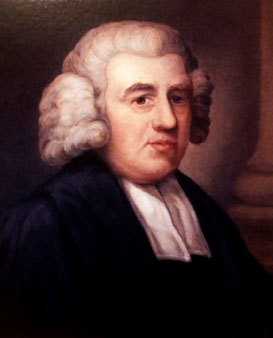
John Newton's article "Causes, Nature, and Marks of a Decline in Grace" delves into the theological issues surrounding the waning fervor in the Christian life, particularly among believers. Newton examines the observable decline of initial zeal and warmth that new believers often experience, exploring factors such as weakness in faith, self-righteousness, and the influences of a sinful nature. He supports his observations with scriptural references, notably Matthew 5:14-16 and 2 Peter 3:18, illustrating that genuine growth in grace can coexist with fluctuating feelings of affection for divine things. The practical significance of this examination encourages believers to recognize the need for continual dependence on God and to engage diligently in the means of grace, such as prayer and study of Scripture, to invigorate their faith despite feelings of spiritual dryness.
Key Quotes
“The evils of their hearts which though overpowered were not eradicated will revive again.”
“For though we can fall of ourselves we cannot rise without his help.”
“I apprehend therefore that though we find an abatement of that sensible warmth of affection which we felt at first setting out yet if our views are more evangelical our judgment more ripened, our hearts more habitually humbled under a sense of inward depravity...”
“Indeed every sin in its own nature has a tendency towards a final apostasy.”
What does the Bible say about a decline in grace?
The Bible suggests that a decline in grace can occur as believers face the challenges of a sinful nature and world, leading to a weakening of spiritual fervor.
Hebrews 12:1-2, 2 Peter 3:18
How do we know the doctrines of grace are true?
The doctrines of grace are supported through both scripture and historical confession of faith within the Reformed tradition, affirming God's sovereignty in salvation.
Ephesians 1:4-5, Romans 8:29-30
Why is the concept of grace important for Christians?
Grace is foundational for Christians as it signifies God's unmerited favor, emphasizing our reliance on Him for salvation and spiritual strength.
Ephesians 2:8-9, Titus 2:11-12
March, 1765
My friend,
I remember, when I once had the pleasure of waiting on you, you were pleased to begin an interesting conversation, which, to my concern, was interrupted. The subject was concerning the causes, nature, and marks of a decline in grace; how it happens that we lose that warm impression of Divine things, which in some favored moments we think it almost impossible to forget; how far this change of frame is consistent with a spiritual growth in other respects; how to form a comparative judgment of our proficiency upon the whole; and by what steps the losses we sustain from our necessary connection with a sinful nature and a sinful world, may be retrieved from time to time. I beg your permission to fill up the paper with a view to these inquiries. I do not mean to offer a labored essay on them—but such thoughts as shall occur while the pen is in my hand.
The awakened soul (especially when, after a season of distress and terror, it begins to taste that the Lord is gracious) finds itself as in a new world. No change in outward life can be so sensible so affecting. No wonder, then, that at such a time little else can be thought of—the transition from darkness—to light; from a sense of wrath—to a hope of glory, is the greatest change which can be imagined, and is oftentimes as sudden as wonderful. Hence the general characteristics of young converts are zeal and love. Like Israel at the Red Sea, they have just seen the wonderful works of the Lord, and they cannot but sing his praise; they are deeply affected with the danger they have lately escaped, and with the case of multitudes around them, who are secure and careless in the same alarming situation; and a sense of their own mercies, and a compassion for the souls of others, is so transporting, that they can hardly forbear preaching to everyone they meet.
This emotion is highly just and reasonable, with respect to the causes from whence it springs; and it is doubtless a proof, not only of the imperfection—but the depravity of our nature, that we are not always thus affected; yet it is not entirely genuine. If we examine this character closely, which seems at first sight, a pattern and a reproof to Christians of longer standing, we shall for the most part find it attended with considerable defects.
1. Such people are very weak in faith. Their confidence arises rather from the lively impressions of joy within—than from a distinct and clear apprehension of the work of God in Christ. The comforts which are intended as cordials to animate them against the opposition of an unbelieving world—they mistake and rest in as the proper evidences of their hope. And hence it comes to pass, that when the Lord varies his dispensations, and hides his face—-they are soon troubled and at their wit's end.
2. Those who are in this state of their first love, are seldom free from something of a censorious spirit. They have not yet felt all the deceitfulness of their own hearts; they are not well acquainted with the devices or temptations of Satan; and therefore know not how to sympathize or make allowances with others, where allowances are necessary and due—and can hardly bear with any who do not reveal the same earnestness as themselves.
3. They are likewise more or less under the influence of self-righteousness and self-will. They mean well—but not being as yet well acquainted with the spiritual meaning and proper use of the law, nor established in the life of faith, a part (oftentimes a very considerable part) of their zeal spends itself in externals and non-essentials, prompts them to practice what is not commanded, to refrain from what is lawful, and to observe various and needless austerities and singularities, as their tempers and circumstances differ.
However, with all their faults, methinks there is something very beautiful and engaging in the honest vehemence of a young convert. Some cold and rigid judges are ready to reject these promising appearances on account of incidental blemishes. But would a gardener throw away a fine nectarine, because it is green, and has not yet attained all that beauty and flavor which a few more showers and suns will impart? Perhaps it will hold for the most part in grace as in nature (some exceptions there are) —if there is not some fire in youth, we can hardly expect a proper warmth in old age.
But the great and good Gardener watches over what his own hand has planted, and carries on his work by a variety of different, and even contrary dispensations. While their mountain stands thus strong, they think they shall never be moved; but at length they find a change. Sometimes it comes on by insensible degrees. That part of their affection which was purely natural, will abate of course when the power of novelty ceases. They will begin, in some instances, to perceive their own indiscretions; and an endeavor to correct the excesses of an imprudent zeal will often draw them towards the contrary extreme of remissness. The evils of their hearts, which, though overpowered, were not eradicated, will revive again. The enemy will watch his occasions to meet them with suitable temptations; and as it is the Lord's design that they should experimentally learn and feel their own weakness, he will in some instances be permitted to succeed.
When guilt is thus brought upon the conscience, the heart grows hard, the hands feeble, and the knees weak; then confidence is shaken, the spirit of prayer interrupted, the armor gone. And thus things grow worse and worse—until the Lord is pleased to interpose. For though we can fall of ourselves, we cannot rise without his help! Indeed, every sin, in its own nature, has a tendency towards a final apostasy! But there is a provision in the covenant of grace, and the Lord, in his own time, returns to convince, humble, pardon, comfort, and renew the soul. He touches the rock—and the waters flow. By repeated experiments and exercises of this sort (for this wisdom is seldom acquired by one or a few lessons), we begin at length to learn that we are nothing, have nothing, call do nothing—but sin. And thus we are gradually prepared to live more outside of ourselves—and to derive all our sufficiency of every kind from Jesus, the fountain of grace. We learn to tread more warily, to trust less to our own strength; to have lower thoughts of ourselves, and higher thoughts of Jesus! In which two last particulars, I apprehend what the Scripture means by a growth of grace does properly consist. Both are increasing in the lively Christian—every day shows him more of his own heart, and more of the power, sufficiency, compassion, and grace of his adorable Redeemer; but neither will be complete until we get to heaven.
I apprehend, therefore, that though we find an abatement of that sensible warmth of affection which we felt at first setting out; yet, if our views are more evangelical, our judgment more ripened, our hearts more habitually humbled under a sense of inward depravity, our tempers more softened into sympathy and tenderness; if our prevailing desires are spiritual, and we practically esteem the precepts, ordinances, and people of God; we may warrantably conclude, that his good work of grace in us is, upon the whole, on an increase.
But still it is to be lamented, that an increase of knowledge and experience, should be so generally attended with a decline of fervor. If this was not for what has passed in my own heart, I would be ready to think it impossible. But this very circumstance gives me a still more emphatic conviction of my own vileness and depravity. The lack of humiliation humbles me, and my very indifference rouses and awakens me to earnestness.
There are, however, seasons of refreshment, ineffable glances of light and power upon the soul—which, as they are derived from clearer displays of Divine grace, if not so elevating as the first joys, are more penetrating, transforming, and animating. A glance of these, when compared with our sluggish stupidity when they are withheld—weans the heart from this wretched state of sin and temptation, and makes the thoughts of death and eternity desirable. Then this conflict shall cease; I shall sin and wander no more, see him as he is, and be like him forever!
If the question is—How are these bright moments to be prolonged, renewed, or retrieved? We are directed to faith and diligence. A careful use of the appointed means of grace, a watchful endeavor to avoid the occasions and appearances of evil, and especially assiduity in secret prayer, will bring us as much of them as the Lord sees good for us. He knows best—why we are not to be trusted with them continually. Here we are to walk by faith, to be exercised and tried; by and by we shall be crowned, and the desires he has given shall be abundantly satisfied!
April, 1766
My friend,
I shall embrace your permission to fill my paper. As to the subject, that which has been a frequent theme of my heart of late—I shall venture to lay before you; I mean, the remarkable and humbling difference which I suppose all who know themselves may observe, between their acquired and their experimental knowledge. In other words, the difference between their judgment and their practice. To hear a believer speak his apprehensions of the evil of sin, the vanity of the world, the love of Christ, the beauty of holiness, or the importance of eternity—who would not suppose him to be armored against temptation? To hear with what strong arguments he can recommend watchfulness, prayer, forbearance, and submission, when he is teaching or advising others—who would not suppose but he could also teach himself, and influence his own conduct! Yet, alas! The person who rose from his knees before he left his chamber—as a poor, indigent, fallible, dependent creature, who saw and acknowledged that he was unworthy to breathe the air or too see the light—may meet with many occasions, before the day is closed, to discover the corruptions of his heart, and to manifest how weak and faint his best principles and clearest convictions are, in their actual exercise!
And in this view—how vain is man! what a contradiction is a believer to himself! He is called a Believer emphatically, because he cordially assents to the Word of God; but, alas! how often unworthy of the name!
If I were to describe him from the Scriptural portrait—I would say that he is one whose heart is athirst for God, for His glory, and for His presence; that his affections are fixed upon an unseen Savior; that his treasures, and consequently his thoughts, are on eternal realities, far beyond the bounds of sense. Having experienced much God's forgiveness, he is full of mercy and forgiveness to all around. Having been often deceived by his own heart, he dares trust it no more—but lives by faith in the Son of God, for wisdom, righteousness, and sanctification, and derives from Him grace upon grace; sensible that without Him he has not sufficiency even to think a good thought! In short—he is dead to the world, to sin, to self; but alive to God, and lively in His service. Prayer is his breath, the Word of God his food, and the ordinances more precious to him than the light of the sun. Such is a believer—in his judgment and prevailing desires.
But was I to describe him from his actual experience, especially at some times—how different would the picture be! Though he knows that communion with God is his highest privilege, he too seldom finds it so; on the contrary, if duty, conscience, and necessity did not compel him—he would leave the throne of grace unvisited from day to day! He takes up the Bible, conscious that it is the fountain of life and true comfort; yet perhaps, while he is making the reflection, he feels a secret distaste, which prompts him to lay it down, and give his preference to a newspaper! He needs not to be told of the vanity and uncertainty of the world, and all beneath the sun; and yet is almost as much elated or cast down by a trifle—as those who have their only portion in this world! He believes that all things shall work together for his good, and that the most high God appoints, adjusts, and overrules all his concerns; yet he feels the risings of fear, anxiety, and displeasure, as though the contrary was true! He owns himself to be ignorant, and liable to be deceived by a thousand fallacies; yet he is easily betrayed into flattering views of himself, and self-conceit! He feels himself to be an unprofitable, unfaithful, unthankful servant, and therefore blushes to harbor a thought of desiring the esteem and commendations of men—yet he cannot suppress it! Finally (for I must observe some bounds), on account of these and many other inconsistencies, he is struck dumb before the Lord, stripped of every hope and plea, but what is provided in the free grace of God—and yet his heart is continually leaning and returning to a covenant of works.
Two questions naturally arise from such a view of ourselves.
First: How can these things be—or why are they permitted? Since the Lord hates sin, teaches his people to hate it and cry against it, and has promised to hear their prayers—how is it that they go thus burdened by sin? Surely, if he could not, or would not, over-rule evil for good—he would not permit it to continue. By these exercises of sin and grace, the Lord teaches us more truly to know and feel the utter depravity and corruption of our whole nature, that we are indeed defiled in every part! His method of salvation is likewise hereby exceedingly endeared to us! We see that it is and must be of grace, wholly of grace; and that the Lord Jesus Christ, and his perfect righteousness, is and must be our all in all.
God's power likewise, in maintaining his own work notwithstanding our infirmities, temptations, and enemies, is hereby displayed in the clearest light; his strength is manifested in our weakness!
Satan likewise is more remarkably disappointed and put to shame, when he finds bounds set to his rage and wiles, beyond which he cannot pass; and that those in whom he finds so much evil to work upon, and over whom he so often prevails for a season—escape at last out of his hands! He casts them down—but they are raised again! He wounds them—but they are healed! He obtains his desire to sift them as wheat—but the prayer of their great Advocate prevails for the maintenance of their faith.
Farther, by what believers feel in themselves—they learn by degrees how to warn, pity, and bear with others. A soft, patient, and compassionate spirit, and a readiness and skill in comforting those who are cast down, is not perhaps attainable in any other way.
And, lastly, I believe that nothing more habitually reconciles a child of God to the thought of death, than the wearisomeness of this warfare with sin and temptation. Death is unwelcome to human nature. But the Christian knows that not until death—will conflict cease! Then we shall sin no more. The flesh, with all its attendant evils, will be laid in the grave. Then the soul, which has been partaker of a new and heavenly birth, shall be freed from every encumbrance, and stand perfect in the Redeemer's righteousness before God in eternal glory!
But though these evils cannot be wholly removed, it is worth while to inquire, Secondly, How they may be mitigated? This we are encouraged to hope for. The Word of God directs and animates to a growth in grace—and though we can do nothing spiritually of ourselves—yet there is a part assigned us. We cannot conquer the obstacles in our way by our own strength; yet we can give way to them; and if we do, it is our sin—and will be our sorrow.
The disputes concerning inherent power in the creature, have been carried to inconvenient lengths; for my own part, I think it safe to use Scriptural language. The Apostles exhort us to give all diligence—to resist the devil; to purge ourselves from all filthiness of flesh and spirit; to give ourselves to reading, meditation, and prayer; to watch; to put on the whole armor of God; and to abstain from all appearance of evil. Faithfulness to light received, and a sincere endeavor to conform to the means prescribed in the Word of God, with a humble application to the Blood of sprinkling and the promised Holy Spirit, will undoubtedly be answered by increasing measures of light, faith, strength, and comfort. We shall know—if we follow on to know the Lord.
March, 1773
Dear sir,
A simple dependence upon the teaching and influence of the good Spirit of God, so as not to supersede the use of appointed means, would, if it could be uniformly maintained, make every part of duty easy and successful. It would free us from much solicitude, and prevent many mistakes. Methinks I have a subject in view already, a subject of great importance to myself, and which perhaps will not be displeasing to you—How to walk with God in the daily occurrences of life, so as to do everything for his sake and by his strength.
When we are justified by faith, and accepted in the Beloved—we become heirs of everlasting life; but we cannot know the full value of our privileges, until we enter upon the state of eternal glory. For this, most who are converted have to wait some time after they are partakers of grace. Though the Lord loves them, hates sin, and teaches them to hate it—he appoints them to remain a while in a sinful world, and to groan under the burden of a depraved nature. He could put them in immediate possession of the heaven for which he has given them a fitness—but he does not. He has a service for them here; an honor which is worth all they can suffer, and for which eternity will not afford an opportunity, namely—to be instruments of promoting his designs, and manifesting his grace in the world. Strictly speaking, this is the whole of our business here, the only reason why life is prolonged, or for which it is truly desirable, that we may fill up our connections and situations, improve our comforts and our crosses, in such a manner as that God may be glorified in us and by us.
As he is a bountiful Master and a kind Father, he is pleased to afford a variety of temporal blessings, which sweeten our service, and as coming from his hand are very valuable. But they are by no means worth living for, considered in themselves, as they can neither satisfy our desires, preserve us from trouble, or support as under it. That light of God's countenance, which can pervade the walls and dissipate the gloom of a dungeon, is unspeakably preferable to all that can be enjoyed in a palace without it. The true end of life is, to live not to ourselves—but to Him who died for us; and while we devote ourselves to his service upon earth, to rejoice in the prospect of being happy with him forever in heaven.
These things are generally known and acknowledged by professors; but they are a favored few who act consistently with their avowed principles; who honestly, diligently, and without reserve, endeavor to make the most of their talents and strength in promoting the Lord's service, and allow themselves in no views or designs but what are plainly subordinate and subservient to it. Yes, I believe the best of the Lord's servants see cause enough to confess, that they are not only unprofitable in comparison of what they wish to be—but in many instances unfaithful likewise. They find so many snares, hindrances, and temptations, arising from without, and so much encumbrance from sin which dwells within—that they have more cause for humiliation than self-complacence, even when they seem most earnest and most useful.
However, we have no Scriptural evidence that we serve the Lord at all, any farther than we find a habitual desire and aim to serve him wholly. He is gracious to our imperfections and weakness; yet he requires all the heart, and will not be served by halves, nor accept what is performed by a divided heart.
Doing all to the glory of God, is the true alchemy which turns everything to gold, and ennobles the common actions of life into acts of piety; 1 Cor. 10:31. Nor is there a grain of real goodness in the most specious actions, which are performed without a reference to God's glory. This the world cannot understand; but it will appear highly reasonable to those who take their ideas of God from the Scripture, and who have felt the necessity and found the benefits of redemption.
We are debtors many ways—the Lord has a right to us by creation, by redemption, by conquest, when he freed us from Satan's power, and took possession of our hearts by his grace; and, lastly, by our own voluntary surrender, in the day when he enabled us to fix our choice on himself—as our Lord and our portion. Then we felt the force of our obligations. We saw the beauty and honor of his service, and that nothing was worthy to stand in the least degree of competition with it. This is always equally true, though our perceptions of it are not always equally strong. But where it has been once really known, it cannot be wholly forgotten, or cease to be the governing principle of life; and the Lord has promised to revive the impression in those who wait upon him, and thereby to renew their strength; for in proportion as we feel by what ties we are his—we shall embrace his service as perfect freedom.
Again—when the eye is thus single, the whole body will be full of light. The principle of acting simply for God, will in general make the path of duty plain, solve a thousand otherwise dubious questions, lead to the most proper and obvious means, and preclude that painful anxiety about events, which upon no other plan can be avoided. The love of God is the best casuist; especially as it leads us to a careful attendance to his precepts, a reliance on his promises, and a submission to his will.
Most of our perplexities arise from an undue, though perhaps unperceived, attachment to SELF. Either we have some scheme of our own too closely connected with our general view of serving the Lord; or lay some stress upon our own management, which, though we suspect it may possibly fail us, we cannot entirely help trusting to. In these respects the Lord permits his servants occasionally to feel their own weakness; but if they are sincerely devoted to him, he will teach them to profit by it, and bring them by degrees to a simplicity of dependence, as well as of intention. Then all things are easy. Acting from love, and walking by faith, they can neither be disappointed or discouraged. Duty is their part, care is his, and they are enabled to cast it upon him. They know, that, when their expedients seem to fail—that he is still all-sufficient. They know, that, being engaged in his cause, they cannot miscarry; and that, though in some things they may seem to fall short of success, they are sure of meeting acceptance, and that he will estimate their services not by their actual effects—but according to the gracious principle and desire he has put into their hearts. 2 Chron. 6:7-8.
June, 1773
Dear sir,
I must content myself with the idea of the pleasure it would give me, to sit with you half a day under my favorite great tree, and converse with you, not concerning the comparatively petty affairs of human governments—but of the things pertaining to the kingdom of God. How many delightful subjects would suggest themselves in a free and retired conversation! The excellency of our King, the permanency and glory of his kingdom, the beauty of his administration, the privileges of his subjects, the review of what he has done for us, and the prospect of what he has prepared for us in future—and if, while we were conversing, he should be pleased to join us (as he did the disciples when walking to Emmaus), how would our hearts burn within us! Indeed, whether we are alone or in company, the most interesting topics strike us but faintly—unless he is pleased to afford his gracious influence; but when he is present—light, love, liberty, and joy, spring up in the hearts that know him.
But we cannot meet. All that is left for me, is to use the liberty you allow me of offering a few hints upon these subjects by letter, not because you don't know them—but because you love them. The hour is coming, when all impediments shall be removed—all distinctions shall cease that are founded upon sublunary things, and the earth and all its works shall be burnt up. Glorious day! May our souls be filled with the thought, and learn to estimate all things around us now—by the view in which they will appear to us then. Then it will be of small consequence who was the prince, and who was the beggar, in this life; but who in their several situations sought, and loved, and feared, and honored the Lord.
Alas! how many of the kings of the earth, and the rich men, and the chief captains, and the mighty men, will then say (in vain) to the mountains and the rocks, "Fall on us and hide us from the face of him who sits on the throne, and from the wrath of the Lamb!" In this world they are for the most part too busy to regard the commands of God, or too amusing to seek his favor. They have their good things here; they please themselves for a while, and in a moment they go down to the grave. In that moment their thoughts perish, their schemes are left unfinished, they are torn from their possessions, and enter upon a new, an untried, an unchangeable, a never-ending state of existence! Alas, is this all the world can afford!
I congratulate you—not because God has appointed you to appear in an elevated rank, (this, abstracted from the opportunity it affords you of greater gospel usefulness, would perhaps be a more proper subject for condolence); but that he has admitted you to those honors and privileges which come from him alone, and which so few in the superior ranks of life think worthy of their attention. "By the grace of God I am what I am!" 1 Corinthians 15:10.
As believers, we are often affected with a sense of God's distinguishing mercy to us. We are debtors, great debtors to the sovereign grace of God, which alone makes us to differ from the perishing world around us!
Yet it does not yet appear what we shall be. We cannot form a just conception of the misery from which we are redeemed, much less of the price paid for our redemption! How little do we know of the Redeemer's surpassing excellency, and of the unutterable agonies He endured, when His soul was made an offering for sin, and it pleased the Father to bruise Him—that by His stripes we might be healed! These things will strike us in quite another manner—when we view them from the light of eternity!
May the cheering contemplation of the glorious hope set before us—support and animate us to improve our short interval on earth, and fill us with a holy ambition of shining as lights in this evil world, to the praise and glory of His grace—who has called us out of darkness, into His glorious light!
Encompassed as we are with snares, temptations, and infirmities, it is possible (by His promised assistance) to live in some good measure above the world—above the influence of its cares, its smiles, or its frowns. Our citizenship is in heaven—we are not at home—but only reside here on earth for a season, to fulfill our appointed service. The Lord, whom we serve, has promised that He will guide us by His wisdom, strengthen us by His power, and comfort us with the light of His countenance, which is better than life. Every temporal blessing we receive from Him, is a token of His favor, and a pledge of that far more exceeding and eternal weight of glory, which He has reserved for us in heaven. Oh! to hear Him say at last, "Well done, good and faithful servant! Enter into the joy of your Lord!" will be rich amends for all that we can lose, suffer, or endure, for His sake!
"No eye has seen, no ear has heard, and no mind has imagined—what God has prepared for those who love Him!" 1 Corinthians 2:9
May 24, 1774
Dear sir,
What a mercy it is, to be separated in spirit, conversation, and interest—from the ungodly world! Where all are alike by nature—but grace makes a happy and unspeakable difference! Believers were once under the same influence of that evil spirit who still works in the children of disobedience; each pursuing different paths—but all equally remote from truth and peace; some hatching cockatrice eggs, others weaving spiders' webs. These two general heads, of evil and vanity, include all the schemes, aims, and achievements of which man is capable—until God is pleased to visit the heart with his grace.
The busy part of mankind are employed in multiplying evils and miseries. The more retired, speculative, and curious, are amusing themselves with what will hereafter appear as unsubstantial, unstable, and useless, as a cobweb! Death will soon sweep away all which the philosophers, the scientists, the mathematicians, the antiquarians, and other learned triflers, are now weaving with so much self-applauded address. Nor will the fine-spun dresses, in which the moralist and the self-righteous clothe themselves, be of more advantage to them, either for ornament or defense, than the web of a spider.
It is given only to a few, to know their present state and future destination. These build upon the immovable Rock of ages for eternity. These are trees springing from a living root, and bear the fruits of righteousness, which are by Jesus Christ, to the glory and praise of God. These alone are awake, while the rest of the world are in a deep sleep, indulging in vain dreams; from which likewise they will shortly awake. But, O with what consternation, when they shall find themselves irrecoverably divorced from all their delusive attachments, and compelled to appear before that God to whom they have lived strangers, and to whom they must give an account! O for a thousand tongues, to proclaim in the ears of thoughtless mortals, that important aphorism of our Lord, "Only one thing is needful!" Yet a thousand tongues would be, and are, employed in vain—unless so far as the Lord is pleased to send the watchman's warning, by the power and agency of his own Spirit.
I think the poet tells us, that Cassandra had the gift of truly foretelling future events; but she was afterwards laid under a painful embarrassment, that nobody would believe her words. Such, with respect to the bulk of their hearers, is the lot of Gospel ministers. They are enlightened to see, and sent forth to declare, the dreadful consequences of sin; but, alas, how few believe their report!
To illustrate our grief and disappointment, I sometimes suppose there was a dangerous river in the way of travelers, over which there is a bridge, which those who can be prevailed upon may pass with safety. By the side of this bridge watchmen are placed, to warn passengers of the danger of the waters; to assure them, that all who attempt to go through them inevitably perish; to invite, entreat, and beseech them, if they value their lives—to cross the bridge. Methinks this should be an easy task—yet if we should see, in fact, the greater part stopping their ears to the friendly importunity, many so much offended by it, as to account the watchman's care impertinent, and only deserving of scorn and ill-treatment, hardly one in fifty betaking themselves to the friendly bridge, the rest eagerly plunging into the waters, from which none return, as if they were determined to see who would be drowned first—this spectacle would be no unfit emblem of the reception the Gospel meets with, from a blinded world.
Gospel ministers are rejected, opposed, vilified; they are accounted troublers of the world, because they dare not, cannot stand silent, while sinners are perishing before their eyes. And if, in the course of many sermons, they can prevail but on one soul to take timely warning, and to seek to Jesus, who is the way, the truth, and the life—they may account it a mercy and an honor, sufficient to overbalance all the labor and reproaches they are called to endure. From the most, they must expect no better reception than the Jews gave to Jeremiah, who told the Prophet to his face, "As to the word you have spoken to us in the name of the Lord—we will not hearken to you at all; but we will certainly do whatever goes forth out of our own mouth!"
Surely, if the Lord has given us any sense of the worth of our souls, any compassion towards them, this must be a painful exercise; and experience must teach us something of the meaning of Jeremiah's pathetic exclamation, "O that my head were waters, and my eyes fountains of tears—that I might weep day and night, for the slain of the daughter of my people!" It is our duty to be thus affected.
Our relief lies in the wisdom and sovereignty of God. He reveals his salvation to whom he pleases, for the most part to babes; from the bulk of the wise and the prudent—the gospel is hidden. Thus it has pleased him—and therefore it must be right. Yes, he will one day condescend to justify the propriety and equity of his proceedings to his creatures; then every mouth will be stopped, and none will be able to reply against their Judge. Light has come into the world—but men prefer darkness. They hate the light, resist it, and rebel against it. It is true—all do so! And therefore, if all were to perish under the condemnation, their ruin would be their own act. It is of grace that any are saved; and in the distribution of that grace, God does what he will with his own—a right which most are ready enough to claim in their own concerns, though they are so unwilling to allow it to the Lord of all.
Many perplexing and acrimonious disputes have been started upon this subject; but the redeemed of the Lord are called not to dispute—but to admire and rejoice, to love, adore, and obey! To know that he loved us, and gave himself for us, is the constraining argument and motive to love him, and surrender ourselves to him; to consider ourselves as no longer our own—but to devote ourselves, with every faculty, power, and talent, to his service and glory. He deserves our all—for he parted with all for us. He made himself poor, he endured shame, torture, death, and the curse, for us—that we, through him, might inherit everlasting life! Ah! the hardness of my heart, that I am no more affected, astonished, and overpowered, with this thought!
July, 1777
Dear sir,
I have recently read "Robertson's History of Charles V", which, like most other histories, I consider as a comment upon those passages of Scripture which teach us the depravity of man, the deceitfulness of the heart, the ruinous effects of sin; and the powerful, though secret, rule of Divine Providence, moving, directing, controlling the designs and actions of men, with an unerring hand, to the accomplishment of his own purposes, both of mercy and judgment. Without the clue and the light which the Word of God affords—the history of mankind, of any, of every age, only presents to view—a labyrinth and a chaos; a detail of wickedness and misery to make us tremble; and a confused jumble of interfering incidents, as destitute of stability, connection, or order—as the clouds which fly over our heads.
But with the Scripture key—all is plain, all is instructive. Then I see, truly there is a God, who governs the earth, who pours contempt upon princes, takes the wise in their own craftiness, over-rules the wrath and pride of man to bring his own designs to pass, and restrains all that is not necessary to that end; blasting the best concerted enterprises at one time, by means apparently slight, and altogether unexpected, and at other times producing the most important events from instruments and circumstances which are at first thought too feeble and trivial to deserve notice.
I would like to see a writer of Dr. Robertson's abilities give us a history upon this plan; but I think his reflections of this sort are too general, too cold, and too few. What an empty phantom do the great men of the world pursue, while they wage war with the peace of mankind, and butcher (in the course of their lives) perhaps hundreds of thousands, to maintain the shadow of authority over distant nations, whom they can reach with no other influence than that of oppression and devastation! But when we consider those who are sacrificed to their ambition as justly suffering for their sins, then heroes and conquerors appear in their proper light, and worthy to be classed with earthquakes and pestilences—as instruments of Divine vengeance. So many cares, so much pains, so many mischiefs, merely to support the idea which a human worm has formed of his own grandeur, is a proof that man, by nature, is not only depraved—but infatuated. How awful is the case of those who live and die in such a spirit, and who have multiplied miseries upon their fellow-creatures, in order to support and feed their pride and arrogance! Perhaps they may, upon their entrance to the eternal state, be accosted by multitudes, to the purpose of that sarcastic language in the prophet's sublime ode of triumph over the king of Babylon, Isa. 14:5-17.
But though the effects of this principle of SELF are more extensive and calamitous in proportion as those who are governed by it are more elevated, the principle itself is deep-rooted in every heart, and is the spring of every action—until grace infuses a new principle, and self, like Dagon, falls before the Lord Almighty. Great and small are but relative terms; and the passions of discontent, pride, and envy, which, in the breast of a potentate are severely felt by one half of Europe, exert themselves with equal strength in the heart of a peasant, though, for lack of materials and opportunities, their operations are confined within narrow bounds. We are fallen into a state of gross idolatry—and SELF is the idol we worship!
September 28, 1774.
My dear friend,
I see the necessity of having, if possible, my principles at my fingers' ends, that I may apply them as occasions arise every hour.
"We know that all things work together for good to those who love God—to those who are the called according to his purpose." Romans 8:28. Certainly, if my ability was equal to my inclination, I would remove your tumor with a word or a touch—I would exempt you instantly and constantly from every inconvenience and pain! But you are in the hands of One who could do all this and more, and who loves you infinitely better than I can do—and yet He is pleased to permit you to suffer. What is the plain lesson? Certainly, that at the present juncture, He, to whom all the chains of events, and their consequences are present in one view, sees it better for you to have this tumor than to be without it! For I have no more idea of a tumor rising (or any other incidental trial befalling you), without a cause, without a need-be, without a designed advantage to result from it, than I have of a mountain or pyramid rising up of its own accord in the middle of Main Street. The promise is express, and literally true—that all things, universally and without exception, shall work together for good to those who love God. But they work together! The smallest as well as the greatest events have their place and use—like several stones in the arch of a bridge, where no one would singly be useful—but every one in its place is necessary to the structure and support of the arch; or, rather, like the movement of a watch, where, though there is an evident subordination of parts, and some pieces have a greater comparative importance than others—yet the smallest pieces have their place and use, and are so far equally important, that the whole design of the machine would be obstructed for lack of them.
Some workings and turns of Divine Providence may be compared to the main-spring or main-wheels, which have a more visible, sensible, and determining influence upon the whole tenor of our lives. But the more ordinary occurrences of every day are at least pins and pivots, adjusted, timed, and suited with equal accuracy, by the hand of the same great Artist who planned and executes the whole! We are sometimes surprised to see how much more depends and turns upon these minor events, than we were aware of. Then we admire his skill, and say "he has done all things well!" Indeed, with respect to his works of providence, as well as of creation, he well deserves the title of Maximus in minimis.
Such thoughts as these, when I am enabled to realize them, in some measure reconcile me to whatever he allots for myself or my friends, and convinces me of the propriety of that verse, which speaks the language of love, as well as authority, "Be still—and know that I am God!"
I sympathize with you in your severe trial, and pray and trust that your Shepherd will be your Physician; will superintend and bless the use of means; will give you in his good time health and cure, and at all times reveal unto you abundance of peace.
His promises and power are necessary for our preservation, in the smoother scenes he has allotted for us, and they are likewise sufficient for the roughest. We are always equally in danger in ourselves, and always equally safe under the shadow of his wings. No storms, assaults, sieges, or pestilences, can hurt us, until we have filled up his appointed measure of service! And when our work is done, and he has ripened us for glory—it is no great matter by what means he is pleased to call us home to himself!
July 22, 1777.
My dear Sir,
The complaints you make of what passes within, encourage me under what I feel myself. Indeed, if those, who, I have reason to believe, are more spiritual and humble than I am, did not give some testimony that they find their hearts made of the same materials as mine is, I should be sometimes hard put to it to believe that I have any part or lot in the matter, or any real knowledge of the life of faith! But this concurrent testimony of many witnesses, confirms me, in what I think the Scripture plainly teaches—that the soil of human nature, though many spots are certainly better weeded, planted, and fertilized than others—is everywhere the same—universally bad! The heart is so bad, that it cannot be worse—and of itself is only capable of producing noxious weeds, and nourishing venomous creatures!
We know that culture, skill, and expense will make a garden—where all was desert before. When Jesus, the heavenly gardener, encloses a soil, and separates it from the wasteland of the world, to make it a residence for Himself—a change presently takes place; it is planted and watered from above, and visited with beams infinitely more nourishing and fertilizing than those of the material sun.
But its natural propensity to bring forth weeds still continues, and one half of God's dealings with us, may be compared to a company of weeders, whom He sends forth into His garden—to pluck up all which He has not planted with His own hand; and which, if left to grow, would quickly overpower and over top the rest!
But, alas! the ground is so impregnated with evil seeds, and they shoot in such quick succession, that if this weeding work were not constantly repeated, all former labor would be lost! Hence arises the necessity of daily crosses and disappointments, and such multiplied convictions that we are nothing, and can do nothing, of ourselves! All these trials are needful, and barely sufficient, to prevent our hearts from being overrun with pride, lust, worldliness and self-dependence.
November 11, 1775.
My dear Miss M,
Our last visit was very pleasant to myself; if anything that passed was of service to you, we know to whom the thanks are due; for we can neither communicate nor receive anything—but so far as he is pleased to enable us. One reason why he often disappoints us—is that we may learn to depend on him alone. We are prone, as you observe, to rest too much upon sensible comforts—yet they are very desirable, only as to the measure and seasons. It is well to be submissive to his will; to be thankful for them when we have them, and humbly waiting for them when we have them not. They are not, however, the proper ground of our hope; a good hope springs from such a sense of our needs, and such a persuasion of his power and grace—as engages the heart to venture, upon the warrant of his promises, to trust in him for salvation.
In a sense, we are often hindering him by our impatience and unbelief. But, strictly speaking, when he really begins the good work, and gives us a desire which will be satisfied with nothing short of himself—he will not be hindered from carrying it on; for he has said, I will work, and none shall hinder it. Ah! had it depended upon myself, upon my wisdom or faithfulness, I would have hindered him, and ruined myself long ago! How often have I grieved and resisted his Spirit! But hereby I have learned more of his patience and tenderness, than I could otherwise have known.
He knows our frame, and what effects our evil nature, fermented by the artifices of Satan, will have; he sees us from first to last. A thousand evils arise in our hearts, a thousand wrongnesses in our conduct, which, as they do arise, are new to ourselves, and perhaps at some times we are ready to think we were incapable of such things; but none of them are new to him, to whom past, present, and future are the same. The foresight of them did not prevent his calling us by his grace. Though he knew we were vile, and would prove ungrateful and unfaithful—yet he would be found of us; he would knock at the door of our hearts, and gain himself an entrance. Nor shall they prevent his accomplishing his gracious purpose. It is our part to be abased before him, and quietly to hope and wait for his salvation in the use of his appointed means. The power, success, and blessing—are wholly from himself.
To make us more sensible of this, he often withdraws from our perceptions; and as, in the absence of the sun, the wild beasts of the forest roam abroad; so, when Jesus hides himself, we presently perceive what is in our hearts, and what a poor shift we can make without him. When he returns, his light chases the evils away, and we are well again.
It is your great and singular mercy, my dear Miss, that he has taught you to seek him so early in life. You have entered in the way of salvation—but you must not expect all at once. The work of grace is compared to the corn, and to a building; the growth of the one, and the carrying forward of the other, are gradual. In a building, for instance, if it is large, there is much to be done in preparing and laying the foundation, before the walls appear above ground; much is doing within, when the work does not seem perhaps to advance without; and when it is considerably forward—yet, being encumbered with scaffolds and rubbish—a bystander sees it at a great disadvantage, and can form but an imperfect judgment of it. But all this while the architect himself, even from the laying of the first stone, conceives of it according to the plan and design he has formed; he prepares and adjusts the materials, disposing each in its proper time and place—and views it, in idea, as already finished. In due season it is completed—but not in a day. The top-stone is fixed, and then, the scaffolds and rubbish being removed—it appears to others as he intended it should be.
Men, indeed, often plan what, for want of skill or ability, or from unforeseen disappointments, they are unable to execute. But nothing can disappoint the heavenly Builder; nor will he ever be reproached with forsaking the work of his own hands, or beginning that which he could not or would not accomplish; Phi. 1:6. Let us therefore be thankful for beginnings, and patiently wait the outcome. His enemies strive to retard the work, as they did when the Jews, by his order, set about rebuilding the Temple. Yet it was finished, in defiance of them all.
March, 1779.
Dear Madam,
Our experiences pretty much tally. They may be drawn out into books—but the sum total may be comprised in a short sentence; "Our life is a warfare." For our encouragement, the Apostle calls it a good warfare. We are engaged in a good cause, fight under a good Captain, the victory is sure beforehand, and the prize is a crown—a crown of eternal life. Such considerations might make even a coward bold. But then we must be content to fight; and, considering the nature, number, situation, and subtlety of our enemies, we may expect sometimes to receive a wound. But there is a medicinal tree, the leaves of which are always at hand to heal us.
We cannot be too attentive to the evil which is always working in us, or to the stratagems which are employed against us; yet our attention should not be wholly confined to these things. We are to look upwards likewise to him, who is our head, our life, our strength. One glance of Jesus will convey more effectual assistance—than poring upon our own hearts for a month! The one is to be done—but the other should upon no account be omitted. It was not by counting their wounds—but by beholding the brazen serpent, the Lord's instituted means of cure—that the Israelites were healed. That was an emblem for our instruction.
One great cause of our frequent conflicts is, that we have a secret desire to be rich—and it is the Lord's design to make us poor. We want to gain an ability of doing something—and He suits his dispensations, to convince us that we can do nothing. We want a stock of power in ourselves—and He would have us absolutely dependent upon Him. So far as we are content to be weak—that His power may be magnified in us—so far we shall make our enemies know that we are strong, though we ourselves shall never be directly sensible that we are so. Only by comparing what we are, with the opposition we stand against—we may come to a comfortable conclusion, that the Lord works mightily in us. Psa. 41:11.
If our views are simple, and our desires towards the Lord—it may be of use to consider some of your faults and mine, not as the faults of you and me in particular—but as the fault of that depraved nature, which is common with us to all the Lord's people, and which made Paul groan as feelingly and as heartily as we can do. But this consideration, though true and Scriptural, can only be safely applied when the mind is sincerely and in good earnest devoted to the Lord. There are too many unsound and half-professors, who eagerly catch at it, as an excuse for those evils they are unwilling to part with. But I trust I may safely recommend it to you.
This evil nature, this indwelling sin, is a living principle, an active, powerful cause; and a cause that is active will necessarily produce an effect. Sin is the same thing in believers as in the unregenerate; they have, indeed, a contrary principle of grace, which counteracts and resists it, which can prevent its out breaking—but will not suppress its rising. As grace resists sin, so sin resists grace, "For the sinful nature desires what is contrary to the Spirit, and the Spirit what is contrary to the sinful nature. They are in conflict with each other, so that you do not do what you want." Gal. 5:17. The proper tendency of each is mutually weakened on both sides; and between the two, the poor believer, however blameless and exemplary in the sight of men, appears in his own view the most inconsistent character under the sun! He can hardly think it is so with others, and judging of them by what he sees, and of himself by what he feels—in humility he esteems others better than himself.
This is the warfare. But it shall not always be so. Grace shall prevail. The evil nature is already enervated, and before long it shall die the death. Jesus will make us more than conquerors!
October 3, 1778.
Dear Madam,
You would have me tell you what are the best means to be used by a young person, to prevent the world, with all its seductive and insnaring scenes, from drawing the heart aside from God. It is an important question; but I apprehend your own heart will tell you, that you are already possessed of all the information concerning it which you can well expect from me. I could only attempt to answer it from the Bible, which lies open to you likewise.
If your heart is like mine, it must confess, that when it turns aside from God it is seldom through ignorance of the proper means or motives which should have kept us near him—but rather from an evil principle within, which prevails against our better judgment, and renders us unfaithful to light already received.
I could offer you rules, cautions, and advises in abundance; for I find it comparatively easy to preach to others. But if you should farther ask me, how you shall effectually reduce them to practice; I feel that I am so deficient, and so much at a loss in this matter myself, that I know not well what to say to you. Yet something must be said.
In the first place, then, I would observe, that though it is our bounded duty, and the highest privilege we can propose to ourselves, to have our hearts kept close to the Lord; yet we must not expect it absolutely or perfectly, much less all at once. We shall keep close to him in proportion as we are solidly convinced of the infinite disparity between him and the things which would presume to stand in competition with him, and the folly, as well as ingratitude, of departing from him. But these points are only to be learned by experience, and by smarting under a series of painful disappointments in our expectations from creatures. Our judgments may be quickly satisfied that his favor is better than life, while yet it is in the power of a mere trifle to turn us aside.
The Lord permits us to feel our weakness, that we may be sensible of it; for though we are ready in words to confess that we are weak, we do not so properly know it, until that secret, though unallowed, dependence we have upon some strength in ourselves is brought to the trial, and fails us. To be humble, and, like a little child, afraid of taking a step alone, and so conscious of snares and dangers around us, as to cry to him continually to hold us up that we may be safe—is the sure, the infallible, the only secret of walking closely with him.
But how shall we attain this humble frame of spirit? It must be, as I said, from a real and sensible conviction of our weakness and vileness, which we cannot learn (at least I have not been able to learn it) merely from books or preachers. The providence of God concurs with his Holy Spirit in his merciful design of making us acquainted with ourselves. It is indeed a great mercy to be preserved from such declensions as might fall under the notice of our fellow-creatures; but when they can observe nothing of consequence to object to us, things may be far from right with us, in the sight of Him who judges not only actions—but the thoughts and first motions of the heart. And indeed could we for a season so cleave to God as to find little or nothing in ourselves to be ashamed of, we are such poor creatures, that we should presently grow vain and self-sufficient, and expose ourselves to the greatest danger of falling.
There are, however, means to be observed on our part; and though you know them, I will repeat the principal, because you desire me. The first is Prayer; and here, above all things, we should pray for humility. It may be called both the guard of all other graces, and the soil in which they grow.
The second, Attention to the Scripture. Your question is directly answered in Psa. 119:9, "How can a young person stay pure? By obeying your word and following its rules." The precepts of the Word are our rule and delight the promises our strength and encouragement. The good recorded of the saints is proposed for our encouragement; their miscarriages are as land-marks set up to warn us of the rocks and shoals which lie in the way of our passage.
The study of the whole scheme of Gospel salvation, respecting the person, life, doctrine, death, and glory of our Redeemer, is appointed to form our souls to a spiritual and divine taste. And so far as this prevails and grows in us, the trifles which would draw us from the Lord, will lose their influence, and appear, divested of the glare with which they strike the senses—as mere vanity and emptiness.
The third grand means is, Consideration or Recollection; a careful regard to those temptations and snares, to which, from our tempers, situations, or connections, we are more immediately exposed, and by which we have been formerly hindered. It may be well in the morning, before we leave our chambers, to forecast, as far as we are able, the probable circumstances of the day before us. Yet the observance of this, as well as of every rule that can be offered, may dwindle into a mere form. However, I trust the Lord, who has given you a desire to live to him, will be your guard and teacher. There is none who teaches like him.
John Newton, 1786
(From the preface of his fifty expository discourses on the MESSIAH)
From those Readers, whose habits of thinking on religious subjects, are formed by a close attachment to particular systems of divinity, the Author requests a candid construction of what he advances, if he ventures, in some instances, to deviate a little from the more beaten track. If he is, sometimes, constrained to differ from the judgment of wise and good men, who have deserved well of the Church of God, he would do it modestly. Far from depreciating their labors, he would be thankful for the benefit which he hopes he has received from them. It is a great satisfaction to him, that in all doctrinal points of primary importance, his views are confirmed by the suffrage of writers and ministers eminent for genuine piety, and found learning; who assisted him in his early enquiries after truth, and at whose feet he is still willing to sit. And yet, remembering that he is authorized and commanded to call no man master, so as to yield an implicit and unqualified submission to human teachers; while he gladly borrows every help he can, from others, he ventures, likewise, to think for himself.
His leading sentiments concerning the grand peculiarities of the Gospel, were formed many years since, when he was in a state of almost entire seclusion from society; when he had scarcely any religious book, but the Bible, within his reach; and had no knowledge, either of the various names, parties, and opinions, by which, Christians were distinguished and divided, or of the controversies which existed among them. He is not conscious, that any very material difference has taken place in his sentiments, since he first became acquainted with the religious world; but, after a long course of experience and observation, he seems to possess them in a different manner. The difficulties, which, for a season, perplexed him, on some points, are either removed, or considerably abated. On the other hand, he now perceives difficulties, that constrain him to lay his hand upon his mouth, in subjects, which, once appeared to him obvious and plain. Thus, if he mistakes not himself, he is less troubled with skepticism, and at the same time, less disposed to be dogmatic, than he formerly was. He feels himself unable to draw the line, with precision, between those essential points, which ought to be earnestly contended for (in a spirit of meekness) as for the faith once delivered to the saints; and certain secondary positions, concerning which, good men may safely differ, and wherein, perhaps, we cannot reasonably expect them to be unanimous, during the present state of imperfection. But if the exact boundary cannot be marked with certainty, he thinks it both desirable and possible, to avoid the extremes, into which men of warm tempers have often been led.
Not that the Author can be an advocate for that indifference to truth, which, under specious semblance of toleration and candor, offers a comprehension, from which none are excluded—but those who profess, and aim, to worship God in the Spirit, to rejoice in Christ Jesus, and to renounce all confidence in the flesh. Toleration is a Christian grace. It differs much from that tame, unfeeling neutrality between truth and error, which is so prevalent in this present day. As the different rays of light, which, when separated by a prism exhibit the various colors of the rainbow, form, in their combination, a perfect and resplendent white, in which every color is incorporated; so, if the graces of the Holy Spirit were complete in us, the result of their combined effect, would be a truly candid, moderate, and liberal spirit towards our brethren.
The Christian, especially he who is advanced and established in the life of faith, has a fervent zeal for God, for the honor of His name, His law, and His Gospel. The honest warmth which he feels, when such a law is broken, when such a Gospel is despised, and when the great and glorious name of the Lord his God is profaned; would, by the occasion of his infirmities, often degenerate into anger or contempt, towards those who oppose themselves, if he was under the influence of zeal alone. But his zeal is blended with benevolence and humility; it is softened by a consciousness of his own frailty and fallibility. He is aware that his knowledge is very limited in itself, and very faint in its efficacy; that his attainments are weak and few, compared with his deficiencies; that his gratitude is very disproportionate to his obligations, and his obedience unspeakably short of conformity to his prescribed rule; that he has nothing but what he has received, and has received nothing—but what, in a greater or less degree, he has misapplied and misimproved. He is therefore a debtor to the mercy of God, and lives upon his multiplied forgiveness.
He makes the gracious conduct of the Lord towards himself, a pattern for his own conduct towards his fellow-creatures. He cannot boast, nor is he forward to censure. He considers himself, lest he also be tempted (Galatians 6:1); and thus he learns tenderness and compassion to others, and to bear patiently with those mistakes, prejudices, and errors in them, which once belonged to his own character; and from which, as yet, he is but imperfectly freed. But then, the same considerations, which inspire him with meekness and gentleness, towards those who, oppose the truth, strengthen his regard for the truth itself, and his conviction of its importance. For the sake of peace, which he loves and cultivates, he accommodates himself, as far as he lawfully can—to the weakness and misapprehensions of those who mean well; though he is thereby exposed to the censure of bigots of all parties, who deem him flexible and wavering, like a reed shaken with the wind.
But there are other points, nearly connected with the honor of God, and essential to the life of faith, which are the foundations of his hope, and the sources of his joy. For his firm attachment to these, he is content to be treated as a bigot himself. For here, he is immovable as an iron pillar, nor can either the fear, or the favor of man—prevail on him to give place, no not for an hour! (Galatians 2:5). Here his judgment is fixed; and he expresses it, in simple and unequivocal language, so as not to leave, either friends or enemies, in suspense, concerning the side which he has chosen, or the cause which is nearest to his heart.
The minister who possesses a candor, thus enlightened, and thus qualified, will neither degrade himself to be the instrument, nor aspire to the head, of a party. He will not servilely tread in the paths prescribed him by men, however respectable. He will not multiply contentions, in defense, either of the shibboleths of others, or of any hobby-horse of his own, under the pretense that he is pleading for the cause of God, and truth. His attention will not be restrained to the interest of any detached denomination of Christians—but extended to all who love the Lord Jesus Christ, in sincerity.
On the other hand, knowing that the Gospel is the wisdom and power of God, and the only possible mean, by which, fallen man can obtain either peace or rectitude, he most cordially embraces and avows it. Far from being ashamed of it, he esteems it his glory. He preaches Christ Jesus the Lord, and Him crucified. He dares not handle the Word of God deceitfully (2 Corinthians 4:2), disguise, or soften the doctrines of the grace of God, to render them more palatable to the depraved taste of the times. He disdains the thought! And he will no more encounter the prejudices, and corrupt maxims and practices of the world, with any weapon—but the truth as it is in Jesus (Ephesians 4:21), than he would venture to fight an enraged enemy, with a paper sword.
Such is the disposition which the Author wishes for himself, and which, he would endeavor to cultivate in others. He hopes that nothing, of a contrary tendency, will be found in the volumes now presented to the Public. The MESSIAH is the leading and principal subject of every sermon. His person, grace, and glory; His matchless love to sinners; His humiliation, sufferings, and death; His ability and willingness to save to the uttermost; His kingdom, and the present and future happiness of His willing people; are individually considered, according to the order suggested by the series of texts. Nearly connected with these topics, are the doctrines of the fall and depravity of man; the agency of the Holy Spirit; the nature and necessity of regeneration, and of that holiness, without which, no man shall see the Lord. On these subjects, the Author is not afraid of contradictions, from those who are taught of God.
With respect to some other points which incidentally occur, he has endeavored so to treat them, as to avoid administering fuel to the flame of angry controversy. He is persuaded himself, and shall be happy to persuade his readers, that the remaining differences of opinion, among those who truly understand, and cordially believe the declarations of Scripture, on the preceding articles—are neither so wide, nor so important, as they have sometimes been represented. Many of these differences are merely verbal, and would cease, if due allowance was made for the imperfection of human language, and the effects of an accustomed phraseology, which often lead people to affix different ideas to the same expressions, or to express the same ideas in different words.
And if, in some things, we cannot exactly agree, since we confess that we are all weak and fallible, mutual patience and forbearance, would be equally befitting the acknowledgements we make, and the Gospel which we profess. We should, thereby, act in character, as the followers of Him who was compassionate to the infirmities and mistakes of His disciples, and taught them—not every thing at once—but gradually, as they were able to bear.
The Author ought not to be very solicitous, upon his own account, what reception his writings may meet with. The fashion of this world is passing away. The voice, both of applause and of censure, will soon be stifled in the dust. It is, therefore—but a small thing to be judged of man's judgment (1 Corinthians 4:3). But conscious of the vast importance of the subject, which he thus puts into the Reader’s hands, he cannot take leave of him, without earnestly entreating his serious attention.
The one principle, which, he assumes for granted, and which, he is certain cannot be disproved, is, That the Bible is a revelation from God. By this standard, he is willing, that whatever he has advanced, may be tried. If the Bible is true, we must all give an account, each one of himself, to the great and final Judge. That when we shall appear before His solemn tribunal, we may be found at His right hand, accepted in the Beloved, is the Author's fervent prayer, both for his Readers and for himself.
Alas! how difficult do we find it to observe a proper medium between overvaluing and undervaluing our creature-comforts; especially those of social and relative life. The mutual affection which does, or should exist, between husband and wife, parents and children, and proportionally between other family connections, or our intimate and tried friends, constitute our chief temporal pleasures. These are almost the only pleasures this earth can afford, which are very interesting to an intelligent and serious mind. For these the voluptuary has little relish—sensuality has blunted his feelings, and his gratifications are scarcely superior to those of the brutes.
Such people are not at present concerned in the subject of this paper, nor can they well understand it. I write for those who possess and value the comforts of domestic life, acknowledge the goodness of the Lord in bestowing and preserving them, who wish to make them additional motives for gratitude and praise—but are often apprehensive that their attachments to God's gifts, should withdraw their thoughts from the great Giver, and encroach upon that supreme regard which is only due to himself.
A disposition to love the creature more than the Creator—is undoubtedly a part of a proof of our natural depravity. This evil principle, described by the apostle under the names of the Flesh, the Old Man, and Indwelling Sin, however weakened and mortified in a true believer—is not extirpated. The opposition between nature and grace, flesh and spirit, renders the Christian life a state of constant warfare. They are opposite, contrary, contradictory one to the other; no peace or truce can exist between them. The effects of this conflict extend to every faculty. When grace is in exercise, the motions of sin are noticed, checked and lamented—but they are always sufficiently strong to render our best intentions and best actions defective and polluted. And particularly, to depreciate and adulterate the finest feelings of humanity, and to turn our glory into shame. Thus our comforts often become our snares; and that which should be for our health proves an occasion of falling.
We cannot be too watchful against this propensity; it should prompt us to daily humiliation, and much prayer. But the Lord is not a hard master; he gives us all things richly to enjoy; not to raise, and then disappoint our expectations—but, within the limits his wisdom prescribes, to gratify them. Ignorance and superstition misrepresent him. Under their influence multitudes think to please them by self-invented austerities and mortifications, and suppose they shall be acceptable to him, in proportion as they make themselves miserable. But, on the contrary, we are assured that he delights in our prosperity—so far as it is consistent with our safety; and that he does not willingly afflict His own children, who love and serve him. He has placed us in a world, in which (considered as his world) everything is beautiful in its season, proper use, and due subordination, to our chief good; though considered as man's world, our apostasy has filled it with confusion and misery.
Contemplate his goodness in a rural situation. Light colors, and prospects, are suited to please the eye. The singing of birds, the lowing of the cattle, the bleating of the sheep, and in general, the inarticulate tones of all the animal tribes, are soothing and grateful to the ear. During a great part of the year, the scent of blossoms and flowers perfumes the air, and regales the sense of smelling. Food is a necessary means for the preservation of life, and would be so if it were no less unpalatable than the most nauseous drugs. But we are furnished with a profusion and variety of foods, which, while they satisfy our hunger, and recruit our strength, are likewise grateful to the palate, and accommodated to the different tastes of different people. Nay, he has not only given us food—but fruits. These are certainly not needful for the support of life, nor are they forbidden like the fruit of the tree of knowledge—but are freely presented for our use.
Things might have been so constituted, that all our sensations from external objects would have been disagreeable and painful. But God is good. We would live in the midst of continual enjoyments if we obeyed his precepts, and observed his regulations; which, however contrary to the evil dispositions of our fallen nature, amount to no more than the kind admonition, "Do yourself no harm!" For there is not a single restriction enjoined by the Scripture, with which it would not be our best interest to comply, if the authority of God was wholly out of the question. But sin, where it prevails, dishonors God, abuses his gifts, and throws all into confusion. Intemperance, riot, and disorderly passions, have filled the earth with woe!
Thus, as we are creatures formed for society, and cannot live, either with safety or comfort, in a solitary state, it has pleased God in his goodness—to make us susceptive to social affections, which sweeten our fellowship with each other, and combine duty with pleasure. Parents are certainly bound by the law of nature to take care of their own children, and to provide for them; especially in the helpless state of infancy, when they are utterly unable to take care of themselves. This would often be a irksome task, if they did not feel an instinctive tenderness for their infant offspring at first sight, which makes that delightful, which might otherwise be troublesome.
It is likewise the appointment of God, that the successive generations of mankind should be perpetuated by marriage. As this is the nearest of all natural relations, so when the union is properly formed and conducted, it is the most interesting and endeared. This union, by the will of God, is in itself indissoluble until death makes a separation, excepting in the single case of marital unfaithfulness. But the marriage state when entered into without a regard to God, to the rules of his Word, and a dependence upon his blessing, is seldom productive of an abiding union of hearts; and if this is lacking, the case of either party may be compared to that of a dislocated limb, which is indeed still united to the body—but, not being in its proper place and connection, is useless and painful itself, and the cause of pain and uneasiness to the whole body.
Even the marriages of those who come together, and live together, in the fear of the Lord, are subject to heavy troubles—doubled in wedlock, and frequently multiplied in children—they have a larger share of cares, duties, and anxieties, than those who live single; yet they are comparatively happy. And I think, all things considered, they have the most favored lot. They love the Lord, they seek his presence and blessing, and they do not seek in vain. They love each other, they have one faith, one aim, one hope. Their mutual affection, intimacy, and perfect confidence, greatly enhance the value and relish of the comforts in which they participate, and alleviate the weight of their burdens and trials. Love sweetens labor, and blunts the sting of sorrow. The vicissitudes of life give energy to prayer; and repeated supports and deliverances, in answer to prayer, afford new motives and causes for praise and thanksgiving.
But still they are jealous of themselves, lest those affectionate feelings, which greatly assist them in discharging their social and relative duties with attention and cheerfulness, should become excessive and idolatrous. And, as I have already observed, they have reason to be always on their guard, lest that which is lawful and right in itself, should, by being indulged in an immoderate degree, become ensnaring and hurtful.
A true believer is, for the most part, rather shocked, than seduced—by temptations to gross evils; his heart recoils at the proposal. He thinks with Joseph, "How can I do this wickedness, and sin against God? The believer's chief danger, lies in the abuse of lawful things.
The relation we stand in to God, as his intelligent creatures, from whom we derive all that we have or are, and on whom we depend for every breath we draw, makes it our indispensable duty to love him with all our heart, and mind, and soul, and strength. And, as we have broken this law of our creation, he has in mercy been pleased to claim us for his own by a new and more endearing title. He has redeemed us to himself—by His blood. He has bought us with a price, and paid his life as a ransom for our souls. When a sinner is enabled to feel the force of this argument, he needs no more—the love of Christ constrains him. From that moment he is made willing to devote himself, and his all—to him who died for him. But the flesh strives against the Spirit; he is still a poor creature. He cannot do the things that he would, nor as he would; otherwise every thought of His heart should be in absolute subjection to his Lord and Savior.
The Lord, who knows our frame, and of what we are made, is unspeakably merciful to our infirmities—but he will not admit a rival. The believer knows and acknowledges, that whatever he possesses, which is not held and improved in subordination and subservience to the will and glory of him from whom he received it—is so far an idol! And the consciousness of his proneness to afford these intruders an undue share in his affections, often makes him confess to the Lord with Job, "Behold, I am vile!" though his outward conduct in the sight of men may be unblamable and exemplary.
Yet perhaps some people may be overburdened with this apprehension. The gospel is not designed to make us stoics—it allows full room for those social feelings which are so necessary and beneficial in our present state, though it teaches and enjoins their due regulations. It is the duty, no less than the privilege, of husbands, to love their wives, even as their own selves; yes, even as Christ loved the church, and gave himself for it. These expressions are very strong; they imply great love, tenderness, and sympathy. When the Lord said to Abraham, "Take now your son, your only son, Isaac, whom you love," he did not reprove him for loving his child; and Abraham's prompt obedience, when commanded to offer up his beloved son, was a proof that, though his love to Isaac was strong, it was not inordinate. And the apostle declares, "that, if any man provides not for those of his own household—he has denied the faith, and is worse than an infidel." He is to provide for them, if in his power, in preference to others, which plainly intimates that they are preferably entitled to his love. Friendship, likewise, between those who are joint partakers of grace, is very consistent with true religion. Such was the friendship between David and Jonathan. And though our Lord loved all his disciples, one of them is honored with a peculiar distinction, as "the disciple whom Jesus loved."
God formed us originally for himself, and endued the human mind with a capacity which he alone can fill. But, when he dwells in the heart, there is still room for innumerable objects of happiness, in their proper subordinate order. When a woman marries, she may continue to love her own parents and relatives as formerly; she may extend her affection and regard to the parents and friends of her husband; in a course of years the number of those whom she loves and values may be greatly increased, without interfering with each other, or with that love which she owes to her husband. But there is a different and special regard due to him, which if she should transfer to another person, she would be criminal. Thus we may love, and we ought to love, our husbands, wives, children, parents, and friends; and, if we consider them as the Lord's gifts—if we seek his blessing in them and upon them—if we hold them at his disposal—if we employ all our influence with them, to engage them to seek and love him supremely—if, when they are removed from us, we are disposed to yield a cheerful submission to his holy will—and if, when things are brought into competition, we rather choose to venture displeasing our dearest friends, than to sin against the Lord—with these restrictions we cannot easily love them too much.
But who can come up to this standard? I suppose no person can completely. But we may aim at it; we may lament our deficiency; we may pray for more grace; and by grace we may approximate more and more to it.
It is not necessary to distress ourselves with what may happen; as, how should I behave, if the Lord were to take the desire of my eyes from me suddenly? We are to live today—and to leave tomorrow with him. If we presume that we could support such a stroke, we should probably find it too heavy for us. But this we may say, The Lord is all-sufficient, and he is faithful. He has promised strength according to the day. He permits me to call upon him in the time of trouble, and I trust, when the time of trouble shall come—he will enable me to pray for that help from him, without which I know I must sink; for in myself I am weaker than a bruised reed. In the meantime I endeavor to cast all my care upon him who cares for me.
For the rest, we are in the Lord's school—the school of the cross. His daily providential dispensations are suited to wean our attachment from everything here on earth, and to convince us that this world cannot be our rest—for it is polluted. Our roses grow on thorns, our honey bears a sting. Frequently our sharpest trials—spring from our choicest comforts. Perhaps, while we are admiring our gourd—a worm is secretly preying upon its root. As every bitter thing is sweetened to a believer, so there is some bitter thing mingled with every sweet. This is wisely and mercifully ordered by our heavenly Father. It is necessary. With such hearts an we have, and in such a world as we live in—much discipline is needful to keep us from sleeping upon the enchanted ground.
But the time is short. It will not be thus always. We hope soon to be out of the reach of sin and temptation. Happy hour, when sorrow and mourning, hitherto our inseparable companions, shall flee away, to return no more! When joy and gladness shall come forth to meet us, and conduct us to our eternal home! Then those who have loved each other in the Lord upon earth, shall rejoice together before him, shall drink of the rivers of pleasure that are at his right hand, and their happiness shall be unspeakable, uninterrupted, without abatement, and without end!
March 7, 1765.
Dear Sir,
Your letter of February 19th came to me yesterday. I have read it with attention, and very willingly sit down to offer you my thoughts. Your case reminds me of my own—my first desires towards the ministry were attended with great uncertainties and difficulties, and the perplexity of my own mind was heightened by the various and opposite judgments of my friends. The advice I have to offer is the result of painful experience and exercise, and for this reason perhaps may not be unacceptable to you. I pray our gracious Lord to make it useful.
I was long distressed, as you are, about what was or was not a proper call to the ministry. It now seems to me an easy point to solve—but perhaps will not be so to you until the Lord shall make it clear to yourself in your own case. I have not room to say so much as I could. in brief, I think it principally includes three things:
1. A warm and earnest desire to be employed in this service. I apprehend, the man who is once moved by the Spirit of God to this work, will prefer it, if attainable, to thousands of gold and silver; so that, though he is at times intimidated by a sense of its importance and difficulty, compared with his own great insufficiency (for it is to be presumed a call of this sort, if indeed from God, will be accompanied with humility and self-abasement), yet he cannot give it up. I hold it a good rule to inquire in this point—whether the desire to preach is most fervent in our most lively and spiritual frames, and when we are most laid in the dust before the Lord? If so, it is a good sign. But if, as is sometimes the case, a person is very earnest to be a preacher to others, when he finds but little hungering and thirstiness after grace in his own soul—it is then to be feared his zeal springs rather from a selfish principle—than from the Spirit of God.
2. Besides this affectionate desire and readiness to preach, there must in due season appear some competent sufficiency as to gifts, knowledge, and utterance. Surely, if the Lord sends a man to teach others—he will furnish him with the means. I believe many have intended well in becoming preachers, who yet went beyond or before their call in so doing. The main difference between a minister and a private Christian seems to consist in these ministerial gifts, which are imparted to him, not for his own sake—but for the edification of others. But then I say, these are to appear in due season. They are not to be expected instantaneously—but gradually, in the use of proper means. They are necessary for the discharge of the ministry; but not necessary as pre-requisites to warrant our desires after it. In your case, you are young, and have time before you. Therefore, I think you need not as yet perplex yourself with inquiring if you have these gifts already. It is sufficient if your desire is fixed, and you are willing, in the way of prayer and diligence, to wait upon the Lord for them—as yet you need them not.
3. That which finally evidences a proper call—is a correspondent opening in Providence, by a gradual train of circumstances pointing out the means, the time, the place—of actually entering upon the work of the ministry. And until this concurrence arrives, you must not expect to be always clear from hesitation in your own mind. The principal caution on this head is, not to be too hasty in catching at first appearances. If it be the Lord's will to bring you into his ministry—he has already appointed your place and service; and though you know it not at present—you shall at a proper time. If you had the talents of an angel—you could do no good with them until his hour has come—and until he leads you to the people whom he has determined to bless by your means.
It is very difficult to restrain ourselves within the bounds of prudence here, when our zeal is warm, a sense of the love of Christ upon our hearts, and a tender compassion for perishing sinners is ready to prompt us to break out too soon—but "he who believes shall not make haste". I was about five years under this constraint. Sometimes I thought I must preach, though it was in the streets. I listened to everything that seemed plausible, and to many things that were not so. But the Lord graciously, and as it were insensibly, hedged up my way with thorns; otherwise, if I had been left to my own spirit, I would have put it quite out of my power to have been brought into such a sphere of usefulness, as he in his good time has been pleased to lead me to. And I can now see clearly, that at the time I would first have gone out, though my intention was, I hope, good in the main—yet I overrated myself, and had not that spiritual judgment and experience which are requisite for so great a service.
I wish you therefore to take time; and if you have a desire to enter into the Established Church, endeavor to keep your zeal within moderate bounds, and avoid everything that might unnecessarily clog your admission with difficulties. I would not have you hide your profession, or to be backward to speak for God; but avoid what looks like preaching, and be content with being a learner in the school of Christ for some years. The delay will not be lost time; you will be so much the more acquainted with the Gospel, with your own heart, and with human nature. The last is a necessary branch of a minister's knowledge, and can only be acquired by comparing what passes within us, and around us—with what we read in the Word of God.
I am glad to find you have a distaste both for Arminian and Antinomian doctrines—but let not the mistakes of others sit too heavy upon you. Be thankful for the grace which has made you to differ; be ready to give a reason of the hope that is in you with meekness and fear; but beware of engaging in theological disputes, without evident necessity, and some probable hope of usefulness. They tend to eat out the life and savor of religion, and to make the soul lean and dry. Where God has begun a real work of grace, incidental mistakes will be lessened by time and experience; where he has not, it is of little signification what sentiments people hold, or whether they call themselves Arminians or Calvinists.
I agree with you, that there is time enough for you to think of Oxford yet; and that if your purpose is fixed, and all circumstances render it prudent and proper to devote yourself to the ministry, you will do well to spend a year or two in private studies. It would be further helpful, in this view, to place yourself where there is Gospel preaching, and a spiritual people. If your favorable opinion of our church should induce you to come here, I shall be very ready to give you every assistance in my power. As I have trod exactly the path you seem to be setting out in, I might so far perhaps be more serviceable than those who are in other respects much better qualified to assist you. I doubt not but in this, and every other step, you will entreat the Lord's direction; and I hope you will not forget to pray for me.
by John Newton, 1769
"You, however, know all about my teaching, my way of life, my purpose, faith, patience, love, endurance, persecutions, sufferings." 2 Timothy 3:10-11
I. The characteristic excellence of Paul, which was as the spring or source of every other grace—was the ardency of the supreme love he bore to his Lord and Savior. It would not be easy to find many periods throughout his epistles which do not evidence the fullness of his heart in this respect. He seems delighted even with the sound of the name of Jesus, so that, regardless of the cold rules of academic composition, we find him repeating it ten times in the compass of ten successive verses. (1 Cor. 1:1-10) He was so struck with the just claim the Savior had to every heart, that he accounted a lack of love to him—as the highest pitch of ingratitude and wickedness, and deserving the utmost severity of wrath and ruin. (1 Cor. 16:22)
When he was conscious that, for his unwearied application to the service of the Gospel, in defiance of the many dangers and deaths which awaited him in every place—he appeared to many as one beside himself, and transported beyond the bounds of sober reason; he thought it a sufficient apology to say, "The love of Christ constrains us!" (2 Cor. 5:14) "We are content to be fools for his sake, to be despised so he may be honored, to be nothing in ourselves that he may be all in all." He had such a sense of the glorious, invaluable excellence of the person of Christ, of his adorable condescension in taking the nature and curse of sinners upon himself, and his complete suitableness and sufficiency, as the wisdom, righteousness, sanctification, and redemption of his people—that he often seems at a loss for words answerable to the emotions of his heart! And when he has exhausted the powers of language, and astonished his readers with his inimitable energy, he intimates a conviction of his inability to do justice to a subject—the height, and depth, and length, and breadth of which are too great for our feeble capacities to grasp!
But, besides these general views, he was particularly affected with the exceeding abundant love and grace of Christ to himself, when he reflected on the circumstances in which the Lord had found him, and the great things he had done for him. That he who had before been a persecutor, a blasphemer, and injurious—should be forgiven, accepted as a child of God, entrusted with the ministry of the Gospel, and appointed to everlasting salvation—was indeed an instance of wonderful grace! So it appeared to himself, and at the thought of it he often seems to forget his present subject, and breaks forth into inimitable digressions to the praise of Him who had loved him, and given himself for him!
Happily convinced of the tendency and efficacy of this principle in himself, he proposes it to others, instead of a thousand arguments, whenever he would inculcate the most unreserved obedience to the whole will of God, or stir up believers to a holy diligence in adorning the doctrine of their God and Savior in all things. And his exhortations to the conscientious discharge of the various duties of family life, are generally enforced by this grand motive. In a word, at all times, and in all places, the habitual and favorite subject that employed his thoughts, his tongue, and his pen—was the love of Christ!
Supported and animated by this love, he exerted himself to the utmost, in promoting the knowledge of him whom he loved, and bearing testimony to his power and grace. Nothing could dishearten, or weary or terrify, or bribe him from his duty!
This love to Jesus, must and will be universally, the leading principle of a faithful minister. Should a man possess the tongue of men and angels, the finest genius, and the most admired accomplishments, if he is not constrained and directed by the love of Christ—he will either do nothing, or nothing to the purpose. He will be unable to support either the frowns or the smiles of the world. His studies and endeavors will certainly be influenced by low and selfish views. Selfish interest or a desire of applause may stimulate him to shine as a scholar, a critic, or a philosopher; but until the love of Christ rules in His heart, he will neither have inclination nor power to exert himself for the glory of God, or the good of souls!
II. The inseparable effect, and one of the surest evidences of love to Christ, is a love to his people. Of this likewise, our apostle exhibits an instructive and affecting example. The warmth and cordiality of his love to those who loved his Lord and Master, appear in every page of his writings. He so rejoiced in their prosperity, that to hear of it, at any time, made him in a manner forget his own sorrows, when encompassed with troubles on every side. And though, in many instances, he did not meet that grateful return he had reason to expect, yet he could not be discouraged. But when he had occasion to expostulate with some upon this account, he adds, "I will still gladly spend and be spent for you, though the more I love you—the less I am loved." (2 Cor. 12:15) Of such a generous temper as this, the world, would they observe it, must acknowledge (as the magicians in Egypt), "This is the finger of God!" For nothing but his grace can produce a conduct so contrary to the natural inclination of man, as to persevere and increase in kindness and affection to those who persevere in requiting it with coldness and ingratitude!
His epistles to the Thessalonians abound in such expressions and strains of tenderness, as would doubtless be generally admired, were they not overlooked, through the unhappy disregard which too many show to that best of books in which they are contained. When he is appealing to themselves concerning the sincerity of his conduct, and how far he had been from abusing his authority, he says, "We were gentle among you, as a nursing mother nurtures her own children," —who, by her tender and assiduous offices, supplies their inability to take care of themselves. (1Th. 2:7-8)
He then adds, "We cared so much for you that we were pleased to share with you not only the gospel of God but also our own lives, because you had become dear to us!" No comment can do justice to the spirit of this sentiment.
In another passage, "We were forced to leave you," (1 Th. 2:17) the original term has an emphasis which no single word in our language can answer. It imports such a state of separation as is made between a parent and a child by the death of either, when the child is left a helpless and exposed orphan, or the parent is bereaved of the staff and comfort of his old age. It beautifully intimates the endearing affection which subsisted between the apostle and the people he was writing to, and demonstrates the greatest tenderness, simplicity, and love.
But his regard went beyond words, and was evidenced by the whole course of his actions. Nor was it confined to those who had enjoyed the benefits of his personal ministry; his heart was charged with the care and welfare of all the churches; and even those who had not seen his face, had an unceasing share in his solicitude and prayers, (Col. 2:1) Nay, so strong was his love to the churches, that it balanced his habitual desire to be with Christ; he could not determine which was best choice—to suffer with the members upon earth (so that he might be serviceable to them), or to reign with the Head in heaven. (Phi. 1:23-24) In the passage referred to, we see the happy centripetal and centrifugal forces which carried him on through the circle of duty—he constantly tended and gravitated to his center of rest; but successive opportunities of usefulness and service drew him off, and made him willing to wait yet longer.
In this part of his character we are not to consider him exclusively as an apostle. All who have truly known the Gospel to be the power of God unto salvation, are partakers of the same spirit, according to the measure of their faith. That person is unworthy the name of a Christian, who does not feel a concern and affection for his brethren who are in the world. It must be allowed that prejudices and misapprehensions too often prevent the Lord's people from knowing each other; but, so far as they believe a person to be a child of God through faith—they cannot but love him. This is the immutable criterion which our Lord himself has given, whereby his real disciples are to be known and acknowledged. (John 13:35) He has not directed us to judge by their discourses, their knowledge, or even their zeal—but by the evidence they give of mutual love! We may as easily conceive of a sun without light, or a cause without an effect, as of a person duly affected with a sense of the glory of God and the love of Christ—and not proportionally filled with a spirit of love to all who are like-minded. But especially this disposition is essential to a minister of the Gospel, and the apostle assures us, that all imaginable qualifications are of no avail without it! Though we could possess the powers of a prophet or an angel, or the zeal of a martyr—if we are destitute of this love—we are, in the sight of God—but as sounding brass, or a tinkling cymbal.
III. Paul's inflexible attachment to the great doctrines of the Gospel is another part of his character which deserves our attention. He knew their worth, experienced their power in his own soul, and saw that, though they were unacceptable to the wisdom of the world, they bore the impress of the manifold wisdom of God. He takes notice that, in those early days, there were many who "corrupted" the Word of God. (2 Cor. 2:17) Corrupted properly signifies to adulterate; to imitate the practice of dishonest winemakers, who mix and sophisticate their liquors, so that, though the color is preserved, and the taste perhaps nearly counterfeited, the quality and properties are quite altered. But he says, "We are not as they." He preached the Gospel in its purity and simplicity, the sincere, genuine milk of the word, (1 Peter 2:2) neither weakened by water, nor disguised by any artful sweetening to render it more palatable. He added nothing of his own, nor employed any arts or gloss to palliate the truth—that it might be more acceptable to men of carnal minds.
As he was not ashamed of it, neither was he afraid lest it should fall without success to the ground, if not supported and assisted by inventions of his own. He knew whose Word it was, and therefore cheerfully ventured the outcome with him, who alone could procure it a welcome reception. And as he disdained the thought of himself deviating one iota from the plain and full declaration of the truth—neither could he bear, no, not for an hour, with any others who presumed to do so. (Galatians 2:5) I doubt not but the warmth of his zeal, in this respect, has disgusted many in the present day, wherein a seeming candor and tolerance is pleaded for and extended to almost every foolish sentiment—except the truths in which Paul gloried! There is little doubt but many, if they had the courage and honesty to speak out, would add Paul himself to the list of those whom they despise as uncharitable, and hot-brained, narrow-minded bigots; for who has offended more than he—against the rules of that indifference to error, which is at present miscalled love?
The Galatians, in a short time after he left them, had ventured to admit some alteration in the doctrine they had received from him—it was chiefly in one point. They had been persuaded into an undue regard for the law of Moses. This, some may think, was little more than a secondary matter; that it could not have any great or direct influence upon their moral practice, and that they might be very good Christians, though, in this one thing, they could not see exactly with their teacher's eyes. But how different was the apostle's judgement! If the Galatians had returned to the practice of idolatry, or broke out into the most scandalous immoralities—Paul could hardly have expressed his surprise and grief in stronger terms! He changes his usual manner of address, and speaks to them as a foolish people (Galatians 3:1) under the power of some unaccountable fascination. He tells them that, by admitting such an addition, (Galatians 1:6-9) small and inconsiderable as they might think it—they had, in effect, received another Gospel—which was, however, so enervated and despoiled of efficacy, that it was, more properly speaking, become no Gospel at all, utterly unworthy the least pretense to the name!
Further, he denounces an anathema! (the highest curse!) upon any person who should dare to preach any such pretended Gospel, even though, if such a thing were possible, it should be himself, or an angel from heaven! And this denunciation he immediately repeats, lest it should be thought that he spoke rather from warmth of temper, than from a just sense of the importance of the case.
What would some of my readers think of a man who should, at this time, express himself in terms like these? But let it be remembered that our apostle, who was so ready with an anathema upon this occasion, and who, in another place, passes the same severe judgement (1 Cor. 16:22) upon any man who does not love the Lord Jesus Christ—was far from speaking thus from emotions of anger and ill-will. The disposition of his own mind, the tender concern with which he viewed the worst of sinners, may be judged of from his willingness to be made an anathema himself (Romans 9:3) if, by all he could suffer, he might be a means of saving the Jews, who were his worst enemies, and from whom he had constantly received the most unjust and cruel treatment!
But when the cause of the Gospel and the honor of Christ were in question—he could not, he dared not, consult with the feelings of flesh and blood; but, as the minister and messenger of the Lord, he solemnly declared what must, and will, be the awful consequence of neglecting or corrupting the Word of life!
Every faithful minister of the Gospel is possessed of a measure of the same attention to the purity of the truth and faith once delivered to the saints. They must not deviate from their instructions; nor can they behold with indifference, the specious attempts of others to mislead the unwary. They know what censures they must expect upon this account. It is sufficient for them, that they can appeal to the Searcher of hearts, that though, as the servants of Christ, they dare not aim to please men by speaking smooth things—yet they act from principles of benevolence and love, and would rejoice in the salvation of their greatest opposers!
The world, perhaps, would judge more favorably of these faithful ministers, if they knew more about them—if they were witnesses to the prayers and tears which they pour out for them in secret; and the emotions of mind they feel when they are constrained to declare the more solemn parts of their message. But, as ministers, and in their public work, they cannot avoid pointing out the danger of those who venture their souls and eternal hopes upon any other doctrine, than that which Paul preached.
IV. But though Paul was so tenacious of the great foundation-truths of the Gospel, and would not admit or connive at any doctrine that interfered with them, he exercised, upon all occasions—a great tenderness to weak consciences, in matters that were not essential to the faith, and when the scruples were owing rather to a lack of clear light—than to obstinacy. This was evident in his conduct with regard to the great controversy that soon took place between the Jewish and Gentile converts, about the distinction of meats and drinks, and other rituals enjoined by the law of Moses (Romans 14:1-23); the obligation of which, many, who had been educated in the practice of those observances, did not immediately see were superseded by the Gospel of Christ. He knew and asserted his own liberty; yet, in condescension to the weakness of others—he often abridged himself of it, and declared that, rather than grieve or cause offence to a weak brother—he would eat no meat while the world stood.
His practice herein will probably be of general application, so long as the present state of human infirmity exists. A defect in knowledge, the prejudices of previous education and custom, the remains of a legal spirit, the influence of great names, and other causes of a like nature—will probably always operate, so far as to keep up lesser differences in judgement and practice among those who agree in the great and fundamental truths.
The enemy gains too much advantage from these things—not to increase such differences into divisions. SELF is too prevalent in the best men, and the tendency of self is—to exact submission, to hurry to extremes, to exaggerate trifles into points of great consequence, and to render us averse to the healing expedients of peace. From these sources, discords and evils innumerable have been multiplied and perpetuated among the various denominations under which the Lord's people have been ranged, which have greatly hindered the welfare and progress of the common cause, and exposed each contending party to the scorn of their real enemies.
But were the spirit and conduct of our apostle more adopted, many debates would entirely cease; and in those things where a difference of judgement would still exist—the exercise of patience, gentleness, and mutual forbearance, would, perhaps, afford fairer occasion for the display of the Christian character—than if we were all exactly of one mind! Then the strong would bear the infirmities of the weak; the one would not censure—nor the other despise. Nor would those whose minds have been enlarged by a variety of experience and observation, think it at all strange, much less would they be angry, if others, who have not had the same advantages—cannot immediately enter into all their sentiments!
Paul, in knowledge, abilities, and usefulness, was eminently superior to all those among whom he chiefly conversed; and, as an apostle, he had a stronger right than any man since the apostles' day could have—to exact an implicit deference and submission; but he had drunk deeply of the spirit of his Master, and we are concerned to follow him, as he followed Christ, in the exercise of tenderness to the weakest of the flock.
It is not my present business to define what are properly essentials in the Christian religion, and to separate them clearly from the less important points, which, for that reason, and in contradistinction to the other, are called secondary points. This would lead me too far away from my topic; though, perhaps, it would not be so difficult as a person might at first expect, who should be told of all that has been written, with little satisfaction, upon the subject. I foresee a future period in our history, when a treatise of this kind will be almost necessary; and, if I am spared to reach so far, I shall probably embrace the occasion. In the mean time I would just hint an observation or two on this head, which the intelligent reader, if he thinks them just, may apply as he sees proper:
A. Essentials and secondary points in religion (if we speak with propriety) are derived from the same source, and resolved into the same authority. To consider the commands of God as essentials, and the inventions and traditions of men super-added thereto, as secondary points, would be a very improper, and, indeed, a very false division of the subject. Nothing but what is prescribed by the Word of God, or may be fairly deduced from it—is worthy of the name even of a secondary point in true religion. Human appointments, if not repugnant to Scripture and the light of conscience, may be submitted to for the sake of peace, or when the general purposes of edification cannot be attained without them; but they seem not to deserve a place even among the secondary points of a religion which is of divine institution. All the labored arguments, whether for or against the color of a garment, the shape of a building, and a multitude of other things equally insignificant, seem to have occasioned a needless loss of time and temper, chiefly by a mistake of the question on both sides!
B. Essentials in Christianity are those things without which no man can be a Christian in the sight of God, and by the decision of his Word. And, on the other hand, those things alone are essential, which whoever possesses, is, by Scripture declaration, in a state of favor with God through Christ. These might be branched out into many particulars; but they are fully and surely comprised in two—faith and holiness. These are essential to the being of a Christian; are only to be found in a Christian; are infallible tokens that the possessor is accepted in the Beloved; and whoever dies without them must assuredly perish. These are essentials, because they are absolutely necessary; for it is written, "Whoever does not believe—shall be damned," (Mark 16:16) and, "Without holiness—no man shall see the Lord," (Hebrews 12:14)
And they are essential likewise, because they demonstrate and evidence—a saving interest in the promise of everlasting life. Thus our Lord declares, "I assure you: Anyone who hears My word and believes Him who sent Me, has eternal life and will not come under judgment—but has passed from death to life" (John 5:24) And the apostle, writing to the believing Romans, tells them, "But now, since you have been liberated from sin and become enslaved to God, you have your fruit, which results in holiness—and the end is eternal life!" (Romans 6:22)
These, then, are the essentials of religion; and though they are produced by the same power of the Holy Spirit, and derived from a knowledge of the same truths, and therefore cannot be separated, they may properly be distinguished—for the conviction of those who pretend to one without the other. The most specious appearances of holiness, which are not accompanied with faith in Christ, may be safely rejected as counterfeits! On the other hand, a profession of faith which is not evidenced by the fruits of holiness, by gracious tempers, and a tenor of life befitting the Gospel—is dead, deluding, and destructive!
If the question is removed another step, and it should be asked, "which, or how many, of the doctrines of Scripture are necessary to produce the faith and holiness supposed requisite?" It may suffice to say, that, in the nature of things, no person can be expected to believe in Christ, until convinced of his need of him, and of his ability, as a Savior, fully to answer his expectations. And as a supreme love to God, and a hatred of all sin—are evidently included in the idea of holiness, it supposes a disposition of mind which every man's experience proves to be beyond the power of fallen human nature. And therefore a competent knowledge and cordial acceptance of what the Scripture teaches concerning the nature and desert of sin; the person and mediatory acts of Christ; the causes, ends, and effects of his mediation; together with the necessity of that change of heart which is expressed by a being born again—appear to be essentially necessary to that faith and holiness which are described in the Gospel.
C. The secondary points of religion include all those particulars of revelation which a person, possessed of the above-mentioned essentials, may as yet be unacquainted with, or unable to judge of with certainty. A careful application to the Scripture, a diligent waiting upon God in prayer, and an improvement of the means of grace—will, by the divine blessing, which is promised to those who seek in this manner—increase our light, comprehension, and certainty, with regard to these points; which, though not essentially necessary to the being of a Christian, are exceedingly conducive to his well-being, to his growth and establishment in the truth.
This subject may be, perhaps, illustrated from the physical body, in which what we call the vital parts may be considered as essential to life, because there can be no life without them. We may easily conceive that a man may live without an arm or leg, or several members and organs, which, though highly valuable for use and comfort, are not necessarily connected with life. But if we conceive of him as deprived of his head, heart, or lungs—we can no longer consider him as living. Yet it is desirable to have a body not only barely alive—but thriving.
Just so in true religion: those who are truly partakers of it, will not too curiously inquire—how much knowledge, or what degree of practice—is barely consistent with a possibility of life. But they will earnestly desire to be acquainted with the whole will of God, and that every part of it may have a suitable influence upon their practice.
But, in the mean time, a consolation is provided, in the promises of God made to those who have received the seeds of faith and true holiness, against the fears, doubts, and involuntary mistakes which, from remaining ignorance, they are yet subject to. God will supply what is lacking, pardon what is amiss, and lead them on from strength to strength. They are to walk by the light already afforded, to wait on him for an increase, to be wary of themselves, and gentle to others. And things which as yet they do not understand, God will, in his due time, reveal to them. But to return from this digression.
5. Every part of Paul's history and writings demonstrates an unselfish spirit, and that his uncommon labors were directed to no other ends than the glory of God and the good of men. No man had, probably, so great an influence over his hearers, or could have a juster claim, from the nature and number of his services, to a suitable provision for himself. But he could say, with truth, "I will not burden you, for I am not seeking what you have—but you!" To cut off all occasions of misapprehension on this head, he usually submitted to work with his own hands rather than be dependent on his friends. It is true, he does not propose himself to us as a pattern in this respect, for he tells us that "the laborer is worthy of his hire," and that "the Lord had ordained that those who preach the Gospel should live by the Gospel." (1 Cor. 9:14) And when he saw it expedient, he did not refuse to be himself assisted by others. He showed, by accepting such assistance from some, that he understood his liberty, and did not act from a spirit of pride or singularity when he declined it. And by his more general practice, he evidenced that he was superior to all selfish and mercenary motives; and, upon the whole, he was content to appear and live as a poor man. And though he had learned in the school of Christ, how to abound, as well as to suffer poverty, the latter seems to have been more frequently his lot. (Phi. 4:12)
He saw too many false teachers, who, under the sanction of a minister, made merchandise of souls, and he not only severely censured them—but by this self-denial, which they were unable to imitate—he manifested the vanity of their pretenses in setting themselves forth as the apostles of Christ. This seems to have been his chief design in it, and the reason of his repeating, with so much earnestness, his determination to take nothing from the Corinthians, who were too much inclined to listen to some of these teachers, to his disadvantage. But whatever parade they might make of gifts or zeal, or however they might presume to equal themselves to him in other respects; he knew they would not attempt to share with him—in the glory of preaching the Gospel freely, which was diametrically inconsistent with their whole design!
The circumstances with us are so far different, that, in proposing Paul as a pattern of unselfishness, we do not lay a stress upon his preaching the Gospel without expense to his hearers. Yet, in his noble contempt of worldly advantage, and making everything stoop to the great ends of his mission—he stands as a precedent to all Christian ministers in succeeding times! In those passages of his epistles to Timothy and Titus, where the negative part of a minister's character is given, this is constantly one branch of it, that he must not be influenced by a love of gain; and as constantly the word is compounded with the epithet, filthy—"not given to filthy lucre;" to intimate that nothing can be more dishonest or dishonorable, than to enter the Christian ministry for mercenary reasons! Nor is this the judgement of Scripture only—but the general voice of mankind.
Nothing is a greater bar to a minister's usefulness, or renders his person and labors more contemptible, than a known attachment to money, a grasping fist, and a hard heart! Those who enter into the pastor's office for filthy lucre, who are less concerned for the flock—than their fleece, who employ all their arts and influence to exchange a lesser benefit for a greater, or to superadd one benefit to another—may obtain the reward they seek! But of all the methods of acquiring wealth, which do not directly expose a man to the lash of human laws—this is the most to be lamented and avoided!
If the Scriptures are true; if Paul was a servant of Christ; and if the authority of his precepts and example is still binding—a day will come when mercenary preachers will wish they had begged their bread from door to door, or been chained as slaves to the oar of a galley for life—rather than have presumed to intrude into the church upon such base and unworthy motives! It is to be feared that too many read the awful denunciations upon this head, in the prophets Jeremiah (23:1-40) and Ezekiel, (13:1-23; 34:1-31) with indifference, as supposing they only relate to the Jews who lived at that time. But they are equally applicable to all who prostitute the Word and worship of God—to the purposes of ambition and avarice!
6. From the foregoing particulars we may collect the idea of true Christian zeal, as exemplified in our apostle. Hardly any word in our language is more misunderstood or abused, than zeal. It is used in the New Testament in both a good or bad sense—and it is considered as a vice or virtue, according to its object and principle.
In the BAD sense—it sometimes denotes envy, indignation, or disdain, an obstinate and ignorant opposition to the truth, a misguided warmth in unnecessary things, and a contentious, disputatious temper. A zeal replete with these traits has too frequently been the bane and opprobrium of the Christian church!
But, "It is GOOD to be to be zealous, provided the purpose is good," (Galatians 4:17) and then it is sinful to be otherwise. Our passions were not given us in vain. When the judgement is well informed, and the understanding duly enlightened by the Word of God: the more warmth—the better.
But this warmth and earnestness, in an ignorant or prejudiced person, is dangerous and hurtful to himself and others! It is like haste in a man in the dark, who knows not where he is going, nor what harms he may suffer by his haste. False zeal spends its strength in defense of names and forms, the externals of religion, or the inventions of men!False zeal enforces its edicts by compulsion and severity! False zeal would willingly call for fire from heaven; but, unable to do this, it kindles the flame of persecution, and, if not providentially restrained, wages war with the peace, comfort, and liberty of all who disdain to wear its chains; and breathes threatening, slaughter, and destruction with an unrelenting spirit! The mildest weapons (which false zeal never employs alone, except where it is checked by a superior power)—are calumny, contempt, and hatred. And the objects it seeks to harm are generally the quiet in the land, and those who worship God in spirit and in truth. In a word false zeal resembles the craft by which it works—and is earthly, sensual, devilish.
But the true Christian zeal is a heavenly gentle flame. It shines and warms—but knows not to destroy. It is the spirit of Christ, infused with a sense of his love into the heart. It is a generous philanthropy and benevolence, which, like the light of the sun, diffuses itself to every object, and longs to be the instrument of good, if possible, to the whole race of mankind. A sense of the worth of souls, the importance of unseen and eternal realities, and the dreadful condition of unawakened sinners—makes it, indeed, earnest and importunate; but this it shows—not by bitterness and constraint—but by an unwearied perseverance in attempting to overcome evil with good. It returns blessings for curses, prayers for harsh treatment, and, though often reviled and affronted, cannot be discouraged from renewed efforts to make others partakers of the happiness itself possesses. It knows how to express a befitting indignation against the errors and follies of men; but towards their persons—it is all gentleness and compassion. It weeps (and would, if possible, weep tears of blood) over those who will not be persuaded. But, while it plainly represents the consequences of their obstinacy, it trembles at its own declarations, and feels for those who cannot feel for themselves.
True Christian zeal is often grieved—but cannot be provoked. The zealous Christian is strictly observant of his own failings, candid and tender to the faults of others; he knows what allowances are due to the frailty of human nature, and the temptations of the present state, and willingly makes all the allowances possible. And though he dares not call evil good, cannot but judge according to the rule of the Scripture—yet he will conceal the infirmities of men as much as he can. He will not speak of them without just cause, much less will he aggravate their case; or boast himself over them!
Such was the zeal of our apostle: bold and intrepid in the cause of God and truth, unwearied in service, inflexible in danger. When duty called, he was not to be restrained either by the threats of enemies, the solicitations of friends, or the prospect of any hardships to which he might be exposed. He cheerfully endured hunger and thirst, watching and weariness, poverty and contempt, and counted not his life dear—so that he might fulfill the great purposes of the ministry which he had received of the Lord.
But at the same time, in all his interaction with men—he was gentle, mild, and compassionate. He pursued the peace, and accommodated himself to the weakness, of all about him. When he might command—he used entreaties. When he met with harsh and injurious treatment—he bore it patiently, and, if opportunity offered, requited it with kindness. Thus as he had drunk of the spirit of Jesus—so he walked in the steps of his Lord and Master.
All who bear the name of ministers of Christ, would do well to examine how far their tempers and conduct are conformable to Paul's. Are there not too many who widely differ from him? Where he was immovable as an iron pillar—they are flexible and yielding as a reed waving in the wind, suiting their doctrines and practice to the depraved taste of the world, and prostituting their talents and calling to the unworthy pursuit of selfish ambition and applause!
On the other hand, in things less essential, or not commanded, they invade the rights of the private judgement of others, and attempt to bind heavy yokes and impositions upon those whom Christ has made free. And while they readily tolerate (if not countenance) false doctrine and immorality—they exert all their strength and subtlety to disquiet or suppress those who differ from them in the slightest issue, if they profess to differ for conscience' sake. But Jesus has no such 'ministers'! their claim is utterly vain! None but those who are ignorant of the plainest truths can allow them this character; their tempers, their behavior, the tenor of their professed instructions, and the total lack of efficacy and influence in their ministrations, plainly demonstrate that Christ neither sent them nor owns them!
7. Having considered the subject-matter and the leading views of the apostle's ministry—it may be proper to take some notice of his manner as a preacher. This he reminds the Corinthians of. They were reputed as an educated and clever people. Paul was aware of their character, and expresses himself as if he had been deliberating before he saw them, in what way he would address them with the fairest probability of success. He tells them, (1 Cor. 2:1-4) that he determined to know nothing among them but Jesus Christ, and him crucified; including, in this one comprehensive expression, the whole scheme of Gospel doctrine.
And as to the manner in which he delivered this doctrine, he says, "My speech and my preaching was not with enticing words of man's wisdom—but in demonstration of the Spirit and with power." We are sure that he did not renounce justness of reasoning, or propriety of expression. In these respects he exceeded their most admired orators, as may appear to any who have skill to compare his epistles and discourses with the best performances of the Greek writers. But he renounced "the enticing," or plausible, "words of man's wisdom." In the term "man's wisdom," may be included— whatever the natural faculties of man are capable of discovering or receiving, independent of the peculiar teaching of the Spirit of God. "Enticing words of man's wisdom" may include all those ways and arts which the wise men of the world have used, or approved, as most effectual to express, adorn, or defend their own wise sentiments and discoveries. These, and the methods of setting them off to advantage, have been divided into many branches, and dignified with high sounding names.
But all the efforts of man's wisdom, considered as engaged in the subjects of religion, may be summed up in three particulars:
A. A vain inquiry into things which lie wholly beyond the capacity of man in his present state, and which can only be discovered by supernatural revelation.
B. A vain attempt to account for everything according to the light and principles of depraved reason.
C. A studious exactness in language, either an easy flow of words to please and amuse the ear, or a torrent of strong and figurative expressions to engage the passions, according as a different taste or fashion happens to prevail.
It would be too dry a task to illustrate these points, by adducing specimens of each from the works of the ancient and modern philosophers; but if we had no other employment in hand, it would be easy to show that man's wisdom, in the first sense, is Uncertainty; in the second, Prejudice; in the third, Imposition and artifice. It is sufficient for my present purpose, that the apostle renounced them all.
Instead of vain conjectures, he spoke from certain experience; he could say, "I received of the Lord, that which I also delivered to you." Instead of accommodating his doctrine to the taste and judgement of his hearers—he spoke with authority, in the name of God whom he served. Instead of losing time in measuring words and syllables, that he might obtain the reputation of a fine speaker—he spoke, from the feeling and fullness of his heart, the words of simplicity and truth! The success of his preaching did not at all depend upon the softness and harmony of his words, and therefore he disdained an attention to those petty ornaments of speech, which were quite necessary to help out the poverty of "man's wisdom".
He sought something else, which those who preach themselves rather than Christ Jesus the Lord, have little reason to expect. I mean, the power and demonstration of the Spirit. He knew that this alone could give him success!
Ministers may learn from him, what to avoid and what to seek for—if they would be useful to their hearers. Men can but declare the truths of the Gospel; it is the Spirit of God who alone can reveal them with power, to the heart of the listener. Nothing less than a divine power can present them to the mind in their just importance, and throw light into the soul by which they may be perceived! Nothing less than this power can subdue the will, and open the heart to receive the truth in the love of it. Without this divine power—even Paul would have preached in vain!
From what has been said, we may remark two obvious reasons, among others, why we have so much unsuccessful preaching in our days: either the Gospel truths are given up, or the Gospel simplicity departed from. Where either of these is the case, the Lord refuses his power and blessing.
8. Another observable part of Paul's character, is his sincere humility. In the midst of his eminent and extensive services, he retained a deep sense of the evil part he once acted against the Lord. He speaks of himself, on this account, in the most abasing language, as the chief of sinners, and strongly expresses his unworthiness of the grace and apostleship he had received. And though his insight into the mysteries of the Gospel, the communion he maintained with God by faith in His Son, and the beauty of holiness which shone in his life, were all beyond the common measure—yet having, in the same proportion, a clearer sense of his obligations, and of the extent and purity of the divine precepts—he thought nothing of his present attainments, in comparison of those greater degrees of grace he was still pressing after. While, in the eyes of others, he appeared not only exemplary—but unequaled, he esteemed himself less than the least of all the saints; (Ephesians 3:8) and his patience and condescension towards others, and his acquiescence under all the trying dispensations of providence with which he was exercised—were a proof that this was not an pretended manner of expression—but the genuine dictate of his heart!
To speak of one's self in abasing terms is easy—and such language is often a thin veil, through which the motions of pride may be easily discerned. But though the language of humility may be counterfeited, its real fruits and acting's are inimitable. Here again, Paul is a pattern for Christians.
A humble frame of mind is the strength and ornament of every other grace, and the proper soil wherein they grow! A proud Christian, that is, one who has a high conceit of his own abilities and attainments, is no less a contradiction, than a sober drunkard, or a generous miser. All other seeming excellencies are of no real value, unless accompanied with humility. And though a person should appear to have little more than a consciousness of his own insufficiency, and a teachable dependent spirit, and is waiting upon the Lord, in his appointed way, for instruction and a blessing, he will infallibly thrive as a tree planted by the waterside; for God, who resists the proud, has promised to give grace to the humble. (James 4:6)
But, in an especial manner, humility is necessary and beautiful in a minister! The greatest abilities and the most unwearied diligence will not ensure success without it! A secret apprehension of his own importance, will deprive him of the Holy Spirit's assistance, without which he can do nothing! "His arm will be dried up, and his right eye will be darkened;" (Zec. 11:17) for the Lord Almighty has purposed to stain the pride of all human glory, and will honor none but those who abase themselves, and are willing to give all the praise to him alone!
If any man had ground to set a value upon his knowledge, gifts, and services—Paul might justly claim the pre-eminence. But though he was an apostle, and an inspired writer, though he had planted churches through a considerable part of the known world, though he was received as an angel by many to whom he preached; and, by a special blessing, had been caught up into the third heaven; yet he was, by grace, preserved from being exalted above measure—or from assuming an undue superiority over his brethren. The authority with which he was entrusted, he employed solely to their advantage, and accounted himself the least of all, and the servant of all. How very opposite has been the conduct of many since his time—who have aimed to appropriate the glory exclusively to themselves!
Such was our apostle, and the same spirit (though in an inferior degree) will be found in all the faithful ministers of the Lord Jesus! They love his name; it is the pleasing theme of their ministry, and to render it glorious in the eyes of sinners is the great study of their lives. For his sake they love all who love him, and are their willing servants to promote the comfort and edification of their souls. They love his Gospel, faithfully proclaim it, without disguise or alteration, and shun not to declare the whole counsel of God, so far as they are themselves acquainted with it. They contend earnestly for the faith once delivered to the saints; and are desirous to preserve and maintain the truth, in its power and purity. The knowledge of their own weakness and fallibility makes them tender to the weaknesses of others. And though they dare not lay, or allow, any other foundation than that which God has laid in Zion—yet, knowing that the kingdom of God does not consist in foods and drinks—but in righteousness, peace, and joy in the Holy Spirit—they guard against the influence of a party spirit. And, if their labors are confined to Christians of one denomination, their love and prayers are not limited within such narrow bounds—but extend to all who love and serve their Master.
They have entered upon the ministry, not for selfish and sordid ends—for popular applause, or filthy lucre—but from a constraining sense of the love of Jesus, and a just regard to the worth and danger of immortal souls! Their zeal is conducted and modeled by the example and precepts of their Lord; their desire is not to destroy—but to save; and they wish their greatest enemies a participation in their choicest blessings.
In the subject-matter and the manner of their preaching, they show that they seek not to be men-pleasers—but to commend the truth to every man's conscience in the sight of God. And when they have done their utmost, and when God has blessed their labors, and given them acceptance and success beyond their hopes, they are conscious of the defects and evils attending their best endeavors, of the weak influence the truths they preach to others have upon their own hearts; that their sufficiency of every kind is of God, and not of themselves; and therefore they sit down, ashamed, as unprofitable servants, and can rejoice or glory in nothing but in him who came into the world to save the chief of sinners!
It might be expected that a spirit and conduct thus uniformly benevolent and unselfish, and witnessed to, in a greater or less degree, by the good effect of their ministry and example among their hearers, would secure them the good-will of mankind, and entitle them to peace, if not to respect. But, on the contrary, these are the very people who are represented as deceivers of souls, and disturbers of society; they are not permitted to live in some places; and it is owing to a concurrence of favorable circumstances if they are permitted to speak in any. The eyes of many are upon them, watching for their halting; their infirmities are aggravated, their words twisted, their endeavors counteracted, and their persons despised.
The design of our history is to show, in the course of every period of the church, that those who have approached nearest to the character I have attempted to delineate from Paul, have always met with such treatment. From his declaration, that "all who live godly in Christ Jesus shall suffer persecution," (2 Timothy 3:12) we may expect it shall always be so—while human nature and the state of the world remain as they are. However, it may be a consolation to those who suffer for righteousness sake, to reflect, that the apostles were thus treated before them; particularly Paul, who, as he labored more abundantly than the rest—so he suffered more abundantly than the rest. His person was treated with contempt and despite, his character traduced, his doctrine misrepresented. And though his natural and acquired abilities were great, and he spoke with power and the demonstration of the Spirit—yet he was reckoned as "a babbler," and "a madman," and "the scum of the earth, and the refuse of the world!"
"Whatever you have learned or received or heard from me, or seen in me—put it into practice. And the God of peace will be with you." Philippians 4:9
Letter 1
My dear friend and brother,
You have more than once gently called upon me for the reasons which induced me to exercise my ministry as a Clergyman of the Church of England, rather than among the Dissenters, where my first religious connections were formed, and with many of whom I still maintain a cordial friendship. Hitherto I have usually waived the subject, and contented myself with assuring you, in general terms, that, as the preference I gave to the Establishment was the result of serious and, I trust, impartial inquiry, so that I had never seen reason to repent of it, no, not for a minute, since the day of my ordination. I now purpose to give you a more particular answer: and, as you are not the only person who has expressed a friendly surprise at my choice, I shall communicate my reasons from the press, that all my fiends who have been at a loss to account for my conduct, may have such satisfaction as it is in my power to give them. I shall, however, keep you particularly in my eye while I write, that a just sense of the candor and affection with which you have always treated me, may regulate my pen, and preserve me (if possible) from that harsh and angry spirit, into which writers upon controversial points are too often betrayed.
I confess, that, as in this business my conscience is clear in the sight of Him to whom alone I am properly accountable, I would wish still to continue silent, and submit to be a little misunderstood by some people whose good opinion I prize—rather than trouble the public with what more immediately relates to myself. But something upon this subject seems expedient in the present day; not so much by way of apology for one or a few individuals, as with a view of obviating prejudices, and preventing, or at least abating, the unhappy effects of a party-spirit.
There was a time when the non-conformists groaned under the iron rod of oppression and were exposed to fines, penalties, and imprisonment, as well as to cruel mocking, and the lawless rage of a rabble—for worshiping God according to the light of their consciences! The greater part of the non-conformist ministers of that day were the light and glory of the land. They were men full of faith and of the Holy Spirit, penetrated with a deep sense of the Redeemer's glory and love, and of the worth of souls. Their ministrations were accompanied with unction and power, and they were instrumental in turning many sinners from their evil ways. It is no wonder that the world hated such men; that snares were spread for their feet, their liberty abridged, and that many said, "Away with them, they are not worthy to live!"
It is probable, that, if these servants of the Most High could have enjoyed that freedom for their persons and assemblies, which, in answer to their prayers, is now possessed by those who bear the same name, they would have been well satisfied that the established church should have remained in peaceful possession of its own order and ritual. And several among them, not the lowest in repute for wisdom and piety, continued long to worship occasionally in the parish churches, after the non-conformist preachers had been ejected from them. But things were studiously carried against them with a high hand. The exaction of re-ordination, and the little time allowed for subscribing the Book of Common Prayer, which many of the ministers had not been able to procure when the law called for their assent to it, were two circumstances which greatly contributed to swell the Bartholomew list. It was well known to some of the leaders in that unhappy business, that there were among the non-conformists, wise and moderate men, who were not disposed to leave their parochial churches, unless they were constrained by the harshest and most violent measures; such, therefore, were the measures they adopted.
It is our mercy to live in more quiet times. We are on all sides freed from restraints in religious concerns; and every person is at liberty to profess, preach, worship, or print—as he thinks proper. But it is still to be lamented, that those who are united upon the same foundational truths, and agree in the same important leading principles, should lay so much stress upon their secondarydifferences in sentiment, as to prevent the exercise of mutual love and forbearance; and that, instead of laboring in concert, within their respective departments, to promote the common cause, they should strive to vex and worry each other with needless disputation, and uncharitable censures!
I hope, among us, the High Church principles, which formerly produced unjustifiable and oppressive effects, are now generally exploded. But may we not lay a claim, in our turn, to that moderation, candor, and tenderness, from our dissenting brethren, which we cheerfully exercise towards them? But, as we (I think) are no longer the aggressors, so they seem no longer content to stand upon the defensive. We wish to join them with heart and hand, in supporting and spreading the great truths of the gospel; and such as you, my friend, approve our aims, and rejoice with us, if God is pleased to give us success.
But there are those among you, whose persons and general conduct we respect, from whom we do not find equal returns of good-will, because we cannot join with them in the support of a group which bears the name of the Dissenting Interest. I know not whether this phrase was in use a hundred years ago; but, were I to meet with it as referring to that period, I would understand by it little more or less than the interest of the Redeemer's kingdom. At present, when I consider the various names, views, and sentiments, which obtain among those who form this aggregate, styled the Dissenting Interest, I am at a loss what sense to put upon the term. May I not say, without offence, that it is at least a very heterogeneous body? May I not hope, without presumption, that though you and I are not agreed on the subject of church government, yet I am related to you by a much nearer and stronger tie than that which binds you to the Dissenting Interest?
I confess, that so far as it is the interest of those who depreciate the person and blood of the Savior, and deny the agency and influence of the Holy Spirit, or the total depravity of fallen man, so far I cannot (in a Christian view) be a friend to it. On the other hand, so far as it regards those who love, avow, and preach the doctrines, experience, and practice, which both you and I include in our idea of the Gospel, so far I can truly say, though not a Dissenter myself, the Dissenting Interest is dear to my heart, and has a share in my daily prayers. And in this, I am persuaded, I speak the sentiments of many, both ministers and laymen, in the establishment.
We are sorry, therefore, (at least I am sorry,) though not angry, when books are written, or declarations (perhaps in the most solemn occasions of worship) [some of the Letters were written in the year 1777.] unseasonably made, which seem not so much designed to confirm Dissenters in their own principles, as to place those who cannot accede to them in an unfavorable light; the ministers, especially, who, according to some representations, must be supposed to be almost destitute of common sense, or else of common honesty!
When I write a letter, especially to a friend, I think myself released from that attention to method which I might observe if I was composing a treatise. As my heart dictates—my pen moves. I therefore hope you will bear with me if I do not come directly to what I proposed; which was to give you some account of the motives of my own conduct. It may not be improper to premise a few preliminary observations. I shall not weary you by attempting to justify everything that obtains in our way, nor call your attention to all the minutiae which might furnish subject for debate to those who know not how to employ their time better. It would be mere trifling to dispute for or against a surplice or a band, a gown or a cloak; or to inquire whether it is the size, or the shape, which renders some of these habiliments more or less suitable for a minister, than the others. But, perhaps, a few strictures upon establishments and liturgies may not be wholly impertinent to my design.
That national religious establishments, under the New Testament dispensation, are neither of express divine appointment, nor formed in all points upon a Scriptural plan, I readily admit. Whether upon this account they cannot be submitted to without violating the obedience we owe to the Lord Jesus, as Head and Lawgiver of his church, I shall consider hereafter. At present, permit me only to hope, (for my own sake,) that such submission is not absolutely sinful; and in that view, to offer a word in favor of their expedience.
I plead not for this or that establishment, or the administration of one preferably to another; but chiefly for that circumstance which I suppose is common to them all, I mean, the parceling out a country, the government of which is professedly Christian, into certain districts, analogous to what we call parishes, and fixing in each of those districts, a person with a ministerial character, who by his office is engaged to promote the good of souls within the limits of his own boundary. I think the number of parishes in England and Wales is computed to be not much fewer than ten thousand.
The number of dissenting churches and congregations in England and Wales, (if those whom I have consulted as the most competent judges are not mistaken,) will not be found greatly to exceed one thousand. In how many, or in how few of these, the old puritan gospel (if I may so call it) is preached or prized—I deem you a better judge than myself. It is certain, that the number of dissenting ministers who are very willing that it should be publicly known that they differ widely from the sentiments of their forefathers, is not small. However, we will take them all into the estimate.
Now let us for a moment suppose the establishment, with all its provisions, removed and annihilated. In this case some of the dissenting ministers might indeed change their situations, and fix in places where they might hope for more extensive influence; but, as none of them could be in two places at once, about nine-tenths of the kingdom would be deprived, at a single stroke, of the very form of public religion, and reduced, in a short time, (for any relief the Dissenting Interest could afford,) to a state little better than Heathenism. That there is any regard paid to the Lord's day through the greater part of the land, that the holy Scriptures are publicly read to thousands, who, probably, would otherwise know no more of the Bible than they do of the Koran—are good effects of the national establishment, which, I think, can hardly be denied, even by those who are most displeased with it.
For this reason, if I could not conform to the Establishment myself, I think I would speak respectfully of it, and bless God for it. Some established form of religious profession, with a full and free toleration for all who think they can serve God more acceptably upon a different plan—appears to me the most desirable and promising constitution, for preserving the rights of conscience, and for promoting the welfare of souls. I believe, therefore, that the Church of England, as by law established, (for it claims no higher title,) though it be not a perfect institution, and notwithstanding its real or supposed defects, and the faults of individuals within its community, has been, upon the whole, and will be, a blessing to the nation; and that its preservation is an effect of the wise and gracious providence of the Great Head of the Church Universal.
From the expediency of parochial order, I would farther deduce the expediency of a rubric and liturgy. For I cannot conceive of an established church, without including in my idea some determinate rule or line respecting doctrine and worship, by which it is discriminated from other churches which are not so established. As to our liturgy, I am far from thinking it incapable of amendment; though, when I consider the temper and spirit of the present times, I dare not wish that the improvement of it should be attempted, lest the intended remedy might prove worse than the disease! As I am not called to defend it, I shall only say, what I believe will be allowed by many candid people on your side, that that the general strain of it is Scriptural, evangelical, and experimental. It recognizes with precision, the One Great Object of Worship, in his personal distinctions and glorious attributes, the honors and offices of the Redeemer, the power and agency of the Holy Spirit, the evil of sin, the depravity of man, and all the distinguishing doctrines of the Gospel. As to the composition, I question if anything in the English language (the Bible excepted) is worthy of being compared with it for simplicity, perspicuity, energy, and comprehensive fullness of expression.
But I suppose the objection does not lie so much against our liturgy, in particular, as in general against the use of liturgies of any kind. And, for ought I know, if the compilers of our liturgy could have expected, that all the parishes in the kingdom, and from age to age, would be supplied with ministers competently acquainted with the mysteries of the Gospel, and possessed of the spirit of grace and supplication, they might have left them under less restraint in conducting public worship. I believe many of the Dissenters take it for granted, that a considerable part of our clergy are not only unable to pray in public, to the edification of their hearers, without a form—but are unfit for the ministerial office in every view. Should this be true, it is a truth which, I hope, would excite lamentation, rather than ridicule or invective, in all who profess a regard for the glory of God, or love to the souls of men.
But, upon this supposition, I would think an evangelical liturgy a great blessing; as it must secure the people (that is, the bulk of the nation) from being exposed to the same uncertainty and disappointment from our reading desks, as they are liable to from the pulpit. For they who cannot, or do not, preach the Gospel, are not likely to pray agreeably to the spirit of the Gospel, if that part of the public service was likewise left to their own management. Or shall we say, it is an advantage to some dissenting congregations that, their ministers not being confined to a form of sound words, there is little more of Christ or of grace to be found in their prayers than in their sermons?
Is it not too hastily taken for granted by many, that God cannot be worshiped in spirit and in truth by those who use a form of prayer? or that he will not afford those who so approach him, any testimony of his acceptance? If the words of a form suit and express the desires and feelings of my mind, the prayer is as much my own as if I had conceived it upon the spot. On the other hand, if I have the greatest readiness and fluency in diversifying expressions, so that my prayer should always appear unstudied and new; yet, if my spirit, or the spirit of those who join with me, are not engaged in it, though I may admire my own performance, and be applauded by others—it is no better than a mere lifeless form in the sight of Him who searches the heart. Not to say, that many who profess to pray extempore, that is, without either a printed or a written form—go so much in a beaten path, that they who hear them frequently can tell, with tolerable certainty, how they will begin, when they are about the middle, and when they are drawing towards the close of their prayer.
It is said, that a prescribed form precludes the exercise of a gift in prayer; which is true: but then, as I hinted before, it in some good measure supplies the lack of such a gift; and, blessed be the Lord, there are many living witnesses who can declare, to his praise, that a form does not restrain, much less preclude, the exercise of grace. They know, and are sure, that their Lord and Master owns and comforts them in what their brethren hastily condemn them for. It is well for us, that God sees not as man sees, and is no more a respecter of parties than of persons.
It cannot be denied that the Lord himself appointed forms of prayer and praise to be used in the Old Testament church. When the ark set forward, and when it rested, Moses addressed the Lord, not according to the varied emotions of his own spirit—but statedly in the same determinate expressions, Num. 10:35-36. So likewise in the solemn benediction which the high-priest was to pronounce upon the people, Num. 6:23-27. Again, at the presenting of the first fruits, though the heart of the officer might be filled with gratitude, He was not to express it in his own way—but the Lord himself prescribed the form of his acknowledgment, confession, and prayer. Deu. 26:12-15. But it may be said, these were enjoined under the Levitical institution, which is now abrogated, and that we live under a dispensation of greater light and liberty. I wish, however, with all our light and liberty, we could more fully come up to the spirit of some of the devotional parts of the Old Testament, which were recorded for our instruction, and most certainly are not abrogated.
The Book of Psalms, especially, contains a rich variety of patterns for prayer, if we may not call them forms, adapted to all the various exercises of the life of faith. And if, when I read or repeat such Psalms as the sixty-third, eighty-fourth, or eighty-sixth, I could feel, in the manner I wish, the force of every expression, I should think I prayed to good purpose, though I were not to intermingle a single word of my own.
So likewise with respect to that summary which our Lord condescended to teach his disciples; though, I believe, it had a peculiar reference to the state in which they were before his passion, and while he was still with them; yet, agreeably to the fullness of his wisdom, it is so comprehensive, that, I apprehend, every part of a believer's fellowship with God in prayer, may be reduced, without forcing, to one or the other of the heads of this prayer. And I should esteem it a golden hour indeed, one of the happiest seasons I ever enjoyed in prayer, if I could repeat it with a just impression of the meaning of every clause! But, alas! such are the effects of our unhappy differences, or rather of a wrongness of spirit in maintaining them; and so prone are we to think we cannot be too unlike those whom we are not pleased with, that even the words which our Lord himself has taught us are depreciated and disused by many, I fear, upon no better ground than because they are retained in the usage of the Church of England! Though, besides, giving us a pattern to pray after that manner, He has, at least, permitted us to use it as a form, directing us, when we pray, to say, "Our Father who are in heaven," etc. If Scriptural warrant be required, I think we have one more clear and express for the use of this prayer than can be found for some things upon which no small stress is laid by our dissenting brethren.
Some people might possibly allege, that, if the use of Scriptural forms of prayer were admitted, it would plead nothing in favor of such forms as are of human composition. But, as I believe the more judicious part of the Dissenters would not make this distinction, a few words may suffice for an answer. Most of us, when we preach, profess to preach the Word of God; and, I think, we are sufficiently authorized to use the expression, so far as our sermons are explanatory of Scriptural truths, and agreeable to them. For, though the system of truth contained in the holy Scriptures has a peculiar authority, as the fountain from whence we are to derive our public discourses, and the standard by which they are to be tried—yet truth, as to its nature, does not admit of degrees; but all propositions, if they are true, must be equally true; and every conclusion which is rightly inferred from Scriptural premises, must be, in whatever words it is expressed, (if they are precise and clear,) as true as the premises from which it is drawn. If I give a just definition or explication of a doctrine of the Bible in my own words, the truth or importance of that doctrine are not affected or weakened by the vehicle in which I convey it; nor would a hearer have a right to withhold his attention or assent, from a pretense that, though the proposition itself was true, he was not concerned in it, because I had not expressed it in Scriptural phrases. It is only upon this ground that the propriety and authority of preaching can be maintained; and the like reasoning may be applied to prayer. A prayer is Scriptural, if conformable to the promises, patterns, and truths of Scripture, though it should not contain one phrase taken verbatim from the Bible!
May I not here appeal to the practice of the Dissenters themselves? I suppose, Dr. Watts's Hymns, and his imitation of David's Psalms, especially the latter, are used by a large majority of dissenting congregations in their public worship. Many of these pieces are devotional; that is, they are in the strain of prayer, or praise. They are, therefore, forms of prayer or praise; and when the first line is given out, it is probable that several people in the assembly know before-hand every word they are to sing. In some congregations the psalm or hymn is delivered line by line; and in most, the bulk of the people are provided with books. Now, it appears to me, that, when a worshiper, who attends to what is going forward, and is not content with a mere lip-service, joins in singing verses, which express the desires and petitions of his heart to the Lord, he prays; and, if he uses verses with which he was before acquainted, he prays by a form; he does the very thing for which we are condemned! Unless it can be proved that the fault and evil, which is essential to a form in prose, is entirely removed, if the substance of the obnoxious form be expressed in metre and chime.
I have heard of a minister who used to compose hymns in the pulpit. It was his custom to give out one line; and by the time the congregation had sung the first, he had a second ready for them, and so on, as long as he thought proper to sing. These were not forms; they were composed on the spot. Before he had finished a second stanza, the former (as to the verse and cadence) was in a manner forgotten, and the same hymn was never heard twice. I know not what these unpremeditated pieces were in point of composition; but, were I persuaded of the unlawfulness of forms of prayer, and at the same time approved of the practice of singing in public worship, I would extremely covet the talent of extempore hymn-making, as one of the most necessary gifts a minister could possess, in order to maintain a consistency in his whole service.
I here close what I intended by way of introduction. In my subsequent letters, I purpose to acquaint you more directly with the reasons which determined my own choice, and which still satisfy me, that in receiving Episcopal ordination, and exercising my ministry in the established church, I have not acted wrong. At present, I shall relieve your attention, by subscribing myself,
Your affectionate friend and brother,
John Newton
Letter 2
My dear friend and brother,
As such I address you as such, notwithstanding our different views of church-government, you have acknowledged me as your Christian brother. You have confirmed your love to me by many repeated proofs; and it is the desire of my heart, that nothing may take place on either side to weaken the exercise of that friendship, which, having the faith and hope of the Gospel for its basis, is calculated to exist and flourish in the heavenly world. With this thought upon my mind, it is impossible that I should write a single line with an intention of grieving or offending you; and I am persuaded the same consideration on your part will dispose you to a candid perusal of what I offer. I had rather be silent than plead, even for truth, in an angry, contentious spirit; for every year of my life strengthens my conviction of the importance of that divine aphorism, "Man's anger does not accomplish God's righteousness." James 1:20
How far what I have suggested in favor of establishments and liturgies may appear conclusive to you, I know not. I depend much upon your sincerity; but I make allowances for the unavoidable influence of education, friends, and habit—both in you and in myself. We generally ascribe the dissent of those who differ from us, in part at least, to prejudices of this kind; but, as it is very natural to think favorably of ourselves, we almost take it for granted that we have either escaped or outgrown every bias! Though some of the principles we maintain have been instilled into us from our childhood, and we have been confirmed in what we say is right, by the instruction, advice, and example of friends—exactly as others have been confirmed in what we call wrong. Yet we think that that possessiveness, which we see in them as the effect of ignorant prejudice, is in us a very different thing—a just attachment to truth, and the result of impartial examination and full conviction. For my own part, I dare not say that I am free from all bias and presuppositions; but I desire and endeavor to guard against their influence.
But, though I have ventured to defend the propriety of a national established church, and, upon that ground, the expediency of a liturgy, I need not tell you that I had no hand in forming either the one or the other. By the allotment of Divine Providence, I was born in a nation where these things had taken place long before I came into the world; therefore, when the Lord gave me a desire to preach his Gospel, and it became necessary to determine under what character I should exercise my ministry, the question before me was not— What form of church-government I might propose as the most Scriptural, if all parties among us were willing to refer themselves to my decision? But my inquiry was rather directed to this point, What would be my path of duty—living, as I did, in the Island of Great Britain, and in that part of it named England?
At first, indeed, I saw but little room for deliberation. For about six years after I was awakened to some concern for my soul, my situation in life had secluded me equally from every religious party. During this period, in which I walked alone, the Lord was pleased to show me the way to the throne of grace, and to lead me to study and prize his holy Word. By his blessing, I made some advances in knowledge, though slowly, under such discouragements and disadvantages, as they, who, from the beginning of their inquiries, are favored with public ordinances and the help of Christian fellowship, can have no proper conception of. At length I became acquainted with some of his people, and had frequent opportunities of hearing the Gospel. My first connections of this sort were chiefly with Dissenters, and brought me, as it were, into a new world; for, until then, I had hardly an idea of the different names and modes by which professing Christians were distinguished and subdivided, nor of the animosity with which their various disputes were carried on! But, as I received benefit and pleasure from my fellowship with my new friends, it is no wonder that, while my heart was warm, and my experience and judgment unformed —that I should enter with readiness into all their views. Thus, together with the real advantages I obtained among them, I imbibed, at the same time, a strong prejudice against the established church, and hastily concluded, that, though I might occasionally communicate with it as a private person, it would be impossible to officiate in it as a minister, without violating my conscience. Accordingly, my first overtures were to the Dissenters; and, had not the providence of God remarkably interposed to prevent it, I would probably have been a brother with you in every sense.
But my designs were overruled. A variety of doors by which I sought entrance, (for I did not give up upon the first disappointment,) were successively shut against me. These repeated delays afforded me more time to think and judge for myself; and the more I considered the point, the more my scruples against the Episcopal church gave way. Reasons increased upon me, which not only satisfied me that I might conform without sin—but that the preference (as to my own concern) was plainly on that side. Accordingly, in the Lord's due time, after several years waiting to know his will, I sought and obtained Episcopal ordination; and I seriously assure you, that, though I took this step with a firm persuasion that it was right, I did not, at that time, see so many reasons to justify my choice, nor perhaps any one reason in so strong a light, as I have since. Far from having regretted this interesting part of my conduct for a single hour, I have been more satisfied with it from year to year.
You will please, therefore, accept what I am about to offer, not merely as an account of the motives which influenced me twenty years ago—but rather as the considerations which, at this minute, call upon me to be heartily thankful to the Lord, for leading me by a way which I knew not, to labor in that part of his vineyard, which experience has proved to be most suitable for maintaining my personal peace and comfort, and (I truly believe likewise) for promoting my usefulness as a minister.
Some of our dissenting brethren, who, I hope, are willing to think as well of the awakened clergy in the Church of England, as they can, kindly allow us to be well-meaning people. They believe we desire to be useful, and think it not impossible but that, in some instances, we may be so; but they pity us, either for not having more light, or for not having courage to follow that light, which, they suppose, must force itself upon us—if we did not willfully shut it out. From what they hear of us, they are staggered. They are reluctant to deny that the Lord is with us at all; but then, if the Lord is with us indeed, why are we thus? It is almost unaccountable to them, upon this supposition, how we can remain where we are. They are expecting from day to day, that, if we are enlightened, as we profess, and are honest men, as they wish to find us, we shall surely come out from 'Babylon', renounce our slavery, and will-worship, and openly attach ourselves to the Dissenting Interest. Could we do this, and persuade our people to follow us, they would, probably, no longer doubt whether the Lord had wrought by our ministry or not.
I could wish you not to think of me while you read the paragraph I am now beginning. You know many of our ministers, and you know that there are among them men of sound sense, solid judgment, and extensive Christian reading—men whom the Lord has been pleased to favor with an eminency in gifts and spiritual knowledge; in a word, able ministers of the New Testament. Men, who, though in the sight of the Lord they lie low in the dust, conscious of inherent defilement, and that their best services need forgiveness; yet, with regard to their fellow-creatures, can, in the integrity of their hearts, appeal to all around them, that their life is not befitting of the Gospel which they preach. Some of these men, at least, have carefully studied the subject-matter of debate between us and the Dissenters, have read the books, and considered the arguments which are supposed sufficient to convert and reform us; but, after all their endeavors to obtain information, though they agree with the evangelical Dissenters in their views of the Gospel, (which yet they received not from them—but from the holy Scripture,) they are still constrained to differ on the question of church form and order.
Now, why should this be imputed to their ignorance and blindness? Why should their not acceding to you—be imputed to selfish motives? There are with us men whose integrity and sincerity are, in every other respect, unimpeachable; and it is hard that, without sufficient evidence, they should be charged with blatant hypocrisy in a business which concerns the honor of their Savior, and the uprightness of their consciences in his sight. Besides, what can be the powerful motives for such hypocrisy? Do they, by remaining in the establishment, avoid the offence of the cross, and find a shelter from that opprobrium and opposition which must be their lot if they had the fortitude to unite with the Dissenters?
Here, at least, however, we may be mistaken. I apprehend the Lord has assigned to us the post of honor; and that in the treatment we meet with from an unbelieving world, our lot rather resembles that of the Dissenters in the last century, than of the present. It is true, we are no more exposed to fines and imprisonment than you are; but, if it be an honor to suffer shame for his name's sake, I think we have the pre-eminence.
As to "money-matters", I could name several of our clergy who are not so plentifully provided for in the establishment—but that, if they were to leave us, and go over to your side, it is very probable the manner in which converts of such characters and abilities would be received among you, might considerably increase their income.
Nor can it upon better grounds be ascribed to obstinate prejudice and incurable bigotry, that your arguments do not prevail. For it is well known that many of our ministers show a cordial and liberal spirit to the Dissenters, receive them gladly into their houses, attend occasionally upon their preaching, recommend and encourage applications for the support of their ministers or places of worship, and are ready to concur with them in every plan for usefulness. And I believe this disposition would be more general, had not experience shown that the candor of some of your clergymen, in these respects, has been too often improperly requited by ungenerous attempts to prejudice and perplex our people, and to weaken our hands.
Yet one or other, or all these charges, must be insinuated against us, rather than fallible men will suppose themselves anything else than infallible, even in points of a secondary nature; and though others, whom they have no reason to think inferior to themselves either in judgment or integrity, are compelled to differ from them.
Be assured, dear sir, that, in thus apologizing for my brethren, I write, not only without their desire—but without their knowledge. I think I have now finished all my preambles, and I proceed immediately to acquaint you with my reasons for conforming to the established church of England, and continuing in it.
My first and principal reason is, the regard I owe to the honor and authority of the Lord Jesus Christ, as head and lawgiver of his church. I do not mean that this consideration obliges me absolutely to prefer the form of the Church of England to any other form—but only that it will not permit me to join with those who make dissenting from it necessary in point of conscience.
I cannot suppose that any true Christian in our land of light and liberty, will hesitate a moment to acknowledge that Christ is the one infallible, authoritative Legislator and Governor of his church; that he is the Lord, and the only Lord of conscience; that nothing inconsistent with his revealed will should be practiced, nothing that he has enjoined be omitted, by those who profess allegiance to him.
But, however generally acknowledged these principles are, I believe the misconstruction and misapplication of them have contributed more to divide the people of God, and to alienate their affections from each other, than any other cause that can be assigned. It seems reasonable to expect that those whose hopes are built upon the same foundation, who are led by the same Spirit, who are opposed by the same enemies, and interested by the same promises—would look upon each other with mutual delight, would love as brethren, would bear each other's burdens—and so fulfill their Master's law, and copy his example. But, alas! a mistaken zeal for his honor fills them on all sides, with animosity against their fellow disciples, splits them into a thousand parties, gives rise to fierce and endless contentions, and makes them so earnest for and against their respective distinctives, that the love, which is the discriminating characteristic of his religion, is scarcely to be found among them in such a degree of exercise, as to satisfy even candid observers whether they bear his mark or not.
The visible church of Christ comprises all who call themselves by his name, and who profess to receive his Gospel as a divine revelation. It is a floor on which the grain and the chaff are mingled, a field in which the wheat and the tares grow together, a net enclosing a multitude of fish both good and bad. But the visible church of Christ, taken in this large extent, is not the proper subject of his government, as He is the King of the saints alone. For his kingdom is a spiritual kingdom, which none can understand, and his rule a spiritual rule, which none can receive or obey—until born from above, and made new creatures by the power of the Holy Spirit. If these regenerated people, who, it is to be feared, are seldom the largest number in any denomination, are considered as detached from the visible church, the remainder is a merely differenced from the world, which lies in wickedness, in nothing but a name, and in the privilege of having the oracles of God committed to it. But nominal professors, though they have, or may have, in their hands the Scriptures, which are able to make sinners wise unto salvation, are no less distant and alienated from the life of God, (until he is pleased to reveal his power in their hearts,) than Mahommedans or Heathen! And, with respect to these, the honor of the Lord Jesus Christ is but little concerned with the different ways in which they may think proper to constitute themselves into national or particular churches, and please themselves with a lifeless form of worship, while their hearts are in a state of enmity to his grace!
Admitting that the plan of a Gospel-church was described with the same precision in the New Testament, as the institutions of the Levitical worship in the Old, and punctually complied with to the minutest circumstance; though the worshipers might applaud and admire their own exactness, and censure and despise all who differed a hair's breadth from them; yet, if they did not serve God in spirit and in truth, their boasted church order would avail them nothing. All that related to the worship of God under the law was confessedly of divine appointment; and the people in the time of the prophets, were not so much charged with neglecting the prescribed forms—as with resting in them! When this evil became general, and they thought to compensate for their lack of spirituality, by their feasts, fasts, and sacrifices, the Lord expresses himself as displeased with his own institutions! Isaiah 1:11-15; Isaiah 66:3-4; Jer. 7:8-14, Jer. 7:22-23. They could plead his prescription for their observances; but in vain they trusted to the temple, and said, "The temple of the Lord, the temple of the Lord are we!" when the Lord of the temple was departed from them. And certainly he will be no more pleased with a form without the heart now—than he was then!
I must, therefore, confine my inquiry to the church of Christ in a more limited and proper sense; as expressive of his mystical body, composed of all who by faith are united to him as their foundation and root, of all to whom he is the head of vital influence, who have fellowship with him in his death, and are partakers of the power of his resurrection. These are infallibly known only to himself. They are scattered far and wide, separated from each other by seas and mountains; they are a people of many nations and languages. But, wherever their lot is cast, they hear his voice, are under his gracious eye, and the life which they live in the flesh, is by faith in his name. They have not all equal degrees of light, or measures of grace, nor are they all favored with equal advantages for knowing or enjoying the full extent of the liberty of the Gospel; but they are all accepted in the Beloved, and approved of God. They are all spiritual worshipers, joint partakers of grace, and will hereafter appear together at their Savior's right hand in glory.
At present they are in an imperfect state. Though they are new creations—they are not freed from the 'principle of indwelling sin'. Their knowledge is clouded by much remaining ignorance; and their zeal, though right in its aim, is often warped and misguided by the corrupt influence of SELF. For they still have many corruptions. They live in a world which furnishes frequent occasions of enticing them. And Satan, their subtle and powerful enemy, is always upon his watch to mislead and ensnare them!
Besides all this—they are born, educated, and effectually called, under a great variety of circumstances. Habits of life, local customs, early relationships of families and friends, and even bodily constitution, have more or less influence in forming their characters, and in giving a tincture and turn to their manner of thinking; so that, in matters of a secondary nature—their sentiments may, and often do—differ as much as the features of their faces! A uniformity of judgment among them on these secondary matters, is not to be expected, while the wisest are defective in knowledge, the holiest are defiled with sin, and while the weaknesses of human nature, which are common to them all—are so differently affected by a thousand impressions which arise from their various situations.
They might, however, maintain a unity of spirit, and live in the exercise of mutual love, were it not that almost every individual, unhappily conceives that they are bound in conscience, to prescribe their own line of conduct—as a standard to which all their brethren ought to conform! They are but few, who consider this "narrow mind-set" to be as unnecessary, unreasonable, and impracticable, as it would be to insist, or expect, that every man's shoes should be exactly of one size!
Thus, though all agree in asserting the authority and right of the Lord Jesus, as King and Head of his church—yet the various ideas they frame of the rule or standard to which He requires them to conform, and their pertinacious attachment to their own conceptions of it—separate them almost as much from each other, as if they were not united to Him by a principle of living faith! Their little differences form them into so many separate churches; and the fury with which they defend their own ideas, and oppose all who cannot agree with them in every minute point, makes them forget that they are children in the same family, and servants of the same Master! And, while they vex and worry each other with disputations and censures—the world is bewildered by all this, and laughs at them all! The spirit of love is restrained, offences are multiplied, and Satan is gratified by beholding the extensive effects of his pernicious and long-practiced maxim, Divide and conquer!
I am far from supposing that all the various modes of church-government under which spiritual worshipers are cast, are equally agreeable to the spirit and genius of the Gospel, or equally suited to the purposes of edification. Perhaps there is no considerable body of people who profess themselves Christians, however erroneous in their plans of doctrine or worship, among whom the Savior has not some hidden ones, known to himself, though lost to human observation in the crowd of pretenders which surround them. The power of his grace can break through all disadvantages, and make a few individuals wiser than their teachers—by revealing his truth to their heart, sooner or later, so far as is necessary to salvation. But it must be owned that some communities which bear the name of Christian, have departed so very far from the simplicity of the Gospel, that we may reason and conclude, that it is almost impossible for a converted person to continue a single day in such a church! But such reasoning cannot be maintained against plain facts.
Thus the Church of Rome, not merely by adopting an unmeaning burdensome train of ceremonies—but by her doctrines of papal infallibility, praying to saints and angels, purgatory, absolution, the mass, and other doctrines of the like stamp, has become so exceedingly adulterated, that possibly some people who may read this treatise, will form an unfavorable opinion of me, for declaring that I have not the least doubt but the Lord Jesus has had, from age to age, a succession of chosen and faithful witnesses within the pale of that corrupt church! Yet, I would hope, that they, who, having themselves tasted that the Lord is gracious, know the language of a heart under the influence of his Spirit, would, in defiance of Protestant prejudices, be of my mind, if they had opportunity of perusing the writings of some Papists. If such people as Fenelon, Pascal, Quesnel, and Nicole, (to mention no more,) were not true Christians, where shall we find any who deserve the name? In the writings of these great men, not withstanding incidental errors, I meet with such strains of experimental godliness, such deep knowledge of the workings of the Spirit of God and of the heart of man, and such masterly explications of many important passages of Scripture, as might do honor to the most enlightened Protestant! And yet these men lived and died in the Popish church, and, to their last hours! And, though I have not equal means of information, I can as little doubt that the Lord has a people likewise in the Greek Church, which, as to its external frame, seems to be little less unscriptural than the Church of Rome itself!
However, I desire to be thankful that I am not a Papist! I am at least one step nearer to the true and acceptable worship of God. For I believe the most rigid of our dissenting brethren will allow, that the Church of England, if almost, yet is not altogether so depraved and corrupt in its constitution as the Church of Rome. I am now in my track, and shall trouble you with fewer digressions in the sequel. My next point will be to examine the different claims of Protestant churches to the honor they all assume—that their respective institutions are most conformable to the rules the apostles have laid down on the subject of church-government, and express the greatest regard to the authority of the Lord Jesus Christ, the undoubted Head and Lawgiver of his church. And to avoid, as much as I can, encumbering what I write in an epistolary way to a friend, with the stiffness of argumentation, I shall content myself with giving you a simple account of what occurred to me upon this head, when I made the inquiry for my own direction. But it is time to conclude this letter, by assuring you, that I am your affectionate friend,
John Newton
Letter 3
My dear friend and brother,
If the authority of men truly respectable for learning, judgment, and grace were sufficient to determine the question: which of the various forms of church-government now current among Christians, is most agreeable to the letter and spirit of the New Testament, a modest inquirer, who wishes for the sanction of those whom he esteems wiser and better than himself, would, probably, without hesitation, join himself to that party to which he might be first led to apply for direction. For, whatever difference there may be in the merit of their several claims for pre-eminence, the claim itself is made with an equal degree of confidence by them all. At a time when I was very sensible of my own incompetence to decide this point for myself, I received (as I hope) much benefit from the writings of Bishop Hall, Reynolds, Davenant, Mr. Hooker, and other divines of the Church of England. I perceived they were people of strong sense, extensive literature, sound in the faith; and, from such accounts of their lives as I could collect, I judged they had been zealous and diligent in their callings, and burning and shining lights in the world. I could not perceive that any of them were dissatisfied with the established church, in which they lived and died; and some of them I found were very strenuous in its defense, not only pleading that it was lawful to maintain communion with it—but offering many arguments to prove that it was even sinful to separate from it, and that it was the only resemblance of the primitive apostolical church.
I own to you, that I thought some of their assertions upon this head were too strong, and some of their arguments not fully conclusive. Yet I was a little staggered, and it gave me pain to be forced to differ, in any point, from men whom I believed to have been full of faith and of the Holy Spirit. However, some general idea I possessed of the liberty of the Gospel, a conviction that the Lord had a people and a work in other countries where the form of the Church of England could not take place, and the previous attachment I had to the Dissenters with whom, as I have said, I was first acquainted, prevented me from becoming what is called a High Churchman. But, as for these reasons, I could not give the Church of England an exclusive preference, or think myself authorized to brand those who dissented from it with the hard names of schismatics and fanatics; so, on the other hand, I could not go into the opposite extreme, or suppose that a church in which the Lord employed and owned such valuable men, and had a numerous spiritual people was no better than a Babylon, from whence all who loved his name and salvation were in duty and conscience bound to withdraw.
Many books, likewise, came in my way, written by divines of the church of Scotland. In the writings of Durham, Fleming, Halyburton, and others, I found proofs that they were not inferior in light, holiness, and a sound spiritual judgment, to the most eminent luminaries of our own church. In what concerned the life and power of religion, I could perceive no considerable difference between them. As they were all taught by the same Spirit—so they were all teachers of the same truths. But in their sentiments upon church-government they differed very widely. Wherein they agreed, I could fully agree with them; wherein they differed, I was left in the uncertainty of a traveler, who, inquiring his way of two people, is told by one to turn to the right, and by the other, directly opposite, to the left!
My Anglican guides would persuade me that the form of the church from the apostles' days was Episcopal. But my Scotch guides were positive that our prelacy was, almost equally with the papacy, a branch and a mark of antichrist! If I compared the sufficiency of each to decide for me—I knew not which to prefer! On both sides were men of wisdom and grace, and who I believed would not willfully mislead me; on both sides they confessed themselves, in general, to be, like myself, fallible, and liable to mistake. Only in this one point, both sides appeared confident that they could not be mistaken; and yet their opinions were not only diverse—but contradictory!
The suspense in which I was held by these incompatible claimants, sent me more readily and attentively to renew my inquiries among my former friends of your denomination. By these I was instructed, that I need not trouble myself with weighing and comparing the arguments which the English and Scotch churches had to offer in favor of their respective constitutions, for they were both equally destitute of any foundation in truth or Scripture: that I had only to read the New Testament for myself, and it must appear very plain, that the Lord Christ had not left a concern of this importance undetermined; but had directed his apostles to leave in their writings a pattern, according to which it was his pleasure all his churches in future ages should be formed: that the first churches were Congregational or Independent; and that every other plan was unscriptural, and a presumptuous deviation from the declared will of the Lord. As I had been a debtor to some of their writers likewise, and was personally acquainted with several of their ministers, their representations had so much weight with me, as to increase my confusion!
My difficulties grew upon me, when I found, by consulting different Independent writers, who had professedly treated this subject, that, though they were of one mind, in asserting that a plain and satisfactory pattern for this congregational order might be easily collected, and stated from a perusal of the New Testament; yet, when they came to delineate and describe it according to their own idea, they were far from being agreed among themselves, as to the nature and number of the officers, powers, and acts, which are requisite to the constitution and administration of a regularly organized gospel church. I formerly employed much time and attention in this disquisition; but, not having for many years past reviewed a controversy which I think rather dry and uninteresting, I cannot, from memory, enter into a detail of particulars; nor is it needful.
Of the fact, I think I may be confident—that there is not such an agreement among them as might be expected, if the plan from which they all profess to copy was clearly and expressly revealed in the New Testament, as obligatory upon all Christians. Here I was at a loss again; for, if I could have admitted their principle, that every circumstance of worship and government in a church ought to have the warrant of a precept or a precedent from the Scripture; still I needed help to digest and put together the several regulations which were dispersed in so many different parts of the Gospels and Epistles; for I found myself unable to frame the detached materials into one orderly structure by my own skill. But, when they, who professed to have the light which I wanted, were themselves divided upon the point, I was precluded from the hope of any certain assistance; for, as to probabilities and conjectures, I might as well depend upon my own, as upon those of another.
Nor was this the whole of my difficulty. I was honestly advised to read and examine for myself. I did so; and it appeared to me, by comparing what I read with what I saw, that the Independents could not, at least did not, keep closely to their own principles. I thought I met with usages in the churches planted by the apostles, which were not practiced in any of the congregational churches I was acquainted with. And, on the other hand, I noticed some practices among them—of which I could find no traces in the inspired account we have of the primitive churches! Permit me, by way of specimen, to mention one instance in each kind. If it was necessary, I could mention several; but I wish not to be tedious.
The apostle Paul addresses the Corinthians as a church of Christ; and we have from him a larger and more particular account of the practices of their church than of any other. After censuring and correcting some improprieties which had been practiced in their public assemblies, he give them this direction: "Two or three prophets should speak, and the others should weigh carefully what is said. And if a revelation comes to someone who is sitting down, the first speaker should stop. For you can all prophesy in turn so that everyone may be instructed and encouraged." 1 Corinthians 14:29-31. The general practice of congregational churches in our time seems not at all to comply with this apostolic injunction. I think, my friend, in your assemblies, especially in your solemn stated worship on the Lord's day, there is seldom more than one speaker. The same minister who preaches, usually begins and ends the service. Should it be pleaded that the apostle speaks of prophesying, and evidently supposes that the church of Corinth was favored with extraordinary gifts and revelations which are now ceased, and that therefore the rule cannot, in that respect, extend to us; I have two answers to make:
In the first place, though we do not expect extraordinary revelations, we have encouragement to hope for the presence of our Savior, and the gracious influences of his Spirit, when we meet in his name, sufficient to enable us to speak to his praise, and to the edification and comfort of our brethren. And it is probable that you have more than once been a hearer in a public assembly, when your heart has been so warmed and impressed with the truths of the gospel, that you would have been willing to have ascended the pulpit yourself, either to confirm or correct what you have been hearing, or to indulge the liberty you found in your mind upon some other important subject. Perhaps something was then revealed to you, which might have been very suitable to the occasion, and to the state of the congregation. Why did you not then declare it? Why did you neglect to stir up the gift of God that was in you? Would it have been contrary to the custom of your churches? But would you not, upon your principles, have been justified by the custom of a New Testament church, and the injunction of an apostle?
But, secondly, and chiefly, I answer, if it is admitted that, because the primitive churches had extraordinary gifts, there are some things in their practice which are not proper for our imitation, who have not the same gifts: then I quite give up the hope of being able to determine the exact and invariable form of a church, by such lights as the Acts of the Apostles and their Epistles afford me; unless some man, or set of men, are qualified and commissioned to draw the line for me, and to show me distinctly how far, and in what instances—the state of the first Christians is limited from being a pattern to us, by the extraordinary dispensations of that age; and how far, and in what cases, their pattern is binding upon us still, notwithstanding those dispensations have long since ceased.
To be directed to study these churches as a model and pattern—and to be told, at the same time, that only some parts of their practice were not designed for the imitation of future ages, without distinctly specifying which were, and which were not—is rather the way to perplex and bewilder an inquirer, than to help him to comprehend the issue! Upon this ground, though I might refuse to trust the assumed infallibility of the Pope, I must feel the need of an infallible visible guide to reside somewhere in the church; for without such assistance I could not take a single step with certainty—but must be liable to stumble at the very threshold of my inquiry.
I think it is the usual practice, in your churches, to require from all people who wish to be admitted into your communion, an account, either verbal or written, of what is called their experience; in which, not only a declaration of their faith in the Lord Jesus, and their purpose, by grace, to devote themselves to him, is expected—but likewise a recital of the steps by which they were led to a knowledge and profession of the gospel. I select this as one instance in which, I conceive, you have neither precept nor precedent in the Scripture for your warrant!
A profession of faith in the Lord Jesus Christ, of acceptance of him, and submission to him in his offices and characters, supported by the evidence of a gospel life-style should, I apprehend, be deemed sufficient to entitle a person to church-membership; and especially by those who so loudly insist upon the evil of superadding any regulations to those which are already provided by our Lord and his apostles. The authority which makes it a pre-requisite for admission, that a person shall relate how and when he was awakened, what exercises of mind he has passed through, and other particulars of a like nature, appears to me to be as merely human—as the authority which prescribes the canons of an established church! If the practice is defensible, it must be on the plea of expediency.
It is not my present business, to inquire how far it may be expedient for young converts, for young people, especially for young women, to be compelled to speak before a public assembly; or, if that is dispensed with, for the sake of other interfering expediencies, how far it is expedient to trust to a written experience; otherwise I could say a good deal upon this head.
But it is sufficient for my purpose, that no hint of this practice can be found in the New Testament. On the contrary, I read, that, when Saul, after he escaped from Damascus, attempted to join himself to the disciples, it was Barnabas, and not Saul himself, who informed them both of his conversion, and of the extraordinary manner in which it was effected, giving a testimony of his conduct from the time he had professed a change. But, if expediency may warrant a measure or standard in your churches not expressly commanded in Scripture, why not, likewise, in ours? Be it either right or wrong in one case—it must be so in both!
I am afraid I shall weary you, by only giving a brief account of the long and intricate road which I traveled, to discover, if I could, the best constituted church. But I must entreat your patience a little longer, until I bring you to the end of my journey.
It may be necessary to inform some of my readers, though not you, that a considerable part of the independent congregational churches differ from the rest, with respect to the mode and subjects of baptism. At the time when my thoughts were most engaged about church-order, I lived in intimate habits of friendship with several Baptists, who were very willing to assist me in settling my judgment. These, though they would have been pleased to see me yield to the arguments of their Paedobaptist congregational churches, would not be satisfied that I should stop were they stopped. They urged Scripture precepts and precedents to lead me farther; and said, that none of the congregational churches—but their own, were agreeable to the mind of Christ. They told me, that, though I should acknowledge and embrace the congregational order, which, undoubtedly, was the only one countenanced by Scripture, still I could not be right until I had renounced what I called the baptism I had received in my infancy, and submitted (as they termed it) to baptism by immersion, to which I was bound, not only by the practice of the primitive church—but by the example of our Lord himself, who, when he was baptized, said, for our instruction, "Thus it becomes us to fulfill all righteousness."
I own, sir, that, if I had seen it my duty to accede to the church-order of the Independents, I know not but their principles would have led me away from them—to join with the Baptists. How they, who, maintaining infant baptism, press Scripture precedent so strongly upon me, answer the Baptists, who in this point press it as strongly upon themselves, is not my concern. I did not stand upon the same ground, and therefore the arguments of the Baptists did not much affect me. I thought the example of our Lord pleaded as much for circumcision as for baptism. I questioned whether I, a poor sinner, had any call to imitate him in those things which it befit him, as our Surety, to perform, in order "to fulfill all righteousness." It appeared to me, that John's baptism and the Christian baptism were different; and, though the Baptists assured me that they were the same, I was not convinced. I thought they were plainly distinguished in Acts 19:2-5; and I was grieved by the attempts of some wise and good men to wrest a sense from that passage, so contrary to its plain and obvious meaning, merely to support a favorite scheme. And, as the form of Christian baptism is laid down in express words, Mat. 28:19, I must continue to think it different from the baptism of John, until I can have sufficient proof that John baptized our Savior in the name of the Father, and of the Son, and of the Holy Spirit.
I found, likewise, that the Baptists, though unanimous against us, and even against those who in every point but one agree with them, were divided among themselves. Some of them, while they practice what they think a duty, do not so peremptorily prescribe it to others, as to make it an indispensable term of communion; but they will receive a person as a church-member whom they judge to be sound in the faith, and of a holy life, though they consider him, in strictness of speech, as unbaptized. But others are much offended by this concession, and bear testimony against it as unscriptural and wrong. Their views are so strict, that if they certainly knew that a person who wished to communicate with them was the most eminent Christian in the land, unless he was likewise baptized in their manner, they could not, they dared not, admit him to the Lord's table, to eat of that bread, and to drink of that cup, which is, by his command and appointment, the privilege and portion of all believers. This difference of judgment between them has been thought so important, that the reasons for and against, and their mutual censures of each other, have been laid before the public, by good men on each side of the question.
Now, my dear friend, this state of the case, what could I do? I had reviewed and compared the sentiments of a number of respectable writers and ministers of different names. In essentials, I agreed with them all; and, in secondary matters, I differed no more from any of them, than they differed among themselves! They all confessed they were fallible, yet they all decided with an air of infallibility; for they all, in their turns, expected me to unite with them, if I had any regard to the authority and honor of the Lord Jesus as head and lawgiver of the church! But the very consideration they proposed, restrained me from uniting with any of them. For I cannot think that I would honor the headship and kingly office of Christ, by acknowledging him as the head of a certain denomination and subdivision of his people, to the exclusion of the rest. Every party uses fair-sounding words of liberty; but, when an explanation is made, it amounts to little more than this—that they will give me liberty to think only as they think, and to act only as they act; which, to me, who claims the same right of thinking for myself, and of acting according to the dictates of my own conscience, is no liberty at all.
I therefore came to such conclusions as these—that I would love them all—that I would hold a friendly fellowship with them all, so far as they should providentially come in my way; but that I would stand fast in the liberty with which Christ had made me free, and call none of them 'master'! In fine, that if others sought to honor him, by laying a great stress on matters of doubtful disputation; that it would be my way of honoring him, by endeavoring to show that his kingdom is not of this world, nor consists in foods and drinks, in pleading for forms and parties—but in righteousness, peace, and joy in the Holy Spirit; and that neither circumcision is anything, nor uncircumcision—but a new creature, and the faith which works by love.
There was a time when I could have joined with the Dissenters, if the providence of God had opened my way to them; but farther experience and observation have so far altered my judgment, that, had I my choice to make again, it seems to me, that I could no more officiate as a minister among any people who insist upon other terms of communion than those which our Lord has appointed, faith and holiness—than I could subscribe to the dogmas of the Council of Trent! My regard to his honor will not allow me to exclude any whom I believe he has been pleased to receive.
Thus much for the first reason of my joining to the Church of England. Yet, in justice to the non-conformists, I must add, that, if I wished to avail myself of the sanction of great names, I could mention some among them, who, if they were now living, I am persuaded, would not blame me for my choice, though they could not, in conscience, do it themselves. Particularly I judge this (from many of his writings) of the truly great Mr. Howe, whose praise is in all the churches.
I am sincerely yours,
John Newton
Letter 4
My dear friend and brother,
I have given you the chief reason why I am not a Dissenter; and it appears to me a sufficient one, though I could assign no other. I have, however, two or three more to offer you; but I hope to comprise them all within the compass of this letter; for, indeed, I begin to be weary of a subject which is not quite suitable to my taste and inclination. But it seems not unseasonable, and, I hope, may not be unuseful, to show you that the preference I have given to the Church of England is not the effect either of ignorance or prejudice.
My second reason for not being a Dissenter, is, BECAUSE I HIGHLY VALUE THE RIGHT OF PRIVATE JUDGMENT, AND MY LIBERTY AS A MAN AND AS A CHRISTIAN. Here again I think we are agreed in principle. You rejoice in the name of a Protestant Dissenter, as setting you free from the shackles and impositions of men; and, probably, think of me and my brethren in the Establishment, with a degree of friendly pity; taking it for granted that the engagements we are under, hold us in a painful state of subjection and bondage, from which you charitably wish to see us released. We are obliged to people of your candid disposition, for your sympathy and good wishes; and we repay you in kind. As we cannot think exactly alike—this seems the best method we can take. Harsh censures and angry disputations would be unfitting our profession, and hurtful to our spirits; but it can do us no harm to pity and pray for each other.
Perhaps you are ready to say, "You would surely pity me if you knew all my inward and outward trials; but you need not pity me for being a Dissenter, because I account it my great privilege." I may say the same, with the alteration of one word. If you knew the evils which I feel within, and the snares and difficulties which beset me from without, you would pity me indeed! But that I exercise my ministry in the Church of England, appears to me, as things stand, to be rather a subject of congratulation than compassion. I cannot become a Dissenter, until I am weary of my liberty. If you please, we will compare notes upon this head.
Let me first speak of the restraints we are under. I am bound, by my subscription, to the forms and rubric of the Common Prayer Book; but I approve the service, and therefore it is no burden to me to use it. I do not consider it as faultless, nor can I subscribe to any book of human composition in the same absolute manner as I would to the Bible. But, by assenting to our church ritual, I give up less of my own private judgment, for the sake of peace, than I should by espousing the rules and practices of any dissenting churches which I am acquainted with.
Again, having accepted a designation to the cure of souls, my public ministry is thereby confined to parish churches; and I cannot, consistently with what I conceive to be the import of my voluntary engagements, preach at random, and in all places, without reserve. But this is no restraint upon my conscience. While I have the examples of our Lord and his apostles in my view, I cannot doubt the lawfulness of preaching on mountains or plains, in market-places, or on the seashore. But things in themselves lawful, are not always, or to all people, expedient. I approve of parochial order. I do not interfere with the conduct of others; but believe it is, upon the whole, best for me to confine myself to the duties of my own parish, and to such opportunities of preaching in parochial pulpits as may occasionally offer. Between the one and the other, I have sufficient employment.
And, though the bishop who ordained me, laid me under no restrictions, I would not have applied to him for ordination, if I had not been previously determined to submit to his authority, and to the rules of the church. I thought, and still think, it my duty to preserve a consistency of character; for I was not ordained to be an apostle or evangelist, to spread the gospel throughout a kingdom—but to take care of the particular flock committed to my charge. But I need not enlarge upon this point, as I think the Dissenters do not in general, by their practice, countenance what we call irregularity—but are almost as seldom seen preaching in the fields or by the way-sides as the most regular of our clergy; though they cannot plead our reasons for not doing it, and are certainly not restrained either by the precepts or precedents of the New Testament.
Nor am I under any disagreeable constraint from my superiors in the church. The archdeacon in his district, and the bishop in his diocese, hold their respective visitations; the former annually, the latter once in three years. At these visitations, the clergy (especially in the country) are expected to attend. On these occasions, we hear a sermon, or a charge, and usually dine together. There is nothing painful to me in paying these tokens of respect to my acknowledged superiors, and receiving marks of civility from them. At all other times, while we keep within the limits which I have already told you I subscribed and consented to—we scarcely know, at least we do not feel, that we have any superiors.
So far as I am concerned, I have reason to acknowledge that the administration of our church-government is gentle and liberal. I have from the first, preached my sentiments with the greatest freedom. I always acted in the parishes which I have served according to my own judgment; and I have done some things which have not the sanction of general custom; but I never met with the smallest check, interference, or mark of displeasure from any of my superiors in the church, to this hour. Such are my restraints, and such is my liberty. I am bound by no regulations but, what I myself approve; and within these boundaries I do as I please—no man forbidding or controlling me.
Indeed I have often thought that I have as good a right to the name of Independent as yourself. Neither you nor I would assume it to the prejudice of our dependence upon our Lord and Savior; and, with respect to the influence of men, perhaps, we have the advantage of you. I think we are more independent of our other ministers and churches.
Though, according to your plan, every particular church is called Independent, as possessing and exercising every kind of church power within itself, and not subject to the control of any other Christian society; yet, considering you as a body, or (according to the modern phrase) an interest, there is a kind of union and association among your ministers, which has a greater effect than some people are aware of, and which, I apprehend, may in some instances be rather unfriendly to the liberty which you so highly prize. Some of your ministers, from their situation or connection, have more influence than others. They have opportunities of assisting poorer ministers; and are, I suppose, in many eases, the judges whether they shall be assisted or not, and how far. They who best know human nature, are best qualified to judge how far the professed independence of your churches may be abated by this influence of connection; and whether the weight of your board of ministers may not be occasionally felt by those who pity us for being subordinate to our bench of bishops.
I have, upon some occasions, been led to compare your ministers to a company of soldiers in their exercise; where every one must move in a prescribed line, keep the same pace, and make the like motions, with the rest—on pain of being treated as refractory! Ministers in the establishment know nothing of these restraints. We are connected in love—but not upon system. We profess the same leading principles and aims—but each one acts singly and individually for himself.
I think we are likewise more independent of our people. The constitution of your churches, which you suppose the only one agreeable to the Scripture, appears to me faulty, in giving a greater power to the people than the Scripture authorizes. There is, doubtless, a sense in which ministers are not only the servants of the Lord—but, for his sake, the servants of the churches; but it is a service which implies rule, and is entitled to respect. Thus the apostle says, "Obey those who have the rule over you." Their office is that of a steward, who is neither to lord it over the household, nor to be entirely under subjection to it—but to superintend, direct and provide for the family.
Scriptural regulations are wisely and graciously adapted to our state of infirmity; but I think the power which the people with you claim, and attempt to exercise, is not so. Many of them, though truly gracious people, may, notwithstanding, from their situation in life, their lack of education, and the narrowness of their views, be very incapable of government; yet, when a number of such are associated according to your plan, under the honorable title of a church of Christ, they acquire a great importance. Almost every individual conceives himself as qualified to judge and to guide the minister; to sift and scrutinize his expressions, and to tell him how and what he ought to preach. But the poorer part of your flocks are not always the most troublesome.
The rich can contribute most to the minister's support, who is often entirely dependent upon his people for a maintenance; their riches likewise give them some additional weight and influence in the church; and the officers, whom you call the deacons, are usually chosen from among the more wealthy. But it is not always found that the most wealthy church members are the most eminent either for grace or wisdom. We may be rather sure, that riches, if the possessors are not proportionately humble and spiritual, have a direct tendency to nourish the worms of self-conceit and self-will. Such people expect to be consulted, and that their judgment shall be followed. The preaching must be suited to their taste and sentiment; and, if anything is either enforced or censured which bears hard upon their conduct, they think themselves ill-treated!
Although a faithful minister, in his better hours, disdains the thought of complying with the caprice of his hearers, or overlooking their faults; yet human nature is weak, and it must be allowed, that, in such circumstances, he stands in a state of temptation. And if he has grace to maintain his integrity; yet it is painful and difficult to be obliged frequently to displease those on whom we depend, and who, in some other respects, may be our best friends and benefactors!
I can truly say, that my heart has been grieved for the opposition, neglect, and unkindness, which some valuable men among you have, to my knowledge, met with, from those who ought to have esteemed them very highly for their work's sake. The effects of this supreme power lodged in the people, and of the unsanctified spirit in which it has been exercised, have been often visible in the divisions and subdivisions which have crumbled large churches into separate handfuls, if I may so speak. And to this, I am afraid, rather than to the spread of a work of grace, may be ascribed, in many instances, the great increase of the number of your churches of late years.
Now, in the Established Church, we know but little of these difficulties; we are not so much at the mercy of our hearers for our subsistence; and, though we probably preach to some who are wiser and better, as well as richer, than ourselves—we have no hearers who assume a right to direct us, or whom we should stand in fear of if they did. For my own part, I wish to have a spirit willing to profit, by a hint even from a child, and to pay attention to the advice of any person who speaks to me in love, and in a right temper. But humble, loving Christians are more disposed to find fault with themselves—than with their minister; and to receive instruction than to offer it. But should a worldly professor, or a zealot for a party, expect me to accommodate my preaching to his practice, or to preach his Shibboleth, I could give him an answer—without being afraid of any consequences!
I may add, that I apprehend we have more liberty with respect to our pulpits. At least I remember to have heard sermons from some of your pulpits, the strain of which has been so very different from the professed sentiments of the proper pastor of the church, that I have thought to myself, "How did this person come preach in this church?" Upon inquiry I found, at one time, that the man was asked to preach at the request of a principal person in the church or congregation, who it seems approved him—though, I was persuaded, the pastor did not!
I esteem it likewise a branch of my Christian liberty, that I can hear whom I please, and have the friends whom I please, among the various denominations of Christians, without being called to account for it. I hope the Dissenters are likewise growing more into this liberty. However, as I know some among your people who would willingly hear me preach occasionally, were they not afraid of their ministers; so I know some of your ministers who would be willing to hear me preach—but do not, because they are afraid of their people!
Thus much (though more might be said) by way of comparing our advantages in point of liberty.
I am well pleased with my lot and liberty. If you are equally pleased with yours—I am glad for it. I write only on the defensive; I neither expect nor wish to alter your views. Enjoy your liberty; only allow me to enjoy and be thankful for mine!
I have now acquainted you with my two principal reasons for not being a Dissenter. The first concerned my conscience. For, though my regard to the authority of the great Lord and Lawgiver of the church, did not directly oblige me to unite with the establishment, it discouraged me from uniting with any of the parties who pretended an exclusive right from Him to enforce their own particular church forms.
As my conscience did not interfere, my second reason, though rather of a prudential kind, was of considerable weight with me. I loved liberty, and therefore gave a preference to the Church of England, believing I might in that situation exercise my ministry with the most freedom. I have made the experiment, and have no reason to repent of it.
These points being cleared, my way was open to attend to another consideration, which had a farther influence in determining my mind. This I am about to offer to you as a third reason for by being where I am—the probability of greater usefulness. This probability, as to myself and to others who can conform with a good conscience, seemed to lie on the side of the established church, upon several accounts.
1. Great multitudes in this 'so called' Christian nation, are grossly ignorant of the first principles of religion, inattentive to the worth and welfare of their souls, and lamentably destitute of the proper means of instruction. I hoped for opportunities in the established church, of preaching to many who could not hear the Dissenters. The children of God, known to himself, are scattered abroad far and wide; and, as faith more usually comes by hearing, I admire his condescension and goodness in permitting his ministers to think differently on some external points, that they may, with an upright heart, serve him in the different fields of his vineyard.
They who are Dissenters upon principle, would act against their judgments and consciences, were they to join the Church of England for the sake of usefulness. I am well content that they should remain as they are; but it has been proved a mercy to thousands, that all who are called and qualified to preach the Gospel, are not like-minded in this respect.
2. The spirit of bigotry and prejudice is too prevalent on all sides. As there are Dissenters who would think it sinful to be seen within the walls of an Anglican church; so there are other people who place a principal part of their religion in an ignorant attachment to our forms, and could not easily be prevailed upon to enter within the doors of an independent meeting-house. But their prepossession in favor of our Anglican churches gives the minister who can conscientiously meet them there, a great advantage, humanly speaking, by confirming the truths of the Gospel, (which, when first declared, are generally disliked and opposed,) from the tenor of our Liturgy and Articles, to which they profess some regard.
A large part of our auditories, especially in places where the Gospel is considered as a novelty, consists of people of this description. But the Lord has been pleased, in very many instances, to honor our service among them with his blessing. By the power of his Spirit, the truth is made manifest to their hearts; they are turned from darkness to light, and from the bondage of sin to serve the living God. Then their former prejudices subside; insomuch that many, who once despised and hated the Dissenters, have been afterwards persuaded to join with them. The Dissenting Interest would probably have been much weaker than it is at present, if it had not been strengthened by the accession of many Anglican church members; and many of your teachers and pastors, who had no inclination at first to hear your ministers, until they were first awakened under ours. The words of our Lord may in this sense be applied to many of your churches, "Other men labored—and you have entered into the fruits of their labors."
The aim of my ministry, I trust, is not to promote the interests of a certain sect or denomination, but to win souls for Christ. We have, however, the comfort to find, that a number are not only called—but edified and established, by the blessing of God on our preaching; and that many of the most judicious and spiritual of our people are armor against the insinuations which prevail on some to forsake the Church of England, in hopes of enjoying a purer and more acceptable worship among the Dissenters. As to those who do actually leave us, if they are truly benefited, if they really grow in grace, and in the knowledge of our Lord, in humility, meekness, benevolence, and deadness to the world—more among you than they would have done among us—I can sincerely rejoice! But I think your brethren have no just reason to be either displeased, or sorry, that God has raised up ministers to preach to thousands—to whom they would never have had access.
3. I saw, likewise, that the Lord had been pleased, of late years, to return, by the power of his Spirit, to the Church of England; which, I believe, many Dissenters thought he had so utterly forsaken, that he would return no more. This leads me to a tender point; and I wish to touch upon it with great tenderness. None of us have anything to boast of. Our warmest exertions in the service of such a Master are far too cold; and our greatest success falls very short of what we ought to pray for. We preach no other gospel than you do; we love and respect many of your ministers for their knowledge, piety, and exemplary holy lives. But I believe that you will allow that the general state of your churches at present, is not so spiritually lively and flourishing as it was in the days of the old non-conformists. I believe the best of your people were long ago sensible of a decline; that they sincerely lamented it, and earnestly prayed for a revival. Their prayers were at length answered—but not in the way they expected.
A great and spreading revival of religion took place—but the instruments were not Dissenters. At the time when I was ordained, there was a considerable number of regular parochial ministers who preached the doctrines of the Reformation. The number has been greatly increased since, and is still increasing. I could not but judge, that the Lord's presence with his Word in awakening sinners, and in applying it with power to the heart—was more evident and striking on our side—than on yours. Not because we are better than you; but because the work with us is rather new, whereas, among you, it is of an older date.
The history of the church of God and of human nature, in past ages, teaches us to expect that revivals of true religion will seldom stand long in their primitive height—but will gradually subside and degenerate, until things return, in a course of time, nearly to their former state; though a name, perhaps first imposed as a stigma by the world, and a form, which owed all its value to the Spirit that once enlivened it, may still remain. I wish I could affirm, that none, who were otherwise competent judges of a revival, have been prevented by their prejudices, from rejoicing in what God has wrought among us. But I fear it has been otherwise, and that a spirit of prejudice and party-spirit revealed itself upon the occasion, which proved hurtful to some good men.
When I think of the abilities and characters of some dissenting ministers, I cannot but ascribe the little visible success they meet with, in some measure, to their unwillingness to acknowledge a work of God in which they themselves were not employed. Their reasons were not wholly groundless. A lively zeal for the glory of God, and the good of souls, in people whose judgments were not fully ripened by observation and experience, did not secure them from incidental mistakes and blemishes. These were easily seen, and eagerly noticed. A desire of being free from the least suspicion of giving countenance to the unguarded, though well-meant, sallies of active spirits, seems to have led some of your ministers into a contrary extreme; and their public discourses, though solid and judicious compositions, lost that animation in delivery, which is, in some degree, necessary to engage attention, and to keep up an auditory. Thus, while preachers, much inferior to them for learning and general knowledge in divinity, have had crowded assemblies, the pleasure with which I have heard some of your most eminent ministers, has been often abated by observing that the number of hearers has been much smaller than the number of pews in the place!
I must therefore confess, that one consideration which deterred me from joining the Dissenters, was, a fear lest the love of peace, and a temper rather compliant, might insensibly betray me into an over-cautious spirit, dampen my zeal, or divert it into a wrong channel, and thereby prevent the success at which I aimed. I rather chose to unite with those people whom I thought the most likely to maintain and encourage what little fervor I possessed; and where I saw the most evident tokens of a power from on high accompanying the public ministrations. And, as I had my reasons likewise for not being an itinerant minister—a regular and stated charge in the established church engaged my preference.
My fourth reason, (the last I think it necessary to mention,) being rather a point of experience, must depend chiefly upon my own testimony, and therefore I need not enlarge much upon it. Superadded, however, to those which I have already stated, it greatly contributed to give full satisfaction to my mind: I mean, the proofs I had that the Lord—by the openings and leadings of his providence, pointed out to me the situation in which I was to serve him.
The first explicit notice I gave of my desire to enter the ministry, was to an intimate friend in your denomination, nearly six years before I was ordained. In the course of this interval, I made, and I received, a variety of applications and proposals; but everything failed, and every door by which I sought admission remained shut against me. I have already observed that this state of suspense gave me time to examine the subject of church-government more closely, and that the result of my studies was the gradual, and, at length, the complete removal of the difficulties and exceptions I had at first hastily imbibed against the established church.
At length, the Lord's time came—then obstacles, apparently insurmountable, suddenly and unexpectedly disappeared! Then I learned the reason of former disappointments. My way had been mercifully hedged lip with thorns—to prevent me taking a wrong course, and to keep me waiting until the place and service of his own appointment were prepared and ready for me. The coincidence of many circumstances, which I cannot explain to another, gave me a very comfortable sense of the Lord's guidance. I received ordination in the Church of England with with wind and tide (if I may so speak) in my favor, with the most pleasing disposition of outward events, and the most assured persuasion, in my own mind, that I was following the call of God, and doing the will of God; of which I had at that time, little more doubt than if an angel had been sent from heaven to tell me so! Nor have I hesitated upon the point a single hour, from that day to this!
I think you will not be sorry to find I am drawing towards a close. Indeed, I would be ashamed to have written so much merely on my own account. I began this correspondence with you about seven years ago. More than one half of it was then written in a few weeks; but I felt a reluctance to proceed, because it seemed to be so much my own affair. But I have frequently thought since, that something upon the subject, written in a moderate and friendly spirit, (which it has been my prayer and endeavor to preserve,) might, by the Lord's blessing, be a means of promoting candor and benevolence among those who, in whatever else they differ in, have one Lord, one faith, one hope.
A desire of being instrumental in so good a work, has at length prevailed on me to revise what I had begun, to add what I thought farther necessary for completing my design, and to send it abroad. I cannot give you particular reasons why I have not done it sooner, or why I do it now. Our times, plans, and purposes, are under God's superior guidance and direction, which it is our duty and our privilege always to acknowledge, though we cannot always distinctly discern it. I shall be happy, if the outcome shall prove that I have been led to choose the fittest time, and to offer a word in season.
Those who love and preach the Lord Jesus Christ in sincerity, whatever name they bear among men, and whatever body of people they are united to—are engaged in one common cause. They are opposed by the same enemies. Their severest conflicts and their sweetest comforts are derived from the same sources. And they will, before long, meet in the same kingdom of glory, and join in the same songs of eternal praise—to Him who sits upon the throne, and to Him who redeemed us to God by his blood. How desirable then is it, that, while we live here—we should be at peace among ourselves, and live in the spirit of that love, (the only infallible mark of our being truly the servants of Christ,) which seeks not its own, is not easily provoked, thinks no evil—but bears, hopes, and believes all things!
As what I write to you is to appear in print, I think it proper to add, for my own sake, that my whole intention will be fulfilled by its publication. I do not mean to enter into controversy; and, therefore, if these letters, contrary to my wish, should raise an opponent, and give occasion to an answer, I shall not think myself bound to reply—unless I could be convicted of such willful misrepresentation on my part—as would render it my duty to ask pardon of God, and of the public.
I commend you and yours to the blessing of our Lord, and remain, your affectionate friend,
John Newton
April 11, 1795
"Whatever you eat or drink or whatever you do—you must do all for the glory of God!" 1 Corinthians 10:31
"There was a rich man who would dress in purple and fine linen, feasting lavishly every day." Luke 16:19
A sinner, considered as such, is not only destitute and incapable of spiritual blessings—but has forfeited all right to the comforts, and even the necessities, of the present life. It is of mere mercy that he is permitted to breathe the air, or walk upon the ground. But Jesus the Savior has not only brought life and immortality to light, and opened the kingdom of heaven to all who believe in his name—but he has removed the curse which sin had entailed upon the lower creation. And now, to them, every creature of God is good, and nothing to be refused, if received with thankfulness and moderation; for all is sanctified to their use by the Word of God and prayer. But these, which, in distinction from the communications of his grace, we call common mercies, are equally derived from his bounty, and the effects of his mediation.
We are therefore bound by gratitude, as well in the ordinary actions of life, as in those of the most importance, whether we eat or drink—to do all with a regard to his love, and with a view to his glory.
It is to be feared, that this apostolic rule is too much disregarded by many professors of the gospel. However they may seem to differ from the world, by a stated and orderly attendance upon the ordinances, they are not easily distinguished upon many other occasions; particularly at their meals. The people of the world can scarcely exceed them in the cost, care, profusion, and variety with which their tables are covered. I am willing to allow some regard to a person's situation in life; but perhaps the excess is more frequently observable among people in trade, or, as we say, in the middle classes, than at the tables of the opulent.
A friend of mine, since deceased, told me, that, when he was a young man, he once dined with the late Dr. Butler, at that time Bishop of Durham; and, though the guest was a man of fortune, and the interview by appointment, the provision was no more than a simple meal. The Bishop apologized for his plain fare, by saying, "That it was his way of living; that he had been long disgusted with the fashionable expense of time and money in entertainments, and was determined that it should receive no countenance from his example." The economy of this truly venerable prelate was not the effect of stinginess; for I have been assured, that, though he was some time possessed of the princely revenue of Durham, he might be said to die poor, leaving little more money than was necessary to discharge his debts, and pay for his funeral. But we may accommodate to him, what the apostles said of themselves on another occasion, "He did not think it fit to leave the Word of God, and to serve tables."
And at the tables of some gentlemen of very respectable characters and affluent fortunes, who do me the honor to notice me, I have often seen little more than I would have thought it right to have had at my own, if they had favored me with their company. It is at least certain, that the waste and parade of which I complain, are by no means confined to those, who, according to the common phrase, can best afford it.
When ministers of the gospel are invited, they may sometimes have reason to suppose, that some part of the reception they meet with, may be intended as a mark of regard and attention to them; and it has the appearance of ingratitude to blame our friends for their kindness.
But some of us would be better pleased to be treated less sumptuously, and in a way more conformable to the simplicity of our Christian profession! We would not wish to be considered as avowed epicures, who cannot dine well without a variety of delicacies—and, if we could suppose, that such cost and variety were designed to remind us how much better we fare abroad than at home—we might think it rather an insult than a compliment. I have known, in some families, the mistress of the house has been, like Martha, too much encumbered with cares and anxieties in making preparation for her friends. They could not see her so soon as they have wished, and, when she has appeared, she could not wholly conceal the discomposure she has felt from some unexpected incident, which has more or less disconcerted the projected arrangement of her feast.
Such things may be common among those who live without God in the world; but they should be carefully avoided by those who make a profession, that, whether they eat or drink—they do all for his glory. Often we cannot avoid the thought, "This dish, unnecessary in itself, or unnecessarily expensive, might have been well spared, and the money given to the poor!" For there is not a day, in which some of the dear people of God do not find a difficulty in providing bread for their children.
Perhaps there is no one circumstance in the history of our Savior so little laid to heart, so generally overlooked, by those who acknowledge him as their Master and their Lord—as that state of poverty to which he submitted, while upon earth. He had no home, he had not a piece of silver to pay his tax; he was hungry when he went to the fig-tree; and when he sat, like a weary, obscure traveler, by the well-side, he was thirsty; he asked for a little water, and seemed upon the point of being refused. He wrought no miracle solely for his own relief; but he felt for the necessitous, and miraculously fed them by thousands; not with dainties, which would have been equally easy to him—but, finding a few loaves and fish among them, he satisfied their needs without changing their diet. Yes, after his resurrection, when he had taken possession of all power and authority both in heaven and in earth, he condescended to dine with his disciples upon broiled fish and bread, which he likewise provided for them.
Alas! the rich followers of this poor Savior have more reason to be ashamed of their gorgeous apparel, their fine houses, their elegant furniture, and their sumptuous feastings, than to value themselves upon such trifles! They are unavoidable appendages to people in some situations; but, I believe, those who have drank deeply into our Lord's spirit, account them rather burdens than benefits.
I know several people, whose ability to do much more in this way if they pleased, than they do, is not disputed; and whose acknowledged benevolence and bounty secure them from the suspicion of being restrained by covetousness. I have often wished that a number of these would form themselves into a society, for the express and avowed purpose of discountenancing, by their example and influence, that sinful, shameful conformity to the world, which spreads like a gangrene, is the reproach of the gospel, and threatens the utter extinction of vital religion in multitudes who profess it.

Comments
Your comment has been submitted and is awaiting moderation. Once approved, it will appear on this page.
Be the first to comment!