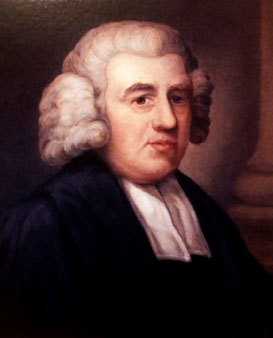
John Newton's article, "The History of Mankind," examines the theological concepts of human depravity, the deceitfulness of the heart, and Divine Providence in influencing history. Newton argues that without the guidance of Scripture, human history appears chaotic and morally bankrupt but becomes coherent and instructive when viewed through a biblical lens. He references passages such as Isaiah 14:5-17 to emphasize the nature of humanity's consequence for sin and the self-centeredness that drives destructive actions, illustrating that pride and ambition result in societal misery. The doctrinal significance of his reflections lies in reinforcing the Reformed doctrines of total depravity and the sovereignty of God over earthly events, underscoring the necessity of grace for transformative change in human hearts.
Key Quotes
“Without the clue and the light which the Word of God affords—the history of mankind of any of every age only presents to view—a labyrinth and a chaos.”
“What an empty phantom do the great men of the world pursue while they wage war with the peace of mankind.”
“The principle of SELF is deep-rooted in every heart and is the spring of every action—until grace infuses a new principle.”
“We are fallen into a state of gross idolatry—and SELF is the idol we worship.”
What does the Bible say about the depravity of man?
The Bible teaches that all humans are depraved by nature and sinful at the core, necessitating grace for salvation.
Romans 3:23, Jeremiah 17:9
How do we know divine providence is true?
Divine providence is affirmed in Scripture, demonstrating God's sovereign control over all events in history.
Isaiah 46:9-10, Ephesians 1:11, Romans 8:28
Why is understanding self-identity important for Christians?
Understanding self-identity in light of Scripture helps Christians recognize their relationship with God and the call to humility.
Genesis 6:5, Galatians 2:20
July, 1777
Dear sir,
I have recently read "Robertson's History of Charles V", which, like most other histories, I consider as a comment upon those passages of Scripture which teach us the depravity of man, the deceitfulness of the heart, the ruinous effects of sin; and the powerful, though secret, rule of Divine Providence, moving, directing, controlling the designs and actions of men, with an unerring hand, to the accomplishment of his own purposes, both of mercy and judgment. Without the clue and the light which the Word of God affords—the history of mankind, of any, of every age, only presents to view—a labyrinth and a chaos; a detail of wickedness and misery to make us tremble; and a confused jumble of interfering incidents, as destitute of stability, connection, or order—as the clouds which fly over our heads.
But with the Scripture key—all is plain, all is instructive. Then I see, truly there is a God, who governs the earth, who pours contempt upon princes, takes the wise in their own craftiness, over-rules the wrath and pride of man to bring his own designs to pass, and restrains all that is not necessary to that end; blasting the best concerted enterprises at one time, by means apparently slight, and altogether unexpected, and at other times producing the most important events from instruments and circumstances which are at first thought too feeble and trivial to deserve notice.
I would like to see a writer of Dr. Robertson's abilities give us a history upon this plan; but I think his reflections of this sort are too general, too cold, and too few. What an empty phantom do the great men of the world pursue, while they wage war with the peace of mankind, and butcher (in the course of their lives) perhaps hundreds of thousands, to maintain the shadow of authority over distant nations, whom they can reach with no other influence than that of oppression and devastation! But when we consider those who are sacrificed to their ambition as justly suffering for their sins, then heroes and conquerors appear in their proper light, and worthy to be classed with earthquakes and pestilences—as instruments of Divine vengeance. So many cares, so much pains, so many mischiefs, merely to support the idea which a human worm has formed of his own grandeur, is a proof that man, by nature, is not only depraved—but infatuated. How awful is the case of those who live and die in such a spirit, and who have multiplied miseries upon their fellow-creatures, in order to support and feed their pride and arrogance! Perhaps they may, upon their entrance to the eternal state, be accosted by multitudes, to the purpose of that sarcastic language in the prophet's sublime ode of triumph over the king of Babylon, Isa. 14:5-17.
But though the effects of this principle of SELF are more extensive and calamitous in proportion as those who are governed by it are more elevated, the principle itself is deep-rooted in every heart, and is the spring of every action—until grace infuses a new principle, and self, like Dagon, falls before the Lord Almighty. Great and small are but relative terms; and the passions of discontent, pride, and envy, which, in the breast of a potentate are severely felt by one half of Europe, exert themselves with equal strength in the heart of a peasant, though, for lack of materials and opportunities, their operations are confined within narrow bounds. We are fallen into a state of gross idolatry—and SELF is the idol we worship!

Comments
Your comment has been submitted and is awaiting moderation. Once approved, it will appear on this page.
Be the first to comment!