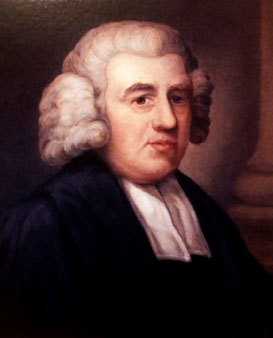
John Newton's article "On Female Dress" explores the theological implications of women's attire in the context of Christian modesty and holiness. Newton addresses the ongoing struggle between the desire for conformity to societal norms and the biblical call for modesty and propriety, urging women of faith to prioritize their Christian testimony over worldly fashion. He supports his arguments with scriptural references, notably 1 Timothy 2:9-10, which emphasizes the importance of modesty, and Isaiah 3:16-24, which warns against vanity and its consequences. The practical significance of his exhortation lies in encouraging women to reflect their faith through their appearance, distinguishing themselves from worldly influences, and fostering a spirit of humility and service rather than one of pride and vanity.
Key Quotes
“Whatever is unsuitable to the Christian profession...should be dealt with by those who have the honor of the gospel and the welfare of their fellow-creatures at heart.”
“It is more for the honor of the gospel that a woman professing godliness should be distinguished from others by modesty, sobriety, and good works than by the shape of her hat or the color of her garment.”
“If a woman when going to public worship looks in the mirror and contemplates with a secret self-delight the figure which it reflects to her view—I am afraid she is not in the frame of spirit most suitable for one who is about to ‘cry for mercy as a miserable sinner.’”
“Why should a godly woman or one who wishes to be thought so make herself ridiculous or hazard a suspicion of her character to please and imitate an ungodly world?”
What does the Bible say about modesty in dress for women?
The Bible encourages women to adorn themselves in modest apparel with decency and propriety (1 Timothy 2:9).
1 Timothy 2:9, 1 Peter 3:3-4
How do we know the importance of modesty in dress is true?
The importance of modesty in dress is backed by biblical principles that prioritize inner beauty and godliness over outward appearance.
1 Peter 3:3-4, 1 Timothy 2:9-10
Why is dressing modestly important for Christian women?
Dressing modestly is important for Christian women as it reflects their commitment to the Gospel and their identity in Christ.
1 Timothy 2:9-10, 1 Peter 3:3-4
Women who profess godliness, and who have the care of young people of their own gender, are perhaps in no point more blamable, than in the example which some of them set, and the liberty which perhaps a greater number allow, of undue conformity to the world, in the article of 'dress'. Few ministers touch upon this subject in their public discourses; and indeed, it is not very easy to treat it with propriety from the pulpit. Yet whatever is unsuitable to the Christian profession, whatever is an inlet to temptation and productive of evil consequences, should in some way or other be dealt with, by those who have the honor of the gospel, and the welfare of their fellow-creatures at heart. I make no further apology, for offering a few hints, which I hope will not give offence, and which I pray, so far as they are agreeable to the Holy Scripture, and confirmed by experience and observation, may be attended to.
I have no doubt that many godly parents who desire to see their children brought up in the nurture and admonition of the Lord, give them many excellent lessons in the nursery. They endeavor to impress their tender minds with a sense of their sinful state by nature, of the evil of pride, and of the vanity of the world. But, when their children begin to appear in public view, for lack of due reflection, or resolution, or both, they either encourage, or at least permit them, to form habits, which have a direct tendency to counteract all the benefits which might otherwise be hoped for, from the instruction of their early years.
I am certainly no connoisseur in the article of 'dress'; but I know how I am affected by what I see—and I can hear what other people say. A simple neatness, according to different situations in life, seems a tolerable definition of a befitting dress.
But Christian women should aim to comply with the apostle's advice, to adorn themselves in modest apparel, with decency and propriety. When he adds, "Not with gold or pearls or expensive clothes," I do not think it necessary to take this restriction so rigidly, as to affirm, that such ornaments are, universally, and without exception, unlawful. I think this is one of the many expressions in Scripture, which are to be understood in a comparative sense. Thus, when our Lord declares, "That unless a man hates parents, wife, children, and his own life—he cannot be my disciple;" we are sure he does not contradict, what, by his authority, is expressly enjoined in many other passages, that we should pay a due regard to our relations. He only teaches us, that whenever our dearest temporal concernments stand in competition with what we owe to Him—they must be given up and renounced.
If clothes are considered merely as a covering for the body, and a defense from the cold, it will be difficult to draw the line, and to determine exactly between what is necessary, and what is superfluous. But it is more for the honor of the gospel, that a woman professing godliness should be distinguished from others, by modesty, sobriety, and good works, than by the shape of her hat, or the color of her garment.
Yet even to ladies of the greatest affluence, who love and fear the Lord, I will venture to suggest a word of caution. To you I say nothing of the expense—you can, as the phrase is, very well afford it. And, if in other respects, you are generous and bountiful, ready to distribute, and willing to share—the cost of what you choose to wear is of no great consideration. But a careful attention to 'dress' will cost you much of what is more valuable than money—that is, your precious time! It will too much occupy your thoughts, and that at the seasons when you would wish to have them otherwise engaged. And it certainly administers fuel to that latent fire of pride and vanity, which is inseparable from our fallen nature, and is easily blown up into a blaze!
I hope you will not be among the first of those, who are eager to catch at, and give sanction to every new fashion; nor is it necessary, if the style is decent and modest, that you should be the very last to adopt it. But there should be something in your dress, to indicate, that, though you do not affect a needless and scornful singularity, (which is often the source of censoriousness and envy,) yet your heart is not set upon these little things. If a woman, when going to public worship, looks in the mirror, and contemplates, with a secret self-delight, the figure which it reflects to her view—I am afraid she is not in the frame of spirit most suitable for one, who is about to 'cry for mercy as a miserable sinner'.
There are likewise women, who, we would hope, are pious, and therefore, of course, benevolent. But an attachment to dress, and a desire to approach, as near as they can, to the standard of those who are their superiors in fortune, blunt their compassionate feelings, and deprive them of the usefulness, comfort, and honor—which they might otherwise attain. The expense of their dress is so great, compared with the smallness of their income, that when they have decorated themselves to their mind, they have little or nothing to spare for the relief of the poor. I doubt not—but they take it for granted, that, upon the supposition that our Lord and Savior was again upon earth in a state of poverty and humiliation, as when he walked in the streets of Jerusalem, and they knew that he needed a garment, when they were about to spend their spare money in some useless piece of finery, they would gladly forego their purpose for the honor of assisting him. But the heart is deceitful. If we live in the neglect of present duty, we have no right to suppose we would act better in different circumstances. He has said, "Inasmuch as you did it to the least of these my brethren, you did it unto me." And, if we are inattentive to the needs of those whom he appoints to be his representatives, we cannot be sure that we would be properly attentive to himself, if he was with us in person, and in a low obscure condition.
But I am not so much concerned by observing the materials, as by the manner of female dress, by what we call the fashion, and the eagerness with which every changing fashion, however improper, is adopted, by people whose religious profession might lead us to hope they had no time to attend to such trifles. If some allowance is to be made for youth on this head, it is painful to see mothers, and possibly sometimes grandmothers, who seem, by the gaudiness and levity of their attire, very unwilling to be sensible that they are growing older!
It may be a sufficient censure of some fashions—to say they are ridiculous. Their chief effect is to disfigure the female form. And perhaps the inventors of them had no worse design, than to make a trial, how far they could lead 'the passive unthinking many' in the path of absurdity. Some fashions, which seem to have been at first designed to hide a personal deformity, have obtained a general prevalence with those who had no such deformity to hide. We are informed, that Alexander had a wry neck, and therefore his courtiers carried their heads on one side, that they might appear to be in the king's fashion. We smile at this servility, in people who lived in Macedonia twenty centuries before we were born; yet it is little less general among ourselves in the present day.
The improprieties of 'the tyranny of fashion' are not simply ridiculous. They are serious evils in a religious view; and, to speak of them in the gentlest terms, they are signs of a careless, inconsiderate spirit, very unsuitable to a professed regard to the gospel. We are required to attend to the things that are lovely and of a good report. Every willful deviation from this rule is sinful. Why should a godly woman, or one who wishes to be thought so, make herself ridiculous, or hazard a suspicion of her character, to please and imitate an ungodly world?
But the worst of all the fashions are those, which are evidently calculated to allure the eyes, and to draw the attention of men. Is it not strange that modest and even pious women should be drawn into an immodest compliance? Yet I have sometimes been in company with ladies of whose modesty I have no doubt, and of whose piety I entertained a good hope, when I have been embarrassed, and at a loss which way to look. They are indeed noticed by the men—but not to their honor nor advantage. The manner of their dress gives encouragement to vile and insidious men, and exposes them to dangerous temptations. Their immodesty has often proved the first step into the road which leads to misery and ruin. They are pleased with the flattery of the worthless, and go on without thought, "like a bird flying into a snare, little knowing it would cost him his life!" But honest and sensible men regard their exterior, as a warning signal, not to choose a companion for life, from among people of this light and volatile turn of mind.
How far does the richest dress which studious vanity, can procure from the spoils of birds, beasts, and insects, fall short of the delicate texture and elegance, and the beautiful tints, which we admire in a flower or a butterfly! "Even Solomon in all his glory was not arrayed like one of these!" The resemblance is chiefly in the frailty of the wearer. Soon, and perhaps suddenly—the body, now adorned with so much extravagance and care, must be deposited in the grave, and be food for worms!
An attention to ornament and dress is peculiarly unseasonable at present. The dark aspect of the times rather requires a spirit of humiliation and abasement. The judgments of God are abroad, his hand is lifted up. We know not what is before us—but we have reason to fear dreadful tokens of his displeasure for our national sins. Perhaps the day is coming when the words of the prophet, "Tremble you women that are at ease, be afflicted you careless ones," may be no less applicable to us, than they were to the Israelites of old.
I earnestly request my fair readers carefully to peruse the following: "The LORD will judge the women of Jerusalem, who walk around with their noses in the air, with tinkling ornaments on their ankles. Their eyes rove among the crowds, flirting with the men. The Lord will send a plague of scabs to ornament their heads. Yes, the LORD will make them bald for all to see! The Lord will strip away their artful beauty—their ornaments, headbands, and crescent necklaces; their earrings, bracelets, and veils of shimmering gauze. Gone will be their scarves, ankle chains, sashes, perfumes, and charms; their rings, jewels, party clothes, gowns, capes, and purses; their mirrors, linen garments, head ornaments, and shawls. Instead of smelling of sweet perfume, they will stink. They will wear ropes for sashes, and their well-set hair will fall out. They will wear rough sackcloth instead of rich robes. Their beauty will be gone. Only shame will be left to them." Isaiah 3:16-24
Letter 1
August 17, 1776.
My dear friend,
It is indeed natural to us to wish and to plan; and it is merciful in the Lord to disappoint our plans, and to frustrate our wishes. For we cannot be safe, much less happy—but in proportion as we are weaned from our own wills, and made simply desirous of being directed by his guidance. This truth (when we are enlightened by his Word) is sufficiently familiar to the judgment—but we seldom learn to reduce it into practice, without being trained awhile in the school of disappointment. The schemes we form, look so plausible and convenient, that when they are broken we are ready to say, 'What a pity!' We try again, and with no better success. We are grieved, and perhaps angry, and plan out another, and so on. At length, in a course of time, experience and observation begin to convince us—that we are not more able than we are worthy—to choose aright for ourselves.
Then the Lord's invitation to cast our cares upon him; and his promise to take care of us, then appear valuable. And when we are done with our own planning—his plan in our favor gradually opens, and he does more and better for us than we could either ask or think. I can hardly recollect a single plan of mine, of which I have not since seen reason to be satisfied, that, had it taken place in season and circumstance just as I proposed, it would, humanly speaking, have proved my ruin; or, at least, it would have deprived me of the greater good the Lord had designed for me. We judge of things by their present appearances—but the Lord sees them in their consequences. If we could do so likewise, we would be perfectly of his mind—but as we cannot, it is an unspeakable mercy that he will manage for us, whether we are pleased with his management or not. It is spoken of as one of his heaviest judgments, when he gives any person or people up to the way of their own hearts, and to walk after their own counsels.
We may indeed admire his patience towards us. If we were blind, and reduced to need a person to lead us—and yet would dispute with him, and direct him at every step—we would probably soon weary him, and provoke him to leave us to find the way by ourselves! But our gracious Lord is long-suffering and full of compassion. He bears with our frowardness—yet he will take methods both to shame and to humble us, and to bring us to a confession that he is wiser than we. The great and unexpected benefit he intends us, by all the discipline we meet with, is to tread down our wills, and bring them into subjection to his. So far as we attain to this, we are out of the reach of disappointment. For when the will of God can please us—we shall be pleased every day, and from morning to night; I mean, with respect to his dealings with us. O the happiness of such a life! I have an idea of it; I hope I am aiming at it—but surely I have not attained it.
SELF is active in my heart, if it does not absolutely reign there. I profess to believe that one thing is needful and sufficient; and yet my thoughts are prone to wander after a hundred more. If it is true, that the light of his countenance is better than life, why am I solicitous about anything else? If he is all-sufficient, and gives me liberty to call him mine, why do I go a begging to creatures for help? If he is about my path and bed; if the smallest, as well as the greatest, events in which I am concerned are under his immediate direction; if the very hairs of my head are numbered; then my care (any farther than a care to walk in the paths of his precepts, and to follow the openings of his providence) must be useless and needless, yes indeed sinful and heathenish, burdensome to myself, and dishonorable to my profession. Let us cast down the load we are unable to carry; and if the Lord be our Shepherd, refer all, and trust all to him. Let us endeavor to live to him and for him today, and be glad that tomorrow, with all that is behind it, is in his hands.
"Godliness with contentment is great gain!" 1 Timothy 6:6. It befits every Christian to say—It is not necessary for me to be rich—or what the world accounts wise. It is not necessary for me to be healthy—or admired by my fellow-worms. It is not necessary for me to pass through life in a state of prosperity and outward comfort. These things may be, or they may not be—as the Lord in His wisdom shall appoint them for me.
But it is necessary for me to be humble and spiritual, to seek communion with God, to adorn my profession of the Gospel, and to yield submissively to His disposal, in whatever way, whether of service or suffering—that He shall be pleased to call me to glorify Him in this world. It is not necessary for me to live long—but highly expedient that while I do live—I should live unto Him! Here then, I would bound my desires; and here, having His Word both for my rule, I am secured from asking amiss. Let me have His presence, wisdom to know my calling, and opportunities and faithfulness to improve them; and as to the rest, Lord, help me to sincerely pray, Whatever You will, whenever You will, and however You will. "I have learned to be content whatever the circumstances. I know what it is to be in need, and I know what it is to have plenty. I have learned the secret of being content in any and every situation, whether well fed or hungry, whether living in plenty or in want!" Philippians 4:11-12
Letter 2
"Get up, go away! For this is not your resting place—because it is defiled, it is ruined, beyond all remedy!" Micah 2:10
My dear friend,
What a poor, uncertain and dying world is this! What a wilderness in itself! Without the saving knowledge of Jesus—how dark, how desolate it is! It does not appear to us thus, before we were saved—because we were then in a state of enchantment, the magical lantern blinding us with a splendid delusion!
It is a great mercy to be undeceived in time; and though our mirthful dreams are at an end, and we awake to everything that is disgustful and dismaying—yet we see a highway through the wilderness, and a powerful and infallible Guide at hand to conduct us through it! And we can discern, beyond the limits of the wilderness—a better land, where we shall be at rest and at home!
What will the difficulties we met along the way—then signify? The remembrance of them will only remain to heighten our sense of the love, care, and power of our Savior and Leader! O how shall we then admire, adore, and praise Him—when He condescends to unfold to us—the beauty, propriety, and harmony of the whole train of His providential dealings with us—and give us a clear retrospect of all the way, and all the turns of our earthly pilgrimage!
In the mean while, the best method of adorning our profession, and of enjoying peace in our souls—is simply to trust Him, and absolutely to commit ourselves and our all to His wise and loving management. By casting our burdens upon Him—our hearts become light and cheerful. We are then freed from a thousand anxieties and worries—which are wearisome to our minds, and which are needless for us—yes, even useless!
But though it may be easy to speak of this confident trust in our Father's care, and it appears to our judgment perfectly right and reasonable—the actual attainment this confident trust, is a great but rare thing! And especially so as to trust the Lord not by fits and starts, surrendering one day and retracting the next—but to abide by our surrender, and live habitually trusting Him, through all the changes and vicissitudes we meet with—knowing that His love, purpose, and promise—are wise, good, and unchangeable!
Perhaps none of us are freed from some occasional fainting times. But the trusting of the Lord in good measure at all times, and living quietly under the shadow of His wing—is what His promise warrants us to expect by a gradual increase—if we seek it by diligent prayer. May it be your experience and mine!
Letter 1
To Mr. W ___ .
January 25, 1766
Dear friend,
You have lately been in the furnace—and are now brought safely out. I hope you have much to say of the grace, care, and skill of the great Refiner, who watched over you; and that you have lost nothing but your dross. Let this experience be treasured up in your hearts for the use of future times. Other trials will come; but you have found the Lord faithful to his promise, and have good encouragement to trust him again.
I would take the liberty to address myself particularly to your dear wife, upon a theme my heart is well acquainted with. You know your weak side; endeavor to set a double guard of prayer there. Our earthly comforts would be doubly sweet, if we could but venture them without anxiety, into the Lord's hands. Where else can we lodge them so safely? Is not the first gift, the continuance, and the blessing which makes them pleasing—all from him? Was not his design in all this—that we should be happy in them? How then can we fear that he will threaten them, much less take them away—but with a view to our further benefit? Let us suppose the thing we are most afraid of, actually to happen. Can it come a moment sooner, or in any other way, than by his perfect appointment? Is he not gracious and faithful to support us under the severe stroke? Is he not rich enough to give us something better—than ever he will take away? Is not the light of His countenance better than life, and all its most valued enjoyments? Is not this our time of trial, and are we not traveling towards a land of light?
Methinks, when we view things in the light of eternity—that it is much the same whether the separating stroke arrives at the end of seven—or seventy years; since, come when it will, it must and will be felt! But one draught of the river of pleasure at God's right hand will make us forget our sorrows forever; or the remembrance, if any, will only serve to heighten our joys. Further, what life did he lead whom we call our Master and our Lord? Was not he a man of sorrows and acquainted with grief? Has he marked out one way to heaven with his painful footsteps—and shall we expect, or even wish, to walk in another path? With such considerations as these, we should endeavor to arm our minds, and pray to the Lord to fix a sense of them in our hearts, and to renew it from time to time; that, when changes are either feared or felt, we may not be like the people of the world, who have no hope, no refuge, no throne of grace—but may be enabled to glorify our God in the fire, and give proof that his grace is sufficient for us in every state.
It is neither comfortable for ourselves, nor honorable to our profession, to startle at every shaking leaf. If we are sensible of this, mourn over our infirmities before the Lord, and faithfully strive in prayer against the fear that easily besets us—he can, and he will, strengthen us with strength in our souls, and make us more than conquerors, according to His sure promise.
A proneness to idolatry is our bosom sin—I have smarted for it. I dare not say I am cured; yet I would hope the Lord's wonderful mixture of comforts and chastisements have not been wholly lost upon me—but have been accompanied with some measure of his sanctifying grace. At present, that is, ever since my settlement here, I have been favored with an interval of ease. I never had so long and general an exemption from sharp trials. When I consider and feel what I am, I am amazed at his forbearance. Surely I deserve to be visited with breach upon breach. But his compassions are infinite! Yet I must not expect to have always fair weather in such a sinful and changeable world. I would desire neither to presume that my mountain stands strong, nor yet to afflict myself with needless apprehension of what a day may bring forth. Oh, that I could improve the present, and cheerfully commit the future to him who does all things wisely and well, and has promised that all shall work together for good!
I am your very affectionate and obliged servant.
Letter 2
To Mrs. W ___ .
March 8, 1766
My dear madam,
When I sent you my well-meant, though free, advice in my last letter, I was little aware how soon I would be called to practice my own lesson! However, upon trial, I can confirm what I then said, and assure you, upon new and repeated experience, that the Lord is good, a stronghold in the day of trouble, and he knows those who put their trust in him. The Lord has been pleased to put us in the fire; but, blessed be his name, we are not burnt. Oh, that we may be brought out refined, and that the outcome may be to the praise of his grace and power! My wife was taken ill on Monday the 24th of February; and from that day to last Wednesday, was a sharp season. But let me not forget to tell you, that this visitation was accompanied with spiritual supports both to her and to myself. I hope we may say, the Lord drew near in the day of distress, and gave us some degree of peaceful resignation to his will. Yet the evil heart of impatience and unbelief had room to show itself, (I speak for one,) and I have the greatest reason to lie ashamed in the dust, and cry "Unclean, unclean!" But truly God is good; he considers our frame; he remembers that we are but dust—he delights in mercy, and therefore we are not consumed.
I believe the Lord gave our dear people a remarkable tenderness of spirit to sympathize with us, and to strive in prayer as one man our behalf. Oh, what a privilege it is to have the prayers of those who fear the Lord! James 5:15. I hope I shall consider her recovery in this view—as the effect of fervent prayer. May it likewise prove an occasion of much praise to a prayer-hearing God.
May my soul learn by what I have lately felt, and may you and yours learn, at a cheaper rate—to keep closer to the Lord than ever. After all, this is but a reprieve—separation, sooner or later, must take place. The day must come when all creature-comforts shall vanish. And when we view things in the light of eternity—it seems comparatively of small importance whether it is this year—or twenty years hence. If we are savingly interested in the covenant of grace; if Jesus is our beloved, and heaven our home; we may be cast down for a little season—but we cannot be destroyed; nay, we shall not be overpowered. Our faithful God will surely make our strength equal to our day; he who has delivered, and does deliver, will deliver to the end; and it will not be long before he will wipe away all tears from our eyes. Therefore let us not fear—whatever sufferings may be yet appointed for us, they shall work together for our good; and they are but light and momentary, in comparison of that exceeding and eternal weight of glory to which we are drawing nearer every hour!
Well, the day is coming when all the Lord's people who are scattered abroad, who praise him in different ages and different languages, shall be collected together, and stand with one heart, consent, and voice before the throne! Oh, the glorious assembly! How white are their robes! How resplendent their crowns! How melodious their harps! Every hour the chorus is augmented by the accession of fresh voices; and before long we hope to join them! Then shall we remember the way by which the Lord led us through this dark wilderness world; and shall see that all our afflictions, our heaviest afflictions, were tender mercies—no less than our most pleasing comforts. What we shall then see, it is now our privilege and duty to believe.
Believe me to be, dear madam, your most affectionate and obliged servant.
Letter 3
To Mrs. W ___ .
July 24, 1766
Very dear madam,
I am truly glad that you and your husband go on comfortably. For so I trust you do upon the whole, notwithstanding the incidental workings of unbelief and temptation. These, like fits of the tooth-ache, though troublesome, are not mortal; and only give us painful but necessary conviction—of the need we have of a compassionate and almighty Physician. They are like winds to the trees, which threaten to blow them down—but in reality, by bowing them every way, loosen the ground about them, circulate the sap, and cause them to strike their roots to a greater depth, and thereby secure their standing. If a tree were to grow all upwards, and the roots not to enlarge in proportion to the branches, it would be blown flat upon the ground by the first storm. It is equally unsafe for a believer to be top-heavy; and therefore the Lord suits and changes his dispensations, that, as they increase in gifts, knowledge, judgment, and usefulness, they may grow downwards likewise, and increase in humility.
Since we have been enabled to put ourselves in his hands, let us hold to our surrender, and leave him to carry on his work in his own way. It is a commonly received maxim, that if a short-sighted, feeble man were to have the distribution of the weather, we would have but poor harvests. But, indeed, we are as well qualified to direct and manage the seasons of the year—as we are to prescribe what dispensations are more proper to promote the growth of grace in our souls. Rejoice, therefore, my dear friends—that you are God's husbandry. The early and the latter rain, and the cheerful beams of the Sun of Righteousness, are surely promised to ripen your souls for glory—but storms and frosts likewise are useful and seasonable in their places, though we perhaps may think we could do better without them. In our bright and lively frames—we learn what God can do for us; in our dark and dull hours—we feel how little we can do without him! Both are needful to perfect our experience and to establish our faith.
At one time we are enabled to rejoice in God; at another we are seeking after him sorrowing. These different seasons are equally good in their turns, though not equally comfortable; and there is nothing we need fear but carnal security, carelessness, and presumption. To think ourselves rich and increased with goods, or to suppose we are safe a moment longer than while depending upon Jesus—would be dangerous. Let us beg the Lord to keep us from such a mistake; and, as to the rest, we shall do well. Let us he faithful and diligent in the use of all appointed means, especially in secret exercises—and then leave him to lead us as he pleases. And, though our path should be through the fire or through the water, we may trust his power and love to bring us safely through, and at last to fix us in a wealthy place, where our warfare and tears shall cease forever!
I am, dear madam, your very affectionate and obliged servant.
Letter 4
To Mr. W ___ .
July 9, 1767
My dear sir,
I congratulate you on that comfortable declaration, "We have an Advocate with the Father, Jesus Christ the righteous, who now appears in the presence of God for us." An awful cause we had to manage in the court of heaven; and, when we expected to be asked what we could say, that judgment should not be given and executed speedily against us, we were speechless and without plea. We could not deny the fact, or offer the least amends. We could neither stand nor flee. But, since Jesus has been pleased to take our affairs in hand, how are appearances changed! The law is fulfilled, justice satisfied, and heaven opened to those who were upon the brink of despair and destruction! And Jesus did not plead for us once only—but he "ever lives to make intercession for us." Let us then take courage.
"Therefore He is able to save to the uttermost, those who come to God through Him, because He always lives to intercede for them!" Hebrews 7:25. That word, uttermost includes all that can be said. Take an estimate of all our sins, all our temptations, all our difficulties, all our fears, and all our backslidings of every kind—still the word uttermost goes beyond them all. And, since He ever lives to make intercession, since He is the righteous one who is always heard, since His promise and compassions are unchangeable—He is indeed able and willing, and determined, to save us even to the uttermost! "I give them eternal life, and they will never perish—ever! No one will snatch them out of My hand!" John 10:28
This point being comfortably settled, that he will neither cast us off himself, nor suffer any to pluck us out of his hands—but that he will surely bring us, through fire and through water, to the wealthy place his love has provided for us; the next important inquiry is, since we may hope for heaven at the end—how may we attain as much of heaven along the narrow way, as is possible to be hoped for in this defiled state of things? Do we indeed, through grace, hope to live with Jesus hereafter? then surely we desire to walk with him here.
When I speak of walking with Jesus, my idea is helped by considering how it was with His first disciples. They lived in His presence. While He stayed in a place—they stayed; and, when He moved—they went with Him. Having Him thus always near, always in view—the sight of Him undoubtedly gave a composure to their whole behavior; and was a check upon their eyes, their tongues, and their actions!
When they had difficulties and hard questions upon their minds—they did not puzzle themselves with vain reasonings. When they were in need—they looked to Him for a supply. And when in danger, knowing that He was with them—they little doubted of deliverance. Now, I need a faith that shall have such an abiding, experimental conviction of His nearness and presence—as if I actually saw Him!
Surely, if He were now upon earth, and I expected a visit from Him this afternoon—my heart would bound at the thought! With what a mixture of joy and fear would I open the door to receive Him! How cautious should I be—not to do or say anything that might grieve Him, and shorten His stay with me! And how gladly, if He gave me permission to speak, would I catch the opportunity of telling Him all my concerns! Surely I would be unwilling to let Him go—until He had healed the wounds in my soul, and renewed my spiritual strength; until He had taught me better how to serve Him, and promised to support me in His service. And if I heard Him say, with an audible voice, "Though they fight against you—they shall not prevail, for I am always with you to deliver you!" I would bid adieu to fear! "Be sure of this: I am with you always—even to the end of the age!" Matthew 28:20
But, alas, my unbelieving heart! Are these things not true, even at present? Is He not as near and as kind? Have I not the same reasons and the same encouragement to set Him always before me, and to tell Him all my needs, my fears, and my dangers—as if I saw Him with my bodily eyes! From hence it appears with what propriety the Christian life is called the life of faith, and from hence likewise it too plainly appears, that, though I am by office called to teach others, I have need to be taught myself the first and plainest principles of my profession. Lord, increase my faith!
I am, with great sincerity, dear sir, your most obliged and affectionate servant,
Letter 5
To Mr. W ___ .
October 2, 1767
Dear sir,
It is because I love you, that I rejoice to think you are in the Lord's hands—and that I desire to leave you there. Happy is the state of a believer; to such, all things are for good. Health is a blessing, a great mercy, enabling us to relish the comforts of life, and to be useful in our generation. But sickness is a greater mercy to the children of God; for it is and shall be sanctified—to wean us more from the present world, to stir up our thoughts and desires heaven-ward, to quicken us to prayer, and to give us more opportunity of knowing the sweetness and suitableness of the promises, and the power and wisdom of a promise-performing God!
Troubles have many uses—when the Lord is pleased to work by them for the good of His children. And are necessary, because we would miss the meaning and comfort of a great part of the Bible without them! I hope the Lord blesses you both with a measure of submission to His will, confidence in His love—and then, with respect to other things you will say, All is well!
"In this world you will have trouble!" John 16:33. Uncertainty and brevity are written upon all below. Therefore may we be enabled both to weep and rejoice—as those who know that we shall not be here in this world very long! By the Lord's goodness, it is appointed both for you and for us, to have more temporal happiness in possession than the greatest part of mankind have in idea; and yet our best here would be a poor all, if it was indeed our all. We should be thankful for present things; but, oh, what greater thankfulness for spiritual blessings—for pardon, peace, and eternal life! Our gourds must wither one day—but our heavenly portion will be ours forever. Jesus, the fountain, will be full—when every creature-stream will be dried up! Jesus, the fountain, will be full, when every creature-stream will be dried up!
His presence with us, is now sufficient to comfort us under all the pains, losses and trials—which we can either feel or fear. But still, it will not appear by all that he will give or show us in the present life, what we shall be when we see him as he is, and are made perfectly like him. Oh, then, let us rejoice in the Lord, and welcome every painful trouble, knowing and believing that all we receive, is conveyed to us by infinite love and unerring wisdom!
B ___ has been sick near unto death; we know not how to spare her, as she is very useful in her situation, and has been often made (though without her intending or observing it) a teacher to me. The Lord has heard prayer on her behalf, and she is raised up again. I look upon our mature believers here—as misers look upon their gold—with a mixture of pleasure and pain. I am daily apprehensive that some of them will be called home; but I long and pray that, before they are removed, others may be raised up to supply their places. I wish I took this more to heart.
The work seems (so far as it comes under my knowledge) much at a stand-still as to new awakenings and conversions. I trust you will pray for us, that the arm of the Lord may be revealed. Things go on comfortably in our church—I can see some grow; and I think there are few of them with whom I am not better satisfied than with myself. My spiritual coldness and stupidity when I am retired out of sight—is amazing! Blessed be the Lord, I hope I can say, it is burdensome, and robs me of much of the comfort I might otherwise enjoy in the many blessings the Lord affords me.
But why should I weary you with my complaints? Let us turn our thoughts to Jesus! In him we have peace, wisdom, righteousness, and power! He knows our weakness, wants, and temptations—and is every way a suitable High Priest and Savior! May the Lord give you a sense of his love while you are reading this. May his peace rest in your hearts, and his presence dwell in your house. May your children all be taught of God, and become the servants of Jesus. May we all be daily growing in his knowledge and grace, be guided by his counsel through the present life, and at last meet in glory! Believe that our hearts are with you, and that we have an affectionate sense of all your kindness, particularly in coming to see us.
I am your affectionate and obliged,
Letter 6
To Mrs. W ___ .
October 31, 1767
My dear friend,
I hear that you still continue very sick. Shall I say that I am sorry? I hope this is allowable—as we have in the sympathizing Savior—the best example and authority to sympathize with suffering friends.
Yet our sorrow should be mixed with joy, for we are directed to rejoice always in the Lord. Always—not only when we are well—but when we are sick! I rejoice, therefore, that you are in safe hands; in the hands of Him whom you love best—and who best loves you! You need not fear that He will lay more upon you, than you are able to bear—for He has engaged his faithfulness to the contrary.
I trust this sickness of your body is, and shall be, for the health of your soul. Yes, perhaps even now, if you were able to write, you would tell me that, as your afflictions abound—so your consolations in Christ do much more abound. All the fruit of your affliction, shall be to take away sin! Therefore be of good courage. We count them happy and blessed—whom the Lord chastises. He deals with you as His child. He intends this painful dispensation to revive in you a sense of the uncertainty and vanity of all things here below; to give you a nearer and closer perception of the importance of unseen realities; to afford you the honor of greater conformity to Jesus, who went through sufferings—to the kingdom.
But how different were His sufferings—from yours! There is no sting in your rod, nor wrath in your cup! Your pains and infirmities do not cause you to sweat blood, nor are you left to cry out, "My God, my God, why have you forsaken me!"
Then, again, our trials are mixed with abundance of temporal mercies—which appear exceedingly valuable to those who feel the lack of them, and have a load of poverty to struggle with, superadded to grievous pains and sicknesses. But, especially, spiritual mercies. In a time of sickness, we may see in the strongest light—the privilege of being a believer, to have a right to cast ourselves and our all upon the covenant mercies of a God in Christ.
Sickness is a bitter evil indeed—to those who have no gracious God to go to; who can have no relief from their earthly friends, and yet know not where else to apply either for patience or deliverance.
When you meditate on these things, I trust you find your heart sweetly composed into a frame of resignation to bear, as well as to do—the will of your heavenly Father; and, though your recovery may be slow, and your physicians shake their heads, as uncertain what to try for you—yet, when the fit time is come, the great Physician who has taken charge of your case, can heal you immediately. Diseases hear his voice. To the Lord our God belong the issues of life and death. I pray as I am enabled, for your recovery at the best season—but especially that the rod may be sanctified, and you brought forth from the furnace refined as gold. "I will bring this third through the fire and make them pure, just as gold and silver are refined and purified by fire!" Zechariah 13:9
I sympathize likewise with your dear husband; nay, perhaps he is more to be pitied than you. You know what you feel—but his affection will be apt to aggravate every circumstance, and his imagination be busy in painting foreboding scenes which I hope will not yet take place. I know what it is, by repeated experience, to watch night and day with anxiety over a life in many respects dearer to me than my own. I have been a long student in this school, and can tell you, my dear sir, by experience, that the Lord our God is faithful and merciful. When he makes two people happy in a mutual affection, he sees now and then a need-be to put their faith and patience to a trial, and to quicken them to prayer by touching them where they are most sensible! Hereby he humbles us for the idolatry, unbelief, and ingratitude of our hearts. But he pities us still, and takes occasion from our distresses, to make the suitableness and seasonableness of his mercy and power more clearly manifested.
Some time ago, this was my trial. I know that you then bore a friendly part with me, and remembered me at the throne of grace. I hope I shall now do my best to repay your labor of love.
I wish we may learn never think ourselves either safe or happy—but when we are beholding the glory of Christ by the light of faith—in the looking-glass of the Gospel. To view him as God manifest in the flesh, as all in all in Himself, and all in all for us—this is cheering, this is strengthening, this makes hard things easy, and bitter things sweet. This includes all I can wish for you—that you may grow in grace, and in the knowledge of the Lord Jesus.
To know Jesus—is the shortest description of true grace.
To know Jesus better—is the surest mark of growth in grace.
To know Jesus perfectly—is eternal life!
This is the prize of our heavenly calling! This is the sum and substance of all we can desire or hope for is—to see Jesus as He is, and to be like Him! He will surely bring all who sincerely love Him, to this honor and happiness. We need not think much of the difficulty of any way—which leads to this blessed end!
I am, with a sincere regard, your most affectionate friend and obliged servant.
Letter 7
To Mr. W ___ .
October 29, 1768
My dear sir,
I hope that your souls prosper; that the Lord hears from you—and you from him often; and that you both live a life of faith in the Son of God, are strong in his might, and comforted by refreshing views of his glory. "Looking unto Jesus—the author and finisher of our faith!" Hebrews 12:2. The great secret of the Christian life—is to be looking unto Jesus! (Oh, that I could learn it better!)
I am a stranger to that court; but I am told that those who wait there form themselves into little parties, have their own conversation, or make their remarks upon what passes, until the king appears; then everything is hushed and dropped, and their attention is fixed upon him alone. Oh, that thus by the eye of faith—we might obtain such a sight of the glory, beauty, and love of King Jesus, as might unite our scattered thoughts, and attract all our powers and affections to himself. But, alas! we are prone (at least I may speak for myself) to forsake the fountain of living waters, and to hew out broken cisterns. Instead of receiving him, I am often looking in myself for something to enable me to do without him, or at least for something to strengthen the warrant he has given me in his word to come to him. May the Lord be merciful to my unbelief and slowness of heart. Though taught and warned again and again, I am frequently repeating the old mistake—and seeking the living among the dead.
I have some faint idea of the life of faith, and can talk a little about it; but to experience myself the power of what I preach to others, this is too often what I find not. Yet I must praise him; if I did not, might not the very stones cry out and shame me! for surely he has dealt marvelously with me. He found me in a waste howling wilderness; in more than the prodigal's distress, with my heart full of madness and rebellion, and beset with horror on every side. In this state I was when he first passed by me, and bid me "live!" He sent from on high, and delivered me out of deep waters. And, oh, what has he not done for me since! given me to know, yes, to preach, his Gospel; and to cast my lot in a pleasant place! He has filled and surrounded me with mercies on every side; and spoken good concerning me for a great while to come, even forever and ever. Praise the Lord, O my soul! Come, my dear friends, and magnify the Lord with me, and let us exalt his name together!
I am, my dear friend, your most affectionate and obliged servant.
Letter 8
To Mr. W ___ .
July 8, 1769
My dear sir,
I have been thinking of you and yours upon my knees, and would be thankful for the information I had yesterday from Mr. ___ , that the Lord is raising you up again. Indeed, I have heard that, in your illness, you were favored with such sweet foretastes of the glory that shall be revealed, that death appeared to you not only disarmed of its sting—but a very desirable messenger; and that you had strong hopes that the hour of your release was at hand. In such a frame it is no wonder that you longed to depart and be with Christ; yet, as many will have cause to rejoice at your recovery, I hope you likewise are made sweetly reconciled to life, and willing to wait and suffer yet a little longer, if by any means the Lord shall be pleased to honor you with usefulness in your station.
If we look to ourselves only, and consider our immediate interest, who that has a good hope through grace would not wish to be out of this wilderness world, and at home in our Father's house, where all temptations and enemies shall be shut out, and we shall enjoy the unclouded light of his countenance forever, without the least abatement or interruption! But Paul, though he had been taken up into the third heaven, and knew more of the state of glorified spirits than was perhaps ever vouchsafed to a child of Adam; and though from the tastes he had received, he had very strong desires to be at the fountain head—yet was content to defer the full possession of his happiness a little longer, if in the mean time the Lord would be pleased to make him serviceable to his church and people.
At the longest, the time is short: ten, or twenty, or fifty years, is but a span in comparison to the eternity that awaits us. And, though we would weep all the while—yet our tears before long will be wiped away. If we consider this life chiefly with respect to the things which make up a great part of it, as eating, drinking, buying, selling, putting on our clothes, and putting them off—a spiritual mind may well be weary of such a train of necessary trifling. But even the common actions of life are sanctified, and become apart of our acceptable service, when performed in a spirit of faith, love, and dependence.
This life, as poor as it is in itself, will become exceedingly important in one view. It is the only opportunity we have to hold forth the power of gospel truth in the midst of a crooked and perverse generation, to show our readiness to bear the cross, and to tread in the steps of a suffering Savior, and to be subservient to the promoting his cause, and the encouragement of his people. Many of our years were wasted in the service of sin before we knew the Lord; and, though they are happy who are taken out of this vain world soon after their conversion—yet I think they are more honored, who are preserved to bear a testimony to his goodness, and to be useful in their generation for a course of years. Therefore, though, if the Lord had seen fit to remove you, you would have escaped some trials which in this world you will be sure to meet with, and would have had your hungering after Jesus abundantly satisfied; yet upon the account of your dear wife and children, your place in the church and in the world, as well as upon my own account—I cannot but rejoice that there is a prospect of your continuance longer on this side the grave!
When I look at the state of the land, I know not how to spare one praying person. They are the chariots and the horsemen of our Israel; and I hope you will live to be an earnest and prevalent pleader in behalf of a sinful people.
It is a happy and most desirable state—to be ready and willing either to live or die, and to be enabled so absolutely to give ourselves up to the Lord's disposal as to have no choice of our own either way—but only intent upon improving today, and cheerfully to leave tomorrow and all beyond it in his hands who does all things well. "For to me, to live is Christ and to die is gain. If I am to go on living in the body, this will mean fruitful labor for me. Yet what shall I choose? I do not know! I am torn between the two: I desire to depart and be with Christ, which is better by far; but it is more necessary for you that I remain in the body." Philippians 1:21-24
I am, dear sir, your affectionate and obliged servant.
Letter 9
To Mr. W ___ .
December 2, 1769
My dear sir,
I know our hearts are all alike by nature; but I have reason to believe that the general tenor of your experience is very different from mine; yes, you tell me so yourself. Through mercy, I am favored with day-light which is sufficient to see by; but the sunshine, in which many of God's people rejoice, is not my portion. An evil heart of unbelief fills my sky with many clouds; and though, so far as the foundations of faith and hope are concerned, I can and do rejoice, believing that the Lord has loved me with an unchangeable, everlasting love, and that he will surely do me good; yet I am one way or another so beset and cramped in my soul, that, as to my frames, I often for the most part go mourning all the day long. I trust I have the name of a child in the Lord's family—yet I may fitly compare myself to a servant; for I set forth many a dish to my Master's guests, of which (to my own apprehension) I am not allowed to taste. The Lord supports, yes, he owns me, in my public work; he graciously keeps me in my outward walk—these are unspeakable mercies. Oh, that I could praise him more on account of them! But, as to the state of things between him and my own soul—-alas! I could write a scroll that, like Ezekiel's, would be full of mourning, lamentation, and woe!
Well, he best knows why it is his pleasure that I should live at such a distance, as to sensible communion. He has a right to do what he will with his own; and, so far as his sovereignty and wisdom are concerned, I desire to submit. If he is pleased to accept my worthless name, to own my feeble services, to preserve me from the errors of the times, and to keep me from being a scandal to my profession; though he appoints me a wearisome conflict with indwelling sin, still I ought to praise him. Before long, this conflict will be over; I shall not always be burdened with this body of death. Only I pray that, whether I enjoy the light of his countenance or not, at least I may desire it, and thirst after it as the deer pants after the water-brook, and feel an emptiness in all earthly things without it. If my soul is not satisfied with him as with marrow and fatness, I pray that it may not be satisfied, or taken up with anything short of him. Rather let the whole world appear like a wilderness to me, than that I should be content that the Comforter who should comfort my soul is at a distance from me.
In the mean time, as I have but a small portion of spiritual consolation, so I am not much exposed to the fiery darts and black temptations of Satan. He fights against me, it is true, and too often gains advantage; but he is not allowed to come upon me in a way of storm and terror, as he is against many. Neither have I outward trials worth mentioning. I believe the Lord keeps a kind of balance with his people: afflictions and comforts are set one against the other; and perhaps this may be one reason why I am led thus. My day at present is easy, and therefore my strength is but small. If he should at any time call me to harder service, I may depend upon his faithfulness and care to administer proportionate support.
Adored be the grace that has enabled us to make the choice of Moses, and to prefer even the afflictions and exercises of the people of God, to all the seeming pleasures of a blinded world. The weeping of believers is happier than the mirth of careless sinners. I can heartily say, Let not my soul eat of their dainties! My first desire would be, to rejoice in the Lord's presence; but, until this is granted, I would make it my second to go mourning after him until I find him.
And may the Lord give to my dear friends who have a more sensible enjoyment of His love, a proportionate measure of a humble and watchful spirit, that you may abide in his light continually.
I am your much obliged servant.
Letter 10
To Mr. W ___ .
December 16, 1770
My dear sir,
Blessed be God, that he has given us the beginnings of the life of faith, and that he has favored us with any growth. But there is an unsearchable fullness, a rich treasure, which can never be exhausted; and we have as yet received but little of the Lord in comparison of what he has yet in reserve for us.
May not a believer be taught something by what we frequently observe of the men of the world? Perhaps, when such a one first enters upon business in a little narrow way, he is in some measure content with a moderate income, and thinks himself happy if, at the end of the year, he can pay his debts, and, as the saying is, make both ends meet. But by-and-by his business enlarges, his trade increases, his hundreds become thousands; then he thinks little of his former small way, he pushes all his interests, and strikes into new branches. He began with a view to a maintenance—but now he pushes for a great fortune, and, like the insatiable fire, the more he gets—the more he craves! Well, let the world have the world; the whole of it can make but a poor all. However, the Lord grant that you and I may be thus wise in our generation.
I remember, when the Lord first set me up, (if I may so speak,) my heavenly trade lay in a small compass, my views were very narrow; I wanted to be saved, and, alas! I hardly looked further than a bare subsistence and security! But, since the Lord has been pleased in a measure to bless me, I hope I feel a desire of being rich. May I, and all whom I love, be thus minded; not be satisfied that we have life—but labor in His appointed way, that we may have it more abundantly; not only to believe—but to be strong in faith; not only to hope—but to rejoice in hope; not only to desire—but to hunger, and thirst, and pant; to open our mouths wide, that we may be filled with his goodness, as well as taste that he is gracious!
Oh, what a happiness it is—to be lively and thriving in the ways of God; to drink into the spirit of Jesus, and to walk with that simplicity, dependence, and heavenly-mindedness which befit a son or a daughter of the Lord Almighty. I trust the Lord has given me thus to will; but, when I would do good—evil is present with me. On this account, our life is a warfare; and it is never well with us—but when we find it to be a warfare. But we have a good Captain, good armor, good provisions, infallible balm to heal our wounds, and (what one would think might make even a coward fight) are assured of the victory beforehand. I shall be glad to hear the success of your last campaign. I trust you have been enabled, in the Lord's strength, to put some of your enemies to flight; that some spiritual Goliath who came out against you, has been cut down by the sword of the Spirit; and that, like Gideon's soldiers of old, you are still pressing on, and, though faint—are yet pursuing.
To be sure, fighting is difficult service—flesh and blood will not much like it. But the time is short, we shall not fight always; we are going where we shall no more hear the voice of war forever. A few battles more, and the King will say to us, Come near, and set your feet upon the necks of your enemies! Then the redeemed shall enter into the kingdom with songs of triumph, and shouts of everlasting joy, and sorrow and sighing shall flee away!
As to myself, I have little to say in my own behalf. The Lord has appointed me a sentinel to give the camp notice of the enemy's approach; I am ashamed to say it—but indeed I am such a wretch, that I am sometimes half-asleep upon my post! It is of the Lord's mercy that I have not been surprised and overpowered before now. Such is his condescension, that he comes to awaken me himself, and only says, Arise, watch, and pray—that you enter not into temptation! I have good reason to believe my enemy has been as near to me as David was to Saul, when he took away his spear—and yet I did not perceive him. Well it is for us that there is one who watches the watchmen, a Shepherd who himself neither slumbers nor sleeps, and yet knows how to have compassion on those who are prone to do both.
Letter 11
To Mr. W ___ .
April 12, 1771
My dear sir,
I often review my late London visit with much satisfaction; rejoicing that I found so many of my dear friends thriving in the good ways of the Lord. Surely his service is perfect freedom; his ways are ways of pleasantness, and all his paths are peace. He is a sun and a shield, a hiding-place, and a resting-place, to those who fear him. May we still press forward—we have not yet attained. There are larger measures of grace, virtue, and consolation set forth in the Gospel—than all we have hitherto received. The Lord has set before us an open door, which no man can shut; he has given us exceeding great and precious promises; has bid us open our mouths wide, and has said that he will fill them. He would have us ask great things, and, when we have enlarged our desires to the utmost, he is still able to do exceeding more than we can ask or think.
May we be as wise in our generation as the children of this world. They are not content with a little, nor even with much, so long as there is any probability of getting more. As to myself, I am but a poor man in the trade of grace; I live from hand to mouth, and procure just enough (as we say) to keep the wolf from the door. But I must charge it to my unbelief and indolence, which have been so great, that it is a mercy I am not a bankrupt! This would have been the case—but that I have a Friend (whom you know) who has kindly engaged for me. To tell you the plain truth, I have nothing of my own—but trade wholly upon his stock; and yet (would you think it possible) though I often confess to him that I am an unprofitable and unfaithful steward—yet I have upon many occasions spoke and acted as if I would have people believe that what he has committed to me, was my own property! Ah, Sir! if you had a servant like me, that should affect to "display" at your expense, you would hardly bear with him long. You would be ready to say, What is this I hear? Give an account of your stewardship, for you may no longer be my steward.
I learn sometimes, from family relations, to form a little judgment of the Lord's patience towards his people. What a family has He to bear with!
Those whom he has graciously saved, have secret idols in their hearts! His friends hold a secret correspondence with His enemies! His children repine against Him, and quarrel one with another! His servants (ministers) serve themselves! I do not wonder that those who are not well acquainted with the freedom and security of the gospel-covenant, should live in daily fear of being turned out of doors. I am sure I deserve it every day of my life. But he is God and not man; his ways are not as ours; and, as it has pleased him to receive us as children, he has promised that we shall abide in his house forever. It is our mercy that we have an atonement of infinite value, and an Advocate who is always heard, and who ever lives to make intercession for us. "But you, O Lord, are a compassionate and gracious God, slow to anger, abounding in love and faithfulness!" Psalm 86:15. "The Lord is slow to anger, abounding in love and forgiving sin and rebellion!" Numbers 14:18
How I have run from one thing to another! But by this means I have got through a good part of my paper. Do you inquire after——? Its present state may be summed up in two sentences—The Lord is gracious, and Satan is busy. The Lord is, I hope, carrying on his work—reviving, healing, sealing, and feeding his people. And I am sure Satan is carrying on his work—some he is leading blindfold up and down the town, and miserable spectacles they are—he is stopping up the ears of others. He is spreading snares and traps in all quarters; so that believers can hardly stir a step without being ensnared. He has taken a professor or two in his toils; and now he seems to laugh at them, and to laugh at us. And all this while he is as assiduous in fighting against the peace of the upright, as if he had nothing else to do. We are a besieged city; and it is not to be conceived, much less expressed, what showers of fiery darts he discharges against us every day! And I am persuaded no army soldier can show so many wounds as some of us have received in conflict with this enemy. However, though he thrusts sore at us, the Lord is our helper. We are kept by the power of God. The banner of salvation still flies upon our walls; and I believe Satan gnashes his teeth at the sight.
I am, dear sir, your much obliged and affectionate servant.
Letter 12
To Mr. W ___ .
December 5, 1771
My dear sir,
I was disappointed not to find you at home last Friday. Then I wished I had stayed with you on the Tuesday evening; so ready are we—at least, so ready am I—to want to recall the day that is past, and correct the disposals of Divine Providence. At length I retreated to my acknowledged principles, that the Lord knows where we are, and when it is needful we should meet; that the word disappointment, when translated into plain English, means little more or less than the grumbling of self-will against the will of God. We would never meet a disappointment in the path of duty, if we could heartily prefer his wisdom to our own. I considered that, though to have had your company would have been more pleasant—yet an opportunity of trying to bow my stubborn spirit to the Lord's disposal, might at that time be more profitable; so I endeavored to make the best of it.
I am desirous to learn to apply the great truths of the Gospel to the common concerns of every day and every hour. I desire to learn, not only to believe that my soul is safe in the Redeemer's hand—but that the hairs of my head are all numbered! Not only that those events in life which I call important are under His direction—but that those which I account the most inconsiderable are equally so! That I have no more right or power to determine for myself where or how I would spend a single day—than I had to choose the time of my coming into the world or of going out of it! But alas! I am a slow scholar, and make bungling work at my lessons!
Thus I would believe we did not meet according to our desire, because it was not his pleasure that we should. When he sees it proper that we should come together, he can easily lead you to——, or me to London—though neither of us at present have any prospect of the means by which our determinations may be guided. Oh, would it not be a blessed thing simply to follow him, and to set him by faith always before us! Then we might be freed from anxious cares, and, as I said, out of the reach of disappointment! For, if his will is ours, we may be confident that nothing can prevent its taking place.
When I hire a carriage, I give myself up, with the most absolute confidence, to the driver. He knows the way, and how to manage better than I do; and therefore I seldom trouble him either with questions or directions—but I read a book, and sit at my ease. I wish I could trust the Lord so; but, though I have given myself up to the care of infinite wisdom and love, and, in my judgment, believe they are engaged on my behalf, I am ready to direct my Guide, and to expostulate with him at every turn, and secretly to wish that I had the reins in my own hand! "So stupid and ignorant am I—even as a beast before him!" In great trials we necessarily retreat to him, and endeavor to stay our souls by believing he does all things well; but in small ones we are ready to forget him, and therefore we are often more put out by little things that happen in the course of every day, than by the sharpest dispensations we meet with.
I am, with sincerity, my dear sir, your most obedient, obliged, and affectionate servant.
Letter 13
To Mr. W ___ .
June 2, 1772
My dear sir,
It is true—I confess it. I have been very naughty. I ought not to have been so long in answering your last kind letter. Now I hope you have forgiven me. And therefore I at once recover my confidence without troubling you with such excuses as the old man, ever desirous of justifying himself, would suggest. We were glad to hear of your welfare, and of the prosperity with which the Lord favors you at home, and in the two great houses; which, I hope, will continue to be like trees planted by the waters of the sanctuary, maintaining the leaves of Gospel doctrine always green and flourishing, and abounding with a constant succession of blossoms, green and ripe fruit; I mean believers in the states of babes, young men, and fathers in Christ.
Awake, oh, heavenly wind, and come,
Blow on these gardens of perfume;
Spirit Divine, descend and breathe
A gracious gale on plants beneath!
And, while you are using your best endeavors in watching for the good of these vineyards, may your own flourish. May your soul rejoice in the Lord, and in the success of his work, and every ordinance and providence administer unto you an especial blessing!
The illness under which I have labored so long, is far from being removed. Yet I am bound to speak well of my Physician—He treats me with great tenderness, and bids me in due time to expect a perfect cure. I know too much of Him (though I know but little) to doubt either His skill or His promise.
It is true, I have suffered sad relapses since I have been under His care. Yet I confess, that the fault has not been His—but my own! I am a perverse and unruly patient! I have too often neglected His prescriptions, and broken the regimen He appoints me to observe. This perverseness, joined to the exceeding obstinacy of my disorders, would have caused me to be turned out as an incurable long ago—had I been under any other hand but His! Indeed—there is none like Him! When I have brought myself very low—He has still helped me. Blessed be His name—I am yet kept alive only by means of His perfect care.
Though His medicines are all beneficial—they are not all pleasant. Now and then He gives me a pleasant cordial; but I have many severe disorders, in which there is a needs-be for my frequently taking His bitter and unpalatable medicines!
We sometimes see published in the newspapers, acknowledgments of cures received. Methinks, if I were to publish my own case, that it would run something like this:
"I, John Newton, have long labored under a multitude of grievous disorders:
a fever of ungoverned passions,
a cancer of pride,
a frenzy of wild imaginations,
a severe lethargy, and
a deadly stroke!
In this deplorable situation, I suffered many things from many physicians, spent every penny I had—yet only grew worse and worse!
In this condition, Jesus, the Physician of souls, found me when I sought Him not. He undertook my recovery freely, without money and without price—these are His terms with all His patients! My fever is now abated, my senses are restored, my faculties are enlivened! In a word, I am a new man! And from His ability, His promise, and the experience of what He has already done—I have the fullest assurance that He will infallibly and perfectly heal me—and that I shall live forever as a monument of His power and grace!"
May many, may all, who are sick of the same diseases, be encouraged, by this declaration of my case—to seek Him likewise. For whoever comes unto Him—He will never cast out!"
When will you come and see the flock at ___? By the blessing of the good Shepherd, we have had a good number of lambs added to the fold of late, who are in a very promising way. You would like to hear their bleating. The voice of joy and thanksgiving is heard in our tabernacles, saying, The right hand of the Lord is exalted; the right hand of the Lord brings mighty things to pass. Pray for us, that these gracious drops may be the forerunners of a plentiful shower. For, notwithstanding what I have said, wickedness still abounds among us in the town. And many, having long resisted the convictions of the Word and Spirit, are hardened and bold in sinning to a great degree. So that ___ is like the two baskets of Jeremiah's figs, the good are very good, and the bad are exceedingly bad.
I am, my dear sir, your affectionate and obliged servant.
Letter 14
To Mr. W ___ .
July 28, 1772
My dear sir,
It was not in my power to reach you after I called upon Mrs. ___ . Indeed, that London is such a noisy, hurrying place—that I wish you would leave it, fill your coach with those whom you love best, and come and spend a few days with us. Here we could chat without interruption, and I could show you a set of promising young plants, which have sprung up since you were here last; if you cannot come to look at them—yet I hope you will pray for them, that they may flourish like the palm-tree, and bring forth fruit in old age.
Give my love to Miss ___ . I trust and pray that, wherever she feeds—that the Lord will be her Shepherd, and will lead her in the green pastures of his truth, and cause her to rest by the refreshing streams of his love. We know that he is not confined to names, places, or instruments. There is but one Lord, one faith, and therefore but one church, composed of all who are vitally united to him, and who receive from his fullness, grace upon grace. To him I commend her, and congratulate her upon the privilege that it is given her early in life to know his name, and to feel the constraining power of his grace. In every other respect the Lord has blessed you abundantly; and if he vouchsafes you this blessing also, to see your children, as they grow up, walking in wisdom's ways—I doubt not but he will give your hearts to love and praise him for all his goodness. May grace, mercy, and truth be with you all.
We finished our little travel in peace, and our return home was crowned with new mercies; but I likewise find the return of my old sins and temptations:
this evil heart of unbelief;
this wicked spirit of SELF;
this stupidity and deadness in the things of God; and
this groveling attachment to the vanities of time and sense.
For these things I groan, being burdened. But we have heard of One who is able to save to the uttermost; and we find that his compassions fail not. His arm is not shortened, nor his ear heavy; and, though our many iniquities might justly keep his good things from us—yet still he is gracious. In secret, I am for the most part dull and heartless as usual; but he is pleased to enable me and permit me to speak for him in public. I feel enough to make me frequently utter David's prayer, "O take not your Word of truth utterly out of my mouth!" He might, he might justly do it; he might lay me aside by sickness, or, what is unspeakably more awful, he might take away his gifts from me, and cause my right eye to grow dark, and my right arm to wither. Sometimes I am almost ready to fear the sentence is coming forth—I feel such a total inability, the Scripture a sealed book, and my heart hard as the nether mill-stone. I know not how I shall make mention of his name again; I am ready to sink at the prospect; but it is he who supports me through all, when I faint, he revives me again.
In the midst of these exercises, I have reason to hope he blesses the Word of his grace. I have come to the knowledge of three or four more since my return, who have been seeking him for some months past, and appear to have right views and warm hearts. And I have reason to hope that he is at work upon more than I am yet acquainted with. A young woman came to me last night in great distress; when I asked her the cause, she said, "Oh, sir, to think that he died such a death, and that I should sin so against him!" Poor soul, she had no thought of teaching her teacher—but what she said, and the simplicity with which she spoke, had almost melted my heart; though my stubborn heart soon got over it, and grew hard again.
Believe me to be sincerely, your affectionate and obliged servant.
Letter 15
To Mr. W ___ .
September 14, 1772
My dear sir,
"I am the Lord your God, who brought you up from the land of Egypt. Open your mouth wide, and I will fill it!" Psalm 81:10
You are hungering and thirsting to feel the power and savor of the truth in your soul—humbling, quickening, strengthening, comforting you, filling you with peace and joy, and enabling you to abound in the fruits of righteousness, which are, by Jesus Christ, to the glory and praise of God. Are these your desires? He who has wrought them in you is God; and he will not disappoint you. He would not say, Open your mouth wide—if he did not design to fill it. Oh, he gives bountifully—like a king! A little is too much for our deserts; but much is too little for his bounty.
Let me tell you a heathen story. It is said, that a man once asked King Alexander to give him some money for his daughter's wedding. The king bid him go to his treasurer, and demand whatever he pleased. He went, and demanded an enormous sum. The treasurer was startled, and said that he could not part with so much without an express order, and went to the king, and told him he thought a small part of the money the man had named, might serve for the occasion. "No," said the king, "let him have it all. I like that man—he does me honor—he treats me like a king, and proves by what he asks, that he believes me to be both rich and generous!"
Come, my friend, let us go to the throne of grace, and put up such petitions as may show that we have honorable views of the riches and bounty of our King! Alas! I have such poor scanty desires, as if I thought Jesus was altogether such a one as myself. Speak a word for me when you are near him; entreat him to increase my love, faith, humility, zeal, and knowledge, a thousand-fold. Ah! I am poor and foolish; I need a great supply; I cannot dig, and yet am often unwilling to beg.
The other day, I met in a friend's house a volume of Mr. Whitfield's Sermons, lately published by Gurney. I have read several of them. They are, indeed, more loose and inaccurate than printed sermons usually are; but I think them the more valuable in one respect on this account, that they give a lively idea of his manner of preaching, which can hardly be guessed at from the sermons formerly printed in his name. But, in these, I cannot read a page but I seem to have the man before my eyes. His voice, his gesture, every particular, returns to my memory, as if I had heard him but yesterday. In this volume, I think it may emphatically be said, He being dead—yet speaks. I should suppose his friends will be glad that this striking picture of him is preserved. Though doubtless the world, who despised his preaching while he lived, will think meanly enough of sermons published just as he preached them.
I am, sincerely, dear sir, your much obliged and affectionate servant.
Letter 16
To Mr. W ___ .
November 14, 1772
My dear sir,
"The human heart is most deceitful—and desperately wicked!" I know but little of my own—and cannot see at all into other people's hearts. This is a day in which the many falls of professors give us warning not to judge too hastily by appearances, to be cautious whom we trust, and especially whom we recommend. However, I have great reason to believe, that you will never have reason to be angry with me for having recommended ___ to you. I have had seven or eight years' trial of him, and judge him to be a simple-hearted, honest man. I account him a good sample of our flock. Most people in our church are somewhat like him: not abounding in that wit which the world calls wisdom; more spiritual than clever, have more grace than politeness, and are more desirous to live above the world—than to be wealthy, or be admired by it. They know the Lord and the truth—but very few of them know much of anything else.
Such are the people whom, for the most part, the Lord chooses and sets apart for Himself—simple, poor, afflicted, and unnoticed in the present world—but rich in faith, and heirs of the kingdom of glory!
We jog on here much in our usual way. Only, as our numbers are increased, the enemy has a larger field for action among us, and we have frequent proofs that he is not asleep. However, upon the whole, I trust the Lord is with us, and preserves us from his subtle devices. Of late we have dad no new 'awakenings' that I know of; I beg your prayers for us, that the Spirit from on high may be again poured out upon us, to make our wilderness into a fruitful field. Indeed, notwithstanding, the Lord has a few people here, and the preaching of the Gospel abounds so much among us.
Wickedness prevails and increases in our city to a dreadful degree. Our streets are filled with the sons of Belial, who neither fear God, nor regard man. I wish my heart was more affected with what my eyes see and my ears hear every day! I am often ready to fear lest the Lord should testify his displeasure in some awful way; but he is full of mercy, he has a remnant among us, therefore I am willing to hope he will yet spare.
And surely, if he were strict to mark all that is amiss—I myself would tremble! Oh, were he to plead against me, I could not answer him one word! Alas! my dear friend, you know not what a poor, unprofitable, unfaithful creature I am! So much forgiven—yet so little love. So many mercies—yet so few returns. Such great privileges—yet a life so sadly below them. Instead of rejoicing in God—I go mourning for the most part. Not because I am shaken with doubts and fears; for I believe the Lord Jesus, who found me when I sought him not, is both able and willing to save to the uttermost; but because indwelling sin presses me close; because, when I would do good, evil is present with me; because I can attempt nothing—but it is debased, polluted and spoiled by my depraved nature; because my sins of omission are innumerable. In a word, there is so much darkness in my understanding, perverseness in my will, disorders in my affections, folly and madness in my imagination. Alas! when shall it be otherwise? I seem to have a desire of walking with God, and rejoicing in him all the day long; but I cannot attain thereto. Surely it is far better to depart, and to be with Jesus Christ—than to live here up to the ears in sin and temptation! And yet I seem very well contented with the possibility of continuing here a good while. In short, I am a riddle to myself—a heap of inconsistency!
But it is said, "We have an Advocate with the Father." Here my hope revives! Though wretched in myself—I am complete in him! He is my wisdom, righteousness, sanctification, and redemption. On this rock I build. I trust it shall be well with me at last, and that I shall by and by praise, and love, and serve him without these abatements.
I am your much obliged servant.
Letter 17
To Mr. W ___ .
April 20, 1773
My dear sir,
It is time to thank you for your kind letter—but I am so busy, that I can hardly pay my debts of correspondence in due season. However, I do not like to let yours be long unanswered, because, until I have evened scores, I have but little hopes of hearing from you again. We were glad to hear that you and your wife were well, and to find by your writing, that the Lord makes your feet like hinds' feet in his good ways, and leads you in the paths of pleasantness and peace. I doubt not but you likewise have your share of trials; but, when the love of God is shed abroad in the heart by the Holy Spirit—it sweetens whatever bitter things the Lord puts into our cup, and enables us to say, None of these things move us! Yes, the life of faith is a happy life, and, though attended with conflicts, there is an assurance of victory. If we sometimes get a wound—there is healing balm near at hand; if we seem to fall—we are raised again; and, if tribulations abound—consolations shall abound likewise. Is it not happiness to have an infallible Guide, an invincible Guard, an Almighty Friend? —to be able to say of the Maker of heaven and earth, He is my Beloved, my Shepherd, my Savior, and my Husband; and to say to him—
Let waves and thunders mix and roar,
O be my God—I ask no more:
While you are Sovereign, I'm secure,
I shall be rich—until you are poor.
Oh, the peace which flows from believing that all events in which we are concerned, are under his immediate disposal; that the hairs of our head are all numbered; that he delights in our prosperity; that there is a need-be, if we are in heaviness; and that all things shall surely work for our good! How happy to have such views of his sovereignty, wisdom, love, and faithfulness, as will enable us to meet every difficult dispensation with submission; and to look through the changes of the present life—to that unchangeable inheritance to which the Lord is leading us, when all evil shall cease, and where joy shall be perfect and eternal! I trust he who loves you strengthens you in this life of faith, and fills you with a peace that passes all understanding.
Perhaps you have heard that I have not been well. My illness was not so great as to confine me from my work, and the Lord was pleased to give me a peaceful frame of mind under his hand, so that I did not suffer much. For about a week I was set to learn the value of hearing by the lack of it; for I was so deaf that I could join in no conversation. But now, thanks to the great Physician, my symptoms are all removed.
A minister of Jesus Christ is as high a nobility (according to the spiritual heraldry in the Word of God) as any mortal man can attain. His department is much more important than that of a King or Emperor. I can wish Mr. ___ no higher preferment than to be an ambassador of the King of kings. It is, however, a very serious business; and he is young enough to admit of time for due deliberation. Many in the time of their first love, while a sense of divine things and compassion of souls have been very warm upon their minds, have been desirous to preach the Gospel; but this desire alone does not amount to a divine call. In those whom the Lord has not designed for the service, it gradually weakens and dies away; or, if they too hastily push themselves forward into the work, they have often cause to repent it; for the ministry must be a wearisome and discouraging service—unless we are clear that God has called and appointed us to it. I hope it will appear that He who called Samuel of old, is calling him; then his desire will abide and increase; and, though some difficulties may occasionally intervene, you will upon the whole see the steps of Divine Providence favoring and leading forward—from the blossom to the fruit.
I am your much obliged and affectionate servant.
Letter 18
To Mr. W ___ .
August 13, 1773
My dear sir,
We are always glad to hear from you, because your paper is perfumed with the name of Jesus. You speak well of him, and you have good reason—for he has been a kind friend to you. I likewise am enabled to say something of him; and I trust the chief reason why I would wish my life to be prolonged is, that I may employ more of my breath in his praise. But, alas! while I endeavor to persuade others, that he is the chief among ten thousand, and altogether lovely—I seem to be but half persuaded of it myself; I feel my heart so cold and unbelieving. But I hope I can say this is not I—but sin which dwells in me.
Did you ever see my picture? It has been drawn by a masterly hand. And though another person, and one whom I am far from resembling, sat for it, it is as like me as one new nickel is like another. The original was drawn at Corinth, and sent to some people of distinction at Rome. Many copies have been taken, and, though perhaps it is not to be seen in any of the London print-shops, it has a place in most public and private libraries, and I would hope in most families. I had seen it a great many times before I could discover one of my own features in it; but then my eyes were very bad. What is remarkable, it was drawn long before I was born—but, having been favored with some excellent eye-salve, I quickly knew it to be my own. I am drawn in an attitude which would be strange and peculiar, if it was not so common with me—looking two different and opposite ways at once, so that you would be puzzled to tell whether my eyes are fixed upon heaven or upon the earth; I am aiming at things inconsistent with each other at the same time, so that I can accomplish neither. According to the different light in which you view the picture, I appear to rejoice—and to mourn; to choose—and refuse; to be a conqueror—or a captive. In a word, I am a double person; I am a riddle—it is no wonder if you know not what to make of me, for I cannot tell what to make of myself. I would—and I would not; I do—and I do not; I can—and I cannot. I find the hardest things easy—and the easiest things impossible. But while I am in this perplexity, you will observe in the same piece a hand stretched forth for my relief, and may see a label proceeding out of my mouth with these words, "I thank God, through Jesus Christ, my Lord." The more I study this picture, the more I discover some new and striking resemblance, which convinces me that the painter knew me better than I knew myself! "I do not understand what I do. For what I want to do—I do not do; but what I hate—I do. I have the desire to do what is good—but I cannot carry it out. For what I do—is not the good I want to do. No, the evil I do not want to do—this I keep on doing!" Romans 7
You have desired a good work—may the Lord give you the desires of your heart. May He give you . . .
the wisdom of Daniel,
the meekness of Moses,
the courage of Joshua,
the zeal of Paul, and
that self-abasement and humility which Job and Isaiah felt—when they not only had heard of Him by the hearing of the ear—but saw His glory, and abhorred themselves in dust and ashes!
May you be taught of God—for none teaches like Him; and come forth an able minister of the New Testament, well instructed rightly to divide and faithfully to distribute the Word of truth.
In the school of Christ, you will have to learn some lessons which are not very pleasant to flesh and blood. You must learn to run, to fight, to wrestle, and many other exercises, some of which will try your strength, and others your patience.
You know the common expression, "a jack of all trades". I am sure a minister had need be such a one:
a brave soldier,
an alert watchman,
a caring shepherd,
a hardworking farmer,
a skillful builder,
a wise counselor,
a competent physician,
and a loving nurse.
But do not be discouraged—you have a wonderful and a gracious Master, who cannot only give instructions—but power and ability! He engages that His grace shall be sufficient, at all times and in all circumstances, for those who simply give themselves up to His teaching and his service.
I am sincerely yours.
Letter 19
To Mr. W ___ .
August 29, 1774
My dear sir,
I have been often with you in spirit in your new habitation. In my idea of it, it is a grand place; a temple where the Lord is worshiped; a castle guarded by Almighty Power. If I mistake not, it has several privileges beyond most of the houses in your neighborhood. Does not the sun often shine into it in the night season? Have you not some rooms so far exceeding the gallery of St. Paul's, that if you speak but in a whisper—your voice is heard beyond the clouds? Have you not a very fine prospect from it, when the air is clear? According to my notion of the situation, when you look one way—you have a long vista which would take one a good number of years to travel over, and a great number of curious Ebenezers erected (instead of mile-stones) all along the road. If you look the other way, there is always a kind of mist, which prevents objects which are near at hand from being clearly seen. But what is very extraordinary, I am told that you can see through that mist, to a land that lies a great way off, and that the more you look—the better you can see.
If every house around you had the like advantages, it would be certainly the finest village in the kingdom—a little heaven upon earth. All houses, from the king's to the laborer’s, however they differ in other circumstances, agree in this—that they must have windows whereby they may receive the light. A palace without a window would be but little better than a dungeon; and a man would almost think himself buried alive in it. Many splendid houses are dungeons with respect to spiritual light. A believer could not bear the thoughts of living in any situation, unless he enjoyed the light of the Sun of Righteousness; and with this—any situation is tolerable.
You know the value of this light; and you are favored with it. Therefore I doubt not, that your house is a good one. May you enjoy it more and more, and now you are withdrawn from the noise of the town, and (as I suppose) in some measure from the hurry of business—may your leisure time be sanctified, and a sense of the Lord's presence brighten every hour of your future life; and may you dwell, as Jacob lodged for one night, at the gate of heaven, until the appointed moment when the gate shall open and let you in, to be forever with the Lord!
In the mean time, you are happy that the Lord has favored you with many opportunities and advantages of promoting his glory, and the good of his people, and given you a heart to improve them. I would tell you how it is with me if I could; at the best, it would be an inconsistent account. I am—what I would not like to be; and would like to be—what I cannot be. I rejoice—and mourn; I stand fast—and am thrown down in the same moment. I am both rich—and poor; I can do nothing—yet I can do all things. I live by miracle! I am opposed beyond my strength—yet I am not overpowered. I gain when I lose—and I often am a loser by my gains. In a word, I am a sinner, a vile one; but a sinner believing in the name of Jesus. I am a silly sheep—but I have a gracious, watchful Shepherd; I am a dull scholar—but I have a Master who can make the dullest learn. He still bears with me, he still employs me, he still enables me, he still owns me.
Oh, for a coal of heavenly fire to warm my heart, that I might praise him as I ought! As a people, we have much cause of humiliation in ourselves, and much cause of thankfulness to him. In the main, I hope we are alive, though not as we could wish; our numbers rather increase from year to year, and some flourish. In the ordinances, we are favored in a measure with his presence. But, oh, for a day of his power; that his work may run broader and deeper, and the fire of grace spread from heart to heart, until the whole town be in a flame! To this I hope you will give a hearty Amen, and often remember us in your prayers.
I am, sincerely yours.
Letter 20
To Mr. W ___ .
May 25, 1775
My dear sir,
I was thinking of writing to you, before I received your letter, and I have been thinking of it often since. Yesterday I had the agreeable information, that your wife had safely delivered a daughter. This quickened my resolve, and determined me to congratulate your family upon the happy event, the very next post. I trust that you, and all nearly concerned in this mercy, rejoice in it, not only as an accession to your family—but especially as you see the good hand of a covenant God appearing for you and yours in answer to prayer. This makes temporal mercies, mercies indeed, when we can receive them as the fruits and pledges of His special love; when they are sanctified by the promise and prayer, and when we call read in them the name and gift of Him who died for us. Please give my love to the family, and let them know that my heart is with them. May the Lord make them very happy in themselves, in each other, and in their family, and may they think they hear him saying upon this occasion, as Pharaoh's daughter did to the mother of Moses, "Take this child, and bring it up for me, and I will pay you your wages." The Lord's wages—is good pay indeed.
Who can express the honor and the comfort of bringing up a child for Jesus? The Lord has given you this honor; and I am sure you prefer it to all worldly considerations. May he give you the desire of your heart for each and every one of your children.
My wife and I are now in the line of parents. For though she never felt a mother's pains, and there doubtless are some feelings of a father to which I am a stranger; the Lord has given us a child whom we love as our own, and look upon as our own. We think it an advantage rather than otherwise that she was born (if I may so say) to us—above five years old, which saved us all the trouble and expense of an infant and toddler. It is a great mercy to us, that God has given her an amiable and manageable disposition, so that she is quite a companion; we love to please her, and she studies to please us; and she is, in general, ruled with a word. I trust she is sent hither to be numbered in due time among his favored people, and to know the Savior’s grace in her youth. Help me, dear sir, with your prayers in her behalf.
You ask, if my soul be more alive to Jesus than ever? I can say he is precious to my soul, and that I love his ways and his service. He is my hope, my end, my portion; and I esteem his favor better than life. But lively feelings are seldom my lot. Blessed be his name, he keeps and supports me. He also keeps the flock committed to my care, so that we are in the main preserved from offences and from strife. Now and then he brings a stray lamb into the fold, and often he is seen in the fold himself! Then the sheep are happy, for they know his voice, and admire his love. And we know he is present when we cannot see him—or else the wolf would quickly break in and scatter us! Here is our security—that his eye and his heart are upon us continually.
You ask about Mr. ___. He is well, and I hope goes on well. I do not think he is lukewarm; nor has his preaching been in vain. He is a young man, and must learn some things, as others have done before him—in the school of experience. But I trust he is sound and honest, and that none who were concerned in helping him through his difficulties, and bringing him into the ministry, will have reason to repent of it.
I am, sincerely yours.
Letter 21
To Mr. W ___ .
May 3, 1776
My dear sir,
Will you accept a short letter as an apology for a long silence. I have been working my way through a heap of unanswered letters; (I should have said half through;) had there been one from you in the number, it would have been dispatched among the first; but, as there was not, I have deferred a little and a little longer, until I am constrained to say, Forgive me! I hope and trust, that you find the Lord's presence with you in your new home; otherwise you would think it a dungeon. There is the same difference among people now, as there was between the Egyptians and Israel of old. Multitudes are buried alive under a cloud of thick darkness—but all the Lord's people have light in their dwellings. Ah! how many great and fair houses are there, without the heavenly inhabitant! It might be written upon their doors, God is not here; and, when you go in, you may be sure of it, for there is neither peace nor truth within the walls.
This thought has often struck me, when I have been to see some fine houses, as they are called. When the Lord is not known and acknowledged, the rooms are but prison cells, in which the poor criminals have license to eat and sleep a little while, until the sentence under which they lie condemned, shall be executed upon them. On the other hand, the houses of believers, though most of them are poor cottages—are truly palaces; for it is the presence of the king that makes the court! There the Lord reigns upon a throne of grace, and there a royal guard of angels take their stand to watch over and minister to the heirs of salvation. After all, the best houses upon earth—are but inns, where we are accommodated a little time, while we are doing our Master's business.
Your real dwelling, your real home, is in heaven; here on earth, you are but a sojourner. But, to express it in a more honorable manner—you are an ambassador, entrusted with affairs of great importance, to manage for the King, your Master! Every believer, while upon earth, in His particular calling, is an ambassador for Christ, though not called to the ministry. He has something of his Master's character and interest to maintain. He derives his supplies, his supports, his instructions from above; and his great charge and care is—to be faithful to his commission; and every other care he may confidently cast upon the Lord to whom he belongs. In this sense we are to remember our dignity, and not to stoop to a conformity to the poor world among whom we live; we are neither to imitate their customs, nor regard their maxims, nor speak their language, nor desire their honors or their favors, nor fear their frowns, for the Lord whom we serve has engaged to maintain and protect us, and has given us his instructions to which it is both our duty and our honor to conform. And, though the unbelieving world cannot be expected to think very favorably of us—yet they can do us no real harm—unless they prevail upon our unbelief, and make us shrink from his service. And, if through grace, we are preserved so as not to be ashamed of him now, hereafter he will not be ashamed of us.
If they account us as gazing-stocks and laughing-stocks because of our singularity; if they reproach, revile, and despise us—we may pity them; for a day is coming when they shall be ashamed, and when we shall stand forth with boldness, and shine like the sun in our Lord's kingdom. Then at least, if not before, the difference between those who fear the Lord, and those who fear him not, will be manifest. How different will be their language concerning him, Isaiah 25:9; Revelation 6:16-17. And how different will his language be to them, Matthew 25:34-41.
Oh, what manner of love, that we, who were like others by nature, should be thus distinguished by grace! We knew him not, and therefore we could not love him; we were alienated from him; sin, self, and Satan, ruled in our hearts; our eyes were blinded, and we were hastening along in the road that leads to death—without suspecting danger! But he would not let us perish. Though, when he knocked at the door of our hearts, we repeatedly refused him entrance; he would not take a denial—but exerted a gracious force; made us willing in the day of his power, and saved us in defiance of ourselves. And from the happy hour when he enabled us to surrender ourselves to him—how tenderly has he pitied us, how seasonably has he relieved us, how powerfully upheld us! How many Ebenezers have we been called upon to rear to his praise! And he has said, that he will never leave us nor forsake us.
And, oh—what a prospect lies before us! When by his counsel he has guided us through life, he will receive us to his kingdom, give us a crown of glory, and place us near himself, to see him as he is, and to be satisfied with his love forever! How many years did we live—before we had the least idea of what we were destined to know and enjoy!
Many things look dark around us, and before us—but the spreading of the Gospel is, I trust, a token for good. Oh, that we might see the work running not only broader as to numbers—but deeper as to the life, power, and experience—in the hearts, tempers, and conversation of those who profess the truth. The Lord has removed many of his dear people from our church—to flourish in a better world. Not only many of the old cedars—but several of the choicest young plants—are taken away. Should I be sorry that the days of their mourning are ended, and that they are out of the reach of snares and storms? Nay, I should rather rejoice—and I do! Yet I feel bereaved. I miss them; they used to pray for me, comfort me, and often teach and shame me by their example. Pray that the Lord may raise us up more champions. I trust he has not wholly withdrawn from us. We walk in peace, and have some seasons of refreshment; now and then we hear of a new inquirer. I would be thankful when, as an angler, I catch a single fish. But oh, that the Lord would put his great net in my hand, and fill it to the brim!
I am, dearest sir, your affectionate and obliged servant.
Letter 1
March 3, 1772
Dear Miss,
Your obliging request to hear from me has not been forgotten; and, if my leisure time were equal to my inclination, I would write very often.
And now, what shall I say? May the Lord direct me to send you a profitable word. It rejoices my heart to think, that at a time of life when you might have been plunging into the vanities of the world—you are seeking Jesus. The Lord, who appointed the hour of your birth, and the bounds of your habitation, was pleased in his good providence to withdraw you early from the giddy circle of vanity in which you might have lived, and to favor you with the advantages of godly example, instruction, and ordinances. You live at a distance from those ensnaring temptations by which the minds of young people are blinded and stupefied. Yet this alone would not have secured you. His providence has been subservient to his grace; otherwise, by this time, you would have been weary and impatient of restraint; you would have accounted the means of grace burdensome, and your home a prison! The evil of the heart is too deeply rooted to be overcome by anything less than the power of God. Whatever your papa and mamma, or the ministers of the gospel, could have told you concerning your state as a lost sinner, and your need of a Savior—you would not have believed them—unless the Lord himself had borne witness in your heart to his own truths.
You are now seeking him—yet, if he had not found you at first, you would never have sought him at all. This I mention for your encouragement, as a good reason why you may be assured that you shall not seek him in vain. I take it for granted, that, though you are but a young soldier, you have already met with conflicts. There is a subtle enemy who labors to distress, hinder, and wound all who desire to serve the Lord. If you could give up the way of holiness, and be content to make the world your portion—you would meet with no disturbance from him. If you were asleep—he would make no noise to awaken you. Those who are content with his service and wages—he manages with so much skill, that, though he leads them captives at his will, though he dwells and works in their hearts, though all the faculties of the mind and members of their body are under his influence—yet they are not aware of him at all! Yes, when many in this state pretend to dispute his very existence—he does not attempt to undeceive them!
Thus, while the strong one armed keeps his house—his goods are in peace. But, when the stronger than he, the gracious Redeemer, comes to deliver his prey out of the hand of the mighty, and to release a soul from Satan's captivity, then the enemy begins to show himself as he really is! And therefore I suppose by this time you can tell in a measure, from your own experience, why he is called in the Scripture— an accuser, an adversary, a serpent, a roaring lion; and what is meant by his wiles, devices, and fiery darts! He knows how to aggravate sin, to strengthen unbelief, to raise objections against the truth of the gospel, or to work upon the imagination, and to fill us with dark, uncomfortable, wild, or wicked thoughts.
But, if he assaults you in any of these ways, you need not fear him; for he is a conquered and a chained enemy! Jesus has conquered him, he has broken his power, and taken away his dominion, so far as concerns those who flee for refuge to the hope of the gospel. And Jesus holds him with an breakable chain, and sets limits to his rage and malice, beyond which he cannot pass! Nor would he be permitted to open his mouth against the peace of his people—but that the Lord intends (for his greater confusion) to make him an unwilling instrument of promoting their good. By these exercises they learn to prize his free salvation, and to depend upon his grace alone; for they find they are not able to stand against their enemy by their own strength. Therefore, fear him not! He who delivered Daniel from the lions—will deliver you, and make you more than a conqueror by faith in his name, and at last bruise Satan under your feet. "Finally, be strong in the Lord and in his mighty power. Put on the full armor of God so that you can take your stand against the devil's schemes." Ephesians 6:10-11
I wonder how my thoughts have turned upon this subject. I am sure I did not intend it when I sat down to write; and, if I had searched for one, I certainly would not have chosen this. If it should prove a word in season, I shall be glad. Perhaps it may; for, though I know not the present state of your mind, it is known to the Lord, and I began my letter with a desire that he would direct me what to send you. However, if it does not so directly suit you now, it may perhaps hereafter, and in the meantime you may lend it to your mamma. She knows what temptations mean.
Go on, my dear Miss, and may the Lord be with you. Give yourself to him every day, and many times a day; remember how many claims he has to you; especially remember this one, that he bought you with his own blood. He died—that you might live. May the name of Jesus be written upon the tablet of your heart, and be as a seal upon your arm; that all your desires and all your actions may be regulated by his Word, directed to his glory, and animated by a living principle of grace, derived from him who is the fountain of grace. Two things alone are worth a serious thought—his presence and his image—the one to make you comfortable in yourself, the other that you may shine to his praise as a light in the world. These blessings, and the increase of them, are gifts which he bestows without money and without price. Yet it is our part to wait patiently upon him for them, by prayer, by reading his good Word, and frequenting his ordinances. Thus you shall know—if you follow on to know the Lord.
I am your affectionate friend.
Letter 2
November 13, 1772
My dear Miss W ___ .
So you received my last letter on your birthday! I hope, that, since your birthday, you have been enabled to wait steadfastly and patiently upon the Lord, and have seen much of his goodness. I am glad you complain of evil thoughts, fears and temptations; for, though these things are not joyous but grievous, they always accompany a work of grace—and, if you were wholly unacquainted with them, you would have reason to suspect you were not in the right way. The way to the kingdom is a beaten path; you are, I hope, following the footsteps of the flock. If you could ask any of the happy souls now in glory, how they came there—they would all tell you, that they were led there through many tribulations. For, though they did not all suffer greatly by persecution, poverty, and worldly troubles—yet they all had much to suffer from indwelling sin, unbelief, and Satan.
As to evil thoughts, they as unavoidably arise from an evil nature—as steam from a boiling tea-kettle. Every cause will have its effect, and a sinful nature will have sinful effects. You can no more keep such thoughts out of your mind—than you can stop the course of the clouds. But, if the Lord had not taught you—you would not have been sensible of them, nor concerned about them. This is a token for good. By nature your thoughts would have been only evil, and that continually. But you find something within you that makes you dislike these thoughts; makes you ashamed of them, makes you strive and pray against them. These evil thoughts convince you, that, though you do not willfully speak or do evil—yet upon the account of your evil thoughts alone—you are a sinner, and stand in need of such great forgiveness; that if there were not a precious, compassionate, and mighty Savior, you could have no hope.
Now, this something that reveals and resists your evil thoughts—what can it be? It cannot be human nature; for we naturally have vain imaginations. It is the grace of God! The Lord has made you sensible of your disease—that you might love and prize the great Physician. The knowledge of his love shall make you hate these thoughts; and faith in his blood shall deliver you from the guilt of them; yet you will be pestered with them more or less while you live in this world, for sin is wrought into our bodies, and our souls must be freed from our bodies—before we shall be fully freed from the evils under which we mourn!
Your other complaint of temptations is likewise a good one. If you were to visit some young ladies who know no other end of living—but to dress and dance and socialize; and if you were to ask them if they are troubled with Satan's temptations—they would think that you were out of your wits! Poor things! They know no better! They are blinded by the god of this world; they go on quietly in the way of sin and vanity, careless of their souls, and mindless of eternity! While they continue in this course, you may be sure Satan will not disturb them! They are asleep, and it would not be for his interest to do anything that might awaken them out of their pleasant dream!
And if you yourself were thus asleep, Satan would be content that you should sleep on—and take your rest. But, when he sees anyone awakened out of this deadly sleep, he probably tries first to lull them asleep again; and, if the Lord prevents that by his mercy, then Satan alters his measures, and roars like a lion which has lost his prey. Be thankful, my dear, that he treats you as his enemy; for miserable is the state of those to whom he behaves as a friend. And always remember that he is a chained enemy! He may terrify—but he cannot devour those who have fled for refuge to Jesus. And the Lord shall over-rule all for good. "Finally, be strong in the Lord and in His mighty power. Put on the full armor of God, so that you will be able to stand firm against all strategies and tricks of the Devil!" Ephesians 6:10-11
The fear you express on account of the falls of some professors whom you thought better than yourself, will, I hope, be a means, by the Lord's blessing—of keeping you from falling as they have done. It is said, Do not be high-minded—but fear; and again, Blessed is the man that fears always. If you were coming to to visit me, (I would be glad if you were,) and you heard before you set out, that many had been robbed, and that the robbers were still upon the road, I would not blame you for being afraid. But, if that fear led you to procure a guard sufficient to protect you, then you might travel with safety, notwithstanding that others had been robbed. So, if the falls of professors, and a sense of your own danger, make you cry earnestly that God would keep you; he will hear and answer your prayer, and you shall stand safe supported by his power, though many fall around you. They fell because they did not look to him. You cannot be too jealous of your own heart, or too cautious of the snares you are exposed to—but you have no cause to distrust the Lord; he is able and faithful to keep those from falling, who, sensible of their own weakness, cry daily to him, "Hold me up—and I shall be safe!" Continue in prayer, that you may be preserved humble and abased in your own eyes, and then I am sure you will not fall.
I am sincerely, your affectionate friend and servant.
Letter 3
March 23, 1773
My dear Miss,
In your last letter, you intimated some expectation of receiving a letter from me on or about your birthday, "So she shall," thought I, "if we live so long;" and accordingly I made a memorandum in my head, to write to Miss W ___ the twenty-third of March, that she may have it on the twenty-fourth, which is her birthday. Just now I sat down to comply with this order; but how did I stare, when, taking up your letter, I found your birth-day was not the twenty-fourth—but the fourth. So all my punctuality is thrown away, and all the pretty things I might have tried to say upon the subject of a birthday are almost three weeks out of season. Well, I must make the best of it, and congratulate you, not that you are exactly so many years old, (I know not how many,) but so many years and twenty days.
If I thought you did not seek, and in a measure know, the Lord's salvation, I would not congratulate you at all. I have often been struck with the absurdity of worldly people making their birthday a season of joy, unless in the year when they come to age, and are released from the restraints of parents, tutors, and guardians, and at liberty to act just as self dictates. In other respects, should they rejoice every year on a certain day, that they have a year less to live where their hearts and their treasures are fixed, and are a year nearer to their eternity which they cannot bear to think of. Ah, how many are jovial on their birthday, who will at length see cause to wish they had never been born! But you have reason to bless God for your birth, since he has been pleased to make you a partaker of a new and heavenly birth, and to admit you into the number of his children. He sent you into the world at such a time, and under such circumstances, as that, in his appointed hour, you might hear and receive the gospel of his grace.
Were it possible you could be informed of the history of all who were born into the world, the same year or the same day with yourself, I mean especially of your own gender, it would give you an affecting view of the mercies by which the Lord has distinguished you from thousands. Many of them are already in eternity, and perhaps the greater part of these taken away before they knew why they came into the world. Could you visit those of them who are still living, you would find some crippled, deformed, blind, or deaf; some defective in their faculties, some languishing under incurable diseases, some struggling under poverty, destitute of friends or food; some, having been accustomed to evil examples from their infancy, and not being favored with the means of instruction, are, though young in years, already grown old in sin. Perhaps you would hardly find one in the whole number so remarkably favored in all respects as yourself. When you had finished your survey, would not your heart adopt and feel the sentiment in the hymn?—
Are these your favors, day by day,
To me above the rest?
Then let me love you more than they,
And try to serve you best.
But the chief mercy of all is, that the Lord has drawn you to seek his face, and to place your happiness in his favor; without this, the possession of all that the earth can afford would be of little worth. May he encourage and animate you to press forward to the prize of your high calling. May his good Spirit teach, warn, and comfort you, and keep you ever mindful that there is no safety but in a continual dependence upon him. Satan is a watchful enemy; he studies our situation and disposition, that he may spread snares for us to the greatest advantage, and is not only to be dreaded when he fights directly against our faith and peace as a roaring lion—but is often as near and as dangerous when we are ready to think him at a distance. He sometimes lays his schemes with little noise, and prevails before he is perceived. But those who humbly look unto the Lord to keep them, shall be preserved.
I hope you will be constant in all the means of grace, especially in secret prayer, and a close attention to the Word of God; if these are neglected, or a formal spirit indulged in them, public ordinances may be frequented, and yet the soul grow lean and dry, and get little benefit from them. But, if we are aware of our weakness and danger, and look continually to the Lord to hold us up that we may he safe—he will keep our feet out of the net.
There are too many professors who live below their privileges; they have everything of religion but its power and its comforts. But it is your happiness to be acquainted with a favored few, who apply themselves in good earnest, and follow the Lord with their whole heart, like Caleb of old. I trust the Lord will give you to be like-minded; to walk as a stranger and pilgrim here on earth, and to have your heart and affections in heaven, where Jesus is; then you may well rejoice in every returning birthday, and say, Now is full salvation nearer than when I first believed.
Believe me to be your affectionate friend.
Letter 4
November 9, 1773
My dear Miss,
I am at a loss how to write, not having a letter to answer. It is true, your mamma gave me some hint of a subject—but I have nothing very interesting to offer upon that head at present. My best wishes and prayers attend you, that the Lord may guide, shine upon, and bless you in every relation and circumstance of life that may be before you.
I have reason to speak well of the marriage state; and it always gives me pleasure when, in the way of my office, I am called to tie the marriage knot, when I have reason to believe the prospect is warranted by prudence, the parties united by affection, and that they come together in the fear and in the name of the Lord. I think I may take it for granted, from your mamma's letter, that these requisites concur in your concern, and therefore I heartily bid you godspeed. And I congratulate your lover, whoever he be, believing that, if the Lord bestows you upon him, and gives him a heart to value you aright—that you will prove a treasure and a blessing to him.
However, let me remind you upon this occasion, that vanity is deeply engraved upon all below the skies, and that the more happy we are in creature comforts, so much the more are we exposed to snares and crosses. Oh, how happy is it to know the Lord, the Fountain of living waters! for every other acquisition without him will prove a broken cistern. But, as he has taught your heart to choose and rest in himself supremely as your portion, you have a warrant from his gracious promises to hope, that he will bless you in all your connections and concerns.
In the mean time, I trust you are praying to the Lord to guard and strengthen you against the new stratagems and devices which Satan, so far as he is permitted, will plot against your peace and steadfastness, when you shall enter upon a new and untried situation. Pray that you may be deeply impressed with the uncertainty of this state of things, and the emptiness of all creature good—in comparison to the light of God's countenance, which is better than life. How different, for the most part, is the appearance between a wedding-day and a dying-day; yet, however long the interval may be between them, the latter must come, and then the space, which in prospect might seem long, will affect us no more than the remembrance of a morning dream. Could I have been told when I married, that my wife and I should live together more than twenty-three years; that our affection should increase as we went on; that the Lord would favor us with a path remarkably smooth, and exempt us from nine trials out of ten which are ordinarily found in wedded life; how would my poor vain heart have been elated! Well, all this, and more has happened. For almost twenty-four years past, I have never seen a single day or hour in which I wished to change my situation with any person upon earth; and we are still spared to each other. But now, shall I tell you what I see when I take a review of past times? Forgetful as I am, I can recollect innumerable instances of the Lord's mercy. We set out in life like two strangers who had a wilderness before them, and knew not a single step of the way; but, oh, how wonderfully has He led us! I can recount likewise innumerable evils, snares, sins, trials, and inquietudes, which, if put together, would make a large abatement of what, if viewed in the lump, might seem a uniform course of happiness and satisfaction. And, as to all the rest, it is gone beyond recall; the shadows of the evening are beginning to advance over us, and how miserable would we now be, if our hope was only in this life! May the Lord write upon your heart, while you are young—a conviction, that communion with him, and grace to glorify him and serve him in the world—are the only things which make life, in its best estate, valuable or desirable.
Pray for me, and believe me to be, sincerely yours.

Comments
Your comment has been submitted and is awaiting moderation. Once approved, it will appear on this page.
Be the first to comment!