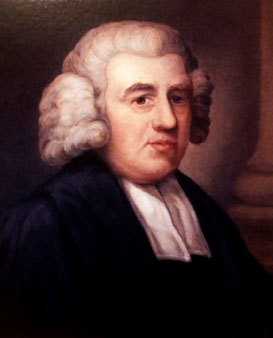
John Newton’s "Three Letters to a Tempted Believer" addresses the spiritual struggles and temptations faced by Christians, particularly the feeling of alienation from God during trials. Newton argues that adversity is inherent to the Christian life and is intentionally ordained by God to deepen faith and reliance on Him as the ultimate source of comfort and strength. He references Scripture passages such as Romans 8:32 and Titus 2:11-14 to emphasize that God has provided grace through Jesus Christ, who not only redeems but also sustains believers amidst their struggles. The letters highlight the importance of faith, prayer, and humility, urging believers to rest in Christ, who is all-sufficient for their trials, and to await God’s deliverance with assurance. Newton underscores that spiritual challenges can reveal the depth of one's need for Christ, thus fostering a greater appreciation for His redemptive work.
Key Quotes
“He who has begun a good work in you is able to carry it on in defiance of all seeming hindrances and make all things … work together for your good.”
“The chief difference … is in this: they then walked by sight and we are called to walk by faith.”
“Though we cannot see him—he sees us; he is nearer to us than we are to ourselves.”
“Fear not—only believe; wait and pray.”
What does the Bible say about God's sovereignty in suffering?
The Bible teaches that God is sovereign over all circumstances, including suffering, using it for our good and His glory (Romans 8:28).
Romans 8:28, 2 Corinthians 4:17
Why is grace important for Christians?
Grace is vital for Christians because it is the means by which we are saved and empowered to live a life honoring to God (Ephesians 2:8-9).
Ephesians 2:8-9, 2 Corinthians 12:9, Titus 2:11-14
How do we know that Jesus is the Savior?
We know Jesus is the Savior through His fulfillment of prophecy, His miraculous works, and ultimately His death and resurrection (John 3:16).
Isaiah 53, John 3:16, 1 Corinthians 15
What does it mean to walk by faith and not by sight?
Walking by faith means trusting in God's promises and His character, even when circumstances seem contrary (2 Corinthians 5:7).
2 Corinthians 5:7, Hebrews 11:1
LETTER 1
June 20, 1776.
Madam,
It would be both unkind and ungrateful in me, to avail myself of any plea of business for delaying the acknowledgment I owe you for your favor. Could I have known in time that you were in town, I would have endeavored to have called upon you while here; and very glad would I have been to have seen you. But those who fear the Lord may be sure, that whatever is not achievable is not necessary. God could have over-ruled every difficulty in your way, had he seen it expedient. But he is pleased to show you, that you depend not upon men—but upon himself; and that, notwithstanding your situation, may exclude you from some advantages in point of outward means. He who has begun a good work in you, is able to carry it on, in defiance of all seeming hindrances, and make all things (even those which have the most unfavorable appearances) work together for your good.
A sure effect of his grace, is a desire and longing for Gospel ordinances; and when they are afforded, they cannot be neglected without loss. But the Lord sees many souls who are dear to him, and whom he is training up in a growing fitness for his kingdom, who are by his providence so situated, that it is not in their power to attend upon Gospel preaching; and perhaps they have seldom either Christian minister or Christian friend to assist or comfort them. Such a situation is a state of trial; but Jesus is all-sufficient, and he is always near. They cannot be debarred from his Word of grace, nor from his throne of grace, for those who feel their need of him, and whose hearts are drawn towards him, are always at the foot of it. Every room in the house, yes, every spot they stand on—fields, lanes, and hedge-rows, all is holy ground to them; for the Lord is there.
The chief difference between us and the disciples, when our Savior was upon earth, is in this: they then walked by sight, and we are called to walk by faith. They could see him with their bodily eyes; we cannot; but he said before he left them, "It is expedient for you that I go away." How could this be, unless that spiritual communion which he promised to maintain with his people after his ascension, were preferable to that fellowship he allowed them while he was visibly with them? But we are sure it is preferable, and those who had tried both—were well satisfied that he had made good his promise; so that, though they had known him after the flesh, they were content not to know him so any more.
Yes, madam, though we cannot see him—he sees us; he is nearer to us than we are to ourselves. In a natural state, we have very dark, and indeed dishonorable, thoughts of God—we conceive of him as at a distance. But when the heart is awakened, we begin to make Jacob's reflection, "Surely the Lord is in this place—and I knew it not!" And when we receive saving faith, we begin to know that this ever-present God is in Christ; that the government of heaven and earth, the dispensations of the kingdom of nature, providence, and grace—are in the hands of Jesus; that it is He with whom we have to do, who once suffered agony and death for our redemption, and whose compassion and tenderness are the same, now that he reigns over all blessed forever, as when he conversed among men in the days of his humiliation.
Thus God is made known to us by the Gospel, in the endearing views of a Savior, a Shepherd, a Husband, a Friend; and a way of access is opened for us through the veil, that is, the human nature of our Redeemer, to enter, with humble confidence, into the holiest of all, and to repose all our cares and concerns upon the strength of that everlasting arm which upholds heaven and earth, and upon that infinite love which submitted to the shame, pain, and death of the cross—to redeem sinners from wrath and misery!
Though there is a height, a breadth, a length, and a depth, in this mystery of redeeming love, exceeding the comprehension of all finite minds; yet the great and leading principles which are necessary for the support and comfort of our souls, may be summed up in a very few words. Such a summary we are favored with in Titus 2:11-14, "For the grace of God that brings salvation has appeared to all men. It teaches us to say 'No' to ungodliness and worldly passions, and to live self-controlled, upright and godly lives in this present age, while we wait for the blessed hope—the glorious appearing of our great God and Savior, Jesus Christ, who gave himself for us to redeem us from all wickedness and to purify for himself a people that are his very own, eager to do what is good." Here the whole of salvation, all that is needful to be known, experienced, practiced, and hoped for, is comprised within the compass of four verses.
If many books, much study, and great discernment, were necessary in order to be saved, what must the poor and simple do? Yet for them especially, is the Gospel designed; and few but such as these, attain the knowledge and comfort of it.
The Bible is a sealed book—until the heart be awakened by the Holy Spirit; and, then, he who runs may read. The propositions of the Gospel are few:
I am a sinner, therefore I need a Savior, one who is both able and willing to save to the uttermost. Such a one is Jesus: he is all that I need—wisdom, righteousness, sanctification, and redemption. But will he receive me? Can I answer a previous question? Am I willing to receive him? If so, and if his word may be taken, if he meant what he said, and promised no more than he can perform—I may be sure of a welcome! He knew, long before, the doubts, fears, and suspicions which would arise in my mind when I would come to know what I am, what I have done, and what I have deserved; and therefore he declared, before he left the earth, "Him who comes to me—I will never cast out." I have no money or price in my hand, no worthiness to recommend me. And I need none, for he saves freely—for his own name's sake. I have only to be thankful for what he has already shown me, and to wait upon him for more. It is my part to commit myself to him—as the Physician of sin-sick souls, not to prescribe to him how he shall treat me. To begin, carry on, and perfect the cure—is his part.
The doubts and fears you speak of are, in a greater or less degree, the common experience of all the Lord's people, at least for a time. While any unbelief remains in the heart, and Satan is permitted to tempt—we shall feel these things. In themselves they are groundless and evil; yet the Lord permits and over-rules them for good. They tend to make us know more of the plague of our own hearts, and feel more sensibly the need of a Savior, and make his rest (when we attain it) doubly sweet and sure—and they likewise qualify us for pitying and comforting others.
Fear not—only believe, wait, and pray. Expect not all at once. A Christian is not of hasty growth, like a mushroom—but rather like the oak, the progress of which is hardly perceptible—but in time becomes a great deep-rooted tree. If my writings have been useful to you, may the Lord have the praise. To administer any comfort to his children is the greatest honor and pleasure I can receive in this life. I cannot promise to be a very punctual correspondent, having many engagements; but I hope to do all in my power to reply to your correspondence.
LETTER 2
August 20, 1776.
Madam,
Though in general I think myself tolerably punctual when I can answer a letter in six or seven weeks after the receipt—yet I feel some pain for not having acknowledged yours sooner. A case like that which you have favored me with an account of, deserved an immediate attention; and when I read it, I proposed writing within a day or two, and I can hardly allow any plea of business to be sufficient excuse for delaying it so long; but our times are in the Lord's hands—may he now enable me to send you what may prove a word in season.
Your exercises have been by no means singular, though they may appear so to yourself; because, in your retired situation, you have not (as you observe) had much opportunity of knowing the experience of other Christians; nor has the guilt with which your mind has been so greatly burdened, been properly your own. It was a temptation forced upon you by the enemy—and he shall answer for it.
Undoubtedly it is a mournful proof of the depravity of our nature, that there is that within us, which renders us so easily susceptive of Satan's suggestions; a proof of our extreme weakness, that, after the clearest and most satisfying evidences of the truth, we are not able to hold fast our confidence, if the Lord permits Satan to sift and shake us. But I can assure you, that these changes are not uncommon. I have known people, who, after walking with God comfortably for forty years, have been at their wit's end from such assaults as you mention, and been brought to doubt, not only of the reality of their own hopes—but of the very ground and foundation upon which their hopes were built!
Had you remained, as it seems you once were, attached to the vanities of a mirthful and debauched life, or could you have been content with a form of godliness, destitute of the power—it is probable you would have remained a stranger to these troubles. Satan would have employed his arts in a different and less perceptible way, to have soothed you into a false peace, and prevented any thought or suspicion of danger from arising in your mind. But when he could no longer detain you in his bondage, or seduce you back again into the world—then of course he would change his method, and declare open war against you.
You have experienced a specimen of his power and malice; and the Lord, whom you loved, because he first loved you, permitted it, not to gratify Satan—but for your benefit to humble and prove you, to show you what is in your heart, and to do you good in the outcome. These things, for the present, are not joyous but grievous; yet in the end they yield the peaceable fruits of righteousness. In the mean time, his eye is upon you; he has appointed bounds both to the degree and the duration of the trial. And he does and will afford you such supports, that you shall not be tried beyond what you are enabled to bear. I doubt not, but your conflicts and sorrows will in due time terminate in praise and victory, and be sanctified to your fuller establishment in the truth.
I greatly rejoice in the Lord's goodness to your dying parent. How wisely timed, and how exactly suited, was that affecting dispensation, to break the force of those suggestions with which the enemy was aiming to overwhelm your spirit. He could not stand against such an illustrious demonstrative attestation, that the doctrines you had embraced were not cunningly devised fables. He could proceed no farther in that way; but he is prolific in resources. His next attempt, of course, was to fix guilt upon your conscience, as if you had yourself formed and willingly entertained those thoughts, which, indeed, you suffered with extreme reluctance and pain. Here likewise I find he succeeded for a time; but he who broke the former snare, will deliver you from this likewise!
The dark and dishonorable thoughts of God, which I hinted at as belonging to a natural state, are very different from the thoughts of your heart concerning him. You do not conceive of him as a hard master, or think you could be more happy in the breach—than in the observance of his precepts. You do not prefer the world to his favor, or think you can please him, and make amends for your sins by an obedience of your own. These, and such as these, are the thoughts of the natural heart—the very reverse of yours.
One thought, however, I confess you have indulged, which is no less dishonorable to the Lord than uncomfortable to yourself. You say, "I dare not believe that God will not impute to me as sin, the admission of thoughts which my soul ever abhorred, and to which my will never consented." Nay, you fear lest they should not only be imputed—but unpardonable. But how can this be possible? Indeed I will not call it your thought; it is your temptation. You tell me you have children. Then you will easily understand a plain illustration, which just now occurs to me.
Let me suppose a case which has sometimes happened: a child, three or four years of age we will say, while playing incautiously at a little distance from home, should be suddenly seized and carried away by a gypsy. Poor thing! how terrified, how distressed must it be! Methinks I hear its cries. The sight and violence of the stranger, the recollection of its dear parents, the loss of its pleasing home, the dread and uncertainty of what is yet to befall it—is it not a wonder that it does not die in agony? But see, help is at hand—the gypsy is pursued, and the child recovered. Now, my dear madam, permit me to ask you, if this were your child, how would you receive it? Perhaps, when the first transports of your joy for its safety would permit you, you might gently chide it for leaving your door; but would you disinherit it? Would you disown it? Would you deliver it up again to the gypsy with your own hands, because it had suffered a violence which it could not withstand, which it abhorred, and to which its will never consented? And yet what is the tenderness of a mother, of ten thousand mothers, compared to that which our compassionate Savior bears to every poor soul that has been enabled to flee to him for salvation! Let us be far from charging that to him, of which we think we are utterly incapable ourselves!
Take courage, madam! Resist the devil—and he will flee from you. If he were to tempt you to anything criminal, you would start at the thought, and renounce it with abhorrence. Do the same when he tempts you to question the Lord's compassion and goodness. But there he imposes upon us with a show of humility, and persuades us that we do well to oppose our unworthiness as a sufficient exception to the many express promises of the Word. It is said, the blood of Jesus cleanses from all sin; that all manner of sin shall be forgiven for his sake; that whoever comes he will in no wise cast out; and that he is able to save to the uttermost. Believe his Word—and Satan shall be found a liar!
If the child had deliberately gone away with the gypsy, had preferred that wretched way of life, had refused to return, though frequently and tenderly invited home; perhaps a parent's love might, in time, be too weak to plead for the pardon of such continued obstinacy. But, indeed, in this manner we have all dealt with the Lord—and yet, whenever we are willing to return—he is willing to receive us with open arms, and without an upbraiding word! Luke 15:20-22. Though our sins have been deep-dyed, like scarlet and crimson, enormous as mountains, and countless as the sands, the sum total is, Sin has abounded; but where sin has abounded, grace has much more abounded!
After all, I know the Lord keeps the key of comfort in his own hands—yet he has commanded us to attempt comforting one another. I should rejoice to be his instrument of administering comfort to you. I shall hope to hear from you soon; and that you will then be able to inform me he has restored to you the joys of his salvation. But if not yet, wait for him, and you shall not wait in vain.
LETTER 3
June, 1777.
My dear Madam,
Temptations may be compared to the wind, which when it has ceased raging from one point, after a short calm, it frequently renews its violence from another quarter. The Lord silenced Satan's former assaults against you—but he is permitted to try you again in another way. Be of good courage, madam, wait upon the Lord, and the present storm shall likewise subside in good time. You have an infallible Pilot, and are embarked in a voyage against which the winds and waves cannot prevail. You may be tossed about, and think yourself in apparent jeopardy—but sink you shall not, except the promises and faithfulness of God can fail.
Upon an attentive consideration of your trouble, it seems to me to amount only to this, that though the Lord has done great things for you, he has not yet brought you to a state of dependence on himself, nor released you from that impossibility which all his people feel, of doing anything without him. And is this, indeed, a matter of complaint? Is it not every way better—more for his glory, and more suited to keep us mindful of our obligations to him, and, in the outcome, more for our safety, that we should be reduced to a happy necessity of receiving daily out of his fullness (as the Israelites received the manna), than to be set up with something of a stock of wisdom, power, and goodness of our own?
Adam was thus furnished at the beginning with strength to stand; yet, mutability being essential to a creature—he quickly fell and lost all. We who are by nature sinners, are not left to so hazardous an experiment. God has himself engaged to keep us, and treasured up all fullness of grace for our support, in a head who cannot fail. Our gracious Savior will communicate all needful supplies to his members—yet in such a manner that they shall feel their need and weakness, and have nothing to boast of from first to last—but his wisdom, compassion, and care. We are in no worse circumstances than the Apostle Paul, who, though eminent and exemplary in the Christian life, found and freely confessed that he had no sufficiency in himself to think a good thought! Nor did he wish it otherwise; he even gloried in his infirmities, that the power of Christ might rest upon him.
Unbelief, and a thousand other evils, are still in our hearts! Though their reign and dominion is at an end—they are not slain nor eradicated; their effects will be felt more or less sensibly, as the Lord is pleased more or less to afford or abate his gracious influence. When they are kept under control—we are no better in ourselves, for they are not kept down by us. But we are very prone to think better of ourselves at such a time; and therefore God is pleased to permit us at seasons—to feel a difference, that we may never forget how weak and how vile we are. We cannot absolutely conquer these evils—but it befits us to be humbled for them; and we are to fight, and strive, and pray against them. Our great duty is to be at his footstool, and to cry to him who has promised to perform all things for us.
Why are we called soldiers—but because we are called to a warfare! And how could we fight, if there were no enemies to resist? The Lord's soldiers are not merely for show, to make an empty parade in a uniform, and to brandish their arms when none but friends and spectators are around them. No, we must stand upon the field of battle—we must face the fiery darts—we must wrestle (which is the closest and most arduous kind of fighting) with our foes! Nor can we well expect wholly to escape wounds; but the leaves of the tree of life are provided for their healing. The Captain of our salvation is at hand, and leads us on with an assurance which might make even a coward bold—that, in the end, we shall be more than conquerors through him who has loved us!
I am ready to think that some of the sentiments in your letters are not properly yours, such as you yourself have derived from the Scriptures—but rather borrowed from authors or preachers, whose judgment your humility has led you to prefer to your own. At least, I am sure the Scripture does not authorize the conclusion which distresses you—that if you were a child of God—you would not feel such changes and oppositions. Were I to define a Christian, or rather to describe him at large, I know no text I would choose sooner, as a ground for the subject, than Gal. 5:17, "The sinful nature desires what is contrary to the Spirit, and the Spirit what is contrary to the sinful nature. They are in conflict with each other, so that you do not do what you want." A Christian has noble aims—which distinguish him from the bulk of mankind. His leading principles, motives, and desires—are all supernatural and divine. Could he do as he desires—there is not a angel before the Eternal Throne, that would excel him in holiness, love, and obedience! He would tread in the very footsteps of his Savior, fill up every moment in his service, and employ every breath in his praise.
This he would do—but, alas! he cannot! Against these spiritual desires, there is a contrary desire and working of a corrupt nature, which meets him at every turn! He has a beautiful copy set before him in the Scriptures—he is enamored with it, and though he does not expect to equal it, he writes carefully after it, and longs to attain to the nearest possible imitation. But indwelling sin and Satan continually jog his hand, and spoil his strokes!
You cannot, madam, form a right judgment of yourself, except you make due allowance for those things which are not special to yourself—but common to all who have spiritual perception, and are indeed the inseparable appendages of this mortal state. If it were not so, why should the most spiritual and gracious people be so ready to confess themselves vile and worthless? One eminent branch of our holiness, is a sense of shame and humiliation for those evils which are only known to ourselves, and to him who searches our hearts, joined with an acquiescence in Jesus, who is appointed of God, wisdom, righteousness, sanctification, and redemption.
I will venture to assure you, that though you will possess a more stable peace, in proportion as the Lord enables you to live more simply upon the blood, righteousness, and grace of the Mediator, you will never grow into a better opinion of yourself than you have at present. The nearer you are brought to him, the more lively sense you will have of your continual need of him, and thereby your admiration of his power, love, and compassion, will increase likewise from year to year.
I would observe farther, that our spiritual exercises are not a little influenced by our constitutional temperament. As you are only a correspondent, I can but conjecture about you upon this head. If your frame is delicate, and your nervous system very sensible and tender, I should probably ascribe some of your apprehensions to this cause. It is an abstruse subject, and I will not enter into it; but according to the observations I have made—people of this habit seem to live more upon the confines of the invisible world, if I may so speak, and to be more susceptive of impressions from it, than others. That complaint which, for want of a better name, we call depression of heart, may probably afford the enemy some special advantages and occasions of distressing you. The mind then perceives objects as through a tinctured medium, which gives them a dark and discouraging appearance! And I believe Satan has more influence and address than we are aware of—in managing the glass. And when this is not the case at all times, it may be so occasionally, from sickness or other circumstances.
You tell me that you have lately been in circumstances, which may probably have such an effect as I have hinted. You may be charging yourself with guilt for what springs from physical indisposition, in which you are merely passive, and which may be no more properly sinful, than the headache, or any of the thousand natural shocks the flesh is heir to!
The enemy can take no advantage but what the Lord permits him; and he will permit him none but what he designs to over-rule for your greater advantage in the end. He delights in your prosperity; and you should not be in heaviness for an hour, were there not a need be for it. Notwithstanding your fears, I have a good hope, that he who you say has helped you in six troubles—will appear for you in the seventh; that you will not die—but live, and declare the works of the Lord, and come forth to testify to his praise—that he has turned your mourning into joy!
Letter 1
My dear Madam,
My reproof was well meant on my side, and well taken on yours. You may perhaps see that my hints were not wholly unnecessary, and I ought to be satisfied with your apology, and am so. The circumstance of your being seen at the playhouse has nothing at all mysterious in it, as you say you have not been there for six or seven years—it was neither more nor less than a mistake. I had heard that you had been there within these two years. I am glad to find I was misinformed. I think there is no harm in your supposing, that of the many thousands who frequent public amusements, some may, in other respects, be better than yourself—but I hope your humble and charitable construction of their mistake will not lead you to extenuate the evil of those diversions in themselves. For though I am persuaded that a few Christians are, for lack of consideration, drawn in to expose themselves in such places—yet I am thoroughly convinced, that if there is any practice in this land which is sinful, attendance on the playhouse is properly and eminently so. The theaters are fountains and paths of vice! I can hardly think there is a Christian upon earth who would dare to be seen there—if the nature and effects of the theater were properly set before them.
Dr. Witherspoon of Scotland has written an excellent piece upon the stage, or rather against it, which I wish every person who makes the least pretense to fear God had an opportunity of perusing. I cannot judge much more favorably of all the innumerable train of profligacies, by which the god of this world blinds the eyes of multitudes, lest the light of the glorious Gospel should shine in upon them. What an awful aspect upon the present times have such texts as Isaiah 22:12-14. Isaiah 3:12, Amo. 6:3-6, Jam. 4:4. I wish you, therefore, not to plead for any of them—but use all your influence to make them shunned as pest-houses, and dangerous nuisances to precious souls; especially if you know any who you hope in the main are seriously disposed, who yet venture themselves in those haunts of Satan, endeavor earnestly and faithfully to undeceive them.
The time is short; eternity at the door; was there no other evil in these vain amusements than the loss of precious time (but, alas! their name is legion), we have not leisure in our circumstances to regard them. And, blessed be God! we need them not. The Gospel opens a source of purer, sweeter, and more substantial pleasures! We may well bid adieu to these perishing pleasures of sin! We may well pity those who can find pleasure in those amusements where God is shut out; where His name is only mentioned to be profaned; where His commandments are not only broken—but insulted; where sinners proclaim their shame as in Sodom, and attempt not to hide it; where, at best, wickedness is wrapped up in a disguise of entertainment, to make it more insinuating!
I sympathize with all your ailments—but if the Lord is pleased to make them subservient to the increase of your sanctification, to wean you more and more from this world, and to draw you nearer to himself, you will one day see cause to be thankful for them, and to number them among your choicest mercies. A hundred years hence—it will signify little to you whether you were sick or well the day I wrote this letter.
We thank you for your kind condolence. There is a pleasure in the pity of a friend—but the Lord alone can give true comfort. I hope he will sanctify the breach, and do us good. Mrs. **** exchanges forgiveness with you about your not meeting in London; that is, you forgive her not coming to you, and she forgives you entertaining a suspicious thought of her friendship (though but for a minute) on account of what she was really unable to do.
Letter 2
September 1, 1767.
My dear Madam,
I shall not study for expressions to tell my dear friend how much we were affected by the news that came last post. We had, however, the pleasure to hear that your family was safe. I hope this will find you recovered from the hurry of spirits you must have been thrown into, and that both you and your papa are composed under the appointment of Him who has a right to dispose of his own as he pleases; for we know that, whatever may be the second causes and occasions, nothing can happen to us but according to the will of our heavenly Father. Since what is past cannot be recalled, my part is now to pray, that this, and every other dispensation you meet with, may be sanctified to your soul's good; that you may be more devoted to the God of your life, and have a clearer sense of your saving interest in that kingdom which cannot be shaken, that treasure which neither thieves nor flames can touch, that better and more enduring substance which is laid up for believers, where Jesus their Head and Savior is. With this in view, you may take joyfully the spoiling of your goods.
I think I can feel for my fiends—but for such as I hope have a right to that promise, that all things shall work together for their good, I soon check my solicitude, and ask myself, Do I love them better, or could I manage more wisely for them, than the Lord does? Can I wish them to be in safer or more compassionate hands than in his? Will he who delights in the prosperity of his servants, afflict them with sickness, losses, and alarms—except he sees there is need of these things? Such thoughts calm the emotions of my mind. I sincerely condole you—but the command is, to rejoice always in the Lord. The visitation was accompanied with mercy; not such a case as that of the late Lady Molesworth, which made everyone's ears to tingle that heard it. Nor is yours such a case as of some, who in almost every great fire lose their all, and perhaps have no knowledge of God to support them.
Though our first apprehensions were for you, we almost forgot you for a moment when we thought of your next-door neighbor, and the circumstance she was in, so unfit to bear either a fright or a removal. We shall be in much suspense until we hear from you. God grant that you may be able to send us good news, that you are all well, at least as well as can be expected after such a distressing scene. If what has happened should give you more leisure, or more inclination, to spend a little time with us, I think I need not say we shall rejoice to receive you.
Letter 3
September 3, 1767.
My dear Madam,
The vanity of all things below, is confirmed to us by daily experience. Among other proofs, one is, the precariousness of our friendships; and what little things, or rather what nothings, will sometimes produce a coolness, or at least a strangeness, between the dearest friends. How is it that our correspondence has been dropped, and that, after having written two letters since the fire, which removed you from your former residence, I should be still disappointed in my hopes of an answer? On our parts, I hope there has been no abatement of regard; nor can I charge you with anything but remises. Therefore, waving the past, and all apologies on either side, let me beg you to write soon, to tell us how it is with you, and how you have been supported under the various changes you have met with since we saw you last.
I doubt not, but you have met with many exercises. I pray that they may have been sanctified to lead you nearer to the Lord, the fountain of all consolation, who is the only refuge in time of trouble, and whose gracious presence is abundantly able to make up every deficiency and every loss. Perhaps the reading of this may recall to your mind our past conversations, and the subjects of the many letters we have exchanged. I know not in what manner to write after so long an interval. I would hope your silence to us has not been owing to any change of sentiments, which might make such letters as mine less welcome to you. Yet when you had a friend, who I think you believed very nearly interested himself in your welfare, it seems strange, that in a course of two years you should have nothing to communicate. I cannot suppose you have forgotten me; I am sure I have not forgotten you; and therefore I long to hear from you soon, that I may know how to write; and should this likewise pass unanswered, I must sit down and mourn over my loss.
As to our affairs, I can tell you the Lord has been and is exceedingly gracious to us. Our lives are preserved, our health's continued, and abundance of mercies and blessings on every side—but especially we have to praise him that he is pleased to crown the means and ordinances of his grace, with tokens of his presence. It is my happiness to be fixed among an affectionate people, who make an open profession of the truth as it is in Jesus, and are enabled, in some measure, to show forth its power in their lives and conversation. We walk in peace and harmony. I have reason to say—the Lord Jesus is a good Master, and that the doctrine of free salvation, by faith in his name, is a doctrine according to godliness. For, through mercy, I find it daily effectual to the breaking down the strongholds of sin, and turning the hearts of sinners from dead works to serve the living God. May the Lord give my dear friend to live in the power and consolation of his precious truth!
LETTER 1
November, 1775.
My dear Madam,
Too much of that impatience which you speak of, towards those who differ from us in some religious sentiments, is observable on all sides. I do not consider it as the fault of a few individuals, or of this or that party, so much as the effect of that inherent imperfection which is common to our whole race. Anger and scorn are equally unfitting in those who profess to be followers of the meek and lowly Jesus, and who acknowledge themselves to be both sinful and fallible; but too often something of this leaven will be found cleaving to the best characters, and mixed with honest endeavors to serve the best cause.
But thus it was from the beginning; and we have reason to confess that we are no better than the Apostles were, who, though they meant well, manifested once and again a wrong spirit in their zeal; Luke 9:54. Observation and experience contribute, by the grace of God, gradually to soften and sweeten our spirits; but then there will always be ground for mutual forbearance and mutual forgiveness on this head.
However, so far as I may judge of myself, I think this hastiness is not my most besetting sin. I am not indeed an advocate for that indifference and lukewarmness to the truths of God, which seem to constitute the candor many plead for in the present day. But while I desire to hold fast the sound doctrines of the Gospel towards the persons of my fellow-creatures, I wish to exercise all moderation and benevolence. Protestants or Papists, Socinians or Deists, Jews, Samaritans, or Mohammedans, all are my neighbors; they have all a claim upon me for the common offices of humanity.
As to religion, they cannot all be right; nor may I compliment them by allowing that the differences between us are but trivial, when I believe and know they are important. But I am not to expect others to see with my eyes! I am deeply convinced of the truth of John the Baptist's aphorism in John 3:27, "A man can receive nothing—except it be given him from Heaven." I well know, that the little measure of knowledge I have obtained in the things of God—has not been owing to my own wisdom and teachableness, but to God's goodness. Nor did I learn everything all at once—God has been pleased to exercise much patience and long-suffering towards me, for the past twenty-seven years—since He first gave me a desire of learning from Himself. He has graciously accommodated Himself to my weakness, borne with my mistakes, and helped me through innumerable prejudices, which, but for His mercy, would have been insuperable hindrances! I have therefore no right to be angry, impatient, or censorious to others, especially as I have still much to learn, and am so poorly influenced by what I seem to know!
I am weary of theological controversies and disputes, and desire to choose for myself, and to point out to others, Mary's part—to sit at Jesus' feet, and to hear his words. And, blessed be his name! So far as I have learned from him, I am favored with a comfortable certainty; I know whom I have believed, and am no longer tossed about by the various winds and tides of opinions, by which I see many are dashed one against the other. But I cannot, I must not, I dare not, be contentious. Only, as a witness for God, I am ready to bear my simple testimony to what I have known of his truth, whenever I am properly called to it.
I agree with you, that some accounted evangelical teachers have too much confined themselves to a few leading and favorite topics. I think this a fault; and believe, when it is constantly so, the auditors are deprived of much edification, which they might receive from a more judicious and comprehensive plan. The whole Scripture, as it consists of histories, prophecies, doctrines, precepts, promises, exhortations, admonitions, encouragements, and reproofs, is the proper subject of the Gospel ministry—and every part should in its place be attended to; yet so as that, in every part we exhibit—Jesus should be the capital figure! In Him the prophecies are fulfilled, and the promises established. In Him, in a way of type and emblem, the most important parts of Scripture history have an express reference. From Him alone—we can receive that life, strength, and encouragement, which are necessary to make obedience either pleasing or practical.
Where there is true spiritual faith in the heart, and in exercise, I believe a person will not so much need a detail of what he is to practice—as to be often greatly at a loss without it. Our Savior's commandments are plain and clear in themselves; and that love which springs from faith is the best casuist and commentator to apply and enforce them!
You are pleased to say, "Forgive me if I transgress; I know the place whereon I stand is holy ground." Permit me to assure you, my dear madam, that were I, which I am not, a person of some importance, you would run no hazard of offending me by controverting any of my sentiments. I hold none (knowingly) which I am not willing to submit to Scriptural examination; nor am I afraid of offending you by speaking freely, when you point out my way. I would wrong you, if I thought to please you by palliating or disguising the sentiments of my heart; and if I attempted to do so, you would see through the design, and despise it. There may perhaps be an improper manner of chiming upon the name of Jesus, and I am not for vindicating any impropriety; yet, could I feel what I ought to mean when I pronounce that name, I would not fear mentioning it too often. I am afraid of no excess in thinking highly of it, because I read it is the will of God, that all men should honor the Son as they honor the Father.
Labored explications of the Trinity I always avoid. I am afraid of darkening counsel by words without knowledge. Scripture, and even reason assures me, there is but one God, whose name alone is Jehovah. Scripture likewise assures me, that Christ is God, that Jesus is Jehovah. I cannot say that reason assents with equal readiness to this proposition as to the former. But admitting what the Scripture teaches concerning the evil of sin, the depravity of human nature, the method of salvation, and the offices of the Savior; admitting that God has purposed to glorify, not his mercy only, but his justice—in the work of redemption; that the blood shed upon the cross is a proper, and adequate atonement for sin; and that the Redeemer is at present the Shepherd of all who believe in Him. We depend upon Him—and He gives us the effectual help which we need. He is intimately acquainted with us—and knows every thought and intent of our hearts. He has His eye always upon us. His ear always open us. His arm ever stretched out for our relief. We can receive nothing—but what He bestows. We can do nothing—but as He enables us. Nor can we stand a moment—but as He upholds us!
Admitting these and the like promises, with which the Word of God abounds, reason must allow, whatever difficulties may attend the thought, that only he who is God over all, blessed forever, is able or worthy to execute this complicated plan, every part of which requires the exertion of infinite wisdom and almighty power; nor am I able to form any clear, satisfactory, comfortable thoughts of God, suited to awaken my love or engage my trust, but as he has been pleased to reveal himself in the person of Jesus Christ. I believe with the Apostle, that God was once manifested in the flesh upon earth; and that he is now manifested in the flesh in heaven; and that the worship, not only of redeemed sinners, but of the holy angels, is addressed to the Lamb who was slain, and who, in that nature in which he suffered, now exercises universal dominion, and has the government of heaven, earth, and hell, upon his shoulders. This truth is the foundation upon which my hope is built, the fountain from whence I derive all my strength and consolation, and my only encouragement for venturing to the Throne of Grace, for grace to help in time of need.
Until God in human flesh I see,
My thoughts no comfort find;
The holy, just, and sacred Three
Are terrors to my mind.But if Immanuel's face appear,
My hope, my joy begins;
His name forbids my slavish fear,
His grace removes our sins.
I am, however, free to confess to you, that, through the pride and unbelief remaining in my heart, and the power of Satan's temptations, there are seasons when I find no small perplexity and evil reasoning upon this high point. But it is so absolutely essential to my peace, that I cannot part with it; for I cannot give it up, without giving up all hope of salvation on the one hand, and giving up the Bible, as an unmeaning, contradictory fable, on the other hand. And, through mercy, for the most part, when I am in my right mind, I am as fully persuaded of this truth—as I am of my own existence! But from the exercises I have had about it, I have learned to subscribe to the Apostle's declaration, that "no man can say that Jesus Christ is Lord—but by the Holy Spirit." I am well satisfied it will not be a burden to me at the hour of death, nor be laid to my charge at the day of judgment—that I have thought too highly of Jesus, expected too much from him myself, or labored too much in commending and setting him forth to others, as the Alpha and Omega, the true God and eternal life. On the contrary, alas! alas! my guilt and grief are—that my thoughts of him are so faint, so infrequent, and my commendations of him—so lamentably cold and disproportionate to what they ought to be.
I know not whose letters are rapturous—but I wish mine were more so—not that I am a friend to ungrounded sallies of imagination, flights of carnal passions, or heat without light. But it would be amazing to me, were I not aware of human depravity (of which I consider this as one of the most striking proofs), that those who have any good hope of a saving interest in the Gospel salvation, do not find their hearts (as Dr. Watts expresses it) all on fire; and that their very looks do not express a transport of admiration, gratitude, and love, when they consider from what misery they are redeemed, to what happiness they are called, and what a price was paid for their souls. I wish to be more like the Apostle Paul in this respect, who, though he often forms and compounds new words, seems at a loss for any that could suitably describe the emotions of his heart.
I am persuaded you would not object to the just fervors of Scriptural devotion. But this holy flame can seldom be found unsullied in the present life. The temper, constitution, and infirmities of individuals will mix more or less with what they say or do. Allowances must be made for such things in the present state of infirmity—for who can hope to be perfectly free from them! Yet—if the heart is right with God, and sincerely affected with the wonders of redeeming love, our gracious High Priest, who knows our weakness, pities and pardons what is amiss, accepts our poor efforts, and gradually teaches us to discern and avoid what is blamable.
The work of grace, in its first stages, I sometimes compare to the lighting of a fire, where for a while there is abundance of smoke—but it burns clearer and clearer. There is often, both in letters and books, what might be very well omitted; but if a love to God and souls is the leading principle, I pass as gentle censure upon the rest as I can, and apply to some eccentric expressions, what Mr. Prior somewhere says of our civil dissensions in this land of liberty, "A bad effect—but from a noble cause."
LETTER 2
February 16, 1776.
My dear Madam,
It gave me great comfort to find, that what I wrote concerning the divine character of Jesus, as God manifest in the flesh, met with your approbation. This doctrine is, in my view, the great foundation-stone upon which all true religion is built. But, alas! in the present day, it is the stumbling stone and rock of offense, upon which too many, fondly presuming upon their own wisdom, fall and are broken! I am so far from wondering that any should doubt of it, that I am firmly persuaded none can truly believe it, however plainly set forth in Scripture, unless it is revealed to them from Heaven; or, in the Apostle's words, that "no one can call Jesus Christ Lord—but by the Holy Spirit."
There are many who think they believe it, because they have taken it for granted, and never attentively considered the difficulties with which it is attended in the eye of fallen reason. Judging by natural light, it seems impossible to believe that the title of the true God and eternal life, should properly belong to that despised Man who hung dead upon the cross, exposed to the insults of his cruel enemies. I know nothing that can obviate the objections the reasoning mind is ready to form against it—but a real conviction of the sinfulness of sin, and the state of a sinner as exposed to the curse of the Holy Law, and destitute of every plea and hope in himself.
Then the necessity of a Redeemer, and the necessity of this Redeemer's being Almighty, is seen and felt, with an evidence which bears down all opposition; for neither the efficacy of his atonement and intercession, nor his sufficiency to guide, save, protect, and feed those who trust in him, can be conceived of without it. When the eyes of the understanding are opened, the soul made acquainted with and attentive to its own state and needs—he who runs may read this truth; not in a few detached texts of a dubious import, and liable to be twisted and tortured by the arts of criticism—but as interwoven in the very frame and texture of the Bible, and written, as with a sun-beam, throughout the principal parts both of the Old and New Testament.
If Christ is the shepherd and the husband of his people under the Gospel, and if his coming into the world did not abridge those who feared God of the privileges they were entitled to before his appearance, it follows, by undeniable consequence, "that he is God over all blessed forever." For David tell us, that his shepherd was Jehovah; and the husband of the Old Testament church was the Maker and God of the whole earth, the Holy One of Israel, whose name is the Lord Almighty; Psalm 23:1; Isaiah 54:8 with Isaiah 47:4. I agree with you, Madam, that among the many attempts which have been made to prove and illustrate the Scripture doctrine—that the Father, the Word, and the Holy Spirit, are one God—there have been many injudicious, unwarrantable things advanced, which have perplexed instead of instructing, and of which the enemies of the truth have known how to make their advantage. However, there have been tracts upon these sublime subjects which have been written with judgment and an unction, and I believe attended with a blessing. I seem to prefer Mr. Jones's book on the Trinity to any I have seen, because he does little more than state some of the Scripture evidence for it, and draws his inferences briefly and plainly; though even he has admitted a few texts, which may perhaps be thought not quite full to the point; and he has certainly omitted several of the most express and strongest testimonies.
The best and happiest proof of all, that this doctrine is true in itself and true to us—is the experience of its effects. They who know His name will put their trust in Him. Those who are rightly impressed with His astonishing condescension and love, in emptying himself, and submitting to the death of the cross for our sakes—will find themselves under a sweet constraint to love him again, and will feel a little of that emotion of heart which the Apostle expresses in that lively passage, "May I never boast except in the cross of our Lord Jesus Christ, through which the world has been crucified to me, and I to the world." Gal. 6:14. The knowledge of Christ crucified removes the false appearances by which we have been too long cheated, and shows us the men and the things, the spirit, customs, and maxims of the world—in their just light.
Were I perfectly master of myself and my subject, I would never adduce any text in proof of a doctrine or assertion from the pulpit, which was not direct and conclusive; because if a text is pressed into an argument to which it has no proper relation, it rather encumbers than supports it, and raises a suspicion that the cause is weak, and better testimonies in its favor cannot be obtained. Some misapplications of this kind have been so long in use, that they pass pretty current, though, if brought to the assay, they would be found not quite sterling; but I endeavor to avoid them to the best of my judgment.
Thus, for instance, I have often heard, Rom. 14:23; "whatever is not of faith is sin," quoted to prove, that without a principle of saving faith we can perform nothing acceptable to God; whereas it seems clear from the context, that faith is there used in another sense, and signifies a firm persuasion of mind respecting the lawfulness of the action. However, I doubt not but the proposition in itself is strictly true in the other sense, if considered detached from the connection in which it stands; but I should rather choose to prove it from other passages, where it is directly affirmed, as Heb. 11:6; Mat. 12:33.
In such cases, I think hearers should be careful not to be prejudiced against a doctrine, merely because it is not well supported; for perhaps it is capable of solid proof, though the preacher was not so happy as to hit upon that which was most suitable; and extempore preachers may sometimes hope for a little allowance upon this head, from the more candid part of their auditory, and not be made offenders for an inadvertence which they cannot perhaps always avoid in the hurry of speaking.
With respect to the application of some passages in the Old Testament to our Lord and Savior, I hold it safest to keep close to the specimens the Apostles have given us, and I would venture with caution if I go beyond their line; yet it is probable they have only given us a specimen, and that there are a great number of passages which have a direct reference to Gospel truths, though we may run some hazard in making out the allusion. If Paul had not gone before me, I would have hesitated to assert that the prohibition, "You shall not muzzle the ox that treads out the corn," was given, not upon the account of oxen—but altogether for our sakes. Nor should I without his assistance have found out, that the history of Sarah and Hagar was a designed allegory, to set forth the difference between the Law and Gospel covenants. Therefore, when I hear ministers tracing some other allusions, I cannot be always sure that they push them too far, though perhaps they are not quite satisfactory to my judgment; for it may be, they have a farther insight into the meaning of the verses than myself.
And I think Scriptures may be sometimes used to advantage, by way of accommodation in popular discourses, and in something of a different sense from what they bear in the place where they stand, provided they are not alleged as proofs—but only to illustrate a truth already proved or acknowledged. Though Job's friends and Job himself were mistaken, there are many great truths in their speeches, which, as such, may, I think, stand as the foundation of a discourse. Nay, I either have, or have often intended to borrow, a truth from the mouth even of Satan, "Have you not set a hedge about him?" such a confession extorted from our grand adversary, placing the safety of the Lord's people, under his providential care, in a very striking light.
I perfectly agree with you, Madam, that our religious sensations and exercises are much influenced and tinctured by natural constitution. And that, therefore, tears and warm emotions on the one hand, or a comparative dryness of spirit on the other—are no sure indications of the real state of the heart. Appearances may agree in different persons, or vary in the same person—from causes which are merely natural. Even a change of weather may have some influence in raising or depressing the spirits, where the nerves are very delicate. And I think such people are more susceptive of impressions from the agency of invisible powers, both good and evil; an agency which, though we cannot explain, experience will not permit us to deny.
However, though circumstantials rise and fall—the real difference between nature and grace remains unalterable. That work of God upon the heart which is sometimes called a new birth—or a new creation—is as distinct from the highest effects of natural principles or the most specious imitations which education or resolutions can produce, as light is from darkness, or life from death. Only he who made the world can either make a Christian—or support and carry on his own work. A thirst after God as our portion; a delight in Jesus, as the only way to heaven; a renunciation of self and of the world, so far as it is opposite to the spirit of the Gospel—these, and the like fruits of that grace which brings salvation, are not only beyond the power of our fallen nature—but contrary to its tendency; so that we can have no desires of this kind—until they are given us from above; but otherwise, can hardly bear to hear them spoken of, either as excellent or necessary.
LETTER 3
September 17, 1776.
My dear Madam,
We are much indebted to you for your kind thoughts of us. Hitherto I feel no uneasiness about what is before me; but I am afraid my tranquility does not wholly spring from trust in the Lord, and submission to his will—but that a part of it at least is derived from the assurances which my physician gave me, that my operation would be neither difficult nor dangerous. I have not much of the hero in my constitution. If in great pains or sharp trials I should ever show a befitting fortitude—it must be given me from above. I desire to leave all with him—in whose hands my ways are—and who has promised me strength according to my day.
I rejoice that the Lord has not only made you desirous of being useful to others in their spiritual concerns—but has given you in some instances to see, that your desires and attempts have not been in vain. I shall thankfully accept of the commission you are pleased to offer me, and take a pleasure in perusing any papers you may think proper to put into my hands, and offer you my sentiments with that sincerity which I am persuaded will be much more agreeable to you than compliments. Though I know there is in general a delicacy and difficulty in services of this kind, yet with respect to yourself I seem to have nothing to fear.
I have often wished we had more female pens employed in the service of the sanctuary. in the article of essay writing, I think many women are qualified to succeed better than most men, having a peculiar easiness of style, which few of us can imitate. I remember you once showed me a paper, together with the corrections and alterations proposed by a gentleman whose opinion you had asked. I thought his corrections had injured it, and given it an air of stiffness which is often observable when learned men write in English. Grammatical rules, as they are called, are wholly derived from the mode of speaking or writing which obtains among those who best understand the language; for the language must be supposed established before any grammar can be made for it; and therefore women who, from the course of their education and life, have had an opportunity of reading the best written books, and conversing with those who speak well, though they do not burden themselves with the formality of grammar, have often more skill in the English language than the men who can call every figure of speech by a Latin or Greek name. You may be sure, Madam, I shall not wish your papers suppressed, merely because they were not written by a learned man. Language and style, however, are but the dress. Trifles, however adorned—are trifles still. A person of spiritual discernment would rather be the author of one page written in the humble garb of Bunyan, upon a serious subject, than to be able to rival the sprightliness and elegance of Lady Montague, unless it could be with a view to edification.
The subjects you propose are important; and with respect to all devotional exercises so called, I perfectly agree with you, that, to be affecting and useful, they must be dictated rather by the heart than by the head; and are most likely to influence others, when they are the fruits and transcripts of our own experience. So far as I know, we are but scantily provided with specimens of this sort in print, and therefore I shall be glad to see an accession to the public stock.
Your other thought of helps to recollection on Saturday evenings, is, I think, an attempt in which none have been beforehand with you. So that, according to the general appearance, I feel myself disposed to encourage you to do as you have purposed. On the other hand, if I meet with anything, on the perusal of the papers, which in my view may seem to need alteration, I will freely and faithfully point it out.
I can almost smile now—to think you once classed me among the Stoics. If I dare speak with confidence of myself in anything, I think I may lay claim to a little of that pleasing, painful thing—sensibility. I need not boast of it; for it has too often been my snare, my sin, and my punishment. Yet I would be thankful for a spice of it, as the Lord's gift, and when rightly exercised it is valuable; and I think I should make but an awkward minister without it, especially here. Where there is this sensibility in the natural temper, it will give a tincture or cast to our religious expression. Indeed I often find this sensibility weakest—where it should be strongest; and have reason to reproach myself that I am no more affected by the character, love, and sufferings of my Lord and Savior, and my own peculiar personal obligations to him. However, my views of religion have been such for many years—make me more likely be deemed an Enthusiast than a Stoic.
A mere head-knowledge derived from a system of sentiments, however true in themselves, is, in my judgment, a poor thing. Nor, on the other hand, am I an admirer of those rapturous sallies which are more owing to a warm imagination, than to a just perception of the power and importance of Gospel truth. The Gospel addresses both head and heart; and where it has its proper effect, where it is received as the Word of God, and is clothed with the authority and energy of the Holy Spirit—the understanding is enlightened, the affections awakened and engaged, the will brought into subjection, and the whole soul delivered to its impression—as wax to the seal. When this is the case, when the affections do not take the lead, and push forward with a blind impulse—but arise from the principles of Scripture, and are governed by them, the more warmth the better.
Yet in this state of infirmity, nothing is perfect; and our natural temperament and disposition will have more influence upon our religious sensations, than we are ordinarily aware. It is well to know how to make proper allowances and abatements upon this head, in the judgment we form both of ourselves and of others. Many good people are distressed and alternately elated—by frames and feelings, which perhaps are more constitutional than properly religious experiences.
I dare not tell you, Madam, what I am; but I can tell you what I wish to be. The love of God, as manifested in Jesus Christ, is what I would wish to be the abiding object of my contemplation; not merely to speculate upon it as a doctrine—but so to feel it, and my own saving interest in it, as to have my heart filled with its effects, and transformed into its resemblance; that, with this glorious Exemplar in my view, I may be animated to a spirit of benevolence, love, and compassion, to all around me; that my love may be primarily fixed upon him who has so loved me; and then, for his sake, diffused to all his children, and to all his creatures. Then, knowing that much is forgiven to me—I would be prompted to the ready exercise of forgiveness, if I have anything against anyone. Then I would be humble, patient, and submissive under all his dispensations; meek, gentle, forbearing, and kind to my fellow-worms. Then I would be active and diligent in improving all my talents and powers in his service, and for his glory; and live not to myself—but to him who loved me and gave himself for me!
LETTER 4
Nov. 29, 1776.
My dear Madam,
You need not be told, that though there are perhaps supposable extremities in which SELF would prevail over all considerations; yet in general it is more easy to allow SELF our own case, than in the case of those whom we dearly love; for through such a medium our apprehensions possibly receive the idea of the trouble enlarged beyond its just dimensions; and it would sit lighter upon us if it were properly our own case, for then we would feel it all, and there would be no room for imagination to exaggerate.
But though I feel grief, I trust the Lord has mercifully preserved me from impatience and murmuring, and that, in the midst of all the pleadings of flesh and blood, there is a something within me that aims to say, without reserve or exception, "Not my will—but Yours be done!"
It is a comfortable consideration, that he with whom we have to do, our great High Priest, who once put away our sins by the sacrifice of himself, and now forever appears in the presence of God for us—is not only possessed of sovereign authority and infinite power—but wears our very nature, and feels and exercises in the highest degree—those tenderness and commiserations, which I conceive are essential to humanity in its perfect state. The whole history of his wonderful life is full of inimitable instances of this kind. His affections were moved—before his arm was exerted. He condescended to mingle tears with mourners, and wept over distresses which he intended to relieve. He is still the same in his exalted state; compassions dwell within his heart. In a way inconceivable to us—but consistent with his supreme dignity and perfection of happiness and glory—he still feels for his people.
When Saul persecuted the members upon earth, the Head complained from heaven; and sooner shall the most tender mother sit insensible and inattentive to the cries and needs of her infant—than the Lord Jesus be an unconcerned spectator of his suffering children. No, with the eye, and the ear, and the heart of a friend—he attends to their sorrows; he counts their sighs, puts their tears in his bottle; and when our spirits are overwhelmed within us—he knows our path, and adjusts the time, the measure of our trials, and everything that is necessary for our present support and seasonable deliverance, with the same unerring wisdom and accuracy as he weighed the mountains in scales and hills in a balance, and meted out the heavens with a span!
Still more, besides his benevolent sympathy—he has an experimental sympathy. He knows our sorrows, not merely as he knows all things—but as one who has been in our situation, and who, though without sin himself, endured when upon earth, inexpressibly more for us than he will ever lay upon us! He has sanctified poverty, pain, disgrace, temptation, and death—by passing through these states! And in whatever states his people are, they may by faith have fellowship with him in their sufferings, and he will by sympathy and love have fellowship and interest with them in theirs.
What then shall we fear—or of what shall we complain—when all our concerns are written upon his heart, and their management, to the very hairs of our head, are under his care and providence; when he pities us more than we can do ourselves, and has engaged his almighty power to sustain and relieve us? However, as he is compassionate and tender—he is wise also. He loves us—but especially with regard to our best interests. If there were not something in our hearts and our situation which required discipline and medicine, he so delights in our prosperity, that we would never be in heaviness. The innumerable comforts and mercies with which he enriches even those we call darker days, are sufficient proofs that he does not willingly grieve us. But when he sees a need-be for chastisement, he will not withhold it, because he loves us; on the contrary, that is the very reason why he afflicts us! He will put his silver into the fire to purify it; but he sits by the furnace as a refiner, to direct the process, and to secure the end he has in view—that we may neither suffer too much nor suffer in vain!
LETTER 5
December, 1776.
My dear Madam,
I have often preached to others of the benefits of affliction; but my own path for many years has been so smooth, and my trials, though I have not been without trials, comparatively so light and few—that I have seemed to myself to speak by rote upon a subject of which I had not a proper feeling. Yet the many exercises of my poor afflicted people, and the sympathy the Lord has given me with them in their troubles—has made "the benefits of affliction" a frequent and favorite topic of my ministry among them. The advantages of afflictions, when the Lord is pleased to employ them for the good of his people, are many and great. Permit me to mention a few of them; and may the Lord grant that we may all find those blessed ends answered to ourselves, by the trials he is pleased to appoint us.
Afflictions quicken us to prayer. It is a pity it should be so; but experience testifies, that a long course of ease and prosperity, without painful changes—has an unhappy tendency to make us cold and formal in our secret worship. But troubles rouse our spirits, and constrain us to call upon the Lord in good earnest—when we feel a need of that help which we only can have from his almighty arm.
Afflictions are useful, and in a degree necessary, to keep alive in us—a conviction of the vanity and unsatisfying nature of the present world, and all its enjoyments; to remind us that this world is not our rest, and to call our thoughts upwards, where our true treasure is, and where our heart ought to be. When things go on much to our wish, our hearts are too prone to say, "It is good to be here!" It is probable, that had Moses, when he came to invite Israel to Canaan, found them in prosperity—that they would have been very unwilling to move out of Egypt; but the afflictions they were in—made his message welcome. Thus the Lord, by pain, sickness, and disappointments, by breaking our cisterns and withering our gourds—weakens our attachment to this world, and makes the thought of leaving it, more easy and more desirable.
A child of God cannot but greatly desire a more enlarged and experimental acquaintance with his holy Word; and this attainment is greatly promoted by our trials. The far greater part of the promises in Scripture, are made and suited to a state of affliction; and, though we may believe they are true, we cannot so well know their sweetness, power, and suitableness, unless we ourselves are in a state to which they refer! The Lord says, "Call upon me in the day of trouble, and I will deliver you." Now, until the day of trouble comes, such a promise is like a city of refuge to an Israelite, who, not having slain a man, was in no danger of the avenger of blood. He had a privilege near him, of which he knew not the use and value—because he was not in the case for which it was provided. But some can say, I not only believe this promise upon the authority of the speaker—but I can set my seal to it! I have been in trouble; I took this course for relief, and I was not disappointed. The Lord truly heard and delivered me. Thus afflictions likewise give occasion of our knowing and noticing more of the Lord's wisdom, power, and goodness, in supporting and relieving us—than we would otherwise have known.
I have not time to take another sheet, must therefore contract my homily.
Afflictions evidence to ourselves, and manifest to others, the reality of grace. When we suffer as Christians, exercise some measure of that patience and submission, and receive some measure of these supports and supplies, which the Gospel requires and promises to believers—we are more confirmed that we have not taken up with mere notions; and others may be convinced that we do not follow cunningly devised fables.
Afflictions likewise strengthen us—by the exercise our graces. As our limbs and natural powers would be feeble if not called to daily exertion—so the graces of the Spirit would languish, without something which was provided to draw them out to use.
Lastly, afflictions are honorable, as they advance our conformity to Jesus our Lord, who was a man of sorrows for our sake. Methinks, if we might go to heaven without suffering, we would be unwilling to desire it. Why should we ever wish to go by any other path to heaven—than that which Jesus has consecrated and endeared, by his own example? Especially as his people's sufferings are not penal—there is no wrath in them. The cup he puts in their hands is very different from that which he drank for their sakes, and is only medicinal to promote their chief good. Here I must stop; but the subject is fruitful, and might be pursued through a quire of paper.
LETTER 6
August, 1778.
My dear Madam,
Topics of consolation are at hand in abundance; they are familiar to your mind; and was I to fill the sheet with them, I could suggest nothing but what you already know. Then are they consolatory indeed—only when the Lord himself is pleased to apply them to the heart! This he has promised, and therefore we are encouraged to expect it. This is my prayer for you. I sincerely sympathize with you; I cannot comfort you—but he can; and I trust he will. How impertinent would it be to advise you to forget or suspend the feelings which such a stroke must excite! Who can help feeling! Nor is sensibility in itself sinful.
Christian resignation is very different from that stoic stubbornness which is most easily practiced by those unamiable characters whose regards center wholly in SELF; nor could we in a proper manner exercise submission to the will of God under our trials—if we did not feel them. He who knows our frame is pleased to allow, that afflictions for the present are not joyous—but grievous. But to those who fear him—he is near at hand, to support their spirits, to moderate their grief, and in the outcome to sanctify it; so that they shall come out of the furnace refined—more humble, and more spiritual.
There is, however, a part assigned us—we are to pray for divine help when in need; and we are not willfully to give way to the impression of overwhelming sorrow. We are to endeavor to turn our thoughts to such considerations as are suited to alleviate it—our deserts as sinners, the many mercies we are still indulged with, the still greater afflictions which many of our fellow-creatures endure, and, above all, the sufferings of Jesus, that Man of Sorrows, who made himself intimately acquainted with grief for our sakes.
When the will of the Lord is manifested to us by the event, we are to look to him for grace and strength; and be still—and know that he is God, that he has a right to dispose of us and ours as he pleases, and that in the exercise of this right—he is most certainly good and wise.
We often complain of our losses; but the expression is rather improper. Strictly speaking, we can lose nothing, because we have no real property in anything. Our earthly comforts are all lent to us by our good and gracious God; and when recalled, we ought to return and resign them with thankfulness—to Him who has let them remain so long in our hands! But, as I said above, I do not mean to enlarge in this strain.
I hope the Lord, the only comforter, will bring such thoughts with warmth and efficacy upon your mind. Your wound, while fresh, is painful; but faith, prayer, and time, will, I trust, gradually render it tolerable. There is something fascinating in grief—painful as it is, we are prone to indulge it, and to brood over the thoughts and circumstances which are suited (like fuel to fire) to heighten and prolong it! When the Lord afflicts, it is his design that we should grieve. But in this, as in all other things, there is a certain moderation which befits a Christian, and which only grace can teach. And grace teaches us, not by books or by hearsay—but by experimental lessons. All beyond this—should be avoided and guarded against as sinful and hurtful.
Grief, when indulged and excessive, preys upon the spirits, injures health, indisposes us for duty, and causes us to shed tears which deserve more tears. This is a weeping world! Sin has filled it with thorns and briars, with crosses and calamities. This world is a great hospital, resounding with groans in every quarter. This world is as a field of battle, where many are falling around us continually; and it is more astonishing that we escape so well—than that we are sometimes wounded. We must have some share of affliction—it is the unavoidable lot of our nature and state; it is likewise needful in point of discipline. The Lord will certainly chasten those whom he loves, though others may seem to pass for a time with impunity. That is a sweet, instructive, and important passage, Heb. 12:5-11. It is so plain, that it needs no comment; so full, that a comment would but weaken it. May the Lord inscribe it upon your heart, my dear Madam, and upon mine as well!
LETTER 7
November, 1778.
My dear Madam,
Your compelling letter raised in me a variety of emotions when I first received it, and has revived them this morning while perusing it again. I have mourned and rejoiced with you—and felt pain and pleasure in succession, as you enlarged the subject. However, the weight of your grief I was willing to consider as a thing that is past; and the thought that you had been mercifully supported under it, and brought through it, that you were restored home in safety, and that at the time of writing you were tolerably well and composed, and joyful, upon the whole. Now I am more disposed to congratulate you, and join you in praising the Lord for the mercies you enumerate, than to prolong my condolence upon the mournful parts of your letter.
Repeated trying occasions have made me well acquainted with the anxious inquiries, with which the busy poring mind is apt to pursue departed friends—it can hardly be otherwise under some circumstances. I have found prayer the best relief. I have had the most comfort, when I have been enabled to resign the whole concern into His hands, whose thoughts and ways, whose power and goodness, are infinitely superior to our feeble conceptions!
I consider, in such cases, that the great Redeemer can save to the uttermost—and the great Teacher can communicate light, and impress truth, when and how he pleases. I trust the power of his grace and compassion, will hereafter triumphantly appear, in many instances, of people, who, on their dying beds, and in their last moments, have been, by his mercy, constrained to feel the importance and reality of truths which they did not properly understand and attend to in the hour of health and prosperity. Such a beneficial change I have frequently, or at least more than once, twice, or thrice, been an eye-witness to, accompanied with such evidence as, I think, has been quite satisfactory. And who can say such a change may not often take place, when the person who is the subject of it is too much enfeebled to give an account to bystanders of what is transacting in his mind! Thus I have encouraged my hope. But the best satisfaction of all is, to be duly impressed with the voice that says, "Be still—and know that I am God." These words direct us, not only to his sovereignty, his undoubted right to do what he will with his own—but to all his adorable and amiable perfections, by which he has manifested himself to us in the Son of his love.
As I am not a Sadducee, the account you give of the music which entertained you on the road, does not put my dependence either upon your veracity or your judgment to any trial. We live upon the confines of the invisible world, or rather, perhaps, in the midst of it. That unseen agents have a power of operating on our minds, at least upon that mysterious faculty we call the imagination, is with me not merely a point of opinion, or even of faith—but of experience. That evil spirits can, when permitted, disturb, distress, and defile us, I know—as well as I know that the fire can burn me. And though their interposition is perhaps more easily and certainly distinguishable, yet, from analogy, I conclude that holy angels are equally willing, and equally able, to employ their kind offices for our relief and comfort.
I have formed in my mind a kind of system upon this subject, which, for the most part, I keep pretty much to myself; but I can entrust my thoughts to you as they occasionally offer. I apprehend that some people (those particularly who rank under the class of nervous) are more open and accessible to these impressions than others, and probably the same person more so at some times—than others. And though we frequently distinguish between imaginary and real (which is one reason why nervous people are so seldom pitied), yet an impression upon the imagination may, as to the agent that produces it, and to the person that receives it—be as much a reality as any of the sensible objects around him; though a bystander, not being able to share in the perception, may account it a mere whim, and suppose it might be avoided or removed by an act of the will.
Nor have any a right to withhold their assent to what the Scriptures teach, and many sober people declare, of this invisible agency, merely because we cannot answer the questions, How? or Why? The thing may be certain—though we cannot easily explain it. And there may be just and important reasons for it—though we are not be able to assign them. If what you heard, or (which, in my view, is much the same) what you thought you heard, had a tendency to compose your spirit, and to encourage your application to the Lord for help, at the time when you were about to stand in need of especial assistance—then there is a sufficient and suitable reason assigned for it at once, without looking farther. It would be dangerous to make such impressions a rule of duty; but if they strengthen us and assist us in the performance of what we know to be our duty—we may be thankful for them.
You have taken leave of the scenes of your younger life—a few years sooner than you must have done, if the late dispensation had not taken place. All must be left soon—for all below is polluted, and in its best state—is too scanty to afford us real happiness. If we are believers in Jesus, all which we leave is a mere nothing, compared with what we shall obtain. To exchange a dungeon for a palace, earth for heaven—will call for no self-denial when we stand upon the threshold of eternity, and shall have a clearer view than we have now of the vanity of what we are leaving—and the glory of what we are obtaining! The little losses and changes we meet with in our way through life—are designed to remind us of, and prepare us for the great change which awaits us at the end of it. May the Lord grant that we may find His mercy in that solemn hour!
LETTER 1
April 17, 1776.
Dear Sir,
By this time I hope you are both returned in peace, and happy together in your stated favored tract; rejoicing in the name of Jesus yourselves, and rejoicing to see the savor of it spreading like a precious perfume among the people. Every day I hope you find the prejudices of the people wearing off, and more disposed to hear the words of life. The Lord has given you a fine first-fruits, which I trust will prove the pledge of a plentiful harvest. In the mean time he will enable you to sow the seed in patience, leaving the event in his hands. Though it does not spring up visibly at once, it will not be lost. I think He would not have sent you—if He had not a people there to call; but they can only come forth to view as He is pleased to bring them. Satan will try to hinder and disturb you; but he held by a chain which he cannot break, nor go a step farther than he is permitted.
And if you have been instrumental to the conversion of but a few, in those few you have an ample reward already for all the difficulties you have or can ever meet with. It is more honorable and important to be an instrument of saving one soul, than to rescue a whole kingdom from temporal ruin! Let us therefore, while we earnestly desire to be more useful, not forget to be thankful for what the Lord has been pleased already to do for us; and let us expect, knowing whose servants we are, and what a Gospel we preach, to see some new miracles wrought from day to day. For indeed, every real conversion may be accounted miraculous, being no less than an immediate exertion of that power which made the heavens, and commanded the light to shine out of darkness.
I wish I had more of that clear air and sunshine you speak of, that with you I might have more distinct views of the land of promise. I cannot say my prospect is greatly clouded by doubts of my reaching it at last; but then there is such a languor and deadness hangs upon my mind, that it is almost amazing to me how I can entertain any hopes at all. It seems, if doubting could ever be reasonable, there is no one who has greater reason for doubting than myself. But I know not how to doubt—when I consider the faithfulness, grace, and compassion of Him who has promised. If it could be proved that Christ had not died, or that he did not speak the words which are ascribed to him in the Gospel, or that he is not able to make them good, or that his word cannot safely be taken—in any of these cases I would doubt—and lie down in despair.
LETTER 2
July 15, 1777.
My dear Sir,
I begin with congratulations first to you and your wife on your safe journey and good passage over the formidable Humber River. Your wife has another river to cross (may it be many years before she approaches the bank), over which there is no bridge. Perhaps at seasons she may think of it with that reluctance which she felt before she saw the Humber; but as her fears were then agreeably disappointed, and she found the experiment, when called to make it, neither terrifying nor dangerous, so I trust she will find it in the other case.
We should reason: God guides and guards me through life; he gives me new mercies, and new proofs of his power and care every day; and, therefore, when I come to die he will forsake me, and let me be the sport of winds and waves. Indeed, the Lord does not deserve such hard thoughts at our hands, as we are prone to form of him. But notwithstanding we make such returns, he is and will be gracious, and shame us out of our unkind, ungrateful, unbelieving fears at last.
If, after my repeated kind reception at your house, I should always be teasing your wife with suspicions of her goodwill, and should tell everybody I saw, that I truly believed the next time I went to see her she would shut the door in my face and refuse me admittance—would she not be grieved, offended, and affronted? Would she not think, "What reason can he assign for this treatment? He knows I did everything in my power to assure him of a welcome, and told him so over and over again. Does he count me a deceiver? Yes, he does! I see his friendship is not worth preserving; so farewell! I will seek friends among such as believe my words and actions." Well, my dear madam, I make no doubt but you will treat me kindly next time, as you did the last. But think—is not the Lord as worthy of being trusted as yourself? and are not his invitations and promises as hearty and as honest as yours? Let us, therefore, beware of giving way to such thoughts of him, as we could hardly forgive in our dearest friends, if they should harbor the like of us!
Our friend is very busy seeking that precious piece of furniture, called a wife. May the Lord direct and bless his choice. "Who can find a virtuous and capable wife? She is worth more than precious rubies!" Proverbs 31:10. In Captain Cook's voyage to the South Sea, some fish were caught which looked as well as others—but those who ate of them were poisoned! Alas! for the poor man who catches a poisonous wife! There are many such to be met with in the matrimonial seas, who look passing well to the eye. But a marriage to them proves baneful to domestic peace, and hurtful to the life of grace.
I know several people, including myself, who have great reason to be thankful to Him who sent the fish, with the money in its mouth, to Peter's hook. He has secretly instructed and guided us where to angle; and if we have caught prizes, we owe it not to our own skill, much less to our deserts—but to His goodness! "Charm is deceptive, and beauty is fleeting; but a woman who fears the Lord is to be praised!" Proverbs 31:30
LETTER 3
July 4, 1777.
My dear Sir,
Your poor little boy! It is mercy indeed, that he recovered from such a severe mishap. The Lord wounded—and the Lord healed. I ascribe, with you, what the world calls accidents to Him, and believe, that without His permission, for wise and good ends—a child can no more pull a bowl of boiling water on itself—than it could pull the moon out of its orbit!
Why does God permit such things? He does these things—to remind us of the uncertainty of life and all creature-comforts; to make us afraid of cleaving too close to pretty toys, which are so precarious, that often while we look at them they vanish; to lead us to a more entire dependence upon himself; that we might never judge ourselves or our concerns safe from outward appearances only—but that the Lord is our keeper, and were not His eye upon us—a thousand dangers, and painful changes, which we can neither foresee nor prevent—are lurking about us every step, ready to break in upon us every hour!
"Men are but children of a larger growth." How many are laboring and planning in the pursuit of things, the outcome of which, if they obtain them, will be but like pulling scalding water upon their own heads! They must have the bowl by all means—but they are not aware what is in it—until they feel it!
LETTER 4
September 7, 1777.
Dear Sir,
I hope that your minister will be restored to you again before long, and that he and many of your place will rejoice long in each other. Those are favored places which are blessed with a sound and faithful Gospel ministry, if the people know and consider the value of their privileges, and are really desirous of profiting by them; but the kingdom of God is not in word—but in power.
I hope those who profess the Gospel with you—will wrestle in prayer for grace to walk worthy of it. A minister's hands are strengthened when he can point to his people as so many living proofs that the doctrines he preaches are doctrines according to godliness; when they walk in mutual love; when each one, in their several places, manifests a humble, spiritual, upright, conduct; when they are Christians, not only at church—but in the family, the shop, and the field; when they fill up their relations in life, as husbands or wives, masters or servants, parents or children, according to the rule of the Word; when they are evidently a people separated from the world while conversant in it, and are careful to let their light shine before men, not only by talking—but by acting as the disciples of Christ; when they go on steadily, not by fits and starts, prizing the means of grace without resting in them. When it is thus, we can say, "Now we really live—if you stand fast in the Lord. Then we come forth with pleasure, and our service is our delight, and we are encouraged to hope for an increasing blessing!"
But if the people in whom we have rejoiced sink into formality or a worldly spirit; if they have dissensions and jealousies among themselves; if they act improperly—then our hearts are wounded and our zeal damped, and we know not how to speak with liberty. It is my heart's desire and prayer for you, that, whether I see you, or else be absent from you, I may know that you stand fast in one spirit and one mind, striving together for the faith of the Gospel.
Letter 1
March 12, 1774.
My dear Madam,
My heart is full, yet I must restrain it. Many thoughts which crowd my mind, and would have vent were I writing to another person, would to you be unseasonable. I write not to remind you of what you have lost—but of what you have, which you cannot lose. May the Lord put a word into my heart that may be acceptable; and may his good Spirit accompany the perusal, and enable you to say with the Apostle, that, as sufferings abound, consolations also abound by Jesus Christ. Indeed I can sympathize with you. I remember too the delicacy of your frame, and the tenderness of your natural spirits; so that were you not interested in the exceeding great and precious promises of the Gospel—I would be ready to fear you must sink under your trial. But I have some faint conceptions of the all-sufficiency and faithfulness of the Lord, and may address you in the king's words to Daniel, "Your God whom you serve continually—he will deliver you."
Motives for resignation to his will abound in his Word; but it is an additional and crowning mercy, that he has promised to apply and enforce them in time of need. He has said, "My grace shall be sufficient for you;" and "as your day is—so shall your strength be." This I trust you have already experienced. The Lord is so rich, and so good, that he can by a glance of thought compensate his children for whatever his wisdom sees fit to deprive them of. If he gives them a lively sense of what he has delivered them from—and prepared for them—or of what he himself submitted to endure for their sakes—they find at once light springing up out of darkness—hard things become easy—and bitter sweet.
I remember to have read of a good man in the last century (probably you may have met with the story), who, when his beloved and only son lay ill, was for some time greatly anxious about the event. One morning he staid longer than usual in his closet. while he was there his son died. When he came out his family were afraid to tell him; but, like David, he perceived it by their looks; and when upon inquiry they said it was so, he received the news with a composure that surprised them. But he soon explained the reason, by telling them, that for such discoveries of the Lord's goodness as he had been favored with that morning—he could be content to lose a son every day.
Yes, Madam, though every stream must fail, the fountain is still full and still flowing. All the comfort you ever received in your dear husband was from the Lord, who is abundantly able to comfort you still. Your husband has gone but a little before you. May your faith anticipate the joyful and glorious meeting you will shortly have in the heavenly world. Then your worship and converse together will be to unspeakable advantage, without imperfection, interruption, abatement, or end! Then all tears shall be wiped away, and every cloud removed; and then you will see, that all your concernments here below (the late afflicting dispensation not excepted), were appointed and adjusted by infinite wisdom and infinite love!
The Lord, who knows our frame, does not expect or require that we should aim at a stoic indifference under his visitations. He allows, that afflictions are at present not joyous—but grievous; yes, he wept with his mourning friends when Lazarus died. But he has graciously provided for the prevention of that anguish and bitterness of sorrow, which is, upon such occasions, the portion of such as live without God in the world; and has engaged, that all shall work together for good, and yield the peaceable fruits of righteousness. May he bless you with a sweet serenity of spirit, and a cheerful hope of the glory that shall shortly be revealed.
I intimated, that I would not trouble you with my own sense and share of this loss. If you remember the great kindness I always received from your husband and yourself, as often as opportunity afforded; and if you will believe me possessed of any sensibility or gratitude, you will conclude that my concern is not small. I feel likewise for the public. Will it be a consolation to you, madam, to know, that you do not mourn alone? A character so exemplary as a friend, a counselor, a Christian, and a minister, will be long and deeply regretted; and many will join with me in praying, that you, who are most nearly interested, may be signally supported.
We join in most affectionate respects and condolence. May the Lord bless you and keep you, lift up the light of his countenance upon you, and give you peace!
Letter 2
April 8, 1775.
My dear Madam,
I have long and often purposed waiting upon you with a second letter, though one thing or other still caused delay; for though I could not but wish to hear from you, I was far from making that a condition of my writing. If you have leisure and desire to favor me with a line now and then, it will give us much pleasure; but if not, it will be a sufficient inducement with me to write, to know that you give me liberty, and that you will receive my letters in good part. At the same time I must add, that my various engagements will not permit me to break in upon you so often as my sincere affection would otherwise prompt me to do.
I heartily desire to praise the Lord on your behalf. I am persuaded that his goodness to you in supporting you under a trial so sharp in itself, and in the circumstances that attended it—has been an encouragement and comfort to many. It is in such apparently severe times, that the all-sufficiency and faithfulness of the Lord, and the power and proper effects of his precious Gospel, are most eminently displayed. I would hope, and I do believe, that the knowledge of your case has animated some of the Lord's people against those anxious fears which they sometimes feel when they look upon their earthly comforts with too careful an eye, and their hearts are ready to sink at the thought. What should I do, and how should I behave, were the Lord pleased to take away my desire with a stroke? But we see he can supply their absence, and afford us superior comforts without them.
The Gospel reveals one thing needful—the pearl of great price; and supposes, that they who possess this are provided for, against all events, and have ground of unshaken hope, and a source of never-failing consolation under every change they can meet with during their pilgrimage state. When his people are enabled to set their seal to this, not only in theory, when all things go smooth—but practically, when called upon to pass through the fire and water—then his grace is glorified in them and by them. Then it appears, both to themselves and to others, that they have neither followed cunningly devised fables, nor amused themselves with empty notions. Then they know in themselves, and it is evidenced to others—that God is with them in truth.
In this view a believer, when in some good measure divested from that narrow selfish disposition which cleaves so close to us by nature, will not only submit to trials—but rejoice in them, notwithstanding the feelings and reluctance of the flesh. For if I am redeemed from misery by the blood of Jesus; and if he is now preparing me a mansion near himself, that I may drink of the rivers of pleasure at his right hand for evermore; the question is not (at least ought not to be), "how may I pass through life with the least inconvenience?" but, "how may my little span of life be made most subservient to the praise and glory of Him who loved me, and gave himself for me?"
Where the Lord gives this desire—he will gratify it; and as afflictions, for the most part, afford the fairest opportunities of this kind, therefore it is, that those whom he is pleased eminently to honor are usually called, at one time or another, to the heaviest trials; not because he loves to grieve them—but because he hears their prayers, and accepts their desires of doing him service in the world.
The post of honor in war is so called, because attended with difficulties and dangers which but few are supposed equal to; yet generals usually allot these hard services to their favorites and friends, who on their parts eagerly accept them as tokens of favor and marks of confidence. Should we, therefore, not account it an honor and a privilege, when the Captain of our salvation assigns us a difficult post? He can and does (which no earthly commander can) inspire his soldiers with wisdom, courage, and strength, suitable to their situation. 2Co. 12:9-10. I am acquainted with a few who have been led thus into the forefront of the battle. They suffered much; but I have never heard them say they suffered too much; for the Lord stood by them and strengthened them. Go on, my dear madam. In a little while Jesus will wipe away all tears from your eyes; you will see your beloved husband again, and he and you will rejoice together forever!
Letter 3
October 24, 1775.
My dear Madam,
The manner in which you mention my Omicron's letters, I hope, will rather humble me, than puff me up. Your favorable acceptance of them, if alone, might have the latter effect; but alas! I feel myself so very defective in practicing those things, the importance of which I endeavored to point out to others, that I almost appear to myself to be one of those who do not practice what I preach. I find it much easier to speak to the hearts of others—than to my own. Yet I have cause beyond many—to bless God, that he has given me some idea of what a Christian ought to be, and I hope a real desire of being one myself; but truly I have attained but a very little way.
A friend hinted to me, that the character I have given of "C", or "Grace in the full ear", must be from my own experience, or I could not have written it. To myself, however, it appears otherwise; but I am well convinced, that the state of "C" is attainable, and more to be desired than mountains of gold and silver! But I find you complain likewise; though it appears to me, and I believe to all who know you, that the Lord has been peculiarly gracious to you, in giving you much of the Spirit in which He delights, and by which His name and the power of His Gospel are glorified. It seems, therefore, that we are not competent judges either of ourselves or of others.
I take it for granted, that they are the most excellent Christians—who are most abased in their own eyes. But lest you should think upon this ground that I am something, because I can say so many humiliating things of myself, I must prevent your over-rating me, by assuring you, that my confessions rather express what I know I ought to think of myself, than what I actually do think of myself.
Naturalists suppose, that if the matter of which the earth is formed were condensed as much as it is capable of, it would occupy but a very small space. In proof of which they observe, that pane of glass, which appears smooth and impervious to us, must be exceedingly porous in itself; since in every point it receives and transmits the rays of light; and yet gold, which is the most solid substance we are acquainted with, is but about eight times heavier than glass, which is made up (if I may so say) of nothing but pores. In like manner I conceive, that inherent grace, when it is dilated, and appears to the greatest advantage in a sinner, would be found to be very small and inconsiderable, if it was condensed, and absolutely separated from every mixture.
The highest attainments in grace in this life are very inconsiderable, compared with what should properly result from our relation and obligations to a God of infinite holiness. The nearer we approach to him—the more we are sensible of this. While we only hear of God as it were by the ear—we seem to be something. But when, as in the case of Job, he reveals himself more sensibly to us, Job's language becomes ours, and the height of our attainment is, to "abhor ourselves in dust and ashes!"
There certainly is a real, though secret, a sweet, though mysterious, communion of saints, by virtue of their common union with Jesus. Feeding upon the same bread, drinking of the same fountain, waiting at the same mercy-seat, and aiming at the same ends, they have fellowship one with another, though at a distance. Who can tell how often the Holy Spirit, who is equally present with them all, touches the hearts of two or more of his children at the same instant, so as to excite a sympathy of pleasure, prayer, or praise, on each other's account? It revives me sometimes in a dull and dark hour to reflect, that the Lord has in mercy given me a place in the hearts of many of his people; and perhaps some of them may be speaking to him on my behalf—when I have hardly power to utter a word for myself. For kind services of this sort, I persuade myself I am often indebted to you. O that I were enabled more fervently to repay you in the same way! I can say, that I attempt it. I love and honor you greatly, and your concernments are often upon my mind.
We spent most of a week with Mr. B. since we returned from London, and he has been once here. We have reason to be very thankful for his connection. I find but few like minded with him, and his family is filled with the grace and peace of the Gospel. I never visit them—but I meet with something to humble, quicken, and edify me. O! what will heaven be, where there shall be all who love the Lord Jesus, and they alone; where all imperfection, and whatever now abates or interrupts their joy in their Lord and in each other, shall cease forever! There at least I hope to meet you, and spend an eternity with you, in admiring the riches and glory of redeeming love!
Letter 4
October 28, 1777.
My dear Madam,
What can I say for myself, to let your compelling letter remain so long unanswered, when your kind solicitude for us induced you to write? I am ashamed of the delay. You would have heard from me immediately, had I been at home. But I have reason to be thankful that we were providentially called to London a few days before the fire; so that my wife was mercifully preserved from the alarm and shock she must have felt, had she been upon the spot. Your letter followed me hither, and was in my possession more than a week before my return. I purposed ti write to you every day—but indeed I was much hurried and engaged. Yet I am not excused. I ought to have saved time from my meals or my sleep, rather than appear negligent or ungrateful.
The fire devoured twelve houses—and it was a mercy, and almost a miracle, that the whole town was not destroyed; which must, humanly speaking, have been the case, had not the night been calm, as two thirds of the buildings were thatched. No lives were lost; no person considerably hurt; and I believe the contributions of the benevolent will prevent the loss from being greatly felt. It was at the distance of a quarter of a mile from my house.
Your letter points out a subject for me to address. Yet at the same time, you lay me under a difficulty. I would not willingly offend you, and I hope the Lord has taught me not to aim at saying flattering things. I deal not in flattery, and religious flattery is the most inappropriate of any.
But why might I not express my sense of the grace of God, manifested in you as well as in another? I believe our hearts are all alike—destitute of every good, and prone to every evil! Like money from the same mint—they bear the same impression of total depravity; but grace makes a difference, and grace deserves the praise. Perhaps it ought not greatly to displease you, that others do, and must, and will think better of you than you do of yourself. If I do, how can I help it, when I form my judgment entirely from what you say and write? I cannot consent, that you should seriously appoint me to examine and judge of your state. I thought you knew, beyond the shadow of a doubt, what your views and desires are. Yes, you express them in your letter, in full agreement with what the Scripture declares of the principles, desires, and feelings of a Christian. It is true that you feel contrary principles, that you are conscious of defects and defilements; but it is equally true, that you could not be right, if you did not feel these things. To be conscious of them, and humbled for them—is one of the surest marks of grace; and to be more deeply sensible of them than formerly—is the best evidence of growth in grace. But when the enemy would tempt us to doubt and distrust, because we are not perfect—then he fights, not only against our peace—but against the honor and faithfulness of our dear Lord. Our righteousness is in Jesus; and our hope depends, not upon the exercise of grace in us—but upon the fullness of grace and love in him, and upon his obedience unto death.
There is, my dear madam, a difference between the holiness of a sinner—and that of an angel. The angels have never sinned, nor have they tasted of redeeming love. they have no inward conflicts, no law of sin warring in their members; their obedience is perfect; their happiness is complete. Yet if I be found among redeemed sinners, I need not wish to be an angel. Perhaps God is not less glorified by your obedience, and, not to shock you, I will add by mine, than by Gabriel's. It is a mighty manifestation of his grace indeed—when it can live, and act, and conquer in such hearts as ours; when, in defiance of an evil nature and an evil world, and all the force and subtlety of Satan—a weak worm is still upheld, and enabled not only to climb—but to thresh the mountains; when a small spark is preserved through storms and floods. In these circumstances, the work of grace is to be estimated, not merely from its imperfect appearance—but from the difficulties it has to struggle with and overcome. And therefore our holiness does not consist in great attainments—but in spiritual desires, in hungering, thirstiness, and mournings; in humiliation of heart, poverty of spirit, submission, meekness; in hearty admiring thoughts of Jesus, and dependence upon him alone for all we need. Indeed these may be said to be great attainments; but they who have most of them are most sensible that they, in and of themselves, are nothing, have nothing, can do nothing—and see daily cause for abhorring themselves and repenting in dust and ashes!
Our view of death will not always be alike—but in proportion to the degree in which the Holy Spirit is pleased to communicate his sensible influence. We may anticipate the moment of dissolution with pleasure and desire in the morning—and be ready to shrink from the thought of it before night! But though our frames and perceptions vary, the report of faith concerning it is the same. The Lord usually reserves dying strength for a dying hour! When Israel was to pass Jordan, the Ark was in the river; and though the rear of the army could not see it, yet as they successively came forward and approached the banks, they all beheld the Ark, and all went safely over. As you are not weary of living, if it be the Lord's pleasure, so I hope, for the sake of your friends and the people whom you love—he will spare you among us a little longer; but when the time shall arrive which he has appointed for your dismissal—I make no doubt but he will overpower all your fears, silence all your enemies, and give you a comfortable, triumphant entrance into his kingdom.
You have nothing to fear from death; for Jesus, by dying, has disarmed it of its sting, has perfumed the grave, and opened the gates of glory for his believing people! Satan, so far as he is permitted, will assault our peace—but he is a vanquished enemy. Our Lord holds him with a chain, and sets him bounds which he cannot pass. He provides for us likewise the whole armor of God, and has promised to cover our heads himself in the day of battle, to bring us honorably through every skirmish, and to make us more than conquerors at last.
If you think my short unexpected interview with Mr. C. may justify my wishing he should know that I respect his character, love his person, and rejoice in what the Lord has done and is doing for him and by him, I beg you to tell him so—but I leave it entirely to you.
Letter 1
May, 1774.
My dear Madam,
We are glad to hear that you had a safe though perilous journey. I hope I shall be always mindful to pray, that the Lord may guide, bless, and comfort you, and give you such a manifestation of his person, power, and grace, as may set you at liberty from all fear, and fill you with abiding peace and joy in believing. Remember that Jesus has all power, the fullness of compassion, and embraces with open arms all that come to him for life and salvation.
Through mercy, Mrs. **** is better again; and I remain so, though death and illness are still walking about the town. O for grace to take warning by the sufferings of others—to set loose to the world, and so number our days as to incline our hearts to the one thing needful. Indeed that one thing includes many things, sufficient to engage the best of our thoughts and the most of our time—if we were duly sensible of their importance. But I may adopt the Psalmist's expression, "My soul cleaves to the dust!" How is it that the truths of which I have the most undoubted conviction, and which are, of all others, the most weighty—should make so little impression upon me? O I know the cause! It is deeply rooted. An evil nature cleaves to me; so that when I would do good—evil is present with me.
It is, however, a mercy to be made sensible of it, and in any measure humbled for it. Before long, this evil nature will be dropped into the grave—then all hindrances shall cease. This thought gives relief—I shall not always live this poor dying life. When I shall see the Redeemer as he is—I shall be like him. This will be a heaven indeed, to behold his glory without a veil, to rejoice in his love without a cloud, and to sing his praises without one jarring or wandering note, forever!
In the mean time, may He enable us to serve him with our best. O that every power, faculty, and talent, were devoted to him! He deserves all we have, and ten thousand times more if we had it; for he has loved us, and washed us from our sins in his own blood. He gave himself for us. In one sense we are well suited to answer his purpose; for if we were not vile and worthless beyond expression, the exceeding riches of his grace would not have been so gloriously displayed. His glory shines more in redeeming one sinner—than in preserving a thousand angels!
Poor Mr.**** is still in the dark valley—but we trust prayer shall yet bring him out. Mighty things have been done in answer to prayer; and the Lord's arm is not shortened, neither is his ear heavy. It is our part to wait until we have an answer. One of his own hymns says,
The promise may be long deferred,
But never comes too late.
The sudden death of our friend is a heavy blow. He was an amiable, judicious, candid man, and an excellent preacher in a great sphere of usefulness; and his age and constitution gave hopes that he might have been eminently serviceable for many years. How often does the Lord write vanity upon all our expectations from men! He visited a person ill of a putrid fever, and carried the seeds of infection with him to London, where he died. His wife is a very excellent and accomplished woman—but exceedingly delicate in her frame and spirits. How can she bear so sudden and severe a stroke! But yet I hope she will afford a proof of the Lord's all-sufficiency and faithfulness.
O madam, the Lord our God is a great God! If he frowns, the smiles of the whole creation can afford no comfort; and if he is pleased to smile, he can enable the soul under the darkest dispensations to say, "All is well." Yet the flesh will feel, and it ought. Otherwise the exercise of faith, patience, and resignation, would be impracticable. I have lost in him one of my most valued and valuable friends—but what is my loss to that of his people!
May the Lord bless you and keep you. May the Lord increase you more and more, you and your children. May the Lord lift up the light of his countenance upon you, and give you his peace. I thank him for leading you to us—but especially for making your visit here in any measure agreeable and profitable to yourself. If I have been an instrument in his hand for your comfort, I have reason to remember it among the greatest favors he has conferred upon me. And now, dear madam, once more farewell. If the Lord spares our lives, I hope we shall see each other again upon earth. But above all, let us rejoice in the blessed Gospel, by which immortality is brought to light, and a glorious prospect opened beyond the grave!
There sits our Savior enthroned in light,
Clothed with a body like our own.
There at least, after all the changes and trials of this earthly state, we shall meet to part no more.
Letter 2
1775.
My dear Madam,
If the Lord favors Miss M**** with a taste for the library of my proposing, she will be like the merchant-man seeking goodly pearls—and will count all other books but pebbles in comparison of those four volumes, which present us with something new and important whenever we look into them. I shall be much obliged to her if she will commit the third chapter of Proverbs to her memory, and I shall pray the Lord to write it in her heart.
You surprise me when you tell me, that my birthday was noticed by those I never saw. Be so good as to return my thanks to my unknown friends, and tell them, that I pray that our common Lord and Savior will bless them abundantly. His people while here are scattered abroad, and separated by hills and rivers, and too often by denominations and prejudices—but by and by we shall all meet where we shall all know and acknowledge each other, and rejoice together for evermore! I have lately read with much pleasure, and I hope with some profit, the history of the Greenland Mission. Upon the whole, it is a glorious work. None who love the Lord will refuse to say—it is the finger of God indeed. For my own part, my soul rejoices in it; and I honor the instruments, as men who have hazarded their lives in an extraordinary manner for the sake of the Lord Jesus. I am sure that none could have sustained such discouragements at first, or have obtained such success afterwards, unless the Lord had sent, supported, and owned them.
I hope we shall have an interest in your prayers. I trust the Lord is yet with us. We have some ripe for the sickle, and some just springing up; some tokens of his gracious presence among us—but sin and Satan cut us out abundance of work as individuals, though through mercy as a church, we walk in peace.
The "toad and spider" are an exhibition of my daily experience. I am often wounded—but the Lord is my health. Still I am a living monument of God's mercy; and I trust that word, "Because I live you shall live also," will carry me to the end. I am poor, weak, and foolish—but Jesus is wise, strong, and abounding in grace. He has given me a desire to trust my all in his hands, and He will not disappoint the expectation which he himself has raised. At present I have but little to say, and but little time to say it in. When you think of this place, I hope you will think and believe, that you have friends here most cordially interested in your welfare, and often remembering you in prayer. May the Lord be your guide and shield, and give you the best desires of your heart. I pray him to establish and settle you in the great truths of his Word. I trust he will. We learn more, and more effectually, by one minute's communication with God through the medium of His Word—than we could from an assembly of theologians, or a library of books!
Letter 3
August, 1775.
My dear Madam,
It is not owing to forgetfulness that your letter has been thus long unanswered. It has lain within my view this two weeks, demanding my first leisure hour—but affairs of daily occurrence have been so many and so pressing, that I have been constrained to put it off until now. I trust the Lord, by his Spirit and providence, will direct and prosper the settlement of your children. Give my love to your daughter, Miss M****. My idea of her enlarges. Methinks I see her aspiring to be as tall as her mamma. I hope likewise, that she increases in grace and wisdom, as in years and stature; and that hearing our Lord's flock is a little flock, she feels a thirst to be one of the happy number which constitutes his fold. If she has such a desire, I can tell who gave it her, for I am persuaded it was not born with her; and where the good farmer sows, there will he also reap. Therefore, dear Miss M****, press forward—knock, and it shall be opened unto you, for yet there is room. O what a fold! O what a pasture! O what a Shepherd! Let us love, and sing, and wonder!
I hope the godly people are praying for our sinful, troubled land, in this dark day. The Lord is angry, the sword is drawn, and I am afraid nothing but the spirit of wrestling prayer can prevail for the returning it into the scabbard. Could things have proceeded to these extremities, except the Lord had withdrawn his beneficial blessing? It is a time of prayer. We see the beginning of trouble—but who can foresee the possible consequences? The fire is kindled—but how far it may spread, those who are above may perhaps know better than we.
I do not meddle with the disputes of party, nor concern myself with any political quarrels—but such as are laid down in Scripture. There I read that righteousness exalts a nation, and that sin is the reproach, and, if persisted in, the ruin of any people. Some people are startled at the enormous sum of our national debt. Those who understand spiritual arithmetic may be well startled if they sit down and compute the debt of national sin. Item, The profligacy of manners. Item, Perjury. Item, The cry of blood, the blood of thousands, perhaps millions, from the East Indies. It would take sheets, yes quires of paper, to draw out the particulars under each of these heads—and even then, much would remain untold. What can we answer, when the Lord says, "Shall not I visit you for these things? Shall not my soul be avenged on such a nation as this?"
Since we received the news of the first hostilities in America, we have had an additional prayer-meeting. Could I hear that professors in general, instead of wasting their breath in censuring men and political measures, were plying the Throne of Grace, I would still hope for a respite. Poor New England! once the glory of the earth, now likely to be visited with fire and sword. They have left their first love, and the Lord is sorely contending with them. Yet surely their sins as a people are not to be compared with ours. I am just so much affected with these things as to know, that I am not affected enough. Oh! my spirit is sadly cold and insensible, or I would lay them to heart in a different manner. Yet I endeavor to give the alarm as far as I can. There is one political maxim which comforts me. "The Lord reigns!" His hand guides the storm; and he knows those who are his—how to protect, support, and deliver them. He will take care of his own cause; yes, he will extend his kingdom, even by these formidable methods. Men have one thing in view; He has another—and his counsel shall stand!
The chief piece of news since my last is concerning B.A. She has finished her course, and is now with the great multitude who have overcome by the blood of the Lamb, and by the Word of his testimony. Tuesday the 1st of February she was in our assembly, was taken ill the next day, and died while we were assembling the Tuesday following. She had an easy death, retained her senses and her speech until the last minute, and went without a struggle or a sigh. She was not in raptures during her illness—but was composed, and maintained a strong and lively faith. She had a numerous gathering about her bed daily, who were all witnesses to the power of faith, and to the faithfulness of the Lord, enabling her to triumph over the approaches of death; for she was well known and well respected. She will be much missed—but I hope He will answer the many prayers she put up for us, and raise up others in her place. "Blessed are the dead who die in the Lord." Blessed are they who know whom they have believed, and when death comes can cheerfully rest their hopes on him who died that we might live. She had been long a precious and honorable woman—but her hope in the trying hour rested not in what she had done for the Lord—but upon what he had done for her; not upon the change his grace has wrought in her—but upon the righteousness he had wrought out for her by his obedience unto death. This supported her; for she saw nothing in herself but what she was ashamed of. She saw reason to renounce her own goodness, as well as her own sins—as to the point of acceptance with God, and died, as Paul lived, determined to know nothing but Jesus Christ and him crucified.
Our friends, Mr. and Mrs. C**** are moving to Scotland soon. All beneath the moon (like the moon itself) is subject to incessant change. Alterations and separations are graciously appointed of the Lord, to remind us that this world is not our rest, and to prepare our thoughts for that approaching last change, which shall fix us forever in an unchangeable state! O Madam! What shall we poor worms render to him who has brought life and immortality to light by the Gospel, taken away the sting of death, revealed a glorious prospect beyond the grave, and given us eyes to see it? The reflection, that we must, before long, take a final farewell of all that is most capable of pleasing us upon earth, is not only tolerable—but pleasant. For we know we cannot fully possess our best friend, our chief treasure, until we have done with all below. Nay, we cannot until then, properly see each other. We are cased up in vehicles of clay, and converse together as if we were in different coaches with the blinds close drawn round. We see the carriage, and the voice tells us that we have a friend within it. But we shall know each other better, when death shall open the coach-doors, and bring out the company, and lead them into the glorious apartments which the Lord has appointed to be the common residence of those who love him. What an assembly will that be! What a constellation of glory, when each individual shall shine like the sun in the kingdom of their Father! No sins, sorrows, temptations; no veils, clouds, or prejudices, shall interrupt us then! All names of vain distinction (the fruits of present remaining darkness, the channels of bigotry, and the stumbling-block of the world), will be at an end.
The description you give of your present residence pleases me much, and chiefly because it describes and manifests to me something still more interesting, I mean the peaceable situation of your mind. Had he placed you in an Eden some months ago, it would hardly have awakened your descriptive talent. But he whom the winds and seas obey has calmed your mind, and I trust will go on to fill you with all joy and peace in believing. It is no great matter where we are, provided we know that the Lord has placed us there, and that he is with us!
Letter 4
1776.
My dear Madam,
We take it for granted that you will now most certainly make us a visit. Do come as soon, and stay as long, as you possibly can. Methinks you will be glad to get out of the smell and noise of London, as soon as possible. If we did not go to London now and then, we would perhaps forget how people live there. Especially I pity professors—they are exposed to as many dangers as people who live in the coal mines; chilling damps, scorching blasts, epidemic disorders, owing to the impure air. Such are the winds of false doctrines, the explosions of controversy, the blights of worldly conversation, the contagion of evil custom. In short, a person had need have a good constitution of grace, and likewise to be well supplied with antidotes, to preserve a tolerable share of spiritual health in such an ungodly situation.
And now, how shall I fill up the rest of the paper? It is a shame for a Christian and a minister to say he has no subject at hand, when the inexhaustible theme of redeeming love is ever pressing upon our attention. I will tell you then, though you know it—that the Lord reigns! He who once bore our sins, and carried our sorrows—is seated upon a throne of glory, and exercises all power in heaven and on earth. Thrones, principalities, and powers, bow before him. Every event in the kingdoms of providence and of grace—are under his rule. His providence pervades and manages the whole universe, and is as minutely attentive to every part—as if there were only a single object in his view. From the tallest archangel to the smallest ant or fly—all depend on him for their being, their preservation, and their powers. He directs the sparrows where to build their nests, and where to find their food. He over-rules the rise and fall of nations; and bends, with an invincible energy and unerring wisdom—all events to his sovereign will! So that while many intend other outcomes—their designs all concur and coincide in the accomplishment of his holy will.
He restrains with a mighty hand—the still more formidable efforts of the powers of darkness. Satan with all his hosts cannot exert their malice a hair's-breadth beyond the limits of his permission. This omnipotent Savior is the head and husband of His believing people. How happy are those whom it is his good pleasure to bless! How safe are they whom he has engaged to protect! How honored and privileged are they to whom he is pleased to manifest himself, and whom he enables and warrants to claim him as their friend and eternal potion! Having redeemed them by his own blood—he esteems them as his treasure, his jewels, and protects them as the pupil of his eye. They shall not lack any good thing. They need not fear. His unerring eye is upon them in every situation; His ear is always open to their prayers; and His everlasting arms are under them for their sure support! On earth he guides their steps, controls their enemies, and directs all his dispensations for their spiritual good. While in heaven he is pleading their cause, preparing a glorious home for them, and communicating down to them reviving foretastes of the glory which they shall shortly enter into. "The Lord reigns! Let the earth rejoice!" Psalm 97:1 "Hallelujah! For the Lord our God, the Almighty, reigns!" Revelation 19:6.
O how is this mystery hidden from an unbelieving world! Who can believe it, until it is made known by personal experience, what an fellowship is maintained in this land of shadows between the Lord of glory—and sinful worms! How should we praise him that he has visited us! For we were once blind to his beauty, and insensible to his love, and would have remained so to the last, had he not revealed his goodness and grace to us, and been found by us when we sought him not.
Mrs. **** presents her love. The bite of the leech, which I mentioned to you, has confined her to the house ever since—but I hope she will be able to go out tomorrow. We were for a while apprehensive of worse consequences—but the Lord is gracious. He shows us in a variety of instances what dependent creatures we are, how blind to events, and how easily the methods which we take to relieve ourselves from a small inconvenience may plunge us into a greater trouble. Thus we learn (happy indeed if we can effectually learn it) that there is no safety—but in his protection, and that nothing can do us good—but by his blessing. As for myself, I see so many reasons why he might contend with me, that I am amazed that he affords me and mine so much peace, and appoints us so few trials. We live as upon a field of battle. Many are hourly suffering and falling around us; and I can give no reason why we are preserved—but that he is God, and not man. What a mercy that we are only truly known to him, who is alone able to hear us!
May the Lord bless you, comfort you, guide you, and guard you!
Letter 1
March 18, 1767.
Dear friend,
I can truly say, that I bear you upon my heart and in my prayers. I have rejoiced to see the beginning of a good and gracious work in you; and I have confidence in the Lord Jesus, that he will carry it on and complete it; and that you will be among the number of those who shall sing of "redeeming love" to all eternity. Therefore fear none of the things appointed for you to suffer by the way—but gird up the loins of your mind, and hope to the end. Be not impatient—but wait humbly upon the Lord.
You have one hard lesson to learn, that is—the evil of your own heart. You know something of it—but it is needful that you should know more; for the more we know of ourselves, the more we shall prize and love Jesus and his salvation. I hope what you find in yourself by daily experience will humble you—but not discourage you. Humble you it should, and I believe it does. Are not you amazed sometimes that you should have so much as a hope, that, poor and needy as you are, the Lord thinks of you? But let not all you feel discourage you; for if our Physician is almighty, our disease cannot be desperate; and if he casts none out who come to him, why should you fear? Our sins are many—but his mercies are more. Our sins are great—but His righteousness is greater. We are weak—but he is power.
Most of our complaints are owing to unbelief, and the remainder of a legal spirit; and these evils are not removed in a day. Wait on the Lord, and he will enable you to see more and more of the power and grace of our High Priest. The more you know him—the better you will trust him. The more you trust him—the better you will love him. The more you love him—the better you will serve him. This is God's way. You are not called to buy—but to beg; not to be strong in yourself—but in the grace that is in Christ Jesus. He is teaching you these things, and I trust he will teach you to the end.
Remember, the growth of a believer is not like a mushroom—but like an oak, which increases slowly indeed—but surely. Many suns, showers, and frosts, pass upon it before it comes to perfection; and in winter, when it seems to be dead—it is gathering strength at the root. Be humble, watchful, and diligent in the means, and endeavor to look through all, and fix your eye upon Jesus—and all shall be well. I commend you to the care of the good Shepherd, and remain, for his sake.
Letter 2
May 31, 1769.
Dear friend,
I was sorry I did not write as you expected. Indeed I have not forgotten you; you are often in my thoughts, and seldom omitted in my prayers. I hope the Lord will make what you see and hear while abroad profitable to you, to increase your knowledge, to strengthen your faith, and to make you from henceforth, well satisfied with your situation. If I am not mistaken, you will be sensible, that though there are some desirable things to be met with in London preferable to any other place—yet, upon the whole, a quiet situation in the country, under one stated ministry, and in connection with one people—has the advantage. It is pleasant now and then to have opportunity of hearing a variety of preachers—but the best and greatest of them are no more than instruments in God's hands. Some preachers can please the ear better than others—but none can reach the heart any farther than the Lord is pleased to open it. This he showed you upon your first going up; and I doubt not but your disappointment did you more good than if you had heard with all the pleasure you expected.
The Lord was pleased to visit me with a slight illness in my recent journey. I was far from well on the Tuesday—but supposed it owing to the fatigue of riding, and the heat of the weather—but the next day I was taken with a shivering, to which a fever followed. I was then near sixty miles from home. The Lord gave me much peace in my soul, and I was enabled to hope he would bring me safely home, in which I was not disappointed. And though I had the fever most of the way, my journey was not unpleasant. He likewise strengthened me to preach twice on Sunday; and at night I found myself well, only very weary, and I have continued well ever since.
I have reason to speak much of his goodness, and to kiss the rod, for it was sweetened with abundant mercies. I thought that had it been his pleasure I would have continued sick at Oxford, or even have died there, I had no objection. Though I had not that joy and sensible comfort which some are favored with—yet I was quite free from pain, fear, and care, and felt myself sweetly composed to his will—whatever it might be. Thus he fulfils his promise in making our strength equal to our day; and every new trial gives us a new proof how happy it is to be enabled to put our trust in Him.
I hope, in the midst of all your engagements, you find a little time to read his good Word, and to wait at his mercy-seat. It is good for us to draw near to Him. It is an honor that He permits us to pray; and we shall surely find he is a prayer-hearing God.
Endeavor to be diligent in the means—yet watch and strive against a legal spirit, which is always aiming to represent him as a hard master—watching, as it were, to take advantage of us. But it is far otherwise. His name is Love. He looks upon us with compassion; He knows our frame, and remembers that we are but dust; and when our sins prevail, He does not bid us to despond—but reminds us that we have an Advocate with the Father, who is able to pity, to pardon, and to save to the uttermost. Think of the names and relations he bears. Does he not call himself a Savior, a Shepherd, a Friend, and a Husband? Has he not made known unto us his love, his blood, his righteousness, his promises, his power, and his grace—and all for our encouragement? Away then with all doubting, unbelieving thoughts; they will not only distress your heart—but weaken your hands.
Take it for granted upon the warrant of his Word, that you are his, and he is yours; that he has loved you with an everlasting love, and therefore in loving-kindness has drawn you to himself; that he will surely accomplish that which he has begun, and that nothing which can be named or thought of shall ever be able to separate you from him. This persuasion will give you strength for the battle! This is the shield which will quench the fiery darts of Satan! This is the helmet which the enemy cannot pierce! Whereas if we go forth doubting and fearing, and are afraid to trust any farther than we can feel, we are weak as water, and easily overcome. Be strong, therefore, not in yourself—but in the grace that is in Christ Jesus. Pray for me.
Letter 3
March 14.
Dear friend
I think you would hardly expect me to write—if you knew how I am forced to live at London. However, I would have you believe I am as willing to write to you, as you are to receive my letters.
I have been visiting Mrs. ****. She is a woman of a sorrowful spirit—she talks and weeps. I believe she would think herself happy to be situated as you are, notwithstanding the many advantages she has at London. I see daily, and I hope you have likewise learned, that places, and outward circumstances cannot, of themselves, either hinder or help us in walking with God. So far as he is pleased to be with us, and to teach us by his Spirit, wherever we are—we shall be happy and content. And if he does not bless us and water us every moment, the more we have of our own wishes and wills—the more unhappy we will be.
One thing is needful—a humble, dependent spirit, to renounce our own wills, and give up ourselves to his disposal without reserve. This is the path of peace—and it is the path of safety. For he has said, "He guides the humble in what is right and teaches them his way." I hope you will fight and pray against every rising of a murmuring spirit, and be thankful for the great things which he has already done for you It is good to be humbled for sin—but not to be discouraged; for though we are poor creatures, Jesus is a complete Savior; and we bring more honor to God by believing in his name, and trusting his Word of promise, than we could do by a thousand outward works.
I pray the Lord to shine upon your soul, and to fill you with all joy and peace in believing. Remember to pray for us, that we may be brought home to you in peace.
Letter 4
London, Aug. 19, 1775.
Dear friend,
You see I am mindful of my promise; and glad would I be to write something that the Lord may be pleased to make a word in season. I went yesterday into the pulpit very dry and heartless. I seemed to have fixed upon a text—but when I came to the pinch, it was so shut up that I could not preach from it. I had hardly a minute to choose, and therefore was forced to snatch at that which came first upon my mind, which proved "I know whom I have believed, and am convinced that he is able to guard what I have entrusted to him for that day." 2 Timothy 1:12. Thus I set off at a venture, having no resource but in the Lord's mercy and faithfulness; and indeed what other can we wish for? Presently my subject opened, and I know not when I have been favored with more liberty.
Why do I tell you this? Only as an instance of his goodness, to encourage you to put your strength in him, and not to be afraid, even when you feel your own weakness and insufficiency most sensibly. We are never more safe, and never have more reason to expect the Lord's help—than when we are most sensible that we can do nothing without him. This was the lesson Paul learned—to rejoice in his own poverty and emptiness, that the power of Christ might rest upon him. Could Paul have done anything, Jesus would not have had the honor of doing all. This way of being saved entirely by grace, from first to last, is contrary to our natural pride. It mortifies self, leaving it nothing to boast of; and, through the remains of an unbelieving, legal spirit, it often seems discouraging. When we think ourselves so utterly helpless and worthless, we are too ready to fear that the Lord will therefore reject us; whereas, in truth, such a poverty of spirit is the best mark we can have of a saving interest in his promises and care.
How often have I longed to be an instrument of establishing you in the peace and hope of the Gospel! and I have but one way of attempting it, by telling you over and over of the power and grace of Jesus. You need nothing to make you happy—but to have the eyes of your understanding more fixed upon the Redeemer, and more enlightened by the Holy Spirit to behold his glory. Oh, he is a suitable Savior! He has power, authority, and compassion to save to the uttermost! He has given his Word of promise, to engage our confidence; and he is able and faithful to make good the expectations and desires he has raised in us. Put your trust in him; believe (as we say) through thick and thin, in defiance of all objections from within and without. For this, Abraham is recommended as a pattern to us. He overlooked all difficulties. He ventured and hoped even against hope, in a case which, to appearance, was desperate; because he knew that He who had promised—was also able to perform.
Your sister is much upon my mind. Her illness grieves me. Were it in my power I would quickly remove it. The Lord can, and indeed will remove it—when it has answered the end for which he sent it. I trust he has brought her to us for good, and that she is chastised by him—that she may not be condemned with the world. I hope, though she says little, she lifts up her heart to him for a blessing. I wish you may be enabled to leave her, and yourself, and all your concerns, in his hands. He has a sovereign right to do with us as he pleases; and if we consider what we are, surely we shall confess we have no reason to complain. To those who seek him, his sovereignty is exercised in a way of grace. All shall work together for good. Everything which he sends is needful; nothing can be needful which he withholds. Be content to bear the cross; others have borne it before you. You have need of patience; and if you ask, the Lord will give it to you—but there can be no settled peace until our will is in a measure subdued. Hide yourself under the shadow of his wings; rely upon his care and power; look upon him as a physician who has graciously undertaken to heal your soul of the worst of sicknesses, sin! Yield to his prescriptions, and fight against every thought that would represent it as desirable to be permitted to choose for yourself. When you cannot see your way—be satisfied that he is your leader. When your spirit is overwhelmed within you—he knows your path. He will not leave you to sink. He has appointed seasons of refreshment, and you shall find that he does not forget you. Above all, keep close to the Throne of Grace. If we seem to get no good by attempting to draw near him—we may be sure we shall get none by keeping away from him!
Letter 5
Dear friend,
I promised you another letter, and now for the performance. If I had said, It may be, or, perhaps I will, you would be in suspense—but if I promise, then you expect that I will not disappoint you, unless something should render it impossible for me to make my word good. I thank you for your good opinion of me, and for thinking I mean what I say; and I pray that you may be enabled more and more to honor the Lord, by believing his promise. For he is not like a man, that would fail or change, or be prevented by anything unforeseen from doing what he has said. And yet we find it easier to trust to worms than to trust the God of truth! Is it not so with you? And I can assure you it is often so with me. But here is the mercy, that his ways are as high above ours—as the heavens are higher than the earth. Though we are foolish and unbelieving, he remains faithful. He will not deny himself.
I recommend to you especially that promise of God, which is so comprehensive that it takes in all our concerns, I mean, that "all things shall work together for good." How hard is it to believe, that not only those things which are grievous to the flesh—but even those things which draw forth our corruptions, and reveal to us what is in our hearts, and fill us with guilt and shame—should in the outcome, work for our good! Yet the Lord has said it. All your pains and trials, all that befalls you in your own person, or that affects you upon the account of others—shall in the end prove to your advantage. And your peace does not depend upon any change of circumstances which may appear desirable—but in having your will bowed to the Lord's will, and made willing to submit all to his disposal and management. Pray for this, and wait patiently for him, and he will do it.
Do not be surprised to find yourself poor, helpless, and vile. All whom God favors and teaches—will find themselves so. The more grace increases—the more we shall see to abase us in our own eyes! This will make the Savior and his salvation more precious to us. He takes his own wise methods to humble you, and to prove you; and I am sure he will do you good in the end.
Letter 6
September 16, 1775.
Dear friend,
When you receive this, I hope it will give you pleasure to think, that, if the Lord is pleased to favor us with health, we shall all meet again in a few days. I have met with much kindness at London, and many comforts and mercies. However, I shall be glad to return home. There my heart lives, let my body be where it will. I long to see all my dear people, and I shall be glad to see you. I steal a little time to write another line or two, more to satisfy you than for anything particular I have to say.
"Here on earth you will have many trials and sorrows. But take heart, because I have overcome the world!" John 16:33. I doubt not but the Lord is bringing you forward, and that you have a good right to say to your soul, "Why are you cast down and disquieted? Hope in God—for I shall yet praise him!" An evil heart, an evil temper, and the many crosses we meet with in passing through an evil world—will bring us many troubles. But the Lord has provided a balm for every wound, and a cordial for every care. The fruit of all trials—is to purge away sin, and the end of all will be eternal life in glory. Think of eternal glory—put it in the balance of the sanctuary; and then throw all your trials into the opposite scale, and you will find there is no proportion between them! Say then, "Though he slays me—yet I will trust in him;" for, when he has fully tried me, I shall come forth like gold.
You would have liked to have been with me last Wednesday. I preached at Westminster Bridewell. It is a prison and house of correction. The bulk of my congregation were robbers, highwaymen, pick-pockets, and poor unhappy women, such as infest the streets of this city, sunk in sin, and lost to shame. I had a hundred or more of these before me. I preached from 1Ti. 1:15; and began With telling them my own testimony. This gained their attention more than I expected. I spoke to them nearly an hour and a half. I shed many tears myself, and saw some of them shed tears likewise. Ah! had you seen their present condition, and could you hear the history of some of them, it would make you sing, "O to grace how great a debtor!" By nature they were no worse than the most moral people; and there was doubtless a time when many of them little thought what they should live to do and suffer. I might have been, like them, in chains—and one of them have come to preach to me, had the Lord so pleased.
Letter 7
Oct. 10, 1777.
Dear friend,
I have just come from seeing N**** in the hospital. The people told me she is much better than she was—but she is far from being well. She was brought to me into a parlor, which saved me the painful task of going to inquire and seek for her among the patients. My spirits always sink when I am within those mournful walls, and I think no money could prevail on me to spend an hour there every day. Yet surely no sight upon earth is more suited to teach one thankfulness and resignation. Surely I have reason, in my worst times, to be thankful that I am out of hell, out of Bedlam, out of Newgate! If my eyes were as bad as yours, and my back worse, still I hope I should set a great value upon this mercy, that my senses are preserved. I hope you will think so too. The Lord afflicts us at times—but it is always a thousand times less than we deserve, and much less than many of our fellow-creatures are suffering around us. Let us therefore pray for grace to be humble, thankful, and patient.
This day last year, I was under the surgeon's knife. There is another cause for thankfulness, that the Lord inclined me to submit to the operation, and brought me happily through it. In short, I have so many reasons for thankfulness, that I cannot count them. I may truly say they are more in number than the hairs of my head! And yet, alas! how cold, insensible, and ungrateful I am! I find no good by complaining, except to him who is able to help me. It is better for you and me to be admiring the compassion and fullness of grace that is in our Savior—than to dwell and pore too much upon our own poverty and vileness. He is able to help and save to the uttermost. There I desire to cast anchor, and wish you to do so likewise. Hope in God—for you shall yet praise him!
Letter 1
March 7, 1765.
Dear Sir,
Your letter of February 19th came to me yesterday. I have read it with attention, and very willingly sit down to offer you my thoughts. Your case reminds me of my own—my first desires towards the ministry were attended with great uncertainties and difficulties, and the perplexity of my own mind was heightened by the various and opposite judgments of my friends. The advice I have to offer is the result of painful experience and exercise, and for this reason perhaps may not be unacceptable to you. I pray our gracious Lord to make it useful.
I was long distressed, as you are, about what was or was not a proper call to the ministry. It now seems to me an easy point to solve—but perhaps will not be so to you until the Lord shall make it clear to yourself in your own case. I have not room to say so much as I could. in brief, I think it principally includes three things:
1. A warm and earnest desire to be employed in this service. I apprehend, the man who is once moved by the Spirit of God to this work, will prefer it, if attainable, to thousands of gold and silver; so that, though he is at times intimidated by a sense of its importance and difficulty, compared with his own great insufficiency (for it is to be presumed a call of this sort, if indeed from God, will be accompanied with humility and self-abasement), yet he cannot give it up. I hold it a good rule to inquire in this point—whether the desire to preach is most fervent in our most lively and spiritual frames, and when we are most laid in the dust before the Lord? If so, it is a good sign. But if, as is sometimes the case, a person is very earnest to be a preacher to others, when he finds but little hungering and thirstiness after grace in his own soul—it is then to be feared his zeal springs rather from a selfish principle—than from the Spirit of God.
2. Besides this affectionate desire and readiness to preach, there must in due season appear some competent sufficiency as to gifts, knowledge, and utterance. Surely, if the Lord sends a man to teach others—he will furnish him with the means. I believe many have intended well in becoming preachers, who yet went beyond or before their call in so doing. The main difference between a minister and a private Christian seems to consist in these ministerial gifts, which are imparted to him, not for his own sake—but for the edification of others. But then I say, these are to appear in due season. They are not to be expected instantaneously—but gradually, in the use of proper means. They are necessary for the discharge of the ministry; but not necessary as pre-requisites to warrant our desires after it. In your case, you are young, and have time before you. Therefore, I think you need not as yet perplex yourself with inquiring if you have these gifts already. It is sufficient if your desire is fixed, and you are willing, in the way of prayer and diligence, to wait upon the Lord for them—as yet you need them not.
3. That which finally evidences a proper call—is a correspondent opening in Providence, by a gradual train of circumstances pointing out the means, the time, the place—of actually entering upon the work of the ministry. And until this concurrence arrives, you must not expect to be always clear from hesitation in your own mind. The principal caution on this head is, not to be too hasty in catching at first appearances. If it be the Lord's will to bring you into his ministry—he has already appointed your place and service; and though you know it not at present—you shall at a proper time. If you had the talents of an angel—you could do no good with them until his hour has come—and until he leads you to the people whom he has determined to bless by your means.
It is very difficult to restrain ourselves within the bounds of prudence here, when our zeal is warm, a sense of the love of Christ upon our hearts, and a tender compassion for perishing sinners is ready to prompt us to break out too soon—but "he who believes shall not make haste". I was about five years under this constraint. Sometimes I thought I must preach, though it was in the streets. I listened to everything that seemed plausible, and to many things that were not so. But the Lord graciously, and as it were insensibly, hedged up my way with thorns; otherwise, if I had been left to my own spirit, I would have put it quite out of my power to have been brought into such a sphere of usefulness, as he in his good time has been pleased to lead me to. And I can now see clearly, that at the time I would first have gone out, though my intention was, I hope, good in the main—yet I overrated myself, and had not that spiritual judgment and experience which are requisite for so great a service.
I wish you therefore to take time; and if you have a desire to enter into the Established Church, endeavor to keep your zeal within moderate bounds, and avoid everything that might unnecessarily clog your admission with difficulties. I would not have you hide your profession, or to be backward to speak for God; but avoid what looks like preaching, and be content with being a learner in the school of Christ for some years. The delay will not be lost time; you will be so much the more acquainted with the Gospel, with your own heart, and with human nature. The last is a necessary branch of a minister's knowledge, and can only be acquired by comparing what passes within us, and around us—with what we read in the Word of God.
I am glad to find you have a distaste both for Arminian and Antinomian doctrines—but let not the mistakes of others sit too heavy upon you. Be thankful for the grace which has made you to differ; be ready to give a reason of the hope that is in you with meekness and fear; but beware of engaging in theological disputes, without evident necessity, and some probable hope of usefulness. They tend to eat out the life and savor of religion, and to make the soul lean and dry. Where God has begun a real work of grace, incidental mistakes will be lessened by time and experience; where he has not, it is of little signification what sentiments people hold, or whether they call themselves Arminians or Calvinists.
I agree with you, that there is time enough for you to think of Oxford yet; and that if your purpose is fixed, and all circumstances render it prudent and proper to devote yourself to the ministry, you will do well to spend a year or two in private studies. It would be further helpful, in this view, to place yourself where there is Gospel preaching, and a spiritual people. If your favorable opinion of our church should induce you to come here, I shall be very ready to give you every assistance in my power. As I have trod exactly the path you seem to be setting out in, I might so far perhaps be more serviceable than those who are in other respects much better qualified to assist you. I doubt not but in this, and every other step, you will entreat the Lord's direction; and I hope you will not forget to pray for me.
Letter 2
June 7, 1767.
Dear Sir,
I must beg you (once for all) to release me from any constraint about the length or frequency of my letters. Believe that I think of you, and pray for you—even when you do not hear from me. Your correspondence is not quite so extensive as mine, therefore you may write the oftener. Your letters will be always welcome; and I will write to you when I find a leisure hour, and have anything upon my mind to offer.
You seem sensible where your most observable failing lies, and to take reproof and admonition concerning it in good part; I therefore hope and believe the Lord will give you a growing victory over it. You must not expect that bad habits and tempers will be eradicated instantaneously; but by perseverance in prayer, and observation upon the experiences of every day, much may be done in time. Now and then you will (as is usual in the course of war) lose a battle; but be not discouraged—but rally your forces—and return to the fight! There is a comfortable word, a leaf of the tree of life, for healing the wounds we receive, "I am writing this to you so that you will not sin. But if you do sin, there is someone to plead for you before the Father—Jesus Christ, the Righteous One." 1 Jo. 2:1.
If the enemy surprises you, and your heart smites you—do not stand astonished as if there was no help, nor give way to sorrow as if there was no hope, nor attempt to heal yourself; but go immediately to the Throne of Grace, to the great Physician, to the compassionate High Priest—and tell him all. Satan knows, that if he can keep us from confession, our wounds will rankle. Do profit by David's experience, "When I refused to confess my sin, I was weak and miserable, and I groaned all day long. Day and night your hand of discipline was heavy on me. My strength evaporated like water in the summer heat. Finally, I confessed all my sins to you and stopped trying to hide them. I said to myself, 'I will confess my rebellion to the Lord.' And you forgave me! All my guilt is gone!" Psalm 32:3-5. When we are simple and open-hearted in abasing ourselves before the Lord, though we have acted foolishly and ungratefully, he will seldom let us remain long without affording us a sense of his compassion and forgiveness. For he is gracious; he knows our frame, and how to bear with us, though we can hardly bear with ourselves, or with one another.
The main thing is to have the heart right with God. This will bring us in the end safely through many mistakes and blunders. But a double mind, a selfish spirit—which would halve things between God and the world—the Lord abhors. Though I have not yet had many opportunities of commending your prudence, I have always had a good opinion of your sincerity and integrity. If I am not mistaken in this, I make no doubt of your doing well. If the Lord is pleased to bless you, he will undoubtedly make you humble; for you cannot be either happy or safe, or have any probable hope of abiding usefulness, without a sincere humility. I do not know that I have had anything so much at heart in my connections with you, as to impress you with a sense of the necessity and advantages of a humble frame of spirit. I hope it has not been in vain. O! to be little in our own eyes!
Humility is the foundation of every grace! Humility leads to a continual dependence upon the Lord Jesus. Humility is the spirit which he has promised to bless. Humility conciliates us good-will and acceptance among men—for he who abases himself is sure to be honored. And that this temper is so hard to attain and preserve—is a striking proof of our depravity. For are we not sinners? Were we not rebels and enemies before we knew the Gospel? And have we not been unfaithful, backsliding, and unprofitable ever since? Are we not redeemed by the blood of Jesus? We cannot stand a single moment—unless he upholds us. We have nothing which we have not received. We have not received anything which we have not abused. Why then is dust and ashes proud?
I am glad you have found some spiritual acquaintance in your barren land. I hope you will be helpful to them, and they to you. You do well to guard against every appearance of evil. If you are heartily for Jesus, Satan owes you a grudge. One way or other he will try to cut you out work, and the Lord may allow him to go to the length of his chain. But though you are to keep your eye upon him, and expect to be tempted by him at every step, you need not be slavishly afraid of him—for Jesus is stronger and wiser than he; and there is a complete suit of armor provided for all who are engaged on the Lord's side!
Letter 3
Oct. 20, 1767.
Dear Sir,
A concern for the perplexity you have met with, from objections which have been made against some expressions in my printed sermons, and in general against exhorting sinners to believe in Jesus, engages me to write immediately. I shall chiefly confine myself at present, to the subject you propose.
In the first place, I beg you to be upon your guard against a reasoning spirit. Search the Scriptures; and where you can find a plain rule or warrant for any practice—go boldly on; and be not discouraged because you may not be clearly able to answer or reconcile every difficulty which may either occur to your own mind, or be put in your way by others. Our hearts are very dark and narrow; and the very root of all apostasy is a proud disposition to question the necessity or propriety of Divine appointments. But the child-like simplicity of faith, is to follow God without reasoning; taking it for granted a thing must be right if he directs it—and charging all seeming inconsistencies to the account of our own ignorance.
I suppose the people who trouble you upon this head are of two sorts. 1st, those who preach upon Arminian principles, and suppose a free-will in man, in a greater or less degree, to turn to God when the Gospel is proposed. These, if you speak to sinners at large, though they will approve of your doing so, will take occasion, perhaps, to charge you with acting in contradiction to your own principles. So it seems Mr. **** has said. I love and honor that man greatly, and I beg you will tell him so from me; and tell him farther, that the reason why he is not a Calvinist, is because he misapprehends our principles.
If I had a proper call, I would undertake to prove the direct contrary; namely, that to exhort and deal plainly with sinners, to stir them up to flee from the wrath to come, and to lay hold of eternal life, is an attempt not reconcilable to sober reason upon any other grounds than those doctrines which we are called Calvinists for holding; and that all the absurdities which are charged upon us, as consequences of what we teach, are indeed truly chargeable upon those who differ from us in these points. I think this unanswerably proved by Jonathan Edwards, in his discourse on the freedom of the will; though the chain of reasoning is so close, that few will give attention and pains to pursue it. As to myself, if I was not a Calvinist—I would have no more hope of success in preaching to men, than to horses or cows!
But these objections are more frequently urged by Calvinists themselves; many of them, I doubt not, good men—but betrayed into a curiosity of spirit, which often makes their ministry (if ministers) dry and inefficacious, and their lives sour and unsavory. Such a spirit is too prevalent in many professors, that if a man reveals a warm zeal for the glory of God, and is enabled to bear a faithful testimony to the Gospel truths; yes, though the Lord evidently blesses him, they overlook all, and will undervalue a sermon, which upon the whole they cannot but acknowledge to be Scriptural, if they meet with a single sentence contrary to the opinion they have taken up! I am sorry to see such a spirit prevailing. But this I observe, that the ministers who give into this way, though good men and good preachers in other respects—are seldom very useful or very zealous. And likewise for those who are in private life, are more ready dispute dry theological points, at least harping upon a string of doctrines, than for experimental and heart-searching converse, whereby one may warm and edify another. Blessed be God, who has kept me and my people from this turn. If it should ever creep in or spread among us, I would write Ichabod upon our assembly!
I advise you, therefore, to keep close to the Bible and prayer. Bring your difficulties to the Lord, and entreat him to give you and maintain in you a simple and sincere spirit. Search the Scriptures. How did Peter deal with Simon Magus? We have no right to think worse of any who can hear us, than the Apostle did of him. He seemed almost to think his case desperate, and yet he advised him to repentance and prayer. Examine the same Apostle's discourse, Acts 3, and the close of Paul's sermon, Acts thirteen. The power is all of God; the means are likewise of his appointment; and he always is pleased to work by such means as may show that the power is his. What was Moses's rod in itself, or the trumpets that threw down Jericho? What influence could the pool of Siloam have, that the eyes of the blind man, by washing in it, should be opened? or what could Ezekiel's feeble breath contribute to the making dry bones live? All these means were exceedingly disproportionate to the effect; but He who ordered them to be used, accompanied them with his power.
Yet if Moses had gone without his rod; if Joshua had slighted the rams' horns; if the prophet had thought it foolishness to speak to dry bones, or the blind man refused to wash his eyes—nothing would have been done. The same holds good in the present subject. I do not reason, expostulate, and persuade sinners, because I think that I can prevail with them—but because the Lord has commanded it. He directs me to address them as reasonable creatures; to take them by every handle; to speak to their consciences; to tell them of the terrors of the Lord, and of his tender mercies; to argue with them what good they find in sin; whether they need a Savior; to put them in mind of death, judgment, and eternity, etc. When I have done all, I know it is to little purpose—unless the Lord speaks to their hearts. And he will speak to his own, and at his own time. I am sure he will, because he has promised it. See Isaiah 55:10-11; Mat. 28:20.
Indeed I have heard expressions in the warmth of delivery which I could not wholly approve, and therefore do not imitate. But in general, I see no preaching made very useful for the gathering of souls, where perishing sinners are shut out of the discourse. I think one of the closest and most moving addresses to sinners I ever met with, is in John Owen's Exposition of the 130th Psalm, from p. 243 to 276. If you get it and examine it, I think you will find it all agreeable to Scripture; and he was a steady, deep-sighted Calvinist. I wish you to study it well, and make it your pattern. He handles the same point likewise in other places, and shows the weakness of the exceptions taken somewhere at large—but I cannot just now find the passage. Many think themselves quite right, because they have not had their thoughts exercised at large—but have confined themselves to one track. There are extremes in everything. I pray God to show you the golden mean.
Letter 4
August 30, 1770.
Dear Sir,
I would steal a few minutes here to write, lest I should not have leisure at home. I have not your letter with me, and therefore can only answer so far as I retain a general remembrance of the contents.
You will, doubtless, find rather perplexity than advantage from the multiplicity of advice you may receive, if you endeavor to reconcile and adopt the very different sentiments of your friends. I think it will be best to make use of them in a full latitude, that is, to correct and qualify them one by another, and to borrow a little from each, without confining yourself entirely to any. You will probably be advised to different extremes. It will then be impossible to follow both; but it may be practical to find a middle path between them. I believe this will generally prove the best and safest method. Only consult your own temper, and endeavor to incline rather to that side to which you are the least disposed, by the ordinary strain of your own inclination; for on that side you will be in the least danger of erring. Warm and hasty dispositions will seldom move too slow, and those who are naturally languid and cool are as little liable to over-act their part.
With respect to the particulars you instance, I have generally thought you warm and enterprising enough, and therefore thought it best to restrain you; but I meant only to hold you in—until you had acquired some farther knowledge and observation both of yourself and of others. I have the pleasure to hope (especially of late) that you are become more self-distrusting and wary than you were some time ago. And, therefore, as your years and time are advancing, and you have been for a tolerable space under a probation of silence, I can make no objection to your attempting sometimes to speak in select societies; but let your attempts be confined to such—I mean where you are acquainted with the people, or the leading part of them, and be upon your guard against opening yourself too much among strangers. And again, I earnestly desire you would not attempt anything of this sort in a very public way. You may remember a simile I have sometimes used of green fruit. Children are impatient to have it while it is green—but people of more judgment will wait until it is ripe. Therefore I would wish your exhortations to be brief, private, and not very frequent. Rather give yourself to reading, meditation, and prayer.
As to speaking without notes, in order to do it successfully, a fund of knowledge must be first possessed. Indeed, in such societies as I hope you will confine your attempts to—it would not be practicable to use notes. But I mean, that if you design to come out as a preacher without notes from the first, you must use double diligence in study. Your reading must not be confined to the Scriptures; you should be acquainted with church history, have a general view of theology, as a system, know something of the state of controversies in past times and at present, and indeed of the general history of mankind. I do not mean that you should enter deeply into these things; but you will need to have your mind enlarged, your ideas increased, your style and manner formed. You should read, think, write, compose, and use all diligence to exercise and strengthen your mental faculties. If you would speak extempore as a minister, you must be able to come off roundly, and to fill up your hour with various matter, in tolerable coherence, or else you will not be able to overcome the prejudice which usually prevails among the people. Perhaps it may be as well to use some little scheme in the note way, especially at the beginning. But a little trial will best inform you what is most expedient.
Let your backwardness to prayer and reading the Scripture be ever so great—you must strive against it. This backwardness, with the doubts you speak of, are partly from your own evil heart—but perhaps chiefly temptations of Satan. He knows, if he can keep you from drawing water out of the wells of salvation—he will have much advantage. My soul goes often mourning under the same complaints—but at times the Lord gives me a little victory. I hope he will over-rule all our trials to make us more humble, dependent, and to give us tenderness of spirit towards the distressed. The exercised and experienced Christian, by the knowledge he has gained of his own heart, and the many difficulties he has had to struggle with—acquires a skill and compassion in dealing with others. Without such exercise, all our study, diligence, and gifts in other ways—would leave us much at a loss in some of the most important parts of our calling.
You have given yourself to the Lord for the ministry; his providence has thus far favored your views. Therefore harbor not a thought of flinching from the battle, because the enemy appears in view—but resolve to endure hardship, as a good soldier of Jesus Christ. Lift up your banner in his name; trust in him—and he will support you. But, above all things, be sure not to be either enticed or terrified from the privilege of a Throne of Grace.
Who your enemies are, or what they say, I know not; for I never conversed with them. Your friends here have thought you at times harsh and hasty in your manner, and rather inclining to self-confidence. These things I have often reminded you of; but I considered them as blemishes usually attendant upon youth—and which experience, temptation, and prayer, would correct. I hope and believe you will do well. You will have a share in my prayers and best advice; and when I see occasion to offer a word of reproof—I shall not use any reserve.
Letter 5
July 25, 1772.
Dear Sir,
I am glad to hear you are accommodated, where I hope your best endeavors will not be lacking to make yourself agreeable, by a humble, inoffensive, and circumspect behavior.
I greatly approve of your teaching one of the lessons in the afternoon. You will find it a great help to bring you gradually to that habit and readiness of expression which you desire; and you will perhaps find it make more impression upon your hearers—than what you read to them from the pulpit. However, I would not discourage or dissuade you from reading your sermons for a time. The chief inconvenience respecting yourself is that which you mention. A written sermon is something to lean upon—but it is best for a preacher to lean wholly upon the Lord. But set off gradually; the Lord will not despise the day of small things. Pray heartily that your spirit may be right with him—and then all the rest will be well. And keep on writing. If you compose one sermon, and should find your heart enlarged to preach another, still your labor of writing will not be lost. If your conscience bears you witness that you desire to serve the Lord, his promise (now that he has brought you into the ministry) of a sufficiency and ability—for the work belongs to you as much as to another.
Your borrowing help from others, may arise from a self-distrust of yourself, which is not blamable; but it may arise in part likewise from a distrust of the Lord, which is hurtful. I wish you may get encouragement from that word, "Who makes mouths? Who makes people so they can speak or not speak, hear or not hear, see or not see? Is it not I, the Lord? Now go, and do as I have told you. I will help you speak well, and I will tell you what to say." Exo. 4:11-12. It was a great encouragement to me.
While I would press you to diligence in every rational means for the improvement of your stock in knowledge, and your ability of utterance—I would have you remember, that true preaching is a gift of God. It cannot be learned by industry and imitation only, as a man may learn to make a chair or a table. It comes from above; and if you patiently wait upon God, he will bestow this gift upon you, and increase it in you. It will grow by exercise. To him who has—shall more be given—and he shall have more abundantly. And be chiefly solicitous to obtain an unction upon what you do say. Perhaps those sermons in which you feel yourself most deficient—may be made most useful to others. I hope you will endeavor likewise to be plain and informal in your language and manner (though not base or vulgar), so as to suit yourself, as much as possible, to the minds of the most ignorant people. There are, in all congregations, some people exceedingly ignorant—yet they have precious souls, and the Lord often calls such to be saved. I pray the Lord to make you wise to win souls. I hope he will.
You cannot be too jealous of your own heart. Cry to Him who is able to hold you up, that you may be safe—and you shall not cry in vain. It is indeed an alarming thought, that a man may pray and preach, be useful and acceptable for a time—and yet be nothing! But still the foundation of God stands sure. I have a good hope, that I shall never have cause to repent the part I have taken in your concerns. While you keep in the path of duty—you will find it the path of safety. Be punctual in waiting upon God in secret. This is the life of everything, the only way, and the sure way—of maintaining and renewing your strength.
The Deceitfulness of the Heart
by John Newton
"The human heart is most deceitful and desperately wicked. Who really knows how bad it is? But I know! I, the Lord, search all hearts and examine secret motives. I give all people their due rewards, according to what their actions deserve." Jeremiah 17:9-10
The prophet Jeremiah had a hard task. He was appointed to inculcate unwelcome truths upon a vain insensible people. He had the grief to find all his expostulations and warnings, his prayers and tears, had no other effect than to make them account him their enemy, and to draw reproach and persecution upon himself. He lived to see the accomplishment of his own predictions; to see the land of his nativity desolated, the city destroyed, the people almost extirpated, and the few who remained, transported into a distant country, to end their days in captivity!
Those who have resolved, honestly and steadily, to declare the Word of the Lord, have, in all ages, found a part of his trial; the message they have had to deliver has been disagreeable and disregarded. It is no hard matter to frame discourses that shall meet with some degree of general approbation; nor is it difficult to foresee the reception which plain truth must often meet with—but those who undertake a charge must perform it; and ministers are bound to declare to the people everything that regards their welfare, whether they will hear, or whether they will forbear. If the watchman sees the danger coming, and does not blow the trumpet, to give the most public notice possible, he is answerable for all the evils that may follow. This is applied as a caution to the prophet Ezekiel; and, undoubtedly, everyone who administers in holy things is concerned in it.
"So you, O son of man, I have set you a watchman unto the house of Israel: therefore you shall hear the Word at my mouth, and warn them from me. When I say unto the wicked man, O wicked man, you shall surely die; if you do not speak to warn the wicked from his way, that wicked man shall die in his iniquity, but his blood will I require at your hand!" Ezekiel 33. Let this solemn passage plead our excuse, if, at any time, we seem too urgent, or too plain, in our discourses. Too plain or urgent we cannot be. Our business is most important; opportunities are critical and precious. It is at the hazard of our souls if we speak deceitfully; and at the hazard of yours if we speak in vain.
In the preceding verses, the prophet gives us a striking image of the opposition between the righteous and the wicked, in their present state, their hopes, and their end. The one is compared to a tree; the other to heath and stubble; the one, planted by streams of water; the other, exposed on the burning desert; the one, green, flourishing, and full of fruit; the other, parched and withering; the hope of the one, fixed on the Lord, the all-sufficient Almighty God; the rash dependence of the other, on a frail feeble arm of flesh.
Suitable to this difference is their end. The one, blessed, provided against all evil, so that he shall not be anxious in the year of drought; the other, cursed, and cut off from the expectation of any amendment. "He shall not see when good comes." The immediate design was, perhaps, to show the Jews, that there was no way to avert the judgments of God, and to avoid the impending evils which threatened them, but by returning to the Lord, who had begun to smite, and who alone was able to heal them. But this they refused. They preferred their own contrivances: "they leaned upon an arm of flesh;" sometimes upon Egypt, sometimes upon Assyria; one while presuming upon force; another while upon cunning. They were fruitful in expedients; and, when one broken cistern failed them, had recourse to another. But the prophet denounces the curse of God both on them and their supports, subjoining the words of my text; which may be understood, either as a farther proof of what he had said, or an assigned cause of that obstinacy and perverseness he had complained of: "The human heart is most deceitful and desperately wicked. Who really knows how bad it is?"
But, without confining the words to the first occasion of their delivery, I shall consider them, as teaching us a doctrine, abundantly confirmed by many other passages of Scripture, that "The human heart is most deceitful and desperately wicked," which I shall endeavor to illustrate in a plain familiar way.
I shall, secondly, from the next verse, enforce this observation, that the heart (as bad as it is) is incessantly under the Divine inspection and examination: "But I know! I, the LORD, search all hearts and examine secret motives!"
I shall, thirdly, consider the issue and design of this inquest; that "I give all people their due rewards, according to what their actions deserve." And may the Lord enable us so to try and examine ourselves here, that hereafter we may be found unblamable and without rebuke before him, through Jesus Christ our Lord.
I. The heart is here characterized, first, as deceitful, and that above or in all things.
Second, as desperately wicked—so bad, and in so deplorable a state, as is not to be conceived or fathomed. "Who really knows how bad it is?"
The word in the original, which we translate desperately wicked, signifies a mortal, incurable disease; a disease which, seizing on the vitals, affects and threatens the whole frame; and which no remedy can reach! This idea leads us to that first transgression, whereby man, departing from God, fatally destroyed his soul's health, and sunk into that state so pathetically described by Isaiah 1. "The whole head is sick;" all the powers of the understanding disordered. "And the whole heart is faint;" all, the springs of the affections enfeebled. "From the sole of the foot, even unto the head, there is no soundness, but only wounds, bruises, and putrefying sores;" the evil growing worse continually, and no help or helper at hand! "They have not been closed nor bound up, nor mollified with ointment."
In consequence of this deep-rooted disorder, the heart is deceitful; that is, it deceives and fails us in every instance; it promises more than it can perform; it misleads us with vain desires; and mocks us with unsuccessful efforts—like the faint attempts of a sick man, to perform those actions which require a state of sound health and strength. That this is indeed the case, will, I think, appear from the following particulars; to which I entreat your attention.
Scripture and reason do jointly assure us, that all we see is the work of an Almighty Being: the heavens and the earth, the sun, moon, and stars, and even the grass and flowers of the field, loudly proclaim the presence, the power, the wisdom, and the goodness of God—yet behold the extreme insensibility of man! The wisest of our species, in those places where Divine revelation was not known, ever mistook the effect for the cause; and ascribed that honor to the creature which is due only to the Creator. This was the very best of the case; for, in general, they sunk still lower, to worship stocks and stones! Nay, to the eternal reproach of the natural understanding in the things of God, the more civilized any nation was, the more renowned for arts and arms—the farther they were removed from those they termed barbarians, so much the more vile and contemptible the idolatry they established, generally proved! The wisdom of the Egyptians paid divine honors to cats, monkeys, and the vilest reptiles.
The fine taste of the Greeks consecrated those for gods, who, if they had lived among men, would have been deemed the pests of society; gods who were, professedly, both patterns and patrons of the most shameful vices! The Romans, "although they claimed to be wise, they became fools and exchanged the glory of the immortal God for images made to look like mortal man and birds and animals and reptiles!" So deeply were they infatuated, so totally lost to common sense, that the Apostle Paul's worst enemies could find no more plausible accusation against him, in one of the most civilized cities then in the world, than that he had ventured to affirm, "that they were not gods—which were made with men's hands."
Thus stood the case with Heathen. Let us now come nearer home. It is to be feared, the greatest difference between them and the generality of us called Christians, is, that we do not partake in their gross outward idolatry. In other respects, our insensibility is perhaps as much greater than theirs, as our superior knowledge renders it more inexcusable. We acknowledge a God; that there is but one; that he is the cause of all things; that in him we live, and move, and have our being. Had the poor Heathen known this, we may judge, by their application to their mistaken worship, it would have had some influence on their practice. But what numbers of "us" live altogether as "without God in the world." I come not here to make invectives; let conscience judge, and give evidence accordingly.
What do we think of the perpetual presence of God around us? We know that he is acquainted with all our thoughts, words, and actions; yet are we not more effectually restrained and awed by the presence of our fellow-worms, than by the regard of that Eye which is ten thousand times brighter than the sun? How are we affected by the works of God? Has not the appearance of a fine day, or the beauty of an extensive prospect, a force to extort a sense of satisfaction from everyone? But how few are there of us, who can realize and acknowledge the hand of the glorious Author of these things? How seldom and how faintly, do we adopt the reflection of David? "When I consider the heavens, the work of YOUR fingers, the moon and stars which YOU have ordained; Lord, what is man that you should be mindful of him?" Psalm 8:1-9.
What is our judgment of the Word of God, that glorious message of love, in which he has pointed out to us the way of salvation? Is not this book the least read, the least admired, and the least understood, of any? We are presently affected, we enter with all our spirit into the moving incidents (as we term them) of a romance or tragedy, though we know they are not founded on truth, nor have any relation to ourselves; but we can read the history of Jesus Christ, his life and doctrines, his death and passion, with indifference, though we say, all he spoke, or did, or suffered, was for our sakes.
What are our thoughts of that eternity to which we are posting, and to which, for anything we know, a few hours may introduce us? Is it not in the power of the smallest trifle that occurs, to hide this important point from our view? It were easy to multiply particulars; but are not these sufficient to show the deceitfulness, the desperate wickedness, of the heart?
Let me add one more: the judgments of God are now abroad in the world for these things. We have warnings all around us. We know that many fruitful lands in our neighborhood are, in a manner, turned into a wilderness, for the sins of the inhabitants. Every newspaper brings us tidings of some new desolation, and we cannot tell how soon the case may be our own; but we have neither sympathy for our fellow-creatures, nor concern for ourselves. We hear, we pity, we forget—in the same instant!
Is then what we see and feel more laid to heart? Our friends and acquaintances are taken from among us daily; some of them suddenly, in the midst of their warmest pursuits, or just upon the accomplishment of their most favorite schemes—we drop an unmeaning tear, and fly to every foolish vanity for relief. Perhaps we are afflicted ourselves, and brought down to the borders of the grave—but, even against this, we are, for the most part, armored. Or, if we feel a slight impression, it gradually wears off with the disease; and we return, as soon as we recover, to our former follies with redoubled ardor!
This is a sketchy view of the insensibility of the human heart. Let us now consider its ingratitude. The Israelites were a sample of all mankind in this respect. God visited them, in Egypt, in the midst of their affliction. Without any application on their part, he undertook and effected their deliverance. He brought them from among their enemies "with a high hand, and a stretched-out arm!" He led them safely through the wilderness; he screened them with a cloud, from the piercing beams of the sun; he gave them light by night, in a pillar of fire; he fed them with bread from heaven, and caused streams to flow in the sandy desert; he made a covenant with them, and chose them for his peculiar people; he destroyed all their enemies before them; and, at length, put them in the full and peaceable possession of a land flowing with milk and honey.
Interwoven with the history of God's gracious dealings with them, we have an account of their behavior towards him; which was a continual series of rebellion, perverseness, murmuring, and disobedience! And are we better than they? Certainly not! If we had time to consider the natural, civil, and religious advantages we enjoy as a nation, it would appear that we likewise have long been a peculiarly favored people. The eye of the Lord our God has been upon us continually for good; and we have reason to say, "He has not dealt so with any nation!" The history of all ages and countries, affords us no instance of national prosperity that can be compared, either for degree or continuance, with what we have enjoyed since the Revolution; nor would it be easy, I fear, to find a parallel, in any history, of our great ingratitude! It is impossible that those who have so little sensibility, either of the value of the gifts of God, or of his hand in bestowing them—can be grateful. The seat of gratitude is in the heart; the proof appears in the words and actions.
Now, what are the prevailing subjects of conversation among us? Are the great things that God has done for us, the high obligations we are under to him, the comforts of our holy religion, and the nature of that blessed hope set before us by the Gospel, in the number? On the contrary, is not the least hint of these things in company, for the most part, received with reserve, if not with contempt and disgust? "Out of the abundance of the heart—the mouth speaks." God, and the things of God, have little place there; but levity, detraction, ill temper, and, not seldom, profaneness and obscenity, in our discourses, too plainly reveal the nature of the fountain from whence they flow. And if we look upon the actions of men in general, they are but of a piece with their words— engrossed by business, or enslaved to pleasure, for a season, all upon the stretch in amassing treasures; and then, perhaps, as restless and eager to waste them! Whatever passion rules them for the time, or whatever changes they may admit in their schemes—it is too plain, that a principle of gratitude to God, and a conscious desire to please him, has little influence either in forming or executing their plans. If these things are so, we have another instance of the deceitfulness and desperate wickedness of the heart—it is full of the blackest ingratitude!
Need anything be added to these two charges? Have we not said enough to confirm the prophet's assertion? If not, we can name a third particular, if possible, more absurd and inexcusable than either of the former. Man is not only insensible of the greatest part of those things which most concern him, and ungrateful and disobedient to his Maker and Preserver, his best and only friend—but he is proud too! Though he has nothing but what he has received; though he has received nothing but what he has perverted and mismanaged, and must render a strict account of his mismanagement, yet he is proud! We have already seen his blindness and baseness; only pride was lacking, to make him a monster indeed! And need we spend time to prove this? No! Pride is a universal evil. Any man may easily perceive it in every other man, but not in himself! And every thinking man may perceive it working within himself incessantly. Whether we are alone or in company, whether with friends or enemies, with those above us or those below us, pride will insinuate itself!
Nay, in the immediate presence of God, when we come together to implore his mercy, while the most humbling confessions are upon our lips, and we are charging ourselves as most miserable, helpless sinners—even here pride will find us out! Those must be great strangers to themselves, who are not sensible of this. Now, "why is dust and ashes proud?" Proud of our failings! Proud of our infirmities! Is it not from hence, because the heart is deplorably diseased, desperately wicked, and deeply deceitful!
I shall pursue this point no farther. I shall not attempt to enumerate, at present, those "evil thoughts, murders, adulteries, fornications, thefts, and blasphemies," Mark 7:21, which our Lord assures us do perpetually "proceed from the heart." I chose to insist on insensibility, ingratitude, and pride—because these are the vices which, in common life, we most condemn, are willing to think ourselves most free from, and can the least bear to be charged with. And it must be allowed, that, between man and man, there is often the appearance of much generosity, gratitude, and condescension. But what will it avail us, that we stand upon some tolerable terms towards each other in these respects, if we are guilty before God? "I, the LORD, search all hearts and examine secret motives!" He cannot be deceived or put off with a fair external appearance! This is the next point to be considered.
II. That the heart, with all its workings and all its faults, is incessantly under the Divine inspection and examination, "I, the LORD, search all hearts and examine secret motives!" The heart and motives, as distinguished in Scripture phrase, signify those different powers of the mind, the affections, and the thoughts. The words search and examine have an emphasis in the original, which cannot be reached without a paraphrase, if at all.
The heart, with all its deceitful and wicked workings—is incessantly under the Divine inspection and examination! The Lord searches the heart—He traces and investigates, the inmost principles of our souls and their motives, with the utmost exactness!
To form a more just idea of this scrutiny, let us ask ourselves—how we could bear to be compelled to declare aloud, in full company—every thought, wish and desire which pass through our minds—with no exception! People, if they were brought to this trial, would rather choose to die than comply with it.
The Lord has mercifully kept us from the knowledge of each other's hearts, any farther than we are willing to disclose ourselves. If every man was compelled to speak all that he thinks—there would be an end of human society; and man would no more venture to dwell with man, than with tigers and bears!
We know what mischief one ungoverned tongue may sometimes occasion; now, the tongue can do no evil, any farther than as it is an instrument of disclosing the hidden things of the heart; yet it is but a small part of these, that the worst tongue is capable of disclosing! What then would be the case, if all our hearts were open, all our evil thoughts, motives and desires known to one another? What a mixture of confusion, defiance, shame, rage, fear, and contempt—would overspread every countenance!
And yet, we are thus exposed to the searching eye of a pure and holy God! The Lord knows the thoughts of man's heart, that they are vain. He long ago declared the result of His observation. "God saw the wickedness of man was great in the earth; and that every imagination of the thoughts of his heart was only evil continually!" And, though the world was drowned for this—matters were not mended afterwards; for, upon a second survey, His judgment amounts to the same. "The Lord looks down from heaven on the entire human race; He looks to see if there is even one with real understanding, one who seeks for God. But no, all have turned away from God! All have become corrupt! No one does good, not even one!" Psalm 14:1-7, Isaiah 59. Compare Romans 3.
How it was in our blessed Savior's time we have already observed; and neither Scripture nor experience give us reason to hope it has been better since, or is now. The Apostle Paul has assured us, "But mark this: There will be terrible times in the last days. People will be lovers of themselves, lovers of money, boastful, proud, abusive, disobedient to their parents, ungrateful, unholy, without love, unforgiving, slanderous, without self-control, brutal, not lovers of the good, treacherous, rash, conceited, lovers of pleasure rather than lovers of God; having a form of godliness but denying its power." 2 Timothy 3:1-5. Surely, I say, if these are marks of the last days, they must be already commenced. However, we see, upon the whole, how vile and hateful our hearts must appear in the sight of a heart-searching God!
III. One thing more we have to consider; That the Lord does not observe the heart of man with the indifference of a mere spectator, but as an impartial and inflexible Judge! "But I know! I, the Lord, search all hearts and examine secret motives. I give all people their due rewards, according to what their actions deserve!" This was the third particular to be spoken to.
But, alas! what can be said to this? Is it not sufficient to fill our souls with dread—to hear, that the Lord has purposed to "give all people their due rewards, according to what their actions deserve"; and that He sits as Judge, not only upon outward actions, but examines the very thoughts and intents of the heart! Can any of us stand under such a trial? Which of us will presume to say, 'I am clean?' To what purpose can any of us plead, I have not committed adultery—if God charges us with every lustful thought, and every offense of the eye? What will it avail, that we have never killed our neighbor—if every angry word, every degree of ill-will or revenge, is considered as murder in God's sight? It will not suffice to say, I am no thief or extortioner—if we have ever coveted what was the property of another?
If we have at any time mentioned, or even thought of, the name of God, without the highest habitual reverence, we have taken his name in vain; and he has declared he will not hold us guiltless. That this is no interpretation of my inventing, but the very words of truth, the declaration of Him by whom we must be one day judged, Matthew 5, will inform you. There a wanton glance is styled adultery; an angry expression censured as murder; and to speak unadvisedly, even of the hairs of our head, is deemed a branch of profane swearing. And why? Because all these spring from the heart, which is "naked and open," without either covering or concealment, "in the sight of him with whom we have to do;" Hebrews 4.
This is thought uncomfortable doctrine, and not without reason, could we go no farther. For there is nothing in heaven or in earth, in time or eternity, which affords the least glimpse of comfort to fallen man, if either God is strict to mark what is amiss, or if he, trusting in himself, presumes to plead with his Maker. The Divine law requires perfect, unremitted, unsinning obedience; it denounces a curse upon the least failure. "Cursed is everyone who does not continue to do everything written in the Book of the Law" Galatians 3:10. Everyone, without exception of person or circumstance, that continues not, from the beginning to the end of life, in all things, great and small, to do them, to finish them, to do them completely, without any defect either in matter or manner! Most uncomfortable doctrine indeed, were there no remedy provided! For the law of God is as eternal and unchangeable as his nature; it must not, it cannot be lessened or brought down to our capacities; neither can the penalty be evaded; for the God of truth has said, has sworn, that "the soul that sins—shall surely die!" Ezekiel 18:4. Here then we must receive" a sentence of death in ourselves," 2 Corinthians 1:9. Here, "every mouth must be stopped, and all the world become guilty before God," Romans 3:19. Here we must say with the Apostle, "Therefore, by the deeds of the law, there shall be no flesh justified in his sight!" Galatians 2:16; "for by the law is the knowledge of sin," Romans 3:20.
O that we could all sincerely say so; that we were brought to this—to feel and confess our lost, undone estate, and our utter inability to save ourselves! Then, with joy, would I proceed to what I have had in my eye all along. For with what view have I said so much upon so disagreeable a subject? Why have I attempted to lay open some of the depths of the heart? but that I might more fully illustrate the wonderful grace and goodness of God, given to us in the Gospel; and, at the same time, show the utter impossibility, not of being saved at all, but of finding salvation in any other way than that which God has appointed.
For, behold! "God has so loved the world," that he sent his Son to accomplish that for us, "which the law could not do through the weakness of our flesh." Jesus Christ performed perfect obedience to the law of God in our behalf; He died, and satisfied the penalty due to our sins; He arose from the grave as our representative; He is entered into heaven as our forerunner. "He has received gifts for men, even for the rebellious," Psalm 68. He is "exalted" on high, to "bestow repentance and remission of sins," Acts 5, on all who seek to him. He has established his ordinances for this purpose; He has commanded his people, not to "neglect assembling themselves together." He has charged his ministers, at such seasons, to declare first the guilty, deplorable condition of mankind, and then to proclaim the glad tidings of salvation, "by faith in him." He has promised to be with them in this work to the end of the world. He has promised, that where his Word is faithfully preached, he will accompany it "with a spirit and power," that shall bear down all opposition. He has promised, that while we are speaking to the ear—that he will, by his secret influence, apply it to the heart, and open it to receive and embrace the truth spoken, as in the case of Lydia.
Who would venture to preach a doctrine so unpalatable to the carnal mind, as Jesus Christ, and him crucified? Who would undertake so ungrateful a task, as to depreciate that noble creature man, and arraign him publicly of insensibility, ingratitude, pride, and deceit; were it not that we have, first, a command, and that at our peril, to speak plain; and, secondly, a promise that we shall not speak in vain? Not that we can expect to be universally received; the time is come, when many "will not endure sound doctrine," 2 Timothy 4:3; but some there will be, whom God is pleased to save by the foolishness of preaching, so called.
Some such I would hope are in this assembly. To such I say—do not attempt to satisfy the Divine justice by any poor performances of your own! Do not think to cleanse or expiate the evil of your hearts by any of your own inventions; but, "behold the Lamb of God, who takes away the sin of the world," John 1:29. He died, that you may live; He lives, that you may live forever. Put, therefore, your trust in the Lord; for with him is plenteous redemption. His sufferings and death are a complete final atoning sacrifice for sin. "He is able to save to the uttermost;" and he is as willing as he is able. It was this brought him down from heaven; for this he emptied himself of all glory, and submitted to all indignity, shame and suffering! His humiliation expiates our pride; his perfect love atones for our ingratitude; his exquisite tenderness pleads for our insensibility. Only believe! Commit your cause to him by faith and prayer.
As a Priest, he shall make atonement for your sins, and present your persons and your services acceptable before God. As a Prophet, he shall instruct you in the true wisdom, which makes wise to salvation; he shall not only cause you to know his commandments, but to love them too; he shall write them in your hearts! As a King, he shall evermore mightily defend you against all your enemies. He shall enable you to withstand temptations, to support under difficulties, to break through all opposition. He shall supply you with everything you need, for this life, out of the unsearchable riches of his grace. He shall strengthen you to overcome all things; to endure to the end! And then he shall give you a place in his kingdom; a seat near his throne; a crown of life; and a crown of glory! "For God has reserved a priceless inheritance for his children. It is kept in heaven for you, pure and undefiled, beyond the reach of change and decay!" 1 Peter 1:4
On All Things Being Given Us with Christ
by John Newton
"He who did not spare his own Son, but gave him up for us all—how will he not also, along with him, graciously give us all things?" Romans 8:32
Various have been the disputes and various the mistakes of men, concerning the things of God. Too often, amidst the heat of fierce contending parties, TRUTH is injured by both sides, befriended by neither. Religion, the pretended cause of our many controversies, is sometimes wholly unconcerned in them: I mean, that "pure and undefiled religion," that "wisdom which, coming from above," abounds with proof of its Divine original, being "pure, peaceable, gentle, and easy to be entreated, full of mercy and good works, without partiality, and without hypocrisy," James 3. True religion is a serious and a personal concern. It arises from a right knowledge of God and ourselves; a sense of the great things he has done for fallen man; a persuasion, or at least a well-grounded hope, of our own interest in his favor; and a principle of unbounded love to him who thus first loved us. It consists in an entire surrender of ourselves, and our all, to God; in setting him continually before us, as the object of our desires, the scope and inspector of our actions, and our only refuge and hope in every trouble: finally, in making the goodness of God to us the motive and model of our behavior to our fellow-creatures: to love, pity, relieve, instruct, forbear, and forgive them, as occasions offer, because we ourselves both need and experience these things at the hand of our heavenly Father.
The two great points to which true religion tends, and which it urges the soul, where it has taken place, incessantly to press after, are, communion with God, and conformity to him; and as neither of these can be fully attained in this life, it teaches us to pant after a better life; to withdraw our thoughts and affections from temporal things, and fix them on that eternal state, where our desires shall be abundantly satisfied; and the work begun by grace—shall be crowned with glory!
Such is the religion of the Gospel, which the life and doctrine of our Lord, and the writings of his Apostles, jointly recommend. An excellent abridgment of the whole we have in this eighth chapter to the Romans, describing the state, temper, practice, privileges, and immovable security, of a true Christian. Every verse is rich in comfort and instruction, and might, without violence, afford a theme for volumes. Particularly, that verse which I have read may be styled a complete and comprehensive epitome of whatever is truly worthy our knowledge and our hope. The limits of our time are too narrow to admit any previous remarks on the context, or indeed to consider the subject according to the order of an exact division. Therefore I shall not at present use any artificial method; but, taking the words as they lie, I shall offer a few practical observations, which seem naturally and immediately to arise from the perusal of them, making such improvement as may occur as I go along. And may the Father of mercies, who has put this treasure into our hands, favor us with his gracious presence and blessing.
I. From the words, "He spared not his own Son," we may observe, in one view, the wonderful goodness and inflexible severity of God. So great was his goodness, that, when man was by sin rendered incapable of any happiness, and obnoxious to all misery; incapable of restoring himself, or of receiving the least assistance from any power in heaven or in earth; God spared not his only begotten Son—but, in his unparalleled love to the world, gave him, who alone was able to repair the breach. Every gift of God is good: the bounties of his common providence are very valuable; that he should continue life, and supply that life with food, clothing, and a variety of comforts, to those who by rebellion had forfeited all, was astonishing! But what are all inferior blessings, compared to this unspeakable gift of the Son of his love?
Abraham had given many proofs of his love and obedience before he was commanded to offer up Isaac upon the altar; but God seems to pass by all that went before, as of small account in comparison of this last instance of duty: "Now I know that you fear God, seeing you have not withheld your son, your only son, from me," Genesis 22. Surely we likewise must say, "In this was manifested the love of God to us—that he gave his Son, his only Son, to be the life of the world." But all comparison fails: Abraham was bound in duty, bound by gratitude; neither was it a free-will offering—but by the express command of God; but to us the mercy was undesired, as well as undeserved. "Herein is love—not that we loved God;" on the contrary, we were enemies to him, and in rebellion against him, "but that he loved us, and sent his Son to be the atoning sacrifice for our sins," the sins we had committed against himself. My friends, ought not this love to meet a return? Is it not most desirable to be able to say, with the Apostle, upon good grounds, "We love him—because he first loved us?" Should it not be our continual inquiry, "What shall we render to the Lord—for all his benefits?" especially for this, which is both the crown and the spring of all the rest! Are we cold and unaffected at this astonishing proof of Divine love? and are not our hearts grieved and humbled at our own ingratitude? Then are we ungrateful and insensible indeed!
The justice and severity of God is no less conspicuous than his goodness, in these words: "as he spared not to give his Son for our sakes," so, when Christ appeared in our nature, undertook our cause, and was charged with our sins, though he was the Father's well-beloved Son, "he was not spared." He drank the bitter cup of the wrath of God to the very dregs: he bore all the shame, sorrow, and pain, all the distress of body and mind, that must otherwise have fallen upon our heads. His whole life, from the manger to the cross—was one series of humiliation and suffering. Consider him in the wilderness—given up to the power and assaulted by the temptations of the devil! Observe him in the world—despised, vilified, persecuted even to death, by unreasonable and wicked men; ridiculed, buffeted, spit upon; and at length nailed to the accursed tree! Behold him in the garden, and say, "Was ever sorrow like unto his sorrow, with which the Lord afflicted him in the day of his fierce anger?"
How inconceivable must that agony be, which caused his blood to forsake its usual channels, and drop from every pore of his body! Behold him, lastly, upon the cross, suffering the most painful and ignominious death; suspended between two thieves; surrounded by cruel enemies, who made sport of his pangs; derided by all who passed by! Attend to his dolorous cry, expressive of an inward distress beyond all we have yet spoken of, "My God, my God—why have you forsaken me!"
Paul reminds the Galatians, that, by his preaching among them, Jesus Christ had been "evidently set forth crucified before their eyes." The punishment due to the sins of all that shall stand at the last day on the right hand of God, met and centered in Christ, the Lamb of expiation; nor was the dreadful weight removed until he, triumphant in death, pronounced "It is finished!" Let us not think of this as a matter of speculation only; our lives, our precious souls, are concerned in it. Let us infer from hence, how "fearful a thing it is to fall into the hands of the living God!" The Apostle Peter admonishes those to whom he wrote from the fearful example of the angels who sinned, and of the old world; where the same word is used as in my text, "he spared them not;" that is, he punished them to the utmost; he did not afford them the least mitigation. It is a frequent figure of speech, by which much more is understood than is or can be expressed.
Much more then may we say, if God "spared not his Son—what shall be the end of those who obey not the Gospel?" If the holy Jesus was thus dealt with, when he was only accounted a sinner by imputation, where shall the impenitent and the ungodly appear? The punishment of sin in the soul in a future state is twofold: the wrath of God in all its dreadful effects, typified by fire unquenchable; and the stings of conscience, represented by a worm that never dies. Our Lord endured the former; but the other, perhaps, could have no place in him, who was absolutely perfect and sinless. But if the prospect of one made him astonished and sorrowful beyond measure, what consternation must the concurrence of both raise in the wicked, when they shall hear and feel their irrevocable doom! May we have grace so to reflect on these things, that we may flee for safety to the hope set before us, to Jesus Christ, the only and the sure refuge from that approaching storm, which "shall sweep away all the workers of iniquity as a flood."
II. Here, as in a looking-glass, we may see theevil of sin. The bitter fruits of sin are indeed visible everywhere. Sin is the cause of all the labor, sickness, pain, and grief under which the whole creation groans. Sin often makes man a terror and a burden, both to himself and those about him. Sin occasions discord and confusion in families, cities, and kingdoms. Sin has always directed the march, and ensured the success, of those instruments of Divine vengeance, whom we style mighty conquerors. Those ravages of mankind, which spread devastation and horror far and wide, and ruin more in a few days than ages can repair, have only afforded so many melancholy proofs of the malignity of sin. For sin, a shower of flaming brimstone fell upon a whole country. For sin, an overwhelming deluge destroyed a whole world. For sin, principalities and powers were cast down from heaven, and are reserved under chains of darkness, to a more dreadful doom. But none of these things, nor all of them together, afford such a conviction of the heinous nature and destructive effects of sin, as we may gather from these words, "He spared not his own Son!"
III. Here we may likewise see the value of the human soul. We ordinarily judge of the worth of a thing—by the price which a wise man, who is acquainted with its intrinsic value, is willing to give for it. Now, the soul of man was of such estimation in the sight of God, who made it, that, when it was sinking into endless ruin, "he spared not his own Son—but freely delivered him for our ransom." Two things especially render the soul thus important in the view of Infinite Wisdom:
First, the capacity he had given it; for "he formed it for himself," capable of knowing, serving, and enjoying God; and, by consequence, incapable of happiness in anything beneath him; for nothing can satisfy any being but the attainment of its proper end.
Secondly, the duration he had assigned it, beyond the limits of time, and the existence of the material world. The most excellent and exalted being, if only the creature of a day, would be worthy of little regard. On the other hand, immortality itself would be of small value to a creature that could rise no higher than the pursuits of animal life. But in the soul of man the capability of complete happiness or complete misery, and that forever, make it a prize worthy the contention of worlds!
At length the Word of God appeared "in the likeness of sinful flesh," that, in our nature, he might encounter and subdue sin, the sworn enemy of our species. All that has been transacted in the kingdoms of providence and grace, from the beginning of the world, has been in subservience to this grand point—the redemption of the deathless soul.
And is it so—and shall there be found among us numbers utterly insensible of their natural dignity; who dare disparage the plan of Infinite Wisdom, and stake those souls for trifles—souls which nothing less than the blood of Christ could redeem? There is need to use great plainness of speech; the matter is of the utmost weight; be not therefore offended that I would warn you against "the deceitfulness of sin." Do not allow your hearts to be entangled in the vanities of the world; either they will fail, and disappoint you in life—or at least you must leave them behind you when you die. You must enter an invisible unknown state, where you cannot expect to meet any of those amusements or engagements which you now find so necessary to trifle away the tedious load of time that hangs upon your hands. You, to whom a few hours of leisure time are so burdensome, have you considered how you shall be able to support an eternity of time in hell? You stand upon a brink, and all about you is uncertainty. You see, of your acquaintances, some one or another daily called away—some who are as likely to live as yourselves. You know not but you may be the very next. You cannot be certain—but "You fool—this very night your soul may be required of you!" Perhaps a few hours may introduce you into the presence of that God whom you have been so little desirous to please. And can you, in such a situation, sport and play, with as little concern as the lamb already marked out for the slaughter tomorrow? Oh! That is astonishing! How fatally has the god of this world has blinded your eyes! and how dreadful must your situation be in death—if death alone can undeceive you!
IV. Lastly, We may gather from these words the certainty of the Gospel salvation. God himself delivered up his Son for us all. He declared himself well pleased with him, as our Surety, upon his first entrance on his work; and testified his acceptance of his undertaking, in that he raised him from the dead, and received him into heaven as our Advocate. Now, "if God himself is thus for us—who can be against us?" If he who only has right to judge us—is pleased to justify us, "who can lay anything to our charge? If Christ who has died for our sins, and has risen on our behalf—has engaged to "intercede for us, who shall condemn?" "There is now no condemnation to those who are in Christ Jesus."
Nor is this all; but everything we stand in need of is fully provided; and we may well argue, as the Apostle has taught us elsewhere, "If when we were enemies we were reconciled to God by the death of his Son, much more, being reconciled, we shall be saved by his life," or, as in the passage before us, "He who spared not his own Son—but delivered him up for us all," when we were alienated from him, "how shall he not with him freely give us all things," now he has taught us to pray, and given us his own promises to plead for all we ask?
This brings me to the second clause of the text; only it may be proper, before I enter upon it, to add two cautions, to prevent mistakes from what has been already said.
1st, Let us remember that all is free gift. He gave his Son—he gives all things with him. The Gospel allows no place for merit of our own in any respect. There was no moving cause in us, unless our misery may is deemed such. Our deliverance, in its rise, progress, and accomplishment, must be ascribed to grace alone; and he who would glory, must "glory in the Lord."
2d, Let us observe the Apostle's phrase. He says, not absolutely for all—but for us all; that is, those who are described in the former part of the chapter, "who are led by the Spirit of God, who walk not after the flesh, who are delivered from the bondage of corruption," who have liberty to call God, "Abba, Father," and prove their relation by following him as "dear children." Christ is "the author of eternal salvation, only to those only who obey him," Hebrews 5:14. It cannot be otherwise, since a branch of that salvation is to deliver us "from our sins," and "from the present evil world," to "purify us from dead works, to serve the living God." "Don’t be deceived: God is not mocked. For whatever a man sows—he will also reap. He who sows to the flesh, shall," notwithstanding all that Christ has done or suffered, yes so much the rather, "from the flesh reap corruption."
The text, having declared that God spared not his Son for our sakes, proceeds to infer, that "with him he will assuredly give us all things." Here we may take notice, first, that the words all things must be limited to such as are needful and good for us. It may be said of many of our desires, "You know not what you ask for," in such cases, the best answer we can receive, is a denial. For those blessings which God has promised absolutely to give, such as pardon, grace, and eternal life, we cannot be too earnest or explicit in our prayers; but in temporal things we should be careful to ask nothing but with submission to the Divine will. The promises, it is true, appertain to "the life that now is, as well as that which is to come." "Whether things present, or things to come; all are ours, if we are Christ's." But the particular giving of these things, God has reserved in his own hands, to bestow them as best shall suit our various tempers, abilities, and occasions. And well for us that it is so—for we would soon ruin ourselves if left to our own choice. Like children who are fond to meddle with what would hurt them—but refuse the most beneficial medicines, if unpalatable; so we often pursue, with earnestness and anxiety, those things which, if we could obtain them, would greatly harm, if not destroy, us! Often, too, with a rash and blind impatience, we struggle to avoid or escape those difficulties which God sees fit to appoint for the most gracious and merciful purposes:
to correct our pride and vanity,
to exercise and strengthen our faith,
to wean us from the world,
to teach us a closer dependence upon himself, and
to awaken our desires after our glorious inheritance.
Again; as God, by his promise freely to give us all things, has not engaged to comply with the measure of our unreasonable short-sighted wishes; so neither has he confined himself as to the time or manner of bestowing his gifts. The blessing we seek, though perhaps not wholly improper, may be at present unseasonable. In this case, the Lord will suspend it until he sees it will afford us the comfort and satisfaction he intends us by it—and then we shall be sure to have it. Sometimes it is withheld to stir us up to fervency and importunity in our prayers, sometimes to make it doubly welcome and valuable when it comes.
So likewise as to the manner. We ask for a certain thing—and he gives us an equivalent in something else; and when we come to weigh all things, we see cause to say that his choice was best! Thus David acknowledges: "In the day that I called, you answered me, and strengthened me with strength in my soul," Psalm 138:1-8. David asked for deliverance from trouble; the Lord gave him strength to bear it; and he says that his prayer was fully answered.
A parallel case the Apostle records: he besought the Lord three times for the removal of that trial which he calls "a thorn in the flesh." The answer he received was, "My grace is sufficient for you." Such an assurance of God's grace, was more valuable than the deliverance he sought could be.
Sometimes we seek a thing in a way of our own, by means and instruments of our own devising. God crosses our feeble purposes, that he may give us the pleasure of receiving it immediately from himself. It would be easy to enlarge on this head. Let it suffice us to know, that our concerns are in his hands who "does all things well;" and who will, and does, appoint "all things to work together for our good."
From the latter clause, thus limited and explained, many useful directions might be drawn. I shall only mention two or three, and conclude.
1st, Since we are told, that God freely gives us all things—let us learn to see and acknowledge his hand in all we have, and in all we meet with. "Not even a sparrow, worth only half a penny, can fall to the ground apart from the will of your Father! And the very hairs on your head are all numbered!" Matthew 10:29-30. Such a deep and abiding persuasion of the Most High God, ordering, and over-ruling all our concerns, would—like the light—diffuse a luster and a beauty upon everything around us. To consider every comfort of life, as an effect and proof of God's favor towards us, would, like the fabled magic stone—turn all our possessions to gold, and stamp a value upon things which a common eye might judge insignificant.
The eye of Divine Providence is upon every sparrow of the field. Nor can we properly term any circumstance of our lives as small, since such things as seem most trifling in themselves, do often give birth to those which become most important. On the other hand—to be able to discover the wisdom and goodness of our heavenly Father, through the darkest cloud of troubles and afflictions; to see all our trials appointed to us, in number, weight, and measure; nothing befalling us by chance, nothing without need, nothing without a support, nothing without a designed advantage—what a support must these truths be to the soul!
Take away these, and man is the most forlorn, helpless, miserable object in the world; pining for everything he has not, trembling for everything he has; equally suffering under the pressure of what does happen, and the fear of what may happen; liable to thousands of unsuspected dangers, yet unable to guard against those which are most obvious!
Were there no future life, it would be our interest to be truly and uniformly religious, in order to make the most of this life. How unhappy must they be to whom the thoughts of an ever present God is a burden they strive, in vain, to shake off! But let us learn "to acknowledge him in all our ways," and then "he will direct and bless our paths."
2nd, Since all we have is the gift of God, let us learn the secret of being content in any and every situation. Our heavenly Father knows what we have need of, before we ask him." "The earth is his, and the fullness thereof;" and his goodness is equal to his power; a proof of which we have in the text. He has already given us more than ten thousand worlds.
Are you poor? Be satisfied with the Lord's appointment. It were as easy to him to give you large estates, as to supply you with the bread you eat, or to continue your breath in your nostrils; but he sees that poverty is best for you—he sees that prosperity might prove your ruin! Therefore he has appointed you the honor of being in this respect, conformable to your Lord, who, when on earth, "had nowhere to lay his head!"
Have any of you lost a dear friend or relative, in whose life you thought your own lives bound up? "Be still, and know that he is God!" It was God who gave you that friend; his blessing made your friend a comfort to you; and though the stream is now cut off—the fountain is still full. Do not be like a wild bull in a net! The Lord has many ways to turn your mourning into joy.
Are any of you sick? Think how the compassionate Jesus healed diseases with a word, in the days of his flesh. Has he not the same power now—as then? Has he not the same love? Has he, in his exalted state, forgotten his poor languishing people here below? No! He still retains his sympathy: "he is touched with a feeling of our infirmities; he knows our frame; he remembers we are but dust!" It is because sickness is better for you than health, that he thus visits you. He dealt in the same manner with Lazarus, whom he loved. Resign yourselves, therefore, to his wisdom, and repose in his love. There is a land where the blessed inhabitant shall no more say, "I am sick," and there "all who love the Lord Jesus" shall shortly be.
Are any of you tempted? "Blessed is the man who endures temptation; for when he is tried, he shall receive the crown of life, which the Lord has promised to those who love him!" Sure you need no other argument to be content, or, shall I say? to rejoice, and be exceeding glad. "My son, do not make light of the Lord's discipline, and do not lose heart when he rebukes you, because the Lord disciplines those he loves, and he punishes everyone he accepts as a son." Be it in poverty or losses, in body or mind, in your own person or another's, it is all appointed by God, and shall issue in your great benefit, if you are of the number of those that love him.
3rd, Since it is said that all things are freely given us in and together with Christ, let us "give all diligence to make our calling and election sure." Let us give diligence to know that we have an interest in him and his mediation; and then (if I may borrow a common expression) we are made forever! The Lord Jesus Christ, sent from God on a merciful errand to a lost world, did not come empty—no, he is fraught with all blessings, suitable to all people, extending to all times, enduring to all eternity! O make it your great care to know him and to please him; study his Word, call upon his name, frequent his ordinances, observe his sayings, seek to know him as the only way to God—the way to pardon, peace, and Divine communion here, and to complete happiness hereafter. When once you can say, "My beloved is mine!" —I account all his interest my own. "And I am his," —I have given myself up to him without reserve; then you will, you must be happy. You will be a partaker in all the blessings of all his attributes and perfections. His wisdom will be your high tower, his providence your constant shield, his love your continual solace. "He will give his angels charge over you to keep you in all your ways."
In times of difficulty—he will direct your counsels; in times of danger—he will fill you with comfort, and "keep" you "in perfect peace," when others quake for fear. He will bless your basket and your store, your substance and your families. Your days shall happily pass in doing your Father's will, and receiving renewed tokens of his favor; and at night you shall lie down, and your sleep shall be sweet. When afflictions befall you (for these likewise are the fruits of God's love), you shall see your God near at hand, "a very present help in trouble;" you shall find your strength increased in proportion to your trial; you shall in due time be restored, as gold from the furnace, purified sevenfold, to praise your great Deliverer.
Everything you meet in life shall yield you profit; and death, which puts a fatal end to the hope of the wicked—death, at whose name thousands turn pale—shall to you be an entrance into a new and endless life! He who tasted death for you, and sanctified it to you, shall lead and support you through that dark valley! You shall shut your eyes upon the things of time—to open them the next moment in the blissful presence of your reconciled God! You, who a minute before were surrounded by weeping, helpless friends—shall in an instant be transported and inspired to join in that glorious song, "To Him who loved us, and washed us from our sins in his own blood, and has made us kings and priests to God and his Father! To him be glory and strength, forever and ever. Worthy is the Lamb who was slain, to receive power, and riches, and wisdom, and strength, and honor, and glory, and blessing!" Thus, "blessed shall the man be—who fears the Lord!" "Thus shall it be done—to him whom the King delights to honor!" Amen.!

Comments
Your comment has been submitted and is awaiting moderation. Once approved, it will appear on this page.
Be the first to comment!