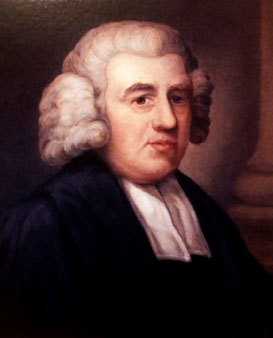
John Newton's letter "Without Me You Can Do Nothing" emphasizes the profound dependence of believers on Christ for all good thoughts and actions. He makes the theological case that human capacity is insufficient without divine assistance, drawing on Scripture references such as John 15:5, which states, "Without me you can do nothing," to illustrate humanity's total reliance on God's sustaining grace. Newton argues that even when believers appear to act independently, any effectiveness or wisdom only arises from the Holy Spirit's influence. He urges Christians to acknowledge their weakness, turning to God in humility for guidance, thus advancing the biblical principle of dependency on divine grace. The practical takeaway reaffirms the Reformed doctrine of total depravity, underscoring that all believers must seek strength and wisdom from Christ continually.
Key Quotes
“Without Me you can do nothing not only upon the authority of the Speaker but from the same irresistible and experimental evidence...”
“His gracious influence is that to those who are best furnished with gifts which the water is to the mill or the wind to the ship...”
“This gracious assistance is afforded in a way imperceptible to ourselves to hide pride from us and to prevent us from being indolent...”
“The Lord whom he serves engages to proportion his strength to his day whether it be a day of service or of suffering...”
What does the Bible say about our dependence on God?
The Bible teaches that without Christ, we can do nothing (John 15:5), emphasizing our total dependence on God's grace.
John 15:5
How do we know that God's grace is sufficient for our needs?
God's grace is described as all-sufficient, appearing throughout Scripture, including 2 Corinthians 12:9.
2 Corinthians 12:9
Why is acknowledging our weakness important in the Christian life?
Acknowledging our weakness leads to reliance on God's strength, as taught in 1 Corinthians 1:27.
1 Corinthians 1:27
What role does prayer play in maintaining our dependence on God?
Prayer is a vital means through which we communicate our dependence on God and seek His guidance.
James 1:17
February 23, 1775
Dear sir,
I assent to our Lord's declaration, "Without Me you can do nothing;" not only upon the authority of the Speaker--but from the same irresistible and experimental evidence, as if he had told me, that I cannot make the sun to shine, or change the course of the seasons. Though my pen and my tongue sometimes move freely--yet the total incapacity and stagnation of thought I labor under at other times, convinces me, that in myself I have not sufficiency to think a good thought! And I believe the case would be the same, if that little measure of knowledge and abilities, which I am too prone to look upon as my own, were a thousand times greater than it is.
For every new service, I stand in need of a new supply, and can bring forth nothing of my supposed store into actual exercise--but by his immediate assistance. His gracious influence is that, to those who are best furnished with gifts, which the water is to the mill, or the wind to the ship, without which the whole apparatus is motionless and useless.
I apprehend that we lose much of the comfort which might arise from a sense of our continual dependence upon him, and, of course, fall short of acknowledging as we ought what we receive from him--by mistaking the manner of his operation. Perhaps we take it too much for granted, that communications from himself must bear some kind of sensible impression that they are his, and therefore are ready to give our own industry or ingenuity, thecredit for those performances in which we can perceive no such divine impression. Yet it is very possible that we may be under his influence, when we are least aware! And though what we say, or write, or do, may seem no way extraordinary; yet that we should be led to such a particular turn of thought at one time rather than at another, has, in my own concerns, often appeared to me remarkable, from the circumstances which have attended, or the consequences which have followed.
How often, in the choice of a text, or in the course of a sermon, or in a letter to a friend, have I been led to speak a word in season--and what I have expressed at large, and in general--has been so exactly suited to some case which I was utterly unacquainted with--that I could hardly have hit it so well, had I been previously informed of it. Some instances of this kind have been so striking, as hardly to admit a doubt of divine agency. And, indeed, if believers in Jesus, however unworthy in themselves, are the temples of the Holy Spirit; if the Lord lives, dwells, and walks in them; if he is their life and their light; if he has promised to guide them with his eye, and to work in them to will and to do of his own good pleasure; methinks what I have mentioned, and more, may be reasonably expected.
That line in the hymn, "Help I every moment need," is not a hyperbolical expression--but strictly and literally true, not only in great emergencies--but in our smoother hours, and most familiar paths. This gracious assistance is afforded in a way imperceptible to ourselves, to hide pride from us, and to prevent us from being indolent and careless with respect to the use of appointed means. And it would be likewise more abundantly, and perhaps more sensibly afforded, were our spirits more simple in waiting upon the Lord. But, alas! a divided heart, an undue attachment to some temporal object, sadly deadens our spirits (I speak for myself), and grieves the Lord's Spirit; so that we walk in darkness and at a distance, and, though called to great privileges, live far below them!
But methinks the thought of him who is always near, and upon whom we do and must incessantly depend, should suggest a powerful motive for the closest attention to his revealed will, and the most punctual compliance with it. For so far as the Lord withdraws from us--we become as blind men; and with the clearest light, and upon the plainest ground, we are liable, or rather sure, to stumble at every step.
Though there is a principle of consciousness, and a determination of the will, sufficient to denominate our thoughts and performances our own; yet I believe mankind in general are more under an invisible agency than they apprehend. The Lord, immediately from himself, and perhaps by the ministry of his holy angels--guides, prompts, restrains, or warns his people. So there undoubtedly is what I may call a black inspiration--the influence of the evil spirits, who work in the hearts of the disobedient, and not only excite their wills--but assist their faculties, and qualify as well as incline them to be more assiduously wicked, and more extensively mischievous, than they could be of themselves. I consider Voltaire, for instance, and many writers of the same stamp, to be little more than secretaries and amanuenses of the evil one--who has unspeakably more wit and adroitness in promoting infidelity and immorality, than they of themselves can justly pretend to. They have, for a while, the credit (if I may so call it) of the fund from whence they draw; but the world little imagines who is the real and original author of that philosophy and poetry, of those fine turns and sprightly inventions, which are so generally admired. Perhaps many, now applauded for their genius, would have been comparatively dolts, had they not been engaged in a cause which Satan has so much interest in supporting.
But, to return to the more pleasing subject. How great and honorable is the privilege of a true believer! That he has neither wisdom nor strength in himself--is no disadvantage; for he is connected with Infinite Wisdom and Almighty Power! Though weak as a worm, his arms are strengthened by the almighty God--and all things become possible, yes easy to him--which occur within the compass of his proper duty and calling. The Lord, whom he serves, engages to proportion his strength to his day, whether it be a day of service or of suffering. And though he is fallible and short-sighted, exceeding liable to mistake and error; yet, while he retains a sense that he is so, and with the simplicity of a child asks counsel and direction of the Lord--he seldom takes a wrong step, at least not in matters of consequence. And even his sins are overruled for good. If he forgets his true state, and thinks himself to be something, he presently finds he is indeed nothing. But if he is content to be nothing, and to have nothing--he is sure to find a seasonable and abundant communication of all that he needs. Thus he lives, like Israel in the wilderness, upon mere divine bounty; but, then, it is a bounty unchangeable, unwearied, inexhaustible, and all-sufficient.
Moses, when speaking of the methods the Lord took to humble Israel, mentions his feeding them with manna, as one method. The manna would not keep; they could not hoard it up, and were therefore in a state of absolute dependence from day to day. This appointment was well suited to humble them.
Thus it is with us in spiritual matters. We would perhaps prefer to hoard up a stock of grace and sufficiency at once--such an inherent portion of wisdom and power, as we might depend upon, at least for common occasions, without being constrained, by a sense of indigence--to have continual recourse to the Lord for everything we need. But His way is best. His own glory is most displayed--and our safety best secured, by keeping us quite poor and empty in ourselves, and supplying us from one minute to another, according to our need--out of His inexhaustible storehouse of grace.
This, if anything, will prevent boasting, and keep a sense of gratitude awake in our hearts. This is well adapted to quicken us to prayer, and furnishes us with a thousand occasions for praise, which would otherwise escape our notice.
But who or what are we, that the Most High God should thus notice us; should visit us every morning, and water us every moment! It is an astonishing thought, that God should thus dwell with men! that he, before whom the mightiest earthly potentates are less than nothing and vanity--should thus stoop and accommodate himself to the situation, needs, and capacities of the weakest, lowest, and poorest of his children! But so it has pleased him. He sees not as man sees!
March 10,1774
Dear sir,
For about six weeks past, I have had occasion to spend several hours of almost every day with the sick and the dying. These scenes are to a minister, like walking the hospitals to a young surgeon. The various cases which occur—exemplify, illustrate, and explain, with a commanding energy—many truths, which may be learned indeed at home—but cannot be so well understood, or their force so sensibly felt, without the advantage of experience and observation.
As physicians, besides that competent general knowledge of their profession, which should be common to them all, have usually their several favorite branches of study—some applying themselves more to surgery, others to medicine, others to anatomy—so ministers, as their inclinations and gifts differ, are led more closely to consider some particular branch of the system of Divine truth. Some are directed to state and defend the doctrines of the Gospel; some have a talent for elucidating difficult texts of Scripture; some have a turn for explaining the prophetical parts; and so of the rest. For myself, if it is lawful to speak of myself, and so far as I can judge, heart-anatomy is my favorite branch—I mean, the study of the human heart, with its workings and counter-workings, as it is differently affected in a state of nature or of grace, in the different seasons of prosperity, adversity, conviction, temptation, sickness, and the approach of death.
The Lord, by sending me here, provided me a good school for these purpose. I know not where I could have had a better one affording a greater variety of characters, in proportion to the number of people; and as they are mostly a poor people, and strangers to that culture which is the result of education, there is a simplicity in what they say or do, which gives me a peculiar advantage in judging of their cases.
But I was about to speak of death. Though the grand evidence of those truths upon which our hopes are built upon, arises from the authority of God speaking them in his Word, and revealing them by his Spirit to the awakened heart (for, until the heart is awakened, it is incapable of receiving this evidence); yet some of these truths are so mysterious, so utterly repugnant to the judgment of depraved nature, that, through the remaining influence of unbelief and vain reasoning, the temptations of Satan, and the subtle arguments with which some men, reputed wise, attack the foundations of our faith—the minds even of believers are sometimes capable of being shaken. I know no better corroborating evidence for the relief of the mind under such assaults, than the testimony of dying people, especially of such as have lived outside of the noise of controversy, and who perhaps never heard a syllable of what has been started in these evil days against the Deity of Christ, his atonement, and other important articles.
Permit me to relate, upon this occasion, some things which exceedingly struck me in the conversation I had with a young woman, whom I visited in her last illness, about two years ago. She was a sober, prudent person, of plain sense, could read her Bible—but had read little beside. Her knowledge of the world was nearly confined to the parish; for I suppose she was seldom, if ever, twelve miles from home in her life. She had known the Gospel about seven years before the Lord visited her with a lingering consumption, which at length removed her to a better world.
A few days before her death, I had been praying by her bed-side, and in my prayer I thanked the Lord that he gave her now to see that she had not followed cunningly devised fables. When I had finished, she repeated that word. "No," she said, "not cunningly devised fables—these are realities indeed! I feel their truth—I feel their comfort! O tell my friends, tell my acquaintance, tell inquiring souls, tell poor sinners, tell all the daughters of Jerusalem" (alluding to Solomon's Song 5:16, from which she had just before desired me to preach at her funeral), "what Jesus has done for my soul! Tell them, that now, in the time of need, I find him to be my beloved and my friend, and as such I commend him to them!"
She then fixed her eyes steadfastly upon me, and proceeded, as well as I can recollect, as follows: "Sir, you are highly favored in being called to preach the Gospel. I have often heard you with pleasure; but give me permission to tell you, that I now see all you have said, or can say, is, comparatively—but little. Nor, until you come into my situation, and have death and eternity fully in your view, will it be possible for you to conceive the vast weight and importance of the truths you declare. Oh, Sir, it is a serious thing to die! No words can express what is needful to support the soul in the solemnity of a dying hour."
I believe it was the next day when I visited her again. After some discourse, as usual, she said, with a remarkable vehemence of speech, "Are you sure I cannot be mistaken?" I answered without hesitation, "Yes, I am sure; I am not afraid to say, My soul for yours, that you are right." She paused a little, and then replied, " You say true; I know I am right. I feel that my hope is fixed upon the Rock of ages! I know in whom I have believed. Yet, if you could see with my eyes, you would not wonder at my question. But the approach of death presents a prospect, which is until then hidden from us, and which cannot be described." She said much more to the same purpose, and in all she spoke there was a dignity, weight, and evidence, which I suppose few professors of divinity, when lecturing from the chair, have at any time equaled. We may well say, with Elihu, Who teaches like him?
Many instances of the like kind I have met with here. I have a poor girl near me, whose mental capacity is indeed very small; but the Lord has been pleased to make her acquainted alternately with great temptations, and proportionally great discoveries of his love and truth. Sometimes, when her heart is enlarged, I listen to her with astonishment. I think no books or ministers I ever met with, have given me such an impression and understanding of Christian experience, as I have upon some occasions received from her conversation.
But I am rambling again. My attendance upon the sick is not always equally comfortable; but could I learn aright, it might be equally instructive. Some confirm the preciousness of a Savior to me, by the cheerfulness with which, through faith in his name, they meet the king of terrors. Others no less confirm it, by the terror and reluctance they discover when they find they must die; for though there are too many who sadly slight the blessed Gospel while they are in health—yet in this place most are too far enlightened to be quite thoughtless about their souls, if they retain their senses in their last illness. Then, like the foolish virgins, they say, Give us some of your oil. Then they are willing that ministers and professors should pray with them, and speak to them.
Through the Lord's goodness, several whom I have visited in these circumstances have afforded me good hope—they have been savingly changed by his blessing upon what has passed at the eleventh hour. I have seen a marvelous and blessed change take place in their language, views, and tempers, in a few days. I now visit a young person, who is cut short in her nineteenth year by a consumption, and I think cannot live many days. I found her very ignorant and insensible to spiritual realities, and she remained so a good while; but of late I hope her heart is touched. She feels her lost state; she seems to have some right desires; she begins to pray, and in such a manner as I cannot but hope the Lord is teaching her, and will reveal himself to her before she departs.
But it is sometimes otherwise. I saw a young woman die last week—I had been often with her; but the night she was died, she could only say, "Oh, I cannot live! I cannot live!" She repeated this mournful complaint as long as she could speak; for as the vital powers were more oppressed, her voice was changed into groans, her groans grew fainter and fainter, and in about a quarter of an hour after she had done speaking, she expired. Poor thing, I thought, as I stood by her bedside, if you were a duchess, in this situation, what could the world do for you now! I thought likewise how many things are there that now give us pleasure or pain, and assume a mighty importance in our view, which in a dying hour will be no more to us than the clouds which fly unnoticed over our heads Then the truth of our Lord's aphorism will be seen, felt, and acknowledged, "Only one thing is needful!"
December 8, 1774
Dear sir,
How wonderful is the patience of God towards sinful men! In him they live, and move, and have their being; and if he were to withdraw his support for a single moment, they must perish! He maintains their lives, guards their persons, supplies their needs—while they employ the powers and faculties they receive from him in a settled course of opposition to his will. They trample upon his laws, affront his government, and despise his grace—yet still he spares! To silence all his adversaries in a moment, would require no extraordinary exertion of his power; but his forbearance towards them manifests his glory, and gives us cause to say, "Who is a God like unto you?"
Sometimes, however, there are striking instances of his displeasure against sin. When such events take place immediately upon a public and premeditated contempt offered to Him who sits in the heavens. For though his long-suffering is astonishing, and many dare him to his face daily, with seeming impunity; yet he sometimes strikes a dreadful and unexpected blow, and gives an illustration of that solemn word, "Who ever hardened himself against the Lord, and prospered?" But who am I, to make this observation? I ought to do it with the deepest humiliation, remembering that I once stood (according to my years and ability) in the foremost rank of his avowed opposers; and with a determined and unwearied enmity—renounced, defied, and blasphemed him! "But he will have mercy on whom He will have mercy;" and therefore I was spared, and reserved to speak of his goodness.
Josephus, when speaking of the death of Herod Agrippa, ascribes it to a natural cause, and says, he was seized with excruciating pains in his intestines. But Luke informs us of the true cause—an angel of the Lord smote him! Had we a modern history, written by an inspired pen, we would probably often be reminded of such an interposition where we are not ordinarily aware of it. For though the springs of actions and events are concealed from us for the most part, and vain men carry on their schemes with confidence, as though the Lord had forsaken the earth; yet they are under his eye and control. Faith in some measure, instructed by the specimens of his government recorded in the Scripture, can trace and admire his hand, and can see how he takes the wise in their own craftiness, and stains the pride of human glory; and that, when sinners speak proudly, he is above them, and makes everything bend or break before him.
While we lament the growth and pernicious effects of infidelity, and see how wicked men and seducers wax worse and worse, deceiving, and being deceived; what gratitude should fill our hearts to Him, who has been pleased to call us out of the horrid darkness in which multitudes are bewildered and lost—into the glorious light of His Gospel!
Faint are our warmest conceptions of this mercy. In order to understand it fully—we should have a full and adequate sense of the evil from which we are delivered; the glory to which we are called; and especially of the astonishing means to which we owe our great salvation—the humiliation, sufferings, and death of the Son of God!
But our views of these points, while in our present state—are and must be exceedingly weak. We know them but in part, we see but a din reflection of them. And though they are faithfully represented in the mirror of God's Word, to us they appear indistinct, because we see them through a gross medium of ignorance and unbelief.
In heavenly glory, every veil shall be removed; and we shall fully know—the unspeakable evil of sin, and the unsupportable dreadfulness of God's displeasure against it, when we see the world in flames, and hear the final sentence denounced upon the ungodly!
We shall have far other thoughts of Jesus when we see him as he is; and shall then be able to make a more affecting estimate of the love which moved him to be made a substitute and a curse for us. And we shall then know what great things God has prepared for those who love him. Then with transport, we shall adopt the queen of Sheba's language, "It was a true report we heard in yonder dark world; but, behold, the half, the thousandth part, was not told us!" In the mean time, may such conceptions as we are enabled to form of these great truths, fill our hearts, and be mingled with all our thoughts and all our concerns. May the Lord, by faith, give us an abiding evidence of the reality and importance of these eternal realities—so shall we be enabled to live above the world while we are in it, uninfluenced either by its blandishments or its frowns; and, with a noble simplicity and singularity, avow and maintain the cause of God in truth, in the midst of a crooked and perverse generation. He whom we serve is able to support and protect us; and he well deserves at our hands, that we should be willing to endure, for his sake, much more than he will ever permit us to be exercised with.
You are not indeed called to serve God quite alone; but among those of your own rank, and with whom the station in which he has placed you—how few are there who can understand or approve, the principles upon which you act, or easily bear a conduct which must impress conviction, or reflect dishonor upon themselves! But you are not alone; the Lord's people (many of whom you will not know until you meet them in glory) are helping you here with their prayers; his angels are commissioned to guard and guide your steps; yes, the Lord himself fixes his eye of mercy upon your private and your public path, and is near you at your right hand, that you may not be moved! That he may comfort you with the light of his countenance, and uphold you with the arm of his power, is my frequent prayer.
January 20, 1775
Dear sir,
We have entered upon another year! So have thousands, perhaps millions—who will not see it close! An alarming thought to the worldling! at least it should be so. I have an imperfect remembrance of an account I read, when I was a boy, of an ice palace, built one winter at Petersburgh. The walls, the roof, the floors, the furniture, were all of ice—but finished with taste; and everything that might be expected in a royal palace was to be found there; the ice, while in the state of water, being previously colored, so that to the eye all seemed formed of proper materials; but all was cold, useless, and transient. Had the frost continued until now, the palace might have been standing; but with the returning spring it melted away, like the baseless fabric of a vision. No contrivance could exhibit a fitter illustration of thevanity of life. Men build and plan as if their work were to endure forever; but the wind passes over them—and they are gone! In the midst of all their preparations, or at farthest when they think they have just completed their designs, their final breath departs, they return to their earth; in that very day their thoughts perish! "How many sleep—who kept the world awake!"
Yet this ice-house had something of a leisurely dissolution; though, when it began to decay, all the art of man was unable to stop it. But often death comes hastily, and destroys to the very foundations without previous notice. Then all we have been concerned in here (all—but the consequences of our conduct, which will abide to eternity) will be no more to us than the remembrance of a dream. This truth is too plain to be denied; but the greater part of mankind act as if they were convinced it was false—they spend their days in vanity, and in a moment they go down to the grave! What cause of thankfulness have those, who are delivered from this delusion; and who, by the knowledge of the glorious Gospel, have learned their true state and end; are saved from the love of the present world, from the heart-distressing fear of death; and know, that, if their earthly house were dissolved, like the ice-palace, they have a house not made with hands, eternal in the heavens!
Yet even these are much concerned to realize the brevity and uncertainty of their present state, that they may be stimulated to make the most and the best of it; to redeem their time, and manage their precarious opportunities, so as may most tend to the praise and glory of Him who has called them out of darkness, into marvelous light. Why should any, who have tasted that the Lord is gracious, wish to live another day—but that they may have the honor to be fellow-workers with him, instrumental in promoting His designs, and of laying themselves out to the utmost of their abilities and influence in his service?
To enjoy a sense of His loving-kindness, and to have the light of his countenance lifted up upon our souls, is indeed, respecting ourselves, the best part of life, yes, better than life itself! But this we shall have to unspeakably greater advantage, when we have finished our course, and shall be wholly freed from the body of sin. And therefore the great desirable while here on earth, seems to be grace, that we may serve him and suffer for him in the world. Though our first wish immediately upon our own accounts might be, to depart and be with Jesus—yet a lively thought of our immense obligations to his redeeming love, may reconcile us to a much longer continuance here, if we may by any means be subservient to diffuse the glory of His name, and the blessings of his salvation, which is God's great and principal end in preserving the world itself.
When historians and politicians descant upon the rise and fall of empires, with all their professed sagacity, in tracing the connection between causes and effects—they are totally unacquainted with the great master-wheel which manages the whole movement; that is, the Lord's design in favor of his church and kingdom. To this every event is subordinate; to this every interfering interest must stoop. How easily might this position be proved, by reviewing the history of the period about the Reformation.
I doubt not, but some who are yet unborn will hereafter clearly see and remark, that the present unhappy disputes between Great Britain and America, with their consequences, whatever they may be, are part of a series of events, of which the extension and interests of the church of Christ were the principal final causes. In a word, that Jesus may be known, trusted, and adored—and sinners, by the power of his Gospel, be rescued from sin and Satan, is comparatively the one great business, for the sake of which the succession of day and night, summer and winter, is still maintained. And when the plan of redemption is consummated, sin, which now almost fills the earth, will then set it on fire; and the united interest of all the rest of mankind, when detatched from that of the people of God, will not plead for its preservation a single day.
In this view, I congratulate you, that, however your best endeavors to serve the temporal interests of the nation may fall short of your wishes; yet, so far as your situation gives you opportunity of supporting the Gospel cause, and facilitating its progress—you have a prospect both of a more certain and more important success. For instance, it was, under God, that your favor and influence brought me into the ministry. And though I be nothing—yet he who put it into your heart to patronize me, has been pleased not to allow what you then did for his sake to be wholly in vain. He has been pleased, in a course of years, by so unworthy an instrument as I am, to awaken a number of people, who were at that time dead in trespasses and sins. And now some of them are pressing on to the prize of their high calling in Christ Jesus; and some of them are already before the throne!
"What will it profit a man if he gains the whole world—yet loses his soul? Or what will a man give in exchange for his soul?" Matthew 16:26. Should I suggest in some companies, that the conversion of a hundred sinners to God, is an event of more real importance than the temporal prosperity of the greatest nation upon earth—I would be charged with ignorance and arrogance. But you are skilled in Scriptural arithmetic, which alone can teach us to estimate the value of souls, and will agree with me—that one soul is worth more than the whole world, on account of its redemption price, its vast capacities, and its endless duration.
Should we suppose a nation to consist of forty million people, and each individual to enjoy as much good as this life can afford, without abatement, for a term of fifty years each; all this good, or an equal quantity, might be exhausted by a single person in two thousand million years, which would be but a moment in comparison of the eternity which would still follow. And if this good were merely temporal good, the whole aggregate of it would be evil and misery—if compared with that happiness in God, of which only those who are made partakers of a Divine life are capable. On the other hand, were a whole nation to be destroyed by such accumulated miseries as attended the siege of Jerusalem, the sum total of these calamities would be but trifling, if set in competition with what every single person who dies in sin has to expect, when the sentence of everlasting destruction, away from the presence of the Lord, and the glory of his power, shall be executed.
What an unexpected round have my thoughts taken since I set out from the ice-palace!
August 24, 1774.
Dear Sir,
You are going abroad; you will carry with you, I doubt not, the best advice, strengthened by the authority and affection of parents whom you greatly love and greatly reverence. This may seem to make anything a stranger can offer unnecessary, if not impertinent. Yet, confiding in your candor, and in your good opinion of my intention, I shall venture to let my pen run on a little longer. Not only my wishes—but my hopes, are strong in your behalf. Perhaps there is hardly a young man in the kingdom, born to a fortune, who is setting out in life upon equal advantages with yourself. How many men of your years, who have been brought up in affluence—are unprincipled, uninstructed, and have already entered upon a course of dissipation and folly, in which it is impossible they themselves can find satisfaction, and which (unless they are reclaimed from it by an Almighty arm) will infallibly preclude them from usefulness or esteem! Whereas your early years have been successfully employed in the pursuit of knowledge, and your education formed under the most animating and endearing influence; and the Lord has furnished you with every natural ability of body and mind, which may qualify you to serve him in that situation of life which his Providence has allotted you.
What may I not then further hope from these beginnings, especially as it is easy to observe that He has given you an amiable and promising disposition of spirit; and has not only preserved you from being hurried down the stream of a giddy world—but enabled you to account the tender restraint under which you have been educated, not a yoke—but a privilege.
I sympathize with you, at what you will feel when you are first separated from your happy family. But the Lord God, who is the sun and shield of those who fear him, will be always near you. His favor is the one thing needful, which no outward advantages can compensate the lack of; and the right knowledge of him is the one thing needful, which no human teaching can communicate.
Were I more intimate with you, I could have asked the question, and perhaps received the satisfaction to know, that you have already begun to consider him in this light; that you feel a vanity in science, an emptiness in creatures, and find that you have desires which only He who gave them can satisfy. I trust it either is—or will be thus.
As to worldly education, though it is useful when we know how to make a right use of it—yet, considered as in our own power, and to those who trust to it without seeking a superior guidance, it is usually the source of perplexity, strife, skepticism, and infidelity. It is, indeed, like a sword in a madman's hands, which gives him the more opportunity of hurting himself and others.
As to what the world calls pleasure, there is so little in it, that many of the philosophers of old—though they had little of value to substitute in its place, could despise it. You will perhaps meet with some who will talk another language; who will pretend to be too wise to submit to the Bible, and too happy in worldly things to expect or desire any happiness beside; but I trust you have seen enough to enable you to treat such people with the pity, and such pretensions with the contempt which they deserve.
Should we set our concerns with an eternal world aside for a moment, it would be easy to demonstrate that religion is necessary, in order to make the most of this life, and to enjoy temporal good with the highest relish. In such a world as this, where we are every moment liable to so many unforeseen and unavoidable contingencies, a man without religion may be compared to a ship in a storm, without either rudder, anchor, or pilot. But then, the religion, which only deserves the name, must come from above; it must be suited to the state and wants of a sinner; it must be capable of comforting the heart; it must take away the sting and dread of death; and fix our confidence upon One who is always able to help us. Such is the religion of Jesus; such are its effects, and such are the criteria whereby we are to judge of the various forms and schemes under which it is proposed to us. But I forbear; I am only reminding you of what you know, and what you have known to be verified by living and dying examples. This happiness, my dear sir, is open to you, and to all who seek. He is enthroned in heaven—but prayer will bring him down to the heart. Indeed, he is always before-hand with us; and if we feel one desire towards him, we may accept it as a token that he gave it to us—to encourage us to ask for more.
May he who is your guide and guard—be with you at all times, and in all places, and bring you back to your father's house in peace. Should I live to see that day, you have few friends whose welcome would be warmer or more sincere than mine; and if, when you are settled and at leisure, you will afford me a letter—it will be both a pleasure and a favor to me.
November 6, 1777.
My dear Sir,
You say you are more disposed to cry misery than hallelujah. Why not both together? When the treble is praise, and heart humiliation for the base, the melody is pleasant, and the harmony good. However, if not both together, we must have them alternately: not all singing, not all sighing—but an interchange and balance, that we may be neither lifted too high—nor cast down too low—which would be the case if we were very comfortable or very sorrowful for a long continuance.
But though we change—the Savior changes not! All our concerns are in his hands, and therefore safe. His path is in the deep waters; his thoughts and methods of conduct are as high above ours—as the heavens are high above the earth; and he often takes a course for accomplishing his purposes, which is directly contrary to what our narrow views would prescribe. He wounds—in order to heal. He kills—that he may make alive. He casts down—when he designs to raise. He brings a death upon our feelings, wishes, and prospects—when he is about to give us the desire of our hearts. These things he does to test us; but he himself knows, and has determined before-hand, what he will do. The test indeed, usually turns out to our shame. Impatience and unbelief show their ugly heads, and prompt us to suppose this, that, and the other thing, yes perhaps all things, are against us; to question whether He is with us and for us, or not. But it issues likewise in the praise of his goodness, when we find, that, over all our unkind complaints and suspicions—he is still working wonderfully for us, causing light to shine out of darkness, and doing us good in defiance of ourselves!
November 23, 1774.
My dear Sir,
I hope to be informed in due time—that the Lord has given you full health and cure. He has preserved me hitherto from the hands of surgeons; but I feel as if my flesh would prove, as you say, a very coward, were it needful to submit to a painful operation. Yet I observe, when such operations are necessary, if people are satisfied of a surgeon's skill and prudence, they will not only yield to be cut at his pleasure, without pretending to direct him where, or how long, he shall make the incision—but will thank and pay him for putting them to pain, because they believe it for their advantage. I wish I could be more like them in my concerns.
My body, as I said, is, through mercy, free from considerable ailments—but I have a soul which requires surgeon's work continually: there is some tumor to be cut out, some dislocation to be reduced, some fracture to be healed, almost daily! It is my great mercy, that One who is infallible in skill, who exercises incessant care and boundless compassion towards all his patients, has undertaken my case! And, as complicated as it is, I dare not doubt his making a perfect cure! Yet, alas! I too often discover such impatience, distrust, and complaining, when under his hand; am so apt to find fault with the instruments he is pleased to make use of; so ready to think the beneficial wounds he makes are unnecessary, or too large. In a word, I show such a promptness to control, were I able, or to direct, his operations, that, were not his patience beyond expression, he would before now have given me up!
I am persuaded no money would induce any doctor to attend upon a patient who should act towards him—as I have towards my best Physician. Sometimes I indulge a hope that I am growing wiser, and think, "Surely, after such innumerable proofs as I have had, that he does all things well, I shall now be satisfied to leave myself quietly and without reserve to His disposal." A thousand such surrenders I have made, and a thousand times I have retracted them. Yet still he is gracious. Oh, how shall I praise him at last!
I thank you for your letter; I never receive one from you without pleasure, and, I believe, seldom without profit, at least for the time. I believe, with you, that there is much of the proper and designed efficacy of the Gospel mystery which I have not yet experienced; and I suppose those who are advanced far beyond me in the Divine life judge the same of their utmost present attainments. Yet I have no idea of any permanent state in this life—which shall make my experience cease to be a state of warfare and humiliation. At my first setting out, indeed, I thought to be better, and to feel myself better from year to year; I expected by degrees to attain everything which I then comprised in my idea of a godly Christian. I thought my grain of grace, by much diligence and careful improvement, would, in time, amount to a pound; that pound, in a farther space of time, to a talent; and then I hoped to increase from one talent to many; so that, supposing the Lord should spare me a number of years, I pleased myself with the thought of dying rich in grace.
But, alas! these my golden expectations have been like South-Sea dreams! I have lived hitherto a poor sinner, and I believe I shall die one! Have I then gained nothing by waiting upon the Lord? Yes, I have gained, that which I once would rather have been without, such accumulated proofs of the deceitfulness and desperate wickedness of my heart, as I hope, by the Lord's blessing, has, in some measure, taught me to know what I mean, when I say, "Behold I am vile!"
And, in connection with this, I have gained such experience of the wisdom, power, and compassion of my Redeemer; the need, the worth, of his blood, righteousness, attention, and intercession; the glory that he displays in pardoning iniquity and sin and passing by the transgression of the remnant of his heritage—that my soul cannot but cry out, "Who is a God like unto you!" Thus, if I have any lower thoughts of myself, Eze. 16:63, and any higher thoughts of him than I had twenty years ago, I have reason to be thankful. Every grain of this experience is worth mountains of gold. And if, by his mercy, I shall yet sink more in my own esteem, and he will be pleased to rise still more glorious to my eyes, and more precious to my heart—I expect it will be much in the same way. I was ashamed when I began to seek him; I am more ashamed now; and I expect to be most of all ashamed when he shall appear to destroy my last enemy. But, oh! I may rejoice in him, to think that he will not be ashamed of me.
My dear Friend,
The more I think of the point you proposed to me, the more I am confirmed to renew the advice I then gave. There is doubtless such a thing as Christian prudence; but, my friend, beware of counterfeits. Self-love, and the evil heart of unbelief, will endeavor to obtrude upon us a prudence so called, which is as opposite to the former as darkness to light. I do not say, that, now that you have a wife, and the prospect of a family, you are strictly bound to give to the poor in the same proportion as formerly. I say, you are not bound; for everything of this sort should proceed from a willing heart.
But if you should tell me the Lord has given you such a zeal for his glory, such a concern for the honor of the Gospel, such a love to his members, such a grateful sense of his mercies (especially by granting you, in this late instance of your marriage, the desire of your heart), and such an affiance in his providence and promises, that you find yourself very unwilling to be one sixpence in the year less useful than you were before, I could not blame you or dissuade you from it. But I do not absolutely advise it; because I know not the state of your mind, or what measure of faith the Lord has given you. Only this I believe, that when the Lord gives such a confidence, he will not disappoint it.
When I look among the professors, yes, among the ministers of the Gospel, there are few things I see a more general lack of, than such a trust in God as to temporals, and such a sense of the honor of being permitted to relieve the necessities of his people, as might dispose them to a more liberal distribution of what they have at present in their power, and to a reliance on him for a sufficient supply in future. Some exceptions there are. Some people I have the happiness to know, whose chief pleasure it seems to be, to devise liberal things.
For the most part, we take care, first to be well supplied, if possible, with all the necessaries, conveniences, and not a few of the elegancies of life; then to have a snug fund laid up against a rainy day, as the phrase is, (if this is in an increasing way, so much the better), that when we look at children and near relatives, we may say to our hearts, "Now they are well provided for." And when we have got all this and more, we are perhaps content, for the love of Christ, to bestow a pittance of our superfluities, a tenth or twentieth part of what we spend or hoard up for ourselves, upon the poor! But, alas! what do we herein more than others? Multitudes, who know nothing of the love of Christ, will do thus much, yes, perhaps, greatly exceed us, from the mere feelings of humanity.
But it may be asked, would you show no regard to the possibility of leaving your wife or children unprovided for? Quite the reverse: I would have you attend to it very much, and behold the Scriptures show you the more excellent way. If you had a little money to spare, would you not lend it to me, if I assured you it should be repaid when needed? I call point out to you better interest and better security than I could possibly give you: Pro. 19:17, "He who has pity upon the poor, lends unto the Lord: and that which he has given, will he pay him again." What do you think of this text? Is it the word of God, or not? Is he worthy of belief, or not? Is he able to make good his word, or is he not? I dare stake all my interest in your friendship (which I should be very reluctant to forfeit), that if you act upon this maxim, in a spirit of prayer and faith, and with a single eye to his glory, you shall not be disappointed. Read over Mat. 6:26-34. Shall we confine that reasoning and those promises to the primitive times? Say not, "If the Lord would make windows in heaven, this thing might be." He has more ways to bless and prosper those who trust in him, than we are able to point out to him. But I tell you, my friend, God will sooner make windows in heaven, turn stones into bread, yes, stop the sun in its course, than he will allow those who conscientiously serve him, and depend upon him, to be destitute.
Some instances we have had of ministers who have seemed to transgress the bounds of strict prudence in their attention to the poor. But they have been men of faith, prayer, and zeal: if they did it, not from impulse, or a spirit of indolence, but from such motives as the Scripture suggests and recommends, I believe their families have seldom suffered for it. Besides, you know not what you may actually save in the course of years by this method. The Apostle, speaking of some abuses that obtained in the church of Corinth, says, "For this cause many are sick among you." If prudence should shut up your compassion (which I trust it never will), the Lord might a severe illness upon your family, which would perhaps cost you twice the money which would have sufficed to refresh his people, and to commend your ministry and character.
But if, after all, prudence will be heard, I counsel you to do these two things. First, Be very certain that you allow yourselves in nothing superfluous. You cannot, I trust, in conscience think of spending one penny more than is needful on yourself; unless you have another penny to help the poor. Then, secondly, Let your friends who are in good circumstances be plainly told, that, though you love them, prudence, and the necessary charge of a family, will not permit you to entertain them, no, not for a night. What! say you, shut my door against my friends? Yes, by all means, rather than against Christ. If the Lord Jesus was again upon earth, in a state of humiliation, and he, and the best friend you have, standing at your door, and your provision so strait that you could not receive both, which would you entertain? Now, he says of the poor, "Inasmuch as you did it to the least of these my brethren, you did it unto me." Your friends have houses of their own, but the poor need relief. One would almost think that passage, Luk. 14:12-14, was not considered as a part of God's word; at least I believe there is no one passage so generally neglected by his own people. I do not think it unlawful to entertain our friends; but if these words do not teach us, that it is in some respects our duty to give a preference to the poor, I am at a loss to understand them.
I was enabled to set out upon the plan I recommend to you, at a time when my certain income was much too scanty for my own provision, and before I had the expectation or promise of assistance from any person upon earth. Only I knew that the Lord could provide me with whatever he saw needful; and I trusted, that, if he kept me dependent upon himself, and desirous to live for his service only, he assuredly would do so. I have as yet seen no cause to repent it. I live upon his promise; for, as to any present ways or means, everything here below is so uncertain, that I consider myself in the same situation with the birds of the air, who have neither storehouse nor barn. Today I have enough for myself, and something to impart to those who lack: as to futurity, the Lord must provide; and for the most part I can believe he will. I can tell you, however, that now and then my heart is pinched: unbelief creeps in, and self would much rather choose a strong box, or what the world calls a certainty, than a life of absolute dependence upon the providence of God. However, in my composed hours I am well satisfied. Hitherto he has graciously taken care of me; therefore may my heart trust in him, and not be afraid.
Consider, my friend, the Lord has done well for you likewise. He has settled you peaceably in a good and honorable employment; he has now answered your prayers, in giving you a partner, with whom you may take sweet counsel, one who will help and strengthen you in your best desires. Beware, therefore, of that reasoning which might lead you to distrust the Lord your God, or to act as if you did. You complain that there is too much of an expensive taste among some people in your congregation. If you set yourself to discountenance this, and should at the same time too closely shut up your hands, they will be ready to charge you with being governed by the same worldly spirit, though in another form. If you have been hitherto tender and bountiful to the poor, and should make too great and too sudden an alteration in this respect, if the blame should not fall upon you, it probably would upon your wife, who, I believe, would be far from deserving it. If the house which has been open to the poor in former times, should be shut against them, now that you live in it, would it not open the mouths of those who do not love your ministry, to say, that, notwithstanding all your zeal about doctrines, you know how to take care of your own selfish interest, the same as those whom you have thought indifferent and lukewarm in the cause of the Gospel? Would it not?—But I forbear. I know you need not such arguments. Yet consider how many eyes are upon you, watching for your halting.
Now, at your first setting out, is the proper time seriously to seek the Lord's directions, that you may from the beginning adopt such a plan as may be most for your own comfort, the honor of your character as a minister, the glory of him who has called you, and the edification of your people. It is easier to begin well, than to make alterations afterwards. I trust the Lord will guide and bless you in your deliberations. And for my own part, I am not in the least afraid that you will ever have cause to blame me for the advice I have given, if you should be disposed to follow it.
I have given you my opinion freely, and perhaps with an appearance of more strictness than is necessary. But I would apply our Lord's words in another case to this: "All men cannot receive this saying: he who is able to receive it, let him receive it." If the Lord has given you this confidence in his word, you are happy. It is better than the possession of thousands by the year.
by John Newton
(The following is Pliny's letter to the Emperor Trajan—written just after the commencement of the second century)
It is a rule, sir, which I inviolably observe, to refer myself to you in all my doubts; for who is more capable of removing my scruples, or informing my ignorance? Having never been present at any trials concerning those who profess Christianity, I am unacquainted not only with the nature of their crimes, or the measure of their punishment—but how far it is proper to enter into an examination concerning them. Whether, therefore, any difference is usually made with respect to the ages of the guilty, or no distinction is to be observed between the young and the adult; whether repentance entitles them to a pardon; or, if a man has been once a Christian, whether it avails nothing to desist from his error; whether the profession of Christianity, unattended with any criminal act, or only the crimes themselves, inherent in the profession, are punishable—in all these points I am greatly doubtful.
In the mean while, the method I have observed towards those who have been brought before me as Christians, is this—I interrogated them whether they were Christians; if they confessed, I repeated the question twice again, adding threats at the same time; when, if they still persevered, I ordered them to be immediately punished; for I was persuaded, whatever the nature of their opinions might be, a contumacious and inflexible obstinacy certainly deserved correction.
There were others also brought before me, possessed with the same Christian profession—but, being citizens of Rome, I directed them to be carried there. But this crime spreading, while it was actually under prosecution!
An information was presented to me, without any name subscribed, containing a charge against several people, who, upon examination, denied they were Christians, or had ever been so. They repeated, after me, an invocation to the gods; and offered religious rites, with wine and frankincense, before your statue, (which for the purpose I had ordered to be brought) and even reviled the name of Christ. I thought proper, therefore, to discharge these.
Some among those who were accused by a witness in person, at first confessed themselves Christians—but immediately after denied it. And others owned indeed that they had been of that number formerly—but had now forsaken their error. They all worshiped your statue, and the images of the gods, throwing out imprecations at the same time against the name of Christ. They affirmed, the whole of their guilt, or their error, was, that they met on Sundays, before it was light, and addressed themselves in a form of prayer to Christ, as to some God; binding themselves by a solemn oath—not for the purposes of any wicked design—and never to commit any fraud, theft, or adultery; never to falsify their word, nor deny a trust, when they should be called upon to deliver it up. After which, it was their custom to separate, and then reassemble to eat in common a harmless meal.
After receiving this account, I judged it so much the more necessary to endeavor to extort the real truth, by putting two female slaves to the torture, who were said to attend their religious functions; but I could discover nothing more than an absurd and excessive superstition.
I thought proper, therefore, to adjourn all further proceedings in this affair, in order to consult with you—for it appears to be a matter highly deserving your consideration; more especially as great numbers must be involved in the danger of these prosecutions, having already extended, and being still likely to extend, to people, of all ranks and ages, and even of both sexes. For this contagious superstition is not confined to the cities only—but has spread its infection among the country villages! Nevertheless, it still seems possible to remedy this evil, and restrain its progress.
The heathen temples, at least, which were almost deserted, begin now to be frequented; and their sacred rituals, after a long intermission, are again revived; while there is a general demand for the victims, which, for some time past, have met with but few purchasers.
From hence it is easy to imagine, what numbers might be reclaimed from this error—if a pardon were granted to those who shall repent.
REMARKS (by John Newton)
Several remarks easily offer from a perusal of this valuable monument of ecclesiastical antiquity, which I consider as affording us one of the most authentic testimonials of the natural tendency of genuine Christianity, and likewise a striking display of the unreasonableness and malignancy of the spirit by which it was then opposed, and by which it always will be opposed, (so far as the providence of God, and the circumstances of the times will permit it to act,) while the state of the world and of human nature continue as they are.
1. It appears, that the number of those who professed the Christian name, when Pliny was proconsul of Pontus and Bythynia, and particularly within the extent of his government, was very great; so great, that the heathen temples had been almost left desolate, and their sacrifices sunk into neglect. Pliny thought that such a general defection from the old religion rendered severities and punishments justifiable, and even necessary—yet, on the other hand, being a person of humanity, he was shocked and grieved when he reflected on the multitudes who were affected by such prosecutions, without distinction of rank, age, or gender.
Considering the many disadvantages to which the Christians had been exposed, especially under the reigns of Nero and Domitian, their great increase at the time of Pliny's writing, (which, at the latest, could be but a few years after the commencement of the second century,) evidently proved, that the propagation and maintenance of the gospel is no way dependent upon the rank, titles, or acquired abilities of those who profess it—for, numerous as the Christians were, they were of so little note and esteem in the world, that Pliny, who was a scholar, a philosopher, and a gentleman, a curious inquirer into everything that was thought worthy of being known—was wholly unacquainted with the Christians, until his office obliged him to procure some information concerning them. He had an extensive acquaintance in Rome, having been many years in public life, and the Christians were very numerous there; but he appears only to have known that there was such a people; and that they were a deluded and contemptible people, who deserved all that they suffered, for their obstinacy. The very name of Christian was then odious and reproachful; and when, in succeeding ages, it became general and fashionable, other disgraceful epithets were substituted to stigmatize the faithful servants of God, and to point them out to the scorn or rage of the world.
2. Multitudes, who had been willing to be thought Christians in a time of peace, renounced their profession when they could no longer maintain it without the hazard of their lives. The terms of safety were to pray to the heathen gods, to offer wine and incense to the statue of the emperor, and to blaspheme Christ—which, Pliny was rightly informed, no true Christian could be prevailed on to comply with. Yet, in fact, when the persecution was sharp, so many yielded, that the cause seemed visibly to decline. The heathen temples, which had been almost forsaken, were again frequented, the rituals revived, and the demand for victims greatly increased. It is plain, therefore, that there were, even in those primitive times, many superficial Christians, destitute of that saving faith and love which are necessary to perseverance, in the face of dangers and death.
Of course, it is no new thing for men to desert the profession of the truth, to which they have formerly appeared to be attached; through the fear of man, or the love of the world. These are the stony-ground hearers; and our Lord has assured us, that such would be found, wherever his gospel should be preached. But there were others, who, having experienced this gospel to be the power of God unto salvation, were faithful witnesses, and could neither be intimidated nor flattered into a compliance with evil.
It is the same at this day—for, though we are mercifully exempted from the terror of penal laws—yet the temptations arising from worldly interest, and the prevalence and force of evil customs, will sooner or later be too hard for all professors who have not received that faith which is of the operation of God, which, by communicating a sense of the constraining love of Christ—is alone able to purify the heart from selfish and sinful principles, and to overcome the world with all its allurements and threatenings!
3. We have, in this epistle, an honorable testimony to the conduct and practice of the Christians in Pliny's time. Though the information of enemies and apostates was admitted, and even sought for, and those who were inclined to speak in their favor, were put to the torture—we see, that in the declaration of this heathen Pliny—that nothing is laid to their charge which was in any degree deserving of just blame. Though their meetings were accounted an offence against the state, they are acquitted of any criminal transactions. On the contrary, it is said, that they bound themselves by the strictest obligations against the commission of immorality, and to the faithful discharge of family duties. An engagement of this kind, among any other people, Pliny would have approved and admired. But the nature of their religious worship, which he censures as a dangerous and immoderate superstition, he thought sufficiently criminal in itself, notwithstanding its influence upon their conduct was confessedly commendable.
To such inconsistencies are the wisest men reduced, who have the least degree of frankness in their opposition to the people of Christ. While they ignorantly condemn their principles, they are compelled to bear witness in favor of their general deportment which is formed upon those principles; and which, experience shows, no other principles can uniformly produce. It is true, the Christians were often unjustly charged with the greatest immoralities—but not by people of reputation and judgment like Pliny, who were careful to inquire into the truth of what they related.
At present, we who know what foul aspersions are propagated against the despised professors of the gospel—do not think it necessary to attempt a formal refutation of them; because, as we fear the authors of such slanders are incorrigible, so we are persuaded with regard to others, that there are very few people (however they may mistake our sentiments) so ignorant or credulous, as seriously to think them worthy of credit.
4. The object of divine worship, in their assemblies, was the Lord Jesus Christ. Every Sunday, they met early in the morning to sing hymns to his praise; not in commemoration of a mortal benefactor or lawgiver—but as to God; acknowledging, by this practice, their firm persuasion of that great mystery of godliness, God manifested in the flesh, and that God was in Christ reconciling the world unto himself. That they met before it was light, was most probably to avoid the notice and fury of their persecutors. The enemies of Christ may put those who know and love him to many difficulties and inconveniences; but they cannot wholly prevent them from assembling in his name, unless they confine them in prisons or chains! The reason is, they honor him as God, and are assured that he is present where two or three are met in his name, at all times and in all places. Their dependence for support, direction, and deliverance, is entirely upon him. And when they worship him according to his will, he manifests himself unto them as he does not unto the world. This they believe, experience, and profess—and the hardships they will submit to, rather than be deprived of such opportunities, is a proof that they are not disappointed in their expectations from him; especially if it is considered, that there have been few ages in which a succession of his people have not been pressed with the like trials for adhering to him.
But no power or policy could ever effectually prevent meetings to honor and serve him, among those who were fully persuaded that he is their God and their Savior. Bishop Bonner, in Queen Mary's reign, who was better versed in the arts of persecution than in the history of the church, mistook these Christians, whom Pliny describes, for heretics, and charged Philpot with being altogether like them; a charge which the good man received as a great honor.
5. The severity with which the persecution was carried on under Trajan, appears from the doubt proposed by Pliny, whether he was at liberty to make any allowance in particular cases—or must punish all alike who were guilty of bearing the Christian name, without paying the least regard to gender, age, rank, or circumstance. Though desirous to show lenity—he did not think himself authorized to reject the most invidious or private accusations; nor even to accept of a recantation, without the emperor's express warrant. It is plain that he considered the mitigations he proposed, as a deviation from the ordinary course of proceeding against them.
History scarcely affords an instance of such undistinguished rage exerted against any people, upon any occasion, except against those who have been punished for righteousness' sake, though they indeed have often been exposed to similar treatment, both from heathens, and professed Christians. In cases of sedition, or even rebellion against civil government, though many perhaps suffer, the greater number usually obtain mercy. The devouring sword of war seldom preys upon the defenseless, upon tender youth, or hoary old age, or women. Some bounds are set by the feelings of humanity, to the carnage of a field of battle—but when the native enmity of the heart, against those of whom the world is not worthy, is permitted to act without restraint—it acknowledges no distinctions, it feels no compassion—but, like the insatiable fire, consumes whatever it can reach!
If there are some exceptions, a few people of gentle natural dispositions, who are unwilling to shed blood, and rather express their dislike by a contemptuous pity—this is chiefly to be ascribed to the power of God over the heart of man; and he sometimes makes use of these to check the violence of the others. Such a one was Pliny; he had no esteem for the Christians, he despised them as deluded enthusiasts, and he was angry with them for what he deemed their obstinacy—yet the greatness of their sufferings, and the number of the sufferers, gave him some concern, and made him interpose in their favor, so far as to prevent them from being industriously sought out, or punished without witnesses or proof.
6. The chief or only crime of the Christians, in the judgment of Pliny, was, their steadiness in maintaining a cause which the emperor did not approve, and continuing their Christian assemblies after they had been prohibited by his edict—for this audacity and presumption, he counted them deserving of the heaviest punishment, however blameless they were in other respects.
It must be allowed, that, as the edicts of the Roman emperors had at that time the force of law—that the profession of Christianity, when forbidden by those edicts, was illegal, and, if the penalties they suffered were prescribed by the edict, and they were tried and condemned under the same forms as were usually observed in other criminal processes, they suffered according to law.
Thus it appeared to Pliny; and though, in his private capacity, he might pity the offenders—yet, as a governor and a judge, he thought it his duty to give sentence according to the rule prescribed to him.
At this distance of time, and while we keep in view that the persecutors were heathens, we can readily plead in behalf of the Christians. The obstinacy they were charged with, was no other than a commendable regard to the superior authority of God. In all things not inconsistent with their duty to their supreme Lord—they were peaceable and obedient subjects to the emperor. But, to agree to the worship of idols, to burn incense to the statue of a man, to abjure the name of Jesus who had redeemed them from hell, or willfully to neglect his commands—these things they could not do without sin—and therefore they choose to suffer.
We approve their determination, and admire their constancy. But a question naturally arises upon this subject, namely, Whether God is the Lord of the conscience under a heathen government only? Or whether any man, or set of men, who own the Christian name, can have a better right than Trajan had, to compel men to act contrary to the light of their minds, or to punish them for a refusal?
As true Christians have always, by the influence of his grace, extorted from the more sober part of their adversaries, a confession in favor of their moral and peaceable conduct, they have been usually proceeded against, upon the principle which influenced Pliny—not so much for the singularity of their religious tenets and usages, which are pretended to be so weak and absurd as to excite contempt rather than anger; but for their pertinacity in persisting to maintain them, contrary to the laws and injunctions which have been contrived for their suppression.
There have been men, in most ages of the church, whose ambition and thirst of power have been gratified by thus tyrannizing over the consciences of their fellow-creatures, or (if they could not prevail over conscience) over their liberty, fortunes, and lives; and they have, by flattery or misrepresentation, had but too much success in engaging the authority of the government to support their evil designs. How many instances might we quote, from the history of kings and rulers, who in other respects have sought the welfare of their people, who—yet being misled to esteem it as a branch of their prerogative, to dictate in what manner God shall be worshiped, and what points shall be received as articles of faith—have crowded the annals of their reigns with misery, in the calamities which their ill-judged measures have brought upon their subjects.
A uniformity of modes in religion has been enforced, as though it were the most desirable object of government; though it may be proved, that to prescribe, under the severest penalties, a uniformity of rituals, would hardly be more unreasonable in itself, or more injurious to the peace and rights of society. Sometimes the servants of God have been traduced as people hostile to the government, because they cannot adopt or approve such institutions as are directly subversive of the faith and obedience they owe to the Lord! Thus the prophet was charged by Amaziah, the high-priest of Bethel, "Amaziah, the priest of Bethel, sent a message to King Jeroboam: Amos is hatching a plot against you right here on your very doorstep! What he is saying is intolerable. It will lead to rebellion all across the land!" Amos 7:10.
At other times, new laws have been enacted, purposely to ensnare or distress them. Thus, when the enemies of Daniel were convinced that they could find no crime against him, except concerning the law of his God; by flattering the pride of Darius, they obtained a decree, which, according to their expectation, gave Daniel up into their power as a criminal against the state. May we be duly thankful to God, and to the government under which we live, for the valuable privilege of religious liberty, and that we can worship him according to the light of our consciences, and assemble together in His name where and when we please, none being permitted to persecute us!
Dear Sir,
The subject of your last is important. I can sympathize with your concern, having known much of it myself, and therefore willingly devote my first opportunity to reply. But shall I indeed condole with you? or shall I rather congratulate you on the perplexity you complain of? I know it is not pleasing; but I hope it will be sanctified and profitable to you.
Though I am no enemy to the acquisition of useful knowledge, I have seen many instances of young men who have been much hurt by what they expected to reap advantage from. They have gone to the academy humble, peaceable, spiritual, and lively; but have come out self-wise, dogmatically, censorious, and full of a wisdom founded upon the false maxims of the world. I have been ready to address them with that line of Milton: "If you are he—But ah! how fallen!"
I do not mention this as the necessary fault of the institution, but as the frequent effect of notions too hastily picked up, when not sanctified by grace, nor balanced by a proportional depth of spiritual experience. I am therefore glad to hear, that, notwithstanding the advantages you have had in the pursuit of your studies, you feel an inward conviction, that you still need something which you cannot receive from men or books, in order to complete your fitness for the ministry: that you may be "a workman who needs not to be ashamed," and enabled rightly to divide (to distinguish and distribute) the word of truth.
It seems to me a point of more curiosity than use, to inquire too nicely into the modus of the Holy Spirit's assistance in the composure and delivery of sermons. If we cannot exactly state the boundaries between what we may deem the result of our own thoughts, and the needful influence of the Holy Spirit, it seems a safe way to give him the honor of the whole, and to attribute nothing to ourselves but our infirmities. If we have a capacity, means for improvement, diligence to make use of those means, and if that diligence is attended with any degree of success; may we not acknowledge that the former links of this chain are the effect of his goodness and favor, no less than the latter?
To the question, How far is it lawful to expect this assistance of the Holy Spirit? I answer, It is lawful very far, even to lay the whole stress upon it, so as to be firmly persuaded that we can neither meditate nor speak to purpose without it; that if we have not this assistance, whatever else we have, or may think we have, we shall but "darken counsel by words without knowledge." For this, I think, I have warrant in Joh. 15:5. If any person supposes he has so far mastered a system of divinity, that though he can indeed do better with the Spirit's assistance, yet he can make a tolerable shift without it, I envy him not this attainment. But if the question intends, How far a depend-once upon the Holy Spirit may lawfully supersede the use of means? I answer, Not in the least. The blessing and the means are so closely united, that they cannot be separated. The blessing may be surely expected, if diligently sought in the use of proper means, and we have no just reason to expect it without them. But to clear up the whole, let it be considered, What may deserve the name of diligence in this matter? and what are the proper means?
By diligence, I understand spiritual diligence. Such an active, improving, industrious habit, as is peculiar to a heart impressed with some real abiding sense of the love of God, the worth of souls, the shortness of time, and the importance of eternity. Without this turn of mind, though a man should spend sixteen hours every day in his study, he may be a mere trifler. The greatest part of his application will be spent on what is least necessary; and his knowledge will chiefly prove of that sort which puffs up, without communicating any real benefit: Gen. 41:21; Psa. 127:2.
The chief means for attaining wisdom, and suitable gifts for the ministry, are the holy Scriptures, and prayer. The one is the fountain of living water, the other the bucket with which we are to draw. And I believe you will find, by observation, that the man who is most frequent and fervent in prayer, and most devoted to the word of God, will shine and flourish above his fellows. Next to these, and derived from them, is meditation. By this, I do not mean a stated exercise upon some one particular subject, but a disposition of mind to observe carefully what passes within us and around us, what we see, hear, and feel, and to apply all for the illustration and confirmation of the written word to us. In the use of these means, and a humble dependence upon the Lord in all the changing dispensations we pass through, our spiritual experience will enlarge: and this experience is the proper fund of our ministerial capacity, so far as it may be considered inherent in us: Pro. 16:23; Mat. 13:52; 1Jo. 1:3.
These means are of universal importance. The wisest can do nothing without them, the weakest shall not use them in vain. There are likewise subordinate means, which may be healthful, and should in general be attended to: yet they ought not, I apprehend, to be considered as a sine qua non in a minister's call and fitness. The first preachers had them not, and some in the present day are enabled to do well without them.
Under this head, I principally intend all that comes under the usual designation of literature. A competent acquaintance with the learned languages, history, natural philosophy, &c. is very desirable. If these things are held in a proper subservience, if they do not engross too much of our time, nor add fuel to the fire of that self-importance which is our great snare; they may contribute to increase and enlarge our ideas, and facilitate our expressing ourselves with propriety. But these attainments (like riches) are attended with their peculiar temptations; and unless they are under the regulation of a sound judgment, and a spiritual frame of mind, will prove (like Saul's armor to David) rather cumbersome than useful in preaching. The sermons of preachers thus qualified are often more ingenious than edifying, and rather show off the preacher, than commend the Gospel of Christ.
As you desire my advice with respect to your future studies, I shall comply without hesitation or ceremony. The original Scriptures well deserve your pains, and will richly repay them. There is doubtless a beauty, fullness, and spirit, in the originals, which the best translations do not always express. When a word or phrase admits of various senses, the translators can only preserve one; and it is not to be supposed, unless they were perfectly under the influence of the same infallible Spirit, that they should always prefer the best. Only be upon your guard lest you should be tempted to think, that, because you are master of the grammatical construction, and can tell the several acceptations of the words in the best authors, you are therefore and thereby master of the spiritual sense likewise. This you must derive from your experimental knowledge, and the influence and teaching of the Spirit of God.
Another thing which will much assist you, in composing and speaking properly and acceptably, is logic. This will teach you what properly belongs to your subject, and what may be best suppressed; and likewise, to explain, divide, enumerate, and range your ideas to advantage. A lax, immethodical, disproportionate manner, is to be avoided. Yet beware of the contrary extreme. An affected starchiness and over-accuracy will fetter you, will make your discourses lean and dry, preclude an useful variety, and savor more of the school-lamp, than of that heavenly fire which alone can make our meditations efficacious, and profitable either to ourselves or our hearers. The proper medium can hardly be taught by rule; experience, observation, and prayer, are the best guides.
As your inquiry seems chiefly to be, how to fill up your outlines. I would advise you to study the living as well as the dead, or rather more. Converse much with experienced Christians and exercised souls. You will find advantage in this respect, not only from the wise, but from the weak of the flock. In the course of your acquaintance, you will meet with some in a backsliding state, some under temptations, some walking in darkness, others rejoicing in the light, &c. Observe how their spirits work, what they say, and how they reason in their several cases; what methods and arguments you find most successful in comforting the feeble-minded, raising up those who are cast down, and the like, and what answers they return. Compare these with the word of God, and your own heart. What you observe of ten people in these different situations, may be applied to ten thousand. For though some circumstances vary, the heart of man, the aids of grace, and the artifices of Satan, in general, are universally the same. And whenever you are to preach, remember, that some of all these sorts will probably be before you, and each should have something said to their own peculiar ease.
The tempted and distressed will be most probably relieved by opening the various states and exercises of the heart, and by showing, from scriptural and other examples, that no new thing has befallen them. The careless and backsliders, who have made a profession, should be reminded of that blessedness they once spoke of, and warned of their danger. Those who are now upon the mount, should be cautioned to expect a change, and to guard against security and spiritual pride. To the dead in trespasses and sins (some such will be always present), it is needful so preach the spirituality and sanction of the law, that they may be stirred up to seek to Jesus. Of him all awakened souls love to hear much. Let Jesus therefore be your capital subject. If you discuss some less essential topic, or bend all your strength to clear up some dark text, though you should display much learning and ingenuity, you will probably fall short of your main design, which I dare say will be to promote the glory of God, and the good of souls.
You will likewise find advantage, by attending as much as you can on those preachers whom God has blessed with much power, life, and success in their ministry. And in this you will do well not to confine yourself to any denomination or party, for the Spirit of the Lord is not confined. Different men have different gifts and talents. I would not wish you to be a slavish admirer of any man. Christ alone is our Master and Teacher. But study the excellencies of each: and if you observe a fault in any (for no human models are perfect), you will see what you are yourself to avoid.
Your inquiries respecting my own experience on this subject, must be answered very briefly. I have long since learned, that if I was ever to be a minister, faith and prayer must make me one. I desire to seek the Lord's direction, both in the choice and management of subjects; but I do not expect it in a way of extraordinary impulse, but in endeavoring to avail myself, to the best of my judgment, of present circumstances. The converse I have with my people, usually suggests what I am to preach to them. At first, my chief solicitude used to be, what I should find to say: I hope it is now, rather that I may not speak in vain. For the Lord has sent me here, not to acquire the character of a great speaker, but to win souls to Christ, and to edify his people. As to preparation, I make little use of books, excepting the Bible and a concordance. Though I preach without notes, I most frequently write more or less upon the subject. Often when I begin, I am at a loss how I shall proceed; but one thing insensibly offers after another, and, in general, I believe the best and most useful parts of my sermon occur de novo while I am preaching. When I can find my heart in frame and liberty for prayer, every thing else is comparatively easy.
I should be very glad if anything I have offered may afford you satisfaction. The sum of my advice is this: Examine your heart and views. Can you appeal to Him who knows all things, concerning the sincerity of your aim, that you devote yourself to the work of the ministry, not for worldly regards, but with a humble desire to promote the Redeemer's kingdom? If so, and his providence has thus far concurred with you, trust him for your sufficiency of every kind, and he will not disappoint you, but will be near to strengthen you according to your day. Depend not upon any cisterns you can hew out for yourself, but rejoice that you have liberty to come to the fountain that is always full, and always flowing. You must not expect a mechanical sufficiency, such as artificers acquire by habit and exercise in their business. When you have preached well nineteen times, this will be no security for the twentieth. Yes, when you have been upheld for twenty years, should the Lord withhold his hand, you would be as much at a loss as at first. If you lean upon books or men, or upon your own faculties and attainments, you will be in fear and in danger of falling continually. But if you stay yourself upon the Lord, he will not only make good your expectations, but in time will give you a proper confidence in his goodness, and free you from your present anxiety.
One thing more I must mention as belonging to the subject: That a comfortable freedom for public service depends much upon the spirituality of our walk before God and man. Wisdom will not dwell with a trifling, an assuming, a censorious, or a worldly spirit. But if it is our business, and our pleasure, to contemplate Jesus, and to walk in his steps, he will bless us: we shall be like trees planted by a constant stream, and he will prosper the work of our hands.
True religion is necessary, in order to the best enjoyment of the pleasures of the present life.
Dear Sir,
Though I truly love you, and have no reason to doubt of the reality of your friendship to me; yet I cannot but apprehend, that notwithstanding our mutual regard, and my frequent attempts to be witty (if I could) for your diversion, there is a something in most of my letters (which I cannot, dare not wholly suppress) that disgusts and wearies you, and makes you less inclined to keep up a frequent fellowship than you would otherwise be. Rather than lose you, I will spare you as much as I can; but at present you must bear with me, and allow me full scope. You have given me a challenge, which I know not how to pass over; permit me for this time to preach again, and to take some passages in your letter for my text.
In the present debate I will accept your compliment, and suppose myself to be, as you say, a man of sense. You allow, then, that all the sense is not on your side. This, indeed, you cannot deny; for whatever becomes of me, it is needless to tell you, that Hale, Boyle, and other great names I could mention, were men of as great penetration and judgment, had as good opportunities and took as much pains to be informed of the truth, as any of the advocates for infidelity can pretend to. And you cannot, with any modesty or consistence, absolutely determine that they had not as good grounds for thinking themselves right, as you can have for concluding they were wrong.
But, declining the advantage of human authority, I am content the point should rest between you and me. And here I beg you to observe, that I have one evident advantage over you in judging, namely, that I have experienced the good and evil on both sides, and you only on one side. If you were to send me an inventory of your pleasures; how charmingly your time runs on, and how dexterously it is divided between the coffee-house, play-house, the card-table, and tavern, with intervals of balls, concerts, etc.; I would answer, that most of these I have tried over and over, and know the utmost they can yield, and have seen enough of the rest, most heartily to despise them all. I profess I had rather be a worm crawling on the ground, than to bear the name of 'man' upon the poor terms of whiling away my life in an insipid round of such insignificant and unmanly trifles!
I will return your own expression—I believe you to be a person of sense; but, alas! how do you prostitute your talents and capacity, how far do you act below yourself, if you know no higher purpose of life than these childish dissipations, together with the more serious business of rising early and sitting up late to amass money, that you may be able to enlarge your expenses! I am sure, while I lived in these things I found them unsatisfying and empty to the last degree; and the only advantage they afforded (miserable are those who are forced to deem it an advantage) was, that they often relieved me from the trouble and burden of thinking. If you have any other pleasures than these, they are such as must be evil and inconvenient even upon your own plan; and therefore my friendship will not allow me to bring them into the account. I am willing to hope you do not stoop still lower in pursuit of satisfaction. Thus far we stand upon even ground. You know all that a life of pleasure can give, and I know it likewise.
On the other hand, if I should attempt to explain to you the source and streams of my best pleasures—such as a comfortable assurance of the pardon of my sins, a habitual communion with the God who made heaven and earth, a calm reliance on the Divine Providence, the cheering prospect of a better life in a better world, with the pleasing foretastes of heaven in my own soul; should I, or could I, tell you the pleasure I often find in reading the Scripture, in the exercise of prayer, and in that sort of preaching and conversation which you despise;—I doubt not but you would think as poorly of my happiness as I do of yours. But here lies the difference, my dear friend; you condemn that which you have never tried. You know no more of these things than a blind man does of colors; and, notwithstanding all your flourishes, I defy you to be at all times able to satisfy yourself that things may not possibly be as I have represented them.
Besides, what do I lose upon my plan, that should make me so worthy of your pity? Have you a quicker relish in the prudent use of temporal comforts? Do you think I do not eat my food with as much pleasure as you can do, though perhaps with less cost and variety? Is your sleep sounder than mine? Have not I as much satisfaction in social life? It is true, to join much with the mirthful, fluttering tribe, who spend their days in laugh and sing-song, is equally contrary to my duty and inclination. But I have friends and acquaintance as well as you. Among the many who favor me with their esteem and friendship, there are some who are people of sense, learning, wit, and (what perhaps may weigh as much with you) of fortune and distinction. And if you should say, "Yes, but they are all enthusiasts like yourself," you would say nothing to the purpose; since, upon your maxim, that "happiness is according to opinion," it cannot be an objection, but the contrary, to have my acquaintance to my own taste. Thus much for the brighter side of your situation.
Let me add one thing more: I know you have thoughts of marriage: do you think, if you should enter into this relation, your principles are calculated to make you more happy in it than I am? You are well acquainted with our family life. Do you propose to know more of the peace and heart-felt joy of domestic union than I have known, and continue to know to this hour? l wish you may equal us; and if you do, we shall still be as before, but upon even ground, I need not turn Deist, to enjoy the best and the most that this life can afford.
But I need not tell you, that the present life is not made up of pleasurable incidents only. Pain, sickness, losses, disappointments, injuries, and affronts with men; will, more or less, at one time or other, be our lot. And can you bear these trials better than I? You will not pretend to it. Let me appeal to yourself: How often do you toss and disquiet yourself, like a wild bull in a net, when things cross your expectations? As your thoughts are more engrossed by what you see, you must be more keenly sensible of what you feel. You cannot view these trials as appointed by a wise and heavenly Father in subservience to your good; you cannot taste the sweetness of his promises, nor feel the secret supports of his strength in an hour of affliction; you cannot so cast your burden and care upon him, as to find a sensible relief to your spirit thereby; nor can you see his hand engaged and employed in effecting your deliverance. Of these things you know no more than of the art of flying; but I seriously assure you, and I believe my testimony will go farther with you than my judgment, that they are realities, and that I have found them to be so. When my worldly concerns have been most thorny and discouraging, I have once and again felt the most of that peace which the world can neither give nor take away.
However, I may state the case still lower. You do pretty well among your friends; but how do you like being alone? Would you not give something for that happy secret, which could enable you to pass a rainy day pleasantly, without the assistance of business, company, or amusement? Would it not mortify you greatly to travel for a week in an unfrequented road, where you should meet with no lively incidents to recruit and raise your spirits? Alas! what a poor scheme of pleasure is yours, that will not support an interval of reflection!
What you have heard is true; I have a few friends who meet at my house once a week, and we spend an hour or two in worshiping the God who made us. And can this move your indignation, or your compassion? Does it show a much nobler spirit, a more refined way of thinking, to live altogether without God in the world? If I kept a card-party at those times, it would not displease you. How can you, as a person of sense, avoid being shocked at your own unhappy prejudice? But I remember how it was once with myself, and forbear to wonder. May He who has opened my eyes, open yours! He only can do it. I do not expect to convince you by anything I can say as of myself; but if God is pleased to make use of me as his instrument, then you will be convinced. How would I then rejoice! I would rejoice to be useful to anyone, but especially daily to you, whom I dearly love. May God show you your true self, and your true taste; then you will attentively listen to what you disdain to hear of—his goodness in providing redemption and pardon for the chief of sinners, through him who died upon the cross for sins not his own. Keep this letter by you at my request; and when you write, tell me that you receive it in good part.
Dear Sir,
You ask me, in your letter, what should one do when one finds one's self always still, quiet, and stupid—except in the pulpit; is made useful there, but cannot get either comfort or sorrow out of it, or but very rarely? You describe a case which my own experience has made very familiar to me. I shall take the occasion to offer you a few miscellaneous thoughts upon the subject of a believer's frames; and I send them to you, not by the post, but from the press; because I apprehend the exercise you speak of is not peculiar to you or to me, but is in a greater or less degree the burden of all who are spiritually minded, and duly attentive to what passes in their own hearts, whether they are in the ministry or not.
As you intimate that you are in the main favored with liberty and usefulness in the pulpit, give me leave to ask you, What you would do if you did not find yourself occasionally poor, insufficient, and, as you express it, stupid, at other times? Are you aware of what might be the possible, the probable, the almost certain consequences, if you always found your spirit enlarged, and your frames lively and comfortable? Would you not be in great danger of being puffed up with spiritual pride? Would you not be less sensible of your absolute dependence upon the power of Christ, and of your continual need of his blood, pardon, and intercession? Would you not be quite at a loss to speak suitably and feelingly to the case of many gracious souls, who are groaning under those effects of a depraved nature, from which, upon that supposition, you would be exempted? How could you speak properly upon the deceitfulness of the heart, if you did not feel the deceitfulness of your own; or adapt yourself to the changing experiences through which your hearers pass, if you yourself were always alike, or nearly so? Or how could you speak pertinently of the inward warfare, the contrary principles of flesh and spirit fighting one against another—if your own spiritual desires were always vigorous and successful, and met with little opposition or control?
The Apostle Paul, though favored with a singular eminency in grace, felt at times that he had no sufficiency in himself so much as to think a good thought; and he saw there was a danger of his being exalted above measure, if the Lord had not wisely and graciously tempered his dispensations to prevent it. By "being exalted above measure," perhaps there may be a reference not only to his spirit, lest he should think more highly of himself than he ought, but likewise to his preaching, lest, not having the same causes of complaint and humiliation in common with others, he should shoot over the heads of his hearers, confine himself chiefly to speak of such comforts and privileges as he himself enjoyed, and have little to say for the refreshment of those who were discouraged and cast down by a continual conflict with indwelling in.
The angel who appeared to Cornelius did not preach the Gospel to him, but directed him to send for Peter: for though the glory and grace of the Savior seems a fitter subject for an angel's powers than for the poor stammering tongues of sinful men, yet an angel could not preach experimentally, nor describe the warfare between grace and sin from his own feelings. And if we could suppose a minister as full of comforts and as free from failings as an angel, though he would be a good and happy man, I cannot conceive that he would be a good or useful preacher; for he would not know how to sympathize with the weak and afflicted of the flock, or to comfort them under their difficulties with the consolations wherewith he himself, in similar circumstances, had been comforted of God.
It belongs to your calling of God as a minister, that you should have a taste of the various spiritual trials which are incident to the Lord's people, that thereby you may possess the tongue of the learned, and know how to speak a word in season to those who are weary; and it is likewise needful to keep you perpetually attentive to that important admonition, "Without me you can do nothing."
Thus much considering you as a minister. But we may extend the subject so as to make it applicable to believers in general. I would observe, therefore, that it is a sign of a sad declension, if one, who has tasted that the Lord is gracious, should be capable of being fully satisfied with anything short of the light of his countenance, which is better than life. A resting in notions of Gospel truth, or in the recollection of past comforts, without a continual thirst for fresh communications from the Fountain of life, is, I am afraid, the canker which eats away the beauty and fruitfulness of many professors in the present day; and which, if it does not prove them to be absolutely dead, is at least a sufficient evidence that they are lamentably sick. But if we are conscious of the desire, if we seek it carefully in the use of all appointed means, if we willingly allow ourselves in nothing which has a known tendency to grieve the Spirit of God, and to dampen our sense of divine things; then, if the Lord is pleased to keep us short of those comforts which he has taught us to prize, and, instead of lively sensations of joy and praise, we feel a languor and deadness of spirit, provided we do indeed feel it, and are humbled for it—we have no need to give way to despondency or excessive sorrow.
Still the foundation of our hope, and the ground of our abiding joys, is the same; and the heart may be as really alive to God, and grace as truly in exercise, when we walk in comparative darkness and see little light, as when the frame of our spirits is more comfortable. Neither the reality, nor the measure of grace, can be properly estimated by the degree of our sensible comforts. The great question is—How we are practically influenced by the word of God, as the ground of our hope, and as the governing rule of our tempers and conversation? The Apostle exhorts believers to rejoice in the Lord always. He well knew that they were exposed to trials and temptations, and to much trouble from an evil heart of unbelief; and he prevents the objections we might be ready to make, by adding, "And again I say, Rejoice," as if he had said, I speak upon mature consideration; I call upon you to rejoice, not at some times only, but at all times; not only when upon the mount, but when in the valley; not only when you conquer, but while you are fighting; not only when the Lord shines upon you, but when he seems to hide his face. When he enables you to do all things, you are no better in yourselves than you were before; and when you feel you can do nothing, you are no worse. Your experiences will vary: but his love and promises are always unchangeable.
Though our desires of comfort, and what we call lively frames, cannot be too importunate while they are regulated by a due submission to his will, yet they may be inordinate for lack of such submission. Sinful principles may, and too often do, mix with and defile our best desires. I have often detected the two vile abominations Self-will and Self-righteousness insinuating themselves into this concern: like Satan, who works by them, they can occasionally assume the appearance of an angel of light. I have felt an impatience in my spirit, utterly unsuitable to my state as a sinner and a beggar, and to my profession of yielding myself and all my concerns to the Lord's disposal. He has mercifully convinced me that I labor under a multiplication of disorders, summed up in the word—sin. He has graciously revealed himself to me as the infallible physician; and has enabled me, as such, to commit myself to him, and to expect my cure from his hand alone. Yet how often, instead of thankfully accepting his prescriptions, have I foolishly and presumptuously ventured to prescribe to him, and to point out how I would have him deal with me! How often have I thought something was necessary which he saw best to deny, and that I could have done better without those dispensations which his wisdom appointed to work for my good! He is God, and not man, or else he would have been weary of me, and left me to my own management long ago. How inconsistent! to acknowledge that I am blind, to entreat him to lead me, and yet to want to choose my own way, in the same breath! I have limited the Holy One of Israel, and not considered that he magnifies his wisdom and grace in working by contraries, and bringing good out of apparent evil. It has cost me something to bring me to confess that he is wiser than I; but I trust, through his blessing, I have not suffered wholly in vain. My sensible comforts have not been great: the proofs I have had of the evils of my sinful nature, my incapacity and aversion to good, have neither been few nor small; but by these unpromising means I hope he has made his grace and salvation precious to my soul, and in some measure weaned me from leaning to my own understanding.
Again: self-righteousness has had a considerable hand in dictating many of my desires for an increase of comfort and spiritual strength. I have wanted some stock of my own. I have been wearied of being so perpetually beholden to him, necessitated to come to him always in the same strain, as a poor miserable sinner. I would have liked to have done something for myself upon common occasions, and to have depended upon him chiefly upon extraordinary occasions. I have found indeed, that I could do nothing without his assistance, nor anything even with it, but what I have reason to be ashamed of. If this had only humbled me, and led me to rejoice in his all-sufficiency, it would have been well. But it has often had a different effect, to make me sullen, angry, and discontented, as if it was not best and most desirable that he should have all the glory of his own work, and I should have nothing to boast of, but that in the Lord I have righteousness and strength. I am now learning to glory only in my infirmities, that the power of Christ may rest upon me; to be content to be nothing, that he may be All in All. But I find this a hard lesson; and when I seem to have made some proficiency, a slight turn in my spirit throws me back, and I have to begin all over again.
There is an inseparable connection between causes and effects. There can be no effect without a cause, no active cause without a proportionable effect. Now indwelling sin is an active cause; and therefore, while it remains in our nature, it will produce effects according to its strength. Why then should I be surprised, that, if the Lord suspends his influence for a moment, in that moment sin will discover itself? Why should I wonder that I can feel no lively exercise of grace, no power to raise my heart to God, any farther than he is pleased to work in me mightily; any more than wonder that I do not find fire in the bottom of a well, or that it should not be day when the sun is withdrawn from the earth? Humbled I ought to be, to find I am so totally depraved; but not discouraged, since Jesus is appointed to me as my wisdom, righteousness, sanctification, and redemption; and since I find that, in the midst of all this darkness and deadness, he keeps alive the principle of grace which he has implanted in my heart.
As to Mr. Rutherford's expression which you mention, that "there is no temptation like being without temptation;" I allow it in a qualified sense; that is, it is better of the two to suffer from Satan's fiery darts, than to be lulled asleep, and drawn into a careless security, by his more subtle, though less perceptible devices; so as to grow indifferent to the means of grace, and sink into a worldly spirit, or, like the church of Laodicea, to imagine ourselves rich, and increased in goods, and that we have need of nothing. But I am persuaded this is not your case; the deadness you complain of, and which is a burden you groan under, is a very different thing. And I advise you to be cautious how you indulge a desire to be exercised with Satan's temptations, as supposing they would be conducive to make you more spiritual, or would of course open you a way to greater consolations. If you have such a desire, I may say to you, in our Lord's words, "you know not what you ask."
He who knows our weakness, and the power of our adversary, has graciously directed us to pray, that we enter not into temptation. Have you considered what the enemy can do, if he is permitted to come in like a flood? In one hour he could raise such a storm as would put you to your wit's end. He could bring such a dark cloud over your mind, as would blot out all remembrance of your past comforts, or at least prevent you from deriving the least support from them. He could not only fight against your peace, but shake the very foundations of your hope, and bring you to question, not only our interest in the promises, but even to doubt of the most important and fundamental truths upon which your hopes have been built. Be thankful, therefore, if the Lord restrains his malice. A young sailor is often impatient of a short calm; but the experienced mariner, who has been often tossed with tempests, and upon the point of perishing, will seldom wish for a storm. in a word, let us patiently wait upon the Lord, and be content to follow as he leads, and he will surely do us good.
September, 1776
Dear sir,
Without any preamble, I purpose now to give you a few thoughts on the meaning of that name which first obtained at Antioch—in other words, what it is to be a Christian? What are the effects, which (making allowance for the unavoidable infirmities attending upon the present state of mortality) may be expected from a real experimental knowledge of the Gospel? I would not insinuate that none are Christians, who do not come up to the character I would describe; for then I fear I should unchristian myself. I only will consider what the Scripture encourages us to aim at—as the prize of our high calling in this life. It is generally allowed and lamented, that we are too apt to live below our privileges, and to stop short of what the Spirit and the promises of the Gospel point out to us as attainable.
Mr. Pope's admired line, "An honest man—is the noblest work of God," may be admitted as a truth, when rightly explained. A Christian is the noblest work of God in this visible world, and bears a much brighter impression of his glory and goodness—than the sun in the skies; and none but a Christian can be strictly and properly honest—all others are too much under the power of self, to do universally to others—as they would like others would do unto them; and nothing but an uniform conduct upon this principle deserves the name of honesty.
The Christian is a new creature, born and taught from above. He has been convinced of his guilt and misery as a sinner, has fled for refuge to the hope set before him, has seen the Son and believed on him. His natural prejudices against the glory and grace of God's salvation, have been subdued and silenced by Almighty power. He has accepted the Beloved, and is made acceptable in him; he now knows the Lord; has renounced the confused, distant, uncomfortable notions he once formed of God; and beholds him in Christ, who is the way, the truth, and the life, the only door by which we can enter to any true satisfying knowledge of God, or communion with him. He now sees God in Christ, reconciled, a Father, a Savior, and a Friend, who has freely forgiven him all his sins, and given him the Spirit of adoption. He is now no longer a servant, much less a stranger—but a son; and because a son, an heir already savingly interested in all gospel promises, admitted to the throne of grace, and an assured expectant of eternal glory!
The Gospel is designed to give us not only a perhaps, or a probability—but a certainty both of our acceptance and our perseverance, until death shall be swallowed up in life. And though many are sadly fluctuating and perplexed upon this head, and perhaps all are so for a season; yet there are those who can say, we know that we are of God; and therefore they are steadfast and unmovable in his way; because they are confident that their labor shall not be in vain—but that, when they shall be absent from the body, they shall be present with their Lord. This is the state of the advanced, experienced Christian, who, being enabled to make his profession the chief business of his life, is strong in the Lord, and in the power of his might. Everyone who has this hope in Christ, purifies himself, even as he is pure. I would now attempt a sketch of the Christian's temper, formed upon these principles and hopes, under the leading branches of its exercise, respecting God, himself, and his fellow-creatures.
The Christian's temper God-ward is evidenced by humility. He has received from Gethsemane and Golgotha, such a sense of the evil of sin, and of the holiness of God, combined with his matchless love to sinners, as has deeply penetrated his heart. He has an affecting remembrance of the state of rebellion and enmity in which he once lived against this holy and good God. And he has a quick perception of the defilements and defects which still debase his best services. His mouth is therefore stopped as to boasting—he is vile in his own eyes, and is filled with wonder that the Lord should visit such a sinner, with such a salvation! He sees so vast a disproportion between the obligations he is under to grace—and the returns he makes, that he is disposed, yes constrained, to adopt the Apostle's words without affectation, and to account himself less than the least of all saints! Knowing his own heart, while he sees only the outside of others—he is not easily persuaded there can be a believer upon earth—so faint, so unfruitful, so unworthy as himself.
Yet, though abased, he is not discouraged, for he enjoys peace. The dignity, offices, blood, righteousness, faithfulness, and compassion of the Redeemer—in whom he rests, trusts, and lives—for wisdom, righteousness, sanctification, and redemption—are adequate to all his wants and wishes—and provide him with an answer to every objection, and give him no less confidence in God, than if he were as sinless as an angel! For he sees, that, though sin has abounded in him—grace has much more abounded in Jesus!
With respect to the past, all things are become new. With respect to the present and future—he leans upon an Almighty arm, and relies upon the word and power which made and upholds the heavens and the earth. Though he feels himself unworthy of the smallest mercies—he claims and expects the greatest blessings which God can bestow; and, being rooted and grounded in the knowledge and love of Christ, his peace abides, and is not greatly affected, either by the variation of his own emotional frames, or the changes of God's dispensations towards him while here. With such a sense of himself, such a heart-felt peace and heavenly hope—how can his spirit but breathe love to his God and Savior?
It is indeed the perfection of his character and happiness, that his soul is united by love to the chief good. The love of Christ is the joy of his heart, and the spring of his obedience. With his Savior's presence, He finds a heaven begun upon earth; and without it, all the other glories of the heavenly state would not content him. He realizes the excellence of Christ; his love to sinners, especially his dying love; Christ's love to himself, in seeking and saving him when lost, and saving him to the uttermost! But I must stop. You can better conceive—than I can describe—how and why Jesus is dear to the heart that knows him.
That part of the Christian's life which is not employed in the active service of his Lord, is chiefly spent in seeking and maintaining communion with him. For this he plies the throne, and studies the Word of grace, and frequents the ordinances, where the Lord has promised to meet with his people. These are his golden hours; and when thus employed, how poor and trivial does all that the world calls great and important appear in his eyes! Yes, he is solicitous to keep up a fellowship of heart with his Beloved in his busiest scenes; and so far as he can succeed, it alleviates all his labors, and sweetens all his troubles. And when he is neither communing with his Lord, nor acting for him—he accounts his time lost, and is ashamed and grieved.
The truth of his love for Jesus—is manifested by submission. This is twofold, and absolute and without reserve in each. He submits to his revealed will, as made known to him by precept, and by Christ's own example. He aims to tread in his Savior's footsteps, and makes conscience of all his commandments, without exception and without hesitation. Again, he submits to his providential will—he yields to his sovereignty, acquiesces in his wisdom; he knows that he has no right to complain of anything, because he is a hell-deserving sinner; and he has no reason to complain, because he is sure that the Lord does all things well. Therefore this submission is not forced—but is an act of trust. He knows he is not more unworthy than he is unable to choose for himself, and therefore rejoices that the Lord has undertaken to manage for him! And were he compelled to make his own choice, he could only choose that all his concerns should remain in that hand to which he has already committed them.
And thus he judges of public as well as of his personal affairs. He cannot be an unaffected spectator of national sins, nor without apprehension of their deserved consequences; he feels, and almost trembles, for others—but he himself dwells under the shadow of the Almighty, in a sanctuary which cannot be forced into; and therefore, should he see the earth shaken, and the mountains cast into the midst of the sea—his heart would not be greatly moved, for God is his refuge; the Lord reigns! He sees his Savior's hand directing every dark appearance, and over-ruling all—to the accomplishment of his own great purposes. This satisfies him; and though the winds and waves should be high, he can venture his own little bark in the storm, for he has an infallible and almighty Pilot on board with him!
And, indeed, why should he fear, when he has nothing to lose? His best concerns are safe; and other things he holds as gifts from his Lord, to whose call he is ready to resign them, in whatever way he pleases; well knowing, that creatures and instruments cannot of themselves touch a hair of His head without the Lord's permission; and that if he does permit them, it must be for the best.
I might enlarge farther. But I shall proceed to consider the Christian's temper respecting himself. He lives godly and soberly. By sobriety we mean more than that he is not a drunkard; his tempers toward God, of course, form him to a moderation in all temporal things. He is not scrupulous or superstitious; he understands the liberty of the Gospel, that every creature of God is good, if it is received with thanksgiving: he does not aim at being needlessly singular, nor practice self-devised austerities. The Christian is neither a Stoic nor a Cynic—yet he finds daily cause for watchfulness and restraint.
Satan will not often tempt a believer to gross crimes—our greatest snares and sorest conflicts are usually found in things lawful in themselves—but hurtful to us by their abuse, engrossing too much of our time, or of our hearts, or somehow indisposing us for communion with the Lord. The Christian will be jealous of anything which might entangle his affections, dampen his zeal, or straiten him in his opportunities of serving his Savior.
He is likewise content with his situation, because the Lord chooses it for him. He is not eager for additions and alterations in his circumstances. If Divine Providence points out and leads to a change—he is ready to follow, though it should be what the world would call from a better to a worse; for he is a pilgrim and a stranger here, and a citizen of heaven. As wealthy people sometimes, in traveling, submit cheerfully to inconvenient accommodations, very different from their homes, and comfort themselves with thinking they are not always to live so—so the Christian is not greatly solicitous about external circumstances. If he has them, he will use them moderately. If he has but little of them, he can make a good shift without them. He is but upon a journey—and will soon be at home! If he is rich, experience confirms our Lord's words, "Watch out! Be on your guard against all kinds of greed; a man's life does not consist in the abundance of his possessions." Luke 12:15. This satisfies him. He know that a large room, a crowd of servants, and twenty dishes upon his table, add nothing to the real happiness of life—therefore he will not have his heart set upon such things.
If he is in a poorer state, he is more disposed to pity than to envy these above him; for he knows that they must have many encumbrances from which he is freed. However, the will of God, and the light of his countenance, are the chief things the Christian, whether rich or poor, regards; and therefore his moderation is made known unto all men.
A third branch of the Christian's temper respects his fellow-creatures. And here, methinks, if I had not filled a sheet already, I could enlarge with pleasure. We have, in this degenerate day, among those who claim and are allowed the name of Christian, too many of a narrow, selfish, mercenary spirit—but in the beginning it was not so. The Gospel is designed to cure such a spirit—but gives no indulgence to it. A Christian has the mind of Christ, who went about doing good, who makes his sun to shine upon the good and the evil, and sends rain on the just and the unjust. His Lord's example forms him to the habit of diffusive benevolence. He breathes a spirit of goodwill to mankind, and rejoices in every opportunity of being useful to the souls and bodies of others, without respect to parties or interests. He commiserates, and would if possible alleviate, the miseries of all around him. And if his actual services are restrained by lack of ability—yet all share in his sympathy and prayers.
Acting in the spirit of his Master, he frequently meets with a measure of the like treatment; but if his good is requited with evil—he labors to overcome evil with good. He feels himself to be a sinner—who needs much forgiveness; this makes him ready to forgive. He is not haughty, faultfinding, easily offended, or hard to be reconciled; for at the feet of Jesus he has learned meekness. When he meets with unkindness or injustice, he considers, that, though he has not deserved such things from men—that they are instruments employed by his Heavenly Father (from whom he has deserved to suffer much more), for his humiliation and chastisement; and is therefore more concerned for their welfare, than for his own sufferings, and prays, after the pattern of his Savior, "Father, forgive them, for they know not what they do!" He knows he is fallible; therefore cannot be dogmatic. He knows he is frail; and therefore dares not be censorious.
As a member of society, he is just, and punctual in the discharge of every relative duty, faithful to his engagements and promises, rendering to all their dues, obedient to lawful authority, and acting to all men according to the golden rule, of doing to others—as he would like to treated by them. His conduct is simple, devoid of artifice, and consistent, attending to every branch of duty. In the closet, the family, the church, and in the transactions of common life, he is the same man; for in every circumstance he serves the Lord, and aims to maintain a conscience void of offense in his sight.
A great part of the beauty of his profession in the sight of men, consists in the due government of his tongue. The law of truth, and kindness, and purity, is upon his lips. He abhors lying; and is so far from inventing a slander, that he will not repeat a report to the disadvantage of his neighbor, however true, without a necessary reason. His converse is cheerful—but inoffensive; and he will no more wound another with his wit (if he has a talent that way), than with a knife. His speech is with grace, seasoned with salt, and suited to promote the peace and edification of all around him.
Such is the Christian in civil life. But though he loves all mankind, he stands in a nearer relation, and bears an especial brotherly love, to all who are partakers of the faith and hope of the Gospel. This regard is not confined within the pale of a denomination—but extended to all who love the Lord Jesus Christ in sincerity. He calls no man master himself; nor does he wish to impose a Shibboleth of His own upon others. He rejoices in the image of God, wherever he sees it, and in the work of God, wherever it is carried on. Though tenacious of the truths which the Lord has taught him, his heart is open to those who differ from him in less essential points, and allows to others that right of private judgment which he claims for himself, and is disposed to hold communion in love, with all who hold the Head.
He cannot indeed countenance those who set aside the one foundation which God has laid in Zion, and maintain errors derogatory to the honor of his Savior, or subversive of the faith and experience of his people; yet he wishes well to them, pities and prays for them, and is ready in meekness to instruct those who oppose. But there is no bitterness in his zeal, being sensible that raillery and invective are dishonorable to the cause of truth, and quite unsuitable in the mouth of a sinner, who owes all that distinguishes him from the vilest of men to the free grace of God! In a word, he is influenced by the wisdom from above, which, as it is pure, is likewise peaceable, gentle, and easy to be entreated, full of mercy and good works, without partiality, and without hypocrisy.
I must just recur to my first head, and observe, that, with this spirit and deportment, the Christian, while he is enabled to maintain a conscience void of offense towards God and man, is still sensible and mindful of indwelling sin. He has his eye more upon his rule than upon his attainments; and therefore finds and confesses that in everything he comes exceedingly short, and that his best services are not only defective—but defiled. He accounts himself an unprofitable servant; and is abased in his own eyes. He derives all his hope and comfort, as well as his strength—from Jesus, whom he has known, received and loved, and to whom he has committed his soul. He renounces all confidence in the flesh, and esteems all things as loss—compared to the surpassing greatness of knowing Christ his Lord, for whose sake he has lost all things—considering them rubbish, that he may gain Christ!
I beg a remembrance in your prayers, that He who has given me to will and desire, may work in me to be and to do according to his own good pleasure.
Dear Sir,
The question, "What is the discriminating characteristic nature of a work of grace upon the soul?" has been upon my mind; if I am able to give you satisfaction concerning it, I shall think my time well employed.
The reason why men in a natural state are utterly ignorant of spiritual truths is, that they are wholly destitute of a faculty suited to their perception. A remarkable instance we have in the absurd construction which Nicodemus put upon what our Lord had spoken to him concerning the new birth. And in the supernatural communication of this spiritual faculty, by the agency of the Holy Spirit, I apprehend the inimitable and abiding criterion, which is the subject of our inquiry, does primarily consist. Those passages of Scripture wherein the Gospel truth is compared to light, lead to a familiar illustration of my meaning. Men by nature are stark blind with respect to this light; by grace, the eyes of the understanding are opened.
Among a number of blind men, some may be more ingenious and of better capacity than others. They may be better qualified for such studies and employment's which do not require eye-sight than many who can see, and may attain to considerable skill in them; but with respect to the true nature of light and colors, they are all exactly upon a level. A man born blind, if ingenious and inquisitive, may learn to talk about the light, the sun, or the rainbow, in terms borrowed from those who have seen them; but it is impossible that he can have a just idea of either; and whatever hearsay knowledge he may have acquired, he can hardly talk much upon these subjects without betraying his real ignorance. The case of one blind person has been often quoted. He believed, that, after much inquiry and reflection, he had at last found out what scarlet was; and being asked to explain himself, "I think," says he, "scarlet is something like the sound of a trumpet." This man had about the same knowledge of natural light as Nicodemus had of spiritual. Nor can all the learning or study in the world, enable any person to form a suitable judgment of divine truth, until the eyes of his mind are opened, and then he will perceive it at once. Indeed, this comparison is well suited to show the entire difference between nature and grace, and to explain the ground of that enmity and scorn which fills the hearts of blinded sinners, against those who profess to have been enlightened by the Spirit of God.
But if we could suppose it possible, that there was a whole nation of blind men, and one or two people should go among them, and profess that they could see, while they could not offer them such a proof of their assertion as they were capable of receiving, nor even explain, to their satisfaction, what they meant by sight; what may we imagine would be the consequence? I think there is little doubt but these innovators would experience much the same treatment as the believers of Jesus often meet with from a blind world. The blind people would certainly hate and despise them for presuming to pretend to what they had not. They would try to dispute them out of their senses, and bring many arguments to prove that there could be no such thing as either light or sight. They would say, as many say now, 'How is it, if these things are so, that we should know nothing of them?' Yes, I think it probable they would rise against them, as deceivers and enthusiasts, and disturbers of the public peace, and say, "Away with such fellows from the earth; it is not fit that they should live!" But if we should suppose further, that during the heat of the contest some of these blind men should have their eyes suddenly opened, the dispute as to them would be at an end in a minute; they would confess their former ignorance and obstinacy, confirm the testimony of those whom they had before despised, and of course share in the same treatment from their blind brethren, perhaps be treated still worse, as apostates from the opinion of the public.
If this illustration is justly applicable to our subject, it may lead us to several observations, or inferences, which have a tendency to confirm what we are elsewhere expressly taught by the word of God.
In the first place, it shows, that regeneration, or that great change without which a man cannot see the kingdom of God, is the effect of Almighty power. Neither education, endeavors, nor arguments, can open the eyes of the blind. It is God alone, who at first caused light to shine out of darkness, who can shine into our hearts, "to give us the light of the knowledge of the glory of God in the face of Jesus Christ." People may attain some natural ideas of spiritual truths by reading books, or hearing sermons, and may thereby become wise in their own conceits; they may learn to imitate the language of an experienced Christian; but they know not what they say, nor whereof they affirm, and are as distant from the true meaning of the terms, as a blind man who pronounces the words blue or red, is from the ideas which those words raise in the mind of a person who can distinguish colors by his sight.
And from hence we may infer the sovereignty, as well as the efficacy of grace; since it is evident, not only that the objective light, the word of God, is not afforded universally to all men; but that those who enjoy the same outward means have not all the same perceptions. There are many who stumble in the noon-day, not for lack of light, but for lack of eyes; and those who now see, were once blind even as others, and had neither power nor will to enlighten their own minds. It is a mercy, however, when people are so far sensible of their own blindness, as to be willing to wait for the manifestation of the Lord's power, in the ordinances of his own appointment. He came into the world, and he sends forth His Gospel, that those who see not may see; and when there is a desire raised in the heart for spiritual sight, it shall in his due time be answered.
From hence likewise we may observe the proper use and value of the preaching of the Gospel, which is the great instrument by which the Holy Spirit opens the blind eyes. Like the rod of Moses, it owes all its efficacy to the appointment and promise of God. Ministers cannot be too earnest in the discharge of their office; it behooves them to use all diligence to find out acceptable words, and to proclaim the whole counsel of God. Yet when they have done all, they have done nothing, unless their word is accompanied to the heart by the power and demonstration of the Spirit. Without this blessing, an apostle might labor in vain: but it shall be in a measure afforded to all who preach the truth in love, in simplicity, and in all humble dependence upon him who alone can give success. This in a great measure puts all faithful ministers on a level, notwithstanding any seeming disparity in gifts and abilities. Those who have a lively and pathetic talent, may engage the ear, and raise the natural passions of their hearers; but they cannot reach the heart. The blessing may be rather expected to attend the humble, than the voluble speaker.
Farther: we may remark, that there is a difference in kind between the highest attainments of nature, and the effects of grace in the lowest degree. Many are convinced, who are not truly enlightened; are afraid of the consequences of sin, though they never saw its evil; have a seeming desire of salvation, which is not founded upon a truly spiritual discovery of their own wretchedness, and the excellency of Jesus. These may, for a season, hear the word with joy, and walk in the way of professors; but we need not be surprised if they do not hold out—for they have no root. Though many such fall, the foundation of God still stands sure. We may confidently affirm, upon the warrant of Scripture, that those who, having for a while escaped the pollutions of the world, are again habitually entangled in them; or who, having been distressed upon the account of sin, can find relief in a self-righteous course, and stop short of Christ, "who is end of the law for righteousness to everyone that believes"—we may affirm, that these, whatever profession they may have made, were never capable of perceiving the beauty and glory of the Gospel salvation.
On the other hand, though, where the eyes are divinely enlightened, the soul's first views of itself and of the Gospel may be confused and indistinct, like him who saw men as it were trees walking; yet this light is like the dawn, which, though weak and faint at its first appearance, shines more and more unto the perfect day. It is the work of God; and his work is perfect in kind, though progressive in the manner. He will not despise or forsake the day of small things. When he thus begins, he will make an end; and such people, however feeble, poor, and worthless, in their own apprehensions, if they have obtained a glimpse of the Redeemer's glory, as he is made unto wisdom, righteousness, sanctification, and redemption—so that his name is precious, and the desire of their hearts is towards him—have good reason to hope and believe, as the wife of Manoah did in a similar case, that if the Lord had been pleased to kill them, he would not have showed them such things as these.
Once more: The spiritual sight and faculty is that which may be principally considered as permanent in a believer. He has no stock of grace, or comfort, or strength, in himself. He needs continual supplies; and if the Lord withdraws from him, he is as weak and unskillful after he has been long engaged in the Christian warfare, as he was when he first entered upon it. The eye is of little present use in the dark; for it cannot see without light. But the return of light is no advantage to a blind man. A believer may be much in the dark; but his spiritual sight remains. Though the exercise of grace may be low, he knows himself, he knows the Lord, he knows the way of access to a throne of grace. His frames and feelings may alter; but he has received such a knowledge of the person and offices, the power and grace, of Jesus the Savior, as cannot be taken from him; and he could withstand even an angel that should preach another gospel, because he has seen the Lord. The length of this paper constrains me to break off. May the Lord increase his light in your heart.
April 20, 1774
Dear sir,
I have been pondering a good while for a subject, and at last I begin without one, hoping that (as it has often happened) while I am writing one line, something will occur to fill up another. Indeed, I have an inexhaustible fund at hand; but it is to me often like a prize in the hand of a fool—I lack skill to improve it. O for a warm, a suitable, a seasonable train of thought, that might enliven my own heart, and not be unworthy your perusal! Methinks the poets can have but cold comfort, when they invocate a fabled muse; but we have a warrant, a right, to look up for the influence of the Holy Spirit, who ordains strength for us, and has promised to work in us. What a comfort, what an honor is this—that sinful worms have liberty to look up to God! and that he, the High and Holy One, who inhabits eternity, is pleased to look down upon us, to maintain our peace, to supply our needs, to guide us with his eye, and to inspire us with wisdom and grace suitable to our occasions! Those who profess to know something of this fellowship, and to depend upon it, are, by the world, accounted enthusiasts, who know not what they mean; or perhaps hypocrites, who pretend to what they have not, in order to cover some base designs. But we have reason to bear their reproaches with patience.
Well then may the believer say, Let them laugh, let them rage; let them, if they please, point at me for a fool as I walk the streets! If I do but take up the Bible, or run over in my mind the inventory of the blessings with which the Lord has enriched me—I have sufficient amends. Jesus is mine—in him I have wisdom, righteousness, sanctification, and redemption, a saving interest in all the promises and in all the perfections of God. He will guide me by his counsel, support me by his power, comfort me with his presence, while I am here; and afterwards, when flesh and heart fail—he will receive me to his glory!
Let them say what they will, they shall not dispute or laugh us out of our spiritual senses. If all the blind men in the kingdom should endeavor to bear me down, that the sun is not bright, or that the rainbow has no colors, I would still believe my own eyes. I have seen them both—they have not. I cannot prove to their satisfaction what I assert, because they are destitute of sight, the necessary medium; yet their disputations produce no uncertainty in my mind. They would not question me, they could not hesitate a moment, if they were not blind. Just so, those who have been taught of God, who have tasted that the Lord is gracious, have an experimental perception of the truth, which armors them against all the sophistry of infidels.
I am persuaded we have many plain people here, who, if a wise man of the world was to suggest that the Bible is a human invention, would be quite at a loss how to answer him by arguments drawn from external evidences; yet they have found such effects from this blessed book, that they would be no more moved by the insinuation, than if they were told that a clever man, or set of men, invented the sun, and placed it in the skies! So, if a wise Socinian was to tell them that the Savior was only a man like themselves, they would conceive just such an opinion of his skill in divinity, as a philosopher would do of a clown's skill in astronomy, who would affirm that the sun was no bigger than a cart-wheel.
It remains therefore a truth, in defiance of all the cavils of the ignorant, that the Holy Spirit does influence the hearts of all the children of God; or, in other words, they are inspired, not with new revelations—but with grace and wisdom to understand, apply, and feed upon the great things already revealed in the Scriptures, without which the Scriptures are as useless as eye-glasses to the blind. Were it not so, when we become acquainted with the poverty, ignorance, and wickedness of our hearts—we must sit down in utter despair of being ever able to think a good thought, to offer a single petition aright in prayer, or to take one safe step in the path of life. But now we may be content with our proper weakness, since the power and Spirit of Christ are engaged to rest upon us; and while we are preserved in a simple dependence upon this help, though unable of ourselves to do anything, we shall find an ability to do everything that our circumstances and duty call for.
What is weaker than a worm? yet the Lord's "worm" shall, in his strength, "thresh the mountains, and make the hills as chaff!" But this life of faith, this living and acting by a power above our own, is an inexplicable mystery, until experience makes it plain.
I have often wondered that Paul has obtained so much quarter at the hands of some people, as to pass with them for a man of sense; for surely the greatest part of his writings must be, to the last degree, absurd and unintelligible upon their principles. How many contradictions must they find, for instance, if they give any attention to what they read in that one passage, Gal. 2:20, "I have been crucified with Christ and I no longer live, but Christ lives in me. The life I live in the body, I live by faith in the Son of God, who loved me and gave himself for me."
And as believers are thus inspired by the Holy Spirit, who furnishes them with desires, motives, and abilities, to perform what is agreeable to his will; so I apprehend, that those who live without God in the world, whom the Apostle styles sensual, not having the Spirit, are, in a greater or less degree, recipients, under what I may call a black inspiration. After making the best allowances I can, both for the extent of human genius, and the deplorable evil of the human heart, I cannot suppose that one half of the wicked wit, of which some people are so proud, is properly their own. Perhaps such a one as Voltaire would neither have written, or have been read or admired so much, if he had not been the amanuensis of an abler hand in his own way. Satan is always near, when the heart is disposed to receive him and the Lord withdraws his restraints, to heighten the sinner's ability of sinning with a vengeance, and assisting him with such strokes of blasphemy, malice, and falsehood, as perhaps he could not otherwise have attained. Therefore I do not wonder that they are clever and smart, that they raise a laugh, and are received with applause among those who are like-minded with themselves.
But, unless the Lord is pleased to grant them repentance (though it is rather to be feared some of them are given up to judicial hardness of heart), how much better would it have been for them had they been born idiots or lunatics, than to be distinguished as the witty and successful instruments of the powers of darkness—in beguiling, perverting, and ruining the souls of men! Alas, what are abilities and talents, or any distinctions which give pre-eminence in life, unless they are sanctified by the grace of God, and directed to the accomplishment of his will and glory!
From the expression, "Bind them in bundles and burn them," I have been led to think, that the deceivers and the deceived; those who have prostituted their abilities or influence to encourage others in sin, and those who have perished by their means; may, in another world, have some peculiar and inseparable connection, and spend an eternity in fruitless lamentations that ever they were connected here on earth!
I doubt not, that you feel the force of that line:
"Oh to grace how great a debtor—
daily I'm constrained to be!"
Had not the Lord separated you for himself—your rank, your abilities, your influence, which now you chiefly value as enlarging your opportunities of gospel usefulness; might, nay certainly would, have been diverted into the opposite channel!
November 5, 1774
Dear sir,
I have not very lately had recourse to the expedient of descanting upon a text, but I believe it the best method I can take, to give my thoughts upon a few obvious topics, which I suppose uniformly present themselves to my mind when I am about to write to you. Just now, that sweet expression of David occurred to my thoughts, "The Lord is my Shepherd." Permit me, without plan or premeditation, to make a few observations upon it; and may you feel the peace, the confidence, the blessedness, which a believing application of the words is suited to inspire.
David had a divine Shepherd, whose wisdom and power were infinite; and might therefore warrantably conclude he should not lack, and need not fear. And we also may conclude the same, if our Shepherd is the Lord. Besides, the very nature of the Shepherd's office respecting the state of such frail creatures as we are, requires those attributes, for the due discharge of it, which are incommunicably Divine. He must intimately know every individual of the flock. His eye must be upon every one, and his ear open to their prayers, and his hand stretched out for their relief, in all places and in all ages. Every thought of every heart must be open to his view; and his wisdom must penetrate, and his arm control and over-rule, all the hidden and complicated machinations of the powers of darkness. He must have the administration of universal providence, over all the nations, families, and peoples upon earth, or he could not effectually manage for those who put their trust in him, in that immense variety of cases and circumstances in which they are found.
Reason, as well as Scripture, may convince us, that he who gathers the outcasts of Israel, who heals the broken in heart, who upholds all that fall, raises up all that are bowed down, and upon whom the eyes of all wait for their support—can be no other than He who counts the number of the stars, and calls them all by their names, who is great in power, and whose understanding is infinite! To this purpose likewise, the prophet Isaiah describes this mighty Shepherd, Isaiah 40:9-17, both as to his person and office.
But is not this indeed, the great mystery of godliness? How just is the Apostle's observation, that no man can say, Jesus Christ is the Lord—but by the Holy Spirit! How astonishing the thought—that the Maker of heaven and earth, the Holy One of Israel, before whose presence the earth shook, the heavens dropped, when he displayed a faint emblem of his majesty upon Sinai, should afterwards appear in the form of a servant, and hang upon a cross, the sport and scorn of wicked men!
I cannot wonder, that to the wise men of the world this appears absurd, unreasonable, and impossible; yet to right reason, to reason enlightened and sanctified, however amazing the proposition be—yet it appears true and necessary, upon a supposition that a holy God is pleased to pardon sinners in a way suited to display the solemn glories of his justice. The same arguments which prove that the blood of bulls and goats is insufficient to take away sin, will conclude against the utmost doings or sufferings of men or angels. The Redeemer of sinners must be mighty; he must have a personal dignity, to stamp such a value upon his undertakings, as that thereby God may appear just, as well as merciful, in justifying the ungodly for his sake; and he must be all-sufficient to bless, and almighty to protect—those who come unto him for safety and life.
Such a one is our Shepherd. This is He of whom we, through grace, are enabled to say—we are his people, and the sheep of his pasture. We are his by every tie and right: he made us, he redeemed us, he reclaimed us from the hand of our enemies; and we are his by our own voluntary surrender of ourselves; for though we once slighted, despised, and opposed him—he made us willing in the day of his power! He knocked at the door of our hearts; but we (at least I) barred and fastened it against him as much and as long as possible—but when he revealed his love, we could stand out no longer. Like sheep, we are weak, destitute, defenseless, prone to wander, unable to return, and always surrounded with wolves; but all is made up in the fullness, ability, wisdom, compassion, care, and faithfulness of our great Shepherd. He guides, protects, feeds, heals, and restores, and will be our guide and our God—even until death. Then he will meet us, receive us, and present us unto himself—and we shall be near him, and like him, and with him forever.
Ah! my friend, what a subject is this! I trust it is the joy of your heart. Placed as you are by his hand in a superior rank, you see and feel that the highest honors, and the most important concernments that terminate with the present life—are as trivial as the sports of children, in comparison with the views and the privileges you derive from the glorious Gospel. And your situation in life renders the grace bestowed upon you—the more conspicuous and distinguishing. I have somewhere met with a similar reflection of Henry the Fourth of France, to this purpose, that, though many came into the world the same day with him, he was probably the only one among them, who was born to be a king. Your Lordship is acquainted with many, who, if not born on the same day with you, were born to titles, estates, and honors; but how few of them were born to the honor of making a public and consistent profession of the glorious Gospel! The hour is coming, when all honors and possessions—but this which comes from God alone, will be eclipsed and vanish, and, "like the baseless fabric of a vision, leave not a wreck behind." How miserable will they then be, who must leave their all!
But grace and faith can make the lowest state of life supportable, and make a dismissal from the highest state of life desirable. Of the former I have many living proofs and witnesses around me. Your Lordship, I trust, will have sweet experience of the latter, when, after having fulfilled the will of God in your generation, you shall be called (I hope in some yet distant day) to enter into your Master's joy. In the mean time, how valuable are life, talents, influence, and opportunities of every kind—if we are enabled to improve and lay out all for him who has thus loved us, thus provided for us!
As to myself, I would hope there are few, who have so clear a sense of their obligations to him, who make such unsuitable and languid returns as I do. I think I have a desire to serve him better; but, alas! evil is present with me. Surely I shall feel something like shame and regret for my coldness, even in heaven; for I find I am never happier—than when I am most ashamed of myself upon this account here.

Comments
Your comment has been submitted and is awaiting moderation. Once approved, it will appear on this page.
Be the first to comment!