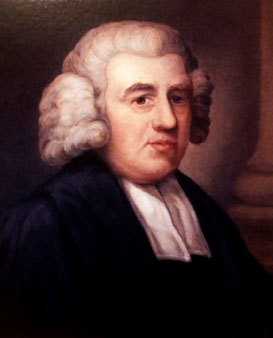
A Believer's Frames by John Newton addresses the spiritual experiences, or "frames," of believers and highlights the importance of understanding the fluctuations in comfort and sorrow as part of the Christian life. Newton argues that feeling inadequate or spiritually "stupid" at times serves to cultivate humility, preventing pride and fostering a deeper dependence on Christ. He references Scripture, particularly the Apostle Paul's acknowledgment of his own insufficiency (2 Corinthians 3:5) and his exhortation to rejoice in all circumstances (Philippians 4:4), to illustrate that true Christian joy is distinct from fluctuating emotions. Practically, the piece encourages believers to find hope and solace in God's unchanging love despite varying spiritual conditions, emphasizing that one's relationship with God is not solely dependent on tangible feelings of grace or comfort.
Key Quotes
“If you did not find yourself occasionally poor, insufficient and as you express it stupid at other times, you would be in great danger of being puffed up with spiritual pride.”
“Neither the reality nor the measure of grace can be properly estimated by the degree of our sensible comforts.”
"The great question is—How we are practically influenced by the word of God as the ground of our hope and as the governing rule of our tempers and conversation.”
“Let us patiently wait upon the Lord and be content to follow as he leads and he will surely do us good.”
What does the Bible say about spiritual pride?
The Bible warns against spiritual pride, emphasizing our dependence on Christ and the dangers of exalting ourselves.
2 Corinthians 12:7
How do we know God's grace is sufficient during our spiritual struggles?
God's grace remains sufficient for us, even during times of spiritual dryness or struggle, as His love and promises are unchanging.
2 Corinthians 12:9
Why is experiencing spiritual dryness important for Christians?
Experiencing spiritual dryness can deepen our understanding of dependence on God and foster more genuine sympathy for others.
2 Corinthians 12:10
Dear Sir,
You ask me, in your letter, what should one do when one finds one's self always still, quiet, and stupid—except in the pulpit; is made useful there, but cannot get either comfort or sorrow out of it, or but very rarely? You describe a case which my own experience has made very familiar to me. I shall take the occasion to offer you a few miscellaneous thoughts upon the subject of a believer's frames; and I send them to you, not by the post, but from the press; because I apprehend the exercise you speak of is not peculiar to you or to me, but is in a greater or less degree the burden of all who are spiritually minded, and duly attentive to what passes in their own hearts, whether they are in the ministry or not.
As you intimate that you are in the main favored with liberty and usefulness in the pulpit, give me leave to ask you, What you would do if you did not find yourself occasionally poor, insufficient, and, as you express it, stupid, at other times? Are you aware of what might be the possible, the probable, the almost certain consequences, if you always found your spirit enlarged, and your frames lively and comfortable? Would you not be in great danger of being puffed up with spiritual pride? Would you not be less sensible of your absolute dependence upon the power of Christ, and of your continual need of his blood, pardon, and intercession? Would you not be quite at a loss to speak suitably and feelingly to the case of many gracious souls, who are groaning under those effects of a depraved nature, from which, upon that supposition, you would be exempted? How could you speak properly upon the deceitfulness of the heart, if you did not feel the deceitfulness of your own; or adapt yourself to the changing experiences through which your hearers pass, if you yourself were always alike, or nearly so? Or how could you speak pertinently of the inward warfare, the contrary principles of flesh and spirit fighting one against another—if your own spiritual desires were always vigorous and successful, and met with little opposition or control?
The Apostle Paul, though favored with a singular eminency in grace, felt at times that he had no sufficiency in himself so much as to think a good thought; and he saw there was a danger of his being exalted above measure, if the Lord had not wisely and graciously tempered his dispensations to prevent it. By "being exalted above measure," perhaps there may be a reference not only to his spirit, lest he should think more highly of himself than he ought, but likewise to his preaching, lest, not having the same causes of complaint and humiliation in common with others, he should shoot over the heads of his hearers, confine himself chiefly to speak of such comforts and privileges as he himself enjoyed, and have little to say for the refreshment of those who were discouraged and cast down by a continual conflict with indwelling in.
The angel who appeared to Cornelius did not preach the Gospel to him, but directed him to send for Peter: for though the glory and grace of the Savior seems a fitter subject for an angel's powers than for the poor stammering tongues of sinful men, yet an angel could not preach experimentally, nor describe the warfare between grace and sin from his own feelings. And if we could suppose a minister as full of comforts and as free from failings as an angel, though he would be a good and happy man, I cannot conceive that he would be a good or useful preacher; for he would not know how to sympathize with the weak and afflicted of the flock, or to comfort them under their difficulties with the consolations wherewith he himself, in similar circumstances, had been comforted of God.
It belongs to your calling of God as a minister, that you should have a taste of the various spiritual trials which are incident to the Lord's people, that thereby you may possess the tongue of the learned, and know how to speak a word in season to those who are weary; and it is likewise needful to keep you perpetually attentive to that important admonition, "Without me you can do nothing."
Thus much considering you as a minister. But we may extend the subject so as to make it applicable to believers in general. I would observe, therefore, that it is a sign of a sad declension, if one, who has tasted that the Lord is gracious, should be capable of being fully satisfied with anything short of the light of his countenance, which is better than life. A resting in notions of Gospel truth, or in the recollection of past comforts, without a continual thirst for fresh communications from the Fountain of life, is, I am afraid, the canker which eats away the beauty and fruitfulness of many professors in the present day; and which, if it does not prove them to be absolutely dead, is at least a sufficient evidence that they are lamentably sick. But if we are conscious of the desire, if we seek it carefully in the use of all appointed means, if we willingly allow ourselves in nothing which has a known tendency to grieve the Spirit of God, and to dampen our sense of divine things; then, if the Lord is pleased to keep us short of those comforts which he has taught us to prize, and, instead of lively sensations of joy and praise, we feel a languor and deadness of spirit, provided we do indeed feel it, and are humbled for it—we have no need to give way to despondency or excessive sorrow.
Still the foundation of our hope, and the ground of our abiding joys, is the same; and the heart may be as really alive to God, and grace as truly in exercise, when we walk in comparative darkness and see little light, as when the frame of our spirits is more comfortable. Neither the reality, nor the measure of grace, can be properly estimated by the degree of our sensible comforts. The great question is—How we are practically influenced by the word of God, as the ground of our hope, and as the governing rule of our tempers and conversation? The Apostle exhorts believers to rejoice in the Lord always. He well knew that they were exposed to trials and temptations, and to much trouble from an evil heart of unbelief; and he prevents the objections we might be ready to make, by adding, "And again I say, Rejoice," as if he had said, I speak upon mature consideration; I call upon you to rejoice, not at some times only, but at all times; not only when upon the mount, but when in the valley; not only when you conquer, but while you are fighting; not only when the Lord shines upon you, but when he seems to hide his face. When he enables you to do all things, you are no better in yourselves than you were before; and when you feel you can do nothing, you are no worse. Your experiences will vary: but his love and promises are always unchangeable.
Though our desires of comfort, and what we call lively frames, cannot be too importunate while they are regulated by a due submission to his will, yet they may be inordinate for lack of such submission. Sinful principles may, and too often do, mix with and defile our best desires. I have often detected the two vile abominations Self-will and Self-righteousness insinuating themselves into this concern: like Satan, who works by them, they can occasionally assume the appearance of an angel of light. I have felt an impatience in my spirit, utterly unsuitable to my state as a sinner and a beggar, and to my profession of yielding myself and all my concerns to the Lord's disposal. He has mercifully convinced me that I labor under a multiplication of disorders, summed up in the word—sin. He has graciously revealed himself to me as the infallible physician; and has enabled me, as such, to commit myself to him, and to expect my cure from his hand alone. Yet how often, instead of thankfully accepting his prescriptions, have I foolishly and presumptuously ventured to prescribe to him, and to point out how I would have him deal with me! How often have I thought something was necessary which he saw best to deny, and that I could have done better without those dispensations which his wisdom appointed to work for my good! He is God, and not man, or else he would have been weary of me, and left me to my own management long ago. How inconsistent! to acknowledge that I am blind, to entreat him to lead me, and yet to want to choose my own way, in the same breath! I have limited the Holy One of Israel, and not considered that he magnifies his wisdom and grace in working by contraries, and bringing good out of apparent evil. It has cost me something to bring me to confess that he is wiser than I; but I trust, through his blessing, I have not suffered wholly in vain. My sensible comforts have not been great: the proofs I have had of the evils of my sinful nature, my incapacity and aversion to good, have neither been few nor small; but by these unpromising means I hope he has made his grace and salvation precious to my soul, and in some measure weaned me from leaning to my own understanding.
Again: self-righteousness has had a considerable hand in dictating many of my desires for an increase of comfort and spiritual strength. I have wanted some stock of my own. I have been wearied of being so perpetually beholden to him, necessitated to come to him always in the same strain, as a poor miserable sinner. I would have liked to have done something for myself upon common occasions, and to have depended upon him chiefly upon extraordinary occasions. I have found indeed, that I could do nothing without his assistance, nor anything even with it, but what I have reason to be ashamed of. If this had only humbled me, and led me to rejoice in his all-sufficiency, it would have been well. But it has often had a different effect, to make me sullen, angry, and discontented, as if it was not best and most desirable that he should have all the glory of his own work, and I should have nothing to boast of, but that in the Lord I have righteousness and strength. I am now learning to glory only in my infirmities, that the power of Christ may rest upon me; to be content to be nothing, that he may be All in All. But I find this a hard lesson; and when I seem to have made some proficiency, a slight turn in my spirit throws me back, and I have to begin all over again.
There is an inseparable connection between causes and effects. There can be no effect without a cause, no active cause without a proportionable effect. Now indwelling sin is an active cause; and therefore, while it remains in our nature, it will produce effects according to its strength. Why then should I be surprised, that, if the Lord suspends his influence for a moment, in that moment sin will discover itself? Why should I wonder that I can feel no lively exercise of grace, no power to raise my heart to God, any farther than he is pleased to work in me mightily; any more than wonder that I do not find fire in the bottom of a well, or that it should not be day when the sun is withdrawn from the earth? Humbled I ought to be, to find I am so totally depraved; but not discouraged, since Jesus is appointed to me as my wisdom, righteousness, sanctification, and redemption; and since I find that, in the midst of all this darkness and deadness, he keeps alive the principle of grace which he has implanted in my heart.
As to Mr. Rutherford's expression which you mention, that "there is no temptation like being without temptation;" I allow it in a qualified sense; that is, it is better of the two to suffer from Satan's fiery darts, than to be lulled asleep, and drawn into a careless security, by his more subtle, though less perceptible devices; so as to grow indifferent to the means of grace, and sink into a worldly spirit, or, like the church of Laodicea, to imagine ourselves rich, and increased in goods, and that we have need of nothing. But I am persuaded this is not your case; the deadness you complain of, and which is a burden you groan under, is a very different thing. And I advise you to be cautious how you indulge a desire to be exercised with Satan's temptations, as supposing they would be conducive to make you more spiritual, or would of course open you a way to greater consolations. If you have such a desire, I may say to you, in our Lord's words, "you know not what you ask."
He who knows our weakness, and the power of our adversary, has graciously directed us to pray, that we enter not into temptation. Have you considered what the enemy can do, if he is permitted to come in like a flood? In one hour he could raise such a storm as would put you to your wit's end. He could bring such a dark cloud over your mind, as would blot out all remembrance of your past comforts, or at least prevent you from deriving the least support from them. He could not only fight against your peace, but shake the very foundations of your hope, and bring you to question, not only our interest in the promises, but even to doubt of the most important and fundamental truths upon which your hopes have been built. Be thankful, therefore, if the Lord restrains his malice. A young sailor is often impatient of a short calm; but the experienced mariner, who has been often tossed with tempests, and upon the point of perishing, will seldom wish for a storm. in a word, let us patiently wait upon the Lord, and be content to follow as he leads, and he will surely do us good.

Comments
Your comment has been submitted and is awaiting moderation. Once approved, it will appear on this page.
Be the first to comment!