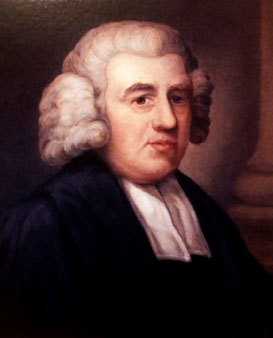
John Newton's letter, "To a Friend, on His Recovery From Illness," explores the theological implications of spiritual awakening in the context of physical illness and the reality of mortality. Newton presents a case for self-reflection, urging his friend to examine whether his thoughts and beliefs about eternity remained unchanged despite having faced death. He emphasizes the transformative power of grace, illustrated by his own experience of coming to faith after a struggle with skepticism. Newton supports his points with Scripture, referencing passages such as 1 John 1:3, which underscores the essential nature of communion with God through Christ. The letter serves as a poignant reminder of the fragility of life and the necessity of a genuine relationship with God, encouraging readers to consider their spiritual states and the importance of continual dependence on divine grace.
Key Quotes
“I can only sigh and wonder... why it not was always thus with myself for long and often it was just so.”
“Nothing is too hard for the Almighty. The same power which humbled me can undoubtedly bring down the most haughty infidel upon earth.”
“The points in debate between us are already settled in themselves and that our talking cannot alter or affect the nature of things for they will be as they are whatever apprehensions we may form of them.”
“When a man is cut off from the world and all its engagements, how can he rest content with anything less than the knowledge of God?”
What does the Bible say about communion with God?
The Bible teaches that true communion with God is established through faith in Christ and involves worshiping Him in spirit and truth.
John 1:3, Ephesians 2:13, 1 John 1:3
How do we know the doctrine of grace is true?
The doctrine of grace is established through Scripture, which illustrates God's sovereignty in salvation and His unmerited favor towards sinners.
Ephesians 2:8-9, Romans 5:20-21, 2 Timothy 1:9
Why is the forgiveness of sins important for Christians?
Forgiveness of sins is essential because it restores our relationship with God and assures us of eternal life through Christ's sacrifice.
Romans 3:23, John 3:16, 1 John 1:9
How can Christians maintain communion with God?
Christians maintain communion with God through prayer, Scripture reading, and living in obedience to His Word.
2 Timothy 3:16-17, Hebrews 10:25, John 15:7
Dear Sir,
I suppose you will receive many congratulations on your recovery from your late dangerous illness; most of them perhaps more sprightly and better turned, but none, I persuade myself, more sincere and affectionate than mine. I beg you would prepare yourself by this good opinion of me, before you read further; and let the reality of my regard excuse what you may dislike in my manner of expressing it.
When a person is returned from a doubtful distant voyage, we are naturally led to inquire into the incidents he has met with, and the discoveries he has made. Indulge me in a curiosity of this kind, especially as my affection gives me an interest and concern in the event. You have been, my friend, upon the brink, the very edge, of an eternal state; but God has restored you back to the world again. Did you meet with, or have you brought back, nothing new? Did nothing occur to stop or turn your usual train of thought? Were your apprehensions of invisible things exactly the same in the height of your sickness, when you were cut off from the world and all its engagements—as when you were in perfect health, and in the highest enjoyment of your own inclinations?
If you answer me, "Yes, all things are just the same as formerly, the difference between sickness and health only excepted;" I am at a loss how to reply. I can only sigh and wonder; sigh, that it should be thus with any, that it should be thus with you whom I dearly love; and wonder, since this unhappy case, strange as it seems in one view, is yet so frequent, why it not was always thus with myself; for long and often it was just so. Many a time, when sickness had brought me, as we say, to death's door, I was as easy and insensible as the sailor, who, in the height of a storm, would presume to sleep upon the top of the mast, quite regardless that the next tossing wave might plunge him into the raging ocean, beyond all possibility of relief. But at length a day came, which, though the most terrible day I ever saw, I can now look back upon with thankfulness and pleasure: I say, the time came, when, in such a helpless extremity, and under the expectation of immediate death, it pleased God to remove the veil from my eyes, and I saw things in some measure as they really were.
Imagine with yourself, a person trembling upon the brink of a dreadful precipice; with a powerful and inexorable enemy eager to push him down, and an assemblage of all that is horrible waiting at the bottom for his fall. Even this will give you but a faint representation of the state of my mind at that time. Believe me, it was not a whim or a dream, which changed my sentiments and conduct—but a powerful conviction, which will not admit the least doubt; an evidence which, like that I have of my own existence, I cannot call in question without contradicting all my senses. And though my case was in some respects uncommon, yet something like it is known by one and another every day: and I have myself conversed with many, who, after a course of years spent in defending Deistical principles, or indulging libertine practices, when they have thought themselves confirmed in their schemes by the cool assent of what they then deemed impartial reason, have been like me brought to glory in the cross of Christ, and to live by that faith which they had before slighted and opposed.
By these instances, I know that nothing is too hard for the Almighty. The same power which humbled me, can undoubtedly bring down the most haughty infidel upon earth. And as I likewise knew, that, to show his power, he is often pleased to make use of weak instruments, I am encouraged, notwithstanding the apparent difficulty of succeeding, to warn those over whom friendship or affection gives me any influence, of the evil and the danger of a course of life formed upon the prevailing maxims of the world. So far as I neglect this, I am unfaithful in my professions both to God and man.
I shall not at present trouble you in an argumentative way. If by dint of reasoning I could effect some change in your notions, my arguments, unless applied by a Superior Power, would still leave your heart unchanged and untouched. A man may give his assent to the Gospel, and be able to defend it against others, and yet not have his own spirit truly influenced by it. This thought I shall leave with you, that if your philosophy be not true to a demonstration, it must necessarily be false; for the outcome is too important to make a doubt on the dangerous side tolerable. If the Christian could possibly be mistaken, he is still upon equal terms with those who pronounce him to be so; but if the Deist be wrong (that is, if we Christians are in the right), the consequence to him must be unavoidable and intolerable. This, you will say, is a trite argument: I own it; but, beaten as it is, it will never be worn out or answered.
Permit me to remind you, that the points in debate between us are already settled in themselves, and that our talking cannot alter or affect the nature of things; for they will be as they are, whatever apprehensions we may form of them: and remember likewise, that we must all, each one for himself, experience on which side the truth lies. I used a wrong word when I spoke of your recovery; my dear friend, look upon it only as a reprieve; for you carry the sentence of death about with you still; and unless you should be cut off (which God of his mercy forbid!) by a sudden stroke, you will as surely lie upon a death-bed; as you have been now raised from a bed of sickness. And remember likewise (how can I bear to write it!) that, should you neglect my admonitions, they will, notwithstanding, have an effect upon you, though not such an effect as I could wish: they will render you more inexcusable.
I have delivered my own soul by faithfully warning you: but if you will not examine the matter with that seriousness it calls for; if you will not look up to God, the Creator of your body, and the Preserver of your spirit, for direction and assistance how to please him; if you will have your reading and conversation only on one side of the question; if you determine to let afflictions and dangers, mercies and deliverances, all pass without reflection and improvement; if you will spend your life as though you thought you were sent into the world only to eat, sleep, and play, and, after a course of years, be extinguished like the snuff of a candle; why, then, you must abide the consequences. But assuredly, sooner or later, God will meet you. My hearty daily prayer is, that it may be in a way of mercy, and that you may be added to the number of the trophies of his invincible grace.
Dear Sir,
Though many authors have written largely and well concerning communion with God, I shall not refer you to books, or have recourse to them myself; but, in compliance with your request, shall simply offer you what occurs to my thoughts upon the subject. I propose not to exceed the limits of a sheet of paper, and must therefore come immediately to the point.
That God is to be worshiped, is generally acknowledged; but those who worship him in spirit and in truth, have real fellowship and communion with him, is known only to themselves. The world can neither understand nor believe it. Many, who would not be thought to have cast off all reverence for the Scripture, and therefore do not choose flatly to contradict the Apostle's testimony, 1Jo. 1:3, attempt to evade its force by restraining it to the primitive times. They will allow that it might be so then; but they pretend that circumstances with us are greatly altered. Circumstances are, indeed, altered with us, so far, that men may now pass for Christians who confess and manifest themselves strangers to the Spirit of Christ: but who can believe that the very nature and design of Christianity should alter in the course of time? and that communion with God, which was essential to it in the Apostles' days, should be now so unnecessary and is practicable as to expose all who profess an acquaintance with it to the charge of enthusiasm and folly? However, those who have tasted that the Lord is gracious, will not be disputed out of their spiritual senses. If they are competent judges whether they ever saw the light, or felt the beams of the sun, they are no less certain that, by the knowledge of the Gospel, they are brought into a state of communion with God.
Communion with God presupposes union with God. By nature we are strangers, yes, enemies to God; but we are reconciled, brought near, and become his children, by faith in Christ Jesus. We can have no true knowledge of God, desire towards him, access unto him, or gracious communications from him, but in and through the Son of his love. He is the medium of this inestimable privilege: for he is the way, the only way, of fellowship between heaven and earth; the sinner's way to God, and God's way of mercy to the sinner. If any pretends to know God, and to have communion with him, otherwise than by the knowledge of Jesus Christ, whom he has sent, and by faith in his name, it is a proof that they neither know God nor themselves. God, if considered abstracted from the revelation of himself in the person of Jesus, is a consuming fire; and if he should look upon us without respect to his covenant of mercy established in the Mediator, we could expect nothing from him but indignation and wrath. But when his Holy Spirit enables us to receive the record which he has given of his Son, we are delivered and secured from condemnation; we are accepted in the Beloved; we are united to him in whom all the fullness of the Godhead substantially dwells, and all the riches of Divine wisdom, power, and love, are treasured up.
Thus in him, as the temple wherein the glory of God is manifested, and by him, as the representative and high priest of his people, and through him, as the living head of his mystical body the church, believers maintain communion with God. They have food to eat which the world knows not of, honor which comes of God alone, joy which a stranger intermeddles not with. They are, for the most part, poor and afflicted, frequently scorned and reproached, accounted hypocrites or visionaries, knaves or fools; but this one thing makes amends for all, "They have fellowship with the Father, and with his Son Jesus Christ."
I would observe further, that as the incarnation of that Mighty One, on whom our help is laid, was necessary, that a perfect obedience to the law, and a complete and proper atonement for sin, might be accomplished in the human nature that had sinned and fallen short of the glory of God; so, in another view, it affords us unspeakable advantage for our comfortable and intimate communion with God by him. The adorable and solemn perfections of Deity are softened, if I may so speak, and rendered more familiar and engaging to our apprehensions, when we consider them as resident in him, who is very bone of our bone, and flesh of our flesh; and who, having by himself purged our sins, is now seated on the right hand of the Majesty on high, and reigns, in the nature of man, over all, God blessed forever.
Thus he who knows our frame, by becoming man like ourselves, is the supreme and ultimate object of that philanthropy, that human affection, which he originally implanted in us. He has made us susceptive of the endearments of friendship and relative life: and he admits us to communion with himself under the most engaging characters and relations, as our Friend, our Brother, and our Husband. Those who, by that faith which is of the operation of God, are thus united to him in Christ, are brought thereby into a state of real habitual communion with him. The degree of its exercise and sensible perception on our parts, is various in different people, and in the same person at different times; for it depends upon the communications we receive from the Lord the Spirit, who distributes them to each one, just as he determines, adjusting his dispensations with a wise and merciful respect to our present state of discipline.
If we were wholly freed from the effects of a depraved nature, the snares of an evil world, and the subtle temptations of Satan--our actual communion with God would be always lively, sensible, and fervent. It will be thus in heaven; there its exercise will be without obstruction, abatement, or interruption. But so long as we are liable to spiritual pride, indolence, an undue attachment to worldly things, and irregular distempered passions, the Lord is pleased to give, increase, suspend, or renew, the sensible impressions of his love and grace, in such seasons and measures as he sees most suitable to prevent or control these evils--or to humble us for them. We grieve his Spirit, and he withdraws; but, by his secret power over our hearts, he makes us sensible of our folly and loss, teaches us to mourn after him, and to entreat his return. These desires, which are the effects of his own grace, he answers in his own time, and shines forth upon the soul with healing in his beams.
But, such is our weakness, and so unapt are we to retain even those lessons which we have learned by painful experience, that we are prone to repeat our former miscarriages, and to render a repetition of the same changes necessary. From hence it is that what we call our frames are so very variable, and that our comfortable sense of Divine communion is rather transient than abiding. But the communion itself, upon which the life and safety of our souls depend, is never totally obstructed; nor can it be, unless God should be unmindful of his covenant, and forsake the work of his own hands. And when it is not perceptible to sense, it may ordinarily be made evident to faith, by duly comparing what we read in the Scripture with what passes in our hearts. I say ordinarily, because there may be some excepted cases. If a believer is unhappily brought under the power of some known sin, or has grievously and notoriously declined from his profession, it is possible that the Lord may hide himself behind so dark a cloud, and leave him for a while to such hardness of heart, as that he shall seem to himself to be utterly destitute and forsaken. And the like apprehensions may be formed under some of Satan's violent temptations, when he is permitted to come in as a flood, and to overpower the apparent exercise of every grace by a torrent of blasphemous and evil imaginations. Yet the Lord is still present with his people in the darkest hours, or the unavoidable event of such cases would be apostasy or despair. Psalm 41:11.
The communion we speak of comprises a mutual fellowship and communication in love, in counsels, and in interests.
In LOVE. The Lord, by his Spirit, manifests and confirms his love to his people. For this purpose he meets them at his throne of grace, and in his ordinances. There he makes himself known unto them, as he does not unto the world; causes his goodness to pass before them; opens, applies, and seals to them, his exceeding great and precious promises; and gives them the Spirit of adoption, whereby, unworthy as they are, they are enabled to cry "Abba, Father." He causes them to understand that great love with which he has loved them, in redeeming them by price and by power, washing them from their sins in the blood of the Lamb, recovering them from the dominion of Satan, and preparing for them an everlasting kingdom, where they shall see his face, and rejoice in his glory.
The knowledge of his love to them, produces a return of love from them to him. They adore him, and admire him; they make an unreserved surrender of their hearts to him. They view him and delight in him, as their God, their Savior, and their portion. They account his favor better than life. He is the sun of their souls: if he is pleased to shine upon them, all is well, and they are not greatly anxious about other things; but if he hides his face, the smiles of the whole creation can afford them no solid comfort. They esteem one day or hour spent in the delightful contemplation of his glorious excellencies, and in the expression of their desires towards him, better than a thousand. And when their love is most fervent, they are ashamed that it is so faint, and chide and bemoan themselves that they can love him no more. This often makes them long to depart, willing to leave their dearest earthly comforts, that they may see him as he is, without a veil or cloud: for they know that then, and not until then, they shall love him as they ought.
In COUNSELS. The secret of the Lord is with those who fear him. He deals familiarly with them. He calls them not servants only, but friends; and he treats them as friends. He affords them more than promises; for he opens to them the plan of his great designs from everlasting to everlasting; shows them the strong foundations and inviolable securities of his favor towards them, the height, and depth, and length, and breadth of his love, which passes knowledge, and the unsearchable riches of his grace. He instructs them in the mysterious conduct of his providence, the reasons and ends of all his dispensations in which they are concerned; and solves a thousand hard questions to their satisfaction, which are inexplicable to the natural wisdom of man. He teaches them likewise the beauty of his precepts, the path of their duty, and the nature of their warfare. He acquaints them with the plots of their enemies, the snares and dangers they are exposed to, and the best methods of avoiding them. And he permits and enables them to acquaint him with all their cares, fears, needs, and troubles, with more freedom than they can unbosom themselves to their nearest earthly friends. His ear is always open to them; he is never weary of hearing their petitions, and answering their petitions.
The men of the world would account it a high honor and privilege to have an unrestrained liberty of access to an earthly king; but what words can express the privilege and honor of believers, who, whenever they please, have audience of the King of kings, whose compassion, mercy, and power are, like his majesty, infinite? The world wonders at their indifference to the vain pursuits and amusements by which others are engrossed; that they are so patient in trouble, so inflexible in their conduct, so well satisfied with that state of poverty and obscurity which the Lord, for the most part, allots them; but the wonder would cease, if what passes in secret were publicly known. They have obtained the Pearl of great price; they have communion with God; they derive their wisdom, strength, and comfort from on high; and cast all their cares upon him, who, they assuredly know, vouchsafes to take care of them. This reminds me of another branch of their communion, namely.
In INTERESTS. The Lord claims them for his portion; he accounts them his jewels; and their happiness in time and eternity is the great end which, next to his own glory, and in inseparable connection with it, he has immediately and invariably in view. In this point all his dispensations of grace and providence shall finally terminate. He himself is their guide and their guard: he keeps them as the apple of his eye; the hairs of their head are numbered; and not an event in their lives takes place but in an appointed subserviency to their final good. And as he is pleased to espouse their interests, they, through grace, are devoted to his interests. They are no longer their own; they would not be their own; it is their desire, their joy, their glory, to live to him who died for them. He has won their hearts by his love, and made them a willing people in the day of his power.
The glory of his name, the success of his cause, the prosperity of his people, the accomplishment of his will—these are the great and leading objects which are engraved upon their hearts, and to which all their prayers, desires, and endeavors are directed. They would count nothing dear, not even their lives, if set in competition with these. In the midst of their afflictions, if the Lord is glorified, if sinners are converted, if the church flourishes--they can rejoice. But when iniquity abounds, when love waxes cold, when professors depart from the doctrines of truth and the power of godliness--then they are grieved and pained to the heart; then they are touched in what they account their nearest interest, because it is their Lord's.
This is the spirit of a true Christian. May the Lord increase it in us, and in all who love his name! I have room only to subscribe myself.
Dear Sir,
In this dark and declining day, when iniquity abounds, the awful tokens of God's displeasure are multiplying around us, and too many professors, not duly sensible of the real cause of all the evils we either feel, or have reason to fear, are disputing, instead of praying; may the Lord bestow upon you and I, and upon all who fear his name, a spirit suited to the times! that the words of David, "I beheld the transgressors and was grieved," may express the very sensation and frame of our hearts. Permit me to keep this expression in my view while I write, though it may perhaps give my letter something of the air of a sermon.
The Hebrew word answering to "I was grieved," signifies such a kind of grief as is mixed with dislike; such a grief as a believer must feel when he has a sense of his own corruptions. It is frequently rendered, as in Eze. 20:43, to loathe: "you shall loathe yourselves in your own sight." We are not required strictly to hate ourselves, but the evil that is in us. So, when we look at the ungodly, we are not to hate them—but to pity them, mourn over them, and pray for them. Nor have we any right to boast over them; for, by nature, and of ourselves, we are no better than they.
But their sinfulness should cause a dislike, an holy indignation: as it is recorded of our Lord, who, though full of compassion and tenderness, so that he wept over his enemies, and prayed for his actual murderers, yet looked upon transgressors with anger, being grieved for the hardness of their hearts. A feeling of this kind seems essential to that new nature which characterizes the children of God; and where it is not in habitual exercise, it is a sufficient evidence that the soul, if truly alive to God at all, is at least in lean and distempered state. Who can avoid being grieved and hurt by that which is in direct opposition to what he most loves? Believers love holiness; and, unless when stupefied by the arts of Satan, can hardly bear themselves for what they find contrary to it within their own breasts; and must, therefore, of course, be grieved with the sins of others. Like righteous Lot, and from his principles, they are vexed with the filthy lives of the wicked. Can those who reverence the name of God be easy and unconcerned when they hear it blasphemed? No! their ears are wounded, and their hearts are pained. Can those who are followers of peace and purity, behold unmoved the riots, licentiousness, and daring wickedness of those who have cast off both shame and fear? Can those who have affections of mercy and compassion, be unaffected when they see the iron hand of oppression grinding the faces of the poor? Or can any who love the songs of Zion, help being shocked with the songs of drunkards? I trust there are many, who, upon these accounts, are daily crying, "My soul is among lions! Woe is me that I dwell in Mesech? O gather not my soul with sinners." The thought of being shut up forever with the ungodly, would be terrible as hell to a gracious soul, though there were no devouring fire, no keen sense of the wrath of God, to be feared.
They are grieved likewise upon their Lord's account; for they have obtained a spark of zeal for his honor and glory. With Elijah, they are "very jealous for the Lord Almighty." They feel their obligations to him, and know he well deserves to reign in every heart. But when, on the contrary, they see almost everyone in a conspiracy against him, despising him to his face, trampling upon his laws, rejecting his authority, and abusing his patience; their eyes affect their hearts. What man of sensibility could brook to see everyone about him contriving how to affront and injure the person whom he most loved? Now the Lord is the believer's best friend, the beloved of his soul; and therefore he is grieved and troubled when he "beholds the transgressors."
This emotion is likewise heightened by compassion to souls. Grace gives some view of the evil of sin, the dreadfulness of the wrath of God, and the vast importance of that word eternity. Thus instructed in the sanctuary of God, they would be stocks and stones, were they capable of beholding sinners rushing upon destruction without being grieved for them. But they cannot bear it. They cannot but give and repeat a faithful warning, though they have little reason to expect any better return than scorn and ill-treatment, for what the world accounts an impertinent officiousness.
But who then are believers! Who are thus "on the Lord's side?"—if these sentiments are common to all who are born of God? Must we un-Christian perhaps the greater part of professors at this time? for it is too evident, that many, who bear the name of Gospel professors, discover but little of this concern. In general, I think, this subject affords no improper test for the trial of our spirits. The effects of grace in similar circumstances are uniform; but if any, who think themselves possessors of it, feel no grief for the aboundings of sin, and the obstinacy of sinners, they differ from the saints recorded both in the Old and New Testament; and it will be their wisdom to examine and take heed lest they be deceived. It is easy to call Christ, 'Lord, Lord'; but a criminal lukewarmness of spirit, where his cause, honor, and Gospel are in question, will one day meet with an awful rebuke, and be treated, in those who make mention of his name, as high treason against his person and government.
But if we allow, that, through the contagion of the times, and the power of Satan, it is possible for true Christians to sink into this indifference, and for the wise virgins, as well as the foolish virgins to sleep, when they should be watching unto prayer; even these have much to fear, lest they should largely participate in the sufferings which the provocation's they connive at have a direct tendency to bring upon a sinful people. When national sins draw down national judgments, the Lord has given us a hope, that he will fix a mark of protection upon those who sigh and mourn in secret before him for the evils which they are unable to prevent. To these he will be a sanctuary; he will either preserve them unhurt, in the midst of surrounding calamities, or he will support them with consolations superior to all their troubles, when the hearts of others are shaken like leaves in a storm. But none have reason to expect to be thus privileged, who have not a heart given them to lament their own sins, and the sins of those among whom they live.
Surely the Lord has a controversy with this land; and there can hardly a period be assigned in the annals of ages, when it was more expedient, or seasonable, for those who fear him to stir up each other to humiliation and prayer, than at present. What is commonly called our national debt, is swelled to an enormous greatness. It may be quickly expressed in figures; but a person must be well-versed in calculation, to form a tolerable idea of accumulated millions. But what arithmetic is sufficient to compute the immensity of our national debt in a spiritual sense? or, in other words, the amount of our national sins? The spirit of infidelity, which for a time distinguished, comparatively, a few, and, like a river, was restrained within narrow bounds—has of late years broken down its banks, and deluged the land. This wide-spreading evil has, in innumerable instances, as might be expected, emboldened the natural heart against the fear of God, hardened it to an insensibility of moral obligation, and strengthened its prejudices against the Gospel. The consequence has been, that profligate wickedness has become almost as universal as the air we breathe; and is practiced with little more reserve or secrecy than the transactions of common business, except in such instances as would subject the offender to the penalty of human laws. O the unspeakable patience of God! The multiplied instances of impiety, blasphemy, cruelty, adultery, and abominations not to be thought of without horror, under which this land groans, are only known to him who knows all things.
There are few sins which imply greater contempt of God, or a more obdurate state of mind in the offender, than perjury; yet the guilt of it is so little regarded, and temptations to it so very frequent, that perhaps I do not go too far in supposing, there are more deliberate acts of perjury committed among us, than among all the rest of mankind taken together. Though some of the Roman poets and historians have given very dark pictures of the times they lived in, their worst descriptions of this kind would hardly be found exaggerated, if applied to our own. But what are the sins of Heathens, if compared with the like evils perpetrated in a land bearing the name of Christian, favored with the word of God, the light of the Gospel, and enjoying the blessings of civil and religious liberty and peace, in a higher degree, and for a longer continuance, than was afforded to any people of whose history we have heard?
The state of the churches of Christ at this time affords likewise ample cause for humiliation and grief. The formality, conformity to the world, the lack of Christian love, the intemperate and unprofitable contentions, which prevail among us, show how faintly the power of the Gospel is felt, even by many who profess to have embraced it. The true and undefiled doctrine of Jesus is not only opposed by its declared enemies, but wounded and dishonored in the house of its friends. And though the sins of those who avow subjection to the institutions of Christ, may not have so gross a stamp of profligacy and immorality, as of those who set him openly at defiance; yet they have, in some respects, an aggravation, of which the others are not capable; as being committed against clearer light, and peculiar, acknowledged obligations. From the consideration of both taken together, who, that has a spark of seriousness and attention, and that has learned from Scripture and history the sure connection between sin and trouble, can forbear trembling at that alarming question, so often proposed to the consciences of ungrateful Israel of old, "Shall not I visit you for these things? says the Lord: and shall not my soul be avenged on such a nation as this?" especially when we see the dispensations of God's providence so awfully corresponding with the threatenings in his word.
How much is it to be desired, then, that all who truly fear the Lord, instead of wasting their time in useless squabbles, may unite in earnest prayer; and, with deep remorse of heart, bemoan those evils which, unless repented of and forsaken, may bring upon us, as a people, such distress as neither we nor our fathers have known! If he is pleased thus to give us a heart to seek him, he will yet be found of us: but if, when his hand is lifted up, we cannot or will not see, nor regard the signs of the times—there is great reason to fear that our case is deplorable indeed.
A few, however, there will be, who will lay these things suitably to heart; and whom the Lord will favor and spare, as a man spares his only son who serves him. That you and I may be of this happy number, is my sincere prayer.
April, 1770
My friend,
Glorious things are spoken of the city of God, or (as I suppose) the state of glory, in Rev. 21:10 onwards. The description is doubtless mystical, and perhaps nothing short of a happy experience and participation, will furnish an adequate exposition. One expression, in particular, has I believe puzzled wiser heads than mine to explain: "The street of the city was pure gold, as it were transparent glass." The construction likewise in the Greek is difficult. Some render it, pure gold, as transparent as glass. If our reading is right, we must understand it either of gold, pure, bright, and perspicuous as the finest transparent glass (for all glass is not transparent); or else as two distinct comparisons —as splendid and durable as the purest gold, as clear and transparent as the finest glass.
In that happy world, the beauties and advantages which here are divided and incompatible, will unite and agree. Our glass is clear—but brittle; our gold is shining and solid—but it is opaque, and reveals only a surface. And thus it is with our minds. The powers of the imagination are lively and extensive—but transient and uncertain; the powers of the understanding are more solid and regular—but at the same time more slow and limited, and confined to the outside properties of the few objects around us. But when we arrive within the veil, the perfections of the glass and the gold will be combined, and the imperfections of each will entirely cease. Then we shall know more than we can now imagine! The glass will be all gold. And then we shall apprehend Truth in its relations and consequences; not (as at present) by that tedious and fallible process which we call Reasoning—but by a single glance of thought, as the sight pierces in an instant through the largest transparent body. The gold will be all glass.
I do not offer this as the sense of the passage—but as a thought which once occurred to me while reading it. I daily groan under a desultory, ungovernable imagination, and a palpable darkness of understanding, which greatly impede me in my attempts to contemplate the truths of God. Perhaps these complaints, in a greater or less degree, are common to all our fallen race, and exhibit mournful proofs that our nature is essentially depraved. The grace of God affords some assistance for correcting the wildness of the imagination, and enlarging the capacity of the mind; yet the cure at present is but palliative; but before long it shall be perfect, and our complaints shall cease forever. Now it costs us much pains to acquire a pittance of solid and useful knowledge; and the ideas we have collected are far from being at the disposal of judgment, and, like men in a crowd, are perpetually clashing and interfering with each other. But it will not be so, when we are completely freed from the effects of sin. Confusion and darkness will not follow us into the world where light and order reign. Then, and not until then, our knowledge will be perfect, and our possession of it uninterrupted and secure.
Since the radical powers of the soul are thus enfeebled and disordered, it is not to be wondered at that the best of men, and under their highest attainments, have found cause to make the acknowledgment of the Apostle, "When I would do good—evil is present with me!" But, blessed be God, though we must feel hourly cause for shame and humiliation for what we are in ourselves; we have cause to rejoice continually in Christ Jesus, who, as he is revealed unto us under the various names, characters, relations, and offices, which he bears in the Scripture, holds out to our faith a balm for every wound, a cordial for every discouragement, and a sufficient answer to every objection which sin or Satan can suggest against our peace. If we are guilty—He is our Righteousness; if we are sick—He is our infallible Physician; if we are weak, helpless, and defenseless—He is the compassionate and faithful Shepherd who has taken charge of us, and will not allow anything to disappoint our hopes of heaven, or to separate us from his love. He knows our frame, he remembers that we are but dust, and has engaged to guide us by his counsel, support us by his power, and at length to receive us to his glory—that we may be with him forever!
Dear Sir,
It is suspected (or, rather, it is too certainly known), that, among those who are deemed Gospel professors, there are some people who allow themselves in the practice of dealing in prohibited, smuggled goods, to the injury of the public revenue, and the detriment of the fair trader. The decisions of the word of God, upon this point, are so plain and determinate, that it is rather difficult to conceive how a sincere mind can either overlook or mistake them. The same authority which forbids us to commit adultery or murder, requires us to "render unto Caesar the things that are Caesar's." "Give everyone what you owe him: If you owe taxes, pay taxes; if revenue, then revenue." These precepts enjoin no more than what the common sense of mankind pronounces to be due, from subjects and members of society, to the governments they live under, and by which they are protected.
But the obligation is greatly enforced upon those who acknowledge themselves the disciples of Christ, since he has been pleased to make their compliance herein a part of the obedience they owe to himself. And it is plain, that these injunctions are universal and binding, under all civil governments, as such; for none can justly suppose, that tributes exacted by the Roman emperors (under whose dominion the first Christians lived), such as Tiberius or Nero, had the sanction of our Lord and his apostles on account of their peculiar equity.
The vending of smuggled goods, or the buying them, if known to be so, is likewise injurious to the fair trader, who, conscientiously paying the prescribed taxes, cannot afford to sell so cheap as the smuggler, and therefore must expect the fewer customers. In this view, it offends the royal law of "doing to others as we desire that they should do unto us." The force of this argument may be easily felt, by anyone who will honestly make the case his own. Without any fancy reasoning, people may know in a moment that they would not like to be put to this disadvantage. It is therefore unjust (that is sinful, and utterly unfitting a professor of religion) to purchase smuggled goods, even in small quantities, and for family use.
As for those who, being in trade themselves, make this practice a branch of their business, and, under the semblance of a fair reputation, are doing things in secret which they would tremble to have discovered, being afraid of the tax collector, though not of God; I can only pray, that God may give them repentance: for it is a work of darkness, and needs it. Transactions of this kind cannot be carried on for a course of time, without such a series and complication of fraud and baseness, and for the most part of perjury likewise, as would be scandalous, not only in a professed Christian, but in an avowed infidel.
It should be observed likewise, that there is hardly any set of men more lost to society, or in a situation more dangerous to themselves and others, than the people who are called smugglers. Frequent fighting, and sometimes murder itself, are the consequence of their illicit commerce. Their money is ill gotten, and it is generally ill spent. They are greatly to be pitied. The employment they are accustomed to, has a direct tendency to deprive them of character and the privileges of social life, and to harden their hearts and stupefy their consciences in the ways of sin. But for whom are they risking their lives and ruining their souls? I would hope, Reader, not for you, if you account yourself a Christian. If you, for the sake of gain, encourage and assist them, by buying or selling their goods, you are so far responsible for the consequences: you encourage them in sin; you expose them to mischief.
And have you so learned Christ? Is this the testimony you give of the uprightness of your hearts and ways? Is it thus you show your compassion for the souls of men? Ah! shake your hands from gain so dearly earned. Think not to support the cause of God with such gain; he hates robbery for burnt-offering. Think it not lawful, or safe, to put a farthing of it into your treasury, lest it secretly communicate a moth and a curse to all that you possess: for it is the price of blood, the blood of souls. If you are indeed a child of God, and will persist in this path after admonition received, be assured your sin will find you out. If the Lord loves you, he will not allow you to prosper in your perverseness. You may rather expect, that, as a little rotted corn is sufficient to spoil the whole heap to which it is laid, so money thus obtained will deprive you of the blessing and comfort you might otherwise expect from your lawful acquisitions.
If you are determined to persist, in opposition to Scripture, to law, to equity and humanity, you have doubtless, as I suppose you a professor, some plea or excuse with which you attempt to justify yourself, and to keep your conscience quiet. See to it, that it be such a one as will bear the examination of a dying hour. You will not surely plead, that "things are come to such a pass, there is no carrying on business upon other terms to advantage!" Will the practice of the world, who know not Christ, be a proper precedent for you, who call yourself by his name? That cannot be, since his command is, "You shall not follow a multitude to do evil." That the truth and power of his grace may be manifested, he is pleased to put his servants into such situations, that they must forego some seeming advantages, and suffer some seeming hardships, in their worldly connections, if they will approve themselves faithful to him, and live in the exercise of a good conscience. He promises that his grace shall be sufficient for them. It is the blessing of the Lord which makes rich; and for lack of this we see many rise early, take late rest, and eat the bread of carefulness, to no purpose. And I believe, integrity and diligence in business, with a humble dependence upon his Providence, are the best methods of thriving even in temporals. However, those who lose for him are in no danger of losing by him. They may be confident of so much as he sees best for them; and they shall have his peace and blessing with it. But if, when you are placed in a state of trial, the love of the world is so powerful in your heart that you cannot resist the temptation of enriching yourself by unlawful means, you have great reason to fear you have not his Spirit, and are therefore none of his.
Dear Sir,
In compliance with your request, I freely give you my sentiments on the particulars you desired: your candor will pass over all inadvertencies, when I give you such thoughts as offer themselves spontaneously, and without study. If the Lord is pleased to bring anything valuable to my mind, I shall be glad to send it to you; and I am willing to believe that when Christians, in his name and fear, are writing to one another, he does often imperceptibly guide us to drop "a word in season;" which I hope will be the case at present.
The first object of solicitude to an awakened soul, is safety. The law speaks, the sinner hears and fears: a holy God is revealed, the sinner sees and trembles; every false hope is swept away; and all earnest inquiry takes place, "What shall I do to be saved?" In proportion as faith is given, Jesus is discovered as the only Savior, and the question is answered; and as faith increases, fear subsides, and a comfortable hope of life and immortality follows.
When we have thus "a good hope through grace," that heaven shall be our home, I think the next inquiry is, or should be, How we may possess as much of heaven, along the way, as is possible? in other words, How a life of communion with our Lord and Savior may be maintained in the greatest power, and with the least interruption that is consistent with the present imperfect state of things? I am persuaded, dear Sir, this is the point that lies nearest your heart; and therefore I shall speak freely my mind upon it.
In the first place, it is plain, from Scripture and experience, that all our abatements, declensions, and languors, arise from a defect of faith; from the imperfect manner in which we take up the revelation of our Lord Jesus Christ in the Scripture. If our apprehensions of him were nearly suitable to the characters he bears in the word of God; if we had a strong and abiding sense of his power and grace always upon our hearts; doubts and complaints would cease. This would make hard things easy, and bitter things sweet, and dispose our hearts with cheerfulness to do and suffer the whole will of God; living upon and to him, as our wisdom, righteousness, sanctification, joy, and supreme end, we should live a heaven upon earth. The face of the question is therefore a little changed, and amounts to this, What are the means to increase and strengthen our faith?
I apprehend, that the growth of faith, no less than of all other graces, of which faith is the root, is gradual, and ordinarily effected in the use of appointed means; yet not altogether arbitrary, but appointed by him who knows our frame; and therefore works in us, in a way suited to those capacities he has endued us with.
I. If faith arises from the knowledge of Christ, and this knowledge is only contained in the word of God—it follows, that a careful, frequent perusal of the Scriptures, which testify of him, is a fit and a necessary means of improving our faith.
II. If, besides the outward revelation of the word, there must be a revelation of the Spirit of God likewise, whose office it is "to take of the things of Jesus, and show them to the soul," by and according to the written word (John 16:14; 2Co. 3:18); and if this Spirit is promised and limited to those who ask; then it follows likewise, that secret prayer is another necessary means of strengthening faith. Indeed, these two I account the prime ordinances. If we were providentially, and not willfully, restrained from all the rest, the word of grace and the throne of grace would supply their lack: with these we might be happy in a dungeon, or in a desert; but nothing will compensate the neglect of these. Though we should be engaged in a course of the best conversation, and sermons, from one end of the week to the other, we would languish and starve in the midst of plenty, our souls would grow dry and lean, unless these secret exercises were kept up with some degree of exactness.
III. Another means to this purpose, is faithfulness to light already received; John 14:15-24, especially John 14:21. It is worth observation, that faith and fidelity, the act of dependence and the purpose of obedience, are expressed in the Greek by the same word. Though the power is all of God, and the blessing of mere free grace; yet if there is any secret reserve, any allowed evil connived at in the heart and life, this will shut up the avenues to comfort, and check the growth of faith. I lay very little stress upon that faith or comfort which is not affected by unsteady walking.
The experience of past years has taught me to distinguish between ignorance and disobedience. The Lord is gracious to the weakness of his people; many involuntary mistakes will not interrupt their communion with him; he pities their infirmity, and teaches them to do better. But if they dispute his known will, and act against the dictates of conscience, they will surely suffer for it. This will weaken their hands, and bring distress into their hearts. Willful sin sadly perplexes and retards our progress. May the Lord keep us from it! It raises a dark cloud, and hides the Sun of Righteousness from our view; and until he is pleased freely to shine forth again, we can do nothing; and for this perhaps he will make us wait, and cry out often, "How long, O Lord! how long?"
Thus, by reading the word of God, by frequent prayer, by a simple attention to the Lord's will, together with the use of public ordinances, and the observations we are able to make upon what passes within us and without us, which is what we call experience, the Lord watering and blessing with the influence of His Holy Spirit, may we grow in grace, and the knowledge of our Lord and Savior; be more humble in our own eyes, more weaned from self, more fixed on him as our all in all, until at last we shall meet before His throne.
The communion of saints—another point you desired my thoughts upon—is the great privilege of all the children of God; they may be separate from each other in body, and yet may daily meet at the Throne of Grace. This is one branch of the communion of saints, to be present in spirit to each other. Sharing in common of the influences of the same Spirit, they feel the same desires, aim at the same objects, and, so far as they are personally acquainted, are led to bear each other upon their hearts in prayer.
It has often been an encouragement to me in a dark and dull hour, when rather the constraint of duty than the consideration of privilege has brought me upon my knees, to reflect how many hearts, and eyes, and hands, have been probably lifted up in the same moment with mine: this thought has given me new courage. O what a great family our Father has! And what David says of the natural is true of the spiritual life: (Psalm 104:1-35). "These all wait upon you, that you may give them their food in due season. What you give them, they gather: you open your hand, and they are filled with good." Then I particularly think of those who have been helpful to me in time past; the seasons of sweet communion we have enjoyed together, the subjects of our mutual complaints, etc. Where are they, or how engaged, now? Perhaps this moment praying or thinking about me. Then I am roused to make their cases my own, and, by attempting to plead for them, I get strength to pray for myself.
It is an encouragement, no doubt, in a field of battle, to know that the army we belong to is large, unanimous, all in action, pressing on from every side against the common enemy, and gaining ground in every attack. But if we derive fresh spirits from considering our friends and associates on earth, how should we take fire if we could penetrate within the veil, and take a view of the invisible world! We would not then complain that we were serving God alone. Oh the numbers, the voices, the raptures, of that heavenly multitude! Not one complaining note, not one discordant string. How many thousand years has the harmony been strengthening, by the hourly accession of new voices!
I sometimes compare this earth to a temporary gallery or stage, erected for all the heirs of glory to pass over, that they may join in the coronation of the Great King; a solemnity in which they shall not be mere spectators, but deeply interested parties; for he is their husband, their Lord; they bear his name, and shall share in all his honors. Righteous Abel led the van—the procession has been sometimes broader; sometimes narrowed to almost a single person, as in the days of Noah. After many generations had successively entered and disappeared, the King himself passed on in person, preceded by one chosen harbinger: he received many insults on his passage; but he bore all for the sake of those he loved, and entered triumphant into his glory.
He was followed by twelve faithful servants, and after them the procession became wider than ever. There are many yet unborn who must (as we do now) tread in the steps of those gone before; and when the whole company is arrived, the stage shall be taken down and burnt.
Then all the chosen race shall meet before the throne,
Shall bless the conduct of his grace, and make his wonders known.
Let us then, dear Sir, be of good courage: all the saints on earth, all the saints in heaven, the angels of the Lord, yes, the Lord of angels himself, all are on our side. Though the company is large, yet there is room—many mansions—a place for you—a place, I trust, for worthless me.
December, 1772
Dear sir,
I lately employed some of my leisure hours (which, when I am not indolent, are but few) in reading the Memoirs of the Duke of Sully, which occasionally came in my way. It afforded me matter for variety of reflections. I pity the Duke of Sully, whose attachment to the name of Protestant seems to have been little more than a point of honor, who drew all his resources from himself, and whose chief aim seems to have been to approve himself faithful to an earthly master. He acted as well as could be expected from natural principles; and the Lord, who employed him as an instrument of his providence, rewarded his fidelity with success, honor, and riches--a reward which, though in itself a poor one, is suited to the desires of men who place their happiness in worldly things, and is so far a compensation of their services.
It is given to you, to act from nobler principles, and with more enlarged views. You serve a Master, of whose favor, protection, and assistance you cannot be deprived; who will not overlook or misconstrue the smallest service you attempt for him; who will listen to no insinuations against you; who is always near to comfort, direct, and strengthen you; and who is preparing for you such honors and blessings as he only can give--an eternal inheritance (the reverse of all earthly good). Thus animated and thus supported, assisted likewise by the prayers of thousands, may we not warrantably hope that you will be an instrument of great good, and that both church and state will be benefitted by your example, counsels, and care?
In another view, the Duke of Sully's history exhibits a comment upon the Psalmist's words, "Surely man in his best estate--is altogether vanity!" View him in one light, he seems to have possessed all that the most aspiring mind could aim at--the favor and confidence of his prince, accumulated wealth, great honors, and such power, by his offices and influence with the King, that he could almost do what he pleased. Yet he had so much to suffer from the fatigues and difficulties of his station, and the cabals and malice of his enemies, that, in the midst of all his grandeur, a dispassionate mind would rather pity than envy him. And how suddenly were his schemes broken by the death of the King! Then he lost his friend, his protector, his influence. The remainder of his days were embittered by many inquietudes: he lived indeed (if that could afford any consolation) in much state and pageantry afterwards; but, after having toiled through more than fourscore years, died at last of a broken heart from domestic uneasiness. And is this all that the world can do for those who are accounted most successful! Alas! Too low they build--who build below the skies!
And what a picture of the instability of human things, have we in his master, Henry! Admired, beloved, dreaded; full of vast designs; fondly supposing himself born to be the arbiter of Europe--in an awful moment, and in the midst of his friends, suddenly struck from the height of his grandeur, and snatched into the invisible, unchangeable world! In that moment all his thoughts and designs perished!
How unspeakably awful, is such a transition! How remarkable were his own foreboding of the approaching hour! O Lord, how do you pour contempt upon princes, and teach us that the great and the small are equally in your hands, and at your disposal, as clay in the hands of the potter! Poor king! while he expected obedience to his own commands--he lived in habitual defiance of the commands of God. Men may respect his memory, for his sincerity, benevolence, and other amiable qualities; but, besides that he was engrossed by a round of sensual pleasure (when business of state did not interfere), his life was stained with adultery. Happy, if in the hours he spent in retirement, when the pre-intimation of his death hung heavy upon his mind--if the Lord would have humbled and softened his heart, and gave him repentance unto life! I wish the history afforded a proof of this. However, in his death we see an affecting proof, that no human dignity or power can ward off the stroke of the Almighty, who by such sudden and unexpected dispensations, often shows himself dreadful to the princes and great men of the earth. O that they could see His hand--and wisely consider his works in them!
But happy is the man who fears the Lord, and delights in his commandments; who sets God always before him, and acts under the constraining influence of Redeeming Love! He is the real friend and the best champion of his country--who makes, not the vague notions of human wisdom and honor--but the precepts and example of the blessed Jesus--the model and the motive of his conduct. He inculcates (as occasion offers) the great truths of Christian religion in his conversation, and demonstrates them by his practice; yet the best part of his life is known only to God and himself. His time is divided between serving his country in public, and wrestling for it in private.
Nor shall his labors or his prayers be lost. Either he shall have the desire of his heart, and shall see the religion and the liberty which he so highly values transmitted to posterity; or, if he should live when wrath is decreed, and there is no remedy, the promise and the providence of God shall seal him as the peculiar charge of angels, in the midst of public calamity. And when all things are involved in confusion, when the hearts of the wicked shall shake like the leaves of the forest--he shall be kept in perfect peace, trusting in the Lord.
July, 1776
Dear sir
That I may not weary you by a preamble, I oblige myself to take the turn of my letter from some passage of Scripture; and I fix upon that which just now occurred to my thoughts—a clause in that pattern of prayer which He who best knows our state, has been pleased to leave for the instruction of his people in their great concern of waiting at his throne of grace; Mat. 6:13, "lead us not into temptation." This petition is seasonable at all times, and to all people who have any right knowledge of themselves, or their spiritual calling.
The word temptation, taken at large, includes every kind of trial. To tempt, is to try or prove. In this sense, it is said, the Lord tempted Abraham—that is, he tried him; for God cannot tempt to evil. He proposed such an act of obedience to him, as was a test of his faith, love, dependence, and integrity. Thus, all our afflictions, under his gracious management, are appointed to prove, manifest, exercise, and purify the graces of his children. And not afflictions only, prosperity likewise is a state of temptation; and many who have endured sharp sufferings, and came off honorably, have been afterwards greatly hurt and ensnared by prosperity! To this purpose the histories of David and Hezekiah are in point.
But by temptation we more frequently understand the wiles and force which Satan employs in assaulting our peace, or spreading snares for our feet. He is always practicing against us, either directly and from himself, by the access he has to our hearts, or mediately, by the influence he has over the men and the things of this world. The words which follow confirm this sense: "Lead us not into temptation—but deliver us from evil," or from the evil one, as it might be properly- rendered here, and in 1 Jo. 5:19. The subtlety and power of this adversary are very great—he is an over-match for us; and we have no hope of safety—but in the Lord's protection.
Satan's action upon the heart may be illustrated by the action of the wind upon the sea. The sea sometimes appears smooth; but it is always disposed to swell and rage, and to obey the impulse of every storm. Thus, the heart may be sometimes quiet; but the wind of temptation will awaken and rouse it in a moment; for it is essential to our depraved nature to be unstable and yielding as the water. And when it is under the impression of the enemy, its violence can only be controlled by Him who says to the raging sea, "Be still, and here shall your proud waves be stayed." The branches of temptation are almost innumerable; but the principal may be reduced to the several faculties of the soul (as we commonly speak), to which they are more directly suited.
He has temptations for the understanding. He can blind the mind with prejudices and false reasoning, and ply it with arguments for infidelity, until the most obvious truths become questionable. Even where the Gospel has been received, he can insinuate error, which, for the suddenness and malignity of its effects, may be properly compared to poison. A healthy man may be poisoned in a moment; and if he is—the baneful drug is usually mixed with his food. Many, who for a while seemed to be sound in the faith, have had their judgments strongly and strangely perverted, and prevailed upon to renounce and oppose those truths they once prized and defended. Such instances are striking proofs of human weakness, and loud calls to watchfulness and dependence, and to beware of leaning to our own understandings. For these purposes he employs both preachers and authors, who, by fine words and fair speeches, beguile the hearts of the unwary. And, by his immediate influence upon the mind, he is able (if the Lord permits him) to entangle those who are providentially placed out of the reach of corrupt and designing men.
He tempts the conscience. By working upon the unbelief of our hearts, and darkening the glory of the Gospel, he can hold down the soul by the number, weight, and aggravation of its sins—so that it shall not be able to look up to Jesus, nor draw any comfort from his blood, promises, and grace. How many go burdened in this manner, seeking relief by performing duties, and perhaps spending their strength in things not commanded, though they hear, and perhaps acknowledge, the Gospel? Nor are the wisest and most established able to withstand his assaults—if the Lord withdraw, and give him permission to employ his power and subtlety unrestrained. The Gospel affords sufficient ground for an abiding assurance of hope; nor should we rest satisfied without it: however, the possession and preservation of this privilege depends upon the Lord's presence with the soul, and his shielding us from Satan's attacks; for I am persuaded that he is able to sift and shake the strongest believer upon earth.
He has likewise temptations suited to the will. Jesus makes his people willing in the day of his power; yet there is a contrary principle remaining within them, of which Satan knows how to avail himself. There are occasions in which he almost prevails to set self again upon the throne, as Dagon was raised after he had fallen before the ark. How else should any, who have tasted that the Lord is gracious—give way to a repining spirit, account his dispensations hard, or his precepts too strict—so as to shrink from their observance, through the fear of men, or a regard to their worldly interest?
Farther: he has snares for the affections. In managing these, he gains a great advantage from our situation in a world which does not know God. The Scripture gives Satan the title of god of this world; and believers learn, by painful experience, how great his power is in and over the people and things of it—so that to be steadfast in wisdom's ways requires unremitted efforts, like pressing through a crowd, or swimming against a stream. How hard is it to live in the midst of pitch and not be defiled? The air of the world is infectious. Our business and unavoidable connections are so interwoven with occasions of sin, and there is so much in our hearts suited to them, that unless we are incessantly upheld by Almighty strength, we cannot stand a day—or an hour. Past victories afford us no greater security than they did Samson, who was shamefully surprised by enemies whom he had formerly conquered.
Nor are we only tempted by compliance's which are evil in themselves. With respect to these, perhaps, conscience may be awake, and we stand upon our guard; but we are still upon Satan's ground; and while he may seem to allow himself defeated, he can dexterously change his method, and come upon us where we do not suspect him.
Perhaps our greatest danger arises from things in themselves lawful. He can tempt us by our nearest and dearest friend, and pervert every blessing of a kind Providence into an occasion of drawing our hearts from the Giver! Yes, spiritual blessings, gifts, comforts, and even graces—are sometimes the engines by which he practices against us, to fill with vain confidence and self-sufficiency, or to lull us into formality and indolence.
That wonderful power which we call the imagination, partakes largely of that depravity which sin has brought upon our whole frame, and affords Satan an avenue for assaulting us with the most terrifying, if not the most dangerous, of his temptations. At the best, we have but a poor command over it. We cannot, by an act of our own will, exclude a thousand painful, wild, inconsistent, and hurtful ideas, which are ever ready to obtrude themselves upon our minds: and a slight alteration in the body, in the motion of the blood or nervous spirits, is sufficient to withdraw it wholly from our dominion, and to leave us, like a city without walls or gates—exposed to the incursion of our enemy!
We are fearfully and wonderfully made; and, with all our boasted knowledge of other things, can form no conception of what is so vastly interesting to us—the mysterious connection between soul and body, and the manner in which they are mutually affected by each other. The effects we too sensibly feel. The wisest of men would be accounted fools or mad, were they to express in words, a small part of what passes within them! And it would appear that much of the soberest life—is little better than a waking dream! But how dreadful are the consequences, when the Lord permits some hidden pin in the human machine to be altered! Immediately a door flies open, which no hand but his can shut—and the enemy pours in, like a flood, falsehood and horror, and the blackness of darkness; the judgment is borne down and disabled, and the most distressing illusions seize us with all the apparent force of evidence and demonstration.
When this is the case in a certain high degree—we call it a mental derangement. But there are various degrees of it, which leave a person in the possession of his senses as to the things of common life, and yet are sufficient, with respect to his spiritual concerns, to shake the very foundations of his hope, and deprive him of all peace and comfort, and make him a terror to himself. All the Lord's people are not called to navigate in these deep waters of soul distress; but all are liable. Ah! if we knew what some suffer—whom Satan is permitted to tyrannize in this way, surely we should be more earnest and frequent in praying, "Lead us not into temptation."
From some little sense I have of the malice and subtlety of our spiritual enemies, and the weakness of those barriers which we have to prevent their assaults—I am fully persuaded that nothing less than the continual exertion of that Almighty Power which preserves the stars in their orbits—can maintain our peace of mind for an hour or a minute.
In this view, all comparative difference in external situations seems to be annihilated. For as the Lord's presence can make his people happy in a dungeon, so there are temptations, which, if we felt them, would instantly render us incapable of receiving a moment's satisfaction from an assemblage of all earthly blessings, and make the company of our dearest friends tasteless, if not insupportable.
Ah! how little do the mirthful and the frivolous think of these things! How little indeed do they think of them—who profess to believe them! How faint is the sense of our obligations to Him, who freely submitted to the fiercest onsets of the powers of darkness, to free us from the punishment due to our sins; otherwise we must have been forever shut up with those miserable and merciless spirits, who delight in our torment, and who, even in the present state, if they get access to our minds, can make our existence a burden!
But our Lord, who knows and considers our weakness, of which we are so little aware, allows and directs us to pray, "Lead us not into temptation!" We are not to expect an absolute freedom from temptation; we are called to be soldiers, and must sometimes meet with enemies, and perhaps with wounds. Yet, considering this prayer as provided by Him who knows what we are, and where we are, it may afford us both instruction and consolation.
It calls to a constant reflection upon our own weakness. Believers, especially young ones, are prone to rest too much in grace received. They feel their hearts warm; and, like Peter, are ready to please themselves with thinking how they would act in such or such a state of trial. It is as if the Lord had said, Poor worms, be not high-minded—but fear and pray, that, you may be kept from learning by bitter experience—how weak your supposed strength is. It sweetly intimates, that all our ways, and all our enemies, are in the hands of our great Shepherd. He knows our path. We are short-sighted, and cannot tell what an hour may bring forth. But we are under his protection; and if we depend upon him, we need not be anxiously afraid. He will be faithful to the trust we repose in him, and will allow no temptation to overtake us—but what he will support us under and bring us through. But it becomes us to beware of carnal security and presumption, to keep our eyes upon him, and not to think ourselves safe a moment longer than our spirits feel and breathe the meaning of this petition.
It implies, likewise, the duty of watchfulness on our part; as our Lord joins them elsewhere, "Watch and pray." If we desire not to be led into temptation, surely we are not to run into it. If we wish to be preserved from error—we are to guard against a curious and reasoning spirit. If we would preserve peace of conscience, we must beware of trifling with the light and motions of the Holy Spirit—for without his assistance we cannot maintain faith in exercise. If we would not be ensnared by the men of the world—we are to keep at a proper distance from them. The less we have to do with them—the better; excepting so far as the providence of God makes it our duty in the discharge of our callings and relations, and taking opportunities of doing them good. And though we cannot wholly shut Satan out of our imaginations, we should be cautious that we do not willfully provide fuel for his flame; but entreat the Lord to set a watch upon our eyes and our ears, and to teach us to reject the first motions and the smallest appearance of evil.
I have been so intent upon my subject, that I have once and again forgot I was writing to you, otherwise I would not have let my paper run to so great a length, which I certainly did not intend when I began. I shall not add to this fault, by making an apology. I have touched upon a topic of great importance to myself. I am one among many who have suffered greatly for lack of paying more attention to my need of this prayer. O that I could be wiser hereafter, and always act and speak as knowing that I am always upon a field of battle, and beset by legions!

Comments
Your comment has been submitted and is awaiting moderation. Once approved, it will appear on this page.
Be the first to comment!