What is separation? Part number
two. Last Sunday we had what I would
call an introduction to the main part of the subject which we're
giving today. I would like for us to read the
greater portion, maybe the whole chapter, of 2 Corinthians chapter
6. So open your Bibles to 2 Corinthians
chapter 6. If I'll be fighting anything
today, it'll be sore throat. Let's read the entire chapter,
and we're going on through verse 1 of chapter 7. Whoever made
this chapter division, as far as I'm personally concerned, didn't do a very good job. And
you'll see why when we get to the first verse. So we will start
reading with verse 1 of chapter 6 and go through the first verse
of chapter 7. And working together with him,
We also urge you not to receive the grace of God in vain. For,
he says, at the acceptable time I listen to you, and on the day
of salvation I help you. Behold, now is the acceptable
time. Behold, now is the day of salvation. giving no cause for offense in
anything, in order that the ministry be not discredited." Now notice
beginning with verse 4, we can see that grace saves, S-A-B-E-S. Then in verses 11 through 13,
grace grows. And then beginning with the 14th
verse through the first verse of chapter 7, grace separates. And folks, it covers the subject.
I have never brought a message any more important for Christians
than the one this morning. I hope that we are all prepared
for it because it's going to put all of us right where we
belong. So notice now beginning with
verse 4 as we continue reading. But in everything commending
ourselves as servants of God, in much endurance, in afflictions,
in hardships, in distresses, in beatings, in imprisonments,
in tumults, in labors, in sleeplessness, in hunger, in purity, in knowledge,
in patience, in kindness, in the Holy Spirit, in genuine love,
in the word of truth, in the power of God, by the weapons
of righteousness for the right hand and the left, by glory and
dishonor, by evil report and good report, regarded as deceivers
and yet true, as unknown yet well known, as dying yet behold
we live, as punished yet not put to death, as sorrowful, yet
always rejoicing, as poor, yet making many rich, as having nothing,
yet possessing all things." That's quite descriptive, isn't it?
Doesn't leave anything out, does it? Now verse 11, another division. Our mouth has spoken freely to
you, O Corinthians, Our heart is opened wide. You're not restrained
by us, but you are restrained in your own affections. Now,
in like exchange, I speak as to children. Open wide to us
also. Now notice beginning with verse
14. Here is the separation. the beginning
of it and the conclusion of it in the first verse of chapter
7. Do not be bound together with
unbelievers. For what partnership have righteousness
and lawlessness? Or what fellowship has light
with darkness? Or what harmony has Christ with
Belial? and that equals the devil. Or
what has a believer in common with an unbeliever? Or what agreement
has the temple of God with idols? For we are the temple of the
living God, just as God said, I will dwell in them and walk
among them. And I will be their God and they
shall be my people. Therefore, come out from their
midst and be separate, says the Lord. And do not touch what is
unclean, and I will welcome you, and I will be a father to you,
and you shall be sons and daughters to me, says the Lord Almighty. Therefore, see the first word
tells you, that this is summing it all up, pointing to what has
already been said. Therefore, in view of what has
been said, having these promises, beloved, let us cleanse ourselves
from all defilement of flesh and spirit, and notice spirits
spelled with a little lowercase s, perfecting holiness, Let me
say it again, perfecting holiness in the fear of God. Well said, isn't it? Well stated
by the Holy Spirit for you and for me. There is no promise in the Scriptures
to the covenant of grace that does not have influence to excite
the Christian to duty. I know it experientially and
so do you as a Christian. In studying the passage dealing
with the subject of separation, In 2 Corinthians, especially
beginning with verse 11 through verse 18, Paul could not stop,
if you will notice, until he said, therefore, in verse 1 of chapter 7, having
these promises, notice these promises, Beloved, let us cleanse
ourselves from all defilement of flesh and spirit, perfecting
holiness in the fear of God. Inward separation results in
outward separation. So you see a church member doing
something that he shouldn't be doing, or talking about something
he should not be talking about, or in a manner in which he is,
And that's kind of his style. He is telling you by what he
says that there is no inward separation. It's just that simple. Just that simple. The Christian
lives in the sphere of the world. We're in the world, but we're
not of it. We've been called out of it, as we'll see in a
moment. Even though we live in the sphere
of the world, the world that is lying in the lap of the devil
himself, 1 John 5, 19. I didn't make that up. That's biblical. But the life we live as Christians,
we live from a higher sphere than the sphere of earth. Listen to what Christ said to
his own disciples in John chapter 15, verses 18 and 19. If the world hates you, you know that it has hated me
before it hated you. If you were of the world, the
world would love its own. but because you're not of the
world, but I chose you out of the world. Therefore, the world
hates you. I want us to back up a moment
because I want to make a distinction here. Notice, but I chose you out of
the world. I chose you. That's divine election,
isn't it? But I want to ask you a question.
Do you think that refers to the same thing that Ephesians 1-4
refers to? It doesn't. Have you made the distinction
between God's choice of His own that He gave to Christ even before
the foundation of the world? That's called eternal election. Now the choice that he made in
speaking to his disciples in John chapter 15 verses 18 and
19, he said, I chose you out of the world. That's the world
of time. Because the world wasn't in existence
when he chose us in Christ. So that's choosing us out or
calling us out. from the world system. And that
is done, of course, in time. And that is done because of His
eternal choice of us in Christ. So there are a number of references
that you will find in the New Testament to the subject of election
that does not refer to eternal election, but God's actual pulling
out, regenerating, giving life to, those that he gave to Christ
eternally, even before the foundation of the world. So that's a distinction
that should be made. Separation is an unchanging principle. I said unchanging principle.
God's people must not only avoid sin, but also the causes and
occasions of sin. We are also to avoid them. Separation
is to the ministry of God's Word what sanitation and sterilization
is to surgery. That's the best way I can describe
it. You certainly want the doctor who operates on you to be sterilized
and not give you something during the operation that you don't
want. And that's some germ. So what our lives are and our
associations are to the Word of God and the message of the
Lord is what sterilization is to surgery. Now both Jeremiah
and Paul, I like to use them together and you'll see why.
Jeremiah is called the weeping prophet. And we know how the
Apostle Paul suffered, and the Lord told him what great things
that he would suffer at the time he was converted, not regenerated,
but converted in Acts chapter 9. So Jeremiah and Paul had intense
affection I mean intense affection for the Jewish people. Jeremiah
was a Jew, and so was Paul a Jew. Now, let's look at these two
for a moment. First of all, let's see what Jeremiah said, and I'd
like for you to open your Bibles, please, to the ninth chapter
of Jeremiah, and let's read verses 1 through 3. Verses 1 through 3. Jeremiah said, O that my head
were waters, and my eyes a fountain of tears, that I might weep day
and night for the slain of the daughter of my people. Now my people refers to the Israelites,
the people to whom Jeremiah was ministering. Oh, that I had in
the desert a wayfarer's lodging place, that I might leave my
people and go from them. Now watch this. For all of them
are adulterers. The national life of the Israelites
was at a very low ebb, very low morally. at this time. And he said, by inspiration,
all of them are adulterers. Notice next, an assembly of treacherous
men. An assembly of treacherous men. And they bend their tongue like
their bow. Lies and not truth prevail in
the land. Well folks, we're seeing a lot
of that in our country today, aren't we? For they proceed from
one evil to evil. Or just from evil to evil. And
they do not know me, declares the Lord. Now that's
the situation that Jeremiah had to face in his ministry. And
if you studied the life of Jeremiah throughout the book of Jeremiah,
you know what I'm talking about. Now Paul had a similar experience
with national Israel of his time. So turn to Romans 10, 1 through
4. Paul said, Brethren, my heart's
desire and my prayer to God for them is for their salvation. For I bear them witness that
they have a zeal for God, but not in accordance with knowledge. For not knowing about God's righteousness,
and seeking to establish their own, they did not subject themselves
to the righteousness of God. For Christ is the end of the
law for righteousness. to everyone who believes. The faithfulness of both Jeremiah
and Paul demanded they both walk apart from Israel. Notice now,
walk apart from Israel as they testified against Israel. You can't be a part of something
and testify to it. If you're going along with it
and you say something, it doesn't amount to a hill of beans. When
you say something, you have to be apart from it. I can remember very well my experience
with the SBC. I remember one day we had a meeting,
and we had 25 or 30 preachers present. We were meeting once
a month at some preacher's church building where he pastored, and
we would discuss the doctrines of grace. And that had been going
on for about a year. And so this day I felt that it
was time for me to notify the other preachers that I was getting
out of the Southern Baptist Convention. And so when I made that statement,
I wish you could have heard them. It would have been a great lesson
for you. It was for me. Thirty or thirty-five preachers,
we'd been getting together and discussing the doctrines of grace. There seemed to be a lot of camaraderie,
you know. And they began to shoot questions
at me. I was moderating the meeting
at the time. They called me, some called me
Will, some called me Bill. Will, you can't do that. We admit that there are a lot
of false things being given from the scriptures by Baptists, but
you can't do that. I said, oh, yes, I can. I have
to. I'm not asking you to do what
I'm doing. I'm just telling you what I'm
going to do. That was my only purpose in saying
what I said. But I said, if you want to discuss
it, I'd be glad to, but I'll tell you this. In all the research
that I have done, I have never found anywhere in history where
a person, when he got ready to say something against the organization
of which he belonged, instead of staying in and saying
it, he got out and said it. And that's exactly what I'm going
to do. And did you know, up until that time, I had a lot of phone
calls. Did you know, out of those 30-some
preachers, I never received another phone call from one of them.
And I could meet one of them, you know, run into one or two
that I would, once in a while, make a hospital call or something.
Boy, they wanted to get going. They didn't want to be caught
talking to me because some of the Southern Baptists might say,
Oh, I saw so-and-so talking to Beth. And folks, lies were told about
this preacher and I'm talking about bald-faced liars. But I would rather them say it
about me after I'm out than to say it while I'm a part of them. So here's what you have. That
was a personal experience. So there is a great lesson in
Jeremiah's prayer and God's answer in Jeremiah 15, and turn now
to Jeremiah 15. And let us read verses 15 through
21. I want you to read this with me. Thou who knowest, O Lord, remember
me, take notice of me, and take vengeance for me on my persecutors. Do not, in view of thy patience,
take me away. Know that for thy sake I endure
reproach. The words were found and I ate
them. Folks, I want you to know, I know exactly what Jeremiah meant
when he said that and used that terminology, I ate them. And
thy words became for me a joy and a delight of my heart. And the word that I studied after
I left the convention, and there were some rough times ahead,
but I can truthfully relate with Jeremiah and what he is saying
right here. He says, for I have been called
by thy name, O Lord, God of hosts. I did not sit, now watch this,
in the circle of merrymakers, I did not sit in the circle of
merrymakers, nor did I exult. Because of thy hand upon me,
I sat alone. For thou didst fill me with indignation. Who, why, has my pain been perpetual? and my wound incurable, refusing
to be healed. Will thou indeed be to me like
a deceptive stream with water that is unreliable? Therefore,
thus says the Lord, if you return, now watch this, what a lesson
we learn from this, folks. If you return, and I will restore
you, then I will restore you. If you return, I'll restore you.
Before me you will stand, and if you extract the precious from
the worthless. I want to stop there, folks.
I had to stop and really just look at that a few times. Look
at what it says. And if you extract the precious
from the worthless. Now notice what he says, you
will become my spokesman. Folks, I tried to do that very thing
and God has given me the opportunity to be his spokesman for a long
time since. Now let's go further. They, for their part, may turn
to you. Now watch it. Boy, this is really
descriptive, folks. I'm afraid sometimes when we
read the Scriptures, we read them too fast. So let me go over
that again. They, for their part, may turn
to you. But as for you, you must not
turn to them. Your standard is different, folks.
We're talking about separation. Then I will make you, to this
people, a fortified wall of bronze. Isn't that wonderful? What a
promise. And folks, I've experienced that
to some extent. So you see, I've got a lot of
personal things in the study of this, and I'm sharing them
with you. And though they fight against
you, I want you to think about that
for a moment. Though they fight against you, they will not prevail
over you. I had them to fight against me
before I left the convention, even from within the church.
But folks, I'm still around. I'm still preaching. They will not prevail over you,
for I am with you to save you and deliver you, declares the
Lord, so I will deliver you from the hand of the wicked. And I will redeem you from the
grasp of the violent. Now, Paul had similar experiences. We read some of them in this
sixth chapter. I'm going to give you some chapters
to read because we'll not take time to do this. Because if we
did, it would take too much time. But put in Acts chapter 17, chapter
22, chapter 24, 2 Corinthians chapter 10 and chapter
11, and 2 Timothy chapter 4. And you'll find that Paul went
through the same experiences that Jeremiah did that we just
read about. So you have a duplication of
it. Now, God never endorsed His servants during biblical times
to stay in an unscriptural system of biblical teaching just in
order to teach some. You might be able to read some.
God doesn't work that way. Not a thing in the Scriptures
that I'll show you this morning. And before we finish this morning,
I'm going to take you all through the Scriptures and give you seven
different periods of time in human history. And it's separation,
separation, separation every time. Every time. So I'm not worried about anybody
answering it or refuting what I'm saying. It's the book. It's the book. It is not necessary to become
affiliated with carnal religious institutions in order to either
preach or serve. It isn't necessary. And a Christian who is instructed
will never do it. Will never do it. This refutes
an error. that has been perpetuated by
the prince of deceivers himself. Join them. Join them. Well, it's the best thing I can
find. But don't join it if the truth
is not really being proclaimed. And so you know what I'm talking
about. All you have to do is turn the television on and look
at it. Look at the religious programs. And when you get through,
you're sick at heart. So which is more important, full
obedience to God or a larger sphere of service to man? Well, I'll put it like this.
For the Christian, there will be either a limited message or
what? a limited fellowship if he does
not compromise. So if you compromise, you'll
have a limited message. Do you want to go somewhere where
there's a limited message? So let me say it again. For the
Christian, there will be either a limited message if he compromises,
are a limited fellowship if he does not compromise. Now, in every age, I'm going
to take you through the Bible, the high points of the Scriptures
now. In every age, God has called His people to a life of separation. Where do you think it begins?
Genesis 12. God told Abraham to get out of
his country and from his people. That's separation, folks. What
caused the separation? The grace of God in his heart. So that's Genesis 12. That takes
you right on through until we get to the book of Exodus. In the book of Exodus, chapters
12 through 14, God told Israel to get out of Egypt. Now that takes in all the rest
of the Old Testament. Separation, separation. Number three, we go to the New
Testament. We'll go to the forerunner of
our Lord Jesus Christ, who is John the Baptist. In Matthew
chapter 3, John the Baptist was separated from organized Judaism. Read the 3rd chapter of Matthew,
that's all you have to do. And read the 14th chapter. John
the Baptist was beheaded by the very ones that he was exposing.
Number 4. Now, John the Baptist has come
and gone. and Christ comes. Well, what
do the Jews think about Him? You have a debate between Jesus
Christ and the religious Jews in John 8, and there are ten
parts to that debate. Ten different separate parts
to that debate. But you'll also find in John
chapter 10 that Christ led His sheep out of Judaism. He didn't stay in Judaism. He led the Jews, the saved Jews,
out of Judaism. And he said, my sheep hear my
voice and they follow me. That's the whole 10th chapter
of John. Then let's go to Pentecost. Peter told the converts at Pentecost, in his famous sermon. And there
were many who were added to the Lord as a result of his message. And he told us who crucified
Christ. He wasn't afraid to say the Jews
killed him. And they had a part in it. But
today you're not supposed to say anything like that because
you might offend a Jew. I believe in telling the truth
regardless of who it offends. I say we are to state the truth
regardless who it offends. Do what God said to do. But here's
what Peter told the converts at Pentecost. In Acts 2 and verse
40. Be saved from this perverse generation. That means separate. You can't
join up with them. So be saved from this perverse
generation. Then let's go to the book of
Hebrews. In the 13th chapter of Hebrews, in verse 13, the
writer of Hebrews, and I believe the writer is Paul, said, Let
us go out to Him, out to Him, that is Christ, outside the camp. Where did Christ meet with His
people? Outside the camp of Judaism, religious Judaism. That's Hebrews
13, 13. Now I'm going to give you the
last one in the book of Revelation. The call of God shall go forth
saying, Revelation 18, verse 4, Come
out of her, Who's he talking about? Babylon.
Religious Babylon. It's going to be a world church.
A world church made up of everything you can think of. Muslims, Shintoism,
Hinduism, and every other kind of ism that ought to be a wasm.
But here's what he said. Come out of her my people. This is the final call. Separation. My people, that you may not participate
in her sins. In her sins. So if you miss the
rapture, and you go through the tribulation, and you're one of
God's elect, you'll be saved. But I guarantee you, it'll cost
you your head when you're saved. It'll cost you your head. So
here's what he says, come out of her, this is John, my people,
that you may not participate in her, that is Babylon's sins,
and that you may not receive of her plagues. Now besides these
seven great divisions of the scriptures, Let me give you some
passages because you may want to read them this afternoon.
Some extra passages on separation. Romans 16, 17. I'm going to let
you write them down. While this is fresh on your mind,
I want you to get all you can get out of this subject today.
1 Timothy chapter 6, verses 3 through
5. 2 Timothy chapter 2 verses 14-21
and chapter 3 verse 5. 2 Thessalonians chapter 3 and
verse 14. And finally, 2 John verses 9-11, only one chapter
in length. So 2 John 9-11. Now let's get down to really
explaining some of these things. Inward separation results in
outward separation. God does not lead his people
into false institutions with the idea of winning some to Christ. God doesn't have a thing to do
with it. That's what the individual wants to do because he likes
religion. In other words, it is never right
to do wrong in order to have the opportunity to do what one
thinks is right. That's just as simple as I can
make it. It's never right to do wrong in order that one may
have the opportunity to do what he thinks is right. Paul said, turn with me to 2
Corinthians chapter 10, and let's read verses 3-6 together. For though we walk in the flesh,
we do not war according to the flesh. For the weapons of our
warfare are not of the flesh, but divinely powerful for the
destruction of fortresses. We are destroying speculations
and every lofty thing raised up against the knowledge of God.
And we are taking every thought captive to the obedience of Christ. And we are ready to punish all
disobedience whenever Your obedience is complete. The ability to think is very
important. I mentioned the other day the
could that the cow chews. Well, it's like, that's an interesting
study, and by the way, you can find out a whole lot about it
by just looking at a real good dictionary. And it'll even use
what I'm talking about in some of the dictionaries to explain
it. I like to meditate. I enjoy waking up in the morning.
I've changed my hours in going to bed and getting up. I go to
bed somewhere after 7 o'clock, so about 2 to 3 o'clock in the
morning, never later than 3 o'clock, I'm awake and I'm wide awake.
Sometimes I'll just lie in bed and think about what I want to
study that day I try to get an idea before I go to bed, what
I'd like to get into, and just meditate on things that I can
recall that go with the subject that I want to do some research
work on. And folks, it can be one of the
greatest experiences of your life. Just 30 minutes or an hour
of just meditation. Seeing what all you can pull
up from your memory bank. that will help you through the
day. So the ability to think is man's great distinction. Able to meditate, able to think. Thought is the instrument of
man's work. Listen to this. Thought determines
the man. Thought arrests the attention,
awakens the feeling, inflames the passions, subdues the desires,
and commands action. Boy, the more you think about
that, and I wouldn't have been able to get all this together
just meditating. So, thought determines the individual. Thought
arrests the attention, awakens the feelings, inflames the passions,
subdues the desires, and commands action. Therefore, thoughts unlead, unlead,
will be to a man what winds and waves are to a sailboat without
a rudder, a driving and destructive force. The Christian desires to have
his thoughts brought into captivity. We read that in our reading this
morning. I said the Christian desires to have his thoughts
brought into captivity to the obedience of Christ. To the obedience of Christ. 2 Corinthians 10, 12, for we're not bold to class or
compare ourselves with some of those who commend themselves,
but when they measure themselves by themselves and compare themselves
with themselves, they are without understanding. He knew how to say it, didn't
he? Sure he did, he was inspired. So balloon-like is the soul of
man, when it is filled with earthly vanities, it swells with pride. The apostle concluded 2 Corinthians
10 by saying, But he who boasts, let him boast in the Lord. For not he who commends himself
is approved, but whom the Lord commends. At 2 Corinthians 10,
17 and 18, Paul was not anxious for a number of converts He could
count as his own. You know, all these soul winners
knew, oh, I had 15 professions, 15 professions. Go out, you know,
witness and come back, butting hole people, bragging about how
many decisions I got. All right, listen to this. Paul was
not anxious for a number of converts he could count. as his own? Listen to this. His chief concern
was for those whom he could present as chaste virgins to Christ,
2 Corinthians 11, 1-4. What a difference. What a difference. I don't know about you, but all
of you who have a Baptist background, You remember getting the annual
letter together every fall? I used to get so sick of that.
And we would have some preachers to talk to us at pastors conferences
and all. Now if you have any that haven't
been baptized yet, get them baptized so you can turn them in this
year. And then the preachers would
go out and hear two or three people that hadn't been baptized.
They'd made a profession of faith. Months had passed, but they'd
arm them and get a hold of them. Now, how many of you know I'm
telling the truth? Let's see your hands. Okay. We've been there, haven't
we? Doesn't it make you sick? It's
your stomach now? All they were concerned about
is a good report showing an increase of baptisms. I once asked a question,
I made some preachers mad. All you have to do is ask them
a question they can't answer and they get mad. That's all
you have to do. I said, how do you know that
those people you baptize? I said, that's kind of an unusual
way to refer to people who have been saved by the grace of God,
have been regenerated in a true conversion experience. They've
been baptized. They believed they'd been baptized.
And then I would have to say, when you read the eighth chapter
of Acts, Simon believed he was baptized, but he wasn't saved. Folks, we need to be very careful
how we use the scriptures. So Paul wasn't concerned about
a bragging number of so many who made decisions under my ministry
and during my campaign at Antioch or some other place. He was concerned
how many he could present as chaste virgins to Christ. What a difference! What a difference! I'm trying to make it as practical
as possible. The true minister of Jesus Christ. I said the true minister. He can present Christ wherever
he goes, but only Christ is sufficient. And Christ makes the difference.
If Christ has come into the heart as a result of regeneration,
great. If nothing has happened other
than a decision being made by saying, I believe, and not even
knowing what they're believing, doesn't amount to hill of beans.
So the true minister of God is concerned about Jesus Christ
and the way He is presented. Let me give you this list. Number
one, we should say Christ is the way. Not a way, THE way. There's only one way and Christ
is the way. Be careful there, you're going
to hurt the feelings of a Muslim. So be it. So be it. Christ IS the way. Without Him,
men are like Cain, C-A-I-N, who was a murderer and a vagabond. Number two, Christ is the truth. Without Him, men are liars like
the devil. Number three, Christ is the life,
L-I-F-E. Without Him, men are dead in
trespasses and sins. Number four, Christ is the light,
L-I-G-H-T. Without him, men are in darkness
and they are in darkness because they are darkness. If you take your notes, leave
your place and fill all those in with scriptures that you can
recall. That'll be helpful as you're studying this. Number
five, Christ is the vine, V-I-N-E. Without Him, men are withered
branches prepared for the fire. I'm not telling you where it
is, but it's biblical. Number six, Christ is the resurrection. Without Him, men cannot be raised
from spiritual death, but they will stand before the great white
throne judgment of God. Finally, number seven, Christ
is the Alpha, that's the beginning, and Omega, that's the conclusion. So Christ is the Alpha and Omega. Without Him as the author and
finisher of one's faith, that person will not experience the
beginning of good or the conclusion of misery. Paul used the term unequally
yoked, and the Greek verb used here and used only in this passage,
this particular Greek verb, also means mismatched, mismatched. In 2 Corinthians 6.14, we have
the introduction. and the only place that it is
used in the scriptures. It's a compound verb made up,
first of all, of the adjective heteros, heteros. It's an adjective meaning another,
different, foreign, or strange. And the verb stem is zugeo, which means to be unequally yoked
or to be mismatched. Mismatched. This unusual compound
word has a cognate form. In the law, that is the Old Testament,
which forbids the breeding of hybrid animals. Now listen closely
to this. The Lord spoke to Moses in Leviticus
19.19 and said, You are to keep my statutes. You shall not breed
together two kinds of your cattle. You shall not sow your field
with two kinds of seed, nor wear a garment upon you of two kinds
of materials mixed together. We'd have a hard time finding
some clothes today, wouldn't we? Have you ever looked at your
label and see what all is in the material that's made up your
shirt or your suit or whatever? That's interesting, kind of funny.
So it's something to think about. So the common application of
do not be bound together with unbelievers, that you read about
in the sixth chapter of 2 Corinthians, is used when discussing the marriage
of Christians with non-Christians. However, the text, in the light
of the immediate context, is not to be confused by the association
of its different kinds. Christians are to have no compromising
connection with anything in the world which is alien to God,
alien to God. The Christian can try to be as
loving and conciliatory as possible without compromise. I said without
compromise, but as long as the world remains In the power of
the evil one, 1 John 5, 19, he cannot maintain any integrity
without, without, I'm emphasizing, without, what? A continual attitude of unbroken
protest. I said unbroken protest. There will always be people and
things to which the Christian has to say, NO! N-O, NO! Furthermore, the Christian must
not be driven out, but he must voluntarily break away. Don't wait till you're kicked
out by the world, but you should
get out of it before that ever happens. So there is an unequal
yoke between sheep and goats. Now let me stop for a moment.
I want to make this real practical. Juanita and I knew a young woman,
this had been a number of years ago, I would say 50 plus years
ago, and she was the only child, her father was dead, and she
was already working and making her own way, and her mother lived
with her. And she was very active in church,
where we were at the time, very active. I don't know why she
came to my mind, but it's a good illustration to use. And she
talked to Juanita about this man who went to church. He was regular in his attendance,
but he was not a Christian. I guess he was looking for a
wife. Well, I'll be frank with you. I'd want to look in a church
for a girl. I wouldn't want to look for a
wife in a honky-tonk. I would certainly want to go
to church. And that was true of me even when I was unregenerate.
And So she was telling Juanita about this man and asked her
for a date. She gave him a date or two and
he let her know that he was very interested in her. And so then
she began to show some affection for him and that she thought
he was a nice guy. Juanita kept telling her, she
said, now you have to be careful. She said, you're a believer,
and you've manifested it to me. And she said, yes. She said,
well now, you have to be sure that he's a Christian. And said,
don't wait, just because he might join the church, you think it's
all over and we can get married. Said, you better hold off, you
better wait a while, even after he joins the church. Well, make
a long story short, He joined the church one Sunday,
made a profession of faith, was baptized. So she was thrilled
over it, and within less than six months, well, they got married. How long do you think their romance
lasted? Very short period of time. And
we lived to see this, which was very, very discouraging. He quit going to church, first
thing. He just couldn't go. A person unregenerate. The only
ones that will go to church are the children of the parents who
make them come. I told Richard, I said, as long as you're eating
at my table and sleeping under my roof, you're going to go to
church as long as you're at home, period. Well, he came and it
didn't do him any good. He'd sit on the back and he'd
slide down to where, you know, he'd just keep sliding down.
You could hardly see him. He'd hide behind the people. But folks, the young people,
I hope, won't ever resent your parents making you go. That's
exactly what you need. You need to be subjected. You
need to be brought up in the nurture and admonition of the
Lord. And you'll never be able to get away. That doesn't mean
that you're going to be saved. But you can never get away from
what you have been taught. And that's what the text means
in Proverbs. Not what most people say about
the text. Just look at it for what it is.
And then you have to harmonize it with all the rest of Scripture.
But in a way, this man just kept dropping out. And then she became... I felt sorry for her. I can remember her countenance.
She'd come to church by herself. He wouldn't come. And we moved,
so I don't know how it ever turned out. But that was a real sad,
pathetic situation. So some lessons, very good practical
lessons can be learned from what we're studying this morning.
So, there is an unequal yoke between
sheep and goats. The line of demarcation is broad
and conspicuous because it is between... Now here are five
things that I'm going to mention in the light of 2 Corinthians
chapter 6, 14 forward. So the line of demarcation is
broad and conspicuous because it is between righteousness and
unrighteousness. That's number one. Number two,
It's between light and darkness. Number three, it's between Christ
and Satan. It's between faith and fidelity,
number four. And number five, it's between
the temple of God and the temple of idols. Now, how are we going to close this
lesson this morning? Let's have a little real Bible
study for a few minutes, and let me test you. I'm not going
to ask anybody to reveal it, but I want you to be tested. I want you to test yourself.
The remaining verses of 2 Corinthians 6 continue to emphasize the subject
of separation, which is the fruit of grace. Grace not only saves,
but grace grows, And we know that God uses His Word
to teach His people concerning the important subject of separation. So God chose the elect to be
holy. Now let's begin by looking at
Ephesians 1-4. Will you open your Bibles to
that verse, that passage? Let's read verses 4-6. I want
to show you something. I'll be asking you some questions
to test yourself in just a few minutes. Just as He, that is God the Father,
chose us in Him, that is God the Son, before the foundation
of the world, that we should be holy and blameless before
Him. In love He predestined us to
adoption as sons through Jesus Christ through Himself, according
to the kind intention of His will, to the praise of the glory
of His grace, which He freely bestowed on us in the Beloved. Now, imperfect Christians are
admonished to cleanse themselves. That's the first verse of chapter
seven of second Corinthians. From all defilements of flesh
and spirit, now watch this, perfecting holiness, perfecting holiness. I want you to know that's a lifetime
job. That's a lifetime job as a Christian. in the fear of God. Now take the word fear. We'll
ask you a question in just a minute about fear. In the fear of God. Now to whom is Paul writing?
To the Corinthian believers. He said, perfecting holiness
in the fear of God. Paul is not dealing with position.
Are you with me? He's not talking about position.
He's talking about condition. Condition, not position. He's not talking about regeneration.
He's talking about progressive sanctification. You see what
I'm talking about? That distinction has to be made.
So Paul is not dealing with position, but he's referring to condition.
Position is the work of the sovereign God. Hebrews 10, 10 through 14. You and I have been set apart
by the perfect work of Jesus Christ at Calvary. By the once-offered
Christ at Calvary. Nothing can be added to that
work. It's perfect before God. That's
our position in Christ. That's our position. Now let's
go a little further. No one can perfect what is already perfected. You can't perfect what is already
perfected. You can't do anything as a Christian
to add to what God did by perfecting you by the perfect work of Jesus
Christ at Calvary. Are you with me? We have to understand
this, folks, or we mess up on a lot of things. So nothing can
be added to or nothing can be taken from that which is perfected
before God. That's the finished work of Christ.
However, when it comes to the filthiness of the flesh and spirit, I still have a filthy flesh and
a filthy spirit, spelled with a little s. I am body, soul,
and spirit. I'm a tripartite person. 1 Thessalonians
5.23. So when it comes to the filthiness
of the flesh and spirit, the Christian is faced with the imperfection
of his condition before God. The believer who understands
his justification before God and views his life against the
backdrop of divine grace will gain a deeper knowledge of his
own sinfulness. When you leave here this morning,
you'll have a deeper sense of your sinfulness than before you
came, I hope. See what I'm talking about? Now, perfecting holiness in the
fear of God is not the same. I want you to open your Bibles
to Matthew 25, 25. You remember the parable when
the Lord is one of his kingdom parables? We'll read verse 25. And he gave
one talent, you know, to a man. and he didn't use his talent.
And so the reckoning day came and the man said, Oh, I was afraid
thou art a hard man and all of this. So look at verse 25 of Matthew
25. And I was afraid and went away
and hid your talent in the ground. I was afraid. I want to ask you
a question. Is there any difference between
perfecting holiness in the fear of God and I was afraid and I
just hid my talent in the ground. He didn't perfect his talent.
You see what I'm talking about? He didn't perfect his talent.
So the man in the parable who had received one talent said,
Master, I knew you to be a hard man, reaping where you did not sow
and gathering where you scattered no seed. Now what's the difference
between a Christian perfecting his holiness in the fear of God
and this person described in the parable. You are a regenerated
person and that person was not regenerated. Not regenerated. So a person's
thinking colors his living and his living manifests his character. Now, the same man in the parable
was afraid of God and he brought nothing to perfection. Paul sought
to perfect holiness in the fear of God. Are these the same kind
of fear? No. We have to be able to explain
it. Could you explain it? Could you
really help someone by showing the difference? between fear
in each of these cases. Let me ask you a question. Is God severe? How would you answer that? Is
God severe? My answer is no. My answer is no. I don't know
how you answered it, but my answer is no. Well, let's go a little
further. Is severity an element of God's
character? I'm going to let you answer it
before I answer it publicly. Mine. Ask it again. Is severity an element of His
character, God's character? My answer is yes. Yes. Now, the man was afraid
because of his sin. Paul, on the other hand, said,
I have been crucified with Christ, nevertheless I live, yet not
I, but Christ lives in me in the life which I now live. I
live by the faith of the Son of God who loved me and gave
himself for me. Quite a difference. Quite a difference. So the fear
of the Lord is to hate evil. Hate evil. See, this professor
that came, and I guess he got his wife going somewhere else. He said this was a hate church.
He didn't know anything about distinctions because he didn't
know anything about grace. He finally told her if she kept
coming here, he'd have to divorce her. And so she was so interested
in bubbling over and all of a sudden it fizzled. So you see, don't
get your hopes up. Just wait and see if they fizzle
or they come and keep coming. Not many people really have it,
I'm sorry to say. All right, let's go a little
further now. So is God severe? No. That's not His character. Absolutely not. And then, well,
is it an element? Is severity an element of His
character? Yes, it is. God can be severe. Now, I guarantee you He's going
to be severe. And the fear of the Lord is to hate evil, and
that's Scripture. Psalm 97, 10. Well, let's bring it, then I'll
have some things to give in conclusion. So the fear of the Lord is the
hate evil. The fear of God is the God-begotten
fear. The fear that you and I have
is the God-begotten fear in you and in me, that we might not
depart from Him. Did you know that's scripture?
Listen to Jeremiah 32, 40. I will put the fear of me, God
said to Jeremiah, I will put the fear of me in their hearts,
that is in his chosen ones, so that they will not turn away
from me. Folks, I'm thankful for the fear
that God's put in my heart. And it's not a slavish fear,
it's a reverential fear. See, the man who was given one
talent, and he hit it, because he was afraid, thou art a hard
man. I've got to tell you this. This has been about 25 years
ago. I had a couple of preachers,
and you wouldn't know them if I called their name, but Charles
Carter knows both of them. And they picked me up one morning.
They wanted me to go to a Bible conference in Dallas. So I thought,
well, I'll go up. It was about 60, more than 25
years ago. It was in the middle or late
60s. And so I was sitting in the back
seat. And one of them is always asking me, if we're together,
what'd you preach on Sunday? That was on Monday morning. What'd
you preach yesterday? And so I told him. He said, boy,
that's hard. You mean you preach that? That's
hard. And so they kept talking among
themselves. I sat there and I had about all
of it I could take, and I was really wanting to come back home. So I thought, well, I'll just
go ahead and say what needs to be said. I said, what you fellows
are saying reminds me of the Gospel of John in the sixth chapter. When the
religious Jews said, that's a hard saying. They were religious Jews.
Boy, the driver of the car looked around me and said, woo. I didn't have to worry about
them anymore asking any more questions. What would you have
said? I said, that's the term that
they used. It's a hard saying. with one talent, hit it. He didn't
perfect it, he hit it. I know you're a hard man. That's
not regeneration, folks. That's the opposite. Now, let me give a few things
here. The unfailing test of a true
believer is the fact that he is always aiming after higher
attainments in the Christian life. Conversion is genuine. These are some things I wrote
down after I got through the lesson. I wrote them down here.
I got to thinking about it after I read it last night and I wrote
them down. Conversion is genuine when one hates sin from the heart. If he hates sin from the heart,
it's genuine. It is not that he hates some
sin, but he hates all sin, for whatsoever is not of faith is
sin. Romans 14, 23. If our hatred is the result of
divine grace, we hate all evil in ourselves first. Are you with
me? And then in others. True hatred
hates all evil in a just proportion. There can be no God-likeness
in us unless we love what God loves and hate what God hates. Two things contrary to each other
cannot be loved at the same time. Therefore, God must first hate
Himself before He can approve of evil because evil is opposed
to God. So you see what you do to the
character of God, don't you? So perfecting holiness in the
reverential fear is fear that I don't want to displease Him.
About W.E. Best
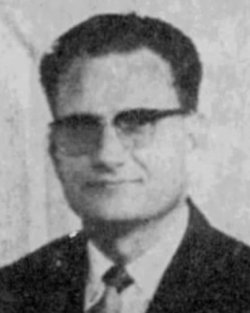
Wilbern Elias Best (1919-2007) was a preacher and writer of Gospel material. He wrote 25 books and pamphlets comprised of sermons he preached to his congregation. These books were distributed in English and Spanish around the world from 1970 to 2018 at no cost via the W.E. Best Book Missionary Trust.
SERMON ACTIVITY
Comments
Thank you for your comment!
Your comment has been submitted and is awaiting moderation. Once approved, it will appear on this page.
Pristine Grace functions as a digital library of preaching and teaching from many different men and ministries. I maintain a broad collection for research, study, and listening, and the presence of any preacher or message here should not be taken as a blanket endorsement of every doctrinal position expressed.
I publish my own convictions openly and without hesitation throughout this site and in my own preaching and writing. This archive is not a denominational clearinghouse. My aim in maintaining it is to preserve historic and contemporary preaching, encourage careful study, and above all direct readers and listeners to the person and work of Christ.
Brandan Kraft
Bible Verse Lookup
Loading today's devotional...
Unable to load devotional.
Select a devotional to begin reading.
Examples: Isaiah 53:10, Rom 8:28-30, Psalm 23, grace, love one another
to
This chapter has verses 1---
Sign in to save your Bible lookup and search history.
Comments
Your comment has been submitted and is awaiting moderation. Once approved, it will appear on this page.
Be the first to comment!