Before we read verses 1 through
5, last Sunday I forgot one of the adjectives. When I looked
down, I went to the wrong adjective, which is easy to do. We had 15
of them, two nouns and a verb. So while I'm reading this, when
I come to the one that I omitted, I'll take a little time, not
as much time as I'd like, but I'll take a little time on that
one that I missed. So let's read beginning with
verse 1, 2 Timothy chapter 3. But this you be recognizing,
in the final days difficult times shall be present. For the people shall be self-lovers, money-lovers,
boasters, arrogant, blasphemers, disobedient to parents, ungrateful,
unholy, without natural affection or devoid of natural affections,
irreconcilable, slanderous, and the next one is the one I omitted
last Sunday. Incontinent is the way that King
James translates it. I'm translating it without self-control. The adjective is akratos, literally
means kratos, means might or power. It is negated by alpha. Thus we have persons without
self-control. I'll be saying a little bit about
that later, but not right now. Untamed. Not lovers of good, traitors,
reckless, high-minded, pleasure lovers more than God lovers. Now, what's the fifth verse?
We gave some important things on this verse. We're going to
have an entire lesson today plus about two more on this verse
of Scripture. So this will be the basis for
it. Verse 5, "...having a form of piety, but who have denied..."
That's a perfect participle. "...who have denied..." And that
means they are in a state of denying. Who have denied the power of
it, that is, the form of piety. You be turning yourself away
from these. This past week I was reading
the works of John Owen on this particular verse. I want to give you four statements
by him. I'm not using this as an outline. I'll give my outline
later. But I think these are worthy
of noting. Things that make the final days
hard days or difficult days. Days that are full of trouble
are, and these are the things that he mentioned. Number one,
when the profession of Christianity is outwardly maintained under
a visible predominancy of horrible lusts and wickedness." He called attention to three
things. He said, consider the infections,
the effects, and the consequences. Secondly, he said, the things
that will make the final days difficult, hard, are times full
of trouble, be when men are prone to forsake the truth, and seducers
abound to gather them up." And folks, that's what we're
seeing today. These two things go together,
he said. Now, I want to add something
to that we'll comment on later. Unregenerate church members not
only grow weary of sound teaching, I Timothy 4, 1 through 3, but
they desire something new that pleases Acts 17, 21, thus manifesting the withdrawal of God's restraint,
Romans 1, 24-28, and II Thessalonians 2, verse 11. Folks, that's an
outline for a message within itself. I added that to what
Owen said because he really started me thinking in a certain area.
Number three, John Owen again. Things that make the final days
very difficult. Be when church members mix with
the world and learn its way of life. Whoo! I want to add something to that.
This is in direct opposition. to being purged from dead works
and purified to Christ as a special people, therefore being zealous
for good works." And folks, that's Titus 2.14. The fourth thing
that John Owen said concerning final days, hard days, difficult
days, days full of trouble, will be when there is a great attendance
on outward duties while the inward condition is decaying. And that's our text, having a
form of piety, but who have denied the power of it. I want to add a statement to
that. An apostate condition desensitizes
false church members, therefore they not only become indifferent
in feeling, but their sensitiveness to God and the Bible is lessened
until it does not exist. And folks, that again is II Thessalonians
2 verse 11. I want us to observe the Lord's
Supper first of all this morning before we get into our lesson.
We took two weeks on the adjectives, fifteen of them, two nouns, and
a verb to describe the awfulness of sin that will be committed,
not only in every generation of mankind, but worse, in the
final days of any dispensation. Let me share with you what I
got into last week. The more I looked at this verse,
knowing what it teaches, And you remember I made this statement
in verse 5 last Sunday, having a form of piety. But who have
denied a perfect participle? And this perfect participle,
this tense, indicates that these characteristics described by
Paul as he was inspired by the Holy Spirit to give us these
verses. These characteristics were not
all futuristic. They were in existence even in
Paul's time to some extent. And then I gave one verse of
Scripture to prove that there is a difference in the last days
and the last of the last days. And that verse was I John 2,
verse 18. Antichrist shall come. Antichrists
existed in Paul's day, in John's day. But a difference between
antichrists that are in every generation and the time for the
antichrist singular that is going to be future, it is not historical,
which is something that you and I Hopefully, folks, no one in this auditorium will
ever witness, but some might, especially if there are any apostates
or any unregenerate who die in an unrenewed state. As a child of God, I'm not worried
about it, and you're not worried about
it. That doesn't mean we'll not have hard times. We're already
beginning to see hard times. But the thing that captivated
my attention, I tried to reflect on this subject from Genesis
1-1 all the way through the Scriptures. Let me tell you what I came up
with and I'll share the outline with you this morning and we'll
develop it to some extent. I believe there are three major
dispensations of grace. I call the first the patriarchal
dispensation, the second one the mosaical dispensation,
and the third being the one in which you and I are living, the Christian dispensation. But it's always, even in the
biblical sense of awful times, terrible times, hard times, the
worst times in the first two dispensations. The first dispensation
being the patriarchal. That's the first days of mankind. That brings us to the mosaical
dispensation, the middle days of mankind, and the final or
the last days of mankind being the age in which you are living,
you and I are living. But the worst days of the first
dispensation were the last days of that dispensation. The worst
days of the second dispensation, the mosaical dispensation, were
the last days of that dispensation. And beloved, you'll just wonder,
I wonder why I hadn't seen it before, really. And the last
days of this dispensation will be the worst days of human history. Now, having said that, I'll ask
the... I have two letters here. that we have just received recently.
I want to read only one. I want to keep one to read at
the last of the service because it is a perfect illustration
of the last point that I want to make this morning and the
point that I want to leave with you. But I assure you that we'll
be studying the Scriptures. Some statements that I have heard
over the last, I would say, The last week especially, I spent
a number of hours listening to all of the rebuttal in the closing
arguments of the O.J. Simpson case. I did it for several
reasons, but I want to share with you some statements that
I've copied down, things that I've actually heard, and they will, I hope, cause
you to react in the same manner in which I have reacted and am
reacting. This one. The panel of lawyers,
mostly defense lawyers, were discussing this, and this is
the statement. It is not content, but body language. that counts in the closing arguments
of a trial. Well, folks, we can say that that is not a desire for
justice to be accomplished. Period. The tragedy is, I've heard this. from preachers. And I have lived
to see some preachers that I know who did conduct themselves several
years ago, ten, fifteen years ago, differently from the way
they're conducting themselves today. And that is, they've come to
realize that the Charismatics with their body language have been able to accomplish
in quotation marks, what they have not accomplished. Therefore, they have resorted
to mimic the charismatics in order to accomplish what they
want to accomplish. Think that through. It is not
content, but body language that counts
in the closing arguments of a trial. Listen to this one. In order to be a defense lawyer,
one has to give up some of his morality. The tragedy is they don't have
any to give up. I don't want to bore you with
this because I'm sure that you've read a lot about it, you've seen
it on TV. One was commenting about Cochran.
Personally, I think he is a demon out of hell. I think he is demon
possessed. Did you know he's a Baptist Sunday
school teacher? Did you see him wearing his big
cross and his lapel in his closing remarks? One said, Cochran is turned into
a preacher, which everyone thought he would be, in the final argument. The reply
was, the preacher is turned into a snake oil salesman. Now here's a summation of the
whole mess. I heard last night a black professor
of law from Harvard University on CNBC. He made some good statements, but before he got through, the
same prejudices were manifested. Here's a summation I saw in a
paper this morning. Defense attorneys argued a frame-up,
a conspiracy hatched by a racist rogue cop, backed up by a racist
system to put away a successful black man. Those were a few thoughts I wanted
to share with you this morning, just a few of many. I've made
notes of them. Did you see in today's paper
Robert Shuler? He says the religious right is
mean. Folks, if the religious right
is mean, what does that make me? Another false prophet. And when
I say a false prophet, I mean a false prophet. Having a form of piety, but who
hath denied the power of it? The command is, avoid, shun every
person who has only a form without any power. I'm interested in the things
that make the final days so difficult, so hard, so full of trouble,
days which you and I may witness to some extent, not the final
of the final days, But we'll see the precursors to it. And we're already beginning to
see them. But I love the promise that Paul
made to the Corinthians. I Corinthians 10, 13, God will
not put more upon you, He will not subject you, He will not
subject me to anything that as a recipient of grace is not capable
of enduring. I think you can see why I enjoyed
reading those statements by John Owen. But we're not dealing with
that, per se, this morning. I also related to you that there
are three great dispensations of grace. Now, some say there are seven
dispensations. I said there are three great. And I'm going to present this
from the Scriptures in a way, and it can't be refuted. It's
there. in the first days of mankind, the mosaical in the middle days, and thirdly, the Christian dispensation
in the last days of mankind. Beginning even with the first
advent of our blessed Lord, and lasting until His second
advent. But there are last of the last
days. And the last of the last days
of any dispensation, whether it be patriarchal, mosaical,
or Christian, in the Scriptures were always the hardest days,
the most difficult days. The days that were most full
of trouble. You say, well, look at the first
dispensation. We're going to look at all three
of them in a summary view this morning, getting to my subject. The last days of the first days
of mankind were the hardest times. You say, well, now how could
that be? since this dispensation concluded with the coming of
the Mosaic. How could the last? How could
the last days be more difficult than the times before the Flood,
when every imagination of man's thought was evil, and that continually? Sixth chapter of Genesis. How could it be? How could they
be more difficult and harder during the time of Joseph than
there were during the time of Noah and just before the flood?
But they are, and I can prove it. Let's look at the second period
of time, the second dispensation, beginning with the Mosaic. The
first thing that comes to your mind, the days of the judges. How many good judges were there?
The whole book of Judges. And if my memory is working correctly,
I think there were 27 chapters in the book of Judges. I didn't
check that out. I think that's true. getting at this stage of my life,
sometimes I don't trust my memories I have in the past. But think
about the judges, the number of judges, and how many of them
were good judges. I'll let you think about that.
Then think about the division of the kingdom into two kingdoms.
I'm talking about the mosaic, mosaical dispensation now. divided
between Israel and Judah, northern and southern kingdoms. A total of about 40 kings in
those two kingdoms. Not one good kingdom. Not one
good king in the kingdom of Israel. And eight, only eight, good ones
in the southern kingdom. How could anything be worse than
the times of the judges and the times of the wicked kings that
were ruling both the northern and the southern kingdoms after
the kingdom was divided? Folks, think with me for a moment.
Think about the minor prophets. Think about statements coming
from the major prophets. Think about, first of all, the
book of Malachi. And here it is, following Malachi,
400 years without God's voice being heard. Can you think of
anything worse than that? Can you think of anything worse
than that? So coming to the dispensation
in which we're living. Some call it the dispensation
of grace. I just call it the dispensation of Christianity.
You can call it by different names. Still means the same.
Started, it began with the first advent of our Lord and will continue
until His second advent. I want to give you an overview
first. The last of the first days of the first dispensation
of mankind, called the patriarchal dispensation, were without a
doubt the last. And they were the worst. The
last were the worst. So let's kind of summarize the
book of Genesis for a little bit. I hope you know enough about
Genesis that you can follow this without a lot of going back to
the Scriptures. I can just give you an overview.
Adam was the beginning of human life. The conflict of life is revealed
in Cain and Seth. Notice I said Cain and Seth,
not Cain and Abel. Abel was killed, Seth took his
place, because the line is through Seth, not Abel. Thus, we have the development
of life along the lines of Cain and Seth. The development of life, which
began in the first family, extended to society in general. Hence the blending of the two
lines culminated in the flood on one hand and the preservation
of Noah and his family on the other hand. Salvation, deliverance, is what
we think about when we view Noah and his family in the ark. salvation or deliverance and
preservation from the evil world in which they lived. Therefore, anyone who follows
and allows what is of the world, now here's a lesson for you and
me, is approving rather than condemning
it. Now, what kind of a preacher
was Noah? You know, I get so amused at
the Charismatics today where they talk about revival and the
great revival. We have a revival of heresy. You say, I don't like what you're
saying. It bothers me very little. Is there anyone who feels that
way? I'm not responsible for what you think. I'm responsible
for what the Scriptures teach. I want to show how inconsistent
they are. And now the Baptists and other denominations are catching
on, and they're following the example of the Charismatics. Even Bob Shuler. The religious
right is guilty of meanness and intolerance. Folks, I am. I am intolerant with the devil. I am intolerant, and I don't
care who knows it, with anything that is contrary to the principles
of Holy Scripture. I'm intolerant. I'm not going to compromise one
iota. But they talk about Noah. Talk
about the great revival in the last days. Well, let me tell
you what the Scripture says in the New Testament, both the 17th
chapter of Luke and the 24th chapter of the Gospel according
to Matthew. As it was in the days of Noah, so shall it be
at the time of the coming of the Son of Man. Now, I want to
ask a question. Was there a great revival in Noah's time? Was there a great
revival? as people would have you to believe
today. You see how inconsistent? Scripture
doesn't mean anything to these people. They're not interested
in biblical facts any more than most lawyers are really interested
in justice. They're interested in winning
their case at any cost. If Noah had done what many church
members are doing today, he would not have been standing
against the world. But he stood against it. Lonely
voice, folks. A lonely voice. However, Noah preached the God
of integrity and righteousness, the God who created man. Watch
what I'm saying. The God who created man, not
a God, spelled with a little g, created by the depraved minds
of wicked men, both in civilization or in the civil area are religious. It doesn't make any difference. So we've been talking about the
development of life at the beginning. Let us notice something about
the pilgrim character of life that comes out not in Noah, but
in Abraham. The pilgrim character of life
is manifested in Abraham. He typically presents to you
and me the pilgrim character of life which is the result of
the consciousness of the effectual call. You know what I mean by the effectual
call? The pilgrim life, however, is not exempt from trials and
conflicts. Now, I would like to stop at
this juncture and go with you verse by verse, especially Hebrews
11, 8 through 19, but I'll ask you to read it. That's my proof. Now let's look at Abraham, Isaac,
and Jacob. In Abraham we see the gracious
electing God. And folks, what I have just said
is detested. It is hated by about 95% of religionists
today. I said in Abraham we see the
gracious electing God. who calls the non-existing as
if he were already there. Romans 4.17. Secondly, in Isaac. In Isaac,
we see the redeeming God. And if you want proof of what
I've said, Hebrews 11 again. And go to the faith of Isaac,
the faith of Abraham, then the faith of Isaac. It is described
for you by the inspired pen of the apostle who wrote it. So
in Isaac we see the redeeming God and life from the dead. Life from the dead. Then Jacob,
whose name became Israel. In Jacob we see the overruling
God. I said, the overruling God. So we have Jacob, an intriguer,
becomes by undeserved grace, a hero for God. No Old Testament saint saw more
of the favor and forgiveness of God than Jacob. Now, in summarizing these patriarchs,
we have, first of all, watch this, and folks, this will stand
the test of Scripture. In Abraham, the truth of divine
election is given. God singled him out from all
the people of the earth. Having said that, I need to show
that election must be viewed from two points of view. Number
one, eternal election, and secondly, election in time. In other words,
God picked out from eternity, and then there is a picking out
in time, when certain persons are in existence. I'll give you
scripture for both. Ephesians 1. 3 through 14, the
first, and especially verse 3 and verse 4. And for the second,
John chapter 6, but especially the 37th verse. So in Abraham, the truth of divine
election, God singled him out from all the people on the earth.
So scripture teaches divine election, eternal election, election in
time. And no one is elected in time
unless he was elected in eternity. Secondly, in Isaac the same truth
is manifested as is evidenced in passing by Ishmael and God's
declaration that in Isaac shall thy seed be called. Genesis 21, 12. Then Jacob. In Jacob, both truths
are to be observed. Thus, we have before us God's
eternal purpose according to the election of grace, Genesis
chapter 25. Now, finally, in the last days
of the patriarchal dispensation, the fullest image of God, life
that began with Adam, the development of life up until
Abraham, and the pilgrim character of
life in Abraham. But the fullest image of life is revealed not in Abraham, not
in Isaac, not in Jacob, but in Joseph. I hope you're familiar with Genesis
beginning with about the 35th chapter through the 50th. For
I'm going to summarize a lot of things for you. That means the most complete
image of life is seen in the sufferings of Joseph. Don't forget what I'm saying,
folks. This will strengthen you when
you need it, because you'll have biblical examples. So the most complete image of
life is seen in the sufferings of Joseph, not for sin, but for
righteousness' sake. The story of Joseph's life has
many profitable lessons. Among them is the outstanding
fact of the unseen operation of God's providence, His government,
complete victory, which brings complete victory for truth and
righteousness. It seems that all through Joseph's
life, he was followed by plotters of evil. And he was. He was hounded by
plotters of evil. We'll talk about his own brethren.
You remember Potiphar? Etc. It began in his own family. Watch what I'm saying. In his
own family at an early age. Did you know some of your worst
enemies as a Christian can be members of your own family? If you don't like that, you'll
just have to either spit it out and not accept the biblical teaching
and believe whatever you want to believe. Can we prove it? Well, let's
see if we can. We must expect, you and I must
expect, opposition instead of applause for our Christian stand. I said opposition rather than
applause. You know why? It is because we are a constant
reminder to wicked men of their evil works and therefore give
rise to their hatred toward us. They know that you know too much,
and they hate you for knowing it. The virtuous character of Joseph
is seen in his family, secondly in Egypt, and thirdly
in his exaltation. Folks, that'd be enough to develop
a whole sermon. So all I'm doing is just giving
you a bunch of outlines. But let's zero in on a few points.
First of all, in this family, Joseph's brothers becoming jealous
of their father's favorite son. I said their father's favorite
son. plan to dispose of him so that they could have their own
evil way." We're going to take a little
time to look at a few verses, in case you have forgotten them.
Turn to the 37th chapter of Genesis. 37th chapter. I'm reading from the King James.
I like the NASB translation of many of these things much better
than the King James, but I'm going to read from the King James.
But this is where I've outlined it through the years, and I want
to call your attention to a few things here. 37th chapter. Notice beginning
with the first verse, And Jacob dwelt in the land wherein his
father was a stranger, in the land of Canaan. These are the
generations of Jacob. Joseph, being 17 years old, was
feeding the flock with his brethren. Notice he was a shepherd. And the lad was with the sons
of Billah, and with the sons of Zilphah, his father's wives. And Joseph brought unto his father
their evil report. What kind of report? Evil report.
Who concocted this evil report? His brethren. Verse 3. Now Israel, that's Jacob, folks,
loved Joseph more than all his children. You say, well, he showed favoritism
and he sinned. Folks, you need to know what
grace does. Surely you don't think that.
Because he was the son of his old age and made him a coat of
many colors We'll be commenting on that coat in a few minutes
with some other things. I want to read a few verses here
verse 4 and When his brethren saw that their father loved him
more than all his brethren They hated him and could not speak peaceably
unto him. And Joseph dreamed the dream. Now, Joseph, being a real man
of God, faithful to the Lord, in fact, Joseph, folks, is the
greatest type of Christ that we have in all the Scriptures.
And I'll point those things out to you in a minute. And he told
it, his brethren, And they hated him yet more. So he couldn't even talk about
spiritual things without them manifesting their hatred. He didn't speak their language.
And he said unto them, here I pray you, this dream which I've dreamed. For behold, we were binding sheaves
in the field, and lo, my sheaf arose, and also stood upright. And behold, your sheaves stood
around about, and made obeisance to my sheave. And his brethren
said to him, Shalt thou indeed reign over us? See their attitude? Or shalt
thou indeed have dominion over us? And they hated him yet the
more for his dreams and for his words. Well, let me read just a little
bit further. And he dreamed yet another dream. Remember now,
the Lord in the Old Testament time, He appeared to them and
appealed to them and spoke to them in dreams, etc., etc., in
various ways and so forth. We have the Word now in its completion.
We're talking about what they had then. And he dreamed yet
another dream, and told it his brethren, and said, Behold, I
have dreamed a dream! More, and behold, the sun, and
the moon, and the eleven stars made obeisance to me. And he told it to his father,
and to his brethren, and his father rebuked him, and said
unto him, What is this dream that thou hast dreamed? Shall
I and thy mother and thy brethren indeed come to bow down ourselves
to thee, to the earth? And his brethren envied him.
Hated him. Envied him. Drop down to verse
18. When they saw him afar off, even
before he came near unto them, they conspired against him to
slay him. Now what makes this so bad? His
brethren doing this, feeling this way, because He was an example
of truth and righteousness, and it was exposing them in their
philosophy. Verse 19, And they said one to
another, Behold, this dreamer cometh, making light. Come now, therefore,
and let us slay him and cast him into some pit, and we will
say, Some evil beast hath devoured him, and we shall see what will
become of his dreams." Now, as far as I want to read,
let's continue giving an overview of his life. So, folks, it's very unpopular
to oppose evil. You don't believe it? Oppose
it. You'll become unpopular quick. So in his family, Joseph's brothers
becoming jealous of their father's favorite son. What do they plan
to do? Dispose of him. dispose of him. Now in the first
11 verses of the 37th chapter of Genesis, we have the greatest
type of the Lord Jesus in the Old Testament. Let me point out
seven things. Number one, Joseph was loved
by his father. He was clothed so as to show
his equality with his father. Two, he testified of heavenly
things to his brethren. He repeated that testimony in
spite of opposition and hatred. Number three, he was a shepherd. Christ is my shepherd, folks.
Number four, Joseph was the son of Jacob's old age. Number five, Joseph's sheaves
were in the field. Number six, Joseph was stripped,
sold, and cast into a pit. Verses 23 and 24. By who? His
brethren. but they could not strip him of either his character or his
graces. Finally, number seven, Joseph
was exalted. Therefore, he became the one
who preserved the lives of his brethren. Now, let's take this in its conclusion. Although this was the first turn
of events against Joseph, we shall see Providence. Now, let's look at the other
side. Providence was quietly working for Joseph, even though
evil was working against him. I'm going to make an application,
a very practical one, before I get through. Thus, even our
enemies, I'm talking about us now, and their plotting can bring us to our goal. I don't like personal illustrations.
I don't like for preacher anyone to spend a lot of time. But folks,
I've experienced this many times in my ministry. The
very people who plotted against me, I didn't understand it at
the time, but those people were bringing me to the goal to which
I was to arrive. That's true of every Christian.
Joseph did not know what his suffering would bring. Therefore, he suffered as if
this very experience of suffering was the end in itself. Please don't forget that. You
and I, when we're suffering, we are to take that experience
as though it is the end in itself. We don't know how God is going
to use it in His providence, folks. This was from Joseph's perspective. Now watch this. However, adversity
from God's perspective was not a penalty against Joseph for
doing wrong, It was the way of providence for the triumph of
life. Therefore, the easy way is not
always the best way, folks. I feel sorry for people when
they claim that life had just been so good, they've just always
had a bed of roses. I'm skeptical, first of all,
of the testimony. And if that is true, that's not
indicative that they have grace and are living a consistent Christian
life. So the next time you're talking
to somebody and some of your relatives and close friends that
like to rub it in, if you're having a hard time, they've just
been so blessed, everything's just gone so well with them.
Folks, two ways of looking at it. I said the easy way is not always
the best way. I'm thankful as I look back,
and I've had some pretty bitter experiences. I can honestly and
truthfully say to you this morning, I'm thankful for every one of
them. I want you to turn your Bibles
to Genesis 50 verse 20. Show you the climax of this thought. Joseph later said to his brethren... I want to give you the NASB.
I wrote it down because I like the NASB translation, and I'll
call the word that I think should be translated differently. Let's
read the King James first. Joseph later said to his brethren,
Fear not, for am I not in the place of God? The NASB reads like this. Do
not be afraid, for am I in God's place? For am I in God's place? Joseph was asking, was it my
design to bring these things to pass? Or was it God's eternal
decree? being worked out. Are you with me, folks? The answer is given in verse
20. Here it is. Genesis 50 and verse 20. I'll read the King James and
I'm going to read the NASB. But as for you, ye thought evil
against me, but God meant it unto good. to bring to pass as
it is this day to save, I don't think that's a better translation,
to save much people alive. Listen to the NASB. And as for
you, you meant evil against me, but God meant it for good in
order to bring about this present result, to preserve many people
alive. God wills to suffer sin for the
glory and the good of His people. Listen closely, please. I said
God wills to suffer sin for the good of His people. If this is not true, then we
have a reflection against absolute omnipotence, which is God's attribute. The worst sins of all were committed
against Joseph. See what I'm saying? Watch what
I'm saying. In the final days of the patriarchal
dispensation, Genesis 37 opens with the last
division of the first book of scripture This shows the connection
between Christ and his descent from Judah Being born of the
Holy Spirit Christ did not inherit original sin as most religion
is teach today If you had inherited original
sin he'd be the Savior So people who believe that, they don't
have a Savior. They can talk about Christ. They
can have all the form that they reject. They disown
the power of it. Joseph was a great type of Jesus
Christ, as has been shown. Therefore, adversity for him
was not a penalty for wrongdoing. but it was the way of providence
for the fulfillment of God's purpose. The great lesson that has to
be learned by you and me, as well as in every dispensation,
is that the greatest enemies of God's people are not to be
found in the forces without but from those within the professed
ranks of God's people. So get ready. Mr. Schuller is not prepared.
He wouldn't know what I'm talking about, the power of positive
thinking. Wherein does the motive power
want to conclude with this? Wherein does the motive power
of God's people lie? Wherein does it lie? Regardless of the dispensation
in which they live, wherein does the motive power
lie? We've heard about motive a lot
the last few weeks. The motive for the killing. So
I've got to think about motive. So I did a little research to
study on the subject of motive. Motive is something that prompts
a person to act in a certain way or that determines volition. The goal or object of one's actions
motivates that person. Now, the dictionary gives a lot
of synonyms. So I won't discuss some of those
with you because there's a difference. And I'm going to give the difference
that Random House, I think, gives a great distinction. So I'll
share these with you. We're talking about motive, folks.
And I want you to see the part where we're just getting into
motive and we'll be dealing with it more. I'm just introducing
it today. Random House, in discussing motive,
lists the synonyms as motivation, incitement, influence, ground,
cause, and then concludes in this manner, in caps, INDUCEMENT in caps,
INCENTIVE in caps. He says motive, inducement, and
incentive, they apply to whatever moves a person to action. Now let's see how he distinguishes
between these three major statements. First, motive is applied mainly
to an inner urge that prompts a person to action, though it
may apply to a contemplated result, the desire for which moves the
person. Two, inducement, watch this,
is never applied to an inner urge and seldom to a goal. but is that which leads a person
on. It is used mainly of opportunities
offered by another person or by the factors of a situation. Incentive. Incentive was once
used of anything inspiring or stimulating the emotions or imagination. It has retained its connotations
of that which inspires a person, but is totally, watch this, is
totally applied only to something offered as a reward or to stimulate
competitive activity, to create incentives for a higher advancement. I want to close with this and
then read you a letter. Wherever there is divine conviction... You say you have a conviction.
Is it divine or is it just human? Is it divine or is it human?
Wherever there is a divine conviction, there is also a divine attraction. So if there's a divine conviction, there's a divine
attraction. Now, here's a person who says,
I am convicted. I have a divine conviction. But
his attractions are not on divine things. You'd say he's a liar,
isn't he? Yeah. And you'd be right. Just
call him what he is. You see, there cannot be one
without the other. You cannot have a divine conviction
without divine attractions. Now, I said all that to say this.
Let me read. Turn to Hebrews 12. I want to
give this in conclusion. I'm introducing something very
important and very practical. Hebrews 12, 1 and 2. I could quote it, but I want
to kind of translate it as I go along, and I have that in my
Bible. King James says, Wherefore seeing
we all so accomplished about, with so great a cloud of witnesses,
let us lay aside every weight and the sin which does so easily
beset us. Now watch this. Then he says,
and what? And let us run with patience
the race that is set before us. Looking at this verse again,
therefore, we also having so great a cloud of witnesses surrounding
us, let us lay aside every encumbrance and the easily distracting sin. Through endurance may we make
progress in the race or in the contest
set before us. Don't stop there. Looking away
to Jesus, the author, and finisher of our faith. Now, let's look
at this closely. The motive power for laying aside
some encumbrance lies in looking to Jesus Christ,
folks. If it doesn't, then laying aside
the encumbrance won't last. Now watch this. If a believer,
or a person who professes to believe, lays aside anything without a
divinely motivated desire, he will either secretly, by desire, what he lays aside, or soon return
to it. Now, why do we have so many people
making professions of faith, and jump up and down for a while,
and then you don't see them? You don't see them. So this is why church members
return to old sins, old ways, and old beliefs. If they had
a divine conviction, there would be divine attractions. Now I'll read you a letter that
spells that out. I couldn't help but smile when
I read the letter. I'll not read all of it. Spanish
people write some nice letters. But this fellow is quite disturbed,
I can understand. It starts out, Very appreciated,
brethren in Christ. By means of this letter, I am
extremely pleased to greet you and all those involved in your
mission. In the name of our Lord and Savior Jesus Christ, praying
that the Lord fill you with His richest wisdom and blessings.
The objective of this letter is to thank you very deeply for
the books that you have sent me. And now I would like for
you to continue sending me the other books, since they have
been very useful in the study of the Bible and how God's salvation
comes to man. On the other hand, I have some
questions to ask you, because I have not been able to clear
up some anxieties concerning free grace. I know in your work it says that
God gives salvation by His sovereign will to man, and man cannot reject
that salvation, since the will of the man is not equal to the
will of God. Thus God chooses man, my question is. One, why
there are Christians that, during the first years of Christian
life, manifest being elected by God and are saved, confess
their salvation, preach God's Word—he's talking about preachers
in particular that he knows—and enjoy the things of God. In the
end, they were ministers, and after some five or ten years
passed, And they have returned to the world doing the works
of the flesh as any natural man. Yet disavowing God's power. Folks, it's simple. They had
the form for a while. They claimed they had divine
conviction, but they didn't. If you have divine conviction,
you'll have divine attractions. Either the man has decided to
receive God's will and afterwards reject it, or there is influence
of the wickedness that is Satan. The fellow's confused. He needs help, too. Also, I saw
others believing in the Lord. Well, now, I put it like this
today, folks. This is not being harsh. I may
see people who say they're believing in the Lord. I have to wait and
see what the evidence is. expressing being elected by God,
believed, were baptized, preached God's Word in their first years
of Christian life, but afterwards also they returned to the world
doing the works of the flesh, but after many years returned
to their Christian life and continued in the assembly of the Lord. See, he's really confused, a
very confused man. I remember when I went to Belfort,
And I taught a lot like I do now. I taught some of the same
things, not to the same depth and so forth. Of course, you
could understand. But I'd have Baptist people join after a while
to become in on professions of faith. The tragedy was, after
making a profession of faith, they still, after a while, acted
like the devil. I even baptized a great number of Baptists. And
they were just my converts. They were not the Lord's converts. In this case, did God, by His
will, do these things in the life of these people? Or do men
decide when and how they can receive salvation and also be
separated and then return to God? He doesn't understand the
first principles. I'm wondering if he's one of
those who preached for a while. He didn't say. Or did the men
not repent of truth? Or has the faith not been given
by God? In these two cases, I saw that
these believers are Christians. When they received their salvation,
they wept, showed piety, went on as if God sowed the change
in their lives, but afterwards all has been blurred. Why? He wants help. I hope he can
get it. I hope the Lord will give him
the spirit that he can understand what he's reading. and especially
the Bible. This is all that I want to say,
and I would like a response. But in any case, I request that
you send me the other books. Lucas Alvarez.
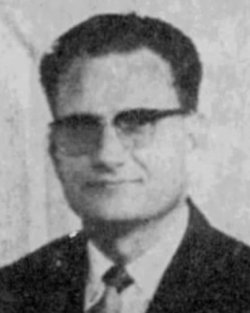
About W.E. Best
Wilbern Elias Best (1919-2007) was a preacher and writer of Gospel material. He wrote 25 books and pamphlets comprised of sermons he preached to his congregation. These books were distributed in English and Spanish around the world from 1970 to 2018 at no cost via the W.E. Best Book Missionary Trust.
SERMON ACTIVITY
Comments
Thank you for your comment!
Your comment has been submitted and is awaiting moderation. Once approved, it will appear on this page.
Pristine Grace functions as a digital library of preaching and teaching from many different men and ministries. I maintain a broad collection for research, study, and listening, and the presence of any preacher or message here should not be taken as a blanket endorsement of every doctrinal position expressed.
I publish my own convictions openly and without hesitation throughout this site and in my own preaching and writing. This archive is not a denominational clearinghouse. My aim in maintaining it is to preserve historic and contemporary preaching, encourage careful study, and above all direct readers and listeners to the person and work of Christ.
Brandan Kraft
Bible Verse Lookup
Loading today's devotional...
Unable to load devotional.
Select a devotional to begin reading.
Bible Reading Plans
Track your daily Bible reading with a structured plan. Choose from several options and let us keep track of your progress.
Comments
Your comment has been submitted and is awaiting moderation. Once approved, it will appear on this page.
Be the first to comment!