Bootstrap
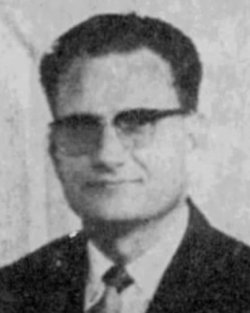
W.E. Best

The Subject of Temptation, Part 2

James 1:13-15
W.E. Best May, 13 1992 Audio
0 Comments
Best's Corner

Sermon Transcript

Auto-generated transcript • May contain errors

100%
Open your Bibles this evening
to James once again. I'd like for us to read verses
13 through 15. Once again, we'll not spend the
time tonight, we'll just read the verses, the translation. We tried to explain some of the
most important things in the Greek text last Wednesday evening
and we'll not repeat it tonight. But let's read the verses anyway
because this is dealing with the subject of temptation. And
tonight I want to go back a number of years and acquaint you with
after giving some quotations that I was faced with and I had
to make a decision in my own personal life as to what I was
going to do as far as my future ministry was concerned. I got
into that by going into this once again in James chapter 1,
13 through 15. But we'll not be dealing with
this per se, this coming Lorsday morning. But we will be dealing
with something that is very practical, something that I feel that the
church as a whole, I need it, and I feel that the church also
needs it. Let no man say when he is being
solicited to sin, I am being tempted by God. For God is unable to be tempted by evil things, and he tempts
no one. But each one is being solicited
to sin when he is being drawn away by his own lust and has
been caught, could be has been deceived. Then lust, which has conceived,
produces sin. And sin, having been fully formed,
brings forth death. Those are three verses that need
to be explored and dealt with in great detail. The first thing
I want to do is to turn in my Bible and read to you some quotations
from works that I was subjected to and things that I was supposed
to use in our church because the book had been written by
the present, at that time, the present president of the SBC,
Southern Baptist Convention, and I'm talking about Herschel
Hobbs, who was pastor of the First Baptist Church of Oklahoma
City for many years. Now, having said that, I want
to read you from the book, which I had, which I was supposed to
use, but I was not about to use it, and I'll show you why. Now,
these are some direct quotations from several sources I want to
give you to begin with tonight. If Jesus could not yield to temptation,
then his temptations were not real. Now that was far enough for me to
read back 35 years ago. If his temptations were not real,
then he pretended to be tempted when he really wasn't. If we say that about him, then
we make him guilty of hypocrisy, which is condemned more than
any other sin. That is taken from the book which
he wrote entitled New Testament Evangelism. Now let me give you
another quote by him. In his life, Jesus endured every
kind of temptation. I hope that soaks in. Every kind
of temptation. The truth of the matter is that
Jesus could sin. But the glorious truth is that
he did not sin. Now folks, that today is one
of the main teachings of the SBC and almost all of her pastors,
because this is taught in all of their seminaries, places where
young ministers receive their training before they go out into
the pastorate. Let me give you another statement
by another man before I turn to some other statements that
I want to give you. Not only the Baptists, but evangelicals.
I'm going to give you some statements by some outstanding, in quotation
marks, evangelicals. Every suggestion Satan made was
appealing to Jesus. and open up to him real possibilities. Since he was fully human, he
could have made the wrong choice. Now this is taken from the Sunday
School literature of the SBC that I've just given you. And
the man who wrote the article was Roger Crook. In God's providence,
he was given the correct name. Now I want to quote you from
some evangelicals. The reason I'm doing this is
because of the verses that we're studying at this time. Those who believe in peccability
say, quote, Why all this preparation, why
all this preparation before meeting Satan? In other words, you're
talking about the preparation of Christ before he met Satan
in the wilderness in Matthew 4 or Luke 4 or Mark 1. If he is God, and he is to meet Satan as God,
and God cannot sin, Then why all this detail about his act
of obedience, his praying, his filling with the Spirit? It was
because he was to meet Satan as the first Adam met him, and
he would not go without complete and adequate preparation. He
fought the battle alone and refused to accept any outside help. the angels came to minister to
him only after he had gained the victory. Could Jesus have
yielded to Satan? Yes. If he had not met him like
Adam did, without prayer, without the word, and in disobedience,
And inversely, if Adam had determined to obey God and prayed and had
been filled with the Spirit and met the enemy with the thus saith
the Lord, he too would not have fallen. Yes, without this obedience,
prayer and the word, the last Adam would have been as prone
to fall as the first man. We shudder to think what would
have happened if Jesus had admitted his inability to gain the victory
as the last Adam and resorted to the power of his deity. He
would immediately have vindicated the first Adam and excused his
defeat. Adam could then rise up in his
grave and accuse God of injustice. Adam could then make the excuse
that he sinned because he had no divine nature to fall back
on. Now I'll quote you another Baptist.
Now those that I've just given you were by evangelicals like
M. R. DeHaan and others. and they're
considered evangelicals. Listen to this statement. This
is by J.B. Moody, a well-known Baptist of
not too many years back. Quote, the child of Bethlehem
was begotten of the Holy Spirit, but being born of a regenerated
woman with the remains of depravity still in the flesh, there may
have been a taint of the same kind of depravity imparted to
her child which made it possible for him to sin and to suffer
for sin. He can sympathize with us in
this depravity which he could have gotten only by heredity."
End of quote. Now the reason I read these, I think sometimes we take too
much for granted. And I have prepared, I'll not
even give you the translation of it tonight, but I'm going
to cover all of Chapter 1, the Lord willing, this coming Sunday,
and it will take both services to do it. We'll just briefly
refer to the major things of verses 1 through 12, dealing
with the subject of trials, and secondly, dealing with the subject
of temptation, and we'll be looking at verses 13 through 15, which
we have read tonight. Now I want you to know something,
what we're going to do, and this is in preparing for our service
this Sunday, and it's not going to be easy to listen to. I warn
you ahead of time. It's good for me at this particular
time, and I think it'll be good for the church family. I want
you to look at verse 16. We're not going to read the rest
of the chapter even the King James, but I do, I'm just going
to read the King James down through about the 21st verse and mention
two or three things that we'll be dealing with and some of the
things in great detail. And it's going to be a message
for this assembly, period. I said this assembly, for all
of us, pastor and all the members. I'll begin with myself. Do not
err, my beloved brethren. Every good gift and every perfect
gift is from above, coming down and coming down from the Father
of lights, with whom is no variableness, neither shadow of turning. Now
notice in verse 16, he addresses the brethren again. You know,
this is an expression that I've already called attention to that
is used some 19 times in the five chapters. So James was writing
to Christians from among the 12 tribes according to verse
one of chapter one. And then in verse 18, of his
own will, begat he us with the word of truth that we should
be a kind of first fruit fruits of his creatures. I'm reading
it as it is in the King James. We'll do our best to straighten
some things out when we give it Sunday morning. Now, notice
the 19th verse especially. This is where we're going to
spend some time Sunday. We have known, well, I was giving
you the translation. Wherefore, my beloved brethren,
or brothers, Let every man be swift, or it could be quick. It's an adjective. Takus means
swift or quick. Quick to hear, slow to speak,
slow to wrath. I want you to know that verse
is really full. quick to hear, slow to speak,
slow to wrath or anger. For the wrath of man, or the
anger of man, could be anger, in fact I've translated it that
way, is not working the righteousness of God. How in the world? What
do you think that means? Won't you look at that? That's
not as easy to deal with as you might think from the King James
it's atrocious now what conclusion would one come to by looking
at verse 20 for the anger of man worketh
not the righteousness of God what in the world you think that
means verse 21 Wherefore, lay apart
all filthiness and superfluity of naughtiness, and we'll certainly
change this quite a bit in the translation, and receive with meekness the
engrafted word which is able to save your souls. Now what
does it mean, able to save your souls? After all, to whom is
James speaking? Speaking to brethren, isn't he?
Isn't he speaking to Christians? So what does it mean, save their
souls? And if you read the Puritans on this, they go wild. They have
it meaning everything from regeneration to something else. They just,
they go from one thing to the other. So that's a real, I would
call that a real exegesis. Verse 22. But be ye doers of the word and
not hearers only, deceiving your own selves. For if any be a hearer
of the word and not a doer, He is like unto a man Beholding
his natural face and a glass or a mirror and that'll be changed
quite a bit for he beholdeth himself and Goeth his way and
straightway forget it. What manner of man he was We're
just reading through verse 26 at 25 But the one having looked
into the perfect law of liberty. Oh, what a subject perfect law
of Liberty, how would you how would you explain that perfect
law of Liberty? What does it mean? And Continueth therein He being
not a forgetful here but a doer of the work this man shall be
blessed in his deed and Now we're going to be dealing more with
the last part after the introduction, Sunday morning. Now I want us
to look into the fact that Jesus Christ could not be tempted tonight
in the light of the passage which we're studying in James 1, 13
through 15. God cannot be solicited to evil.
Jesus Christ is incapable of being solicited to evil and he
doesn't solicit anyone to do evil. And I think we should begin the
subject by discussing just briefly the virgin birth of Christ. I said the virgin birth of Christ. If one accepts the fact of the
miraculous conception, it was miraculous, wasn't it? Christ
to be conceived in the womb of the Virgin. No human being involved, no man
involved. So if one accepts the fact of
the miraculous conception of Christ in the womb of Mary, and
at the same time insists in the doctrine of peccability, he advocates the idea of the
Spirit producing an unholy thing. Now folks, we're not going to
apologize for some in-depth study. refreshing our minds on some
things, even what we have written, what's in print, doesn't cover
the subject as well as we would like to. You could have a large
volume just on the subject and title. I mean a huge volume just
on the subject of the impeccability of Christ. Was He holy in His human nature? Was His human nature holy? Luke
135 refers to his human nature as that holy thing. That holy
thing. Christ's incarnation demanded
a perfect human nature. It demanded it. His coming through the womb of
the Virgin was in order that he might have a perfect human
nature. He is, or he was the assumer,
and what he assumed had to be holy as the assumer was holy. The divine nature, the eternal
son of God, absolutely holy, could not assume something unholy. So Christ's human nature is called
that holy thing, Luke 135. If you want to turn to that passage,
we'll not give an exposition of Luke 135, but we are just
using the term that holy thing. That holy thing is the manner
of God's manifestation according to 1 Timothy chapter three and
verse 16. Human nature apart from a person
is nothing but a thing. I said human nature apart from a person is nothing
but a thing. God was not mutilated by the
flesh, the human nature that he assumed, but it was manifested
in the flesh. John 1, 1 and 14. Christ assumed a human nature
which he will never lay aside. See, I don't agree with a lot
of theologians today. I don't believe that Jesus Christ
will ever lay aside his human nature. He assumed the human
nature and he'll carry it forever. It's a glorified human nature
now. But he's not going to lay it aside. Do you know the so-called
proof text that is used that he will lay it aside? and be
like what he was before he ever assumed, they use 1 Corinthians
15, 24, but it doesn't teach that. We'll get into that passage
in the study of the kingdom, the Lord willing. So that holy thing is the residence
of the Godhead according to Colossians 2, verse 9. In him dwells the
fullness of the Godhead vitally. The human nature in union with
the divine nature made mediatorship between God and men possible. So when a person denies that
Jesus Christ was impeccable also denies the fact that he is the
mediator between God and men. The true mediator. And I've been subjected to that
teaching by a man by the name of Frank
Stagg. Anybody ever heard that name?
Professor at New Orleans Baptist Theological Seminary. He did
not believe. I used to have his paper. that
he put out for his students. I loaned it to somebody and never
got it back, so that's what you get into sometimes when you have
something important, but I had his paper about 65 or 70 pages
in length that was run off and given to his students back in
the late 50s. You say, well, does it make any
difference? Well, it doesn't to religionists, but it does
to Christians. It does to Christians. I could mention these things
even before I left the Southern Baptist Convention and I couldn't
get anybody that thought it was very important. So folks, I had
to get out of the mess. I couldn't live with my conscience
and stay in it. The human nature in union with
the divine nature, I said, made mediatorship between God and
men possible. The mediator is God's appointed
place where God meets with his people. If it were not for Christ,
as our go-between, we would never have access to God the Father.
We have access to God the Father through Christ and by the spirit
of regeneration, Ephesians 2.18. Many other passages, but that's
one of the outstanding ones. Jesus Christ is the mediator
of reconciliation and intercession. He is the mediator at the right
hand of the Father and the Holy Spirit is the mediator within
us. We have two mediators. The one referring to Christ is
1 Timothy 2.5 and the one referring to the Holy Spirit is Romans
8.26 and 27. That holy thing is the method
of our redemption, 1 Peter 3.18. Three things under that statement,
as well as three things under what I just gave. Number one,
God absolutely considered cannot die. God can't die. God absolutely
considered can't die. That's just like God absolutely
considered can't pray. But Jesus Christ and his high
priest of prayer prayed in what capacity? Not as God absolutely
considered, but as the mediator, as the God-man. The God-man could die and did
die. And three, the eternal Son of
God as the Son of Man died. So Jesus Christ, as to his human
nature, is the seed of the woman. Not the seed of the man, he's
the seed of the woman. Genesis 3.15, going back to Genesis
3.15, and that is the key verse, may I emphasize it, that is the
key verse of Genesis chapter three. and
Galatians 4.4 for a New Testament companion passage. The Lord Jesus therefore has
a human, now copy these things down, just one word is all you
have to copy down. The Lord Jesus Christ has a human, two, Jewish,
three, Gentile, four, royal, five, lowly, six, imperfect,
seven, holy, eight, mortal, and nine, and immortal ancestry. Think about his ancestry. See,
I bring a little of this out, just a little of it out, from
a different point of view, in the first volume on eschatology. So the Lord Jesus has a human,
ancestry, Jewish ancestry, Gentile ancestry, royal, lowly, imperfect,
holy, mortal, and immortal. He is, number one, a man approved
of God. He is a Jew. He is the king of
the ages. So God's purpose in the incarnation
is to want, bless, just one word now, teach, judge, rule, and
link heaven and earth together by the God-man. I repeat it. God's purpose in the incarnation
is to bless, teach, judge, rule, and link heaven and earth together
by whom? The God-man, the Lord Jesus,
the impeccable Savior. As God protected Christ's human
nature from the pollution of Joseph by the miraculous conception,
so he protected the human nature of the Lord Jesus Christ from
the pollution of Mary by the same Spirit's work in the womb. Such conception is beyond our
comprehension. That conception took place without
the loss of Mary's virginity. She was as much a virgin after
the birth of Jesus Christ as she was before. How did Mary react to her pregnancy?
And folks, that is a tremendous study within itself. Just put
this down as a reference, Luke 1, 41 through 44. And here we
have the psychology, if you want to use that term today, of the
virgin birth. Here she was pregnant, and what
did she do? She ran to her cousin, whose
husband was the priest, to tell him that she was pregnant. And
you know what that meant? For a person to be pregnant under
the law meant what? Death. That is, without
a husband. So here we have the psychology,
really. She was not afraid. She had already
been spoken to. She had already been assured.
So we have the psychology of the virgin birth. Now if Jesus
Christ had a nature that was capable of sinning, as most of
professing Christendom teaches today, then the following things would
be true. I just want to mention seven.
More could be added to this, but I'm going to give you the
seven I feel to be the most important ones. His mother was stained
with a sin of unchastity. Did you know when I began preaching, I was faced with Harry Emerson
Fosdick. You've heard the name. He was
very much alive when I began preaching more than 50 years
ago. And he was a Baptist that had left the Northern Baptist
Convention and built the Riverside Church in New York
City, liberal, modernistic to the core, denied the virgin birth
of Christ, and even talked about a German soldier being the father
of Jesus Christ. Now you can understand how that
hit me as a young ministerial student studying for the ministry,
to face things like that. So if he was capable of sinning,
then his mother was stained with the sin of unchastity. I just read to you to begin with
tonight where this fellow by the name of J.B. Moody said that
evidently he was stained with the sin of depravity. Same thing, isn't it? Two, he
was the seed of the man, not of the woman. The scripture speaks
of him as being the seed of the woman, not the seed of man. In
every other instance, the offspring is referred to as being the seed
of man. But in the instance of Christ,
he's the seed of the woman. Three, if he could sin, then He was like all other men. No
difference between Jesus Christ and anybody else. Four, He was not the mediator.
He couldn't be the mediator between God and men. Five, He was not free from original
sin. That's true. Six, He would have
had to pray, Father forgive me. If he had sin, he would have
had to pray, Father, forgive me, and if that's true, then
we don't have a Savior. Finally, seven, he would have
had to have a conversion experience. We're gonna take quite a bit
of time on this Wednesday nights because this is so important.
I want us to get some material that we do
not have in print. Christ's human nature must be
distinguished from the fallen nature of man. That's the next
major point. Christ's human nature must be
distinguished from the fallen nature of man. I want to give
you about four things under this point. Number one, fallen human nature has neither
grace nor truth in it. Christ's human nature is full
of grace and truth. That's John 1, 14 through 16. Two, all the sons of Adam come
into the world in sinful flesh. You came into this world in sinful
flesh. I did, and every human being
except Jesus Christ, the Son of God, who came through The
Virgin Mary. Christ came in the likeness of
sinful flesh. Oh, what a difference. He didn't
come in sinful flesh. He came in the likeness of sinful
flesh. That's Romans 8.3. Now for the
first point, Genesis 5.1 and John 3.6. for the last point Romans 8 3
and Philippians 2 7 so let me give these Statements again,
and then I'll give you the verses with each one all the sons of
Adam Come into the world in sinful flesh Genesis 5 1 John 3 6 Then you can put a semicolon
Christ came in the likeness of sinful flesh and And that's Romans
8, 3 and Philippians 2, 7. By the way, Philippians 2, 5
through 11 is the greatest Christological passage in all the scriptures.
It is the standard from which the subject of Christology is
discussed. Three. Man is to have no confidence
in the flesh of men. I said in the flesh of men. That's
Philippians 3.3. Man must have confidence and
he does have confidence in the holy human nature of Jesus Christ. Four, man takes upon himself
the depraved nature of Adam. That's Genesis 5.1 again and
Romans 5.12. Christ did not take upon himself
all that fallen man is in Adam. He took part of the same. That's
an interesting word in the Greek, the English word translated part,
Hebrews 2.14. The Son of God did not identify
himself with a fallen race, watch this, but with man viewed in
divine grace. His incarnation, which was in
time, was not only for those who preceded in time but for all those who shall believe
on him in time to come. Galatians 4.4, 2 Timothy 1.9 and 10, John 17 and verse 20. It was proper that Christ should
be made like those viewed in divine grace, because he that
sanctifieth and those who are sanctified are all of one, Hebrews
2.11. Now I go back to the next major
point. It should be a number I gave you the introduction really
to this in discussing the, so you can make what I had to say
on the virgin birth the introduction. So this would be the second major
point. Christ is the image of God, is the image of God. Man
is made in the image of God. There's a difference between
being made in the image of God and being the image, the very
express image of God. And that's a tremendous study
within itself. The person and work of Christ manifested the
perfection and glory of the Father. Let me give you four points under
this one. Number one, the image of God in Adam was of a created
substance. Christ is the uncreated image
of God, Hebrews 1.3. See, when people talk about Christ
being a man, He's more than a man, folks. This is what I'm stressing.
This is what I'm proving beyond a shadow of a doubt. Yes, He's
more than man. He's the God-man. If He's not
more than man, then He's not our Savior. Number two, the image of God
in Adam was corrupted in the fall. But God's image in Jesus Christ,
the Son of Man, was not corrupted by the Incarnation. Not corrupted by the Incarnation. I wanted to give you these things
because I don't have them like this in a book. And you that
come on Wednesday nights, assuming that you really want to study
and you take these things down, it'd be a great help to you to
have them somewhere where you can go through them and make
them your own at a later time, outline them like you want it.
But these are fundamental things that I gathered over a period
of some ten years in doing research work. I went back to 2 and 300
A.D. in getting this information,
for I was determined to nail it down and put the last nail
that I could find in the coffin of the heresy. That's the way
I feel about truth, folks. That doesn't mean that I have
the last word, but when somebody gets off on a tangent and a heretical
issue like this, I can't live with myself until I do the very
best that I possibly can to get all the information collected
that I can get. And I read day and night for
a long time, and this is just a little touch, just kind of an outline form
of the major things that I was able to get. Did I give you two under the
last? The next one is supposed to be
number three. In the regeneration of man, God's
image in man, which was corrupted by the fall, is renewed. God's image in the sun of man
did not need renewing by regeneration because it was not contaminated
by original sin. So that which was corrupted is
renewed. I'm talking about man, so. Number four. Christ, the image
of God, is the perfect likeness of God. with emphasis on perfect likeness. Man's renewed image is an imperfect
likeness of God. We'll not be really like him
until we are in his presence, as we know. Now, I couldn't put
in the short space that I have here, in a margin of my Bible,
all of these scriptures But anyone who studies the Bible, he can
always be collecting scriptures to go with the different points.
But all of these are based on scripture. Number three, major
point again. The person of Christ must be
distinguished from the person of man. The person of Christ
must be distinguished from the person of man. I'm going to give
you seven points under this one. One, the person of Christ was
uncreated. The person of man was created. Jesus Christ did not assume a
sinful person or a sinful nature any more than God made man deity. So Jesus Christ did not assume
a sinful nature any more than God made man deity. You know what Baptists are saying
today? All Christians are little Jesuses. Number two, Jesus Christ is God's
man by incarnation, and he's referred to as the man. Behold
the man, John 19. Another outstanding passage is
Acts 2 and 22. God's man approved. So Jesus Christ is God's man
by incarnation. Adam is God's man by creation. The difference is between incarnation
and creation. Number three, Jesus Christ is
God's man from heaven. This is 1 Corinthians 15. Adam
is God's man from the earth. When I get through, if we can't
say that Jesus Christ is more than man, well, I'll just quit.
If I haven't established that, I might as well quit. Number four, Jesus Christ is
the only begotten, and that means the only one of
His kind, the unique one, in a class all by Himself. Thus he is declared to be the
only begotten son of the living God. Adam was the created son of God. Five, the essential divine nature in
Christ cannot grow. The essential divine nature in
Christ cannot grow. The God-like nature in the Christian
does grow. And may I stress it, does grow? Yes, folks, there is growth. Where there is no growth, there
is no life. 2 Peter 1.4. Number six, Christ was not born
with an ego turned away from God. Christ was not born with an ego
turned away from God. Man is born with an ego turned
away from God. Jesus Christ was not born of
a human nature Was not born a human person, excuse me, Jesus Christ
was not born a human person But in the incarnation he assumed
a human nature the weakness of which watch this Was not a sinful
weakness Sure, he got weary, sat on Jacob's
well, he got hungry, he got sleepy. That's not a sinful weakness.
There was only one ego in Jesus Christ. And this one ego always
pleased the Father. Always pleased the Father. And number seven. Christ is the firstborn. Luke 2-7, Colossians 1-15, and
Revelation 1-5. Christ is the original one who
has brought forth every created thing. Firstborn has no reference to
the origin of source or source of Christ's existence. Man is the creation of Christ, the firstborn. I'm going to give you another
one, number eight. Christ is the firstfruits. Now, that's
1 Corinthians 15, 23. And we'll get into the Greek
there, but I want to show you in contrast to Christ, who is
the firstfruits. Remember me reading here in James
tonight? I want you to look at verse 18
again. And this has a tremendous lesson
in it. I'm going to translate verse
18. I'm not going to read it as I
did to begin with tonight in the King James. The King James
says, Of his own will begat he us. Remember what I, I didn't,
did I discuss this, I discussed with you last Wednesday, I knew
I had discussed this, the same verb is used in verse 15 and
these are the only two places where this verb is used, means
to bring forth. And I told you that you could
not find it in many of your lexicons and unless you have Liddell and
Scott, you can't find it. So I'm going to translate verse
18, show you the difference now. Christ is the first fruits. And
notice what it said about us, the recipients of grace. Having
been purposed, you could translate it that way, or having been decreed.
Having been purposed, God brought us forth, or He brought
us forth. It's talking about God in the
preceding verse, so you can say, He brought us forth. He brought
us forth by a message of truth. The word Logos here can mean
message or word. And I like, and I have found
where in the study of this in different lexicons that the word
message is a good translation. So having purposed, He brought
us forth by message of truth. So the emphasis is on being brought
forth, and we'll get into that more later. Now the latter part,
that we may be a certain first fruit, singular, of His creatures. You see, we're just a certain
first fruit of His creatures. He is the first fruit, see. So I want to make that distinction. So he is the first of the first
fruit. Are you with me? He's the first
fruit. He's the first of the first fruits. So he is first in order of dignity,
causality, resurrection, and influence. That make sense? Believers are a kind, that's
the way the King James translates it, are a certain first fruit
of his creatures, a certain first fruit. And I've translated a
certain first fruit. So the word shows that the parallel
is not and cannot be exact with Jesus Christ. He is the first
fruit. We are a certain first fruit
of his creatures. And that, of course, by grace,
having brought us forth. Now we're going to stop there
tonight. We've gone an hour. But how would
you like for me... I've done this. It took me a
long time to get this together. And I don't want to... I can't
put everything in print that I'd like to and I don't intend
to. uh... how would you like for me to
give next week all of the major objections to christ's impeccability
all the major objections and then the answers to those objections
well i worked them out it'll take me might take me two or
three weeks to to give the major ones but but i'll be glad to
do it all the major objections to christ's impeccability. Let me read you one or two of
them just to show you what we'll be doing. Here's the objection. The humanity of Jesus was no
different from the humanity of Adam before the fall. I'm giving
their statements now, those who object to the truth of impeccability. The argument states that Jesus
Christ was God's second man and in his humanity he is the last
Adam. Hence, they were alike in all
points. The difference came only by the
fall of the first Adam in yielding to the temptation, and by the
victory of the last Adam, the second man overcame temptation,
though tempted in all points like Adam. Now that's the objection. I went
through it and studying it years ago and got all the major objections. I did this so anytime I had a
battle, if anybody wanted to listen to it, I could give it
to them. But you don't find very many people who are interested
enough to even listen to what you say, much less interested
in the truth. And folks, that's what I'm going
to be discussing with you Sunday morning. You know what it means, quick
to hear? You know what that means? Quick to hear, whoo. Gonna be a lot of red faces if
they hear what I say. I say gonna be a lot of red faces. Slow to speak. You know what
that really means? And slow to anger. Now he's not
forbidding anger. He's slow to anger. And that's verse 19 of James
1. You talk about practical? We need it. We need it badly. Let us stand.
W.E. Best
About W.E. Best
Wilbern Elias Best (1919-2007) was a preacher and writer of Gospel material. He wrote 25 books and pamphlets comprised of sermons he preached to his congregation. These books were distributed in English and Spanish around the world from 1970 to 2018 at no cost via the W.E. Best Book Missionary Trust.

Comments

0 / 2000 characters
Comments are moderated before appearing.

Be the first to comment!

Pristine Grace Research Assistant

Pristine Grace Research Assistant

Ask me about articles, sermons, or theology from our library. I can also help you navigate the site.