Bootstrap
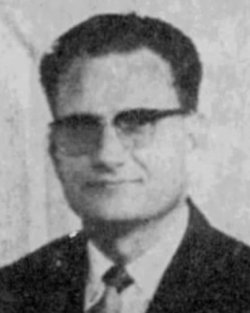
W.E. Best

#1 - Isaiah 53 - Introduction

Isaiah 52:13-15
W.E. Best July, 1 1988 Audio
0 Comments
Best on Isaiah 53

Sermon Transcript

Auto-generated transcript • May contain errors

100%
Chapter of the Prophecy of Isaiah. Our subject this morning will be given the title, Prosperity
of God's Servant. The Prosperity of God's Servant. Most everyone, when he is pointed
to the section of scripture that describes so vividly the sacrificial
work of Christ in Isaiah, he is pointed to the 53rd chapter,
and rightly so. The mistake, however, is often
made in that one does not read the introduction to the 53rd
chapter of Isaiah, which is found in the last three verses, of
chapter 52. We are going to read the last
three verses of chapter 52, and we will only take some high points
from the 53rd chapter in our study this morning. Behold, my
servant shall deal prudently. Notice your marginal reference,
please. Behold, my servant shall prosper. He shall be exalted and extolled
and be very high. As many were astounded at thee,
his visage was so marred more than any man, and his form more
than the sons of men. So shall he sprinkle, or startle,
many nations. The king shall shut their mouths
at him, for that which had not been told them shall they see,
and that which they had not heard shall they consider." I would
like to give to you the outline, not only of the last three verses
of chapter 52, but also of the entire 53rd chapter. I think this section of Scripture,
beginning with verse 13 of chapter 52, going through the last verse
of chapter 53, should be outlined in the following manner. Number
one, God the Father introduces His servant, the Lord Jesus,
the Eternal Son, the One who humbled Himself and became obedient
unto death, even the death of the cross. He thought it not robbery to
be equal with God, but took upon himself the form of a servant
and became obedient unto death. Number two, beginning with the
first verse of chapter 53, we have Israel's penitential confession. We have the history of the servant
of God unfolded. The history of the servant of
God unfolded. Finally, in the last verses of
the chapter, we have in verses 11 and 12, the fruit of the sufferings
of Messiah First of all, we see the introduction
in verses 13 through 15 of chapter 52. Observe, if you will, please,
the very first word, Behold. God calls attention to matters
of the utmost importance. Is there anything more important
than the person and work of Jesus Christ? No, there isn't anything
more important than the person and work of our Savior. The Messiah
is introduced in the Old Testament by the word, Behold. I would
like to mention four different references where that word is
used, and as we observe these four references, we will be able
to see the vital connection that each one has with one of the
Gospels, Matthew, Mark, Luke, or John, in the New Testament. For instance, we have the branch
of Jehovah, Isaiah 4, And verse 2, Behold the branch of Jehovah. Now, to what gospel does this
apply? Behold the branch of Jehovah. It isn't Matthew, it isn't Mark,
nor is it Luke. It has to be the gospel according
to John. Behold the branch of the Lord. In the beginning was the Word,
and the Word was with God, and the Word was God. Number 2, in Jeremiah 23, verses
5 and 6. Behold the branch of David. To what gospel does this point? It is not the gospel according
to John. It is not Luke's gospel, nor
is it Mark's gospel. It refers to none other than
the gospel according to Matthew, Matthew 1.1. Behold the branch
of David. Jesus Christ, as to his human
nature, He was of the seed of David. Look once again at Zechariah
3, verse 8. Behold my servant, the branch. I am stressing the phrase, my
servant. This, of course, points to the
gospel according to Mark, where he is described as the servant. And finally, in Zechariah 6,
verse 12, "...behold the man whose name is the branch." Now,
I'm stressing the first two words, the man. The gospel, according
to Luke, presents the Lord Jesus Christ as the perfect man. You can see now the importance
of this. Behold the branch of Jehovah,
pointing to the gospel according to John. Behold the branch of
David, pointing to the gospel according to Matthew. Behold
my servant, the branch, as it points to Mark's gospel. And finally, behold the man whose
name is the branch. pointing to the gospel according
to Luke. When we look at these references
in reverse, that is, in the reverse order which I have given them
to you, what do we have? We have the man, we have the
servant, we have the son of David, and lastly, the Son of God. Notice now what I said. As you
look at them in the reverse order in which I gave them, we have
the man, the servant, the son of David, and, of course, the
Son of God. Look now at verse 13. Behold,
my servant shall prosper. We are told by Hebrew scholars
that the Hebrew verb used here primarily means to act wisely. But since wise action is effective
and leads to prosperity, the verb is sometimes a synonym for
the word prosperity. Therefore, we are told by the
Holy Spirit through the prophet Isaiah, that Jesus Christ would
be prosperous in the work which he came to accomplish. One thing
that really gets me today, and we're hearing it more, I think,
at this particular time than we have in a great number of
years, enough men are rising up and emphasizing the doctrines
of grace, and as a result of this testimony, Those who do
not believe in the doctrines of grace are rising up in opposition. My wife was listening to the
radio the other morning, and KHCB, and she heard this young
fellow who is on twice a week, he has a workout in Bel Air,
and he took the whole program, 30 minutes in length, to denounce,
as far as he was concerned, the biblical concept of the love
of God. She said she was surprised at
how he went about to denounce, he thought, the belief that some
hold concerning the absolute sovereignty of God in the realm
of grace. There are some who say that the
Lord Jesus Christ died conditionally for all men, but absolutely for
none. Isn't that a ridiculous statement?
And that is the philosophy that is promoted by most religionists
today. Did Jesus Christ die, someone
has raised the question, to procure the forgiveness of sins of those
who can never be forgiven? Do not forget that we're told
in Matthew 12, 30, and 31 that those who blaspheme against the
Holy Ghost, there will be forgiveness neither in this life nor in the
life which is to come. Do you mean to say that Jesus
Christ died to redeem persons and to forgive persons of their
sins? As this person said, of those
who can never really be forgiven? That's ridiculous. It's very
simple when one puts it like this. The work of Jesus Christ
on the cross extends no further than the grace of God the Father. In other words, the grace of
God the Father extends to the same point that the redemptive
work of Jesus Christ extends no farther. And the work of Jesus
Christ extends no further than the grace of the Sovereign God. It would be ridiculous to make
a statement that would contradict that. But looking at the introduction
of the Savior, the Servant, who would be prosperous, and he was
prosperous when he came. He finished the work the Father
sent him to perform. My servant shall prosper. That would be the better way
of reading the first phrase of verse 13. He is prosperous. He is accomplishing the very
thing for which the Father sent him into the world. Thus, we
are told at the very introduction to this great chapter on the
vicarious atonement of Jesus Christ, that the prosperity of
Jesus Christ is something that ought to captivate the thinking
of every rational person. So the Lord knows what he is
doing. We know there are some, however,
who do not believe what the Bible teaches along this line. Here we have the assurance at
the very outset that the pleasure of the Lord shall prosper in
his hand, Isaiah 42, verse 4, and also Isaiah 53 and verse
10. Let's go a little further in
this text. He shall be exalted, that's number
one. Number two, he shall be extolled
or he shall be praised. And finally, he shall be lifted
up very high. So there are three statements
in the last part of the text. He shall be exalted, praised
or extolled, and he shall be very high. One man of the past
stated it like this. He shall be exalted above Abraham,
He shall be lifted up above Moses, and he shall be higher than ministering
angels." Exalted, what does it mean? Raised
up from the very depth of humiliation, that is, from the tomb. He shall
be extolled or praised That is, when he has come forth from the
grave, we know that he has been given a name which is above every
name, that at the name of Jesus every knee must bow and every
tongue must confess that he is Lord to the glory of God the
Father. I like the last statement, and
be very high. We know that he has been lifted
up. And he is sitting today at the right hand of God the Father. Thus the whole path of the Messiah
is set forth in the introductory statement to this particular
passage of Scripture. Then notice in the next verse,
as many as were or as many as were astonished at thee. This means to be astonished. Astonished. Many were astonished
when he came the first time. But the passage even goes further
than that, and we find in the last part of the introduction
where that he will startle the nations. We know that some were
astonished when he came as the Lamb of God. to put away sin
for the sacrifice of himself. When he comes the second time,
when he comes not to offer himself as an offering for sin, for that
he has already accomplished. But when he comes as King of
Kings and Lord of Lords, the nations of the world will be
startled at his coming. so shall he sprinkle, and the
word would be better translated, so shall he startle many, many
nations. That is, he will make the nations
of the world to tremble. We have at the beginning of the
53rd chapter, Israel's penitential confession. Israel's unbelief
is declared. We have the full manifestation
of Israel's repentance. So the glorious manifestation
of Christ as Israel's deliverer produces the deep sense of their
sin and their rejection of the Lord Jesus Christ. The interesting
thing about the first major division of the 53rd chapter is this. We know that it does refer to
what will take place among the Jews when Jesus Christ comes
as King of Kings and Lord of Lords. We know that the verbs
are in the perfect tense. Therefore, prophetically speaking,
this is given in the sense that Israel will confess when she
looks upon the Lord Jesus Christ, whom she was instrumental in
having put to death. Thus we have Israel's penitential
confession. You'll notice the pronouns that
are used. Observe a few statements in the
beginning of the chapter. Who hath believed our report?
And to whom is the arm of the Lord revealed? For he shall grow
up before him as a tender plant, and as a root out of a dry ground.
He hath no form nor comeliness, and when we shall see him, there
is no beauty that we should desire him. He is despised and rejected
of men, a man of sorrows and acquainted with grief. And we
hid as it were our faces from him. He was despised and we esteemed
him not. You'll notice the pronouns we
and our. They're used many times now in
the next few verses. Surely he hath borne our griefs,
carried our sorrows. We did esteem him stricken, smitten
of God, and afflicted. Drop down if you will to verse
5. But he was wounded for our transgressions, bruised for our
iniquities. The chastisement of our peace
was upon him. And then in verse 6, all we like
sheep have gone astray. We have turned everyone to his
own way. The Lord hath laid on him the
iniquity of us all. And that does not mean that the
Lord or God the Father laid upon his Son the iniquity of all mankind
because he did not. If that were true, then every
person would be saved because Jesus Christ did not die in vain. As we think about the prosperity
of Christ's work, there are four words to which I want to direct
your attention. They are, first of all, sacrifice. And I'm trying to be helpful
to many of you who are deeply concerned about your own relationship
to the Lord at the present time. And while this will be helpful
to you, all of us who are saved will certainly be enriched by
refreshing our minds on these precious and infallible truths.
So the word sacrifice is number one. The second word is the word
propitiation. Sounds like a big word. but it
means to cover. Number three, the word reconciliation. And finally, the word redemption. The more specific categories
in terms of which the scripture sets forth the atoning work of
Jesus Christ are sacrifice, propitiation, reconciliation, and redemption. The scripture regards the work
of Christ as one of obedience. I want to suspend just a few
moments now on the subject of obedience as it applies to the
Lord Jesus Christ, God's servant. Behold the servant of Jehovah,
the servant of the Lord. In the first place, We know that
Jesus Christ was obedient unto death, even the death of the
cross. He came not to be ministered
unto, but to minister and to give his life a ransom for, listen
now, many. For many is what the scripture
states. Now, when we think about obedience,
I have to depart from the idea that many Puritans held. They
make a distinction between passive and active obedience. And I would
like for us to look at this for a moment. Should we really make
such a distinction, as some of our predecessors have made, concerning
the subject of obedience? Should we apply active obedience,
follow me now, Should we apply active obedience to the life
which Jesus Christ lived, and passive obedience to his sufferings
and death? John Gill takes this point of
view. There are many others who lived before him who took that
point of view. But I'm a little skeptical about
it. As a result of studying this over the past some ten years,
I've changed my view on that particular thought, and I would
like to express it to you as we begin our study of sacrifice,
propitiation, reconciliation, and redemption. Now, when it
comes to obedience, we know that Jesus Christ was actively obedient. He never did anything contrary
to the will of God the Father. It was predicted of him in the
40th division of the Psalms When the psalmist said, I delight
to do thy will, O God, this was repeated by the writer of Hebrews
in the 10th chapter of the book of Hebrews. Jesus Christ was
active, and his obedience was very active. He always did the
will of his Father. I would like to give a quotation
at this point. in reference to his obedience.
His obedience has been designated as active and passive by many. We must avoid the mistake of
thinking that the active obedience applies to his life and the passive
obedience applies to his sufferings and death. This statement has
been made by one of the more recent theologians, and he is
an outstanding theologian. He gave a lot of thought to this
particular point. It was the result of having studied
his work several years ago that made me do a lot of research
on this particular point. Listen to this. Our Lord's vicarious
obedience demands not only the full discharge of the law's precepts,
but also the infliction of penalty for all infractions and shortcomings. It is this twofold demand of
the law which is taken into account when we speak of the active and
passive obedience of Jesus Christ. Here is what I really like. The
term passive does not mean that in anything Christ did was he
passive. Now think about that for just
a second. Listen to it again. The term passive does not mean
that in anything Christ did was he passive. Any such conception
would contradict the very notion of obedience. That's what stumped
me several years ago. And I saw that he had something
that many of the Puritans, as great as they were in theology,
had missed in their study of theology. Listen to this last
statement again now, because this is really the hub. This
is the important point. In his sufferings, He was supremely
active. In other words, He was not passive
in His sufferings. When Jesus Christ suffered, He
was active. He was active in His death. He
was active in His suffering. He was not passive in His sufferings.
He was not passive in His death. And that's why He said that any
such conception of passivity would contradict the very notion
of obedience. This is the final statement.
Obedience, therefore, is not something that may be conceived
of artificially or abstractedly. This obedience goes from incarnation
to the vicarious death on the cross of Jesus Christ. That,
I think, is a great statement. I do not like to think, I do
not believe it is right for one to think that Jesus Christ was
passive when it came to his sufferings, that he was passive when it came
to his death. Now, turn with me, if you will,
please, to the second chapter of Philippians, and let's think
about what we have said in the light of this passage of scripture
given us by the Apostle Paul, beginning with verse 5. Let this
mind be in you, which was also in Christ Jesus, who, being in
the form of God, thought it not robbery to be equal with God. but made himself of no reputation,
and took upon him the form of a servant, and was made in the
likeness of men. And being found in fashion as
a man, he humbled himself and became obedient unto death, even
the death of the cross." So he was active in all of his life. He was active in his suffering. Yes, he was active even in his
death. Now we come to the four words.
And then after we have discussed these briefly, we want to bring
to a conclusion the perfection of Christ's atoning work. And in discussing the perfection
of his atoning work, We do not want to leave any doubt in the
mind of any person that when the Lord has come into your heart,
when you have been redeemed of the blood of Jesus Christ, there
isn't anything that you can do to add to what Jesus Christ has
perfected for you in his death on the cross. We will look first
of all at the word sacrifice. The Old Testament sacrifices
were basically expiatory. That is, they made satisfaction. They removed guilt by suffering. That's why it was necessary for
Christ Jesus to come into the world and suffer and die for
you and for me. Because sacrifice is basically
expiatory. That is, it makes satisfaction. It removes the guilt, and guilt
can be removed only by suffering. And that's why the Lord Jesus
Christ came into this world. That is why that he was suspended
between heaven and earth. That's why that he died, that
we might not have to suffer such a death. So we stand in his death. and having our standing in his
death, he has perfected us forevermore through the once-offered Christ
Jesus. Sin involves a certain liability,
a liability arising from the holiness of God. That's to be
looked at on one hand. And then on the other, we see
the gravity of sin as the contradiction of God's holiness on the other
hand. So we see two things. What are
they? We see, first of all, certain
liability, a liability arising from the holiness of God. That's
to be viewed on one hand. And on the other hand, what do
we view? The gravity of the sin. the gravity
of the sin as the contradiction of that holiness. So until a
person sees himself as a sinner and that his sin is in contradiction
to the holiness of God, there is no help for him and there
is no hope for him. But when the grace of God comes
into the heart and life, He is brought to the realization of
the awfulness of sin and how that it contradicts the holiness
of God. Now, there was a great disproportion
between the offerer and the offering made in the Old Testament. Listen
to this very carefully. I said there was a great disproportion
between the offerer and the offering made under the Levitical system. For instance, the priest, as
he made the offering, he would identify himself with the offering. He would lay his hand upon the
head of the offering. But there was a difference between
the offerer and the offering. The sins of the priest were imputed,
as it were, to the offering. But the priest was not the offering. He could not offer himself. He
had to offer a sacrifice because he could not offer himself. So there was a great disproportion
between the offerer and the offering. Now, when we come to the New
Testament, when we have the fulfillment of all of these shadows and types
in the sacrifice of Jesus Christ. Listen to this. Jesus Christ
was both the offerer and the offering. He was both. He offered himself. Now, when
the priest in the Old Testament laid his hand upon the head of
the offering, And by that, we have this great principle signified
that the sins of the priest were imputed to the sacrifice. Our sins were imputed to the
Lord Jesus Christ. But when Jesus Christ offered
himself, he had no sin. He was sinless. He was spotless. He was the impeccable Savior.
But he was both the offerer and the offering, and the sins that
were imputed to him were our sins, not his own sins, because
he had no sins. He was perfect, spotless, holy,
harmless, the perfect Lamb of God. So the Lord Jesus offered
himself. This the Old Testament priest
could not do. Neither did the offering offer
itself. In Jesus Christ, we have the
union of both praise and sacrifice. The Lord Jesus was the priest
who made the offering, and He was also the offering itself. How wonderful that is! No wonder
we find the statement in Hebrews chapter 10, when he offered himself
in the end of the age. And having offered himself, he
has perfected forever all who have been set apart by this once-offered
Christ. We come next to the word propitiation. Propitiation means to cover.
Three things are to be noted by the word propitiation, which
means to cover. Number one, it is in reference
to sin that the covering takes place. I said number one, it
is in reference to sin that the covering takes place. Number
two, the effect is cleansing and forgiveness. So when we're
covered, first of all, we know that it has reference to our
sin. And number two, there has been
cleansing and forgiveness. Finally, number three, it is
before the Lord that both the covering and its effect take
place. According to Leviticus 435, Leviticus
10, 17 and Leviticus 16 and verse 30. This means that sin creates
a situation in relation to the Lord, a situation that makes
the covering absolutely necessary. However, the great difference
between the word covering in the Old Testament and the word
as we have it in the New Testament. Jesus Christ came not just for
the purpose of covering our sins, but as we're told in John 1 and
verse 29, Behold the Lamb of God that taketh away the sin
of the world. Now, what's the difference between
the Old Testament covering and the New Testament sacrifice of
Jesus Christ? The sins of the Old Testament
saints were not taken away because the death of the testator had
not taken place. Thus, their sins were covered
and covered until the time of the offering of the evening sacrifice,
that is, when Jesus Christ would become our substitute. And we are told in Hebrews 10
and also Hebrews 9 that it took place, that is the taking away
of our sins, when Jesus Christ died on the cross of Calvary. So, sin does create a situation
in relation to the Lord, a situation that makes covering absolutely
necessary. It made it necessary for the
Old Testament believers And, of course, our sins, since the
death of Jesus Christ, has taken our sins away, covered until
the death of the testator, and then taken away. Let us look
next at the word reconciliation. Now, as we look, first of all,
at reconciliation, we need to make this distinction. Propitiation,
as we have been looking at, or to cover, places in the focus
of attention the wrath of God and the divine provision for
the removal of that wrath. Now, in reconciliation, this
word places in the focus of attention our alienation from God and the
divine method of restoring us to God's favor. So you see, sacrifice,
covering, art, to us, taking away, and now reconciliation
as it comes next in the order. Propitiation, places before one's
focus, the wrath of God, and the divine provision for the
removal of that wrath. Whereas reconciliation, which
we're now investigating, places before us our alienation from
God and the divine method of restoring us into favor with
God. A lot of error is taught on this
particular point. We see that this alienation is
twofold. Notice what I've said. This alienation
is twofold, ours from God and God from us. Observe what I said. When you look at the 53rd chapter
of Isaiah and verse 6, all we like sheep have gone astray. Now, that's true of every person
who comes into this world. He has gone away from the Lord.
But the Lord has also withdrawn his favor, hasn't he? So you
can see that the alienation is twofold. Ours from God, we all
fell in Adam, and then God's alienation from us. Most people
today, and I'm talking about religious people, believe that
reconciliation terminates upon our enmity against God and not
upon his holy alienation from us. Let me repeat that again
because of its importance and the misunderstanding on this
point. I said most religious people believe that reconciliation
terminates upon our enmity against God and not upon his holy alienation
from us. But it is not our enmity against
God. Notice, I said it is not our
enmity against God that comes to the forefront in the reconciliation
but God's alienation from us. Now what should we think about
primarily? Should we think about our alienation
from God? No, that is not what should come
to the forefront of our thinking. We should think about God's alienation
from us. Now, I'm going to use a New Testament
example to explain this. I have not used it in just this
sense before, and I hope this will be helpful to all of us.
I'd like you to turn with me to the seventh chapter of I Corinthians. We're talking about reconciliation
now. We spent a great deal of time here several months ago
studying the subject of reconciliation. I'm not going into it from that
point of view, but I do want to illustrate what I'm talking
about. So in 1 Corinthians chapter 7
and verse 11, I think we have a verse of Scripture that will
help us to illustrate this particular point. In the 7th chapter of 1 Corinthians,
The Apostle Paul is talking about the subject of marriage, and
that if the time comes when there is separation, what should be done before there
should be any return. Let's begin with verse 10. And
unto the married I command, yet not I, but the Lord, let not
the wife depart from her husband. Now verse 11, But, and if she
depart, let her remain unmarried, or be reconciled to her husband,
and let not the husband put away his wife. Now look at the phrase
in the middle of the verse, Let her remain unmarried, or be reconciled
to her husband. The woman being reconciled to
her husband cannot consist in putting away her subjective enmity
or hostility. Are you looking at the verse?
And we're illustrating The separation was to be terminated by what? By a re-entrance upon proper
and harmonious matrimonial relations. Now, you see what is involved? There are a lot of people who
think, well, when I trust Jesus as my Savior, everything is all
right. And they look at it strictly
subjectively. And they think that when they
have made their commitment, that all enmity is removed. But brother, that's not all the
picture. Now look at the woman here as an illustration. She's left her husband. Now there's
more to reconciliation than for the enmity or the subjective
feeling which she has to be removed. In other words, in order for
there to be reconciliation, The Father has been satisfied. He has been satisfied because
his Son has paid the supreme sacrifice. So reconciliation
really begins with God. And it is something received
by the believer. Whereas most religionists believe
that they do something, and then after they've done something,
then God steps in and says, now you're reconciled to me. They've
got it in reverse. Are you following me? Reconciliation
begins with God, not with you, and not with me. I said it begins
with God. And our understanding, our receiving
this reconciliation, is of course the fruit of what has been accomplished
by the sovereign God of the universe. So reconciliation does not refer
to the subjective enmity in the heart of the person, said to
be reconciled, but to the alienation on the part of the person to
whom we are said to be reconciled. We are reconciled to God. So
our attention is therefore drawn not to the subjective realm of
men's attitude toward but to the divine attitude as it is
demonstrated in an historical event, the death of Jesus Christ. Let me repeat that again. Our attention is therefore drawn
not to the subjective realm of man's attitude toward but to
the divine attitude as it is demonstrated in an historical
event, the death of Jesus Christ. So reconciliation is something
received, Romans 5.10. Reconciliation is the work of
God, Romans 5.18, I mean 2 Corinthians 5.18-21. It is a finished work,
this work having been finished can never be repeated. It is
unrepeatable. You and I possess the message,
and we are to tell people that the Father has accomplished the
work through his Son, whereby lost sinners can be reconciled
to a righteous and holy God. Finally, let's look at the word
redemption. The word redemption must not be reduced to the general
notion of deliverance. I said to the general notion
of deliverance. Redemption speaks of ransom,
and ransom is the securing of a release by the payment of a
price. The price has been paid, the
price was the shed blood of Jesus Christ, And therefore, you and
I are the recipients of that release. We're not redeemed from
the law. Follow me now. We're not redeemed
from the law, that is, from our obligation to love God. It is the obligation of every
creature, every human being, to love God, whether he's capable
of doing it or not. That's his obligation. So we
are not redeemed from the law, that is, from the obligation
to love God. We are redeemed from the curse
of the law. Galatians 3.10 and 13. The curse
of the law is its penal sanction. This is essentially the wrath
or curse of God. The displeasure which rests upon
every infraction of God's holy law. Now let's close by looking
at the perfection of Christ's satisfactory work. He shall prosper. He shall prosper in his work. What do most religionists believe
about the perfection of God's redemptive work through his Son?
Did you know that most religionists today believe that sins committed
after baptism, or sins committed after a conversion experience,
are to be satisfied in this life by the individual? How erroneous
one can be! I'm not going to call the roll,
but there are several religious groups who say that all of your
sins are atoned for, are forgiven, up to the point or the time that
you were baptized. But all the sins that you commit
after your baptism, then you're responsible for those sins. There
are those who do not believe in baptism or regeneration, but
they say, and I'm thinking about rank Arminianism now, that all
of your sins are forgiven up to the point of your conversion
experience, but all the sins that are committed after your
conversion experience, that you are responsible for them. Now,
let's look at this in the light of the perfection of Christ's
work on the cross. In opposition to every such notion
of human satisfaction. Christians rightly contend that
the satisfaction of Jesus Christ is the only satisfaction for
sin, and is so perfected, so perfect, so final, that it leaves
no penal liability for any sin of the believer. Now, do we believe
that? Do we believe that? We have to
believe it if we believe in the perfection of Christ's work.
Listen to it again. One of the great men of the past
made this observation. He said, in opposition to every
such notion of human satisfaction. Let's pause there a moment. If
you believe that the work of Jesus Christ on the cross satisfies
your sins up until the time that you have a conversion experience,
but then the sins committed after that experience, you're responsible
to make satisfaction for those sins. What does that do? That
destroys the perfect worth of Jesus Christ. That's why this
theologian said, in opposition to every such notion of human
satisfaction, Christians rightly contend for the satisfaction
of Jesus Christ being the only satisfaction for sin, and is
so perfect and so final that it leaves no penal liability
for any sin of the believer. That's exactly what Hebrews 10
teaches. And then he went on to say, it is true It is true that in this life,
believers are chastised for their sins, and such chastisement is
corrective and sanctifying. This chastisement is painful,
but to approximate, here it is. But to approximate chastisement
to satisfaction for sin is to impinge not only on the perfection
of Christ's work, but also upon the very nature of Jesus Christ
himself. Beloved, I rejoiced when I read
that. I rejoiced. Do you see the significance
of it? Now, let me summarize it. You
see, when you and I are regenerated by the Spirit of God, when we
have a conversion experience, and that comes through knowledge
of the Word of God, we know that there is therefore now no condemnation,
no judgment to them who are in Christ Jesus. You and I cannot
make satisfaction for the sins which we commit as believers
any more than we could make satisfaction for our sins before we were redeemed. One is just as impossible as
the other. That does not remove the chastening
of the Lord and chastening is sometimes very, very painful. But that is not satisfaction. Chastening is one thing. Satisfaction
is another. But don't ever believe that you
are responsible in the sense of making satisfaction for your
sins after you have passed from death into life. You cannot do
it. satisfaction was in Jesus Christ
and in Him alone. That's why we have been perfected
forever by the finished work of Jesus Christ. Another man
said, if we allow the notion of human satisfaction to intrude
itself, here's a Puritan statement, If we allow the notion of human
satisfaction to intrude itself in our construction, either of
justification or sanctification, then we have polluted the river,
the streams whereof make glad the city of God. Isn't that a
great statement? That's my final statement this
morning. Listen to it again. If we allow the notion of human
satisfaction to intrude itself in our construction of justification
or sanctification, then we have polluted the river the streams
whereof may glad the city of God." What do we have? Sacrifice, propitiation, reconciliation,
and redemption. Jesus Christ paid it all. all to him I owe." Are you relying on him for salvation?
I am, and him alone. We're going to stand and sing.
What's the song, Brother Bernard?
W.E. Best
About W.E. Best
Wilbern Elias Best (1919-2007) was a preacher and writer of Gospel material. He wrote 25 books and pamphlets comprised of sermons he preached to his congregation. These books were distributed in English and Spanish around the world from 1970 to 2018 at no cost via the W.E. Best Book Missionary Trust.

Comments

0 / 2000 characters
Comments are moderated before appearing.

Be the first to comment!

Joshua

Joshua

Shall we play a game? Ask me about articles, sermons, or theology from our library. I can also help you navigate the site.