Bootstrap
W.E. Best

Hitherto, Henceforth, and Hereafter

1 Samuel 7:12
W.E. Best December, 25 1985 Audio
0 Comments
Best's Corner

Sermon Transcript

Auto-generated transcript • May contain errors

100%
Our text is found in 1 Samuel
chapter 7 and verse 12. And then if we read the text,
I want us to go back in 1 Samuel and look at some verses that
will lead us up to the subject that I want to discuss with you
tonight. I think this is a very appropriate lesson to remind
us of what we have experienced in the Lord, and by God's grace,
what we are hopeful to experience in the future. First, our text,
Then Samuel took a stone, and set it between Mizpah and Shin,
and called the name of it Ebenezer, saying, Hitherto hath the Lord
helped us. Hitherto hath the Lord helped
us. I'd like now for you to go back
to chapter 3 and verse 1. 1 Samuel 3 verse 1. And the child
Samuel ministered unto the Lord before Eli. And the word of the
Lord was precious in those days. There was no open vision. Now you'll see the connection
with the statement in just a moment. the Word of the Lord was precious
in those days. You have to consider the context
in which that statement is made. Then I'd like for you to turn
to, secondly, to the fourth chapter, and let us look beginning with
verse 10. And the Philistines fought, and
Israel was smitten, And they fled every man into his tent,
and there was a great slaughter, for there fell of Israel thirty
thousand footmen. Now the next verse. And the ark
of God was taken. Now you can see why the Word
of God was precious in those days. And the two sons of Eli,
Hophni and Phinehas, were slain. And then notice the 22nd verse
of the same chapter. The glory is departed from Israel,
for the ark of God is taken. And the ark speaks of the presence
of God in Israel. The first verse of chapter 5,
And the Philistines took the ark of God, and brought it from
Ebenezer unto Ashdod. And then in the 6th chapter,
the ark, we find, is restored. Notice verse 5, Wherefore ye
shall make images of your Imarods, and images of your Maists, that
mar the land, and ye shall give glory unto the God of Israel.
Peradventure he will lighten his hand from off you, and from
off your gods, and from off your land. Then notice verse 7, Now
therefore make a new cart, verse 8, and take the ark of the Lord,
and lay it upon the cart. Now drop over to chapter 7 and
look at verse 3, And Samuel spake unto all the house of Israel,
saying, If ye do return, Now Samuel has become a prophet of
the Lord. unto the Lord with all your hearts,
then put away the strange gods and Ashtoreth from among you,
and prepare your hearts unto the Lord, and serve him only. And he will deliver you out of
the hand of the Philistines. Then the children of Israel did
put away Balaam, and that means the idols, and Ashtoreth, which
is the plural of following, and Samuel said, Gather all Israel
to Mizpah, and I will pray for you unto the Lord. Verse 7, And
when the Philistines heard that the children of Israel were gathered
together to Mizpah, the lords, spelled with a little l of course,
the Philistines went up against Israel, And when the children
of Israel heard it, they were afraid of the Philistines. And
the children of Israel said to Samuel, Cease not to cry unto
the Lord our God for us, that he will save us out of the hand
of the Philistines. And Samuel took a sucking lamb
and offered it for a burnt offering, holy unto the Lord. And Samuel
cried unto the Lord for Israel, and the Lord heard him. And as
Samuel was offering up the burnt offering, the Philistines drew
near to battle against Israel. But the Lord thundered with a
great thunder on that day upon the Philistines, and discomfited
them, and they were smitten before Israel. And the men of Israel
went out of Mizpah, and pursued the Philistines, and smote them,
until they came under Beth-char." Then Samuel took a stone and
set it between Mizpah and Shin, and called the name of it Ebenezer,
saying, Hitherto the Lord hath helped us." There are three words
that we'll be using. I've referred to this in times
past, but it's been a long time, and I want us to look at it tonight
in the light of what we have experienced, and by God's grace,
what we are hopeful to experience in the future. The three words
that we'll be looking at from different portions of Scripture
are, first of all, we're looking at hitherto the Lord has helped
us, that's in verse 12 of chapter 7. The second passage we'll be
looking at is 2 Timothy chapter 4, and the word is henceforth. And finally, in conclusion, we'll
be looking at hereafter. Now to begin with, let us consider
ourselves tonight as being blessed of God in a day in which there
is a famine for the Word of God. I'm talking about the Word of
God in all of its purity. I'm not talking about a few passages
of Scripture quoted once in a while in various places, but I'm talking
about the Word of God being declared in all of its purity, considering
the whole counsel of God and not certain sections of Scripture
or certain favored verses that persons who are members of various
religious organizations desire to hear. We are standing, as
it were, not on the threshold of a new opportunity for service.
Therefore, we cannot look at this exactly as Samuel looked
at it. whom God had raised up as a prophet
to testify against Israel and also to give hope for those who
did repent of their sins, recognizing that the ark of God was no longer
in its rightful place, and since the ark was no longer in its
rightful place, the glory of God was not there. wherever the
truth of God is not expounded in all of its purity, regardless
of what religionists think, the glory of God is not there. It
is not there. So we are standing, not in the
same position as Samuel and the repentant Israelites stood at
that time, but we are standing, I think, in the very door or
in the entrance of a new opportunity for service. It really thrills me when I talk
to different members of the church and the members are not coming
to me in great droves. But when I do talk to different
members and they're thrilled to death over the opportunities
that we're now having, that's a great thrill to me. And I hope
it is catching by all the members of the Church,
but I'm not sure that will be the case. I am grateful for those
who are really thankful for the new door of opportunity that
has opened unto us. I've been reluctant, and I'm
still reluctant to read a lot of letters. I don't want people
to think that we're doing it in order to draw attention to
ourselves or anything. Whatever you and I are able to
do and whatever is done by any individual or through the church
as a whole, it is God and it's not us. It's of God and it is
not of us. But I do see this church and
I see many of us who are really rejoicing in the new opportunity
for service. And I think it is a valid service. In fact, I do not think there
is a service any greater as far as going beyond the confines
of our own congregation. So in viewing the opportunity
objectively, and I think we must view it objectively, there are
three striking scenes linked with three great words. and they
are hitherto, the Lord has helped us. Secondly, henceforth there
is laid up for us a crown of righteousness, provided we run
the race successfully, we fight the good fight of faith, as Paul
expresses it in 2 Timothy chapter 4. And finally, the third scene
is found in the 13th chapter of the Gospel according to John
when our Lord spoke with the disciples before His own crucifixion
for you and for me and all of the elect of God. He says, Hereafter
you shall know. You do not know what I'm doing
now, but you'll know hereafter. And that's John 13 and verse
7. Let us look first of all at hitherto
the Lord has helped us. This is scene number one. The
Israelites were weary. God's visible presence was no
longer with them. The Ark of the Covenant had been
surrendered. into the hands of the uncircumcised. And I believe that the truth
of God, to a great extent, has been surrendered into the hands
of uncircumcised men today. And I make no apology for that
whatsoever. Israel, therefore, was without
both a sanctuary and also a ruler. Thus, we have to consider the
predicament of Israel, nationally speaking. And we find these things
mentioned. For instance, we went back a
few moments ago and looked at the third chapter in verse 1.
The Word of God was precious in those days, and we considered
briefly why it was so precious in that day. And then in chapter
4, verses 10 through 22, Samuel was called in the hour of Israel's
great need, spiritually speaking. You and I know that when people
sow to the flesh, they shall of the flesh reap corruption.
That was not only true with Israel, but it is true even with God's
people today according to Galatians 6, verses 7 and 8. What message do we have to give?
It's the message of truth. We're not to deal in social things. I was rather amused after wanting
to talk to her mother again this afternoon, and she was so delighted
over the service that they had two services at the Methodist
Church where Clarence was last night, one at 7 and one at 11.
So the auditorium was packed at 7. They have a little auditorium
seat, about 200 people. And they had about 70 present
for the second. service. And so after they got
through with the service, they all marched outside with their
candles burning and sang carols. And then Chateau wanted that
a drunk came up and caused so much disturbance that Clarence
had to call the police to come and cart him away. Then in the second service, a
dope addict came up and gave him a lot of problems. And so
Clarence counseled the dope addict until one o'clock this morning,
and she thought that was great. Now I'd like to ask a question.
What can you do to help a drunk when he's drunk? I want you to know I've heard
a lot of preachers talk about leading people who are drunk
to make a decision for Christ. I've actually heard that, not
just once or twice, but I've heard that many times. What can you talk to a person
who is on dope and he doesn't realize what he's doing? What
kind of information can you give him at a time like that? So you see, it's the social thing
that most people are interested in. The social aspect of things. And then we find that Israel
was smitten And this was because of Israel's sin. It was not for
want of manpower, but it was a lack of God's power. And then we have the sons of
Eli who reaped a great harvest that day. And you know what happened
to the sons of Eli, Hophni and Phinehas. They were slain. So here is Samuel, the prophet
of God. And what does he do? He tells Israel what must be
done on their part, on the part of the Israelites, before they
could expect the blessings of God. And then when they recognized
that the ark was no longer in their midst, what did they do? They built a new cart, a new
method for its transportation. I'll be referring to this little
bit later on in connection with our Sunday morning services and
Sunday evening services But let me mention this look first of
all at the sixth chapter in verse 7 now therefore make a new cart
and Then in verse 8 and take the ark of the covenant and lay
it upon the cart The ark was never to be carried in that manner
Do you remember how the vessels were to be transported from one
place to the other and in the study of Numbers chapters 2 and
3, the Kohithites were responsible for the removing of the vessels. They were not to be put on a
new cart. There was one method by which they were to be transported
from one place to another. They were to be carried by hand. By hand. So you can see what
the problem was. And it was a serious problem.
So Samuel demanded repentance. But one thing he could say, hitherto
the Lord has helped us. And then in verse 9, he took
the Lamb, which is the very center of the worship of the Israelites,
and the Lamb of God is the very center of our worship on earth
now in the church, And I want you to know, He will be the very
center of our worship throughout the ceaseless ages of eternity. So He did the right thing. So
the statement was made between Mishpah and Shin, that
is between the cross we could say, and the cry, Behold, he
cometh. So in spite of difficulties,
trials, persecutions, etc., as Samuel could say, and so can
we, hitherto the Lord has helped us. We are where we are tonight. We are where we are today because
of the grace of God. And we are in a position to do
something for the Lord because hitherto the Lord has helped
us. We could not think about the new opportunity for service
if it were not the provisions that God has been able to bring
about through the instrumentality of His people. So hitherto the
Lord has helped us. Then notice what happened in
verse 12. A mark was left. a memorial was left, a monument
was left by which they could remember what the Lord had done
for them. Now there are several instances
in the Old Testament where monuments were left to call attention to
the blessings of God upon His people in times past. The only
reason that you and I are to look back I said the only reason
we are to look back is to consider what the Lord has done for us.
And say hitherto the Lord has brought us to this place. Consider
the blessings that God has bestowed upon us. Let us consider some
of the memorials that have been left. For instance, Moriah is
a memorial. Mount Moriah. Moriah was where Abraham built
his altar and called it Jehovah Jireh the Lord will provide and
the Lord did provide Secondly and we'll be looking
at this one in a couple of services in our Sunday morning and Sunday
evening teaching Jacob set up a stone and Called it Bethel
We won't be getting we may get that far this Sunday morning
called it Bethel. What does Bethel mean? The house
of God. Actually, in the 28th chapter of Genesis, you can see
why all this came to my mind today, it all connects. Bethel
means the house of God. And that was where Jacob had
his real conversion experience. It was at Bethel that Jacob learned
many things about God. But he left Bethel Went to paid
an arm and it was there that he learned many things about
himself Beloved it is just it is important for you and me after
we have learned some things about God to learn some things about
ourselves our own weaknesses and the weakness of the flesh
and These things are all necessary in the life of the people of
God Then we have Joshua who took twelve stones to mark out the
spot where Israel crossed the River Jordan. They were left
there for a memorial that they might remember what the Lord
had done for them at the River Jordan. Now here we have Samuel
taking a stone and setting it between Mizpah and Shin and it
is named Ebenezer which means the Lord hath helped us. So hitherto the Lord has helped
us. We've had a tremendous deliverance,
have we not? So the language in 1 Samuel is
retrospective. It's looking back. Looking back
only for one purpose, to consider what the Lord has done for us,
in us, and with us up to this point. up to this point. Therefore we can all say hitherto,
the Lord has helped us. So scene one is retrospective. A look in retrospect is only
for the purpose of viewing what the Lord has done for us. It
is our duty to keep the memorial of the experience which we have
of the Lord's helping us. So Christian gratitude is ever,
ever trustful. It speaks thankfully of the past. I'm grateful for what the Lord
has done for me. And I'm grateful for the place
where we are today. So hitherto the Lord. Thanksgiving,
however, is always connected with obedience. Now having said
what I have concerning service, and the prospect of service,
by a new opportunity for us brings a thought to my mind which I
heard last Saturday night. Usually on Saturday evenings
after the news, I look at the Eyes of Texas show. Some of you
may look at it, some of you may not. Some of it is interesting
and some of it is rather boring. But last Saturday evening, on
the eyes of Texas, they were showing a little town of 200
people in West Texas. It's out from Abilene. The little
town is named Bradshaw. And the lady that was being interviewed
was in her 80s. She was an old maid. She had
never married. And she didn't have many teeth.
And her father had owned this general store. It was an old,
old building. It looked like it was 100 years
old plus. And she was the only one in it, her parents were dead,
and the other relatives that were living, like brothers and
sisters, wanted her to stay there and keep it open. She said, I
hardly ever have a customer, but I'm here in case I have one. Half of the store, she had some
provisions for people in case they came in, and the other half
of the store on the other side were antiques, most of them not
for sale, but things that she had gathered. She was asked a
question, do you enjoy doing what you're doing? You better
believe I do. This is my life. It has been
my life for many years. It's my life. If I have a customer
every day or two, that's okay. But here's what she said that
was really meaningful. Guess what she said? She said,
there is an old saying, I never heard it before. The person who
enjoys his work has a vacation every day. That's a good statement. I didn't
forget it. A person who enjoys his work has a vacation every
day. Can you say that? Well, I can
say that. The individual who really enjoys
his work. Now, she said that in relation
to what she was doing. But let me carry it a little
further. Are we enjoying our labor of love? Beloved, if you and I are enjoying
our labor of love, we have a vacation every day. period. That's it. I thought that was
a significant statement. That statement was as good as
the one David sent here a few weeks ago by his mother when
she'd been up there. Eternity just keeps everything from happening
at once. You don't forget things like that. They're pungent statements. So Ebenezer, the Lord, hath hitherto
the Lord. Now I'd like for you to turn
to scene two. Scene 2 is found in 2 Timothy chapter 4. We'll
read some verses in just a moment beginning with verse 6. But before
we do, let us consider the scene. The scene is a prison in Rome.
Where was Paul? He was in prison. He was waiting to be executed.
Now let that soak in for a little bit. He was waiting to be executed. Thirty years of warfare lay behind
the Apostle Paul. I said thirty years of warfare
for Christ. He had fought a good fight. He
said so. I've finished my course. I've
kept the faith. Now we'll look at henceforth
in just a minute. Here's the henceforth. Hitherto, henceforth.
So thirty years of warfare lay behind Paul. During that time,
He had been in labors more abundant, he said, in the 11th chapter
of 2 Corinthians, in stripes above measure, in prisons more
frequent, in death oft. Now that was his past. Yet he
could say, I have fought a good fight. I have finished my course. I am ready to be offered. The
time of my departure is at hand. Henceforth there is laid up for
me a crown of righteousness, and not only for me, but for
everyone who loves His appearing." So the Apostle's course had been
tortuous, but he had finished it. He had completed it. There is no shortcut for the
job appointed for you and me to accomplish. There is no dodging
our responsibility. I said there is no dodging our
responsibility. Furthermore, there is no retiring,
and notice what I'm saying, from the service of God. You may retire
from your job, but that doesn't mean you retire from the service
of God. And what a shame it is when many
Christian people While they have their jobs and they're very busy,
it seems like when they retire from their jobs, many of them
retire even from their service from God. There is never any
retirement from service for God. So there must be a steady, straight
race to the finish line. We must not deviate to the right
nor to the left. So the race must be run according
to the rules of the game. 2 Timothy chapter 2. Now there
were many who were making shipwreck of the faith during Paul's time.
Even though there were many making shipwreck of the faith just as
Eli's sons, Hophni and Phinehas. Don't forget this. The ark had
been removed out of its place. The glory of God was no longer
in Israel. and the glory of God is no longer
in many institutions that call themselves churches. And I've
said it in the past and I'll say it again tonight. Anytime
I think the glory of God has departed from this place, I'll
be the first one to write Ichabod of the doorway out there and
a bid adieu to Laodicea. But as long as people continue
to manifest interest in the things of God, It hasn't got that far
yet. It hasn't gotten that far. So
let's consider the condition of Paul's time. Now, it isn't
necessary for us to go back and consider chapter 2, chapter 1,
chapter 3, where Paul describes the times in which he lived and
the things that he had to face, and yet we're told, beginning
with verse 2 of chapter 4, Preach the word, this was his admonition
to Timothy. Be instant in season, out of
season, reprove, rebuke, exhort with all longsuffering and doctrine,
teaching. See, preaching and teaching.
For the time will come when they will not endure sound doctrine,
but after their own lust shall they heap to themselves teachers
having itching ears. And they shall turn away their
ears from the truth and shall be turned unto fables. But watch
thou in all things. Now to see that more vividly,
turn back to the second chapter for just a moment. And look with
me first of all at verses 18 and 19. Well, begin with verse
17. And their word will eat as doth
a canker of whom is Hymenaeus and Philetus. who concerning
the truth have erred, saying that the resurrection is past
already, and overthrow the faith of some. Nevertheless, what a
tremendous word that is, the foundation of God standeth sure,
having this seal, the Lord knoweth them that are his, and let every
one that nameth the name of Christ depart from iniquity. And he
shows the reason for this in the next verses. But in a great
house there are many, not only vessels of gold, and of silver,
but also of wood, and of earth, and some of honor, and some the
dishonored. If a man therefore purge himself
from these, the dishonorable things, you see, he shall be a vessel unto honor,
sanctified in meat for the master's use, and prepared unto every
good work. Now you can see why he said what he did. But yet
in the face of the apostate condition of Paul's time, he admonished
Timothy. But he could say, and only by
grace, verses 6 through 7, I'm now ready to be off in the time
of my departures at hand. I've fought a good fight. I've
finished my course. I've kept the faith henceforth.
There is the Word. So the second scene is a henceforth. There is laid up for me a crown
of righteousness, and not only for me, but for everyone who
loves His appearing. Now in conclusion, let us look
at scene three. Turn to the 13th chapter of the
Gospel according to John. John 13. Let us describe the third scene.
This is the scene of the Lord Jesus Christ speaking to His
disciples. He had just turned from the Jews
and now He is communicating with them before His death on the
cross. So during the time when He was
washing the feet of the disciples, Christ answered Peter's objection,
and the text is found in verse 7. Let's look at it, and then
we'll come back to it later. Verse 7, Jesus answered and said
unto him, What I do thou knowest not now, but thou shalt know
hereafter. The word is hereafter. Hitherto,
henceforth, and hereafter. But let's get a picture of the
first verses of the 13th chapter. Why did the Lord choose us? Why
did He redeem us? Why did He regenerate us? Why is He sanctifying us progressively
now? Why is He keeping us? These are
all valid questions. There's a purpose. And the purpose
is very important. So He is now showing the disciples
what they are to do. And they are to show humility
in service one toward the other. It's humility in service one
toward the other. I'm sure you realize that there
are many who believe that the Lord instituted another ordinance
here, but I don't believe that. So let's look at some verses
before we bring our thoughts to a conclusion. First of all,
when he got up from supper and laid aside his garments, and
took a towel and girded himself. After that he poured water into
a basin and began to wash the disciples' feet. When he came to Peter, what happened? Verse 6, Then cometh he to Simon
Peter, and Peter saith unto him, Lord, Does thou wash my feet? Jesus answered and said unto
him, What I do thou knowest not now, but thou shalt know hereafter. We're going to look at the word,
the Greek word for know. There are two different words
here and that's very important. We'll look at those in just a
moment. Verse 8, Peter said unto him, Thou shalt never wash my
feet. Jesus answered him, If I wash
thee not, thou hast no part or fellowship with me. Now drop
over to verse 15. For I have given you an example. Notice it is an example. That
ye should do as I have done to you. Now, there are two verses
we need to look at closely. Number 7, verse number 7, and
verse number 15. In verse 7, he said, What I do
thou knowest not now. Did Peter know that he was washing
the feet of the disciples? Peter knew that much. But Peter did not know the significance
of what Christ was doing at that time. He knew he was literally
washing the feet of the disciples. He could see that. He had no
problem understanding that. But he did not know the significance
of what he was doing. What I do thou knowest. Here
we have a perfect active indicative of Oedon. And Oida is the strongest
word for knowing, for knowledge, or to know. It is the strongest
word. And then it's a different word
that he uses in the last part. He says, in other words, you
don't know perfectly now. You don't have a good understanding
of what I'm doing now. There are certain things about
what I'm doing you do understand. Now the last part. but thou shalt
know the word for know here is a future middle indicative of
gnosko it is not as strong a word to know as oida as oida but you
shall know hereafter in other words after my death after my resurrection then you'll
know what you are not able to understand at the present time.
What the Lord Jesus Christ was setting forth symbolically to
the disciples was His intercessory work which He would perform for
them after His death and His ascension to the right hand of
the Father. But let's look now at verse 15.
There is a lot of misunderstanding about this verse. He says, For
I have given you an example, it was an example, that ye should
do as, now the truth of the text hinges on the adverb as here. What is the adverb? It is kathos,
and kathos is made up of two words, katha, down, that's an
adjective, meaning down, so you see humility involved here, do
you not? Humility. The Lord was setting forth an
example of His humility in washing the feet of the disciples. And
it's also made up, of course, of the adverb hos. So what do
we have? Here's what he's saying, for
I have given you an example that ye should do as, as, and it could
be interpreted in this manner, in the manner, in the manner,
as, or even as. In other words, if he had been
instituting a right, ordinance as many believe. He would not
have used the word that he did. He would not have used the word
Kathos. He would have used what? Ha. He would have used what I'm doing.
He didn't say you were to do what I'm doing to you, but you're
to do as I in the manner of what I'm doing. So he was setting
forth an example of his humility. His humility. Therefore he was
saying to the disciples, you are to live toward one another
and serve one another in all humility. That's what he was
setting forth before the disciples. So this is the third scene. So Christ was manifesting humiliation
or humility. And Peter, was Peter rejecting
the humility of Christ? When he said, Lord, you're not
going to wash my feet. So you can see why he said, you
don't understand what I'm doing now, but you'll know hereafter. We know that sense doubts. And Peter was exercising his
sense, not his trust. Sense doubts. Faith trusts. He was not manifesting the faith
that he should have been manifesting. So the questions while the others,
in other words, he was questioning while the others were obeying.
So the one must reason out all mysteries, all God's ways, while
the other just takes them by trust. The other disciples were
trusting the Lord. Even though they didn't understand
at that time, they were trusting the Lord. So what is the lesson
of John chapter 13? It is this in verse 15, gird
yourselves with humility in service one to another. Now there is
another afterwards. Here is one. You donít know what
Iím doing now, but youíll know hereafter. And there is another
afterwards. Weíre told in Hebrews 12, verse
11, ìThough no affliction for the present seemeth joyous, but
grievous, nevertheless Afterwards, here it is, it yieldeth the peaceable
fruit of righteousness unto them who are exercised thereby. God isn't going to let His people
get by with things. If you and I are disobedient,
He's going to chase us, and this is what He's talking about here.
So He says, Though no affliction for the present seemeth joyous,
but grieve us. Nevertheless, afterwards, it
yieldeth the peaceable fruit of righteousness unto them who
are exercised thereby." Hebrews 12, verse 11. Now, the flesh
cannot understand spiritual realities. It is either too backward, that
may be an archaic word, but you know what I'm talking Lord, dost
thou wash my feet? Verse 6 of John chapter 13. Peter was out of place. Or we
may be too far as in verse 9 when Peter said, Lord, not my feet
only, but also my hands and my feet. Just wash me all over.
He didn't need that. He had been regenerated He needed
to be cleansed from his daily contact and defilement with sin. So, isn't that true with many
of us? We're either too backward or
we're too forward. We do not make the correct approach. I like what one person said,
and we should conclude our prayer when we approach the Lord in
this manner. Great Shepherd, firmly grasp my hand, and lead
me while I go, for Thou hast said, Thy purpose grand, which
yet I do not know, hereafter I shall know." What do we have? Hitherto the Lord has brought
us to this place. Henceforth and forever it is
the Lord. We don't understand some things
as we would like to understand them now, but the more we study
and the more fellowship that we have of the Lord, the better
understanding we will have. Let's stand for the benediction.
W.E. Best
About W.E. Best
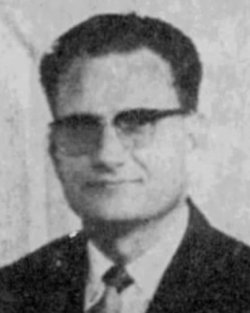
Wilbern Elias Best (1919-2007) was a preacher and writer of Gospel material. He wrote 25 books and pamphlets comprised of sermons he preached to his congregation. These books were distributed in English and Spanish around the world from 1970 to 2018 at no cost via the W.E. Best Book Missionary Trust.

Comments

0 / 2000 characters
Comments are moderated before appearing.

Be the first to comment!

Joshua

Joshua

Shall we play a game? Ask me about articles, sermons, or theology from our library. I can also help you navigate the site.