Bootstrap
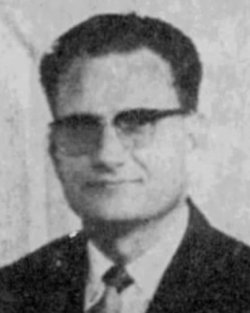
W.E. Best

The Science of Interpretation

1 Corinthians 2
W.E. Best December, 1 1985 Audio
0 Comments
Best on Hermeneutics

Sermon Transcript

Auto-generated transcript • May contain errors

100%
Open your Bibles this morning
to 1 Corinthians chapter 2. 1 Corinthians chapter 2. I want us to read the entire
chapter. We'll be going a little longer
this morning and our message is not a short one. We'll be
speaking in both services today on hermeneutics, the science
of interpretation, because of the importance of this subject,
we'll be also teaching on the same subject but from different
points of view in both services next Lord's Day. Now we feel
that we cannot go beyond five messages on this subject because
we cannot deal with every doctrine in detail in our study of the
eschatological kingdom. However, since this subject,
interpretation, is so important in reference to the subject that
we are now studying, I feel it absolutely necessary to spend
several lessons on the subject of interpretation. We're going
to read the entire second chapter of 1 Corinthians, And this morning
is only the introduction, notice what I'm saying, only the introduction
to a real close scrutiny of verses 10 through 14 in our study tonight. Let us read. And I, brethren,
when I came to you, came not with excellency or superiority,
of speech or of wisdom, declaring unto you the testimony of God. For I determined not to know
anything among you, save Jesus Christ and Him crucified." There
you have the person of Christ, first of all, and secondly, His
work. Verse 3, "'And I was with you
in weakness and in fear, and in much trembling. And my speech
and my preaching was not with enticing or persuasible words
of man's wisdom, but in demonstration of the Spirit and of power, that
your faith should not stand in the wisdom of men, but in the
power of God. Howbeit we speak wisdom among
you that are perfect or mature, yet not the wisdom of this world,
nor of the princes of this world that come to naught, but we speak
the wisdom of God in a mystery, even the hidden wisdom, which
God ordained before the world or ages, unto our glory. which none of the princes of
this world or this age knew, for had they known it, they would
not have crucified the Lord of glory. But as it is written,
I hath not seen nor ear heard, neither have entered into the
heart of man the things which God hath prepared for them that
love him." Prepared for them that love him. But God hath revealed
them unto us by His Spirit, for the Spirit searcheth all things,
yea, the deep things of God. For what man knoweth the things
of a man, save or except the Spirit of man which is in him,
even so the things of God knoweth, underscore that word, no man
but the Spirit of God. Now we have received not the
Spirit of the world, but the Spirit, and the word Spirit should
be capitalized in the King James, it isn't, but it should be, which
is of God or out from God, and it's the preposition act, that
we might know the things that are freely given to us of God,
which things also we speak, not in the words which man's wisdom
teacheth, but which the Holy Ghost, our Holy Spirit, teacheth. Now, underscore the word teacheth.
Now, I want to stop for a moment. Look at the next words. Verse
13, comparing spiritual things with spiritual. This statement
is as controversial as what we discussed last Sunday night in
our first message on interpretation, the interpretation of the kingdom
from 2 Peter 1, 16-21. And this is following up. what we gave last Sunday night. Now notice this statement, comparing
spiritual things with spiritual. I'm emphasizing this because
we're going to make an in-depth study of this controversial statement
tonight. You don't see it in looking at
the English translation, but you have two adjectives and one
participle. two adjectives, and one participle. That sounds a little strange
in this last statement. I'll give it to you in the Greek,
and some of you will want to study and see whatever you might
have in your home library during the afternoon. Pneumatikos, pneumatika,
and then the participle, synchronitis. Now, those are the three words
you have. Now, how are they to be interpreted? That'll be our
study tonight, believe it or not. And I assure you, it'll
take all the time to do justice to it. So let's read verse 13
once again. Which things also we speak, not
in the words which man's wisdom teacheth, but which the Holy
Spirit teacheth, pneumatikos, pneumatika, synchronontes. I gave it in the Greek. Now verse
14. But the natural man receiveth not the things of the Spirit
of God, for they are foolishness unto him, neither can he know
them, because they are spiritually discerned." Underscore the word
discern. You see, I've called attention
to four major words here. Now verses 15 and 16. But he
that is spiritual judgeth all things. Yet he himself is judged
of no man. For who hath known the mind of
the Lord, that he may instruct him? But we have the mind of
Christ." I wanted to read the entire chapter for a reason. I think it should be studied
in connection with the entire chapter. Our subject this morning
is entitled, Interpretation of Scripture. This is the introduction
to our study tonight, especially verses 10 through 14. We'll be
looking, however, at those verses in the light of the overall context
of the second chapter. Every Christian is responsible
for recognizing and supporting true interpreters. You cannot
shirk your responsibility as a Christian. Every time you listen
to someone teach or preach, you are responsible. No one else
can be responsible for you. You are responsible to know whether
that person is a true interpreter of Scripture or if he is not
a true interpreter. You say, well, I'm not qualified
to do it. You can't blame anyone but yourself. You can't even blame the preachers
that you might have been under for a long period of time. You
can't blame me. Every Christian is responsible to know if the interpreter of
Scripture is a man of God really representing the Lord or if he
is a heretic. I wanted to impress upon you
what your responsibility is. I've been preaching to myself
all week in the preparation of these messages. So now I'll preach
to you a little bit this morning. You see, every Christian is also
accountable to God for failure to properly elucidate the Scriptures. Now if you fail, to properly
elucidate the Scriptures. You're held responsible. I'm
not held responsible for you unless I've been teaching you
improperly. And I'll be held for my false
teaching. But you're responsible. However, it must be understood
that no interpreter can speak ex cathedra when it comes to
the Scriptures because he cannot claim to be inspired. Beloved, you're going to have
to follow almost every statement that I'm making this morning.
I realize that I'm putting a lot into about an hour of teaching,
but it's important to do this. Now I want to use an illustration.
The Roman Catholic Church and we exposed her teaching last
Sunday evening on the subject of private interpretation as
it is translated in your King James Version, 2 Peter chapter
1 verse 20. But the Roman Catholic Church
claims to speak ex cathedra for God. To her, the term ex cathedra
means the one who speaks from St. Peter's chair as doctor or
pastor of all Christians is God's official voice. Beloved, I'm
giving you what I have just given you from their own works. The Church of Rome has said that
she will not interpret the Holy Scriptures other than according
to the unanimous consent of the fathers. And if you didn't hear
my message last Sunday night, you're at a loss to follow me
right now. So you'll have to listen to that tape. But I can't
go back and do a lot of reviewing. However, history records anything
but a unanimous consent of the fathers from Justin Martyr, Irenaeus, Tertullian, Gregory,
Chrysostom and others. Now let me give you a few statements
by these early men concerning the scriptures. You might be
amazed. The following are things these
men, whose names I've mentioned, taught. Number one, spiritual
things have been conveyed to us by their being committed to
writing. That's a good statement, isn't
it? I agree with that a hundred percent, so do you. Secondly,
the scriptures constitute the foundation and pillar of our
faith. That too is an outstanding statement. Number three, heretics will be
exposed by scripture. You and I cannot argue with that.
And number four, The will of God is to be understood by the
Scriptures, and by them alone we know the whole will of God. I wanted to give to you some
quotations, some brief statements by these men whose names that
I've mentioned. On the other hand, others, and
I'm talking about Catholics, have vigorously stated that the
Church of Rome is not the Church of the Book. I'm pausing for a purpose. That's
a long comma. Because the study of the Scriptures
has led to countless divisions. Therefore, they advocate that
their people, the Catholic people, are better protected by the long
line of tradition which embodies their current practices and beliefs. One of the members of the church
handed me the December issue of National Geographic magazine. Almost the entire magazine is
taken up with the Roman Catholic Church. You know they're having
a council now. If you've been reading the papers,
the Catholic nuns are greatly disturbed because they have not
been recognized in this council meeting in Rome. Well, I won't
say any more because you can read all of this in the newspapers. Human tradition has always been
the means of making the Word of God of none effect. I'm now quoting Mark 7.13. Mark
said, making the word of God of none effect, and he was writing
concerning the traditions of the Pharisees and others, the
religionists of Christ's day. Let's look at this. The words
none effect come from a Greek participle which is the present
active of the verb ak-yurao. Ak-yurao means to deprive of
authority, to annul or to abrogate. It is used only in Matthew 15,
6 in talking about the same thing that I gave to you, the quotation
from Mark. Mark 7, 13 and Galatians 3, verse
17. Multitudes of religionists have
been shackled by an undue reverence for human authority. Do you understand what I'm talking
about? Not only has that been true in the past, but that is
true today. I said multitudes of religionists
have been and they are being shackled by an undue reverence
for human authority. I think there are a lot of preachers and I think there are a lot of
individuals who strive and want to be preachers for the sake
of the authority they think they have. And there are a lot of people who manifest an undue reverence
for human authority. Stay with me. Men commit a heinous
sin when they exalt their interpretations, thus forcing the Scriptures to
take a secondary place. That has been done. that is being
done and it will continue to be done unto the Lord comes. Now let's illustrate this point. Confessions and creeds are at
their best only interpretations by men. A creed concisely stated in scriptural
language serves some purpose in witnessing. I'm not totally
against confessions, creeds, and so forth. They do serve some
purpose by presenting truth in a condensed form. But stay with
me. Let's look at this subject from
its overall picture. Every such creed should always
remain open for improvement or change as growth in knowledge
of truth demands it. But sad to say, this is rarely
practiced. Now I know whereof I speak, having
been in the ministry for more than 40 years. having pastored
churches for more than 40 years. I've had people under my ministry,
especially when I was in the Southern Baptist Convention,
who would come to me and quote what the confession said, what
the bylaws said. And that's about as far as most
of them ever went. They didn't go to the Word of
God. They would run to the confession. Stay with me. When the work of
man has been brought in as an authoritative interpreter of
Scripture, however well-intentioned, God's Word has been lowered to
a human level. All of us in the past, I'm sure
most of us at least have, had a school field referenced by
him. And most people who have had one will refer to the footnotes
rather than studying the scriptures themselves. And you know what I'm saying
is true. That means that every Christian is to be well-versed
in the Scriptures to know if what the man has in his footnotes
is in harmony with the revelation of God's mind or not. Believe me, what I'm saying this
morning and tonight and next Sunday are so fundamental. These
things are so fundamental to the interpretation, proper
interpretation. of Scripture, handling the Word
of God correctly. Furthermore, there has been an
abridgment of Holy Scripture which must never take place among
Christians. Do you remember here, a short
time back, a Reader's Digest that came out with a condensed
form of the Scriptures? And there were a lot of preachers
at that time that commended it. Well, you can imagine about what
kind of preachers they are. I wouldn't waste time listening
to any one of them. Any condensed form of Holy Scripture
is a confession that it is not all needed for man's benefit. Beloved, I'm giving some statements
that have meant a lot to me. This is in direct contradiction
to Paul's statement that all Scripture is given by inspiration
of God and is profitable for doctrine, for reproof, for correction,
for instruction in righteousness, that the man of God may be perfect, and the word perfect in 2 Timothy
chapter 3 verses 16 and 17 means complete, ready, or entirely
suited. The word translated perfect in
your King James Version of the Scriptures is arties. And it
means complete, ready, or entirely suited. Notice what he says,
that the man of God may be complete. That's what he's saying. may
be entirely suited or equipped. And we'll go a little further
into that. Notice this, throughly furnished unto every good work. That's verse 17. Look at the
words throughly furnished. Here we have a perfect passive
participle of the Greek verb exartizo. It means to equip are to furnish
completely the Christian unto all good works. Don't come to me and tell me
that there are some things in the Scripture that aren't necessary. Everything in the Bible is necessary
for the place in which it was put there and for the purpose
in which it was placed there. creeds and confessions, in almost
every case, have replaced the whole Bible. Let's be honest. Thus they are
used to form, this is an important statement, thus they are used
to form the church's belief rather than to express it. The average creed, the average
confession put out by any denomination is used for the formation rather
than the expression of what is believed. You see how important the subject
is. Christians are not exhorted to study the confessions and
creeds. but to consider what God has
said, 2 Timothy 2, 7, in order to show themselves approved
unto God, verse 15 of the same chapter. Consider what the Lord
has said. Nothing wrong with preaching,
nothing wrong with teaching, nothing wrong with writing, But nothing, preaching or writing,
cannot take place of the Scriptures, the whole counsel of God, the
Word of God from Genesis 1 to Revelation 22-21. That's why
I told you this morning that I think the highest compliment
that has been paid me is that I do not build my teaching, my
preaching, my writing around the five points of Calvinism,
but around the whole counsel of God. Tell you the truth, years ago
I got so tired of going to these so-called grace conferences,
and I quit. My time could be served far better
by staying home and studying. You know why? Heard the same
thing over and over and over again the five points and That
doesn't mean that I got tired of the five points But beloved
there are some things in the Word of God other than the five
points I'm talking about the five points
of Calvinism Confessional exclusiveness too
often becomes destructive to true spiritual growth. Would you agree with that? I
said confessional exclusiveness too often becomes destructive
to true spiritual growth. I want you to read what we have
written. But I preached it even before I've written it. But beloved, never to the exclusion
of studying the Word of the Living God. How can you test what I
say or what I write if you are not acquainted with what the
Bible says? Most people today are too lazy
to spend any time studying, so they depend on their preacher
or their Sunday school teacher or somebody else to give them
the information that they want when they want some information. There must be personal freedom,
the right of personal judgment, but this does not mean unrestrained
license. Private judgment is to be controlled
by the contents of Scripture. Listen to this, grammatically
expressed. I want to put a little emphasis
on grammatically expressed. Now, tonight I'll give a vivid
illustration of this very point. Pneumatikos, Pneumatikos synchronontes. Two adjectives and one participle
in that phrase. Beloved, we have to know something
about those two adjectives. The first one can be either masculine
or neuter. Gender. It can be either one. The second, pneumatica, is neuter. It cannot be either one. But
the first one can be either one. We have to study the Scriptures. We have to study the Scriptures
in the light of the grammatical construction. What would you think of an English
grammarian who just did away with the English grammar and
said it's not important? Well, you'd ridicule him. And yet, beloved, that is exactly
what religionists are doing when it comes to the Greek grammar. No person has the right to be
wrong as though one's accountability
to God were abrogated. You see why I'm saying this?
I don't know how many times I've heard Christians say, I've heard
Baptists say, I've heard others say, it sounds good on the surface. I believe that liberty should
extend to the point that a person should have the right to be wrong.
Now think about that for a moment. Think it through. You see, I've
been subjected to that for years. I've heard it over and over.
So I want you to deal with it. I wanted to deal with it. Now
how do you take that? I said no person has the right
to be in the wrong as though one's accountability to God were
abrogated. Let's investigate this for a
little bit. This false idea of freedom is too often expressed,
but it is not justified in the interpretation of Scripture. Feelings, beloved, are not the
norm of truth. But the truth alone must always
be the standard of our feelings. Does that make sense? The so-called gut feeling has
no place in determining what one believes. We hear that expression
so much today. It's just my gut feeling that
this is right. Better forget that. Let's go
a step further. There are some who think that
their conscience should be a guide. Well, let's look at that point
for a moment. The conscience of man is not so powerful that
it cannot be made subservient to passion, self-interest, and
abuse. It can even become seared. Did
you know that? The conscience can become seared. Listen to the testimony of Scripture.
1 Timothy chapter 4, verses 1 and 2. Paul said, Now the Spirit
speaketh expressly, that in the latter times some shall depart
from the faith, giving heed to seducing spirits, and doctrines
of devils, and that should be demons, not devils, but demons,
speaking lies in hypocrisy, having their conscience seared with
a hot iron. The Greek word for seared with
a hot iron is a perfect passive participle of kosteriodzo. Kosteriadzo means to burn in
with a branding iron. This verb is used only in this
verse. And it means their conscience,
having been branded, and notice, arias, completed action, I mean
perfect, completed action, and is passive, they remain in a
state being. Hence those who have departed
from the faith have been branded with a mark of Satan himself. They have become apostates. You
want to know what an apostate is? You want to know who he is?
He's one who's been branded by the branding iron of Satan. He's an apostate. Now let's look
at the conscience of the believer for a moment. The conscience
of the believer without proper training and discipline, I said
without proper training and discipline, will prove to be weak according
to 1 Corinthians 8, 12 and 1 Corinthians 10, 28 and 29. Conscience is
appealed to in the scriptures as something needing assistance. I want you to know your conscience
alone is not sufficient. I want to give you a verse of
scripture that I think most all of us have overlooked. Conscience
needs the assistance of the Word of God. In fact, conscience must have
the assistance of God's Word. Listen to Paul's statement in
Romans 9 verse 1. I think all of us have overlooked
something important in this text. Paul said, I say the truth in
Christ. I lie not. Now here it is. My conscience also bearing me
witness in the Holy Spirit. I say the truth in Christ. I lie not. my conscience also
bearing witness in the Holy Spirit. The Holy Spirit is never going
to bear witness to anyone that is contradictory to the Word
of God that's already been given. For after all, it is the Holy
Spirit who has given us the Holy Scriptures. Your conscience,
my conscience, needs the assistance of the Word of God. It must have
it. Hence the conscience is described
as that arrangement of our mental and moral constitution which
intuitively responds to God's truth when subjected to it, but
which can be repressed by passion or self-interest. Yes, I want
you to know that you can repress it. I can repress it. And beloved, don't tell me this
morning, I believe that every Christian sitting in this auditorium
this morning has to some extent in his or her Christian life
repressed the truth of God because of his own or her own self-interest. You might say, well, it was in
a little matter, but when it's repressed in a little matter,
it will become a larger matter, and then a larger matter, and
after a while, it'll repress something that is major. I believe everything in God's
Word is for a purpose. And when I hear any Christian,
when I hear any member of this church speak lightly of something
that might not be a major issue, I shiver. What each one of us should do
is to admit that this is the truth of God's Word and I'm not
applying it like I should. I heard a good testimony from
one of our members last night. He told me about witnessing to
his own parents just recently. Both are Baptists, been Baptists
for years and years and years and years. But in a time of crisis, a very
flimsy witness. In fact, no witness for truth
at all. This man's father did not even
know the difference between the sins of nature and the nature
of sin. Let me make it applicable to
all of us. Beloved, if you were facing death
tomorrow, How would you try to assure yourself
that you're a Christian? I'm asking you a real pointed
question now. Would you try to assure yourself
that you are a Christian by looking back over your past life and
saying, well, I didn't do this and I didn't do that. These are things that I didn't
really do. But here are some things that
I did do, and these things that I did do overshadow the things
that I did not do. Is that the way that you assure
yourself in the time of crisis? No. The only way that you and I can
truly assure ourselves in a time of crisis is to say, Oh Lord,
search my heart, reveal to me, enable me to see through the
word of your testimony, just where I stand in your presence. But I know a lot of church members
today, Baptists, Methodists, what have you, in a time of crisis,
they try to get assurance by looking at deeds rather than
really looking at the Lord Himself and His marvelous grace. It's important, isn't it? It's
very important that we have the testimony of Scripture to assist
us in the way we feel about things. Paul said, I say the truth in
Christ, I lie not. My conscience bearing me witness
in the Holy Spirit. The truth is too frequently repressed
by persons who are steeped in religious tradition. Its pervading influence, apart
from the assistance of the Holy Spirit, causes many to succumb
to tradition. Now we're facing the time of
the year when people manifest their traditional views. But
beloved, I'm not going to spend my time talking to somebody and
condemning the Christmas tree. I say these folk that don't know
enough about the scriptures to know the truth about Christmas,
we'd be wasting our times condemning the Christmas tree. That doesn't
mean that we're not to take a stand. But we must first of all point
them to the truth of Jesus Christ. And Christmas is not Christ's
Mass. I said Christ's Mass. People by nature are traditionalists. And most church members are traditionalist. The contents of Christianity
are in the written revelation and scriptures understood only
by the aid of the Holy Spirit within us. Biblical doctrine is unchangeably
the same. Don't you get amused at the council
in Rome or even a Baptist council or any other kind of council?
And there are all kinds of councils. Beloved, I'm saying that biblical
doctrine is unchangeably the same. Doctrine never changes. People change. Therefore, doctrine, which does
not change into something different by either the individual or the
church, must ever be held up as being the unchangeable, unalterable, inflexible Word of the Living
God. I don't know about you, but I
get so sick of all of these statements made by religionists today. And
they water this down, and they water that down. People change,
but truth doesn't change. Human helps are important. And I'm thinking about the word
helps in the light of 1 Corinthians 12, 28. And the Greek word means
aid, assistance, or one who aids or assists, a help. So human
helps are used by the Holy Spirit to propagate truth, but only,
only if chief reliance is placed upon the Scriptures as given
by Him. Now we come to the main part
of our subject this morning. All that I've given before what
we're now going to discuss has been an introduction. Four basic
facts must be considered by you and me. Better listen closely
now. We're getting down to the real
core of our discussion. And we must understand these
things. These are building blocks for the proper interpretation
of Scripture. The four basic facts that we
must know Our revelation is the unveiling of truth. Revelation
is the unveiling of truth. Inspiration is the communication
of truth. Illumination is the understanding
of truth. And interpretation is giving
the proper sense or judgment of truth. Now let me run them back by again.
We have inspiration, revelation, inspiration, illumination, interpretation. So revelation is the unveiling
of truth. Inspiration is the communication
of truth. Illumination is the understanding
of truth. That's why I ask you as we read
1 Corinthians 2 this morning, verses 1 through 16, underscore
certain words. And finally, interpretation is
giving the sense of the judgment of truth. Listen closely to this. The first three, revelation,
inspiration, and illumination, may act cooperatively or separately. They may act cooperatively or
separately. I said the first three, revelation,
inspiration, and illumination may work cooperatively or separately. However, the last one, which
is interpretation, can never work separately from the illumination
of the Spirit of God. Let's look at these now. First
of all, revelation is the unveiling of truth. Hence, that which has been unveiled
has been discovered. The Greek verb apokalupto means
to unveil, to reveal, to uncover, or to make known. The noun form means a disclosure,
apocalypsis, a revelation, or an appearance. Revelation may be given separate
from inspiration. I'll give you an example of these.
I said revelation may be given separate from inspiration. This is demonstrated in the Old
Testament when God spoke directly to the patriarchs. Spoke to Moses, spoke to others
directly. And it will be demonstrated when
He reveals Himself to all the world when Jesus Christ comes
as King of kings and Lord of lords. That's revelation. Let's look secondly at inspiration.
Inspiration is the communication of truth. The Greek word for
inspiration is theopneustos. Two words, compound word, made
up of theos, God, and neo, to breathe. So what inspiration
means is simply this, God breathe scripture. That's what you and I have in
the word of God. It is God breathed scripture. That's 2 Timothy 3, 16. Now this
word is used only one time. Listen to this. One time. Therefore it must ever be used
with great caution. Don't come to me and talk about
being inspired. I won't listen to that. Now you may want to use it in
the light of Webster's definition of inspiration, but I'm not talking
about Webster's definition of inspiration, I'm talking about
the Biblical word. Theopneustos, God breathed, used
only one time and refers to the God breathed scriptures we have. Man can't use this term. It is
never to be applied to man, and it isn't applied to anyone apart from those inspired
of God to give us the Holy Scriptures. When you hear someone on the
television or on a radio station, he talks about being inspired
to do this, inspired to do that, you better write him off. And
then he talks about some religious opinion that he has. He's been
inspired to say this. He's lying through his teeth. He's a liar and the truth is
not in him. And in most instances, their
conscience have been seared or branded with a branding iron
of Satan, their apostates. That's a strong term if you just
use. You better believe it is and I used it. I used it and
it can't be contradicted. Unless a person just used it
ignorantly. But most of the men you hear
use that term are not using it ignorantly. They actually believe
what they're saying. Their consciences have been branded
with the iron of Satan himself. I do not speak to you this morning
by inspiration. I'm speaking to you, I trust,
by illumination from the inspired Word. And what a difference! As a Christian, I can claim illumination. But you're never to confuse illumination
with inspiration. So we have God breathed scriptures. All scripture is given by inspiration
of God. Means that scripture is free
from corruption. And the holy men used were free
from dictation. Let's go just a little further
here on inspired men giving to us the scriptures. There seems
to be a lot of confusion today among commentators that you might
read. I want to illustrate how the
scriptures have come to you and me, how the written word of God,
the written scriptures have come to us. And I want to use as an
analogy how the incarnate Word came to you and to me. I believe we have a perfect analogy.
So let's go back first of all and consider the incarnate Word.
The Holy Spirit 2,000 years ago brought into being the incarnate
Word through the channel of Mary without corrupting either the
eternal Son of God or violating Mary's personality. Think that through for a moment.
What a wonderful truth. The eternal Son came through
a human channel And while coming through the human channel, the
eternal Son was not contaminated, even with depravity. And at the
same time, Mary's personality was not destroyed. Now, having looked at that biblical
fact, let's think about how the God-breathed scriptures have
come to you and me. Just as the Incarnate Word came
through a human channel without the Incarnate Word being contaminated
and Mary's personality not being destroyed, the written Word of
God has come to you and me through holy men And while coming to you and me
through holy men, the Word of God settled in heaven, has not
been contaminated, and neither was the personality of any inspired
man destroyed. Therefore, you can't use the
dictation theory, you see, to the extent that some want to
use it. They were so led so overpowered, so mastered by the Holy Spirit
that what they said was the very words of God or the mind of the
sovereign God of the universe. I don't know of a greater analogy
to illustrate how the scriptures have come to us. The scriptures
are complete. complete. Therefore nothing is
added or nothing can be added to them and nothing can be taken
from them. Now there may be inspiration
without revelation and inspiration which may include revelation. Let me give you two biblical
examples. You say, this seems to be rather confusing. Oh no,
we have to make proper distinctions, beloved, so let me state it again. I said there may be inspiration
without revelation. And inspiration which includes
revelation. Let me give you an example from
the Bible for both of these statements that I've made. Take, for instance,
the narrative of the gospel according to Luke. It's a good example
of inspiration without revelation. Inspiration without revelation.
Turn to Luke's gospel for a moment. Chapter 1. We'll look at his
narrative in the first four verses. I taught on this, by the way,
not too many weeks ago on Wednesday night. So I won't say too much. It's on tape, most of it. that
I want to give. Let's read the verses and then
I'll use a statement here to show you the simplicity of it.
Luke said, For as much as many have taken in hand to set forth
in order a declaration of those things which are most surely
believed among us, even as they delivered them unto us, which
from the beginning were eyewitnesses and ministers of the word, it
seemed good to me also, having had perfect understanding, and
that's not a good translation, it should be really, to follow
closely and hence to trace accurately, of all the things from the very
first to write unto thee in order, most excellent Theophilus, that
thou mightest know the certainty of those things wherein thou
hast been instructed. Now let's look at this narrative
for just a moment for an illustration. Luke was not an eyewitness of
the life of Christ. He was not an eyewitness, so
it was not by revelation. It was not by revelation. However,
if you'll notice the narrative closely, he gathered the material,
he classified the material, and he put down the material in an
orderly arrangement. all the information which he
had received from eyewitnesses themselves so here we have inspiration without
revelation or apart from revelation now this in no way detracts from
inspiration but it does show that the scripture through Luke
was apart from revelation now let's go a little further You'll
notice he makes the statement, having had perfect understanding
from the first. This deserves close scrutiny. Here we have a perfect active
participle of the Greek verb, which means to follow or accompany
closely. To follow or accompany closely. Now here is a good lesson for
you and me in interpretation. Do you see what I'm talking about?
You and I, in order to properly interpret the Scriptures, must
follow the information that God has given to us in the Scriptures. Just like Luke, he went around
to all of these eyewitnesses, and he gathered the data from
all the eyewitnesses, and having gathered the data from the eyewitnesses,
then he put it together in a systematic order, and he's given to you
and me the whole life of Jesus Christ, beginning at the very
beginning until he had finished his work and ascended. That's what you and I are to
do when we properly interpret the Scriptures or handle the
Scriptures correctly. So this means that before writing
chronologically what he found, Luke traced everything from the
beginning of Christ's life on earth. Now lastly, inspiration including
revelation is exemplified in the Apostle John being told what
to write. He was to write what he saw.
Here it is, Revelation 111. What thou seest, write. Here you have both revelation
and inspiration. He was to write what he saw.
Luke, on the other hand, wrote the truth, but he didn't see
it. He got his information from those who did see it. Now let's look Once again at
another point that is very important, illumination. Illumination is
the understanding of truth. The Greek verb photidso means
to give light to, to illuminate or to enlighten. Now the Ephesian
saints in Ephesians 118 were illuminated in regeneration. were illuminated in regeneration.
That's chapter 1, verse 18. And then they were also made
to see, and we have the same verb used, it's an arius active
infinitive of fotizo, and they were made to see what God's administration
for this age includes, and this is found in Ephesians 3, 9. So there was inspiration without
illumination according to 1 Peter 1 11 and there was illumination
with inspiration according to Ephesians 2 and verse 20. Now
we can't elaborate on these too much because each one of these
is really a study within itself. So I'm giving you a lot of information.
If you'll take down the notes, you'll see what I'm talking about.
Now we come to the last. Interpretation. We have seen
revelation. inspiration, illumination, now
interpretation. And the greatest one single biblical
example of this, as far as I'm personally concerned, is the
8th chapter of the book of Nehemiah. I'd like for you to open your
Bibles and we'll try to complete this in about five minutes. So
turn to Nehemiah chapter 8. I'd just like to preach really
and teach for an hour or two from this 8th chapter of Nehemiah.
There are so many things in it. We're looking now at inspiration,
I mean interpretation. And interpretation is giving
the sense of the judgment of truth. Let me give a little history
so we won't have to read so much. When Ezra opened the book before
the Jews in the site, that is he opened the book before the
whole congregation, that had a symbol there to hear him read
and give an interpretation of Scripture. It says in the fifth
verse that he read in the book of the law of God distinctly,
distinctly, and gave the sense, that means the interpretation,
So look at verses 5 and 8, verse 5, Ezra opened the book and the
sight of all the people for he was above all the people, he
was above them in the sense that he was on a platform that had
been erected for him to preach to them, he was on the podium
so to speak, so all could see him and when he opened it all
the people stood up Verse six, and Ezra blessed the
Lord, the great God, and all the people answered, Amen, Amen. With lifting up their hands,
and they bowed their hands and worshiped the Lord with their
faces to the ground. Notice verse eight, so they read
in the book in the law of God distinctly and gave the sense
and cause them to understand. There's interpretation. Let's
look at this for just a few minutes. So for the first time in the
Bible, notice what I said, the first time in the Bible, the
pulpit came to the front. Did you know this is the first
pulpit in the scriptures? Right here, this is the first. And not only is this the record
of the first pulpit in the Bible and coming to the front, but
throughout the dispensation of grace, the pulpit is to be in
the front. But it no longer remains in the
front in most institutions today. They have their little round
table discussions and all the other Tommy Rock Notice what Paul said in 1 Corinthians
1.21. I'm going now from the book of
Nehemiah to 1 Corinthians. And this is in the context, within
the context of where we're studying. Paul said, For after that in
the wisdom of God the world by wisdom knew not God, it pleased
God by the foolishness of preaching. That's the pulpit. To save them
that believe. And then in 1 Corinthians 9,
16, Paul further stated, Woe is me if I preach not the gospel. I'm never going to let something
else take the place of the pulpit as long as I'm alive. Nothing
else is going to take its place. Nothing. And I have the Word
of God for it. As we realize, first of all,
the greatness of God Therefore he blessed the Lord the great
God. Verse 6. Secondly, he also recognized
the greatness of his message. Hence he read distinctly and
gave the sense, or explained what he read. That is interpretation. The wise Ezra also knew the greatness
of Israel's need. They had been in the furnace
of mortification, But now understanding the words that the preacher declared
unto them, they were ready to be cast into the mold of God's
Word. Let me ask you a question this
morning. Are you ready to be cast into the mold of God's Word? The Israelites were at this time.
Anytime God's people are willing to be cast into the mold of God's
Word, you'd better take advantage of it because just like the Israelites,
six months from now or a year from now, you may not be. You
see what I'm saying? Then notice something else. Notice
what the preacher said in verse 10. I'm talking about Ezra. Go
your way, eat the fat, drink the sweet, and send portions
unto them for whom nothing is prepared. You remember one of the letters
I read this morning? We're not to monopolize the truth that
we have. Here it is. What did Ezra tell
the people? sends something for those for
whom nothing has been prepared. The strength of divine joy renders
service to others. The strength of your joy is a
result of what you're doing for God. You know, throughout my ministry,
I've always had somebody who thought he could do a better
job than I can, and there are a lot of them who can. I remember a few years ago, a
young preacher came up to me after I got through preaching.
He said, I'm jealous of you. I feel like I ought to be in that pulpit
because I can do a better job than you do. I said, that's the reason you're
where you are, and that's the reason I'm where I am. That's what I told
him. Today, you know where he is?
He and his wife are divorced, sold all of his library, and
not even going to church. You see, I'm not moved by what
a lot of people say. I'm not moved I know what God
has called me to do and a lot of times you have people in the
church they feel like they can do a better job than what somebody
else is doing but I'll tell you why you're not doing it you're
not doing it because the one that is doing the job is the
one God has opened the door for him to do it that's getting right
down where we all live it I'm talking about interpretation
I'm interpreting now I'm interpreting The person who is doing the will
of God, who has a desire to do the will of God, that person
is going to be given an opportunity to do it. And he'll rejoice when
he does it. So notice, the strength of divine
joy renders service to others. And divine joy comes from being
cast into the mold of God's Word. Those cast in the mold of Holy
Scripture are not left to look at the wine of joy without realizing
that behind that joy lies the pressure of trials. Trials. While I'm rejoicing during these
days, there are plenty of trials. But the joy is overshadowing
the trials. However, trials must not be emphasized
in our conversation. Listen closer to this in closing.
Trials are not to be emphasized in our conversation because that
would indicate that we're seeking self-pity. That we're seeking self-pity. We're going to have plenty of
trials. I want to conclude with this. Notice in verse 6, when Ezra
blessed the Lord, the great God, he served a great God, he had
a great message, and there was a great need in
Israel, just as there is a great need today. But notice what the people, notice
their response. The people, all the people answered,
Amen, Amen. I remember preaching years ago,
and I have the notes here in the margin of my wide margin
Bible. I'll just give this in conclusion.
There are three interesting amens in the scriptures. There is,
first of all, a substantive amen. What do you mean by a substantive
amen? Jesus Christ is called the amen,
the faithful and true witness. Secondly, There is an affirmative
Amen, and this is found in Matthew
16, 28 and Luke 9, 27, and this is used in the beginning of any
momentous truth as asserted or assertion. So affirming something. But I want to stress the last
one. The last one is called an optative amen and it means let it be so beloved
can we say this morning just let it be so let us all be molded
by the Word of God let it be so in our lives The Jews felt this way at that
time and God used them at that time. And so if you feel that
way now, we're going to use you. And the Lord will use you. Because
wait a year from now, you may not feel that way. You may be
in a terrible backslidden condition. Israel went from a high to a
low, a high to a low. And God's people operate the
same way. Surely, we're rejoicing in what
the Lord is doing. Now, I've majored in these things
this morning, revelation, inspiration, illumination, and interpretation. Tonight,
we'll zero in on interpretation in the light of verses 10 through
14. or the standards we're seeing. What's the song?
W.E. Best
About W.E. Best
Wilbern Elias Best (1919-2007) was a preacher and writer of Gospel material. He wrote 25 books and pamphlets comprised of sermons he preached to his congregation. These books were distributed in English and Spanish around the world from 1970 to 2018 at no cost via the W.E. Best Book Missionary Trust.

Comments

0 / 2000 characters
Comments are moderated before appearing.

Be the first to comment!

Joshua

Joshua

Shall we play a game? Ask me about articles, sermons, or theology from our library. I can also help you navigate the site.