Bootstrap
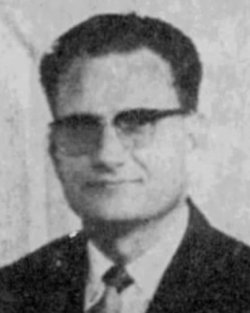
W.E. Best

Christian Warfare

Ephesians 6:10
W.E. Best January, 30 1983 Audio
0 Comments
Best's Corner

Sermon Transcript

Auto-generated transcript • May contain errors

100%
I've done my best during the
month of January, and this being the last service in the month
of January, to be as practical as I possibly could. There is
the time for doctrinal teaching, dealing with great doctrinal
subjects, and then there is a time for practical things, and I've
tried to be practical during the month of January. May continue
during the month of February, for that matter. I want us to
read tonight, beginning with the 10th verse of Ephesians chapter
6, and read through the last verse for our scripture reading.
We'll not be studying all this passage, but I do want us to
see what Paul's final words were, and we'll have something to say
about the word finally here in a moment. Let's read beginning
with verse 10, reading through verse 24. We know that Ephesians
was one of the greatest doctrinal treatises that Paul gave, along
with Romans, and now he is coming to the conclusion of this great
doctrinal book, and he has something to stress in the closing words
of Ephesians. Finally, my brethren, be strong
in the Lord and in the power of his might. We'll not be able
to get much further than that tonight in our study. In fact,
that will be our text. Put on the whole armor of God,
that ye may be able to stand against the wiles of the devil. For we wrestle not against flesh
and blood, but against principalities, against powers, against the rulers
of the darkness of this world, against spiritual wickedness
in high places. Wherefore, take unto you the
whole armor of God, that ye may be able to withstand in the evil
day, and having done all, to stand." Notice how many times
Paul makes reference to standing in these verses. Stand therefore,
having your loins girt about with truth. having on the breastplate
of righteousness and your feet shod with the preparation of
the gospel of peace above all Take the shield of faith wherewith
ye shall be able to quench all the fiery darts of the wicked
and Take the helmet of salvation and the sword of the Spirit which
is the Word of God praying always with all prayer and supplication
in the Spirit and watching thereunto with all perseverance and supplication
for all saints. And for me, that utterance may
be given unto me, that I may open my mouth boldly to make
bold the mystery of the gospel, for which I am an ambassador
in bonds, and therein I may speak boldly as I ought to speak. But
that ye also may know my affairs, and how I do, Tychicus, a beloved
brother and faithful minister in the Lord, shall make known
to you all things, whom I have sent unto you for the purpose,
for the same purpose, that ye might know our affairs, and that
he might comfort your hearts. Peace be to the brethren and
love with faith from God the Father and the Lord Jesus Christ. Grace be with all them that love
our Lord Jesus Christ in sincerity. Amen. I want to speak to you
tonight on Christian warfare. We'll be looking not at all of
these verses in the last chapter of Ephesians, which we have read,
but we will be looking especially at some statements found beginning
with verse 10 through verse 14. The Christian walk that Paul
stresses in the fourth chapter and verse one, when he said that
we are to walk worthy of the vocation wherewith we are called,
Seen in chapter 6 merging into warfare a real warfare We might
ask some questions at this point Does an epistle of such spiritual
elevation Descend to a battlefield for
its conclusion and why would it Descend to such a battlefield
That's a good question When you think about the first chapter
of Ephesians with this great doctrinal section being chosen
in Christ even before the foundation of the world being elected to
salvation and having been redeemed of the blood of Christ verse
7 of Ephesians 1 having the presence and power of the Holy Spirit
within and and then to come to the last verses of this great
spiritual epistle and to see how that the Christian walk merges
into a tremendous conflict with our enemy, Satan himself. So we might ask, does an epistle
with such a spiritual elevation, why would it descend into a battlefield
for its conclusion. And then following that question,
we might ask some others, did not the Lord Jesus Christ win
the victory for us at Calvary? The answer is, of course, he
did. Are we not victorious in him? Yes, we are. Well, why then? Do we have reference made to
this warfare at the close of such a great spiritual epistle
as that which Paul gave to the Ephesian church? We have won
the victory. We are on the winning side. But
we are on the winning side positionally. And I want to emphasize that,
positionally. We may not be experiencing the
victory that we should be conditionally, that is, in our practical Christian
living. But positionally, we are in Christ. We are victorious in Him. But
we may not be living up to our potential as Christians who have
been saved by the marvelous grace of God. Now, there are some reasons
for this spiritual conflict. that Paul makes reference to
in the closing words of this great epistle. I'd like to mention
three reasons. One is personal. and the second,
we could say, is positional, and the third would be dispensational. I'd like to make reference to
these three reasons for the conflict which we have as Christians in
this life. First of all, let us look at
the personal reason. There's a personal reason for
this conflict. There is a traitor in the camp. I said there is a traitor in
the camp. Satan is the enemy of souls. He knows that he cannot
take us out of the hand either of the Father or His Son, Jesus
Christ. But he does know what he can
do to us by hindering us if we are not close to the Lord and
if we are not found continually growing in grace and knowledge
of the Lord Jesus Christ. We must remember that the statement
found not only in Peter but also in James, one is that we are
to resist Satan and he will flee from us. And Peter makes reference
to the fact that Satan is as a roaring lion going about seeking
whom he may devour. That tells us something. So there's
a traitor in the camp, and we have to contend with him. So
that is a personal reason. There is a traitor, and that
shows that there is a personal reason for this conflict. The
second reason is a positional one. A positional one. When the Son of God took to Himself
a body, like sinful man, Satan knew his purpose was to redeem
those that the Father had given to him in the covenant of redemption. Thus, through Herod, Satan sought
to destroy the body of the Lord Jesus Christ. I'm talking about
his physical body, but he was not capable of doing so. In the
temptation, he withstood it. Today, The body is in glory. The Lord Jesus is sitting at
the right hand of the Father in his glorified body. But the Lord does have a body
on the earth. You and I constitute that body. And this is why I make reference
to the positional reason for the conflict that we are engaged
in as Christians. It is because of our position
in Jesus Christ. We are the body of Jesus Christ.
He is living through us in this world, and because of that fact,
there is a tremendous conflict which the body of Jesus Christ
has with Satan. Finally there is a third reason
for this conflict. I do not call it a personal reason
I do not call it a positional reason, but I call it a dispensational
reason the devil knows that he is defeated Knowing that his
time is short. He is working harder now than
ever before His work will intensify as we come near to the second
advent of the Lord Jesus Christ. So the mystery of iniquity is
already working, as Paul tells us. And every skirmish with Satan
brings us near to the final conflict. And therefore, I call this a
dispensational reason. So it has to do with the divine
economy of God. Before we begin our study of
verse 10, let's go back for a few minutes and observe some things
that will bring us up to this point in our study of Ephesians
chapter six. Man's original relationship was
wrecked by the fall. Now this is a very important
point for us to get. And there are three points to
which I'm going to direct your attention. So man's relationship
was wrecked in the fall in the Garden of Eden. There are three
things. First of all, his unbroken fellowship
with God. Now I'm using prepositions. And we'll see how important prepositions
are. In fact, prepositions was the
lesson that Tom was discussing tonight in a very brief manner.
So man's unbroken fellowship with God. took place in the garden. Furthermore, his knowledge of
God. There's another preposition.
And created uprightness of life to God. So all of this was affected. First of all, his fellowship
with God. Secondly, his knowledge of God. And thirdly, his life toward
God, or to God. Now let's go a little further
in the study of those three things. So secondly, we know that man,
every person who comes into this world, is alienated from God. We're looking at prepositions
again. Alienated from God. He is ignorant
of God. And thirdly, he is spiritually
dead to God. That's the condition of every
person as he comes into the world. That brings us to the third point.
In the new birth, you and I have been reconciled to God, still
emphasizing prepositions. We have been reconciled to God,
of course, by the death of Jesus Christ, and as a result of having
been reconciled to God, we have fellowship with God, and therefore,
by grace, we live for God. Now let me review these briefly
again. What happened to Adam in the
Garden of Eden? Think about the fellowship that he had with God
before the fall. So the fall caused havoc with
man. So his fellowship was broken
with God. His knowledge of God was certainly
hindered. And his created uprightness of
life to God was certainly affected. As a result of this, every person
coming into the world is alienated from the life of God, he is ignorant
of God, and he is dead to God. However, when a person is saved
by the grace of the sovereign God, he is reconciled to God,
he has fellowship with God, and he is to live for God. Thus we can see how important
prepositions really are. So as spirit, soul, and body
were affected by the fall, so spirit, soul, and body are affected
by the new birth or the new life in Christ Jesus. I read something
recently that I thought was very good along this line. A person
said that Christian has a live side to spiritual things, but
the sinner is dead to spiritual things. He went on to say, to
talk to an unsaved person about spiritual things is to talk to
his dead side. How true. You cannot talk to
a dead side about spiritual things. And now let's begin with verse
10 of chapter 6. Paul said, finally, my brethren. The word finally here is a very
important word. It has brought about some controversy
as to its real meaning, but I find in the study of this word in
the original that in the Greek the word finally is not essentially
a time word. I said it is not essentially
a time word. Rather the word means that which
remains to be said. Now when you make a study of
the word that is used here in the original language, it is
used in the sense in some places as a time word. But I do not
believe that is the sense in which it is used here. A.T. Robertson makes a very good statement
about this word. He says that there is a minimal
difference, actually, between Tu loipu and ta loipan. Now, of course, that doesn't
mean a thing in the world to you unless you're willing to
get into the original. But he did say that there's minimal
difference between the two. It so happens that we have here
tu loipu and we have a genitive singular neuter of loipos, which
means rest or remaining or other. And I agree with a number of
Greek students who say that what Paul was literally saying here,
he was not using it in the sense of a time word, but the remaining
words that he had to give to the people as he wrote this letter
to the Ephesian church. So it is not essentially a time
word. Rather, the word means that which
remains to be said. So Paul could not leave the lofty
truths of this epistle with any misunderstanding that walking
in chapters 4 and 5 is the sum of Christian conduct. So there
is a battle to be fought by you and me, and Christians are to
fight this battle. So we have been drafted into
the service of Jesus Christ. And since we are looking at verse
10, finally, my brethren, be strong in the Lord and in the
power of his might, and that's enough to discuss in our service
tonight, we'll not get much further than that. My brethren is also
a unique statement. In a limited sense, it would
speak of a common father. In a wider sense, brothers together
in a common cause. Now, how is Paul using this term?
Finally, my brethren. He is talking to persons who
have been drafted, and I'm using a military term, into the service
of Jesus Christ. So when we think about persons
who have been drafted into the service of Jesus Christ, there
is no such thing as free will here. No free will here. So they are brethren because
of the grace of God, and having been chosen by the Lord, and
having been effectually called by the Spirit of God, thus he
calls them, my brethren, my brethren, in a common cause. So their brethren,
first of all, because they're begotten by the spiritual father,
their brethren because they all possess the same spiritual features,
and thirdly, they're all entitled to the very same privileges. And now look at the next statement.
Finally, my brethren, be strong in, in the Lord. This refers to position. our position in Jesus Christ.
In order to really understand the meaning of the preposition
in, as it is used here, you need to go back to the first chapter
of Ephesians for a moment. I have done this in one of my
Bibles. I do not have it in all of them. But I have gone through
the entire first chapter of Ephesians, and every time the preposition
in is found, I have completely encircled it with red ink. And
it is amazing as one goes through this first chapter of Ephesians
and finds the number of times that that little preposition
is found. I'll call attention to it briefly because he refers
to them as brethren in the Lord. Look at verse 1 of chapter 1.
Paul, an apostle of Jesus Christ by the will of God to the saints
which are at Ephesus, and to the faithful in Christ Jesus. Then drop down to verse 4. In verse 4, according as He hath
chosen us in Him before the foundation of the world, and the last part
of verse 4, we are to be holy and without blame before Him
in love. Then drop down to verse 5, to
the praise of the glory of His grace wherein He hath made us
accepted in the Beloved. In verse 7, in whom. In verse
8, wherein He hath abounded toward us in all wisdom and prudence. And then drop down to the last
part of verse 9, he hath purposed in himself, the purpose that
he has purposed in himself. Then in verse 10, that in the
dispensation of the fullness of times, he might gather together
in one all things in Christ, both which are in heaven and
which are on earth, even in him." Now, I will not go any further,
but I did want to emphasize that statement. So be strong in the
Lord. This refers to one's position
in Jesus Christ. There must be an established
judgment in the truth of God. He who does not have a good knowledge
of Jesus Christ and his provision for his own certainly is not
capable to go out and to fight a good fight of faith. Someone
has said that many go into the field of battle against Satan,
but there are few that really conquer. How true that is. And the reason there are few
that conquer is because they go unprepared. So be strong in
the Lord. And that's the emphasis that
he places here. But let's go back to chapter
four for just a moment. We're talking about the walk
of the believer merging into a Christian warfare. And we're
not fighting against flesh and blood, but against principality,
against power, and against the rulers of the darkness of this
world. In chapter 4, there are several
references to the word walk. Beginning with the first verse,
Paul said, I therefore the prisoner of the Lord, beseech you that
ye walk worthy of the vocation wherewith ye are called. The word walk actually is a synonym
for life. Life is a walk from the cradle
to the grave. Enoch walked with God, Genesis
chapter 4. Believers are exhorted to walk
even as Christ walked, 1 John 2 and verse 6. Therefore, a walk
is made up of a series of steps, one step at a time. Thus, life
is made up of many simple acts. And when I say life is made up
of many simple acts, I want to stress that thought. I'm afraid
that there are many people today who, name the name of Jesus Christ,
who are always looking for a mountaintop experience. But I must remind
you, there are very few mountaintop experiences in the life of the
Christian. There are many simple steps.
There are many simple acts. But there are very few mountaintop
experiences. in my 42 years plus of being
a Christian, I could almost name, I think, the mountaintop experiences
that I've had with Jesus Christ on my two hands. So there are
very few mountaintop experiences, but there are many simple acts.
And so life is made up of many simple acts. The same is true
with the life of a married couple. There are some great experiences
in the life of any married couple. But life in the married couple
is made up of many daily simple acts. And the couple can always
rejoice and look upon those mountaintop experiences in their marriage. The same is true in the Christian
life. But there aren't many of those
mountaintop experiences. Someone has said that too many
times a person may go to a certain meeting, and he may hear an outstanding
message, and he may be left on a mountaintop experience, and
then if such a thing happens to him early in his Christian
life, he thinks that every time he goes to church, he's going
to have a mountaintop experience, one to be compared with that.
But that is not always the case. That is not always the case.
And we must realize that that is not always the case. So in
Ephesians chapter 2 verses 1 through 3, we have the walk of life before
regeneration. Then in verse 10 of chapter 2,
we have the walk of good works after regeneration. And then
beginning with chapter 4, and this is the practical section,
actually beginning with chapter 4 through the last chapter, the
practical section of the book, it is called the walk of practical
holiness in chapter 4 and verse 1. And you'll also find, beginning
with chapter 4, these references. We are to walk worthy of the
vocation wherewith we are called. You'll find in chapter 5 and
verse 2, we're to walk in love. In verse 8 of chapter 5, we're
to walk in the light. And then in verse 15 of the same
chapter, we're to walk carefully. So we're to walk worthy of our
vocation. We're to walk in love, we're
to walk in the light, and we're to walk circumspectly, which
simply means that we're to walk carefully. So positively, the
believer is to walk in newness of life, as Romans 6 and verse
4. He is to walk after the Spirit,
Romans 8 and verse 4. He is to walk in honesty, Romans
13 and verse 13. He is to walk by faith and not
by sight, 2 Corinthians 5 and verse 7. He is to walk in good
works, Ephesians 2 and verse 10. He is to walk in love, Ephesians
5 and verse 2. He is to walk in wisdom, Colossians
4 and verse 5. And He is to walk in truth, 2
John verse 4. So positively, the believer is
to walk thusly, as we have suggested. Then let's look at this from
the negative side. Negatively, we are not to walk
after the flesh, Romans 8 and verse 4. We're not to walk after
the manner of men, 1 Corinthians 3 and verse 3. We're not to walk
in craftiness. 2nd Corinthians 4 and verse 2
we're not to walk by sight 2nd Corinthians 5 or 7 we're not
to walk in vanity Ephesians 4 and verse 17 and we're not to walk
disorderly 2nd Thessalonians 3 and verse 7 but this walk of
the believer the positive side of our Christian life, as well
as the negative side of our Christian life. This walk merges into a
Christian battle, which we have with Satan himself. And this
is what the apostle is talking about in this section of scripture,
beginning with verse 10 of chapter 6. So he says, be strong in the
Lord. in the Lord. There must be established
judgment. So we must go into the field
of battle against Satan and we must go prepared doctrinally
to stand up against him. We find in Daniel chapter 11
and verse 32, those that know their God shall be strong and
do exploits. That's a great text. Listen to
it, those that know their God shall be strong and do exploits. So in the Lord is a caution to
you and to me. Then he says in the latter part
of verse 10, finally my brethren be strong not only in the Lord,
but in the power of His might. So to know that God's power is
engaged for the defense of us certainly gives to us great courage.
And this power which we possess is the same power, according
to Ephesians 1 and verse 19, that raised Jesus Christ out
from among the dead. We have, first of all, when we
consider this text of Scripture, that Christian perseveres in
the Christian course to the end of his very life. So his life
and his work must go off the stage at the same time. This
past week, I think we all saw a good illustration of this.
Nearly everyone who listens to sports to any degree has at least
heard about Bear Brant. He lived only about six weeks
after he had retired, and someone made the statement that Bear
Brant said that when he retired, he would die. Well, I suppose he didn't know
just how Much truth there was in that statement. He lived six
weeks, six weeks after he had officially retired. Now why did
I use that as an illustration? I'm talking about the perseverance
of the believer. And beloved, we find that the
Christian course, which we persevere in as Christians, that the life
and the work to which we have been called will go off the stage
at the same time. at the same time. So no believer
should think about retiring in the sense of retiring from the
service of the Lord. He never retires. He cannot retire. So when one's life goes off the
stage of activity, so does his work. So when his life ends,
so does his work end with him. So death is to the last Offering
made by the Christian as we find Paul's statement in 2nd Timothy
chapter 4 verses 6 through 8 Many are easily persuaded to take
up a profession of religion and as easily Persuaded to lay it
down, but when God drafts someone into his service When he has
been effectually called by the grace of God it is not something
that he takes up and Then he lays it down without any thought
whatsoever to it. So persevering is hard and difficult
work. Taking up the cross daily is
the language of Scripture. Nothing about laying down the
cross as long as we are in this life. So the armor that is provided
for you and me that is stated here by Paul in Ephesians chapter
6 is never to be laid aside by us. We can never lay it aside. Human strength can never stand
up against Satan in our own armor. We have to have the armor that
God has provided for us. So the Christian perseveres,
perseveres. to the very end of his life here
on earth. Secondly, the Christian must
not accommodate himself to the corrupt customs of the world
according to Romans chapter 12, verses 1 and 2. We are to present
our bodies, living sacrifices that are holy and acceptable
unto God, which is our reasonable service. And we're not to be
conformed to this world, but be transformed by the renewing
of our minds in order that we might prove what is the perfect
will of God. So the Christian must never accommodate
himself to the corrupt customs of this world. And thirdly, the
Christian keeps the charge even in the midst of apostasy. We're witnessing apostasy today. But the Christian does not become
discouraged over the apostate condition of professing Christendom. He has something that he understands
because of the wisdom of God that has been given to him. He
knows what he believes. He has assurance of what he believes.
And he is to earnestly contend for the faith that has been once
delivered to the saints, according to Jude, verse 3. And then notice,
thirdly, he's to keep the charge, and he does that very thing.
And then we have three things that I think are very important
in verses 10 through 14 of Ephesians chapter 6. The word standing,
this is a military term. Standing is opposed to fleeing.
Standing is opposed to falling. So here we are to stand, and
notice these three things. First of all, we are to stand
against the wiles of the devil. That's verse 11. What does this
mean? To stand against the wiles of
the devil. We are to resist him. That's why James said, resist
the devil, and he will flee from you. So we are to resist, or
we are to repel the aggressive attacks of Satan. The Church
is constantly exposed to the attacks of the devil. This will
continue as long as the Church is a pilgrim on the earth, according
to Matthew chapter 16 and verse 18 the Lord Jesus said upon this
rock I will build my church and the gates of hell will not be
able to prevail against her So we're to stand against the wiles
of the devil secondly in verse 13 he says that withstanding
in the evil day and having done all to stand and This is making
an aggressive move We're not to just stand against and resist,
but we are to be aggressive. We're not to be passive. So here
you see the aggressive part. So in the 11th verse, we're to
stand against. We are to resist the devil and
he'll flee from us. But looking at verse 13, this
is making an aggressive move against the enemy. We cannot
escape the evil day. So we must face it and oppose
the force of the enemy who is against us. We must be clad in
the armor of God to make a successful move against the devil. And then finally, in verse 14,
He says, and having done all to stand. And having done all
to stand. So we are to resist. We are to
be aggressively against Him. And then finally it says in verse
14, having done all to stand. And this means to stand orderly
in the place where God has placed us. What a lesson. So first of
all we are to resist. Secondly, we are to be aggressive
even we as we resist him we are to be aggressive we're to be
on the offense and not always on the defense and Then lastly
says and having done all to stand we're to stand orderly in the
place where God has placed us Do you know where God has placed
you? Have you come to a subtle conclusion in your own mind as
to what God would have you to do? and you're willing to stand
in that place and not be moved? God has a place for every servant. There is a place for every member
of the body of Jesus Christ. Just as the eye and the body
serves a very proper function, the hand serves another function,
the foot another function, the mouth another function as we
find in 1 Corinthians chapter 12. But every member of the body
has a place. And every member of that body
is to stand in the place where God has placed him. Don't you
feel sorry for persons who haven't found their place of service? And persons who have not found
their place of service are often very confusing in their
own ideas about things, and sometimes they can be a great problem to
a church. That should not be, when every
person knows what his place is, and he stands in that place.
Thus, I wanted to call attention to the three places here where
the word standing is found. We are to stand, we are to resist. We are to withstand, we are to
be aggressive. and where to stand, there is
to be order in the place where we stand. Then notice this. Between sanctity and sin, there
is deadly enmity. Someone has said the moral tranquilization
of people is obtainable by no policy of compromise. By no policy
of compromise. The call is for soldiers, not
diplomats. I like this. The call is for
soldiers, not diplomats. Listen to this. The victory is
to be fought, not negotiated. You don't negotiate in this battle.
There's no negotiation. We're either standing on the
side of Jesus Christ, are standing on the side of him who opposes
Jesus Christ. So there's no negotiating. The
same person went on to say, no one can be on both sides. No
man can serve two masters. And then finally, he came to
this conclusion. As the epistle begins with all
spiritual blessings in the heavenlies in Christ Jesus, so this epistle
closes with all the spiritual enemies in the same position. Now think about that for just
a moment. At the beginning of the epistle,
Paul talks about we have been blessed with all spiritual blessings
in the heavenlies in Christ Jesus. But the conclusion of this great
spiritual doctrinal epistle ends in the manner that one would
not think about unless he really studied it and thought it through.
So it begins with spiritual blessings in the heavenlies, in Christ,
and concludes with all of our spiritual enemies in that same
position. And we are at war against those
spiritual enemies who are in heavenly places. And this is
what we have, beginning with verse 14. Therefore the armor
is provided for us. And this is what he said. as
the epistle begins with all spiritual blessings in the heavenlies.
So it closes with all spiritual enemies in the same position.
And here's what I like. Diplomacy has no role to play
in this Christian warfare. What do we mean by diplomacy?
We all know what a diplomat is. Our country has diplomats. and
we send forth our diplomats to negotiate with other countries
in certain areas. But beloved, there is to be no
negotiations. We cannot negotiate with our
enemies. We have to fight our enemies.
We have to resist our enemies. We have to be aggressively against
our enemies. And we have to stand in the position
where God has placed us without any negotiation whatsoever. So
in verse 11, the saints go from the indwelling principle of grace
to its external exercise. External exercise. And what is
it? Put on. Put on the whole armor
of God. It is one thing to have an armor
in principle as to the mental concept of truth But beloved,
it is another thing to have grace in the heart to manifest itself
by the external exercise of putting on the principles of truth. It
isn't enough for you and me to come together and to study the
scriptures and have great principles in our minds. We must put on
those principles. And when we put on those principles,
then we are to exercise ourselves in this conflict in which we
are engaged. Do we possess the spirit of the
primitive Christians? That's a good question to ask.
Someone has said, when Israel went out of Egypt, they greatly
rejoiced on the shores of the Red Sea. And how true. But the
greater part of them failed through unbelief to enter the land of
Canaan. The resemblance between their
case and ours, this writer said, has struck my mind with great
concern. There are three things we must
consider. What are they? Number one, the
object of their understanding was to root out all idolatry
in the land of Canaan. to root out all idolatry, and
to establish themselves in the knowledge and worship the one
true and living God. He said, secondly, the authority
on which they acted was the sovereign command of God. And ours is the
same. Ours is the same. And thirdly,
he said, the ground on which they were to rest their hope
of success was a divine promise of God. Such is also the ground
of your hope and of mine. Those among them, he said, who
believe like Joshua. Caleb felt themselves able to
go up. But they that distrusted the
promises of God turned their backs in the hour of danger.
When they saw the enemies, they said, there are giants in the
land. There are giants in the land.
They didn't feel that they were able to stand up against them.
And then he made this application. He said, if we think lightly
of God's promise, magnify all of our difficulties, as all the
Israelites did who went up to spy out the land with the exception
of Joshua and Caleb, or relax our effort, we may expect to
die as it were in the wilderness, as did the great host of the
Israelites. Well, here's a tremendous application
of the principle of the Old Testament applied here to this passage
in Ephesians chapter 6, beginning with verse 10. We're to put on
the whole armor of God. Now, there are some differences
between the Israelites and us. What are those differences? But
there are also Some things in our favor that we must consider
they went forth armed with a temporal sword You and I are armed not
with carnal weapons But with spiritual weapons and only with
the spiritual weapons provided for us in The truth of God's
Word are we able to stand up? against our enemy So they were
commissioned in justice to destroy men. But we are commissioned
to go forth proclaiming the unsearchable riches of Jesus Christ, knowing
that the word as it goes forth will be the means of conversion
for all of those for whom Jesus Christ died and have been regenerated
by the Holy Spirit of God. Then look at the statement put
on. Put on the whole armor of God. Put on not in conversation. That isn't enough. But put on
in exercise. So our armor and our flesh are
to go off the scene of action together. In heaven we shall
appear, not in the armor. We will not need that armor in
heaven. But here the armor is to be worn day and night by you
and by me. We must walk, we must work, and
we must sleep in the armor that God has provided for us. After having made that statement,
I am reminded of Nehemiah who led the children of Israel in
the rebuilding of the walls around Jerusalem. And the persons who
really went forth under the leadership of Nehemiah and accomplished
the victory that was won, they never put off their armor, so
to speak. They worked day and night. They
had a sword in one hand and a light in the other. Every man standing
in his place round about the camp. And that is exactly what
we're to do. It isn't enough for a few to
stand in their places. It is the responsibility of all
Christians to stand in the places where they have been placed by
God. So put on, not just in conversation,
but in exercise. And then look at the statement,
the whole armor. We're not going to go into the
Discussion of the various parts of the armor tonight, but the
Christian armor must be complete Every part of the Christian must
be protected. So the armor provides for the
protection of the body except the back Except the back and
the reason is we're to be facing our enemy and not turning our
back on it We're to stand against it We're to be on the offense
So put on the whole armor of God. So the armor of God and
the wiles of the devil are set in opposition the one to the
other. Paul was a born warrior. Are you a born warrior? Did you
know every true Christian is a born fighter? I hope you understand
what I mean by that. You're a born fighter. Fighting
the good fight of faith. You say, well, I'm not a fighter.
If you're not a fighter, then you haven't been born of the
Spirit of God. If you're not willing to fight the good fight of faith,
then you've never been born of God, because every Christian
is a born fighter, and he is to fight the good fight of faith. And thirdly, the armor is of
God. He said, take, take, verse 13,
not make, We can't make our armor. We're to take the armor so the
soldiers to come on the field of battle with no arms but what
have been provided for him. When we come on the field of
battle as Christians, we have no weapons of our own, only those
provided by God himself. So Christians must not trust
in the armor of God, but in the God of the armor. In the God
of the armor. I don't trust just in the Word,
but I trust in the God of the Word. My trust is in Him. And
this is His armor for me. This is the only way that I can
stand up against my enemy. And then we have the wiles of
the devil mentioned. And the wiles of the devil simply
refers to the methods of Satan. So the devil does not work in
the open, but always behind cover, behind some kind of cover. And
the methods of the deceiving spirits are adapted to each one
with a skill gained by much experience over a long period of time Don't
forget how long Satan has been Satan. And don't forget the experience
that he has gained through the years that he has been in existence. So an objective and a while are
quite distinct. So the while is a means used
by the fool to gain an objective. Evil spirits are wiles to carry
out their main objective. So what does Paul say in writing
to the Ephesian saints? He said, finally, my brethren,
be strong in the Lord and in the power of His might. So when you look at the statement,
put on the whole armor, that transfers our concern to the
eternal sphere. So our concern is no longer on
the temporal, but on the eternal sphere. And so we are to go forth
in the strength and power of Jesus Christ, knowing that we
shall win the battle, because he is the captain of our salvation,
leading us from victory to victory. Let us stand as we sing. What's
the song, Brother David?
W.E. Best
About W.E. Best
Wilbern Elias Best (1919-2007) was a preacher and writer of Gospel material. He wrote 25 books and pamphlets comprised of sermons he preached to his congregation. These books were distributed in English and Spanish around the world from 1970 to 2018 at no cost via the W.E. Best Book Missionary Trust.

Comments

0 / 2000 characters
Comments are moderated before appearing.

Be the first to comment!

Joshua

Joshua

Shall we play a game? Ask me about articles, sermons, or theology from our library. I can also help you navigate the site.