Bootstrap
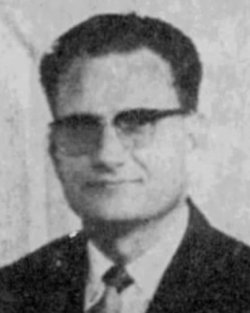
W.E. Best

Christ Made Sin, Part 2

2 Corinthians 5:21
W.E. Best October, 31 1982 Audio
0 Comments
Good for imputation, reconciliation, and impartation.

Sermon Transcript

Auto-generated transcript • May contain errors

100%
Open your Bibles to 2 Corinthians
chapter 5. Last Sunday morning we read beginning
with the 14th verse and read through the 21st. This morning
we're reading only verses 18 through 21. After we have read these verses,
I will review just a few statements that we gave in the lesson last
Sunday. to give to us the proper transition
from that message to the one that we will be bringing to you
today. Paul said, And all things are
of God, who hath reconciled us to himself by or through Jesus
Christ, and hath given to us the ministry of reconciliation. to wit that God was in Christ,
reconciling the world unto himself, not imputing their trespasses
unto them, and hath committed unto us the word of reconciliation. Now then, we are ambassadors
for Christ, as though God did beseech you by us. We pray you
in Christ dead, be ye reconciled to God. That statement means
the same as beseeching persons to repent or beseeching individuals
to believe. Be ye reconciled to God or repent
of your sins or believe on the Lord Jesus Christ. Verse 21,
For he hath made him sin. You notice I omitted the two
words to be because they are italicized, having been supplied
by the translators. That is, the father made his
son sin for us, who knew no sin, that we might be made the righteousness
of God in him. having discussed the temptation
of our Lord in the wilderness, showing from Scripture that Jesus
Christ could not be tempted to sin as you and I are tempted
to sin. He didn't have the nature. There
was nothing within Him that could be attracted by anything evil
outside of Him. And that is in opposition to
what is commonly being taught by many religionists from the
pulpits of our land today. Very important subject. But yet
people are gradually hearing these things, they're becoming
accustomed to them, and finally they even quit fighting against
it. They just go along, and that's exactly what's happening in many
areas of biblical truth today. The Father made him sin. And
then the Apostle adds, who knew no sin. He knew no sin, he did
no sin, in him was no sin. Remember those verses that we
gave you last Sunday. Here it is, he knew no sin in
1 Peter 2.22, who did no sin, And 1 John 3, 5, in him was no
sin or in him is no sin. And then the apostle said that
we might be made the righteousness of God in him. What does it mean for Christ
to be made sin? I'll review just briefly three
or four things. First of all, It was the Father
who made him sin, Isaiah 53 verse 10, as well as this verse in
2 Corinthians 5 and verse 21. What does it mean to be made
sin? The word made simply means to appoint him to be sin. So the Father appointed him to
be sin. And the proof of that is found
in Acts, the second chapter, where the Lord Jesus Christ was
appointed to be Lord and Christ. Lord and Christ. Punishment of
sin is called sin. Genesis chapter 4 and verse 7,
also the 13th verse. The Lord said unto Cain, If thou
doest well, sin, sin lieth at the door. Then Cain replied in
the 13th verse of Genesis 4 by saying, My punishment, which
can be equated with the word sin in verse 7, my punishment
is greater than I can bear. Christ's second coming will be
without sin. Hebrews 9, verse 28. The writer
of Hebrews said, So Christ was once offered to bear the sins
of many, and unto them that look for him shall he appear the second
time without sin unto salvation. This means without any reference
to the judgment for sin, that is, for the elect. Sin was judged
for the sheep at Calvary. That's where sin was judged for
you, and that was objectively judged, judicially handled at
Calvary. Finally, the sacrifice for sin
is called sin. Hosea 4, verse 8. They eat up
the sin of my people, or the sacrifice of my people. Thus the Father appointed His
Son to execute His decree, to fulfill all the prophecies concerning
the coming of Jesus Christ, to put away sin with the sacrifice
of Himself, and to redeem His elect, that is, to stand in their
place. Then we gave to you a number
of things last Sunday. relative to this verse of scripture,
which we will not repeat now. But look at the verse again,
verse 21. Then my message this morning will not be dealing with
this verse except in the light of verses 18 through 21. What
difference is there between the two words made in 2 Corinthians
5, 21? You say they're the same in the
English. They are, but they're not in the Greek. They are not
in the Greek. Christ was made sin. That is,
he was appointed to be judged for sin. And that is not doing
injustice to the Scriptures. He was appointed to be the sacrifice
for sin. Some have interpreted this as
being the sin offering. The Father made Jesus Christ
a sin offering. There are others who have scoffed
at that idea by saying that offering is not mentioned. It isn't. But
I've given you enough passages this morning to prove from Scripture
what the word sin actually means. It stands for judgment. It stands
for sacrifice. It even refers to the coming
again of Jesus Christ when sin will not be judged. Sin was judged
when He came the first time. And when he comes a second time,
it will not be for the purpose of judging sin, it will be for
the purpose of coming to receive his own unto himself and establishing
his kingdom in which he will reign as King of Kings and Lord
of Lords. What's the difference, however,
in the two words made? Beautiful statement here. You
do not see it in the English, but you do in the original language.
So the first word made means to appoint. The father appointed
his son to be sin. And the second word made comes
from a different Greek word. The first one comes from poio,
which means to appoint. It also means to make, but here
it means to appoint. And then the second word for
made comes from the Greek verb ginomai, which means to become. So the father appointed his son
to be the one who would be judged for your sins and for mine, in
order that we might become righteous in Him. Precious truth. Precious
truth indeed. Now we come to the development
of my message this morning. And it is entitled, The Messenger
and His Message. The Messenger and His Message. In the light of verses 18 through
21. Do we love truth or do we love newly understood
truth? That's a very important question.
That's a serious question. Do we love truth for truth's
sake or do we love newly learned truth? Let me develop that a little
bit. Newly learned truth has its place. New discoveries in
the biblical goldmine of truth surely has its place in the life
of every Christian. But I find that there are some
who rejoice only in newly learned things, and that's wrong. We rejoice in the truth. Now,
we want to grow in grace and in knowledge of the Lord Jesus
Christ, but when we grow, this growth simply adds to the truth
which we already embrace and love. In other words, growth
enables us to have a better understanding of the truth which we embrace
and love, It enables us to be more effective in our witnessing
for the simple reason we can give a better explanation of
what we really embrace and love. So I raise the question again.
Do we love truth or do we love newly discovered truth? And I must hasten to say New
discoveries are important. These have their place, but they
have their place as additional enlightenment to the truth which
we already embrace and love. Beloved, I don't want to hear
the same thing said about John 3, 16 every time I come to church,
which you don't either. That doesn't mean that when one
is given an exposition of John 3, 16, that he has gotten all
the information that he can get from the study of Scripture.
I affirm that most people who quote John 3.16 don't even understand
it. Just as most people who quote,
look now at verse 19 of the passage we'll be developing this morning.
God was in Christ reconciling the world unto himself. Most
people who read this say, the word world means the world. It
means everybody. And they say you cannot disprove
it. Oh yes I can, even from the context. You mean you can disprove that
view from the context? I surely can. Will you look at
the very next statement? Not imputing their trespasses
unto them. Now the individual who says,
God was in Christ reconciling the world, all people without
exception. All people without exception.
What are they going to do with the very next statement? Not
imputing their trespasses unto them. Keep that thought in mind
because we will annihilate that view this morning. That it means
all persons without exception. everyone who was objectively
reconciled to the Father through Jesus Christ and His redemptive
work 2,000 years ago. As far as God's concerned, as
far as the legal aspect of salvation is concerned, his sins will never be imputed
to his account. They've already been atoned for.
But there is a difference, beloved, between what Jesus Christ did
for you and me on Calvary and what takes place within us subjectively
when the Holy Spirit applies the redemptive work of Jesus
Christ to us. Thus we will get into the objective
reconciliation and subjective reconciliation. Do you know the
difference? There is a difference. And we'll
see that this morning. But God was in Christ reconciling
the world. The world of whom? The world
of believers, if you want to use that expression. The world
of the elect, if you want to use that expression. Those for
whom Jesus Christ died. Because those who are reconciled
to the Father through the finished work of Jesus Christ will never
have their sins imputed to them. What about Judas, who is in hell? If Jesus Christ reconciled Judas
unto himself, what about Judas in hell today? What about the
man in the 16th chapter of the Gospel according to Luke, who
in hell lifted up his eyes, being in torment? Another great thing about this
statement in 2 Corinthians 5, 19 is that whenever a person
dies, he doesn't have to pay for his sins in purgatory as
taught by Roman Catholicism. His sins will never be imputed
to him. So it destroys Catholicism. So the Catholics are not only
wrong in that, they worship a God who can be overthrown by man,
who is not absolutely sovereign, but they claim to worship one
who forgives and yet doesn't forgive. Doesn't make any sense,
does it? I want to show you how beautiful
the Scriptures are when they're handled correctly. I said when they're handled correctly. Now, my subject this morning,
the messenger and his message. Just two parts. to our message
this morning. First of all, the messenger. Paul tells us that the messenger
is an ambassador for Christ. An ambassador for Christ. The
word for ambassador comes from the Greek verb presbuo. Now you can see that it is closely
related, is it not? to the elder, which comes from
the Greek word presbyteros. This is the verb. It is interesting,
however, that this particular verb is used only twice in the
New Testament, and translated ambassador in both places. The
first reference is here in 2 Corinthians 5, and the second reference is
Ephesians 6 and verse 20. God's ambassadors are like trumpets which make no uncertain sound. Notice I said God's ambassadors
are like trumpets which make no uncertain sound. Turn back
to 1 Corinthians 14 verse 8 for a moment. 1 Corinthians 14.8, one of my favorite
verses of Scripture. I used to have a poem. It is
used by so many others of my friends throughout the years
that I don't use it anymore, but it's a tremendous poem that
was given to me by a Plymouth brethren man some 35 years ago. I'll not give it this morning.
But look at the verse. Paul said, For if the trumpet
give an uncertain sound, who shall prepare himself to the
battle. So God's ambassadors are trumpets
that do not give on certain sounds. I'm talking about God's trumpets.
And the reason they do not give on certain sounds is because
God has committed to them not only the Ministry of Reconciliation,
but also the Word of Reconciliation. I don't see a great amount of
difference between Ministry of Reconciliation and Word of Reconciliation,
as both terms are used within the context of our passage. So
God's ambassadors are like trumpets who make no uncertain sounds. A message has been committed
to them, and they're simply delivering what God has committed to them
and ordained that they should give. They're not out preaching
themselves. They're not exalting themselves.
They're not trying to further themselves. They're out for one
purpose and one only, and that is to further the cause of Jesus
Christ. Secondly, God's ambassadors are
like Ezekiel's wheels. in Ezekiel chapter 1, which move
not unless the Spirit of truth direct them. That's found in
Ezekiel 1, if you want to take time and read it. So it's very important for us
to understand who God's ambassadors are. Ambassadors proclaim peace. But
apart from grace, the hearers shall reward them with trouble. Did you get that thought? Paul
was imprisoned for preaching according to Ephesians 6.20.
And there's where the other place where the word ambassador is
used, which comes from the word presbuo. God's mercy is discovered in the office of preaching. I
said God's mercy is discovered in the office of preaching. A
person can be regenerated by the Spirit of God, but he only
discovers mercy and grace in the office of preaching. Thus we see the importance of
preaching. Conversely, Satan's malice is discovered in his opposition
to that office. And believe me, Satan is opposed
to the office of preaching. It is bad enough for a man to
stand in the office of ambassador without having been sent. But
beloved, it is worse to be in the office without being in Christ. That's a tragedy. And there have been many who
have been in that office who were not in Christ. And I'm sure
there are many today who are in the office, but they're not
in Christ. Power is not in the message apart
from the Spirit. The same must be said for the
ambassador. He may preach in the power and demonstration of
the Holy Spirit, but if the hearers are without the Spirit, Their
hearts will only be hardened by the message which he proclaims. And that's Bible. Let's think about the dignity
of the ambassador for a little bit. The dignity of the ambassador. How humbling this is to the man
of God. The dignity of the ambassador
is measured by three things. Number one. the grandeur of the
power he represents. Listen to this. He is an ambassador
for Christ. And here we have the Greek preposition
hupor, on behalf of Christ. That's humbling, beloved. That's
humbling. So his dignity is measured, first
of all, by the power that he represents. He is an ambassador
on behalf of Jesus Christ. That's the meaning of the preposition
used and translated for in your King James Version. Secondly,
the dignity of the ambassador is measured by the lofty mission
to which he has been sent. And thirdly, his dignity is measured
by the subjects about which he is commissioned to treat. Now that's a message all by itself. Let's look at these things for
a moment. First of all, to be an ambassador for Christ means
to be sent on behalf of Jesus Christ. That's one of the most humbling
things that I can think of. Thus we see why the Lord Jesus
said to the 70, listen to this, in Luke 10 verse 16, He that
heareth you, heareth me. And he that despiseth you, despiseth
me. And he that despiseth me, despiseth
him that sent me. In Christ's prayer to the Father,
he said, As thou hast sent me into the world, even so also
I have sent them. Also I have sent them. How humbling for one who was
once an enemy of God, and that's what I was, and that's what you
were, before you were regenerated by the Holy Spirit, to be sent
on behalf of Christ. We're all sent on behalf of Christ.
Because I'm magnifying the office of the ambassador this morning.
But you're sent out on the behalf of Christ. You're a witness on
the behalf of Christ. That doesn't mean that you occupy
the office of the ambassador. But you're to be a witness on
behalf of Christ. Hence, one who has been reconciled
does not speak theoretically. He speaks from a life of experience. The ambassador is one, I said,
who does not speak theoretically, but he speaks experimentally. You wouldn't want to hear a preacher
preach who hasn't experienced what he's preaching, would you?
And, beloved, neither would you want to listen to someone witness
to you unless you have experienced the grace of the God whom you
represent. Paul said, as though God did
beseech you by us. Now look at that expression.
We're talking about the ambassador. and his responsibility, as though
God did beseech you by us. Then notice he added something.
We pray you in Christ's stead. Now think about that for a moment.
Two statements here just really humbles the Christian. And he finds himself in the dust
at the feet of the sovereign Savior. as though God did beseech
you by us. We pray you in Christ's stead. I want us to get the impact of
these statements. The office of ambassador is not
only one of distinguishing honor, but it is one of important trust. This office takes precedence
over everything else in one's life. Not only in the office
of the ambassador, but in the life of the Christian as well. Let us think secondly about the
lofty mission of the ambassador. The lofty mission of the ambassador. He is sent out on behalf of Jesus
Christ To do what? You remember what the Lord Jesus
said in John 10? He came for the purpose of seeking
and saving the sheep. Not only in Luke 15, but also
in John 10. I've come to seek and to save
the lost. Now, I can't save them. Christ came to seek and to save.
But we're sent out on behalf of Christ as sheep hunters. We're looking for sheep, beloved.
And the amazing thing about it, we often find sheep in the most
unlikely places. My wife and I were witnessing
to a lady this past week. She was supposed to be here this
morning, but like so many, she's not, so I can use this illustration.
And, of course, when someone says, you know, he's going to
be or she's going to be, I just wait until Sunday morning and
I stand up to preach and I look and see if they're present. Because this is a day when words
don't mean a great deal. Here about three or four weeks
or three weeks ago, my phone rang one Saturday afternoon.
This man said, are you Brother W. Best? And I said, yes. He
said, gave me his name. He said, I live out in the edge
of Sugar Land. And he said, I've been going
to church. I'm a member of Providence Baptist Church over near Koontz,
Texas. And of course, I'm familiar with
Providence Baptist Church. I've never been there, but I
know about it. It is a great church, small country church,
about five or six miles out of Koontz, Texas. And that's a long
ways from Houston. And he said, it's just so far to Koontz. And
he said, I've just recently heard about you, and will you give
me directions to your church? Went on to tell me that he was
an attorney. And he said, I go to Koontz every day. My law office
is right across the street from the courthouse in Koontz. And
he told me he was raised in Koontz, so forth, and so that's only
a few miles from where I was raised. Of course, quite a bit
of difference in our ages. He's 35. I said, you mean you
go back and forth Every day, and your law office is in coups?
Yes. And so we talked quite a while,
but strong-raced men have finally got around to the question, why
don't you carry the name Baptist? So I proceeded to tell him, and
so then his reply was, well, what about John the Baptist?
I said, well, I would be happy to explain that to you. I said,
you wouldn't want to name a church after a man, would you? I said,
that literally means John the baptizer, John the identifier. It was John who identified the
Lord Jesus. But he was hanging on to that
word Baptist. Finally he said, well, I'll not make an issue
of this. But he didn't show up, and he hadn't shown up since.
So evidently he made an issue of the name Baptist, and that's
fine. Because you see, the first time he heard me preach in this
pulpit and say what I say so often and will continue to say
because it's biblical, there's no justification for the use
of the name Baptist any more than in Luther or somebody else. And finally he had to admit,
well, he said, I can't disprove what you're saying. Even though
he couldn't disprove what I've said, he is so enamored, I guess,
with the name Baptist that he just doesn't want to give it
up. After all, somebody might criticize him for coming to a
church that doesn't care the name Baptist. Well, the more
I hear about Baptist, the less I think of the name Baptist.
I just threw that in. But I mean every word of it.
I asked him, I said, what are you going to do with the Church
of God at Corinth? Not called the Baptist Church
of Corinth. In fact, you won't find where any of the churches,
the church at Ephesus, the church at Colossae, or any of the churches
are ever called the Baptist church at those places. Well, you're
right. I said, well, they just stay with the Scriptures. Well,
yes, I guess that's what we ought to do. Interesting, isn't it? Really interesting. But we'd have a mission, and
our mission is we're sheep hunters. But sheep are found in the most
unlikely places. And back to my first part of
the illustration. The other day, we were in a place of business.
This woman got to talking. She said, I'm a Catholic. I'm
Polish. She said, my son has recently been converted and he's
thinking about becoming a Baptist preacher. And this really got
me kind of stirred up. And so before I left, she said,
give me the directions to your church. I was happy to do that. And she just talked like she's
going to be here every time the doors were open, you know. But I'm not saying that the Lord
may not do something for her. I'm not saying that. I come back
to say the sheep are found in the most unlikely places. If
you don't believe that, the next time you shave, get a good look
at yourself and say, you mean the grace of God spoke to my
heart? You mean I'm one by God's grace? Listen to this. Paul said, all
things are of God, going back to verse 18, who hath reconciled
us to himself by or through Jesus Christ. Preposition there is
dia, could also be translated through as well as by. Now this
brings us to the message, to the message of the ambassador.
We have seen a few things about the messenger. the ambassador.
Now what about his message? The high point of the messenger's
message is God reconciles the elect, the elect, notice this,
the world of the elect by or through Jesus Christ. What a
privilege to be included in the all things. Asking you a question
this morning. Are you included in the all things
of verse 18? All things include implanting. Now I have some other things
that will precede this that I'm holding for a few minutes. All
things include implanting, outworking, maintaining, and completing. Think about that for a moment.
All things. I'm included in the all things
that the Apostle is talking about. And the foundation for the all
things is what? The sacrificial work of Jesus
Christ. God reconciling us to himself
through Jesus Christ. Through Jesus Christ. But all
things, the implanting of the principle of life, the outworking
of the principle of life, the maintaining of the principle
of life, and the completing in this life, all wrapped up in
God reconciling us to himself through Jesus Christ. Now these things are the fruit
of objective reconciliation. Now we're going to study for
a little bit and I'm hopeful that you are ready to study.
We're going to make some very important distinctions that have
to be made in order to understand this passage along with related
passages of Scripture. Turn with me first of all to
Romans chapter 5. For years I read commentaries, and I got the wrong
impression of reconciliation as given us in Romans 5. And
after having said that, may I give a note of warning? If you want
to make a detailed study of the word reconciliation, and we'll
go into that just briefly this morning, and you have some works
in your home, for instance like Vine's word study, be careful.
Some of these Greek works do not just Limit themselves and
these men do not limit themselves who write these works To the
meaning the literal meaning of a word, but that theology is
also Implanted before they get through giving to you a definition
of the word So be careful when you study reconciliation and
some Greek works and I'll not even mention them. I'm just giving
you a note of warning Read with me beginning with verse 6 of
Romans chapter 5 Paul said, For when we were yet without strength,
in due time Christ died for the ungodly. For scarcely for a righteous
man will one die, yet peradventure for a good man some would even
dare to die. Notice in verse 6, we were without strength,
and it was when we were without strength that Christ died for
us. Then in verse 8, But God commended this love toward us,
in that while we were yet sinners, We're not only without strength,
but we were sinners. Christ died for us. Now we're
getting down to the next two verses and look closely now.
Much more than being now justified by His blood, we shall be saved
from wrath through Him. Verse 10, For if, when we were
enemies, we were reconciled to God by the death of His Son,
much more being reconciled, we shall be saved by his life. Let's
read on through verse 11. And not only so, but we also
join God through our Lord Jesus Christ, by whom we have now received
reconciliation. You see, it doesn't say that.
That's the word in the original. And if you have a good Bible
reference work in your hands, you'll notice in the margin It
is the word reconciliation. We have received reconciliation.
Now think about this for a moment. There is a reconciliation that
was obtained for you and me at Calvary. That's objective. You and I were not there. We
were not even in existence. So that reconciliation was objective,
even while we were enemies. God knowing that all have sinned
and come short of the glory of God. Christ died for us. God was in Christ at that time
reconciling us to Himself. That's objective, not subjective.
No way in the world, beloved, can you make this passage in
Romans 5.10 mean subjective reconciliation. It's objective. It's objective. So the implanting, the outworking,
the maintaining, the completing, all these things are subjective,
but these are the fruits of objective reconciliation. And objective reconciliation
was accomplished at Calvary. Objective reconciliation was
finished when Jesus Christ died. Thus reconciliation began, listen
to this, This is a very important statement. Began with the offended
rather than the offender. Please don't forget that. Now if I were mine to, I could
warn you about a certain work that most of you have in your
library, but I'll let you find it. Let me repeat that statement. Objective reconciliation was
finished when Jesus Christ died, thus, Reconciliation began with
the offended party, God Himself. He was in Jesus Christ reconciling
us unto Himself. So reconciliation began with
the offended rather than the offender. Look, that's so important. And if you don't follow me now,
you're going to miss out on something very precious in a few minutes. Objective reconciliation presupposes
a relation of alienation which has been satisfied by the death
of Jesus Christ, thus enabling God to look with favor upon you
and upon me. Therefore, objective reconciliation
was accomplished by Jesus Christ. So Paul draws attention to the
ground for the removal of our enmity against God. And the foundation of our enmity
against God, the foundation for the removal of that enmity against
God took place 2,000 years ago when Jesus Christ died. Hence Paul is not treating in
this passage, that is in Romans 5, of the putting away of subjective
enmity. Did you get what I said? He is
not treating in Romans 5 of the putting away of subjective enmity. If he had been, the passage would
be like this and would have to read in this manner. Now I want
you to look at the verse. And then I want to read it how
it would have to read. If Paul was talking about the putting
away of subjective enmity, the writer of Romans 5 would have
had to Word it like this, for if when we were enemies, looking
at verse 10, we laid aside our enmity against God through the
death of the Son, how much more having laid aside our enmity
shall we be saved by His life? That isn't what it says, is it?
That's what we would have to read if we were talking about
subjective enmity. Paul was dealing with objective
enmity. He was dealing with the foundation for the removal of
that enmity so God could look with favor upon you and me. Therefore,
reconciliation began with the offended rather than... Now let's go a little further.
Both objective and subjective reconciliation are of God. Both
are of God. And the subjective, first of
all, the objective is through Christ and the subjective is
by the Holy Spirit. That's the difference. The objective
is through the work of Christ. The subjective removal is by
the Holy Spirit in regeneration. The objective was finished at
Calvary. The subjective is not finished
until the application of the finished work of Christ is applied
to the heart in regeneration. So simple, and yet people stumble
over it and misconstrue these passages. I've become sick through
the years. I knew there was something wrong
and I'd read and study and read. But oh, what a blessed truth
when I saw that Paul was dealing with the objective reconciliation
in Romans 5 as he's dealing with objective reconciliation here
in 2 Corinthians 5. dealing with the objective aspect
of reconciliation in both passages. Since this is the fact of Scripture,
how can reconciliation be reconciled with universal redemption? Asking a very serious question,
a very important one, I'll repeat it. Since there is a difference between
objective and subjective reconciliation, one accomplished by Christ 2,000
years ago, and the second accomplished by the Holy Spirit when a person
is regenerated. And since this is a fact of Scripture,
how can reconciliation be reconciled with universal redemption? That
is, Christ dying for all men without exception. Now, I want
to read you a quotation. I'll not give the name. I'll
try to stay away from names unless it's absolutely necessary because
this necessitates a lot of editing because there isn't a need of
calling names unless it's absolutely necessary. And these tapes go
out and other people hear them. But I have a work, a systematic
work of theology, and I want to give a direct quote from this
work on this point. Now, I'm answering the question,
but I want to give you something along this line. My question
was, how can reconciliation be reconciled with universal redemption?
Listen to this quotation now. Quote, there is a reconciliation
which of itself reconciles no one. I haven't given all the quote
yet, but I want that to soak in. but which is the basis for the
reconciliation of any and all who will believe." End of quote. That's a direct quote. I can
give it to anyone who wants it. Tell you right where it's found,
even the page number. This is the view of persons who
deny particular or distinctive redemption. Scripture teaches that all who
are objectively reconciled at Calvary through Jesus Christ
will be subjectively reconciled in time. Does the Bible teach
that? That's why there's great hope for me. And that's why there's
great hope in the proclamation of the truth. We're sheep hunters. God was in Christ, listen to
this, doing the legal work. The Holy Spirit is in the heart
doing the practical work. I can't state that any better. God was in Christ 2,000 years
ago doing the legal work, the ground work, giving us a foundation
for our reconciliation in time. And the Holy Spirit works in
the heart doing the practical work. So the Son, by His death,
accomplished the legal work, making it possible for the Father
to look upon us with favor. And the Holy Spirit works in
us doing the practical work, implanting, working out, maintaining,
and completing. All for whom Christ died are,
are, will be, number one, new creatures. Go back to verse 17
of this passage. Look at verse 17. I want to point
out three things now. If any man be in Christ, he is
a new creature, or new creation. Old things are passed away. Behold,
all things are become new. So all for whom Christ died,
all who were reconciled to the Father through the sacrifice
of Christ, objectively, 2,000 years ago at Calvary, they are
or will be new creatures, verse 17. Their sins will not be imputed
to them, verse 19. And they will be made righteous,
verse 21. What more could you ask for? Now, let's close with some interesting
things. Christ was made sin, looking
at verse 21. The sinless Christ, the sinless
Christ was made sin. That tells you something, doesn't
it? Thus it was impossible for our
sins to have been transferred from us to Jesus Christ in such
a sense as to make him actually the sinner. It's blasphemous to even think
such a thing, much less to say it. There was no involvement
on his part, that is Christ's part, with our depravity. He
was born of a virgin. This is the foundation of Christianity. Our sins were imputed to Him.
Listen now. Our sins were imputed to Him.
And He bare them in that He endured the judgment which we had deserved
because of them. That is, our sins. Imputation may mean either of
two things. Now this brings up the biblical
doctrine of imputation. And you can ask the average believer
today and the average church member what imputation means.
He cannot tell you. And this is a very vital doctrine.
You say it's too deep. If it's too deep for you, then
the subject of Jesus Christ is too deep for you. John 3, 16
is too deep for you. Any verse in the Bible is too
deep. Imputation may mean either of
two things. Number one, It may mean to lay to the charge of
someone what he himself has actually done. I don't have time to illustrate
all this this morning because that's beyond the point that
I want to go in the development of this message. But I'm giving
you the two ways imputation is used. Now, Romans 5.12 answers
what I've just said. It may mean to lay to the charge
of someone what he himself has actually done. You say, I don't
understand that. We sinned at Adam. Secondly, it may mean to lay
to one's charge what another has done. Now we're getting down
to my subject. You and I have sinned. But our
sins were imputed to Jesus Christ and He became the sin bearer. He bore our sins in His own body
on the tree, 1 Peter 2.24. So you see what I'm saying. So
it may mean to lay to one's charge and reckon or to count to one's
account what another has done. Now, as representative in Jesus
Christ was our representative at Calvary. Christ was acting
and standing in the place of all the elect of God. He was imputatively made sin. Please don't forget that. He
was imputatively made sin. He was without sin. He did no sin. No sin was in Him. He was imputatively
made sin. On the other hand, listen closely. The elect whom God pronounced
righteous, looking at the last part of verse 21. The elect whom
God pronounced righteous for the righteousness of Christ.
feel in their own persons unrighteous. I want to ask you a question
this morning. Don't you feel really unrighteous
in your own person? God did not pronounce the elect
subjectively righteous at Calvary. I said He did not pronounce the
elect subjectively righteous at Calvary. Which we were not. You and I were not subjectively
righteous at Calvary, but forensically or legally righteous, which we
were because Jesus Christ stood in our place. Now that brings
me to the conclusion, and oh what a conclusion. Now in order
to understand what I've just said about imputation, we have
to have some understanding of original sin. So follow me closely
here. This is gospel and anything apart
from this is heresy. A strong statement and I realize
it. I said this is gospel, this is pure gospel, anything apart
from this, whether you understand it or not, is heresy. Original sin consists of two
parts. Number one, that which is imputed
to us because of our representative
solidarity with Adam. Romans 5, 12, in him we all sinned. Let me repeat it. Original sin
consists of two parts. Number one, that which is imputed
to us because of our representative solidarity with Adam. Adam was
the federal head of the old creation. And in Him we sin, Paul said
in Romans 5.12. And secondly, that which is imparted,
now the difference between imputed and imparted, that which is imparted
in us when we came into actual existence. So that which was imputed to
me because of my representative solidarity with Adam, was not
actually imparted to me until I came into existence. But as
soon as I came into the world, I came into the world as a sinner.
I was conceived in iniquity, David said. So there's the difference
between imputed and imparted. That helps you to understand
about falling in Adam. We fell in Adam. He was our representative. You say, well, I don't like that.
Then you don't like the gospel. Now let's turn it around and
look at the other side. Here's the beautiful part. It is necessary
that we should be acquainted with both. That we should, in
order that we might have a better perspective of the two-fold righteousness
which we have in Jesus Christ. There's a two-fold righteousness.
Number one, we have His righteousness imputed to us objectively at
Calvary. And secondly, we have it imparted
subjectively in us when we're saved or when we're regenerated
by the Holy Spirit. You see how you have to understand
both? If you don't have the right concept of depravity and original
sin, you can't even understand God's provision for it. Let me
run it back by again. This is so important. I said
original sin consists in two parts. Number one, That which
is imputed to us because of our representative solidarity with
Adam. In him we all sinned. And secondly, that which is imparted
to us when we came into existence. I didn't exist at the time Adam
fell in the Garden of Eden. But because of my representative
solidarity with him, I sinned in him. And his sin was imputed to me.
But it was not imparted until I came into existence. and then
turn it around. Let's look at what God has done
for us in Christ. Talking about the objective and
the subjective. So it's necessary that we understand these two
parts in order that we might have a better perspective of
the two-fold righteousness which we have in Christ. We have His
righteousness imputed to us at Calvary. When Jesus Christ, when
God through Him reconciled us to Himself. that righteousness
was imputed to us then, but not imparted until the Holy Spirit
wrought a work of grace in our hearts. I want you to turn to 1 Peter
3, verse 18. I'm going to preach a message
on this, and I don't know if I'll do it next Sunday or not, but let
me give to you a verse of Scripture that is a great commentary on
the very things that I've just said. I'll give you the three
major divisions of the first part of 1 Peter 3, verse 18,
and this will be my concluding statements. Peter said, For Christ
also hath once suffered for sins. Now I like the New American Standard
Bible which says, For Christ also died for sins once for all. Now that's point number one.
Secondly, the just, that's exactly what we've been saying here in
the light of 2 Corinthians 5.21, isn't it? The one who was made sin, knew
no sin, that we might be made the righteousness of God in him.
So the just for the unjust, that's point number two, and here's
reconciliation that he might bring us to God, or in the New
American Standard Bible, in order that he might bring us to God.
Let me give you three great points here in this first part of this
text. In this verse we have, number
one, a unique propitiation. A unique propitiation. A once
for all death for sins. A once for all death. No wonder Paul said, there remaineth
no more sacrifice for sin. Secondly, a unique substitution,
the just, and he's the one about whom we've been talking, for
the unjust. Christ was without sin. He knew
no sin. He did no sin. In whom was no sin? He was the
foundation. the standard and revelation of
eternal rectitude. And finally, a unique reconciliation
in order that he might bring us to God. And beloved, this
is effectual reconciliation. May we just read the verses now
before we're dismissed. I haven't given a verse-by-verse,
word-by-word exposition, but I've tried to cover some important
things in these verses. And all things are of God, who
hath reconciled us to himself through Jesus Christ, and hath
given to us the ministry of reconciliation, to wit that God was in Christ
reconciling the world unto himself, not imputing their trespasses
unto them, and hath committed unto us the word of reconciliation.
Now then, we are ambassadors for Christ. As though God did
beseech you by us, we pray you in Christ's stead, be you reconciled
to God. For he hath made him sin for
us. Who knew no sin that we might
be made the righteousness of God in him? He appointed Jesus
Christ to be our substitute, to take our place at Calvary,
to pay for our sins, to be judged for our sins, that we might become
the righteousness of God in Him.
W.E. Best
About W.E. Best
Wilbern Elias Best (1919-2007) was a preacher and writer of Gospel material. He wrote 25 books and pamphlets comprised of sermons he preached to his congregation. These books were distributed in English and Spanish around the world from 1970 to 2018 at no cost via the W.E. Best Book Missionary Trust.

Comments

0 / 2000 characters
Comments are moderated before appearing.

Be the first to comment!

Joshua

Joshua

Shall we play a game? Ask me about articles, sermons, or theology from our library. I can also help you navigate the site.