Bootstrap
W.E. Best

#3 Microscopic Exposition - Paul's Relationship to the Message of Jesus Christ

Romans 1:1
W.E. Best July, 1 1973 Audio
0 Comments
Remastered October/November 2024

Sermon Transcript

Auto-generated transcript • May contain errors

100%
Paul, a servant of Jesus Christ. Paul, an apostle, separated under
the gospel of God. You will notice that I deliberately
omitted the palatized words to be. I did that because of a reason,
and a very important one at that. Verse 2, which he had promised
afore by his prophet in the Holy Scripture. concerning his son
Jesus Christ our Lord, which was made of the feet of David
according to the flesh, and declared the Son of God with power according
to the spirit of holiness for the resurrection from the dead.
By whom we have received grace and apostleship, for obedience
to the faith among all nations for his name, among whom are
ye also the cause of Jesus Christ. to all that be in Rome, beloved
of God, all saints, notice once again I've omitted the two words,
to thee, all saints, grace to you and peace from God our Father
and the Lord Jesus Christ. Actually, verse 7 is the salutation
proper. I stated that last Sunday morning
in giving to you a telescopic view of Paul's foreword. Two weeks ago today, we sought
to give to you a panoramic view of the entire book of Romans. I'll relate the major divisions
once again by way of introduction. First of all, we have Paul's
foreword in the first 17 verses, beginning with the 18th verse
of chapter 1. through the eighth chapter, we
have the subject of righteousness communicated. Now there are many
subheadings as we've already given you. In chapters 9 through
11, a portion of scripture completely ignored by many today and misinterpreted
by a large number, we have righteousness vindicated. We have the subject
of righteousness in its relationship to Israel's past, in chapter
9, to Israel's present, chapter 10, and to Israel's future, chapter
11. Beginning with chapter 12 through
the 13th verse of the 15th chapter, we have righteousness demonstrated. Beloved, before we will have
finished this morning, you can know whether you are a Christian
or not. I affirm upon the authority of God's Word that when the grace
of God comes into a person's heart, he is not the same individual. He not only possesses the righteousness
of God, but he will vindicate that righteousness, and furthermore,
he will demonstrate that righteousness in his life. that does away,
that destroys forever, any idea of antinomianism. Coming to the
14th verse of chapter 15, through the last verse of chapter 16,
we have Paul's final word. So we have, as it were, five
major divisions. Forward, righteousness, communicated,
righteousness, vindicated, righteousness, demonstrated, and finally, his
final word to the Roman saints. Last Sunday, I sought to give
to you not a panoramic view, but a telescopic view of Paul's
foreword, giving to you seven major points, stressing those
points. Now this morning, we're going
to take the And I hope to be able to give
to you a microscopic insight into three great principles of
truth set forth in verse 1. Now, let's look at the verse
once again. Three things. Call a servant of Jesus Christ. Call an apostle. separated unto
the gospel of God. I am not discussing Paul's name,
his Gentile name. I've already done that with you.
But we do have his name at the very beginning. You'll notice,
Paul, this was customary of the writers of that time. just as
it is customary for you and me today when we have written a
letter to append our name at the close of the letter. It was
just as customary for these men to put their name at the head
of the letter as it is for you and me to put our name at the
close of the letter. By doing this, Paul identified
himself And he let the Roman Christians
know that he was an apostle of the Lord. He was a servant of
Jesus Christ. And he was called of God and
dedicated to the glorious gospel of the blessed God. Now, do you
really know what this verse contains? Let's see if you do. If you've
memorized the verse, without making a detailed study of at
least three words within this text of Scripture, then you are
not at all acquainted with the real truth of the text. For instance,
a casual reading, or maybe after having memorized the first verse,
you would say, Paul III, wonderful to be a servant of Christ. He
was a servant and therefore he was an apostle. And so his service
for Christ is manifested by his being an apostle. And so his
separation was unto the proclamation of this message, which is demonstrated
by his service and by the fact that he was called to be an apostle,
or a called apostle. Now, is that the idea that you
get? If it is, you're entirely wrong. If that's your consensus
of verse 1, then you don't even know the meaning of the text
at all. Right, Robert? Robert has just
finished making a detailed study of the first verses. So if that's
your opinion, that the word servant means service for Christ, and
that's what you would believe ordinarily, And he was an apostle,
so here his service for Christ was through his apostleship.
And so he was a proclaimer of the gospel, and therefore his
service was manifested by proclaiming the gospel. I said once again,
that is not the meaning of the text at all. Does that surprise
you? The other night I was discussing
this with one of our members, and he had memorized several
And he said, that could be discouraging. He said, that could be discouraging. Oh, no, beloved, it is not discouraging
to a person who wants to study the scripture. Not at all. Now, I know that many of you
do not have the equipment, and that's what it takes, to make
such a study. Therefore, you have to rely to
a great extent on your pastor, and that's what he's for. That's
the purpose of a teaching elder. Therefore, he is to give himself
wholly to the study and ministry of the word of God. And believe
me, it's a full-time job. Now, let's look at the word,
first of all. Pol ester. That is not a good translation
of the Greek word, doula. The word is doulos, and it means
slave or a bond servant, a bond slave or a bond. Do you know
what that really teaches? It is talking about Paul's personal
relationship to Jesus Christ. Now, I'll go ahead and amplify
that in a few moments. So Paul, a servant are a slave
of Jesus Christ. Now, we'll go into his servitude
this morning, and this is going to hit every one of us who is
sitting here. Actually, if I did justice to
this subject this morning, I would not get any further than Paul,
a slave of Jesus Christ. Let's look at another word. The
word is called. It comes from the Greek word
What? It comes from the Greek word
kleipos, or kleitos, kleitos apostolos. He was a called apostle. Now, this word is not talking
about Paul's personal relationship to Jesus Christ, but his relationship
of office. In other words, it is talking
about his position, not as a Christian, but his work for Jesus Christ
as a called apostle. So this has to do with something
specifically. It has to do with his official
relationship. Now let's look at the word separated.
The word separated comes from the Greek word operizo. Translated, separated. Now, you
don't have to worry about these words, and I'm not going to use
too many of the words as we go through Romans. But the separation
here unto the gospel of God. What does it mean? In the first
place, the word gospel is not a verb, it is a noun. Therefore,
the separation was not unto the act of preaching the gospel,
but a separation was unto the message of the gospel itself.
Now, beloved, these are important things, and don't tell me that
you know them by just reading the King James Version, because
you can't know them. You can't know them. So this
is why a person must study to show himself approved and he
must seek to know the meaning of every word. Now what do we
have? We have in the first word Paul's
personal relationship to Jesus Christ. Secondly, we have Paul's
official relationship to Jesus Christ. And lastly, we have his
dedication, not unto the proclamation of the gospel, but unto the message
of the gospel itself. Now, the proclamation of the
gospel comes later. This is what he's talking about
in the fifth verse of this first chapter, when he says, "...by
whom we have received grace and apostleship, for obedience to
the faith among all nations, for his name. So the service
is later. So what do we have? We ought
to establish this and then we'll start dealing with each one minutely
this morning because they have great truths for us. I said great
truths for us. You as a Christian cannot leave
this auditorium this morning, the same person, if you hear
and seek to apply what you hear. So we have, number one, once
again, personal relationship to Christ. Secondly, official
relationship to Christ. And thirdly, dedication to the
message, not to its proclamation, but to the message itself. Now
are you so dedicated? Are you so dedicated? I don't
know. I don't know. Now let's begin our study of
verse one. When we look at the word gulag,
it means a slave. A slave. Are you a slave of Jesus
Christ? You are a slave to someone or
something. Every person is a slave to someone
or something. You may be a slave, of course
if you're unsaved, you're a slave to the devil. You see, I don't
like that terminology, whether you like it or not, it's true.
Every unsaved person is a slave of the devil. Anyone who has
studied the scriptures to any extent knows that. And Paul makes
the contrast in the sixth chapter of the book of Romans. So everyone
by nature is a slave of the devil. Some people are a slave to themselves. Are you a slave to yourself? Some people are a slave to sin. Very few persons today are slaves
of Jesus Christ. You see, I don't like this idea
of slavery. There is no such thing as a person,
any enjoying what he calls absolute
liberty or freedom. There is no such thing as absolute
liberty or freedom. There is no such thing as freedom
without restraint. There isn't any such thing as
liberty without restraint. And I'll prove it to you. You
know it to be true. All right, so the first thing
we're going to investigate this morning is Paul's first statement.
Paul, a slave of Jesus Christ. Paul called himself more than
a servant. He was a bond slave. Now we have a great illustration
in the Old Testament concerning the subject of a bond slave. I want you to open your Bibles
now to Deuteronomy chapter 15. We want to illustrate this by
an Old Testament example. We'll divide this point up into
three major divisions with some subheadings. Paul's first relationship with
God was that of a son, that of a son. On the day of his conversion
experience I'm giving you this while you're turning to Deuteronomy
15. And Paul's conversion experience was the fruit of his regeneration. What did he say on the day of
his conversion experience? Lord, what wilt thou have me
to do? He made every word of it. Most people who profess to be
Christians today are not Christians. And I want to say there are a
lot of so-called Calvinists that aren't either. They're relying
on the doctrines of grace and know nothing about the grace
of God. I've encountered a great number of them. They rely on the subject of divine
election just like the Pharisees did, to whom Christ spoke in
the eighth chapter of the gospel according to John. But you can
know this morning whether you're relying on the grace of God.
You can know this morning whether you are a born-again person or
not. And you can know it for sure.
So Paul's first statement on the day of his conversion experience
was, Lord, what wilt thou have me to do? Now as a son, he didn't
have to do anything to become a son. But as a son, he wanted
to do everything that was becoming to a son. Does that make sense? No individual has to do something
in order to become a child of God. But when he has become a
child of God, his desire is to do everything that is becoming
to a child of God. Beloved, I want to drop something.
Unless you hear and apply what you're hearing in these messages,
it won't be long until you'll either be found among the missing
or you will despise this preacher. Did you know that's what the
true preaching of God's Word will do? That's why men like Barnhouse
and others made the statement they did that Romans, when it
is taught properly, will bring a value revival in any church.
And I believe I believe. You see, no one is compelled
to be regenerated, but when he has been regenerated by the grace
of God, he is impelled to do what a Christian ought to do
for the glory of God. There is a difference now between
compelling and impelling. Most religionists today are compelling
people to make decisions, compelling people to go to church, compelling
people to do this and do that. But when the Lord has wrought
a work of grace in one's heart, he is impelled to do that which
will glorify God, and he doesn't have to be compelled. It's just
that simple. So Paul's first relationship
was God. was that of a son. Lord, what
wilt thou have me to do?" Now, the word slave or bond slave,
and I'm talking about the Greek word doulos, involves two ideas. I said two ideas. First of all,
that of belonging to a master, and secondly, bed of service
as a slave. Two things. First of all, belonging
to a master. And secondly, service to the
master as a slave. Now, the first Christian idea
of bond slave is that the believer is a purchased possession. That's the first idea of a bond
slave. That is, he is a purchased possession. Is this in harmony with Scripture?
It surely is. When one has been born again
of the Spirit of God, he knows that he has been purchased with
a price, and the price has been the precious blood of Jesus Christ. Therefore, he is not his own. The slave is not his own, but
he belongs to his master and his master is the one who purchased
him out of the slave market of sin, Jesus Christ. So the first Christian idea of
bond slave is that he has been purchased by the shed blood of
the Lord Jesus. Now we're going to illustrate
this. by the example given us in Deuteronomy chapter 15. That is why I ask you to turn
to Deuteronomy 15. Let us read beginning with verse
12. Moses said, And if thy brother
and Hebrew man, or and Hebrew woman, be sold unto thee, and
serve thee six years, Then in the seventh year thou shalt let
him go free from thee. In other words,
if he serves for a period of six years, on the seventh year
the slave that had been bought was to be turned loose. He could go if he so desired.
All right, keep that thought in mind. Let's read on. And when
thou sendest him out from thee, thou shalt not let him go away
empty. In other words, the master was to give him a portion of
that which he had worked so diligently to provide for the master. We
have that in verses 14 and 15. Drop down now to verse 16. And
it shall be, if he say unto thee, I will not go away from thee,
look at the statement, I will not go away from thee. because he loveth thee, and thine
house, because he is well with thee." In other words, the slave
who has served for six years doesn't have to go out. He isn't
compelled to leave his master. He's free to go if he so desires,
but he doesn't have to go. If he wants to remain, A slave
to the master, he may do so. All he has to do is to tell the
master what his desire is, and when he has informed the master,
then the master does something to him. Now follow me. This is
God's explanation of bond slave. It's not my idea. Or look at
the 17th verse. Then thou shalt take an oar,
and thrust it through his ear unto the door. And he shall be
thy servant forever. Look at that. He shall be thy
servant forever. I want you to get the picture.
It's very simple. Here's a man who has been a slave for six
years. He loves his master. His master's
good to him. So at the end of six years, when
he could have gone out free, He says, I don't want to go out
free. I want to be your slave. And so then the master says,
you do? Yes. So he's given a mark. And this means that he becomes
the slave of the master. How long? Forever. That is as
long as he lives. I said the first thing that we
should think about as a born slave of Jesus Christ is that
we've been bought with a price. Here in Deuteronomy, we see a
man who had been purchased. He had been bought. He was a
slave. You and I were slaves of sin,
but Jesus Christ purchased us. We've been bought with a price.
That's the primary thought that comes to our mind. Now do we
want to go out free? In other words, do we want to
go out and live in sin? No! And any person who has that
concept has never been regenerated by the grace of God. Have I made
myself clear? Now, the second Christian idea
of bond slave, I've already given you the first, and that is he
is a purchased possession. The second idea is that he is
to completely surrender himself to his master. I want you to
look at this. This is important. This is very
important. So the second Christian ideal
of bond slave is the believer's self-surrender. Spiritual servitude, if you please,
must ever be the product of choice and never that of coercion. Now I want to make this very
practical this morning. You are not forced to become a believer.
You see, Arminianism has the wrong concept and they misconstrue
everything we teach and preach. They have the erroneous That the grace of God just comes
in and just overpowers the person against his will. He doesn't
want to become a Christian, but the grace of God just overpowers
him. Well, it's true that the grace
of God does overpower him. But don't forget this. The grace
of God works a change in that person, giving to him a principle
of life, and he makes the person who doesn't want to serve the
Lord, want to serve him. And so the unwilling person becomes
willing by the power of God's grace. And it isn't a matter
of coercion against a person's will. Now let's look at the surrender.
Here's the surrender aspect. Now some of you may give lip
service to the grace of God, but I tell you, I'm in doubt
about some who are even members of this church. So listen to
me carefully. I said, I'll do my best to bring
these things out in teaching, and if they're not brought out
in teaching, I'll do my best to bring them out by means of
application. Now, we want to apply what about
this idea of self-surrender? Here was the slave of the Egyptian
master, I mean of the Hebrew master. And so he says now, I don't want
to go out free. I'm willing to be your slave
forever. That was surrender, wasn't there?
Wasn't there surrender on the part of the slave? Yes. You see,
I don't coerce people to join this church. I don't coerce people
to make a decision for Jesus Christ. I don't believe in coercion. So whenever a person joins this
church, he joins it because he feels it is the thing he should
do. Now, I've had many people in my ministry who have complained
about my teaching by saying, you expect too much of us. You know what's wrong with people
like that? They lack the grace of God. Whenever a person has
been saved by the grace of God, his desire is to please the Lord. And there is a desire for self-surrender
to all the will of God. Now, any time a person says,
I just feel that this church is too strict, it's demanding
too much. Well, we didn't coerce you to
join. And we won't coerce anyone to stay. You see what I'm doing?
You say, preacher, you're hard. No, I'm not. I want you to get
the point. And you who have the grace of God know exactly what
I'm talking about. We serve the Lord because we
want to serve him. I'm serving the Lord because
I want to serve my master. His grace has made me willing
to serve him. And I'm talking about the second
Christian idea of the word bond slave. All right, let's go a
little further. The new life purchased by Jesus
Christ and applied by the Holy Spirit develops in every recipient
of grace the sense of eternal debt to Jesus Christ. You know
what I'm talking about? I only illustrate that in a two-fold
manner. The Levite as a Christian this
morning as a recipient of God's grace You feel an indebtedness
to Jesus Christ, such an indebtedness that you can never pay. Now let
me illustrate it in this manner. First of all, there's a personal
debt. A debt that you can never forget. That you can never forget. Think about what the Lord Jesus
Christ has done for you. There are too many religionists
today who are spending their time thinking what they can do
for Christ. Are you following me? And secondly,
there is an infinite debt, one that can never be fully discharged
by the person who realizes that he is what he is for the grace
of the Sovereign God. That's enough to humble every
one of you. including this preacher, every one of them, on our knees
before God. These things are understood.
I said they aren't understood. I'm afraid by a lot of folks,
even in this church. Now let's go a little further.
I've given you two principal ideas that must be understood
in order to properly interpret the word do lot. There is, first
of all, the idea of having been purchased for the blood of Christ,
and secondly, the idea that I am completely surrendered to Christ
because of my realization of what he's done for me. Let's
go into this a little bit. What is true freedom? someone
has said, true freedom is to know a person higher and better
than one's own self. That's true freedom. Let's look
at it again. I don't want you to miss the
significance of that statement. True freedom is to know a person
higher and better than one's own self. I've seen a lot of
folk I've worked with them, I've listened to the testimonies,
who are so cocky and so self-satisfied, and a lot of people who even
claim the doctrines of grace. Beloved, it's all I can do, and
sometimes I don't always do it. Hold my tongue. There's no sense of humility.
Look at me, look at my accomplishments. So you seem to think that self
is the most important person. This person went on to say, "'The
more of a slave one is to the infinite mind of God, the more
right and power he has to understand the things of God.'" What a great
statement. Are you a slave? Are you a slave? The more of a slave you are,
the more right and the more power you have to understand the things
of God. When you look at the word Duloth, this word divides every congregation
into two divisions, and it's doing it this morning. This one
word is dividing this congregation this morning into two divisions.
Let me show you what I mean. Two classes, the unsaved and
the saved. A sinner is born into slavery
to sin by virtue of his first birth, his natural birth. The individual who has been born
of the Spirit of God has been lifted out of that fear into
the realm of the sons of God. And he is no longer a slave to
sin, a slave to self, a slave to Satan, but now he is a slave
to Jesus Christ. Love it if this kind of a message
were preached, if this kind of an exposition were given to the
average congregation, there wouldn't be so many lost church members
today. Let's go a little further. I appreciate so much this statement,
made by one of God's noble servants. This man said, and I quote, being
a servant or being a slave is not surrendering your will till
you have no choice in the decision. Listen to me now. Being a slave is not surrendering
your will till you have no choice in the decision. This is in harmony
with the illustration that I've given you in Deuteronomy 15. He goes on to say, being a servant
or slave is having a will that chooses, not because of compulsion, nor
expediency, nor because it is the will of others, oh what a
statement, listen to it now, but because the will of the other. is the nature of the will of
the slave. If you missed that, you missed
the whole point. I want to give it again. Now here is the greatest test
for you as a professing believer in Jesus Christ. Being a slave
is not surrendering your will until you have no choice in the
decision. Being a slave is having a will
that chooses. Not because of compulsion. I'm
not going to put any compulsion on you to join. I won't put any
compulsion on anyone to stay. Listen. Nor expediency. Nor because it is the will of
others. My will or somebody else's will.
The will of the family, the will of somebody else. But listen
to this, here it is. But because the will of the other
is the nature of the servant, and the will of the other is
none other than the will of Jesus Christ. Beloved, the truth is so simple,
if we just take it at face value. Now, have you done that? So you
first of all recognize that you are a slave. You've been purchased
with the blood of Christ. Secondly, you had a choice in
the matter as far as self-surrender is concerned. Just as the slave
could have gone out free, but he didn't go. Act like someone
asked me, Preacher, do you see anything wrong with drinking? I've had that asked me. Do you
see anything wrong with social drinking? I drink all I want.
You do! Yes, I don't want to. You see
what I'm talking about? Some people don't even know how
to interpret things, don't even know how to access things that
are interpreted properly. So you see, sure, somebody says,
well you could go out, you could serve this, yeah, but don't want
to. You see, the will of Jesus Christ has become my will! He has wrought a work in me,
making me willing to do of his will. Does that make sense? Philippians
2, verses 12 and 13. So you see how this great principle
is illustrated in the book of Deuteronomy, chapter 15, verses
12 through 17. Paul was not a hard servant.
He was not a voluntary attendant. He was not a subordinate officer. No, he was not even a ministering
disciple. He was a bond slave. You know, if Paul had been talking
about his service, his ministering, he wouldn't have used the word
do-law. He would have used the word diakonah. That is translated ministry.
That's translated service. But he used the word do-lot.
This denotes his personal relationship to Jesus Christ. So the word
bond-slave gives us the true meaning of Christian liberty
or freedom. Now get set. I want to apply
this, if I can. I want to make it as simple as
I possibly can. Adam and Eve wanted freedom from
the Lord. Persons who have been saved by
the grace of God, they want to serve the Lord, not freedom from
him, but they want to serve him. So slavery itself is a bondage
that includes all other slavery. Until a person is saved, all
so-called freedoms are counterfeit. They form nothing but a mirage.
We hear a lot today about academic freedoms, Christian freedoms. They don't know what they're
talking about, none of it. None of it. I want to illustrate
this. Dr. Barnhouse has given the greatest
illustration on this line I've ever read. And I'll use the statement
some. What is the true meaning of Christian
liberty? The true meaning of Christian
liberty. Before I give you some statements,
I'd like you to carry with me the first Corinthians chapter 7. I want to read three
verses of scripture, 22 through 24. Every time the word servant
is used here, it is the word douloi. Of course the word servant,
douloi, the plural for douloi. Let's begin with verse 22. What
is true Christian freedom? There are many so-called Christians
that don't understand this. Paul said, for he that is called
in the Lord, being a servant, he's talking about a do-lot. But go back to verse 21. Art
thou called, being a servant, that is a slave? Care not for
it. Or it could be interpreted like
this, be not full of anxiety. Then he says, but if thou mayest
be made free, use it rather. So all free men are slaves of
Christ. Did you know that? Now listen
to the next verse, verse 22. For he that is called in the
Lord, being a servant or slave, is the Lord's free man. The only
free person is the person who is a slave of Jesus Christ. He goes on to say, likewise also
he that is called being free is Christ's servant or slave. Ye are bought with a price, be
not ye the servants of men. Now what is true Christian liberty?
It is to be a slave of Jesus Christ. Are you such? Are you
such? Now we hear a lot of talk about
Christian freedom, Christian liberty. Outside of Jesus Christ
all liberties are a counterfeit, all freedoms are counterfeit.
They all form nothing but a mirage. Keep in mind now there is no
such thing as coercion with Christ. For a person to talk about freedom
of religion in the biblical sense is akin to talking about freedom
of love. Here's a person who says, I'm
free to worship God according to the dictates of my own conscience.
He doesn't know what he's talking about. He's never been born of
the Spirit of God. He's religious, but he's never
been born of the Spirit of God. So he said, I'm at liberty to
worship God according to the dictates of my own conscience.
And so I'll worship God any manner in which I please. Dr. Barnhill said, and he's right,
that is nothing short of attempted rape. I want to make this very practical. Here's a young man. There's a
young woman. The young man says, I'm in love
with that young woman. And so he starts pursuing her.
And she doesn't want to be pursued. After all, she doesn't have to
be if she doesn't want to. So he just pursues it anyway.
He is guilty of spiritual rape. Are you listening? You see, there is a lawful manner
to go. If I am to worship God, I must
worship God according to the truth of God's Word. And to attempt
to worship Him other than through the truth of God's Word is nothing
short of attempted rape. I want you to know a young girl
has the right, if a young man keeps pursuing her and she doesn't
want his advances, she has a right to say, get lost. And I mean
she can do it harshly. She can say, you are attempting
spiritual rape. I don't want any part of your
life. I don't feel that God is in it. And I don't love you either. What I'm saying is this, there
is a lawful manner of approach in life, and there is a scriptural
manner of approach in approaching the sovereign God. They that
worship me must worship me in spirit and in truth. Is that what the Bible says? That's what it says. I like the
application that Dr. Barnhouse made in one of his
volumes on Romans. He said, people talk about four
freedoms today, freedom of worship, freedom from war, freedom of
speech, and so forth. He said, Let's just look at those. First of all, freedom of worship.
No person can worship the Lord unless he's been born of the
Spirit of God and approaches God's picture. So there's no
such thing as freedom of worship apart from divine truth. But
what about the person who says, well, freedom of womb? No person
can enjoy this freedom unless he is able to say, the Lord is
my shepherd, I shall not walk. Here's an individual who says,
I want freedom to be free of fear. Well, only the love of
God, according to 1 John 4, 18, can give a person the freedom
from slavish fear. What about the freedom of speech? No person is free to say whatever
he feels like ought to be said. If a man speaks, let him speak
as the oracle of God. There is no such thing as freedom
apart from restraint. Now what has Paul been talking
about? Paul is servant of Jesus Christ. He's been talking about
his personal relationship to Jesus Christ. Not his activity for Christ,
not his service for Christ. Not his ministering for Christ,
but his relationship to Christ. And two things are to be understood.
First of all, a realization of having been purchased by Christ.
and then the surrender and consent of his will to follow him, desiring
to be his slave forever. Now let's look at the next statement.
Paul is turned to Jesus Christ, called an apostle. It really
should be like this, a called apostle. Quaipos Apostolos. And there is no indefinite article
in the Greek A lot of folks don't know this,
but we'll get into this tonight, really, in something very important.
So here, there is no in-depth article. Just Paul's apostle. And he was an apostle by vocation. So, the previous phrase describes
generally Paul's relationship to Christ. This expressly indicates
his positional and official relationship to Jesus Christ. We know that
Paul was not one of the twelve. I'm not going into the word apostle
very much this morning because that isn't necessary. But he
was called apostle. We use the indefinite article
to simplify it. So he was a called apostle. His official relationship. Not
one of the twelve, but he was a called apostle. Now, because
of the lateness of his call, he was not one of the twelve,
see, he is referred to as one born out of due season. 1 Corinthians
15, verse 8. His call, however, was not less real or effective than the call
of the twelve. So the Greek word, call, plays
a part. As I've already stated, it is
without an article. You know what this denotes? This denotes
a definite call at an indefinite time. In other words, there was
never a time in the mind of God when Paul was not an apostle. Even before the foundation of
the world, it was in the mind of God that Paul would be an
apostle. Did you know, to simplify, there
was never a time in the mind of my God when I was not a called
preacher. So what do we have? For the very
fact, there is no article here. We have a definite call at an
indefinite time. So he was always an apostle in
the mind of God. Paul was not an ordinary apostle. He was a special apostle sent
to the Gentiles. So the Lord Jesus Christ made
a special trip from heaven to call him. Don't forget this. Paul saw him, and this qualified
him to be an apostle. So the Son of God made a special
trip from heaven to summon Paul personally to the apostleship. Paul did not call himself. No
one can take this honor to himself. No man today, as a preacher,
can take that honor unto himself any more than he can take the
honor of being a Christian to himself. We were discussing some very
important things last Monday night. Two Greek words used for
desire and desiring in 1 Timothy 3, verse 1. In the call of a
bishop. So it isn't necessary for us
to repeat that this morning. Now let's look at the third statement.
We have seen two. Paul, a slave of Jesus Christ. A called apostle. and now separated
unto the gospel of God. The word separated, I've already
stated, comes from the Greek word haphoristo and it really
means dedication. Used in the sense here of dedication.
To be separated unto the gospel means to be separated from everything
that is opposed to the gospel. Did you get that? to the person
who is rightly related to Jesus Christ, recognizing what his
position is in Christ, he is separated unto the message of
Jesus Christ, and being thus separated, he is opposed to everything that is against that message. You see, you can't rejoice in
truth if you're not capable of detecting error. Now let's take this a little
further. Separation is used, I said, in the sense of dedication.
Paul's designation to office was neither of man nor by man,
Galatians 1.1. Every person cannot be personally
dedicated to the active preaching of the gospel of the Lord Jesus
Christ, but every one of us in this auditorium this morning
is personally, if he's saved, is personally dedicated to the
message of Jesus Christ. I hope I've made myself clear. Now let's apply this. Will you
permit me to apply? Some of you may be dedicated
to your job. Is that your dedication? Follow me now. You are to dedicate
your jobs to the gospel of the Lord Jesus Christ. Some people are just dedicated
to their vocation. But the vocation must be dedicated
to the gospel of the Lord Jesus Christ. that to which a person is dedicated
forms and molds his character. And the reason we do not see
more of Christ taking form in Christians' lives is because
they're dedicated to their vocations rather than dedicated to the
gospel. So let me just hit this then.
Is this what you want? I'll tell you something. This
is what you're going to get whether you want it or not. But I believe
this. Every person who is saved wants it. And hypocrites? Good. You might as well be on the bank
fishing, playing golf or something else anyway. Unless you want
the truth. Because you see, only the Lord can give you the desire
for the truth. I can't get it. I can't get it. Let's go a step
further. The word gospel is used in the
sense of the message. proclaimed rather than the proclaiming
of the message. Now you would not get that meaning
unless you really knew the meaning of the words that
are used in the first verse. So God's message of his only
begotten son implies that Jesus Christ is personally absent. Think of this. Paul was dedicated
to the message of Christ, and this implies that Jesus Christ
was personally absent. And He was! And He is today!
He's the right hand of God the Father. But you and I must be
personally dedicated to the message. During His absence, that goes a step further. The
effects of God's call and separation of Paul was that Jesus Christ
became a personal reality to him. Do you know what separation under
the message of God does for a person? It separates that person from
every scheme, device, and method that men offer to set things
right. Isn't that something? Let me
repeat that. If you're separated unto the
message of Christ, then that means you are separated from
every method, every device brought into being by man for accomplishing
religious results. Love it, I'm giving it to you
like it is. You know what I'm doing? I'll
challenge any one of you to search the original and see if I've
misrepresented a thing. Now let's apply it. Saul of Tarsus, before the work of grace came
into his heart, was separated by pride unto the religion of
the Jews But now, a slave of Jesus Christ, a recipient of
God's grace, he was separated unto the glorious gospel of the
blessed Son of God. So to stand as we sing for regeneration, separated by
pride, unto the religion of the Jesus. salvation, humbly separated by
grace, unto the message of Jesus Christ.
W.E. Best
About W.E. Best
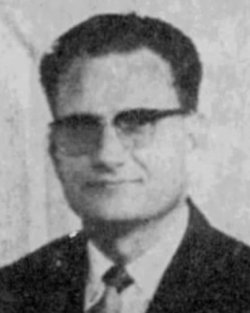
Wilbern Elias Best (1919-2007) was a preacher and writer of Gospel material. He wrote 25 books and pamphlets comprised of sermons he preached to his congregation. These books were distributed in English and Spanish around the world from 1970 to 2018 at no cost via the W.E. Best Book Missionary Trust.

Comments

0 / 2000 characters
Comments are moderated before appearing.

Be the first to comment!

Joshua

Joshua

Shall we play a game? Ask me about articles, sermons, or theology from our library. I can also help you navigate the site.