Bootstrap
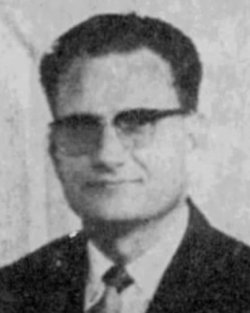
W.E. Best

#20 The Doctrine of Sin

Romans 1:18
W.E. Best July, 1 1973 Audio
0 Comments
Remastered October/November 2024

Sermon Transcript

Auto-generated transcript • May contain errors

100%
Open your Bibles please to Romans
chapter 1. Last Sunday morning we spoke
on the subject entitled The Wrath of God from verse 18. I want to say just two or three
things about this text before we go any further this morning
in the development of this portion of scripture. We have already seen that the
righteousness of God is revealed, notice the tense of the verb,
is revealed in the gospel, verse 17. The apostle goes on to say
in verse 18, for the wrath of God is revealed from heaven against
all ungodliness and unrighteousness of men who hold the truth in
unrighteousness. just as the righteousness of
God is revealed in the gospel, so the wrath of God is revealed
from heaven. That means the wrath of God is
even revealed now from heaven. You might ask the question, how
is the wrath of God revealed from heaven today? It is not
revealed from heaven today in the sense that it was revealed
when God destroyed the earth by water, or when he destroyed
Sodom and Gomorrah by fire, or when he opened up the Red Sea
to let Israel through and then destroyed the Egyptians who were
pursuing them, or opening up the earth and swallowing up Korah
and his devotees. And we could give many other
examples in the Old Testament. But I must say that God's wrath
continues to be revealed from heaven. But the method of his
wrath being revealed is different from what it has been in the
past. You're going to see in the study of this portion of
Scripture, Romans 1, 18-32, that God's wrath is revealed today
in his giving up men to lives of uncleanness. This is specifically
stated in verses 24, 26, and 28. We will be developing
those texts in a subsequent message. I do want to call attention once
again to the 18th verse in that there are three major things
discussed in the 18th verse. First of all, God's wrath. God's wrath is a principle, not
a passion. I hope that you never forget
that. God's wrath is revealed against both ungodliness and
unrighteousness. Please observe the order of the
two words, ungodliness first of all, and then unrighteousness. The word ungodliness denotes
the religious character of sin, and the word unrighteousness
denotes the immoral character of sin. Whenever a person thinks
wrongly, we know that the outcome will be that he will live a manner
of life in keeping with his thoughts. So the order is correct, first
ungodliness and then unrighteousness. Unrighteous or immoral living
is the result of not right thinking. Then the last part of the 18th
verse, Paul goes on to say, For the wrath of God is revealed
from heaven, against all ungodliness and unrighteousness of men who
hold down the truth or suppress the truth in unrighteousness.
This morning we're beginning a series of messages on the doctrine
of sin and we will be taking the word that is found twice
in this 18th verse, the word unrighteousness. All unrighteousness
is sin, we're told in 1 John 5 verse 17. I would like now
for you to open your Bibles to 1 John chapter 3 verse 4. I've already given the text or
a portion of it. 1 John 5 17, all unrighteousness
is sin. Now look with me at the fourth
verse of the third chapter of 1 John. Whosoever committed sin
transgresseth also the law, for sin is the transgression of law. The two words to which I call
attention are, first of all, The word sin comes from the Greek
word harmatia, and the word law of course comes
from the Greek word nomos. In this case it is transgression
of the law, therefore it is the word anomia. So you have two
words, the word sin and the word law, and since John is speaking
about the transgression of the law. He uses it, of course, in
the sense of no law or disobedience to God's standard. And God's standard is his holy
law. May I also say that God is his
law. So we have two words, sin and
law. Therefore, the two words in the original, hamartia and
anomia, are coextensive. Whatsoever is the one is the
other. Keep that in mind because we
have here God's own definition of the subject of sin. Since
we are discussing with you this morning the fact of sin, I'm
hoping that you will take some notes because we will give to
you a number of things that will be of vital importance in the
study of this particular subject. This is not a pleasant subject
to discuss any more than the subject of God's wrath is a pleasant
subject to teach or preach. But since the man of God is obligated
and he is willing to assume his responsibility, he is to declare
the whole counsel of God. Sin today is looked upon lightly
by our society. May I preface our study of the
fact of sin by saying that sin and redemption go hand in hand. What do you mean by that? Sin
and redemption stand or fall together. It is because of sin that God
has provided redemption for his people. These two facts, sin
and redemption, become the measurements of each other. Now that is a
statement I do not want you to forget. I said these two facts,
sin and redemption, become measurements of each other. Let me illustrate.
When sin is minimized, redemption automatically becomes impoverished. The reason you do not hear very
much today about redemption is because you don't hear very much
about sin. Now we have one standard by which
everything is to be measured, and that is God's holy law. That
is why sin is transgression of the law. Now let's look at the word sin. We must define it. We must show
you this morning from the Word of God that this word is used
in more than one sense. I'm going to give you three different
ways in which the word harmatia is used in the Scriptures. Here is a simple definition for
sin, but it does not explain it as fully as it should. in
almost every commentary that you will investigate, you will
come across this statement. It is a statement that has been
handed down in the different creeds of Christians since the
Christian era began. Here is the statement, quote,
Sin is any want of conformity unto or transgression of the
law of God." Very simple statement, meaningful, but yet it is lacking
in some respects, as I will show you. Let me give it to you again. Sin is any want of conformity
unto or transgression of the law of God. Now, there are three
ways in which the word palmartia is used, or the word sin. First of all, the word itself
simply means to miss the mark. That's the primary meaning of
the word sin, to miss the mark. The Greek word which means to
miss the mark is the most comprehensive term for, we might say, divergence
from moral rectitude. It's the most comprehensive term.
Now the three ways in which this word is used in the scriptures
are, number one, it is used in the sense of a principle or source
of action. Sin is used in the sense of the
source or principle of action. There are many verses of Scripture,
but I will give only one or two at this point. We're told in
Romans 5 verse 12, wherefore, as by one man sin entered into
the world, and death by sin, and so death passed upon all
for all have sinned. Now there is a principle, an
evil principle, that began in the heart of Adam. And there
is an evil principle that resides in the heart of every person
who comes into this world because all have sinned and come short
of the glory of God. There is none righteous, no,
not one. Now don't expect me this morning
to answer all the questions that might come to your mind. I'm
only dealing with one aspect of the subject this morning,
and that is the fact of sin. It is an obvious fact that sin
exists. And I'm going to give to you
this morning many proofs of the existence of sin. I can prove the existence of
sin without even considering the Word of God. And yet we know
that the revelation of Scripture proves to you and me the existence
of sin. But a person can know that sin
exists even without any knowledge of the Word of God whatsoever. Let me prove that to you because
we'll be investigating this portion of Scripture now for many weeks,
and I hope that you will memorize this section of Scripture. Paul
said after discussing the righteousness of God in verses 16 and 17 of
Romans 1, For the wrath of God is revealed from heaven against
all ungodliness and unrighteousness of men who hold the truth in
unrighteousness. Now, does sin exist? Can it be
proved that sin does exist, even apart from the revelation of
God's mind in the scriptures? Yes. Because that which may be
known of God is manifest in them or to them, for God hath showed
it unto them. That's verse 19. For the invisible things of him
from the creation of the world are clearly seen, being understood
by the things that are made, even as eternal power and Godhead,
so that they are without excuse. Paul is talking about the general
revelation of God, and we will be bringing a series of messages
on revelation. The general revelation of God,
then one on general revelation versus special revelation. This
passage is talking about the revelation of God to men apart
from Holy Scripture, or the revelation of the existence of God apart
even from Jesus Christ, his Son who came to declare the Father.
John 1 verse 18. He goes on in verse 20 to say,
because that when they knew God they glorified him not as God,
but became vain in their imagination, and their foolish heart was darkened.
Professing themselves to be wise, they became fools and changed
the glory of the uncorruptible God into an image made like two
corruptible bands and the birds and four-footed beasts and creeping
things." That's enough. But beloved, in the 24th verse,
wherefore God also gave them up to uncleanness through the lust
of their own heart, to dishonor their own bodies between themselves.
Today you and I are witnessing the manifestation of God's wrath
in that he is giving up men and women to lives of uncleanness,
morally speaking. And these unclean lives that men and women are living
today are the result of what? Turning from the light that God
gave to them, even in creation. are men, even for the revelation
of God in creation. You'll find in the 26th verse
once again it specifically states that God gave them up. Gave them up to their evil passions. In the 28th verse, the third
time, it states that God gave them up. He gave them up because
they do not like to retain the knowledge of God in their thinking. So we are witnessing today whether
people realize it or not, the wrath of God in that God is giving
people up to lives of moral uncleanness. This is the fact of sin. This
cannot be denied. Then do not overlook this. Death exists, does it not? The whole creation is groaning. So creation is under the wrath
of God. Death did not exist until the
fall of Adam in the Garden of Eden. and death is the consequence
of sin. Wherefore, as by one man sin
entered into the world, and death by sin, every time a person dies, that speaks of the reality of
sin. I'll close my message this morning
by discussing three deaths. There are three kinds of death,
and there are three kinds of life to offset the three kinds
of death. But that will be the conclusion
of this morning's message. So first of all, the word sin
is used in the sense of a principle of a very source of an unrighteous
act. That's why we're told in Jeremiah
17 9 that the heart is deceitful above all things and desperately
wicked. Who can know it? Who can know it? So the heart
is the very seat of one's action. The heart is the very seat of
one's word. We're speaking of the source.
Number two. The word sin is used as a governing
principle of power. The Apostle Paul brings this
out in the sixth chapter of the book of Romans. I'm only calling
attention to one expression in the sixth chapter, verse 6, the
body of sin. In this statement, what do we
have? We have an organized power. And beloved, I want you to know
that sin is an organized power. Even though the members of the
body are the instruments for its manifestation, yet there
is the principle of the seat of sin, which is the heart. So number two, sin is used in
the sense of a governing principle. Sin is used in the sense of a
sinful deed or act. It can be either a word or a
deed. Sin is sinful because it is unlike
God. Therefore, it is ungodliness. The holy character of God is
the final and only standard by which moral values may be accurately
judged. There isn't much discussion today,
even among religionists, about God's absolute sovereignty or
God's absolute holiness. I'm sure it isn't necessary for
me to remind you, who frequent the services of this church,
that we believe in the absolute sovereignty and the absolute
holiness of God. God is holy, and he is the only
standard by which everything is to be measured. To persons who disregard God,
there are no moral standards left but the social customs of
the time. Do you know why we are having
the problems we are today? It is because the glory, the holiness of God,
these attributes are being ignored by men in general. And because
of this fact, there isn't anything left by which to measure morals. That is the customs of the times. I'll tell you the day in which
we live. Our day is not immoral, it is
past that stage. It's amoral, no morals. Dr. King gave me a tape last
Wednesday evening and asked me to listen to it. I did. My wife
and I both listened to it. I'll give it back to him this
morning. We came to the conclusion that this is a day in which not
only do Christians in general have a great opportunity to witness
for the Lord in this amoral age, but every Christian, regardless
of what his profession might be, whatever his work might be,
it affords a great opportunity to be a real witness for the
Lord in these amoral times. This particular tape was on pediatrics. It dealt with the subject of
teenage pregnancies. I listened to the entire tape.
Several doctors had something to say. Not one word was said
in the whole tape. Dr. King will bear me out. About
immorality. Not one word, Dr. King. These persons simply talked about
abortion and all the other things related thereto in the same way
that you and I would talk about fixing a generator, as Brother
Huber said before the service this morning, to our automobile.
Or in the same sense, of just going fishing or doing something
else. Beloved, we are looking at a
portion of Scripture this morning that if you will stay with me
for the next few weeks, you will see sin as you've never seen
it before. And the greater vision we get
of the holiness and majesty of God, the greater concept we will
see, we will have, of the heinousness of sin. Men today in general
would like for us to not talk about sin. Someone has said,
and I quote, ìThe general attitude of our day assumes that it is
wiser to leave the monster called sin, to lurk in the dark, and
to dwell on the more attractive virtues of life.î I'm here to remind you that sin
is exactly what God says it is. And here's what God says it is.
Sin is transgression, number one. That means overstepping
the boundaries, and we use this as the beginning of our discussion.
Sin is lawlessness. The Lord tells us that sin is
iniquity. And this refers to that which
is altogether wrong. Yes, sin is sin. That means it
misses the mark. It disregards the mark. Sin is error. It disregards the
right and therefore goes astray. Sin is wickedness, the outworking
of an evil nature or evil principle, and that of course takes us to
the depravity of man. Sin is ungodliness. It lacks
any fear of God. Don't be surprised today when
you talk to people about the holiness of God If they're unsaved,
it will not affect them in the least. You can talk about the
wrath of God, but they will not be affected in the least. And
you know why we have the answer in Romans 3.18, there is no fear
of God before their eyes. There will never be any fear
before the eyes of the wicked until the grace of God has wrought
a work in their hearts. Sin is evil. And this has reference
to all things that are opposed to God. Sin is disobedience, an unwillingness to be guided
by the will of God. Sin is unbelief, failure to trust
God. Lastly, sin is lawlessness. this consists in the consistent
contempt for divine law. You and I are witnessing today
on every hand a consistent contempt for divine law. We can make statements to a lot
of persons today and they'll say that's archaic. That's outmoded. existentialism. These are some
things with which we will be dealing in subsequent messages,
and all of these things are refuted, beloved, in these verses, Romans
1, 18 through 32. It's impossible for me to convey
to you the many different things that are presented in this portion
of Scripture. Let's go a little further. Sin
is universal. What do you mean by sin being
universal? Will you turn with me as we make a word study for
a moment or two? The Romans 3 verse 23. Sin is
universal. Sin is a fact. And we'll see
that it is an obvious fact. It's an obvious reality in a
few moments. But this sin that is in existence
today is universal for all have sinned and come short of the
glory of God. I would like for us to divide
up this text into several divisions, in fact four parts, as we analyze
this short, this very brief text of scripture. The apostle begins by saying
we've all sinned and come short of the glory of God. The very first word of this text shows that this is the conclusion
to an argument that Paul has made. Notice what I said, it
is the conclusion of an argument that Paul has made beginning
with verse 20. The word for directs our attention
to what goes before. By the law is the knowledge of
sin. If a man is to be saved, he is
saved by a righteousness that God himself has provided. Verse 21, man cannot be saved
by his righteous acts because his righteous acts are nothing
more than filthy rags. And who can expect to stand before
the holy God in human rights? So this is the conclusion of
an argument. The second thing to which I call
attention in this text is all sin. This in the Greek, I'm talking
about the tense of the verb in the Greek, is known as second-ariest
active indicative. Now let me break that down for
you. It expresses a condition or a fact with a note of time not
emphasized. I want you to see this because
this is fundamental, this is basic for our understanding of
the subject we're discussing this morning. In other words, the tense of
this Greek verb has been called by some as timeless areas. And what they mean by that is
this. We have always been sinners because we sinned in Attah. You see the point? That's the meaning. That isn't
difficult to understand. Wherefore, as by one man sin
entered into the world, and death by sin, and so death hath passed
upon all. For in him, it literally means,
in the last part of Romans 5, in him we have all sinned. And Paul is speaking about the
solidarity of all mankind with Adam in his fall in the Garden of
Eden. This will be dealt with more later. I'm trying to set
the stage for future development of this subject. So this is timeless
areas. We've always been centers. Now
I want you to notice the next expression. He not only says
for all have sinned, the timeless areas. There never has been a
time when mankind, all mankind, were not sinful. But now the tense has changed.
And come short. Look at this. And come short. Or to translate it differently,
fall short. So this is a reference to man's
fall in the first part. And now we come to what issues
from this fallen and depraved condition. Coming short. So all sin signifies the original
act of sin, and the expression fall short denotes the sinful
habit, an act flowing from the fall. So from the past fact,
all men sin, The present results flow, they lack or they come
short of the glory of God. Now look at the last, the glory
of God. For all have sinned and come
short or fall short of the glory of God. Do you know what the
word glory literally means? It means to value. So when men fall short, when
they come short of God's glory, they do not value God. Now let's go back to the passage
of Scripture from which we are basing our study this morning. When Paul describes those persons
in Romans 1, he begins by saying when they knew God, they glorified
Him not as God. That is, they didn't put any
value on Him. No value in his name, no value
in his attributes. In other words, they did not
value God, they valued themselves above God. And that's why they
exchanged the truth of God for a lie and worship and serve the
creature more than the creator who is blessed forever. Amen. That's why in the 28th verse,
and even as they did not like to retain God in their knowledge,
why? Because they didn't place any
value whatsoever on God. So God gave them up to a reprobate mind, a mind that
is void of proper discernment, of proper reason. And beloved,
I make no bones about this. People in general today can't
even reason properly. They can reason about the things
of the world, but when it comes to divine things, of course,
they have no sense of judgment. So God gave them over to a reprobate
mind to do those things which are not convenient. Now the fact of sin is beyond
argument. This is the next point that I
want to dwell on for a few minutes. The fact of sin is beyond argument. The Bible addresses all men as
sinners. All have sinned. We've already
looked at this text. Going back to the 14th division of the Psalms,
remember in the first verse we have the first reference to a
fool. And who is the fool? The fool is the individual who
says there is no God. In the second verse, God looked
down from heaven to see if there were any that did understand
or did seek after God. And what did he find? He found
them all gone out of the way. When you go back to the sixth
chapter of Genesis in verse 5, just before the flood, What is
the condition of mankind at that time? What was it? We find what
Moses had to say about it. And this is what he said. The
imagination of the thoughts of man's heart. Evil and that continually. The heart is deceitful above
all things and desperately wicked who can know it but God himself.
You don't even know your own heart. You may think you do,
but you don't. Do you know what I find every
day of my life as I study the Word of God, as I seek to apply
the Word of God to my own personal life? I find that God just keeps
opening up some dark crevice in my heart and there looms out
another manifestation of Satan. Desperately wicked. Who can know
it but God himself? There was a Puritan who was to
be martyred for his belief in the gospel, and he wrote his
wife a note just before he was to be put to death. What do you
think he said in the note to his wife? He said, Beware of
the devil, beware of the world. But most of all, beware of the
deceitfulness of your own heart. Beware of the deceitfulness of
your own heart. How true that is. There is overwhelming
data that man is a fallen creature. Did you know that every person
has some sense of rightness and wrongness? I'm going to prove this now from
Romans 2 verse 1. After the Apostle Paul had described
the Gentiles beginning with the 18th verse through the 32nd, notice what he has to say beginning
with the first verse of the second chapter. Therefore thou art inexcusable,
O man, whosoever thou art that judges. For wherein thou judgest
another, thou condemnest thyself, because thou that judgest doest
the same things." There had to be some sense of
rightness and wrongness for an individual to judge another individual. It doesn't make any difference
whether people live in the dark jungles of Africa, whether they
have never heard the gospel or not, there is some sense of rightness
and wrongness by the very fact that one person
will judge the actions of another individual. I said there is overwhelming
data that man is a fallen creature. Let's think about man's complex
of drives, urges, and impulses. All of these prove him to be
a fallen creature. For instance, before the fall,
Adam's impulse for food, Adam's impulse for love, all of these
impulses or drives were in perfect balance. I said before the fall. His desire for food, his desire
for love, his desire for self-preservation, all of these things were in perfect
balance before the fall. But as soon as Adam fell, all
of those urges, those drives within Adam had been contaminated
by sin. They had been perverted. They
had become corrupted. Man's drives today for food,
man's drives for self-preservation, man's urges for love, all of
these things are out of balance. And we see them even in our own
lives. No law has been passed yet concerning
50 or 55 miles an hour. Last Friday we had met in the
home of Brother Corley up in Spring and Brother Haynes
was over. And we left their place about
four o'clock, a little before. We wanted to go on up to Centerville
to see about Juanita's mother. We hadn't seen her in over two
months. She'd been in the hospital since we had seen her. So we got on the freeway and
I said, well, I'm going to try to keep between 50 and 60, around
55 miles an hour, see how much gasoline I save on this trip.
And then, too, to see how much we can conserve on the energy.
And you know, I was the only one driving that speed. They passed me like I was sitting
still all the way this interval. I've never seen so much traffic.
I get amused by, you know, closing the filling stations, say, at
nine o'clock Saturday night, not opening them again until
midnight Sunday night. I'm sure that's going to conserve
energy. Most people have not only one car, but two cars and
three, and they'll fill them all up. And so they'll have a
period of time there to do whatever they want to do anyway. But the
point I'm making is this. People are not going to do anything
unless they are forced to do it, and even then, they'll try
to get around it in some way. There is such a greed in our
country, and this is the thing that's going to break us completely. In fact, we've already reached
the point of no return. Does that sound encouraging to
you? I said we have already reached
the point of no return. And they weren't conserving much,
I have never, we left my wife's folks about nine o'clock a little
before to come back to Houston, and I have never seen such a
steady stream of cars going out of Houston all the way to Centerville,
just a steady stream of automobiles all the way. Didn't look like
much conservation of energy. But beloved, I'm talking about
the drive. within us. The very drives that
we have within us manifest depravity. They manifest that we are fallen
creatures. I like what one person said,
sin is a fact, whether it be dormant in the slumbering volcano
of man's nature or evident in the demonstration or the devastation
of lava that shall flow from his fiery passion. Isn't that true? Sin, even though
it be dormant, it's there. It may lie dormant like a volcano
that is dormant, but sooner or The evil passion of that individual
will manifest itself in hot lava of thoughts and deeds. The reality of sin has many witnesses. Let's consider a few of the witnesses.
First of all, the law of God has been given for the purpose
of discovering the fact of sin. Romans 3.20, by the law is the
knowledge of sin. Look at that text for a moment
and then consider these things in relation to the law. I said
the law discovers the fact of sin. It is a standard to reveal
man's shortness. Do you want to see how you stack
up in the sight of God? Then measure yourself by the
holy law of God. So it is given to reveal to man
his shortness. It's God's standing. Number two,
it is a scale for man to weigh his deficiencies. If you want
to weigh yourself and see just how much you weigh, then weigh
yourself by God's scale. It is a looking glass, we're
told, to show man his sinfulness. It is a stethoscope to show the
condition of man's heart. It's a rule that evidences his
crookedness. It is an officer which demands
man's condemnation. Finally, it is a judge to condemn
man to death for his disobedience. We know that Scripture declares
the fact of sin. The Word of God is the highest
court of appeal. You cannot go beyond it. In the discussion of the fact
of sin, here are some of the things that we're told. For instance,
in Genesis 18, verse 20, sin is a grievous malady, contaminating
the whole of man. Isaiah describes it in the first
chapter of his prophecy. Man is rotten from the very top
of his head to the very bottom of his feet. Putrefying soul. Number two, sin is an obscuring
cloud which hides the face of God from man. Isaiah 59.2. Sin is a couching beast and it's
couching at your door just as it was Cain. It's a couching
beast. We're told that sin is a binding
cord, binds up man, Proverbs 5, 22. Sin is a rest destroyer. Sin is a written record. Sin is an accusing witness, Isaiah
59, 12. And then this one, malevolent
ought to really shake us. Sin is a sum of addition. Sin added to sin. The coming of the Lord Jesus
Christ revealed the fact of sin. During the personal ministry
of our Lord, many who followed him confessed their sins as they
looked at his holiness. You see, they all believed in
the impeccability of Jesus Christ. The very presence of Christ brought
about confessions of sin, just as a revelation of the holiness
of God in the Old Testament brought about confessions of sin on the
part of men like Isaiah, who said after he had seen the Lord
high and lifted up, he looked at himself and said, Woe is me,
for I am a man of unclean lips, and I dwell in the midst of a
people of unclean lips, Isaiah 6. Daniel, one about whom we
have not one derogatory statement, confessed his sins as he confessed
the sins of Israel. Daniel 9. But when we turn to
the New Testament scriptures, what do we find? Men like Paul,
Peter, all recognized their sins. Even after Paul was saved by
the grace of God, he said, I find in me that is in my flesh dwelleth
no good thing. We have the confessions of unsaved
men like Pharaoh. He confessed his sin, but his
confession was not a manifestation of genuine repentance. Balaam
confessed his sin. Judas even confessed his sin,
but none of these. were manifestations of repentance. Sin is against God. Sin is a state of delusion and
deception. Yes, the heart is deceitful,
above all things, and desperately wicked, who can know it? Sin
is not just a mere act. Did you know there are many religionists
today who believe that sin is nothing more than a mere act?
There can never be an act unless the principle, remember the first
point I gave you on sin? It's the principle, it's the
source from which the act comes. But there are many religionists
who think and who teach that sin is nothing more than an act.
They want to ignore the principle or the source from which it comes.
I want to prove something. Not only is all sin against God,
but sin is a delusion and a deception. And sin is not just a mere act,
it is a quality of being. I said a quality of being. There's
no such thing as sin apart from the sinner or an act apart from
the actor. When a man sins, he's a sinner.
And by the very fact he sins, that's proof that he's a sinner.
I'm talking about the fact of sin. It is impossible to limit
the term sin to the act. It is a quality of being. Let
me illustrate this. Here is a person who is not committing
an act of sin, an overt act of sin, but the very fact, however,
that he knows what he ought to do and he doesn't do it to him
that is sin, we're told in James 4.17. In that case, then the act of
sin is not involved for the very fact that in his heart he is
disobedient. He's a sinner and his act of
disobedience, even though it is not manifested, comes from
the source of the principle of his very being. Sin is described
as a state of the heart, a state of the heart. deceitful, above
all things, desperately wicked, who can know it? The sin that cannot be known
by men is not a sin of act. You may commit many acts of sins
that I know nothing about, and I can commit many acts of sins
that you know nothing about. But the sin that cannot be known
by men is not the sin of act, but it is the sin of the heart. I said the sin of the heart.
So sin is represented as existing in the soul prior to the consciousness
of it. What did Paul tell us? In Romans
7, verses 7 through 9, he said sin was dormant. I was alive
without the law, but what? The commandment came and sin
revived and I died. The commandment simply caused
him to become conscious of sin that existed in a dormant state
in his life. That's why, beloved, you and
I will never know just what people have until people have been put
to the test. We never know what people have until restraint is
removed. Now, when you go back to our
passage from which we are taking our subject this morning, when
the Lord removed the restraint, his restraining hand and it was
positively removed, what happened? All of those persons, when they
knew God, they glorified him not as God but became vain in
their imaginations and their foolish heart was darkened. But
when God removed restraint, what happened? They went into sin
deeper and deeper and deeper. A momentary act of sin cannot
dwell are rain in the heart. But the principle of sin does
rain, does dwell. I said the principle of sin.
So you must make the distinction between an act and the principle
of sin. I want to give this before we
bring our message to a close this morning. This is one of
the greatest thoughts that I've come across in a long time in
the study of the subject of sin. I shared this with you as you
were leaving last Sunday morning and I asked you to be thinking
about it. I will give it to you again and then illustrate it.
Sin has no thesis. Sin has no thesis in itself,
only an antithesis. You say, what do you mean by
that? Sin has no proposition to put forward. Sin has no thesis,
only an antithesis. Now I can explain that in a very
simple manner. Take the word Antichrist. I'll use this to illustrate the
point. Follow me now. Antichrist. What is the primary word in Antichrist? The primary word is Christ. The
secondary word is Antichrist. Sin has no thesis, only an antithesis
opposing that. Now you may say, Preacher, what
about all these false religions today? Don't they have a proposition
to promote? No, they're all in opposition
to the truth of God. Sin has no thesis, only an antithesis. So sin covers its deepest intentions
while it masquerades as good. So the goal of every sin is to
deceive. I don't have time this morning
to go back to Jeremiah 17 9 to discuss three important points
in that text. But keep in mind, first of all,
the heart is deceitful. The second thing about that text
is this, it's desperately wicked. And the third thing, only God
himself knows the depths of the wickedness of the human heart.
You and I cannot reflect on the character of sin unless we do
so in relation to God. This is what we find in Romans
1, 18-32. And as we read and study these
verses together, we see the heinousness of sin. Now for the final closing
point this morning. The fact of sin. Sin is universal. It is against God. It is a fact
beyond question. But sin's penalty is death. Is death. The wages of sin is
death. But the gift of God is eternal
life through Jesus Christ our Lord. Did you know there are
three kinds of death? First of all, there is physical
death. Number two, there is spiritual death. And number three, there
is eternal death. Now there is one word, one word
that is common to all three. The element of separation is
common to all three. Please follow me now for this
is the closing of our subject this morning. I said the word
separation or the element of separation is common to all three.
Let me illustrate. What is physical death? Physical
death is separation of the soul from the body. Number two. Spiritual death is separation
of the soul from God. That's spiritual death. And finally, eternal death is
separation of both soul and body from God throughout all eternity.
W.E. Best
About W.E. Best
Wilbern Elias Best (1919-2007) was a preacher and writer of Gospel material. He wrote 25 books and pamphlets comprised of sermons he preached to his congregation. These books were distributed in English and Spanish around the world from 1970 to 2018 at no cost via the W.E. Best Book Missionary Trust.

Comments

0 / 2000 characters
Comments are moderated before appearing.

Be the first to comment!

Joshua

Joshua

Shall we play a game? Ask me about articles, sermons, or theology from our library. I can also help you navigate the site.