Bootstrap
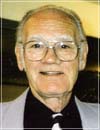
Scott Richardson

Adam, Our Federal Representative

Romans 5
Scott Richardson July, 30 2000 Audio
0 Comments

Sermon Transcript

Auto-generated transcript • May contain errors

100%
from the book of Romans chapter
5. Let us begin reading here at
verse 1 of this fifth chapter. You know, the chapters are the device of men and not
of God. Sometimes the chapters run together,
but they have been divided by men, I guess, to—maybe they thought
it wouldn't help us in our reading of the scriptures and study of
the scriptures. Here in this fifth chapter Paul
continues his discourse on how God saves
sinners. In the latter part of that fourth
chapter he uses for an illustration, which is a true illustration,
of Adam and David. And he talks about Abraham, or
Abraham and David, rather. In verse 20 he says, He staggered
not at the promise of God through unbelief, but was strong in faith,
giving glory to God. He believed God. It doesn't say
he believed in God. It says he believed God. It's
one thing to believe God and another thing to believe in God.
The devil believes in God but does not believe God. Abraham
believed what God said. God said, I'll make your seed. I'll give you a son in your old
age, ninety-some years old. Sarah's in her nineties, beyond
nature to conceive. But I'll give you a child, and
I'll give you a seed that will outnumber the stars in the sky
and the sand on the seashore." And he believed God, and he didn't
stagger or waver. That which he had promised. But
he believed that God was able to do all that he said he would
do. He was able to perform to fulfill
the promise. He believed God. And therefore
it was imputed to him for righteousness, charged to his account. Now,
it was not written for his sake alone, not just for him, his sake alone that it was imputed
unto him, but for us also, for us sinners, those who are sinners,
those who are made to know they are sinners and agree with God
that they are sinners and that they have no hope of eternal
salvation apart from the Lord Jesus Christ. But for us also, to whom it shall be imputed,
if we believe on him that raised up Jesus our Lord from the dead. It says that he was delivered,
the Lord Jesus was delivered for our offenses. He had no offenses. There was no reason for him to
die because he had no sin. He had
no offenses, but he was delivered as a substitute. He was delivered
as the surety. He was delivered as the representative. He was delivered for our offenses
and raised again for our justification, for our right standing before
God. And chapter 5 says, Therefore
being justified by faith faith in the Risen One, faith in the
Lord Jesus Christ, by whom therefore being justified by
faith we have peace with God through our Lord Jesus Christ,
peace with God. That is, we have come to the
understanding by and through the Lord Jesus Christ who satisfied
all the claims against us, that God is not angry with us, that
He is not mad at us. Our offenses have been paid for by the Son of God Himself, and
so we have peace now with God. We have surrendered and we are
not at war with Him. We are at peace. We know He is
God our Father and that He cares for us. He cared for us before
we ever knew His name. He cared for us in eternity. He cares for us in time. He is not mad at us. He is not
going to punish us. He may chastise us, but He does
that out of love and mercy to us. He loves us too much. to
let us go too far. And when we go too far, He lays
a heavy hand upon us out of love and mercy. So we have peace with
God. We can come to Him now. Our Father, which art in heaven,
hallowed be thy name. Blessed be the name of God. We
can come to Him any time of the day and night. hard times and good times, we
call upon the name of our Father. We have that relationship with
Him. We are not at war with Him. We
are at peace, and the peace of God is in our hearts, and this
peace is so great that it passes all understanding. And it goes
on. He says, By whom also we have
access by faith into this grace wherein we stand. Access. and it says, Rejoice in hope
of the glory of God. And not only so, but we glory
in tribulations also, because we know that tribulations worketh
patience, and patience experience, and experience hope, and hope
maketh not ashamed, because the love of God is shed abroad in
our hearts by the Holy Spirit which is given to us. For when
we were yet without strength in due time, in God's time, according
to the time, Christ died for the ungodly. For scarcely will
a righteous man will one die, yet peradventure for a good man
some would even dare to die. But God commended His love toward
us in that while we were yet sinners, Christ died for us. Much more than being now justified
by His blood, we shall be saved from wrath through Him. For if,
when we were enemies, we were reconciled to God by the death
of His Son, much more being reconciled, we shall be saved by His life. And not only so, but we also
join God through our Lord Jesus, by whom we have now received
the atonement. Wherefore, as by one man sin
entered into the world, and death by sin, and so death passed upon
all men, for that all have sinned. For until the law, sin was in
the world, but sin is not imputed when there is no law. Nevertheless, death reigned from
Adam to Moses, even over them that had not sinned after the
similitude of Adam's transgression, who is the figure of him that
was to come. which is by one man, Jesus Christ,
hath abounded unto us. And not as it was by one that
sinned, so is the gift, for the judgment was by one to condemnation,
but the free gift is of many offenses unto justification. For if by one man's offense death
reigned by one, much more they which receive abundance of grace
and the gift of righteousness shall reign in life by one Jesus
Christ. Therefore as by the offense of
one judgment came upon all men to condemnation, even so by the
righteousness of one the free gift came upon all men unto justification
of life. For as by one man's disobedience
many were made sinners, so by the obedience of one shall many
be made righteous. Moreover, the law entered that
the offensive might abound, but where sin abounded, grace did
much more abound. Then, or that as sin hath reigned
unto death, even so might grace reign through righteousness unto
eternal life by Jesus Christ our Lord. Well, I've read all
that to say this, that it pleased God, it pleased God to commence
the human race with a single pair of individuals. It pleased God to start this
human race by and through a pair of single individuals, Adam and
Eve. By one man, Adam. Adam was the representative of
the entire race of mankind. I read to you in verse 19, For
as by one man's disobedience, many were made sinners by this
one man, Adam, who was the representative of the entire race of mankind. God determined to deal with men
in the mass through this one chosen representative. in that one man they stood in
perfection for a while. How long or how short Adam's
obedience was, I don't know. Some say he was obedient for
a month or a year or a day or two weeks. I don't know. I don't
know how long it was. or how short it was that Adam
stood in perfect obedience to God. But we know that it was
a time that all of those that Adam represented stood in the
perfection that the first Adam had. But that didn't last very
long. Whether it was one day or a thousand
days, I don't know. But I do know that after a time,
after a time, after Adam was created by God out of the dust
of the earth and given a helpmink, his wife Eve, after a time, Adam
was tempted. I know that. He was tempted,
and I know that he fell. He fell, this one that represented
the whole of the human race. He stood in perfection, and we
stood in him in perfection, representatively. He was perfect for a time, and
representatively, we being in him as the head of us all, we
stood perfectly. Now, there was a time shortly
after his perfect obedience and his perfect relationship with
God. There was a time after that that
he was tempted. He was tempted and he fell. And when he fell, we fell with
him. God chose to deal with us through
this individual, Adam. He chose him to be our representative. And He represented us, and what
He did, we did. We were perfect in Him. He was
perfect in Himself. We were in Him. And when He fell,
we fell. He broke the one commandment
that was given to Him as a test. He broke that one commandment. His commandment by no means was
a hard one either. And He broke it willfully. deliberately
and straightway, our representative was found to be faulty and guilty. He broke the one command that
God had given him, and by the breaking of that one commandment, the effect of it was upon all
that he represented, and that was every member of the human
race. It pleased God to start this
human race by this individual pair. And because of his disobedience
to this command that he broke from God, he was expelled. He was forced out of paradise
and upon all of his seed, all of those that he represented,
every member of the human race, seeing that they were represented
in him, there came judgment upon them under condemnation, the
Bible says. And the result was, as men grew
and advanced or growed older in years and in months and days
and so forth, they died. And from Adam, the Bible says,
to Moses, to this present day, it has been the rule that men
should die. So that sin, the breaking of
this command given of God to Adam, the sin of Adam, has prevailed
over the race and left to his fallen race a life of sorrow
and toil and heartache. I believe personally here, you
may not agree with me, but if you think about it for a while,
I believe you will, I believe that it is a happy circumstance
for us that we did fall. and were condemned in our representative,
Adam. Because if we, each one of us,
had been individually put upon like probation, as Adam
was, we would have certainly fallen. If we would have stood in the
place of Adam and been put on the same probation
that he was, this do and live, this if you do, you'll die, we
would have died a whole lot quicker than Adam. We would have surely
fallen. So we are no better than our
first Adam. We are no better than Adam and
Eve. The angels fell, but there was
no hope of restoration for fallen angels. There was no gospel ever preached
to fallen angels. But for man, who was represented
in the first Adam, there is hope of eternal life,
but not for angels. Nowhere does it say that the
gospel was preached to angels. So in the infinite wisdom and
the mercy of the great and glorious God, there came into this world
a second Adam. The first Adam, our representative,
the first Adam fell. And when the first Adam fell,
we fell. And the effect of the fall was
that judgment came upon all men. But in the infinite and glorious
wisdom and mercy and the grace of Almighty God in heaven, there
came into this world the second Adam. the Lord Jesus Christ,
the man Christ Jesus, a real man. Only two real men had ever
lived, and it was the first Adam and the second Adam. The first
Adam fell, and the second Adam came to undo what the first Adam
did. A man, a real man. For he was
also God. He was the God-man. He was all
God and all man in one purpose. And he offered himself as an
atonement for the offense committed against God's holy law, although
there was just one command given to Adam. And Adam broke that
command and fell, and we fell with him, and God sent his Christ,
God manifest in the flesh, sent him to make atonement for all
the offenses, not just the one offense, but for all the offenses
of fallen men. The Bible says that he made an
atonement for the offense committed against God's holy and just law,
and the atonement was so great and so marvelous and so effectual
that the Bible says that whosoever believeth in him, his sins are
put away forever. I'd say that was a great atonement,
wouldn't you? That his blood was so effectual
in cleansing that whosoever, regardless of how great his sin
might be, whosoever believeth in him, his sin shall be pardoned,
his sin shall be forgiven, on the basis of the efficacy of
the blood of Him whom God has sent, the Lord Jesus Christ,
the second Adam. Remember now, the second Adam
came to do what the first Adam did, or he came to undo what
the first Adam did. So listen to me. Such an atonement,
such a blessed atonement, that whosoever believeth in him hath
his sins put away forever. So, listen to me now, so that
we rise in the same manner as we fell, only in a different
person. We fell in the person of Adam
and we rise again in the person of the second Adam, the Lord
Jesus Christ. So we rise in the same manner
as we fell, only in a different person. We fell in the first
Adam through no fault of our own. He was our representative. We did not personally sin. We
weren't there. Our beings wasn't here upon this
earth at that time. We had not yet been born. But we were born in eternity
in the mind and the purpose and the will of God. And God sent
Adam as our representative. And so we We live or die in what
the first Adam did. And the second Adam came, and
we live in him. We died in the first one, we
live in the second. So we fell in the first Adam
through no fault of our own. We wasn't there. But he's our
representative. And so we fell in him through
no fault of our own, and we rise in the second Adam through no
merit of our own. No fault of our own in the first
Adam, and the second Adam, no merit of our own. We rise again
in his merit, not our merit. You see that? It's the free grace of God that
we are received back into favor with God, free grace all the
way through. Paul tells us, and I read it
to you here in this chapter, that by one man's disobedience
many were made sinners. But is it not so with the free
gift? The free gift takes away the
many transgressions. Adam offended once and by that
one offense he brought us all into disfavor with God. Now, if one offense had such
power that the whole race, millions and billions and billions and
billions of people that ever lived upon this earth, If that
one offense had such power that the whole race was ruined by
it, well, might we not adore the wondrous work of the Lord
Jesus Christ by which many offenses are removed by the gift of pardon
and free grace? Oh, my soul, what an atonement
we have in the Lord Jesus Christ, that the blood of Christ cleanses
us from all sin, brings us back into favor with God. And God
now smiles upon us, is not angry with us because of the Lord Jesus
Christ standing in our stead and place and room and bearing
the punishment that was due us, satisfying every claim that the
law had against us, the soul that sinneth shall surely die. Oh, that sinless one, that perfect
one that never offended in any point, always pleasing in the
sight of God, free gift of pardon which he came into this world
to bring us. Oh, listen, all the guilt, all the guilt
that was upon us, all the shame because of our sin, all of that was taken away the
moment, the very moment that the sinner's soul and his heart
trusts in God's Christ. All of that guilt and all of
that shame is forever removed, ever since pardon. All the shame
and guilt is gone and we're just like the Lord Jesus Christ. He's
there now at God's right hand. We're members of his body. And he can't perish, so we can't
perish. We'll never be destroyed, because
he'll never be destroyed. He stands as the conquering Savior
who's conquered sin in the world. and the devil and flesh, and
we stand in him. And the moment, the very moment
that a man, woman, boy or girl, turns and trusts God's Christ
for his atonement and his salvation, brother, he stands whiter than
the snow. Ah, this is such a wonderful
thing, wonderful thing. I can't get over it. I can't
get over it, a black, vile sinner like myself has so many sins,
sins of thought, sins of deeds, sins of ignorance, sins willfully,
all kinds of sins. I'm told, I'm told here in the
Holy Bible, if I but turn and trust Him, they are all gone. It says that the free gift is
of many offenses under justification. There in that 16th verse. And not as it was by one that
sinned, so as the gift for the judgment was by one to condemnation. But the free gift is of many
offenses under justification, the many offenses. There's no need for me to tell
you this morning that it'll do you no good to try to count your
sins. You have so many you couldn't
count them. Your mathematics, Your arithmetic
will fail you in any attempt that you make in order to count
your sins. You have so many sins. You are so corrupt and polluted
and dirty and filthy in the sight of God. And that's not including
your sins of ignorance. You can't tell. You fail at the
attempt to sum them all up. But you will benefit, I believe,
if you go over the transgressions of your life that you remember,
from your childhood to the time of your youth and to your manhood. You can add them up. these prevalent
sins that rise up in your heart, you could go over them if you
want to. And if you believe in the Lord
Jesus Christ, you can go down to the bottom of the list, as
you've observed them and added them up, and you can write down
there that the free gift is of many offenses under justification. You're freed from them all, even
though your sins outnumber the sands on the seashore. Somebody was telling me, that
was my neighbor. I was up there the other day
cutting a little wood and she came out and wanted to know if
I wanted to drink a pop. We talked a little bit and she
told me, she said, well, you know my My only son is coming
in to visit me. And I said, well, it's been some
time since you've seen him. She said, yes. I said, I long
to see him, and he longs to see me, and we'll have a good time.
She said, we're going to go over to the beach. We're going to
Myrtle Beach, and we're going to take my whole family, all
my daughters and my grandchildren and my husband and some other
friends. We're all going over. condominium
over there and we're just going to lollygag around in the sun
and on the beach and eat fish and all that. Just have a great
big time. And I thought after she got through
talking to me about walking on the beach that from almost from
Maine to Florida, way down to the tip of Florida to the Key
West, there's just one large strip of sand that they
call the seashore. And it runs out into the water
a ways and then runs way back in the land. And if you was to
walk those 1,800 or 2,000 miles from Maine to Florida, you could
stay in the sand all the way down. They are tons and tons
and tons and tons of sand. That's the way our sins are.
They're so many, they're so numerous, you can't add them up. You can't
even remember them. But bless be God, the atonement
that this second Adam has made and offered himself as our sacrifice
does away with all of our sins, even though They are as many as the grains
of sand on the seashore. And the amazing thing about it
is that they are done away with, they're made an end of, and God
says, I don't even remember them against you no more. You'll stand
in Christ forever as though you'd never seen Him. Isn't that a
wonderful thing? Think of all that sand, it's
just a few, it gets in between your toes and you're in your
shoes or something. Boy, that beggars, that beggars
the actuality of what we are by nature. But he says, I'll
write down at the bottom of that list of all you've made up, I'll
write down at the bottom, that the free gift is of many offenses. I'm the justification. You're
justified before me. And in justification, God regards
us. He regards us as He regards His
Son, as though we had never seen Him. Sins are gone, clothed in
the righteousness of the Lord Jesus Christ. Gone forever, these
sins of ignorance. sins of ignorance. Now, this
one transgression of Adam led to judgment, it says, and not as it was by one that
sin, so as the gift for the judgment was by one to condemnation. Led to judgment. The judgment
was by one. The first sin of our parent did
not go very long until it was judged. It didn't go long unjudged,
the sin of Adam. Before the sun went down that
day, the Lord God walked in the cool of the day in the garden
and He called to Adam and He said, Where art thou, Adam? And
Adam stood before Him in a different relationship from that which
he had before. He had sinned. He stands now as an offender. He stands now as a sinner before
God. And as a sinner and an offender,
he is to be judged by God. And part of his judgment was
that he went from the Garden of Eden. He was forced out of
the Garden. And they put seraphims and cherubims
with flaming swords to prohibit him from coming into that Garden. He went out from the Garden of
Eden to toil by the knees bred by the sweat of his brow. And
by and by he was to return to the dust from which he came. Judgment fell upon him, and judgment
has fallen upon us. And we live and eat our bread
by the sweat of our brow, and we toil and we work. And we cry and we moan and we
have trials and we have troubles and difficulties. And that's
all part of this. And that's what it will be until
we draw our last breath and go down into the grave. We die because
of this sin of atheism. this nature we have of him. Well, the free gift to owe as
many offenses is under justification, so he says
here. And he goes on down here. He said, Sin reigns under death,
under death. It's there. It's paid for. For
those that trust in His Son, that sin's paid for. The penalty
was laid on Him. Our sins were, by the infinite
wisdom of God and the power of God, our sins, all of them, were
gathered up. Ignorant sins were forgotten.
It was laid on Him. And the wrath of God, fell on
the blessed representative, the second Adam, fell on him, and
he paid what was their due. Whatever their due was, he paid
for it. The penalty fell on him. At the
cross, at the cross, I first seen the light. Oh, glory to
God! There is forgiveness for the
vilest sinner out of hell if he'll trust the Lord Jesus. If he'll just look to Him, look
to Him, trust Him. I said, that fellow over there,
that Israelite that was bitten, he's going to die. Poison's in
his veins. Moses said, well, make a serpent
of brass and put it in the pool. Whoever among you that's bitten
and you want life, he said, look, and you live. It begins with a look. It's looking to Jesus, the captain
of our salvation. The second Adam who came to undo
what the first Adam did, bearing the penalty, that's due us as
sinners, clothing us with His righteousness and making us acceptable
to Him. Oh, I'm so glad that God sent
Him, His only Son, the darling of His Brother, to pay my debt, to satisfy all the claims of
justice against me. He can do it, and He did do it. Well, the Lord bless you and
help you.
Scott Richardson
About Scott Richardson
Scott Richardson (1923-2010) served as pastor of Katy Baptist Church in Fairmont, West Virginia.
Broadcaster:

Comments

0 / 2000 characters
Comments are moderated before appearing.

Be the first to comment!

Joshua

Joshua

Shall we play a game? Ask me about articles, sermons, or theology from our library. I can also help you navigate the site.