Bootstrap
Scott Richardson

That Your Joy May Be Full

1 John 1:4
Scott Richardson April, 20 1997 Audio
0 Comments

Sermon Transcript

Auto-generated transcript • May contain errors

100%
Chapter 1. There in this fourth verse of that first chapter,
He said, And these things write we unto you for a reason. Remember, I told you the other
evening, if you just sat down to write a letter without purpose
or reason, and the blank page was before you, when you wound
up, it would be a poor letter. Generally, when you write, you
have reason. You're writing to thank somebody
for something they've done for you. or you're writing to find
out how they are or something. Have good reason. These things
write we unto you. Why? That your joy may be full. God, in His great salvation,
saves us, saves our soul, saves our life. that we might enjoy Him. We might enjoy the God of our salvation. We can't enjoy Him if there's
not any intimacy with Him and us. This is eternal life that
we might know Him. To know Him is eternal life. And to enjoy God. to enjoy God
and His Word and His promises. All of His promises to us are
yea and amen. These things I write unto you,
that your joy may be full. Not half full, full. Like a full
glass of water. Can't get no more in it. Full
and running over. This, then, is the message which
we have heard of Him. That Him, who do you reckon He's
talking about? This is the message that we've heard of Him. Well,
it's His Son, Jesus Christ. This, then, is the message that
we've heard of Him. We declare this unto you, that
God is light. God is light, and in Him is no
darkness at all. If we say we have fellowship
with Him and walk in darkness, that is not walking in the light.
Well, we lie and do not the truth. It is a terrible thing to pretend
to be a believer when a man is not a believer. He pretends to be. He pretends that God is his Redeemer
and his Savior when he knows in his heart. He is not. He is walking in darkness, not
walking in the light. He won't even be honest with
himself. We walk in darkness, we lie and
do not the truth. But if we walk in the light,
He's the light. We walk in that light, we see
light and have light. He is in the light and we have
fellowship, one with another. And the blood of Jesus Christ,
His Son, cleanses us from all sin. Isn't that something? The blood. The Word of God is
full of blood. Start to finish. Full of blood. The religion of the Lord Jesus
is exemplified by blood. Blood. The Scriptures, the Word of God,
is as full of references to the blood as the body of a man is
full of life and blood. The blood of Jesus Christ cleanses
us from all sin. Let me ask this question here
this evening and try to answer it. Blood, that's what we're
talking about. What does it mean in the Scriptures?
What does it mean? When on page after page after
page of the Holy Scriptures it mentions blood, what does it
mean? Well, you say it means suffering. Well, that's partly
right. But it does not just merely mean
suffering. It means suffering unto death. A lot of people suffer, but not
under death. Bob has suffered here recently,
had problems, he and Margaret, and they suffered, but not under
death, because they're still living. They're still here. Fred,
he had his eyes operated on, they hurt, swollen. He suffered,
but not under death. Blood in the Bible means suffering
unto death. It means the taking of a life.
It means laying a life down. Suffering unto death. You see, a sin against God deserves
death as its punishment. I'm not just saying now if a
man murders somebody, He deserves punishment. He deserves capital punishment.
No, that's true. But it's not just murder. A sin,
a sin against God in word, thought, or deed. A sin undetected, unnoticed
by your wife, by your father and your mother, A sin in word
and thought and deed. A sin. A little sin. No such
thing as a little sin. It's all sin. A sin against God deserves, for
its punishment, death. Death. That's what it deserves. You mean just one sin? One. A
little sin? You want to describe it that
way? It deserves for its punishment. You see, over in the book of
Ezekiel, it was true then, it's true now. He said, Ezekiel, that
soul that sinneth, it shall surely die. It doesn't say that soul
that murders somebody, that soul that blasphemes, that soul that
that commits the unpardonable sin, that soul that does this,
oh, that sinner, one sin, one sin, and you're doomed. I said the other night, if you're
going to work your way to heaven, you better start working before
you sin, because one sin ties up the whole matter, one sin
against God. Sin against God deserves death
at its punishment. The soul that sinneth, it shall
die. Not maybe, but shall. Now, the
only way, listen close to me, the only way by which God could
fulfill his threatening sentence, which is, that soul that sinneth,
it shall die. The only way that he can make
good on this, and yet, at the same time, forgive a guilty sinner
was that Jesus Christ, God's only Son, God in the flesh, come
into this world and give His life instead of yours. That's the only way. His life, because of its dignity,
because of the dignity of his person, because of the majesty
of who he is, the God-man, which is so vast, so great in its value. The person, the God-man, the
Lord Jesus Christ, his worth, his value is so great that he
could give His life not only for one man, but He could give
His life for a multitude of men who should believe upon His name
because of the dignity and value of Himself being God in the flesh. Now that by which men are saved
is the suffering of our Lord Jesus Christ unto death. That's how we're saved. By His
sufferings unto death. Not just by His sufferings, but
His sufferings unto death. I read to you where Peter said,
Christ has also once suffered for sins, the just for the unjust,
that He might bring us to God. And the Apostle Paul said, He
hath made Him to be sin for us. He was made sin for us who knew
no sin. He knew no sin. But He was made
sin for us that we might be made the righteousness of God. in
Him, the Lord Jesus Christ. Now, all the sacrifices under the law that's related
to us, particularly in the book of Leviticus, all through the
Old Testament, the sacrifices of the bullock and the lamb and
the red heifer and the turtle dove, all these sacrifices under
the law, when their blood was poured out, they first must bring
the sacrifice, bring the bullock, and then cut the bullock's throat
and catch the blood. And then the blood was poured
out. before the door of the Lord. Before the door of the tabernacle,
or yes, the tabernacle door, which the tabernacle housed was
the housing place typically of the God of Israel. And that blood
of the bullock, or the lamb, or the sheep, whatever it was,
the goat, That lamb, that bullock's blood, was to be poured out before
the door where the Lord dwelt, that the Lord might see the blood. Now, it was poured out, and the
pouring out of this blood, of these animal sacrifices, were
typical of the life given by the Lord for men and women and
boys and girls as a sacrifice in the room, in the place, and
in the stead for those who offended unto death against the law of
God and therefore were doomed to die. That is what those sacrifices
pictured, pouring out of that blood. as our Lord Jesus Christ
poured out His blood. The way by which, well, let me
say first, say it emphatically and say it, I've said it and
said it and said it and said it, say it one more time, there
is no way of salvation under heaven but by faith. in the substitutionary
work of the Lord Jesus Christ. No other way. No other way. Shut up to this way! This is
God's way and there's no other way. The only way that God recognizes
is the substitutionary work of the Lord Jesus Christ. And the
way by which we are redeemed from the eternal wrath of God
is by Christ, God's anointed Christ, having stood for us as
a substitute, as a bullock, as a lamb, and died in our place. That's the message. That's the
message to the ears of the concerned sinner in regard to his soul. That's the message. Believe on
Him. the Lord Jesus Christ whom God
has sent to stand in the sinner's place to endure the wrath of
God against the sinner who is doomed because he has offended
God by sin. The Bible says the chastisement,
Isaiah said it, didn't he? He said the chastisement of our
peace was upon him. That which we deserve was on
Him, and with His stripes we are healed. The blood. The Lord Jesus Christ was scourged
unto bleeding. That is, they disrobed Him, made
Him bearers back to the smiters, and they smote Him. They smote
him with the rod, under bleeding, that the blood
poured down his back, down his legs and onto his feet and into
the dust, that precious, precious soul-cleansing blood. The Lord
Jesus Christ suffered, suffered, not just suffered now, He suffered
unto death, scourged unto bleeding. His temples were pierced and
lacerated with a crown of thorns. His hands and his feet were nailed
to the wood with iron nails, and the blood flowed from these
wounds. The Roman soldier come along
and took the spear and pierced his side and out flowed blood
and water. Ah, many ways by which men may
die without the shedding of the blood. You have known lots of people
that have died without the shedding of the blood. Many ways to die. in this land of the free and
the home of the brave, under capital punishment, and
die without the shedding of the blood. You can be gassed, poisonous
gassed. You can be let loose in an enclosure
where there's no air. You're made to breathe it and
in a little bit you're dead. Or you can be strapped to a chair
And they can turn on the electricity, and they can send enough electricity
through you in just a second. The next second you're off into
eternity. You can die by the way of capital
punishment without the shedding of the blood. But our Savior,
the Lord Jesus Christ, was ordained by God to die by the shedding
of blood. That's God's plan, that's God's
way, not mine, His way. Ordained. God appointed him,
anointed him, called him the Anointed One, commissioned him
to come, ordained him to come to die by death, in which the
shedding of the blood was very conspicuous. on the head, in the temples,
in the hands and the feet, on the back and the side. The blood
was conspicuous. I wonder why. I'll tell you why. So to link, connect the Lord
Jesus Christ forever with the sacrifices of the Old Testament
that typically and symbolically showed and pointed to the doing
and the dying of the Lord Jesus Christ. No value in the blood of those
animals. If they caught ten billion barrels of blood,
there was not a single solitary virtue by a way that that blood
could accomplish satisfaction unto God and stay in His hand
as to eternal wrath. It's only by the blood of the
God-man that he's ordained to die this way. The sacrifices
of the Old Testament, typical, symbolically, taking the blood
of that little lamb and two little birds, two little birds. You kill one bird and put his blood in the basin
mixed with hyssop. Put the blood of the dead bird
in the basin mixed with hyssop and take the live bird and sprinkle
the blood of the dead bird on the live bird. and then take
the live bird to an open field and let him fly with Him. That's
the picture of standing in our stead and Him going to heaven
with the blood to sprinkle upon the mercy seat. Substitution! Any way you look
at it, substitution. Here is another thing. Over there
in the book of Leviticus, chapter 4, I believe it is, it says,
And the priest shall put some of the blood upon the horns of
the altar of sweet incense before the Lord. Some of the blood. Upon the horns, three horns,
of the altar, sweet incense, before the Lord." Before the
Lord. That's the main point. Before
the Lord. Now, the bringing of the bullocks, I've already said,
the killing and the sacrifice, the sprinkling of the blood was
all to be done before the Lord. Before the Lord. Now, you remember
I preached on this lots of times. Here and there and other places.
Expect to preach on it again. You remember the type of the
Paschal Lamb? Passover Lamb, you remember that?
Now, God gave spatial instructions as to where that blood was to
be applied. God said unto Moses and Aaron,
He said, Take the blood, to old Molson there and take
that blood and put it on the two side posts that holds up
the door, the frame of the door. Take the blood, put it on this
side post, this side post, and the overhead post, put the blood
up there, and tell the people to go inside the house. He gave
them special instructions as to where that blood was to be
applied. Was it to be applied inside the
house? Now, you remember all the people
on the night of the Passover was inside. There wasn't a single
solitary soul of them Israelites as a nation outside that night. They was all inside, every one
of them, nobody outside. Now, where was the blood to be
put? Were they to put that blood on
the interior walls inside? where once in a while they could
look at it and it would tend to bring a little comfort and
consolation to them. No. No. It was not the Lord's
purpose for them to be inside and the blood on the interior
wall and for them to look at the blood. It was not God's plan
nor purpose for the blood to be inside. The blood was to be
on the outside. The people was on the inside.
and they couldn't see it. It was sprinkled outside the
house. Now, I've already said that the
Lord God Himself said to Moses and Aaron, take the blood, strike
it on the two side posts upon the upper door posts, the houses,
and put it outside there where God could see it. Now, it was
put where the people could not see it. As if to show that this blood being on the outside
was the main point, it was where God could see it. whether anyone
else saw it at all. It's God that's got to be reconciled. God must see the blood. He must
see the blood. It must be before the Lord that it might be made known to
these people that it is, after all, God's sight of the great
sacrifice which saves the sinner. When I see the blood, when I
see it, I've got to see it. When I see it, I'll pass over
you. That blood that's on the outside,
there's on the inside, and they couldn't see it. The death angel
came over, saw the blood, and I'll pass over that house. The firstborn in the land of
Egypt that night was killed. The death angel came over and
killed him. No blood on their houses. When I see the blood,
I'll pass over you. The place of the blood is where
the Lord sees it in reference to us before Him. Now, some say that the atonement
in some way changes the nature of God. No, a thousand times
no. God is immutable. God cannot
change. There's not a possibility that
God can change. He's immutable, not capable of
changing. I am the Lord, I change not.
You say, well, it changes His nature. No, God is immutable
and cannot change. Well, some people tell us that
the sacrifice of the Lord Jesus Christ was offered to make God
love us. Ah, that ain't true either. That
ain't true either. No, His sacrifice, His sending
of the Lord Jesus Christ to do what He did is the result of
God's love for us before time ever was. Like God, He loves
us with an everlasting love. He loved us before the world
ever was. There is no turning from His
love. God did not send Him to die in
our stead in order that it would make Him love us. He sent Him
because that was the result of Him loving us. He always loved
us. He always loved His people. loved
them in Christ and sent Christ to redeem them. And when they
heard the message, their ears pricked up. And they said, oh,
that suits my need as a sinner. I'm poor and helpless and hopeless
and can't save myself. Oh, they heard the good news.
Christ, the just one, died for the unjust. that he might bring
him to God. That's what the blood means.
It means suffering under death. It means punishment. He was punished. Christ was punished
in our stead. God spared not his own son. But all the eternal wrath of
God against sin Our sin, which was on Him, the wrath went where
sin is and fell on Him. And finally justice cried. Justice
cried, it's enough. Satisfaction has been made. No
more suffering. It's enough. Justice is satisfied. It took the lifeless body by Lord
Jesus off of the tree. Mary Magdalene, the other Mary,
took his blessed body, and whatever they done in preparation
for his burial, that was done. Joseph of Arimathea, Arimathea,
Nicodemus came along and helped out. Joseph gave him his tomb
to be buried in. He made the world, and owned
the world, but didn't have a spot, didn't have a place to be buried.
He was buried in a rich man's tomb. He put a rock upon it,
two guards, one on each side, to guard the tomb, lest these
disciples come and steal the body away. By God, the end of three days
and three nights. He owes from the dead. Because
he lives, ye shall live also. My hope is built nothing less
than Jesus' blood and righteousness. God help us. Let's stand. Prabhup�da, thank you so much.
Thank you.
Scott Richardson
About Scott Richardson
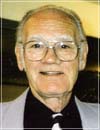
Scott Richardson (1923-2010) served as pastor of Katy Baptist Church in Fairmont, West Virginia.
Broadcaster:

Comments

0 / 2000 characters
Comments are moderated before appearing.

Be the first to comment!

Joshua

Joshua

Shall we play a game? Ask me about articles, sermons, or theology from our library. I can also help you navigate the site.