Bootstrap
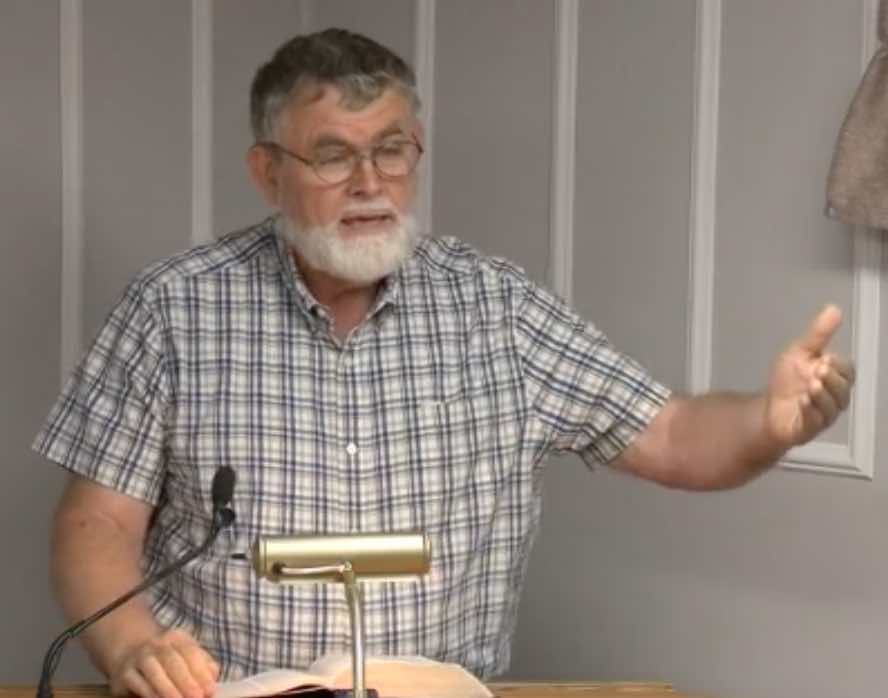
Mike McInnis

The Judge Stands Before the Door

James 5
Mike McInnis September, 22 2024 Audio
0 Comments
James Series

In "The Judge Stands Before the Door," Mike McInnis addresses the theological topic of patience, especially in the context of wealth and its dangers, as discussed in James 5. He argues against a materialistic worldview, reminding believers that wealth is fleeting and can lead to spiritual folly. McInnis asserts that one should not place trust in uncertain riches, as exemplified in the condemnation of the rich in James 5:1-3, where he critiques the harmful pursuit of wealth that neglects justice and charity towards others. He emphasizes the responsibility of believers to maintain integrity in their dealings and to be patient and hopeful for the coming of the Lord, who is depicted as the ultimate judge in verse 9. The practical significance of the message lies in urging Christians to reflect on their priorities and the importance of living in obedience, love, and anticipation of Christ's return.

Key Quotes

“Your riches are corrupted and your garments are moth-eaten. Your gold and silver is cankered, and the rust of them shall be a witness against you.”

“We cannot... draw satisfaction from the riches of this world insofar as lasting treasure.”

“Be ye also patient, establish your hearts, for the coming of the Lord draweth nigh.”

“Behold, the judge standeth before the door.”

Sermon Transcript

Auto-generated transcript • May contain errors

100%
You know, as I read some of these
old hymns, I am reminded how much degraded, I suppose, for lack
of a better word, that our language has become. You know, there's a lot of words
that are used in these hymns that were commonly understood
in times past that are not even used anymore, and most people
probably wonder what they mean, you know. And, of course, we
often, you know, it's not necessary to use big words, but It's often useful when we regard, I'm wanting to say this
correctly, the poetic sense in which God has given us language. He gave us language to communicate
with one another, for sure. He confused the tongues at Babel
because men had used their language to unite themselves together
in their own worship of themselves and they would build a tower
up in heaven for their own glory and the Lord confused the language.
But at the same time, I believe we need to understand that the
Lord created language so that it might exalt that we might
use it to exalt him. And there is a beauty in the
language that the Lord has given us. And I think sometimes in
our desire to simplify things that we lose that. And I give
you an example of that and I believe this is a true thing and that
is in the Bible itself. Now the King James Version of
the Bible is certainly not in itself a
holy book insofar as the printing on the page is concerned. And
indeed, the Lord has given, this is not the original language
in which these scriptures were once breathed. But I believe
that the Lord has blessed the King James Version of the Bible
in a measure that cannot be explained exactly. But one of the things
that makes this version of the scriptures to stand out from
the other more modern versions that have, in my estimation,
dumbed it down so that men might supposedly understand it. See,
the error is that if you make the Bible simple enough, then
everybody is gonna understand it. Well, you can't. The understanding
of the scriptures is not about how simple it is for you to read
it. It's how the Spirit of God takes that word and applies it
to your heart. And so I'm not up here today
to tell you that if you have a version of the scriptures other
than the King James Version that you are somehow walking in grave
error. But I'm telling you that you
cannot improve on this version of the scripture
in my estimation because of the poetic nature of it. Because
God is exalted. in the Psalms, as Brother Al
read a moment ago, and in many of the other versions that I
have read, and I call some of them perversions because many
of them are perversions. Many of them have changed the
meaning of things. in the scripture, and people
suddenly don't get that. One of the areas where some of
the versions have changed it is in Galatians 2.20, Paul said,
I am crucified with Christ, nevertheless I live, yet not I, but Christ
liveth in me. And the life which I now live,
In the flesh, I live by the faith of the Son of God who loved me
and gave himself for me. Now there's a simple change that's
made in that verse by some of the versions that says, by faith
in. the Son of God. Now, I'm not
telling you that that would necessarily be wrong, but it misses the beauty
of what Paul was saying, because it is the faith which is of Christ. It's not just faith in Christ,
but it's that faith which comes from Christ. It's that faith
of Christ. It is, in essence, the faith
that he exhibited when he walked upon this earth. That is the
faith which we confess and profess. So I don't know why that was
on my mind, but I just noticed as we sang that song, there was
a couple of words in there. One of them was pinions. Now,
how many of y'all have ever used the word pin? Now, we use it
down at the store when we're talking about gears because you
have ring and pinions, but that's not what he was talking about.
The word pinions is speaking about wings. The wings of birds
are called their pinions. Now, I don't know how that originated
or where it is, but it's a more colorful word, is it not, than
just saying wings. And of course, using it in the
hymn, that's what he had reference to. And the other one was ethereal. Now, ethereal has a reference
to the sky. It's the ether. They used to
talk about the skies being the ether. Now, again, that's a word
we use in the store all the time, by ether, starting fluid, but
it doesn't have anything to do with ethereal. It's just a word
that's going to be used, and you can disregard all of that
if you want to. I mean, that explains, if anybody
ever wonders, well, why doesn't he use it? Because I'm going
to tell you this. You can't hardly find very few,
and this is not any pat on the back. I'm just pointing out this
is a true thing. You can't hardly go anywhere
and find anybody that uses the King James Version of the Bible.
Because it's old-fashioned, you know. We need something that's
more modern. We need something that's like we taught. Well,
I say we need to perhaps talk like they did. I'm not saying for you to adopt
old English in real phrasing and stuff, but I'm saying that
you can improve. on this I mean you might get
something that you like the way it sounds a little better or
makes it a little easier to understand and I understand there's some
phrasing and stuff you know that that may even have some clarification
into our modern mind but it's not because there's something
wrong with the scripture it's because there's something wrong
with our mind You know, because men in all ages, many ages, not
all ages, because even this Bible hasn't been in existence in all
ages, but the Word of God has. There's never been a time when
the Word of God wasn't existent. the Lord has revealed it more
clearly as time's gone by. And I don't think it can be revealed
more clearly than what this version of the scripture is. So that's
just a commercial, if you are, or you know, it's just that introduction. That doesn't really have any
bearing per se on what we're talking about this morning. But we're looking in James chapter
five. James chapter five. and I'm going to read it. It
says, Go to now, ye rich men, weep and howl for your miseries
that shall come upon you. Your riches are corrupted and
your garments are moth-eaten. Your gold and silver is cankered,
and the rust of them shall be a witness against you, and shall
eat your flesh as it were fire. Ye have heaped treasure together
for the last days. Behold the hire of the laborers
who have reaped down your fields, which is of you kept back by
fraud, crieth, and the cries of them which have reaped are
entered into the ears of the Lord of Sabaoth. You have lived
in pleasure on the earth and have been wanton. You have nourished
your hearts as in a day of slaughter. You have condemned and killed
the just, and he does not resist you. Be patient, therefore, brethren,
unto the coming of the Lord. Behold, the husbandman waiteth
for the precious fruit of the earth. and hath long patience
for it, until he receive the early and the latter rain. Be
ye also patient, establish your hearts, for the coming of the
Lord draweth nigh. Grudge not one against another,
brethren, lest ye be condemned. Behold, the judge standeth before
the door. Take my brethren, the prophets,
who have spoken in the name of the Lord for an example of suffering,
affliction, and of patience. Behold, we count them happy which
endured. Ye have heard of the patience
of Job and have seen the end of the Lord, that the Lord is
very pitiful and of tender mercy. But above all things, my brethren,
swear not, neither by heaven, neither by earth, neither by
any other oath, but let your yea be nay and your nay, nay,
lest ye fall into condemnation. Is any among you afflicted? Let
him pray. Is any merry? Let him sing psalms. Is any sick among you? Let him
call for the elders of the church and let them pray over him, anointing
him with the oil. with oil in the name of the Lord.
And the prayer of faith shall save the sick, and the Lord shall
raise him up. And if he have committed sins,
they shall be forgiven him. Confess your faults one to another,
and pray one for another, that ye may be healed. The effectual
fervent prayer of a righteous man availeth much. Elias was
a man subject to like passions as we are. And he prayed earnestly
that it might not rain. And it rained not on the earth
by the space of three years and six months. And he prayed again
and the heaven gave rain and the earth brought forth her fruit.
Brethren, if any of you do err from the truth and one convert
him, let him know that he which converted the sinner from the
error of his way shall save a soul from death and shall hide a multitude
of sins. Now this is a glorious passage
of scripture. It is also one which, when men
take it out of its context and out of the complete context of
the scripture and the message of the gospel, it can easily
be misunderstood and people can be drawn away into misunderstanding
of what, the Lord is saying through James. But if we keep our eyes
on the truth of God and the message that the Lord is bringing to
the church through James and through his perspective of things,
then there's a great blessing here. Now, of course, the whole
book of James, if I could describe it, I guess we could say that
it is an admonition and an exhortation to the children of God. That's
who he's writing to. He's not writing to the world
in general, but he's writing to the people of God. And he
is reminding us, as he points out these things, that we are
not of this This is not that calling to which we're given.
We are called out from the world. And he uses illustrations of
what we would normally see in the world to show a contrast
to move back from that. Not to go towards it, but to
move away from it. And he goes on here, he says,
take heed now, what it means, go to now. Ye rich men, weep
and howl for your miseries shall come upon you, your riches are
corrupted and your garments are moth-eaten. Now he's speaking
to anyone, be they a believer or not, who would have a trust
in what Timothy described as uncertain riches. And the things
of this world are very uncertain, are they not? And yet men often
trust in them as though they'll be, you know, that's the thing
that's gonna carry them through. But you know, you can lose all
the money you've got as quickly as you gain it. It can be taken
away. It don't make a difference how
much money you have, you can lose it. How often do we read
of people that win the lottery and get millions of dollars and
pretty They're totally bankrupt. They've spent it all. It's all
gone. It flies away. It's uncertain. It has no place. So he's giving a warning here
to anybody, be they a believer or not, who would trust in these
uncertain riches. He says, Weep and howl for your
miseries that shall come upon you if you trust in those things. If that is the course which your
life takes, it will not bring you happiness. And this is most
certainly true for the children of God. We cannot, there's no
happiness to be found in the riches of this world insofar
as lasting treasure. Now, there's certainly nothing,
the scripture never condemns having money, gaining money,
But the scripture does warn us much about money. The same thing
as it does about drinking wine or other things such as that. It doesn't condemn the substance,
but the use, the misuse of it that men take. And he says about
money, the love of money is the root of all evil. Because what is that? That the
love of money is a selfish consideration. I'm gonna get this and I'm gonna
have it and I'm gonna hold on to it and it's gonna make me
happy. It's gonna satisfy me and I'm
gonna somehow gain something by it. The Lord gives men the
riches of this world or poverty of this world for their benefit.
and they serve different benefits, and it's good for the rich man
to consider being poor in Christ, and it's good for the poor man
to consider being rich in Christ. I mean, that's what he's taught
us, what Timothy taught us. Says, your riches are corrupted
and your garments are moth-eaten. You know, that's something that
used to be more of a thing than now. I guess because years ago
people had more natural fibers, I guess, in their clothes and
wool and, I guess, pure cotton and stuff like that. And moles,
I can remember my mother. You know, they would be constantly
worried about this, and they'd put mothballs. You know, most
times in older people's houses, I can remember this as a kid,
when you'd go into an older person's house, that'd be the first thing
that you'd smell was the mothballs. Now, most people don't even think
about that today. You know, I don't know if we've
ever bought any mothballs or not. But that has been a thing. Like I say, when garments were
made out of natural fibers, and moths would eat those things,
and so you'd have to do with it. So we might say, well, what's
he mean by moth eating? Because I doubt there's anybody
in here that's ever had a garment that was moth eating. But that's
nonetheless, they will, moths will come in and eat it. Robbers
will break through and steal. And the government will come
and take everything you've got. If things turn out that way. Your gold and silver is cankered.
That is, it's tarnished. And the rust of them shall be
a witness against you. And think about that, the rust
of them, that is the tarnish of them. You know, you can have
the most beautiful silver platter that you've ever seen, and you
can put that thing on the shelf and come back a year later and
you'll say, well, what happened to my shiny silver platter? Because it won't be. And that
rust bears witness against trusting in these uncertain riches. It
reminds us, you know, these things bear witness to us that there's
nothing that will last in this world. And shall eat your flesh as it
were fire. You know, there's nothing that
angers a rich man more than losing his riches. You know, if a man's
trusting in his riches and something comes along and he loses a bunch
of them, it's gonna put him into a depression, is it not? I mean, the poor man that doesn't
have anything, he never even thinks about that. He's just
trying to get something to eat. But the rich man, he's worried
about keeping his money and it causes him grief when he does. and eat your flesh as it were
fire, ye have heaped treasure together for the last days. Now it is a needful thing, I
think a wise thing as the Proverbs tell us to be wise with our money
and there's a certain laying up of money that is a good thing,
it's a wise thing to lay up treasure to some extent for those days
that come, you know, that you're not gonna be able to take care
of yourself. So that's a good thing. But you
know, we live in a society that has made it a sign of wisdom to lay
up enough treasure that you can just live like a king for the
rest of your life without having to do anything. I mean, that's
kind of the goal. You know, just get so much that
you'll never run out of money. Well, how much would that be?
I don't know, you know, because nobody knows what may happen.
And with, you know, policies of the government and
stuff like that, over which we have little control, it could
take away everybody's. What if the government, through
some means or whatever, decided to confiscate all the money that
everybody has in the banks and put it into the treasury? I mean,
that's happened before in other countries and stuff. What if
they did? What would you have then? You
know, so all of these things are nothing. And it was foolish
to trust in them. Behold, the hire of the laborers
who have reaped down your fields, which is of you kept back by
fraud, crieth, and the cries of them which is reaped are entered
into the ears of the Lord of Sabaoth, the Lord of provision. Now, the scripture says that
the laborer's worthy of his hire. And we as God's people need to
be mindful that if we are in a position to hire somebody,
that we don't try to beat them down to the lowest price that
we possibly can and make them work for peanuts. We need to
pay people what they're worth to do. Now that doesn't mean
that everybody going through life is worthy of making $100,000
a year, of course in a few years that won't mean anything, but
that's still a pretty tidy little sum of money to make in a year.
Everybody, I mean the labor that everybody does is not necessarily
worth that. My labor's not worth that. I
mean I'm surprised really that I get anything for a little bit
that I, you know, perform for the good of society or anything
else. So, You know, we don't need to
overvalue our labor in our own mind, nor do we need to undervalue
the labor of others. You know, it's kind of like buying
and selling. I had a brother, in fact, one time, he got all
upset because he felt like that if a person was a Christian,
that they ought to, you know, practically give somebody, if
they're selling something to them, they ought to just, you
know, if they're in business and they're gonna do a service
or whatever, then they ought to just almost give that to a
fellow believer. And he felt like that was just
the Christian thing to do. I said, well, brother, let's
put the shoe on the other foot. If you go into a store that belongs
to a brother, by the same token, wouldn't you want to pay him
as much as you could for it? I mean, you know, the shoe fits
on both feet. You know, you have to be mindful.
Business, you know, there's a realm of business. I mean, profit has
to be made in businesses in order for them to keep going. But we're
not to try to take advantage of other people. You know, I
mean, we ought to be fair. And that's especially true, as
he says here, don't keep back somebody's wages by fraud. Now,
you know, that was in years past. There was a lot of these big
companies and stuff would have these miners and things, and
they would make them buy their stuff from the company store.
Didn't pay them, you know, in money, but they gave them credit
at the company store. Well, of course, they paid them
such a penance that most of the time, by the time a fellow got
through working for somebody, he owed them money for having
worked. And that's exactly what's taught.
We're not to be those that take advantage of others. A workman's
worthy of his hire, and if somebody performs a service for us as
God's people, then we ought to bless them for it. Our desire
ought to be to bless them for it. And these are minor things
in some ways, but at the same time, in practical terms, they're
how we ought to view things. Are we trying to take advantage
of somebody for our own purpose? Buying and selling, everybody
wants to buy low and sell high, and there's nothing wrong with
that. But we need to be not thinking of trying to take advantage of
somebody. You have lived in pleasure on
the earth and been wanton, that is you have fulfilled your desires
and you have nourished your hearts as in a day of slaughter. Now
what does that mean? Well it means You've been, oftentimes
men who trust in uncertain riches and take advantage of other people
and build their business on the backs of other people and not
rewarding them along the way, they've fattened themselves up
for the day of slaughter, just like you would fatten up a calf,
you know, whenever you, you're gonna gain what you deserve in
that way. You have condemned and killed
the just, and he doth not resist you, because he can't. You know, you can take advantage
of people that are in a position where they can't do any different.
You know, you get somebody over the barrel, I mean, you can pretty
well charge them anything you want to. So we need to be mindful
of that, and in that, Remember that that's exactly what the
world did to Jesus Christ. They took advantage of him, and
they sought to destroy him, and they had no concern for him.
They did not pity him. You have condemned and killed
the just. Is that not a description? of
what we are, so if that be the case, and we know that that was
an unjust and terrible thing, then our mind needs to move in
that direction when we're dealing with our brethren, or people
in the world, not just our brethren, but most especially our brethren. But we're to take advantage of
nobody as we go through this world, remembering how the world
took advantage of Christ Be patient, therefore, brethren, unto the
coming of the Lord. Behold, the husbandman waiteth
for the precious fruit of the earth, and hath long patience
for it until he receive the early and latter rain. Be ye also patient,
establish your heart for the coming of the Lord, draweth nigh. Now, blessed is that servant,
the scripture says, whom when the Lord comes, he finds him
watching. looking for his return. The Lord
said he was going to come back. And that's the blessed hope of
the children of God. And it requires a patient waiting,
does it not? Even as he says, be patient therefore
unto the coming of the Lord, as the husbandman, that is the
farmer, is waiting for the precious fruit of the earth. Everybody
that's ever grown a garden goes out there every day and looking,
and he's hoping he's gonna see something, some fruit starting
to be produced on that, in that garden. But there's nothing he
can really do about it, is it? He's just patiently waiting until
the time that is, but he is desirous. You see, of seeing that fruit,
that's the whole reason that he planted the garden in the
first place was to gain the fruit off of it. And so he desires
it. And he looks for it patiently. So also, be ye also patient. Establish your hearts for the
coming of the Lord draweth nigh. Grudge not one against another,
brethren, lest ye be condemned. Behold, the judge standeth before
the door. Now when the Lord comes, it's
a joyous occasion for the people of God, looking for him. Those that look for him, we're
looking for him. But it is a terrible day. when the Lord shall come for
those that have no hope in Him, that despise Him, that care not
whether He comes or not. They just go on about their business.
They're not evil because He comes to judge the living and the dead. He comes in flaming fire, taking
vengeance on those that know not God. Oh, that the Lord might
teach us what it is to trust Him. to walk as those who are
the children of God. Because he gave us an example.
And he did no evil to any man. That's an amazing thing if you
think of it. I mean, he was a man just like
any man, but he never did one thing of harm to any other individual You ever seen a child? that was
always glad to share his toys. I never have. I raised four boys,
and I never saw any inkling of that in any of them. Now, they
can learn to do that, and you can teach them to do that, and
they can reluctantly do it. But you know, a person, a child,
an adult, they never fully liked that idea. I mean, they'd always
rather go play with that by theirself and not have anybody mess with
them. But the Lord hasn't taught us to be that way. And the Spirit
of God doesn't lead us that way. But He directs our steps that
we might love one another even as Christ loved us. Oh, that
He might instill that in us, because He alone can do it. We
can't. You know, you can't ever instill
true love in anybody, but the Lord can certainly instill it
in His people.
Mike McInnis
About Mike McInnis
Mike McInnis is an elder at Grace Chapel in O'Brien Florida. He is also editor of the Grace Gazette.
Broadcaster:

Comments

0 / 2000 characters
Comments are moderated before appearing.

Be the first to comment!

17
Joshua

Joshua

Shall we play a game? Ask me about articles, sermons, or theology from our library. I can also help you navigate the site.