Bootstrap
Mike McInnis

Lazarus Death #1013

Mike McInnis April, 26 2022 Audio
0 Comments

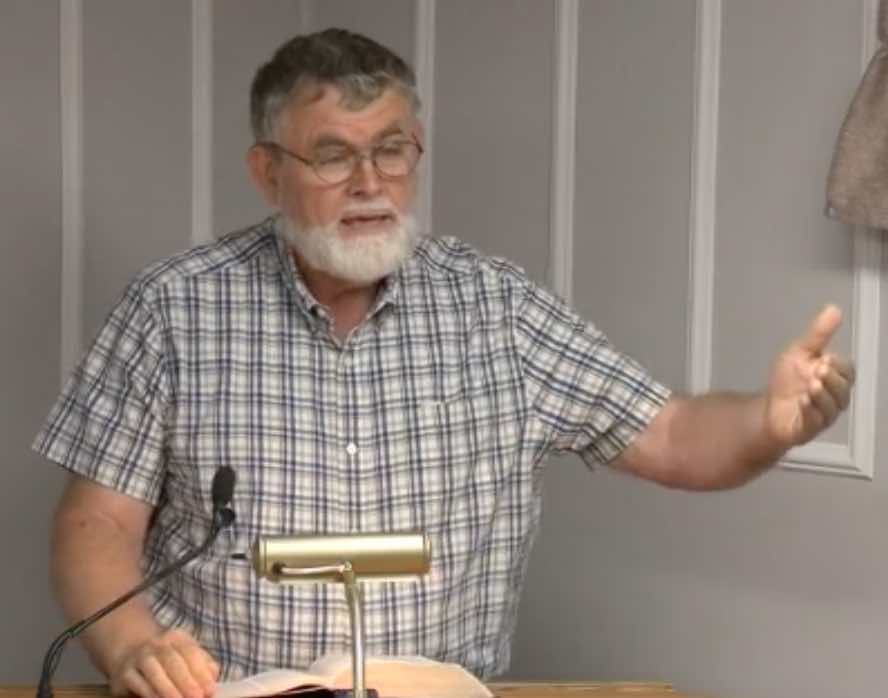
In this sermon, Mike McInnis explores the theological implications of Lazarus' death as a demonstration of Christ's sovereign power over sin and death. He argues that Christ's atonement is particular rather than universal, emphasizing that Jesus died specifically for the elect, reflecting Reformed doctrines of limited atonement and irresistible grace. McInnis supports his argument with scriptural references, including Hebrews 9:12, which speaks of Christ securing eternal redemption, and John 11, depicting Jesus calling Lazarus from the grave, illustrating the personal nature of God's call to His chosen ones. The significance of this teaching lies in its affirmation of God's sovereignty in salvation and the assurance that those redeemed will triumph over death through Christ’s resurrection, transforming their judgment experience into one of hope, rather than fear.

Key Quotes

“It is appointed unto men, once to die, but after this the judgment.”

“Christ was once offered to bear the sins of many, that is, a limited and specific number.”

“The grave shall be opened, and the dead in Christ shall be raised from the dust.”

“He calleth his own sheep by name.”

Sermon Transcript

Auto-generated transcript • May contain errors

100%
Welcome, friends, to another
broadcast of Morsels for Zion's Poor. All men shall stand before
the Lord in judgment, not as a group, but as individuals,
just as each one must face death alone, and as it is appointed
unto men, once to die, but after this the judgment. It is upon
this very principle that the Lord Jesus tasted death to procure
redemption for certain men as individuals. So Christ was once
offered to bear the sins of many, that is, a limited and specific
number. And unto them, the same many, that look for him shall
he appear the second time without sin unto salvation. Just as surely
as all men shall individually face judgment for their sins,
so too did Christ make atonement for his people, that is, many,
as individuals which were chosen in him before the foundation
of the world. This very fact overturns the
notion that His atonement is general in nature, as a blanket
covering for the sins of all men. He died for certain men,
atoned for certain sins, and obtained a certain redemption
for them. Neither by the blood of goats and calves, but by His
own blood He entered in once into the holy place, having obtained
eternal redemption for us. This is the basis upon which
the sons of God have the hope of eternal life and expect to
stand in the day of judgment as those whose sin is covered
by his righteousness. The condemnation which rightly
should have been theirs has fallen upon him who has delivered them
from the curse of the law and granted unto them the right to
be called the sons of God. The curse of the law came upon
a certain man, Lazarus of Bethany, as he fell sick and ultimately
died as all men will. Lazarus' death, while like all
mortal men, was not unto death, but rather unto life. The Lord
ordained both his sickness and death to demonstrate his power
over death itself in a most striking fashion. There is no doubt that
the Lord could have prevented his friend Lazarus' death by
healing him of his disease, just as he had many others. Yet he
tarried on purpose upon being told about the illness of Lazarus,
so that Lazarus might die. Certain men were present on that
date when the most startling of all the miracles which the
Lord Jesus performed was carried out. Certain of those that gathered
there would already believe the Lord's teachings and loved Him.
They would be strengthened by that which they saw. Certain
men had perhaps heard of this man Jesus, who, after what they
witnessed, could be told to believe on Him. Certain men were there
as spies who would report to the Pharisees of what they perceived
to be a man of power who threatened the religious structure of the
Jews. Not one of these certain men was there by chance or happenstance. Every step that each took was
ordained by him who would demonstrate the power and sovereign right
of God to make one vessel an honor and another to dishonor,
as pleased him. Martha, being of a very practical
mind, expressed an objection when the Lord told the men to
take away the stone which covered the tomb's entrance. She was
right to be concerned about the stench which would surely come
forth from the rotting corpse of Lazarus. Yet this stench was
itself ordained by the Lord, so that there might be no doubt
that Lazarus was dead. The Lord would have those certain
men which were present there to smell death itself, and to
understand that it is impossible for a man to live again apart
from the supernatural work of God. A tree may be cut down and
yet sprout from its root, but when men die they return to the
dust from whence they came. As the waters fail from the sea,
and the flood decayeth and dryeth up, so man lieth down, and riseth
not. The Lord had the stone removed
as an illustration of the fact that the grave shall be opened,
and the dead in Christ shall be raised from the dust. The
Lord cried with a loud voice, Lazarus, come forth. This was
a call to a certain man. Elsewise all of the dead would
have come forth. Even so is the call of the Lord
to each one of his children, quite specifically addressed
to them, rather than some general invitation to all of mankind.
The sheep hear his voice, and he calleth his own sheep by name.
He removed the stone from the grave's mouth so that Lazarus
could come out. The living have no place among
the dead. Jesus saith unto them, Loose him, and let him go. This
is an illustration of the preaching of the gospel to the sons of
God who were made alive in Christ. For God, who commanded the light
to shine out of darkness, has shined in our hearts to give
the light of the knowledge of the glory of God in the face
of Jesus Christ. Until a man is awakened by the
Spirit, he cannot see the light which is shed forth in the preaching
of the gospel, who has saved us and called us with a holy
calling, not according to our works, but according to his own
purpose and grace, which was given us in Christ Jesus before
the world began. Have you been quickened from
the dead? For a free CD containing 15 of these radio broadcasts,
send an email to forthepoor at windstream.net.
Mike McInnis
About Mike McInnis
Mike McInnis is an elder at Grace Chapel in O'Brien Florida. He is also editor of the Grace Gazette.
Broadcaster:

Comments

0 / 2000 characters
Comments are moderated before appearing.

Be the first to comment!

Joshua

Joshua

Shall we play a game? Ask me about articles, sermons, or theology from our library. I can also help you navigate the site.