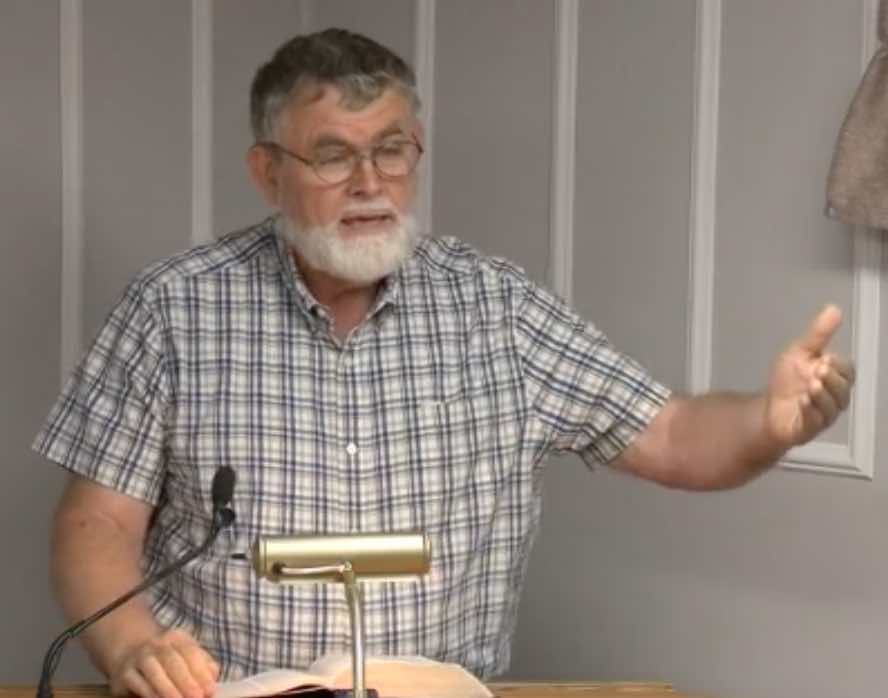
In this sermon, Mike McInnis addresses the doctrine of salvation by grace through faith, emphasizing that it is solely through Jesus Christ that redemption is accomplished. He critiques the prevalent belief that human acceptance or belief plays a pivotal role in salvation, arguing that this undermines the sufficiency of Christ's work on the cross. McInnis supports his points with key scriptural references that illustrate the completeness of Christ's redemptive act, arguing that the elect's salvation was decreed before the foundation of the world and secured by Christ's righteous sacrifice. The practical significance of this message lies in the reassurance it provides to believers that their salvation does not depend on their efforts but on the finished work of Christ, thus encouraging true worship grounded in gratitude rather than fear.
Key Quotes
“The salvation of the Lord's elect is wrapped up in Jesus Christ alone.”
“When anybody's message is Christ plus something, it is too much. Or if it's less than Christ alone, then it is too little.”
“The gospel does not confer life, nor does a belief of the gospel cause a change in sin's imputation in the courts of heaven.”
“It is finished. He has forever manifested his execution of the Father's purpose.”
The Bible teaches that Christ's sacrificial work is fully sufficient for the salvation of His elect, necessitating nothing more.
Scripture clearly asserts that the salvation of the Lord's elect is entirely wrapped up in Jesus Christ alone, with no requirement for additional works or contributions. The multifaceted errors of this age suggest that Christ's redemptive work is only partially effective until human belief is added. This notion, often termed 'accepting Christ,' misconstrues the nature of belief as the catalyst for divine salvation, rather than recognizing that faith is a gift bestowed post-redemption. As stated in Romans, Christ's righteousness is both imputed and secured by His perfect sacrifice, establishing that nothing else can be required for salvation. In Ephesians, we see the preordained nature of this redemption, emphasizing the unwavering certainty of God's purpose in saving His elect.
Romans 3:24-26, Ephesians 1:4-5
God's election is substantiated by biblical teaching that emphasizes His sovereignty and purpose in salvation.
The doctrine of election is firmly rooted in the scriptures, specifically in passages that underscore God's sovereignty in predestining His people for salvation. The reality of God's elect being chosen 'before the foundation of the world' illustrates that His decisions are not contingent on human actions or beliefs. As seen in Romans and Ephesians, the purpose of God cannot be thwarted. His plans extend beyond mere foreknowledge to an active decree which ensures the realization of His redemptive purposes. Furthermore, the entirety of salvation is seen as a work initiated and completed by God, supporting the assurance that His elect will indeed come to faith in Christ and ultimately enjoy eternal communion with Him.
Romans 8:29-30, Ephesians 1:5
Christ's finished work is crucial for Christians as it assures them of full redemption and freedom from the burden of sin.
The completion of Christ's redemptive work stands as a cornerstone of the Christian faith, profoundly impacting a believer's relationship with God. When Christ declared 'It is finished,' He affirmed that the entire debt of sin for His people had been paid in full. This assures believers that their standing before God is secure, resting not on their effort but solely on Christ's perfect righteousness. The import of this truth is highlighted in the transformation experienced by believers; they transition from a fearful life consumed by sin's penalties to a hopeful existence rooted in the grace of God. Understanding this victory leads to authentic worship and the acknowledgment that any effort to supplement Christ's work is not only unnecessary but a form of misunderstanding the gospel's sufficiency.
John 19:30, Hebrews 10:10
Comments
Your comment has been submitted and is awaiting moderation. Once approved, it will appear on this page.
Be the first to comment!
