Bootstrap
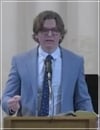
Gary Shepard

The Testimony of Jesus

John 3:30-36
Gary Shepard September, 18 2014 Audio
0 Comments
Gary Shepard
Gary Shepard September, 18 2014

The sermon by Gary Shepard titled "The Testimony of Jesus" centers on the essential doctrine of Christ's superiority as the ultimate Prophet and the giver of God's revelation. Shepard elaborates on John the Baptist’s role and how he exemplifies the necessary decrease of human agency in favor of Christ's preeminence: "He must increase, but I must decrease." The preacher highlights multiple Scripture references, predominantly John 3:30-36, and draws comparisons with Deuteronomy 18 concerning the prophetic office. Shepard emphasizes that John was a prophet sent by God, yet he recognized that the coming Christ holds complete sovereignty and authority as the true and final Prophet. The practical significance lies in the call for believers to heed Christ's testimony and recognize the danger of rejecting it, particularly stressing that faith in the Son is the path to eternal life, while disbelief results in the wrath of God abiding on the unbeliever.

Key Quotes

“He must increase, but I must decrease. This certainly should be the attitude of all who speak for God.”

“He that cometh from above is above all. He that is of the earth is earthly, and speaketh of the earth.”

“Faith in the Lord Jesus Christ as He is revealed in the Scriptures—that's the evidence of having everlasting life.”

“Eternity hangs on whether or not we believe God.”

Sermon Transcript

Auto-generated transcript • May contain errors

100%
John chapter 3. And I'm going to begin reading
in verse 30. John the Baptist says, He must
increase, but I must decrease. He that cometh from above is
above all, He that is of the earth is earthly, and speaketh
of the earth. He that cometh from heaven is
above all. And what he hath seen and heard,
that he testifieth, and no man receives his testimony. He that hath received his testimony,
hath set to his seal that God is true. For he whom God hath
sent speaketh the words of God, for God giveth not the Spirit
by measure unto him. The Father loveth the Son, and
hath given all things into his hand. He that believeth on the
Son hath everlasting life. And he that believeth not the
Son shall not see life, but the wrath of God abideth on him."
I call this the testimony of Jesus. And I was sitting there thinking
just a moment ago what a responsibility men and women have because God
has spoken. He has not been silent. And not only has He, according
to the apostles, spoken and declared Himself in His creation, But He has also come in human
flesh, and from lips of a man has spoken." As a matter of fact,
in Hebrews, where we find all those references to the Old Testament
priests and sacrifice and law, He begins that epistle by saying,
that although God has in past days and in different ways spoken
to men by men, by vision, He has in these last days spoken
unto us by His Son. He has come in human flesh and
has spoken unto us." And I think that maybe we ought to begin
looking at these verses, remembering what Christ said about John the
Baptist. He's the one speaking. But our Lord said of John the
Baptist, among those that are born of women, there is not a
greater prophet than John the Baptist." You take Moses, you
take Isaiah, Jeremiah, and yet the Lord Himself bears this witness. There is not a greater prophet
born of woman than John the Baptist. But when you listen to John the
Baptist, all through these verses, he makes every effort to show
the superiority of the Lord Jesus Christ over his own self. And if we know what a prophet
is, a prophet is different than a priest or a king in that the
king rules for God, the priest represents men before God, but
the prophet He speaks for God. The Bible says there was a man
sent from God and his name was John. But this man sent from
God and this man who speaks for God, he speaks of the Lord Jesus
Christ as one far, far superior to himself in every way, but
especially in his testimony. You see, John, as we find him
saying in these verses, is just simply a man, and at best, a
sinful man. But people who had once listened
to John, They now are reported in these verses to be leaving
John and going over and listening and following Christ. How does that affect John? Well, John knew that he must
increase and I must decrease. And that certainly is the attitude,
or rather should be the attitude of all who speak for God. He must increase and I must decrease. I've always thought that if it
could be said, I know it can't, but if it could be said as an
epitaph on my tombstone, I would be glad it could be said of me
what was said of John the Baptist. They said, John did no miracle. But all things that he said of
this man were true." And so here are all these people that are
going over to listen and follow the Lord Jesus Christ. And if
you look back in verse 26, somebody said that this is a
good lesson in not believing the statistics of men. If you look in verse 26, it says,
"...they came unto John, and said unto him, Rabbi, he that
was with thee beyond Jordan, to whom thou bearest witness,
behold, the same baptizeth, and all men come to him." They're
all going to hear this man, Jesus. But if you look down in verse
32, John was very well aware of what the reality of it was. That it is not always as it appears
to be outwardly. He says in verse 32, "...and
what he hath seen and heard that he testifieth, and no man receives
his testimony." He's not talking about not one
single person, but he's saying comparatively. Compare to what
men said that they were doing. All of them were now going after
Jesus and they were believing what He said. They were no more
of themselves believing what He said than they were to believe
what John said. But if there can be degrees of
responsibility, especially at this particular hour, how responsible
will they be who heard the testimony and witness of the Lord Jesus
Christ from His lips? From His own witness and testimony? John describes himself and really
all apart from Christ who are sent of God to speak for God
and bear witness for God. He said that he was as all are
of the earth and earthly. That's all we can be at best.
I know sometimes preachers get to think that they have entered
into the heavenly some kind, but at best, at best, we are
of the earth. We are chained to this earth
by our flesh. And we have to, because of our
weakness and our limitations of knowledge and of ability and
of understanding, What we say to a degree is very limited. But John said that's not the
case with the Lord Jesus. He's from heaven. He is from
heaven, and in verse 31 it says, He that cometh from above is
above all. He that is of the earth is earthly,
and speaketh of the earth. He that cometh from heaven is
above all. He's above all in the sense that
He is not only superior to all, but He's the sovereign over all. But not only is He the Sovereign
over all, He is also superior in His testimony. He speaks what He has seen and
known as God the Eternal Son. We get a little light, we get
a little understanding about a portion of the Word of God,
And we get to almost beating our chest with pride, got to
tell somebody about what we found out. Well, he never found out
anything. He had perfect understanding
of the whole Godhead, and perfect understanding of the will and
purpose of God, especially as it pertained to the everlasting
covenant, to that everlasting salvation, to those that God
had given Him in that covenant and made Him to be the surety
for, all that God is, all that God has purpose, all that God
requires, all that He gives. He knew it all. He knows it all. He's not ever been taught anything. And this shows us the necessity,
and not only the necessity, but the wisdom and the importance
of hearing and heeding Him. What a responsibility! that God
hath in these last days spoken unto us by His Son. And in that sense, or rather
in that office, He is the Prophet. Turn back to Deuteronomy chapter
18. Now here is A prophet, a true prophet, John
the Baptist, a prophet that as far as among men is concerned,
Christ said, there's none greater. And yet he's talking about the
prophet. That's one thing that all true
prophets talk about. They talk about the true prophet. Now listen in Deuteronomy chapter
18 beginning in verse 15. The Lord thy God will raise up
unto thee a prophet from the midst of thee. That's why the
Lord Jesus Christ, for a various lot of reasons, had to become
flesh, be born of a woman, made under the law. One of the reasons
was in order to be that prophet. "...from the mist of thee of
thy brethren, like unto me, unto him ye shall hearken." Moses
was a prophet. According to all that thou desirest
of the Lord thy God in Oreb, in the day of the assembly, saying,
Let me not hear again the voice of the Lord my God, neither let
me see this great fire any more, that I die not. They knew as
far as God speaking through that mountain and that law, that it
was not a message that they could receive. It was a message of
death to them, not because of God, but because of what they
were. Nothing but sin. They were always asking Moses,
just tell us what God wants us to do and we'll do it. Well,
here they are, they're gathered around that mountain, and from
that mountain the voice of God speaks. And it is so terrifying
to hear the holy voice of God that they are shaken and trembled,
and they can't even stand near that mountain. So they said,
don't tell God to speak to us anymore. I think it was Brother
Richardson who used to say, God will not speak to, nor will He
be spoken to by any sinner in themselves. Got to have a mediator. And so that is exactly what's
being promised and prophesied. What's being prophesied is a
prophet that's coming. He's going to rise up from the
midst of the brethren. And the Lord said unto me, They
have well spoken that which they have spoken. I will raise them
up a prophet from among their brethren like unto thee, and
will put my words in his mouth, and he shall speak unto them
all that I shall command him." There never was a prophet like
that until Christ came. all that I shall command him. I do always the will of my Father. And it shall come to pass." Now,
here is the responsibility, the awesome responsibility and weight
of those who live from the first coming to the second coming of
the Lord Jesus Christ. And it shall come to pass that
whosoever will not hearken unto my words which he shall speak
in my name, I will require it of him." This isn't going to
be a matter of like dealing with an unruly child who doesn't listen. This is God speaking from heaven
and doing so personally, clearly, unmistakably through His only
begotten Son. But the prophet shall presume
to speak a word in my name, and this is one reason why if I failed
in every other way, and I know I have. But the thing that has
always concerned me since the Lord revealed the truth to me
is that I say nothing more and nothing less than what He says." Brother Henry saying one time
concerning messages that were preached on TV and the response
that came back, he said, I try to use as much Scripture as possible
so that their disagreement doesn't come against me, but against
the words of God Himself. But the prophet which shall presume
to speak a word in my name, which I have not commanded him to speak."
Oh, how much does that go on in our day? All these preachers
got extra biblical revelation. The Lord told me to tell you
this. He woke me up in the night and
He told me to tell you this. It's a strange thing that He
tells them things that are contrary to what He's already told them. which I have not commanded him
to speak, or that shall speak in the name of other gods, even
that prophet shall die. And if thou say in thine heart,
How shall we know the word which the Lord hath not spoken?" When a prophet speaks in the
name of the Lord, if the thing follow not, nor come to pass,
that is, the thing which the Lord hath not spoken, but the
prophet hath spoken it presumptuously, thou shalt not be afraid of him."
He may call himself a prophet. He may call himself a preacher,
son of God. But God says as the rule and
test of every spirit, try the spirits to see if they be of
God. In their prophecies, if it comes
not to pass, I didn't send them. they spoke for themselves presumptuously. There was a preacher that was
greatly respected by a lot of people on the radio, and he foretold
the exact time of the coming of the Lord. Guess what happened? It didn't happen. And that automatically
that automatically showed God had not sent him, he was not
speaking for God, and not only that, his prophecy proved that
he was a false prophet. He said, don't be afraid of him.
I remember when I read that and I began to see the liberty that
God's people have from the bondage of this multitude of false prophets
and preachers who try always to bind and to put in shackles
people from that liberty that's in Christ. You don't have to
be afraid of them. You don't have to be afraid to
call a false prophet a prophet. Now, I don't use that term lightly,
I'll tell you that. There are a lot of people that
use it very lightly. But I don't use it lightly. But
I'm not afraid to use it concerning those who preach not the gospel. He said, this is the rule. To
the law, and to the testimony. If they speak not according to
this Word, it's because there is no light in them." How do
we know if somebody truly does have light, understanding of
the Scriptures? They say what God says in His
Word. Because not only is that the
case, but especially it's true of Christ. You see, in Matthew 17, at what
we call the Mount of Transfiguration, it says, while He spoke, I think
that's really important, while He spoke, Behold, a bright cloud
overshadowed them, and behold, a voice out of the cloud which
said, This is my beloved Son, in whom I am well pleased. Hear ye Him." And not only are we to hear Him,
We hear Him when we test everything that we hear from the lips of
man by what He has said in His Word. The Word, written and incarnate, are so
inseparably joined that you cannot acknowledge one without acknowledging
the other. You can't believe one without
believing the other. As a matter of fact, Christ put
it about as plainly as it can be put. He said, whosoever in
this adulterous generation Spiritual adultery. Whosoever in this adulterous
generation shall be ashamed of me and my words, I'll be ashamed
of when I come with all the holy angels." You can't separate Christ
from the testimony of Christ. And in our day, it just seems
like that there is such an attempt to somehow make up this mystical
Jesus, this indescribable Jesus, this Jesus that has had things
done to Him indescribable. We know, we're telling you, but
we cannot describe it. I'm deadly afraid of that, because
He's given us a book of descriptions. And He is the Word of God. You see, God, in Him dwells all
the fullness of the Godhead bodily, and it is in this sense that
He has been given the preeminence. You see, the testimony of the
Lord Jesus Christ is first hand. And his knowledge is perfect
compared to the partial revelations given by the Spirit to prophets
in the past, even John. But even though their revelations
were partial, he said that they all wrote about him. That was central to their message.
He was the one they were talking about. The things of Christ were
the things that they were speaking about. When they spoke of things
that would happen to Israel and all these things, so many times,
again and again in the Old Testament Scripture, they were all speaking
about the coming Christ and what He would do. But those who speak, and by that I mean who speak
for God, Paul said, how can they except
they be sent? John the Baptist was sent from
God. The Lord Jesus Christ while in
this sense was sent by the Father as Jehovah's obedient servant. He did at the same time, with
the same will and resolve, come voluntarily from heaven. And He bore a witness. And I'm
not just talking about what he actually said from his lips,
which the Bible tells us that all the books that could be written
couldn't contain it all. But he bore witness to the truth
of all those Old Testament prophecies. He bore witness as to the reality
and personality of God Himself. And He bore witness in not only
His Word, but in His life, and especially in His death, as to
what the purpose of God is, the purpose of grace is, to that
people He chose in Christ before the world began. Things that you could just spend
about days and months talking about that Christ bore witness
to. Gave this faithful testimony
to. But they really can be summed
up in three words. Or actually in the Greek it's
just one word. And that's when He's hanging
on that cross. And he says, it is finished.
You know, when it comes down to the very essence of faith,
the real difference between actually believing on Christ and not believing
on Christ, it boils down to this very thing. Did he finish it? Or did he not? Must I assist
him in it? Am I to add anything to the work
of righteousness, the work of salvation? Or do I believe him
when he said, it is finished? I love what Paul said when that
wind blew so fierce, that Urocladon wind and all those mariners got
so afraid. And Paul's not disturbed. He
says, be of good cheer. All who stick with this ship,
they're going to be alright. I believe that it shall be as
God has said unto me. Is that what you believe? You
see, John said, the one who receives the testimony of Jesus, who has
come from above, he has set his seal, he has put his total approval
and total reliance and trust in the fact that God is true. Do you believe God is true? God
is true. And the truth Himself came into
this world and spoke the truth. Now, He just said we don't have
to be afraid of any that speak presumptuously, false prophets
that bind on men and women and say God said this when He didn't
and God said for them to tell you this when He didn't. You
don't have to be afraid of them. But it's a deadly and a dangerous
thing to not believe the Word of God when it comes from those
that He sent. I'll show you why. Turn over
to Luke's Gospel. Luke 10. Luke chapter 10 and verse 16. Now, He's always talking about
all these cities, if you notice, wherein great miracles were done. He said, if the citizens of Nineveh
had seen the things you've seen, they'd have repented. Cities
like Capernaum and all these cities all around. He said, you're
exalted to heaven, but you'll be thrust down to hell. Alright? Luke chapter 10 verse 16. He sent these out preaching the
gospel. It's the gospel of Christ. It's
called the Word of Truth. It's this whole body of truth
concerning Jesus Christ and Him crucified. It's about who He
is. It's about what He came to do. It's about His death and its
accomplishments. It's about the result of that,
the resurrection. It's about His ascension into
glory. His reign right now? He sent Him out. And He said, He that heareth
you, heareth Me. Boy, they're all going to be
just like John. They're going to say, He's above all. He's
the testimony. He's the witness. He's the truth. He must increase. I must decrease. And that's what the gospel, the
preaching of it does. It exalts Christ and abases man. Well, that's just exactly backwards
from what men and women want to hear by nature. Exalt me,
lower him. Talk about what I do, not about
what he did. He said, He that heareth you,
heareth me, and he that despiseth me, despiseth you, despiseth
me, and he that despiseth me, despiseth him that sent me."
Oh, we love God, preacher. But we don't like you. We don't
like you because of what you said. Same thing with Christ. He said, for which of these miracles
are you wanting to stone me for? Ah, it's not because of the miracles.
We can live with the miracles. It's because you made yourself
to be God. It's about what you said. That's
always what it's about. In John 5, he says, "...verily,
verily, I say unto you, he that heareth my word, and believeth
on him that sent me, hath everlasting life, and shall not come into
condemnation, but is passed from death unto life." If he hears
my word and believes on me, he's already passed from death unto
life. His believing is not the cause
of it. His believing is the evidence
of it. John 8, He that is of God. What does that mean? Loved of
God? Chosen of God? Redeemed of God? Called of God? He that is of
God, heareth God's Word. Ye, therefore, hear them not,
because ye are not of God, he said to those Pharisees. And then John the Apostle again
in 1 John 4, he says, We are of God. He that knoweth God,
heareth us. That's kind of, maybe borders
being a little bit cocky sounding, doesn't it? Not if you're telling
the truth of God. My sheep hear my voice, the Lord
said. You believe not, because you're
not of my sheep. You don't hear My Word because
you won't hear My Word. You don't believe because you
love the praise of men more than praise of God. How can you believe?
He that is not of God, heareth not us. Hereby we know the Spirit
of truth and the Spirit of error. I tell you, I faced that, it
seems like a lot recently, I don't know why, I've just, in God's
providence, somehow been brought into contact with individuals
and been given an opportunity to talk to them about the gospel
and try to distinguish some things before them and answer some of
their questions. It's almost like you can feel
like they want to hear what you've got to say outwardly, but they
don't really want to inwardly. When they ask a question and
you answer them from the truth, it's almost as if they're counting
that says, I wish I hadn't asked that question. And so I'm left to answer. I'm
left to wonder. I can't help but wonder. Are
they of God? They give no evidence of it at
this point. He that is of God, heareth God's
Word. Well, we know, as really we knew concerning
Christ, He who is the Son, when He came
in human flesh, He subjected Himself to what every prophet
sent of God before Him had already said. He didn't go back and say,
well, Moses said this, but that's not really right. He said, this
is what Moses was talking about. This is what all the prophets
were talking about. They said it just exactly as
it was, just as the Spirit of God moved them to say it. And
it was true. And it was about me. To the Lord, to the testimony.
They speak not according to this Word. It's because there's no
light in them. There's a test. There's a measure.
There's a way. One of the most common expressions
of this day is when men and women are confronted with the truth,
they'll say, well, who knows who's right? How can anybody
know what's right? Well, it's as easy as opening
your Bible. I mean, it requires more than
that. It requires a revealing work of God's Spirit. But that's
where you have to begin. You'll never have any real desire
to know the true and living God if you're never brought to open
the Word of God or come sit under the preaching of the Gospel. As a matter of fact, that's what
I believe is one of the first of the Spirit's works. He convinces
that sinner, he says, of the truthfulness, of the accuracy,
of the unchangeableness of the written Word of God. If you want
to talk about experience, if you want to talk about history,
whatever you want to talk about, I'm not interested. But now,
if you want to measure things by the Word of God, If we both
have got the same objective standard out there, the Word of Truth,
I'm interested in that. I'm interested. In Acts 17, it speaks of those
Bereans, describes them as noble. To my knowledge, that's the only
place in Scripture where the Spirit of God leads a man to
say of a people that they were truly noble. These were more noble than those
in Thessalonica, in that they received the Word with all readiness
of mind, and searched the Scriptures daily, whether those things were
so." That's what we're to do. We're
to weigh everything in the light of Scripture. Everything said
to us, everything written, everything preached to us. Because here is the awful alternative. Verse 36. You see, the Word will
always bring us to The Word. To this prophet. He that believeth on the Son
hath everlasting life. Faith in the Lord Jesus Christ
as He is revealed in the Scriptures. That's the evidence of having
everlasting life. But the other side of that is,
he that believeth not the Son, Now, he talks about believing
in the Son and believing the Son. Shall not see life. Well, that
means he's dead, doesn't it? If he's not going to see life,
that means he's spiritually dead. And he has everlasting death
hanging over his head because it says, but the wrath of God
abideth on him. The wrath of God. Nobody wants
to hear about the wrath of God. But Paul said, because of His
sacrifice, we shall be saved from wrath through Him. We don't want to talk about hell.
We don't want to talk about God being a God of wrath. We're going
to go back and redefine words like propitiation. Take out of
it any notion of it turning away the wrath of God." But he says,
the wrath of God is right now abiding on them that believe
not. Christ said it very clearly. If you believe not, then I'm
He, the Messiah, the Christ, the Savior. And to believe, on
Christ would to be cast all hope on Him alone. Believing has with
it this sense of trusting or leaning all on Him. He said,
if you believe not that I'm He, you shall die in your sins. You see, eternity hangs on whether
or not we believe God. John said, I am of the earth
and earthly. But he that is from heaven, he
that is from above, is above all. Hear ye Him. God help us to. Our Father, tonight
we thank You for Your dearly beloved Son, that when our father Adam and
our mother Eve sinned in that garden place and shut their ears
to all hope, you came speaking, calling out to them, not because
you didn't know where they were, but because they didn't know.
And you didn't leave them to themselves. We thank you that
you didn't leave us to ourselves. But you brought forth your gospel,
your word, and sealed our hearts to it, gave us faith to believe
you, and to trust the testimony of Jesus Christ our Lord, He
who is the truth, and to rest in what He says. And that is that it is finished.
All that's necessary to satisfy your justice, all that's necessary
to make a sinner righteous in your sight, all that's necessary
for heaven and your presence is finished. As we go out of
this place, Lord, bless Your Word to our hearts. May this
be our attitude in everything that we must decrease and you
must increase, because all glory and honor belongs to you. Receive tonight our thanks and
our praise, washed in the blood of our Savior. We thank you for
that good hope of grace. that hope in Christ who is our
hope and our life and our salvation. Help us in every way, for we
ask it all in the name of Christ. Amen.
Gary Shepard
About Gary Shepard
Gary Shepard is teacher and pastor of Sovereign Grace Baptist Church in Jacksonville, North Carolina.

Comments

0 / 2000 characters
Comments are moderated before appearing.

Be the first to comment!

11
Joshua

Joshua

Shall we play a game? Ask me about articles, sermons, or theology from our library. I can also help you navigate the site.