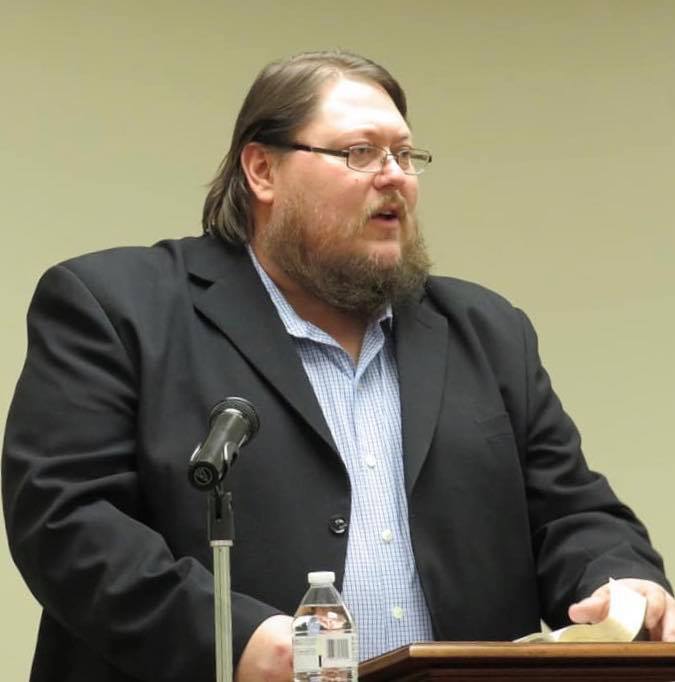
The sermon "No Friday Death Pt 2" by Mikal Smith explores the timing of Christ's death and resurrection, arguing for a Wednesday crucifixion based on Jesus' proclamation of being in the grave for "three days and three nights," as referenced in Matthew 12:38-40. The key argument emphasizes the need for consistency within Scripture regarding the timeline of events surrounding the death of Christ and the significance of two Sabbaths — a high Sabbath occurring on Thursday and the weekly Sabbath on Saturday. Smith meticulously examines various passages, including Matthew 27:62-66 and Luke 23:50-56, illustrating that the assertion of a Friday crucifixion presents contradictions in the overall biblical narrative concerning the fulfillment of Old Testament prophecies and Jewish observances. The practical significance lies in the authority of Scripture and the importance of understanding Christ's sacrificial role in relation to the law, as demonstrated through the feasts and Sabbaths that God instituted.
Key Quotes
“The Bible says that he’s given pastors and teachers. Sometimes we pastor and we, and we do our pastoring thing, sometimes we have to do our teaching thing.”
“If all of this Scripture is given by inspiration of God, then that means that every part of it has to coincide with each other. It has to line up with each other and it cannot contradict.”
“What an amazing thing to see how intricately God has decreed all things to take place in its exact time.”
“There are scriptures... where just three days is used, and we have to understand that... that obviously that means three days and three nights, not just three partial days.”
The Bible states that Jesus died on a Wednesday and rose on a Saturday, aligning with the three days and three nights prophecy.
The Bible teaches that Jesus' crucifixion was on a Wednesday, followed by His burial, and He rose from the dead on Saturday night, proving the fulfillment of the prophecy where He indicated He would be in the grave for three days and three nights (Matthew 12:40). The timeline reveals that His death occurred just before the High Sabbath of the Passover, thus fulfilling all scriptural requirements for the Passover lamb. This understanding is pivotal in asserting the accuracy of Scripture and the precise timing established by God for Jesus' atonement, death, and resurrection.
Matthew 12:40, Matthew 27:46, Matthew 28:1
The Bible's teaching on three days and three nights confirms that Jesus must have died on Wednesday, not Friday.
According to Scripture, Jesus stated He would be in the heart of the earth for three days and three nights (Matthew 12:40). A Friday death does not satisfy this timeline, as it would only allow for two days and two nights. The calculations based on biblical time (from evening to evening) align with a Wednesday crucifixion, allowing for the fulfillment of all prophecies concerning the Passover lamb and Jesus' resurrection on the first day of the week (Matthew 28:1). This meticulous attention to detail underscores the divine orchestration of events leading to Jesus' sacrifice for humanity.
Matthew 12:40, Matthew 27:46, Matthew 28:1
Understanding the timeline validates the accuracy of Scripture and highlights the fulfillment of biblical prophecy.
Recognizing the correct timeline of Jesus' death and resurrection isn’t merely an academic exercise; it is vital for affirming the truthfulness of the Scriptures. If Christ’s death is viewed as occurring on any day other than Wednesday, it contradicts His own prophecy that He would be in the grave for three days and three nights (Matthew 12:40). This understanding also reinforces the fulfillment of Old Testament types, shadows, and the appointed times of the Jewish feasts and festivals that point to Christ as the ultimate Passover lamb (1 Corinthians 5:7). Such insights bolster our faith in the reliability of God's Word and His sovereign plan of salvation.
Matthew 12:40, 1 Corinthians 5:7
The two Sabbaths refer to the High Sabbath of the Passover and the regular weekly Sabbath.
In the week of Jesus' death, there are indeed two Sabbaths: the High Sabbath associated with the Passover (on Thursday of that week) and the weekly Sabbath (on Saturday). Jesus was crucified on the day of preparation, which was the day before the Passover Sabbath. This distinction clarifies the order of events recorded in the Gospels where Jesus' burial was completed before the High Sabbath, and after which the women prepared spices on Friday, then rested on Saturday (Luke 23:54-56). This critical understanding dispels confusion surrounding the timeline and reinforces the theological implications of God's redemptive plan.
Luke 23:54-56, John 19:31, Matthew 28:1
The women prepared spices on Friday after the High Sabbath and rested on Saturday before visiting the tomb on Sunday.
The timing of the women's preparation of spices illuminates the intricacies of the timeline surrounding Jesus' death and resurrection. After the High Sabbath on Thursday, they went to buy and prepare spices on Friday but rested on the weekly Sabbath, which was Saturday (Luke 23:55-56). Their visit to the tomb on Sunday was to anoint Jesus’ body with those spices, as Pilate had previously sealed the tomb, preventing them from accessing it sooner. This sequence indicates that the two Sabbaths were separate and confirms the accuracy and harmony of the scriptural accounts of the events leading up to and following the resurrection.
Luke 23:55-56, Mark 16:1, Matthew 28:1

Comments
Your comment has been submitted and is awaiting moderation. Once approved, it will appear on this page.
Be the first to comment!